
Gasifying models: precision casting – advantages
2026-08-07
- Why gasified models are the foundation of precision casting
- Technological advantages and impact on cost
- Geometric freedom and surface quality of castings
- Comparative analysis: Gasification models versus traditional methods
- Quality standards and defect control
- Applications in industries: from automotive to art
- How to choose a supplier and avoid risks
- Frequently Asked Questions
- Conclusion and next steps
Why gasified models are the foundation of precision casting
Gasifying models: Precision casting - the benefits of this technology lie not simply in the ability to create complex shapes, but in a fundamental change in the economics of production for series from 50 to 50,000 pieces. In our practice, we have seen how switching from traditional wax to polystyrene foam or polymethyl methacrylate models has reduced the production preparation cycle from three weeks to three days. This is because the technology eliminates the need for core boxes and mold assembly, allowing metal to be poured directly into the sand bed around the model being evaporated.
Many engineers mistakenly believe that this method is only suitable for art castings or large automotive blocks. The reality is that modern gasified models provide IT14–IT15 tolerances and surface roughness Ra of 6.3–12.5 µm, making them competitive even with some machining types. The key advantage here is the absence of a mold parting line, which eliminates flash and the need for subsequent stripping in critical areas.
We encountered a situation where a client lost a batch of turbine wheels due to defects in the joining of the mold halves when using classic sand casting. The transition to technology with gasified models solved this problem completely, since the model is a monolith. However, it is important to understand: this method requires strict control of the moisture content of the sand and the speed at which the mold is filled with metal. If you ignore these parameters, you will not get an advantage, but a defect due to incomplete burnout of the model.
Technological advantages and impact on cost
The main value that gasified models provide: precision casting becomes accessible for small-scale production without huge tooling costs. Traditional lost wax casting requires the manufacture of wax molds, which is only justified for runs over 10,000 units. In the case of gasified models (Lost Foam or EPC technology), the model is made by cutting on CNC machines or 3D printing from special foam plastics. This reduces pre-production costs by 40–60% for batches of up to 1,000 pieces.
Let's look at a specific example of savings. When making a complex-shaped manifold using the traditional method, a minimum of 4 rods and 2 half-molds are required. Mold assembly time is 15 minutes per casting, plus time to remove cores after cooling. When using a gasified model, the mold preparation time is reduced to 3 minutes (filling and vibration), and the operation of removing the rods disappears completely. Based on an annual program of 5,000 pieces, this saves more than 300 man-hours in molding operations alone.
Another hidden reserve is the yield of suitable castings. In a standard process, metal loss to the gating system and burr can reach 30–40%. Technology with evaporating models allows you to design a gating system with an optimal configuration, since there are no restrictions on removing the model from the mold. We record a reduction in metal consumption by 15–20% compared to classic earth casting. For expensive alloys, such as heat-resistant nickel superalloys or titanium, these savings cover the cost of the models themselves for the first month of operation.
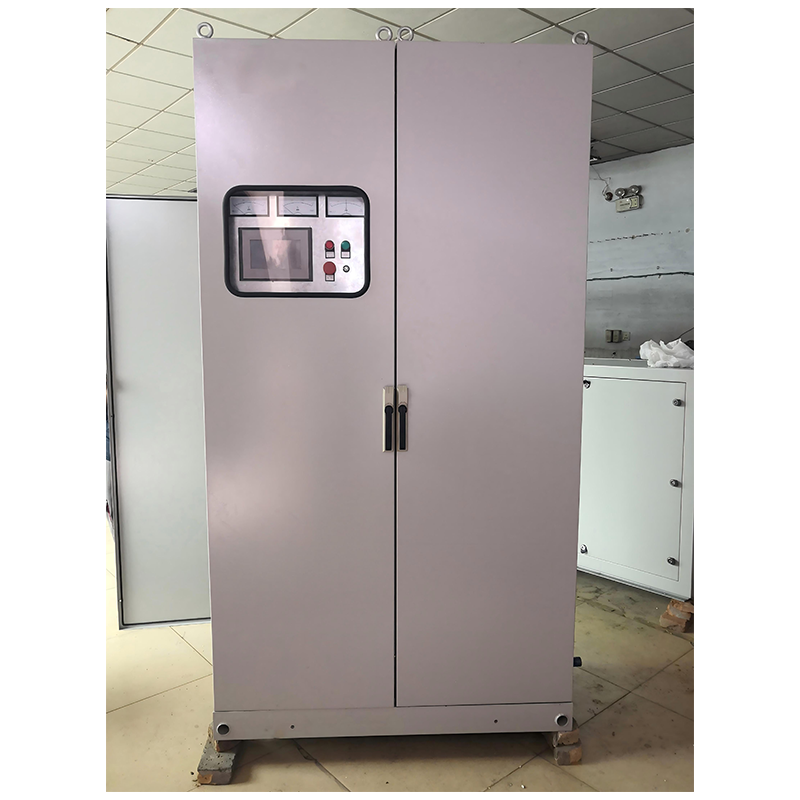
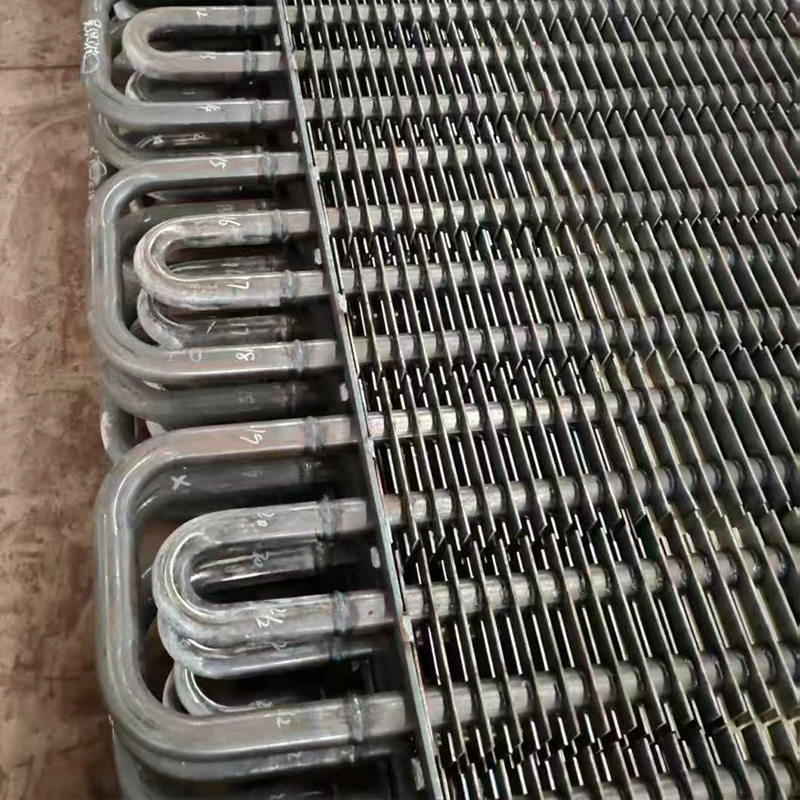
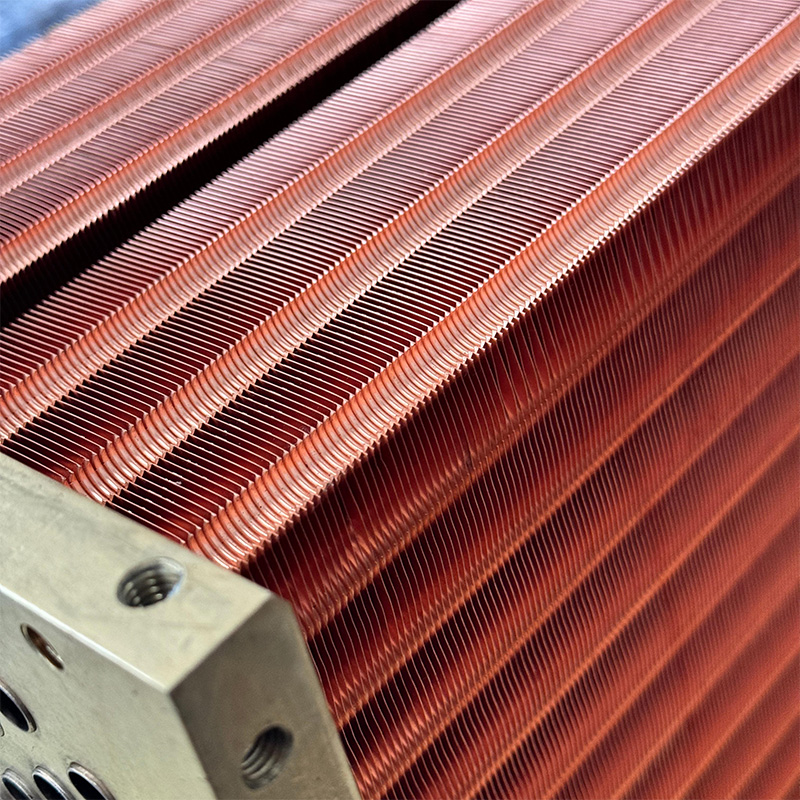
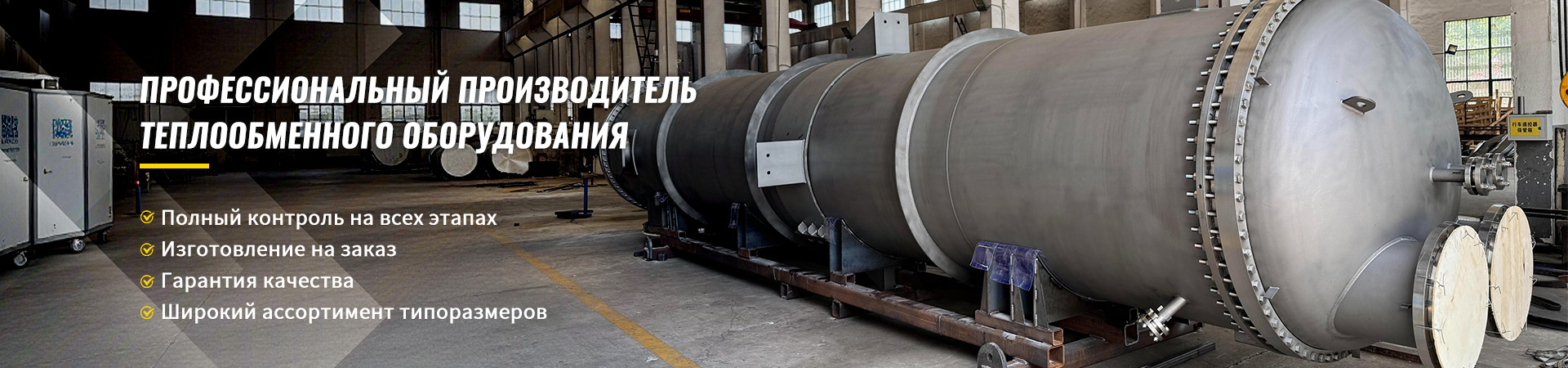
It is working with such demanding materials that determines success in high-tech industries. A striking example of a company where the quality of castings and materials is the foundation of the business isWuxi Kaisheng Electric Power and Petrochemical Equipment Co., Ltd.. Specializing in the development and production of heat exchange equipment for the oil and gas and energy sectors, the company actively uses advanced metal processing methods to create complex components. Their products, which include titanium shell-and-tube heat exchangers, ASME-standard high-pressure units and corrugated tube bundles made from stainless steels (such as 316) or copper-nickel alloys (C70600, C46400), require impeccable metal structure integrity. The use of technologies that minimize defects and allow work with corrosion-resistant alloys (including nickel alloys N06625 and titanium) directly affects the reliability of final products used in aggressive environments of seawater desalination or chemical synthesis. The experience of such manufacturers confirms that choosing the right casting technology and materials is an investment in the longevity of the equipment.
It is important to note a limitation of the method: it is less effective for very thin-walled parts less than 2 mm thick, where metal pressure can deform the model before it evaporates. There are also nuances with the gas permeability of sand. If you are working with aluminum alloys, the pouring speed should be higher than for cast iron so that the model has time to gasify before contact with the metal front. Ignoring this rule leads to defects such as “underfilling” or carbon inclusions.
Every manufacturing manager should audit their current gating system. If your burr losses exceed 10%, introducing gasified models will be the fastest way to increase workshop profitability.
Geometric freedom and surface quality of castings
The main technical advantage that gasified models realize: precision casting reaches a level of complexity that is not available to other methods without expensive machining. Since the model is not removed from the mold, but evaporates under the influence of molten metal, designers have complete freedom in creating internal cavities, undercuts and channels of variable cross-section. There is no need to provide slopes for the withdrawal of rods or to divide the part along the parting plane.
In one of our projects for the production of pump housings for the chemical industry, the customer required the creation of an internal channel with a complex spiral shape. Using traditional rods would result in the rods being misaligned by 1.5mm, causing the impeller to become unbalanced. The use of a one-piece gasified model ensured channel alignment with an accuracy of 0.2 mm. This allowed the customer to eliminate the need for subsequent boring of the housing, saving 45 minutes of machine time per unit.
The surface quality of castings directly depends on the sand fraction and the density of the model. When using quartz sand of a fraction of 0.2–0.4 mm and a correctly selected coating for the model, a roughness is achieved that allows the coating to be applied without puttying. This is critically important for architectural elements or parts operating in aggressive environments, where any pore can become a source of corrosion. We recommend that you always request a certificate from the model supplier for the density of polystyrene foam (usually 18–22 kg/m³), since too low a density will lead to destruction of the model during transportation, and too high a density will impede gas removal.
There is a common misconception that precision gasification casting always produces better accuracy than die casting. This is not true. Accuracy depends on the stability of the sand compaction process. If the vibration is insufficient, the sand will not fill the bottlenecks of the model, and the dimensions will “float”. Therefore, a prerequisite is the presence of automated vibration tables with adjustable frequency. Manual tamping is not acceptable for critical parts.
Design engineers should review the tolerances on their drawings. They often add excess allowances “just in case,” which increases the cost of machining. EPC technology allows you to safely reduce allowances to 2-3 mm per side for most surfaces.
Comparative analysis: Gasification models versus traditional methods
To make an informed decision about implementing technology, you need to clearly understand its place among other methods. Below is a detailed comparison based on real production data from our partners in Russia and the CIS. Please note that the choice of method is dictated not only by quality, but also by batch size and material.
| Comparison parameter | Gasification casting (EPC/Lost Foam) | Sand casting (Earth/XTS) | Lost wax casting (Wax) | Chill casting |
|---|---|---|---|---|
| Economical batch size | 50 – 5,000 pcs. | 1 – 100 pcs. (large size) | 1,000 – 100,000+ pcs. | 10,000+ pcs. |
| Cost of equipment | Low (CNC cutting or 3D printing) | Low (wooden/plastic models) | High (molds for wax) | Very high (metal molds) |
| Dimensional accuracy (class) | IT14 – IT15 | IT15 – IT17 | IT12 – IT14 | IT13 – IT15 |
| Surface roughness (Ra) | 6.3 – 12.5 µm | 25 – 50 µm | 1.6 – 6.3 µm | 3.2 – 12.5 µm |
| Presence of parting line | Absent (monolith) | Present (requires cleaning) | Absent (or minimal) | Present |
| Possibility of complex internal cavities | High (without rods) | Limited (requires rods) | High (wax rods) | Low (requires metal rods) |
| Environmentally friendly process | Medium (emission of gases during filling) | Low (dust, waste mixture) | Medium (chemical solvents) | High (reusable equipment) |
| Materials | Cast Iron, Steel, Aluminum | All metals | All metals, including refractory | Non-ferrous alloys, Cast iron |
The table shows that gasified models occupy a unique niche between single earth casting and mass investment casting. If your task is to produce a batch of 200 gearbox housings from SCh20 cast iron with high precision, but your budget does not allow you to order a steel wax mold, then EPC is the only rational choice. Casting in the ground will give a too rough surface, and casting on wax will be unprofitable due to the cost of the equipment.
However, there is a nuance with the materials. For steels with a high carbon content, the gasification process requires special care. Decomposition products of polystyrene can saturate the metal with carbon, changing its grade. In such cases, we recommend using models made of polymethyl methacrylate (PMMA), which decompose into volatile components without leaving solid carbon, although their cost is 30% higher. This is the case when saving on model material can lead to the failure of the entire cast.
When choosing a service provider, be sure to request a sample casting made from a material similar to yours. A visual inspection of the feeder area will tell more about the qualifications of the foundry workers than any certificates. If you see traces of soot or incomplete filling in the corners, the technology is poorly adjusted.
Quality standards and defect control
Working with gasified models requires strict compliance with the regulatory framework. In Russia and the EAEU countries, the main document regulating the requirements for castings is GOST 26645-85 “Castings from metals and alloys. Dimensional tolerances, allowances and masses.” EPC technology is characterized by falling into the 5th accuracy class according to this standard, provided that the process is automated. It is also important to take into account GOST 32603-2012 (analogous to ISO 8062-3), which determines the tolerances of geometric parameters.
One of the most critical aspects is control of the gas content in the mold. Before pouring, the mold must be purged with air or placed under vacuum (V-process). Vacuum-sealed Molding combined with Lost Foam gives the best results, reducing porosity to 1-2 points on the ASTM scale. Without a vacuum, the risk of formation of gas pockets increases many times, especially in the upper parts of the casting, where pyrolysis products rise.
We conducted an audit of a foundry where there was a high percentage of defects due to the “sand burning” defect. It turned out that a cheap fire-resistant coating was used for models with low gas permeability. The coating acted as a barrier, preventing gases from escaping into the sand mass and penetrating into the metal. Replacing the coating with a composition based on zircon with the addition of surfactants (surfactants) reduced rejects from 12% to 1.5%. This proves that there are no trifles in this technology: the brand of glue for gluing the model blocks, the humidity of the sand (no more than 0.5%) and the temperature of the metal influence the result equally strongly.
Production certification according to ISO 9001 is mandatory for suppliers working in the automotive or aircraft industries. But for EPC, it is more important to have an internal rapid analysis laboratory. Monitoring the chemical composition of each heat and performing spectral analysis should be routine. In addition, for critical components, ultrasonic testing (UT) or radiography is required, since external defects may be absent, and internal pores will go unnoticed.
Customers are recommended to include in the supply contract an acceptance clause based on a standard sample approved by both parties. This will eliminate disputes about the admissibility of certain surface defects, which may be specific for casting using gasified models (for example, traces from the joining of model blocks).
Applications in industries: from automotive to art
The versatility of the method is confirmed by its widespread use in various sectors of the economy. Let's look at two specific cases demonstrating the effectiveness of the technology in different conditions.
Case 1: Automotive industry (Intake manifolds).
The engine manufacturer faced problems with the weight and aerodynamics of the intake manifolds. Aluminum parts produced by die casting had a wall thickness of at least 4 mm due to fillability limitations and required complex machining of the internal channels. The transition to casting using gasified models made it possible to reduce the wall thickness to 2.5 mm without loss of strength, since uniform cooling in the sand reduced internal stresses. The weight of the part decreased by 18%, which directly affected the vehicle’s fuel consumption. In addition, the inner surface of the channels became smooth immediately after casting, improving the air filling of the cylinders. Machining savings amounted to $22 per part for a program of 50,000 pieces per year.
Case 2: Art casting and architecture.
To restore the historical building, it was necessary to reproduce 40 openwork fencing elements of complex shapes with floral patterns. Traditionally making wooden models and molds would take 2 months and would be prohibitively expensive due to the manual labor of the carvers. The use of 3D modeling and subsequent milling of polystyrene foam blocks made it possible to create master models in 5 days. The gasified models perfectly reproduced the smallest details of the ornament. Bronze casting was successful, with the absence of parting lines maintaining the integrity of the visual image. The cost of work was reduced by 35% compared to classical technology, and the order completion time was halved.
The technology is also in demand in the production of heat exchangers, where tightness and a complex system of internal partitions are important, and in agricultural machinery for large parts made of cast iron (gearbox housings, harrow discs), where the weight of the model is not critical, but the absence of rods simplifies the process.
If you work in one of these industries, conduct a product review. Parts that currently require expensive machining or multi-part assembly are ideal candidates for conversion to EPC technology.
How to choose a supplier and avoid risks
The market for precision casting services is saturated with offers, but not all players have the competence to work with gasified models at a high level. A mistake in choosing a partner can lead to you getting cheap equipment, but expensive in terms of suitable products.
The first selection criterion is the presence of your own model preparation area. Factories that buy models externally often cannot guarantee compliance with the geometry and density of the material. The ideal supplier has a CNC milling or 3D printing facility right on the shop floor. This allows you to quickly make changes to the design of the model without lengthy logistics.
The second criterion is the fleet of molding equipment. Manual filling of sand is permissible only for prototypes. The series requires automatic lines with dosed sand supply and controlled vibration. Ask to see a video of the pouring process. If you see a worker filling sand with a shovel, run away from there, the quality will be floating.
The third criterion is experience with your alloy. Casting aluminum and casting high-carbon steel using the same technology have different pitfalls. A supplier specializing in aluminum may not know the nuances of how steel behaves when in contact with polystyrene decomposition products. Запросите референс-лист с похожими материалами.
Мы видели случай, когда компания сэкономила 10% на стоимости литья, выбрав демпингового поставщика, но потеряла 200% бюджета на переделке партии из-за скрытой пористости, выявленной только после начала механической обработки. Дешевое литье часто означает экономию на качестве песка (повторное использование без регенерации) и покрытий моделей.
Обязательно заключайте договор с четкими спецификациями на дефекты. Укажите допустимый размер и количество пор, требования к припускам и чистоте поверхности. Наличие пункта о штрафных санкциях за отклонение от химического состава дисциплинирует литейщиков лучше любых устных договоренностей.
Frequently Asked Questions
Какова максимальная масса отливки, которую можно получить по этой технологии?
Технические ограничения по массе практически отсутствуют. В мировой практике успешно отливаются детали весом до 10 тонн и более (например, блоки цилиндров судовых двигателей или крупные станины). Однако экономическая целесообразность снижается для очень крупных единичных деталей, где проще использовать традиционное литье в землю. Оптимальный диапазон — от 0,1 кг до 200 кг. Для деталей тяжелее 500 кг требуется специальное оборудование для подъема и кантовки форм, что увеличивает капитальные затраты.
Можно ли использовать газифицируемые модели для нержавеющих сталей?
Да, можно, но с серьезными оговорками. Нержавеющие стали чувствительны к науглероживанию. При использовании обычного пенополистирола (EPS) продукты разло жения могут повысить содержание углерода в поверхностном слое, снизив коррозионную стойкость. Для нержавеющих сталей настоятельно рекомендуется использовать модели из полиметилметакрилата (ПММА) или сополимеров с низким содержанием углерода. Также критически важно применение вакуума при заливке для быстрого удаления газов. Без этих мер риск получения брака близок к 100%.
Сколько времени занимает изготовление первой партии после утверждения чертежей?
Благодаря отсутствию необходимости в металлической оснастке, сроки минимальны. Изготовление моделей методом ЧПУ-фрезеровки занимает 2–4 дня в зависимости от сложности. Подготовка формы и первая заливка возможны уже на 5–7 день после получения 3D-модели. Для сравнения: изготовление пресс-формы для литья под давлением или по выплавляемым моделям занимает от 4 до 8 недель. Это делает технологию незаменимой для срочных заказов и прототипирования.
Какие экологические риски несет производство?
Основной риск — выброс стирола и других продуктов термического разложения при заливке. Современные производства обязаны оснащать системы аспирации и термоокислительные установки (каталитические нейтрализаторы) для дожигания газов. Песок, используемый в процессе, подлежит регенерации и может использоваться повторно до 90%, что снижает объем отходов. При соблюдении санитарных норм и наличии очистных сооружений технология считается безопасной и соответствует современным экостандартам ЕС и РФ.
Conclusion and next steps
Газифицируемые модели: прецизионное литьё — преимущества которого мы рассмотрели, представляют собой зрелую, экономически эффективную технологию для широкого спектра задач. Она стирает границы между прототипированием и серийным производством, позволяя получать детали сложнейшей конфигурации с минимальными затратами на оснастку. Ключ к успеху лежит не в самом методе, а в строгом соблюдении технологической дисциплины: контроле качества моделей, параметров песка и режима заливки.
Если вы планируете модернизацию производства или поиск нового способа изготовления сложных узлов, не откладывайте аудит текущих процессов. Потенциал экономии до 40% на себестоимости и сокращения сроков выхода на рынок слишком велик, чтобы его игнорировать. Помните, что правильная технология выбирается не под имеющееся оборудование, а под задачу продукта.
Готовы обсудить ваш проект и рассчитать экономический эффект от перехода на технологию EPC? Наши эксперты проведут бесплатный анализ ваших чертежей и предложат оптимальное решение.
Contact us todayдля получения консультации и расчета стоимости опытной партии.
Читайте также наши материалы овыборе сплавов для прецизионного литьяandстандартах контроля качества в литейном производстве.