
Horizontal PP tank with spiral wound design”
2026-08-13
- Horizontal PP Spiral Wound Tank: Technical Parameters and Supplier Selection
- Spiral winding technology: why it is more reliable than conventional welding
- Calculation of loads and design features of horizontal installation
- Material Comparison: PP vs PE and PVC for Chemical Environments
- EAC certification and GOST requirements for industrial use
- Typical installation mistakes and how to avoid them
- Logistics and production times: market realities in 2026
- Integrated solutions for petrochemicals and energy
- Frequently Asked Questions
- Conclusion and recommendations for choosing a supplier
Horizontal PP Spiral Wound Tank: Technical Parameters and Supplier Selection
In our practice of designing industrial tankshorizontal PP tank with spiral wound designhas become the standard for storing aggressive media with volumes from 5 to 100 m³. This technology solves the main problem of traditional welded tanks - the risk of destruction of seams under the influence of cyclic loads and chemical corrosion. Spiral winding of polypropylene (PP-H or PP-B) creates a monolithic body without transverse joints, which is critical for the durability of the equipment in the Russian climate and complex logistics.
Many buyers make the mistake of choosing a container based only on the price per kilogram of material. We have seen cases where cheap vertical tanks deformed the first time they were filled with hot electrolyte because the geometry of the load was not taken into account. Horizontal orientation requires a completely different approach to calculating the stiffness of walls and supporting elements. In this article we will analyze real numbers: from wall thickness depending on diameter to delivery times of finished products with EAC certification.
Spiral winding technology: why it is more reliable than conventional welding
The manufacturing process begins with the extrusion of a polypropylene homopolymer (PP-H) tape, which is wound onto a rotating mandrel at a strictly controlled angle. The melting temperature of the material is maintained in the range of 240–260°C, ensuring diffusion welding of turns at the molecular level. The result is a pipe or tank body where the joint strength is 95–98% of the strength of the base material. For comparison, manual extrusion welding of sheets gives only 60–70% strength, and it is the seams that are the weak point when storing acids.
The key advantage of the technology is the absence of long longitudinal seams, which in horizontal containers work under tension. When you fill a tank with liquid, pressure pushes the walls apart. In a welded plate tank, this pressure tries to break the vertical seam. In a wound tank, the load is distributed in a spiral, turning into hoop stress, which polypropylene can withstand perfectly. One of our clients in Chelyabinsk replaced three lined steel tanks with one such tank, because the steel was rusting due to microdamage to the lining due to vibration of the pumps.
Wall thickness varies from 6 mm to 25 mm depending on the diameter and density of the product. For standard chemical solutions (density up to 1.2 g/cm³) with a diameter of 2 meters, a wall of 8–10 mm is sufficient. If you plan to store high concentration sulfuric acid or operate at temperatures above +60°C, we recommend increasing the thickness to 12-14 mm or using PP-B copolymer, which is more impact resistant at low temperatures. It is important to understand: an increase in thickness by 2 mm increases the cost of the container by about 15%, but extends the service life in an aggressive environment by 2–3 times.
The design of the bottoms and covers also has nuances. In horizontal tanks, the bottoms are often welded or molded. We use a vacuum forming method for bottoms up to 1.5 meters in diameter, which guarantees uniform thickness without thinning at the corners. For large diameters, segment welding is used with mandatory quality control of each seam using an ultrasonic flaw detector. Do not skimp on the quality of the bottom - 80% of leaks in the field occur precisely in the interface between the cylindrical part and the bottom.
Calculation of loads and design features of horizontal installation
The horizontal PP tank with spiral wound structure works like a beam supported by saddle supports. The main mistake of designers is ignoring the deflection of the body between the supports. Polypropylene has an elastic modulus of about 1500 MPa, which is 100 times less than steel. This means that without additional reinforcement, a long tank will simply “sag” under the weight of the liquid, which will lead to cracks in the support area.
To compensate for this effect, we use two amplification methods. The first is the installation of internal stiffening rings (ribs) every 1–1.5 meters of length. These rings are welded to the inner wall and act as reinforcement, preventing ovalization of the section. The second method is to use external frames made of fiberglass or metal with rubber gaskets. The external frame is preferable for food production, as it eliminates metal contact with the product and simplifies the cleaning of the internal surface.
The distance between the supports (seats) is calculated using a formula that takes into account the length of the tank and the density of the liquid. The optimal distance is 0.2–0.25 of the total length of the tank from the ends. If the supports are installed too close to the center, high bending stresses will occur in the central part. If it is too close to the edges, local deformations of the ends are possible. In our practice, there was a case when a customer independently installed a tank on concrete blocks in the middle, and a month later the body burst along the axis. Always follow the support layout provided by the manufacturer.
Thermal expansion of polypropylene is 0.15 mm per meter of length per 1°C temperature change. For a tank 6 meters long, the temperature difference from winter (-30°C) to summer (+40°C) will elongate it by almost 10 cm. If the tank is rigidly fixed to the foundation, it will destroy itself. Be sure to provide sliding supports on one side and fixing ones on the other, as well as compensators on the inlet and outlet pipes. The use of flexible EPDM or PTFE inserts on communications is mandatory.
Material Comparison: PP vs PE and PVC for Chemical Environments
The choice of material often becomes a stumbling block when purchasing. Let's compare polypropylene (PP) with its main competitors - polyethylene (PE/HDPE) and polyvinyl chloride (PVC) in the context of horizontal containers.
| Parameter | Polypropylene (PP-H/PP-B) | Polyethylene (HDPE) | PVC |
|---|---|---|---|
| Operating temperature | up to +90°C (short-term up to +100°C) | up to +60°C (deforms above) | up to +60°C (becomes brittle below 0°C) |
| Chemical resistance | Excellent to acids and alkalis | Good, but worse for oxidizing agents | Excellent to acids, poor to organics |
| Mechanical strength | High rigidity, keeps its shape | Flexible, requires thick walls | Tough but brittle on impact |
| Weldability | Ideal for spiral winding | It is more difficult to control the quality of the seam | Only gluing or special. welding |
| Price (relative) | Average (optimal for price/quality) | Low (for small volumes) | High (depending on additives) |
Polypropylene wins where the combination of heat resistance and rigidity is important. If you need to store a hot pickling solution (+70°C), HDPE immediately disappears - it will begin to creep and change geometry. PVC is good for cold hydrochloric acid, but in the cold of the Russian winter it can crack from an accidental blow with a shovel when clearing snow around the container. PP-B (copolymer) maintains impact strength down to -20°C, making it a versatile solution for unheated outdoor installations.
However, polypropylene has a limitation: it is not suitable for storing strong oxidizing agents (nitric acid >50%, chromic mixture) and some organic solvents (chlorinated hydrocarbons). In such cases, we offer multilayer structures with an inner layer of PVDF or fluoroplastic, but this is already a premium segment with a price 3–4 times higher. For 90% of electroplating, water treatment and food processing applications, pure PP is the gold standard.
EAC certification and GOST requirements for industrial use
When importing or producing equipment for hazardous production facilities in the Russian Federation and EAEU countries, a certificate of conformity is required.Горизонтальный резервуар из PP со спирально-навитой конструкциейoften falls under the scope of the Technical Regulations TR CU 032/2013 “On the safety of equipment operating under excess pressure” if the operating pressure exceeds 0.05 MPa. Even if the tank is atmospheric, customers often require a declaration of conformity to confirm the quality of the material.
We draw up documentation in accordance with GOST 15150 (climatic modification UHL) and GOST R 52798 (thermoplastic containers). The product passport must indicate: the brand of raw materials (for example, BorSafe HE3488-LS or Moplen HP500N), the results of hydraulic tests (usually 1.25 pressure from the worker for 2 hours) and geometric tolerances. The absence of these documents may result in refusal to accept the object by supervisory authorities, which will lead to production downtime.
An important point: the certificate is issued for a specific model or series of models indicating the range of diameters and lengths. You cannot buy a certificate for a 10 m³ tank and legally produce 50 m³ tanks under the same number. When requesting a quote, always clarify whether certification is included in the price or is a separate service. In our company, all serial products undergo initial testing in an accredited laboratory, and copies of the protocols are attached to each batch.
For export to the CIS countries, we also provide a safety data sheet for chemical products if the tank is supplied with residual process fluid after testing. This is a requirement of the customs union. Ignoring paperwork is a common cause of cargo delays at the border. We take care of this process so that you receive equipment ready for installation along with a full package of documents.
Typical installation mistakes and how to avoid them
Even the best quality tank can be damaged by improper installation. The most common mistake is installation on an uneven base. A height difference between supports of more than 5 mm per meter of length creates a torque that polypropylene cannot compensate for. Over time, this leads to fatigue cracks in the lower part of the housing. The base must be made of concrete of a grade not lower than M200 with ideal flatness, or adjustable metal supports with a level must be used.
The second mistake is overtightening the fastening clamps. Polypropylene is susceptible to creep. If you tighten the metal clamp “all the way”, after six months a dent will form under it and the seal will be broken. Use a torque wrench and follow the tightening torque specified in the instructions. Between the metal and plastic there must be a gasket made of oil- and petrol-resistant rubber with a thickness of at least 3 mm. No metal-plastic contact!
The third problem is incorrect strapping. Rigid metal pipes welded directly to the tank nozzles transfer all pump vibrations and thermal expansion to the housing. The pipes break off. Solution: Use flexible expansion joints (bellows or rubber) at all inlets and outlets. The length of the flexible insert must be sufficient to compensate for the linear expansion of the pipeline. In our practice, there was a case when a rigid line tore off a pipe from a tank with chromic anhydride, which led to an emergency spill and a fine from the environmental inspectorate.
The fourth point is UV protection. Pure polypropylene degrades in sunlight within 2–3 years, becoming brittle. If the tank is located outdoors, it must either be made of a material with the addition of soot (black), or painted with special acrylic paints for plastic, or covered with a casing. White or natural PP will quickly lose its properties in the sun. We recommend immediately ordering tanks in black for outdoor installation - it’s cheaper than painting it later.
Logistics and production times: market realities in 2026
Manufacturing large containers is a balance between speed and quality. The standard production time for a horizontal tank with a volume of 10–20 m³ is 10–14 working days. This period includes cutting of the tape, winding, forming of the bottoms, welding of components and control tests. Rush orders (5-7 days) are possible, but require overtime and priority production, which increases the cost by 15-20%.
Transportation of such products has its limitations. Tanks with a diameter of up to 2.5 meters and a length of up to 6 meters are usually transported by road without oversize registration. If the diameter is more than 2.55 m or the length exceeds 12 m, the development of a transportation scheme, escort and special permits are required. This will increase the cost of logistics by 2–3 times. Therefore, when designing, we often propose making containers composite (sectional), which are joined together at the installation site. This allows them to be transported by a regular truck and assembled on site in 1–2 days.
Delivery costs vary greatly depending on the region. Delivery to the Central Federal District takes 1-3 days, to remote areas of Siberia or the Far East - up to 2 weeks. Consider the seasonal factor: roads may be closed in winter and congested in summer. We recommend planning your purchase at least one month before the required commissioning date. Storage of finished products in our warehouse is free for 14 days after they are ready, which gives you some time to prepare the foundation.
Pricing is transparent: the price depends on the weight of the product (kg), the complexity of additional elements (hatches, stairs, platforms) and the current price of raw materials. Polypropylene is a commodity commodity, its price fluctuates. Price fixation is possible in the contract for a period of up to 5 banking days. Wholesale quantities (from 5 pieces) receive a discount of up to 10% due to optimization of material cutting and production line loading. Don't hesitate to ask for detailed estimates - you should see what you're paying for.
Integrated solutions for petrochemicals and energy
Selecting the right tank is only part of the challenge of ensuring process reliability. Often, storing aggressive environments requires integration with heat transfer equipment that can withstand similar extreme conditions. This is where the experience of specialized manufacturers such asWuxi Kaisheng Electric Power and Petrochemical Equipment Co., Ltd..
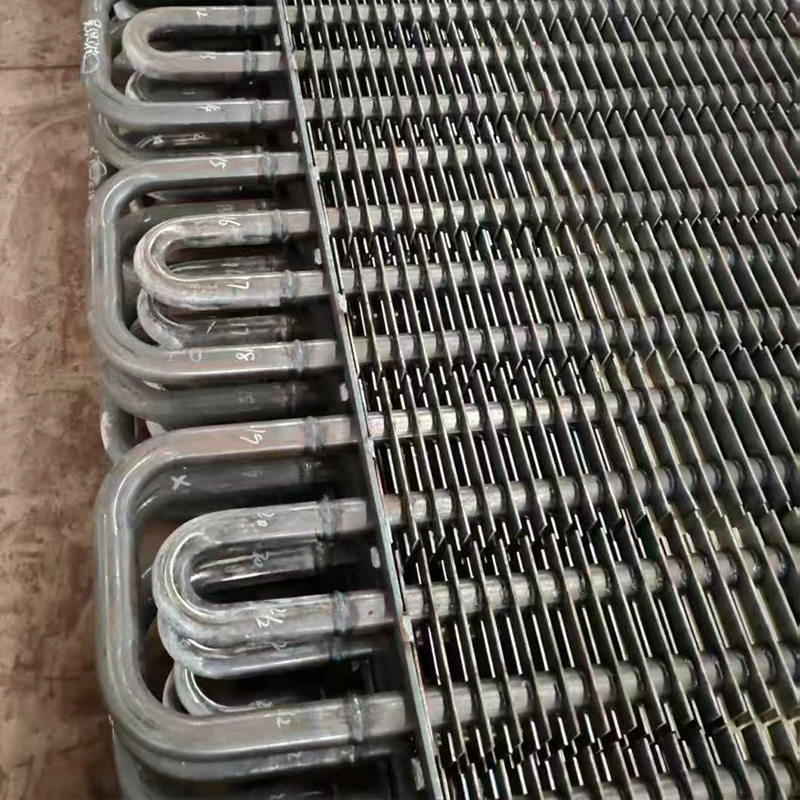
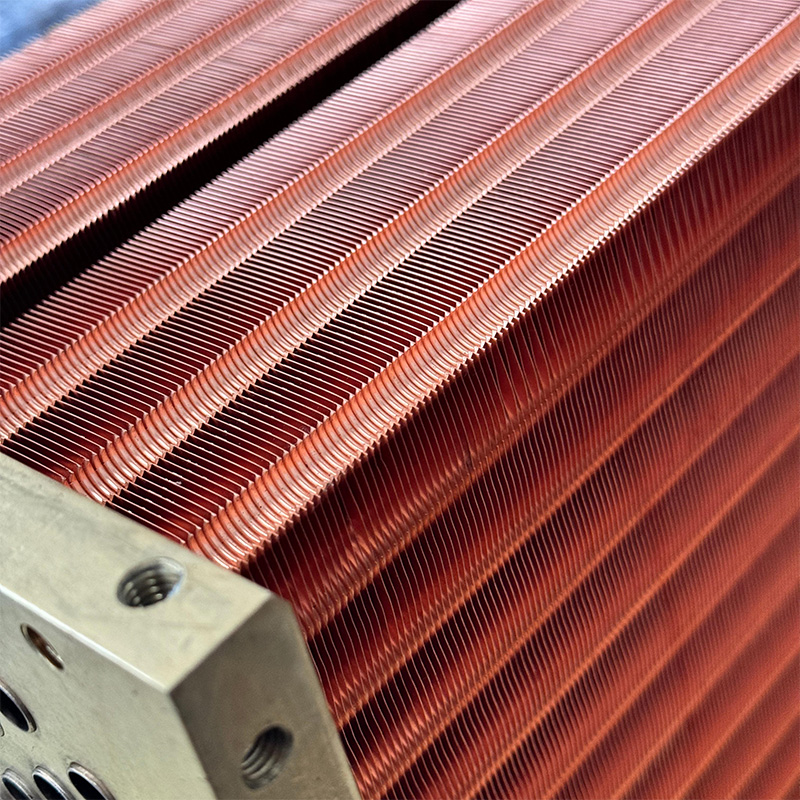
The company specializes in the development and production of high-tech equipment for oil refining, chemical industry and energy. In addition to capacitive solutions, Wuxi Kaisheng offers a wide range of heat exchangers, including titanium shell-and-tube units, ASME high-pressure heat exchangers and corrugated tube bundle units in 316 stainless steel, C46400 marine brass, copper-nickel alloys and N06625 nickel alloys. The company's products also include air coolers, waste heat boilers and various components such as tube sheets made from 321 steel and C70600 alloys.
Products are made from carbon, stainless, alloy steel, as well as titanium, copper and nickel alloys, which provide exceptional corrosion resistance and heat transfer efficiency even in the most aggressive environments. Wuxi Kaisheng's PED and ASME certified equipment is widely used in seawater desalination, shipbuilding and energy conservation projects. The company's approach, combining deep engineering knowledge and the ability to provide customized solutions, allows customers around the world to create sustainable and safe production chains where every element, from tank to heat exchanger, works as one reliable machine.
Frequently Asked Questions
What is the maximum volume a horizontal polypropylene tank can have?
It is technologically possible to produce containers with a volume of up to 100 m³ or more. However, from the point of view of logistics and installation, 50–60 m³ is considered the optimal limit. A tank with a volume of 50 m³ has a length of about 10–12 meters with a diameter of 2.5 meters. Anything larger should be made modular (from several sections) or vertical, if the height of the room allows. Large horizontal containers are difficult to transport without an oversized load permit, which dramatically increases the cost of the project.
Can these containers be used for food?
Yes, provided that PP-H or PP-B grade polypropylene is used, which has a hygienic certificate from Rospotrebnadzor. The material must comply with the requirements of TR CU 005/2011 “On Packaging Safety”. Our tanks are made from virgin raw materials without recycling, which guarantees the absence of odor and migration of harmful substances. The inner surface remains smooth (roughness Ra< 10 µm), which prevents product sticking and makes cleaning easier. For the dairy industry or winemaking this is a standard solution.
How long does such a tank last in an aggressive environment?
The service life directly depends on the temperature and concentration of the aggressive agent. At room temperature and stored with diluted acids (up to 20%), the service life is 15–20 years. При повышенных температурах (+60…+80°C) и высоких концентрациях срок снижается до 7–10 лет. Критическим фактором является не столько химическая коррозия, сколько механическое старение и УФ-излучение. Регулярный осмотр (раз в год) и защита от солнца позволяют максимально продлить жизнь оборудования. У нас есть клиенты, эксплуатирующие наши баки с 2010 года без признаков деградации материала.
Что делать, если нужен ремонт или модификация бака?
Одно из главных преимуществ полипропилена — ремонтопригодность. Трещины, царапины или отверстия можно заварить ручной экструзией прямо на месте эксплуатации без демонтажа емкости. Для этого нужен только генератор горячего воздуха и сварочный пруток из того же материала. Мы проводим обучение персонала заказчика или выезжаем со своей бригадой для сложного ремонта. Также возможно врезка новых патрубков или люков в действующий резервуар, если это не нарушает целостность несущих элементов.
Conclusion and recommendations for choosing a supplier
Выбор емкости для химических или пищевых производств — это инвестиция в безопасность и бесперебойность процессов.Горизонтальный резервуар из PP со спирально-навитой конструкциейпредлагает лучший баланс цены, долговечности и надежности среди доступных сегодня пластиковых решений. Он выдерживает широкий спектр химических воздействий, прост в монтаже и обслуживании, а при правильной эксплуатации служит десятилетиями.
Не рискуйте, покупая “безымянные” баки у посредников без собственного производства. Требуйте образцы сварных швов, протоколы испытаний и отзывы реальных клиентов. Проверяйте наличие сертификатов EAC и соответствие материала заявленным характеристикам. Помните: экономия 10% на стоимости оборудования может обернуться миллионными убытками при аварии и остановке производства.
Мы готовы предложить полный цикл услуг: от инженерного расчета и проектирования до изготовления, доставки и шеф-монтажа на вашем объекте. Наша производственная база оснащена современными линиями спиральной намотки, позволяющими выпускать изделия любой сложности в кратчайшие сроки. Для комплексных проектов, включающих теплообменное оборудование, мы сотрудничаем с ведущими производителями, такими как ООО «Уси Кайшэн», обеспечивая единую стандартизацию качества для всех узлов вашей системы.
Посмотреть каталог резервуаров из полипропилена | Contact us todayдля получения индивидуального расчета стоимости и срока поставки.