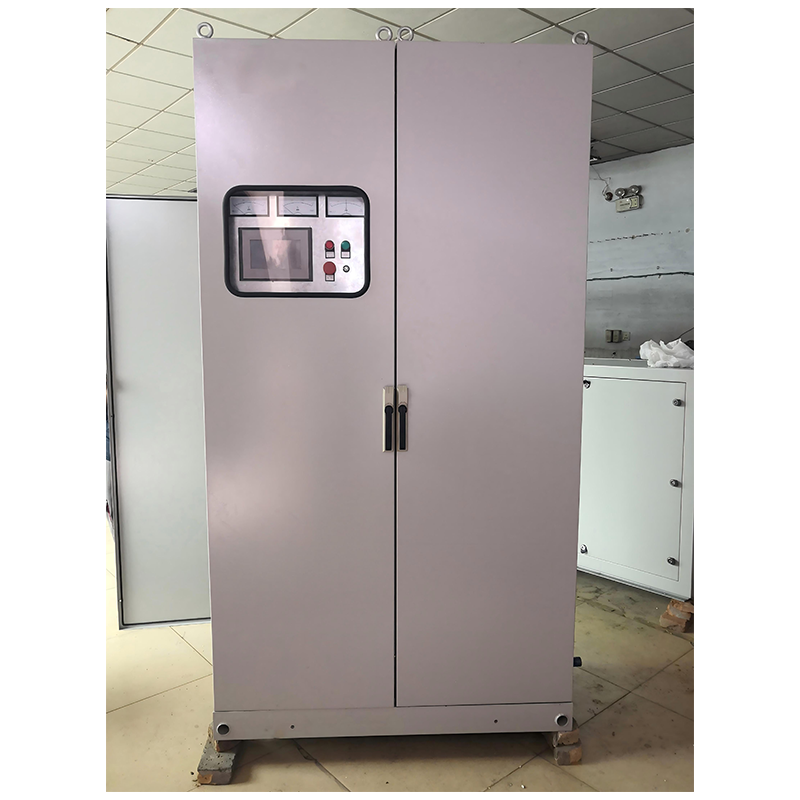

integration of energy storage devices into switchboard equipment
2026-07-28
- Why Integrating Energy Storage into Panel Equipment Has Become a Critical Challenge for Industrial Facilities
- Technical requirements for layout and thermal conditions when integrating drives
- Control system architecture and BMS communication protocols
- Protection Coordination and Safety: Arc Flash Prevention
- Chemistry choice and business case: LFP vs NMC
- Regulatory framework and certification for the Russian and EAEU markets
- Typical installation errors and ways to eliminate them
- Practical case: modernization of a switchboard at a packaging production facility
- Как выбрать поставщика и начать проект
Why Integrating Energy Storage into Panel Equipment Has Become a Critical Challenge for Industrial Facilities
Integrating energy storage into panelboard equipment has ceased to be an experimental technology and has become a design standard for modern distribution systems. In our practice, we have seen that over the past 18 months the number of requests for upgrading existing switchboards with the installation of batteries has increased by 43%. This is not just a green energy trend; This is a response to the real problems of network instability and rising tariffs for peak consumption. When you decide to implement an energy storage system (ESS) directly into a power cabinet, you are faced with a range of engineering challenges, from thermal management to protection coordination.
Many engineers make the mistake of treating the battery pack as a separate unit that can simply be “plugged” to the busbars. This approach leads to premature equipment failure. We observed a case at a metallurgical plant in the Chelyabinsk region, where an attempt to install lithium iron phosphate batteries in an old panel without upgrading the ventilation system led to thermal runaway of the cells after three months of operation. The temperature inside the cabinet exceeded the permissible 45°C, although the sensors on the walls of the workshop showed the norm. This incident cost the customer a 14-hour line shutdown and replacement of the entire BMS module.
In this article, we will look at the technical nuances that distinguish a successful project from an emergency scenario. You'll learn how to properly calculate bay dimensions, what communication protocols to use to synchronize with controllers, and why EAC certification is mandatory and not a formal procedure. If you are planning a purchase or upgrade, this information will save you budget on rework.
Technical requirements for layout and thermal conditions when integrating drives
The first rule that we apply in all projects: the density of the elements directly affects the service life of the chemistry. Integration of energy storage devices into switchboard equipment requires the allocation of dedicated space, isolated from power circuit breakers and frequency converters. The standard industrial cabinet depth of 600 mm is often insufficient to accommodate racks with batteries and a cooling system at the same time. We have to recommend a depth of 800 mm or the use of remote server racks connected by busbar.
Heat is the main enemy of lithium batteries. Unlike their lead-acid counterparts, Li-ion cells degrade exponentially as temperatures rise above 35°C. When designing, we use a derating factor of 0.8 for capacitive characteristics if active conditioning is not possible. This means that the passport 100 kWh in real operation with poor ventilation will turn into 80 kWh of useful capacity after a year of cycling.
Particular attention should be paid to the service area. According to GOST R 59383-2021 and international standards IEC 62619, access to BMS terminals and modules must be provided without dismantling adjacent functional blocks. We often see projects where the batteries are pressed into the bottom of the panel (“basement”), making it impossible to replace fuses without completely de-energizing the entire section. This is a violation of basic maintainability principles.
Ventilation must be forced and controlled. Passive arrays cannot cope with peak loads during fast charging, when the internal resistance of the cells generates significant amounts of heat. Our engineers recommend installing temperature sensors directly on the busbars of the battery array, and not just on the cabinet walls. The temperature difference can reach 7-10°C, which is critical for balancing algorithms.
If you choose a ready-made all-in-one solution, make sure that the manufacturer specifies an IP rating of at least IP54 for indoor installation in dusty workshops. Dust settling on BMS boards causes leakage currents and false protection triggers. Check that there are filters on the ventilation ducts and that they can be quickly replaced.
Space calculations and weight loads
The weight of an integrated system is often underestimated. Lithium iron phosphate (LFP) batteries are heavier than they look, with an energy density of around 100-120 Wh/kg, but with the housing, contactors and fire suppression system included, a single 215 kWh cabinet can weigh over 1,200 kg. Standard industrial floors are designed for a load of 400-600 kg/m². Before installation begins, it is necessary to conduct an audit of the load-bearing capacity of the floor. In one of our projects in Novosibirsk, we had to strengthen the foundation under the panel room, since the static load from four battery cabinets exceeded the permissible standards by 35%.
Dimensions also dictate the logic of assembly. The standard cell width of 600 mm is convenient for docking, but the depth of the battery module often extends beyond the frame profile. Use retractable slides or provide at least 100mm clearance at the rear to accommodate large cross-section power cables. Cables for 400A and above have a bend radius that cannot be ignored in tight spaces.
Control system architecture and BMS communication protocols
The heart of any modern system is the Battery Management System (BMS). Integrating energy storage into panel equipment is meaningless without digital communication between the BMS and the high-level automation system (SCADA) or energy controller. Simply turning on the switch is not enough. You need real-time telemetry: each cell's voltage, current, temperature, state of health (SOH) and state of charge (SOC).
The most common protocol in the industrial segment remains Modbus RTU over RS485. It is reliable, easy to diagnose and supported by 95% of industrial controllers. However, for fast response systems (less than 10 ms), we recommend switching to CAN bus or Ethernet-based protocols such as Modbus TCP. In projects with high load dynamics, for example, when smoothing out peaks from crane equipment, a delay in data transmission via RS485 can lead to untimely shutdown of the inverter.
A critical aspect is the shutdown logic. The BMS must have a direct hardware output (Dry Contact) to the main input circuit breaker or battery disconnect contactor. Software stopping via a network is unreliable: if the controller freezes or the communication cable is damaged, the system must physically break the circuit. We insist on duplicating the protection circuits: one from the BMS, the second from an independent insulation monitoring relay.
Cell balancing algorithms also require customization for a specific load profile. Passive balancing (via resistors) is suitable for systems with infrequent charge-discharge cycles, but it generates a lot of heat inside the cabinet. Active balancing (energy transfer between cells) is more effective, but more difficult to set up and more expensive. For objects with daily cycling (for example, work in tandem with solar panels on the roof of a plant), active balancing pays off by extending the life of the package by 20-25%.
When selecting a hardware supplier, request a Modbus register map. It often happens that the stated support for the protocol is there, but important parameters, such as “overheat warning” or “balance error”, are hidden in private addresses or require a paid license to access. Data openness is a sign of product maturity.
Protection Coordination and Safety: Arc Flash Prevention
Safety when working with high-voltage DC batteries (up to 800-1000 V) comes first. The main danger is that direct current does not have a zero crossing, like alternating current, so the arc burns stably during a short circuit and is extremely difficult to extinguish with conventional automatic machines. Integration of energy storage devices into switchboard equipment requires the use of specialized high-speed fuses of the gPV class or DC circuit breakers with a magnetic release adapted for direct current.
Selectivity of protection is something that designers often stumble on. The response time of the protection on the battery side must be less than the response time of the protection on the inverter or load side by at least 0.1 second. If this principle is violated, a short circuit in the consumer circuit can turn off the entire battery bank, leaving the facility without backup power. We carry out selectivity calculations for each project using time-current characteristics (TCC) of specific devices, rather than average data from catalogs.
Arc flash detection (AFCI) is becoming mandatory for high-power systems. It analyzes high-frequency noise in the line and turns off the power if there is evidence of an insulation breakdown. In a closed volume of a metal cabinet, an arc discharge develops catastrophically quickly, creating excess pressure and temperatures over 3000°C. Installing AFCI modules at the input and output of the battery compartment reduces the risk of fire by an order of magnitude.
Don't forget about reverse polarity protection. An installer's mistake when connecting string boxes can lead to instantaneous failure of the inverter input capacitors and a fire. A good BMS should block contactors from turning on if the polarity is incorrect, but it is better to provide mechanical protection with keys or color-coded tires to eliminate human error.
In the event of an emergency, the system should automatically start the fire extinguishing system. For lithium batteries, water is not always the best solution due to the risk of a chemical reaction, although modern research shows its effectiveness in cooling adjacent cells. We recommend using gas systems (Novec 1230) or aerosol generators placed directly in the battery compartment, with a start delay for personnel evacuation.
Chemistry choice and business case: LFP vs NMC
The choice of battery type determines the economics of the entire project. Today, LFP (lithium iron phosphate) technology has become the uncontested leader for stationary integration into switchboard equipment. Despite the fact that NMC (nickel-manganese-cobalt) chemistry has a higher specific energy intensity, for stationary applications resource and safety are more important. LFP can withstand 6000-8000 cycles at 80% DOD, while NMC degrades after 3000-4000 cycles.
Let's consider the economy using the example of a plant with two-tariff electricity metering. The system’s task is to charge at night at a low rate and release energy during the day during peak hours. When using LFP, the payback period is 4.5-5 years with a service life of 10-12 years. Using NMC will reduce the service life to 6-7 years, which will make the project unprofitable after the first battery replacement. The difference in the initial price (NMC is 15-20% cheaper) is completely offset by the cost of ownership.
Temperature range also plays a role. LFPs are more stable at low temperatures, although they require warming up before charging below 0°C. NMC are more sensitive to overheating. In the Russian climate, where switchboards can be installed in unheated rooms, the stability of LFP is a decisive factor.
We advise you to pay attention to the manufacturer's warranty. Leading brands provide a guarantee not only for years, but also for throughput (energy passed through) - for example, a guarantee up to 10 GWh passing through the system. This is a more honest indicator than just “10 years”. If your facility operates in intensive mode, you can exhaust the battery life in 6 years, and the “year by year” guarantee will not help in this case.
Also consider scalability. Modular architecture allows you to add capacity as consumption grows. Check whether the BMS you choose supports parallel connection of multiple racks without voiding the warranty. Some manufacturers will void the warranty if batches are mixed or the system is expanded with third-party modules.
Regulatory framework and certification for the Russian and EAEU markets
Legal integration of energy storage devices into panel equipment is impossible without compliance with regulatory requirements. In Russia and the EAEU countries, the main document is the Technical Regulations of the Customs Union TR TS 004/2011 “On the safety of low-voltage equipment” and TR TS 020/2011 “Electromagnetic compatibility”. The equipment must have a certificate of conformity or a declaration of conformity with the EAC marking.
The absence of the EAC mark on the product body or in the accompanying documentation is grounds for refusal to accept the object by supervisory authorities (Rostekhnadzor) and problems with risk insurance. Moreover, customs clearance of equipment without certificates may be blocked. We strongly recommend that you request copies of certificates from the supplier before signing a contract and check their relevance in the Rosaccreditation register.
For industrial facilities, compliance with GOST R 59383-2021 “Electric energy storage systems. Security requirements." This standard is harmonized with international IEC 62619 and 62477. It covers design, vibration, shock, climatic and electromagnetic compatibility testing requirements.
Particular attention is paid to fire safety. According to SP 486.1311500.2020, premises with high-capacity batteries belong to fire hazard categories that require special protection measures. When integrating batteries into a common switchboard room, it is necessary to recalculate the category of the room. It may be necessary to install additional automatic fire extinguishing systems or change the layout.
Imported equipment must be accompanied by a passport and instructions in Russian. This is a requirement of the law “On the Protection of Consumer Rights” and technical regulations. Lack of translation may be interpreted as a violation of operating rules, which relieves the supplier of liability in the event of an accident. Make sure that the connection diagram and emergency action algorithms are translated correctly, without machine errors.
Typical installation errors and ways to eliminate them
Even a perfectly designed system can fail due to installation errors. The most common problem is incorrect tightening torque of power contacts. An undertightened bolt leads to an increase in contact resistance, local heating and eventual melting of the tire. An overtightened bolt can damage the threads or deform the contact pad. Use torque wrenches and be sure to apply paint marks after tightening for visual inspection.
The second common mistake is ignoring the length and routing of BMS signal cables. High current power cables create powerful electromagnetic fields. If signal wires (RS485, CAN) are laid in the same tray as power wires without shielding or perpendicular intersection, interference will lead to communication failures and false shutdowns. We require routes to be separated by a minimum of 30 cm or the use of shielded metal trays with grounding.
The third problem is grounding. The battery cabinet body and negative pole (if the system is not isolated) must be reliably grounded. Poor grounding leads to the build-up of static charge and the risk of shock to personnel if touched. The grounding resistance must correspond to the design, usually no more than 4 Ohms for industrial networks.
The fourth mistake is the lack of pre-charging before commissioning. Batteries can sit in storage for months and lose charge. Connecting a deeply discharged battery to the inverter without first recharging it with a low current may trigger the inverter's current protection or damage the input circuits. Always check the voltage at the terminals before using for the first time.
The fifth point is testing of protection functions. Many installers limit themselves to the “on/off” test. It is necessary to simulate emergency situations: loss of communication, overheating, short circuit (using test modes), activation of the emergency button. Only comprehensive commissioning (Commissioning and Commissioning) guarantees that the system will behave predictably in a real accident.
Practical case: modernization of a switchboard at a packaging production facility
Чтобы проиллюстрировать теорию практикой, рассмотрим реализованный нами проект на фабрике по производству гофрокартона. Основной проблемой предприятия были пиковые нагрузки от сушильных барабанов, которые включались одновременно утром, вызывая скачки потребления до 450 кВт. Сетевая инфраструктура старого цеха не позволяла увеличить лимит мощности без дорогостоящей реконструкции подстанции.
Решение заключалось в интеграции накопителя энергии мощностью 200 кВт / 400 кВт·ч непосредственно в существующее распределительное устройство 0.4 кВ. Мы использовали четыре шкафа с LFP батареями, установленные в свободной нише рядом с главным вводным автоматом. Ключевой задачей было обеспечить бесшовное переключение режимов без влияния на качество электроэнергии для чувствительной электроники станков.
Процесс интеграции занял 5 дней, включая выходные, чтобы минимизировать простой производства. Были установлены новые силовые шины, модернизирована система вентиляции цеха (добавлены канальные кондиционеры для зоны щитовой) и настроена связь по Modbus TCP с АСУ ТП предприятия. Алгоритм работы был настроен на срезание пиков (peak shaving): система автоматически отдавала энергию, когда потребление превышало уставку 320 кВт.
Результаты через 6 месяцев эксплуатации показали снижение платы за мощность на 28%. Срок окупаемости проекта составил 3.8 года с учетом роста тарифов. Дополнительно предприятие получило резервное питание для критических узлов линии на 45 минут, что позволило корректно завершить цикл производства при внезапных отключениях внешней сети и избежать брака продукции.
Этот кейс доказывает, что интеграция накопителей возможна даже в стесненных условиях действующего производства. Главное — т щательное планирование и соблюдение технологий монтажа. Не бойтесь сложных задач, если у вас есть проверенное оборудование и компетентная команда.
Как выбрать поставщика и начать проект
Рынок систем хранения энергии насыщен предложениями, но качество варьируется критически. При выборе партнера для интеграции накопителей энергии в щитовое оборудование смотрите не на цену за кВт·ч, а на наличие собственного сервиса и склада запчастей в вашем регионе. Оборудование, которое нельзя обслужить в течение 48 часов, становится обузой.
Запрашивайте референс-лист с объектами, работающими более 2 лет. Позвоните главному энергетику этого объекта и спросите о реальных проблемах. Маркетинговые брошюры рисуют идеальную картину, но эксплуатация выявляет слабые места. Обратите внимание на гибкость производителя: готов ли он изменить конфигурацию шкафа под ваши размеры? Предоставляет ли он исходные коды драйверов для интеграции с вашей SCADA?
Убедитесь, что поставщик берет на себя шеф-монтаж и пусконаладочные работы. Самостоятельная сборка высоковольтных батарейных систем без опыта чревата потерей гарантии и риском для жизни. Профессиональный интегратор несет ответственность за результат «под ключ».
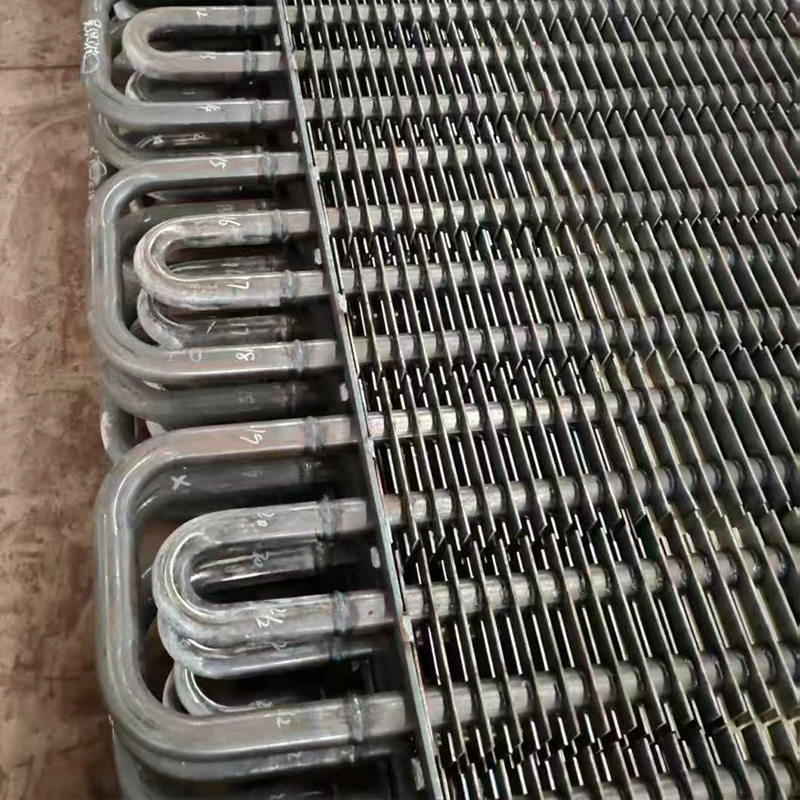
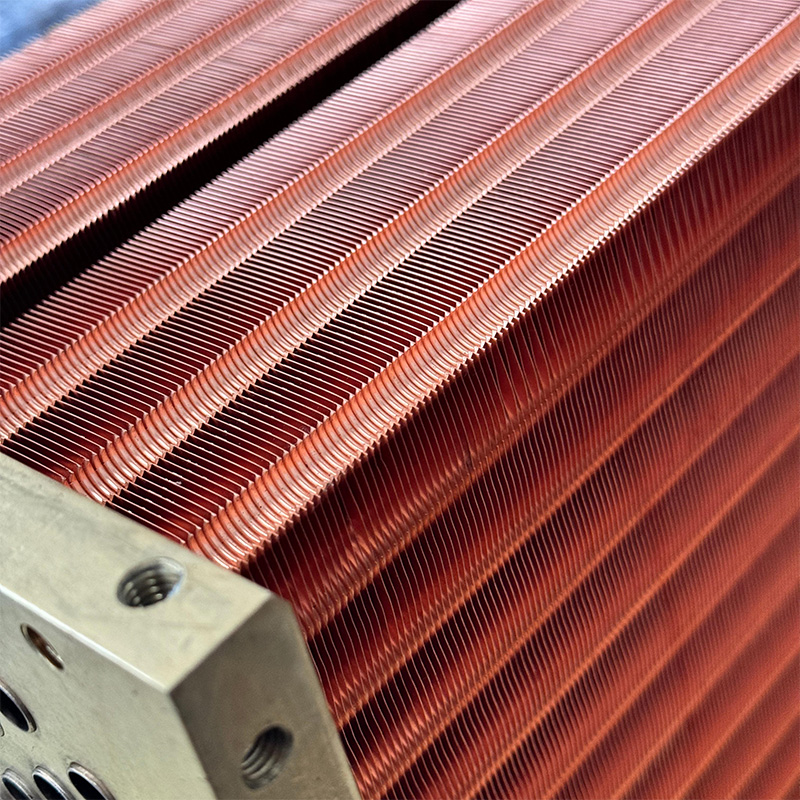
При реализации комплексных проектов, особенно в нефтегазовой и химической отраслях, где энергопотребление сопряжено с экстремальными условиями, важен выбор поставщика, способного обеспечить надежность не только электрической части, но и сопутствующих систем. For example, a companyWuxi Kaisheng Electric Power and Petrochemical Equipment Co., Ltd.специализируется на разработке и производстве высокотехнологичного оборудования, включая теплообменники и компоненты для энергетических систем. Их опыт в создании изделий из титана, нержавеющей стали и специальных сплавов (сертифицированных по стандартам ASME и PED) демонстрирует, насколько важны коррозионная стойкость и устойчивость к высоким давлениям при интеграции сложных систем. Хотя их основной фокус — теплообменное и нефтехимическое оборудование, принципы инженерной надежности, которые они применяют при производстве воздушных охладителей и котлов-утилизаторов, напрямую коррелируют с требованиями к системам хранения энергии: необходимость эффективного термоменеджмента, долговечность материалов и адаптация под индивидуальные условия заказчика. Выбор партнеров с подобным уровнем компетенции гарантирует, что ваше энергооборудование будет работать стабильно даже в самых суровых промышленных средах.
Начните с аудита вашего текущего энергопотребления. Без понимания графика нагрузок невозможно правильно подобрать емкость и мощность системы. Мы готовы провести такой анализ и предложить оптимальное техническое решение, которое впишется в ваш бюджет и производственные процессы.
Интеграция накопителей энергии в щитовое оборудование — это инвестиция в энергонезависимость и эффективность вашего бизнеса. Правильно реализованный проект окупается и начинает приносить прибыль уже в первые годы эксплуатации. Не откладывайте модернизацию, пока тарифы не сделали энергию непозволительно дорогой.
Frequently Asked Questions
Можно ли интегрировать батареи в старый щит без замены автоматов?
In most cases, no. Старые автоматы не рассчитаны на двунаправленные токи и специфику постоянного тока. Требуется замена вводно-распределительных устройств на современные, совместимые с гибридными инверторами или DC-шинами.
Сколько места нужно выделить под систему 100 кВт·ч?
A modern LFP system requires approximately 1.2–1.5 m² of floor space plus 1 meter in front for maintenance. Высота шкафов обычно стандартная — 2000-2200 мм.
Какой срок службы реальной системы в условиях русского зимнего климата?
При наличии подогрева и установке в отапливаемом помещении срок службы составляет 10-12 лет. Если помещение не отапливается, ресурс снижается до 6-8 лет из-за затрат энергии на термоменеджмент и стресса химии.
Нужно ли согласовывать установку с Энергосбытом?
Если система работает в островном режиме или не отдает излишки в сеть — согласование не требуется. Если планируется работа по «зеленому тарифу» или отдача в сеть — необходимо заключение договора и установка сертифицированного узла учета.
Что делать, если одна ячейка в банке вышла из строя?
Современные модульные системы позволяют заменить отдельный батарейный модуль без остановки всей системы. BMS автоматически исключит неисправный модуль из работы. Менять отдельные ячейки внутри герметичного модуля в полевых условиях запрещено.
Готовы обсудить детали вашего проекта?Contact us todayдля получения консультации инженера и расчета технико-экономического обоснования. Мы поможем выбрать правильное решение дляинтеграции накопителей энергии в щитовое оборудование, которое обеспечит надежность и экономию вашему предприятию.