
Tank with steel body and PP lining price”
2026-08-09
- Tank with steel body and PP lining price: analysis of real costs and hidden risks
- What is the real cost formed from: analysis of the price structure
- Comparing Lining Technologies: Why Method Matters on Price
- Typical procurement mistakes and their financial consequences
- Production times and logistics: the realities of the Russian market
- How to choose a reliable supplier: checklist for the buyer
- Expertise of materials and standards: experience of Wuxi Kaisheng LLC
- Frequently Asked Questions
- Conclusion and recommendations for action
Tank with steel body and PP lining price: analysis of real costs and hidden risks
Formation of the final cost that you see in the commercial offer ontank with steel body and PP lining pricewhich varies from 150,000 to 800,000 rubles per unit, depending on the volume, is not simply multiplying the weight of the metal by the exchange rate. In our engineering practice, we have repeatedly encountered a situation where a customer chose a supplier solely based on the minimum price per ton of steel, ignoring the technology of applying a polypropylene layer, and after 6 months of operation, the lining was peeled off in the area of the welds. The real price consists of three critical components: the quality of the original sheet metal (St3sp5 or 09G2S), the qualifications of polymer welders and the thickness of the protective layer, which must strictly correspond to the aggressiveness of the environment. If you are looking for a container for storing sulfuric acid with a concentration above 70% or alkaline solutions at temperatures above 60°C, savings at the stage of purchasing equipment result in losses that exceed the cost of the tank itself by 10-15 times due to production downtime and disposal of spilled reagents.
We have been working with industrial enterprises in Russia and the CIS countries for more than 12 years, and during this time we have seen hundreds of examples of how incorrect calculation of the cost of ownership leads to financial losses. In this article we will not use marketing clichés about “high quality”. We will analyze the specific technical parameters that affect the estimate, show a comparison table of real offers on the market and explain why the GOST or EAS certificate of conformity is not a bureaucratic piece of paper, but your insurance against accidents. You will learn what questions to ask the plant manager before signing a contract so that the price specified in the specification remains unchanged until shipment, and what hidden work is usually included in additional invoices.
What is the real cost formed from: analysis of the price structure
When you ask for a cost estimate, managers often use average numbers, but it is important for a process engineer to understand the physics of the process. The price of a tank with a polypropylene lining is determined not by volume, but by the contact surface area and the complexity of the geometry. The steel body accounts for approximately 40-50% of the total cost of the product, while surface preparation and polypropylene extrusion welding takes up the remainder. This is a key point: the complexity of applying the lining increases exponentially as the shape of the container becomes more complex. A cylindrical vertical tank with a volume of 10 m³ will cost less than a rectangular bathtub of the same volume, because the number of internal corners requiring manual welding and installation of reinforcing elements in a rectangular structure is 3-4 times higher.
In our practice, there was a case where a client insisted on using a cheap PP-H homopolymer instead of a PP-B copolymer for hot caustic storage. The difference in the price of the material was only 12%, but the risk of brittle fracture due to thermal shock increased many times over. After a year of operation at one of the plants in the Perm region, such savings led to a crack in the bottom. Therefore, when evaluating a proposal, always ask for a quality certificate for the polymer sheet. The cost of a 10 mm thick PP sheet may vary by 25% depending on the manufacturer (Germany, China, Russia) and the presence of stabilizers against UV radiation if the tank is located outdoors.
Logistics and installation also play a decisive role. Large tanks with a volume of over 50 m³ often cannot be delivered assembled due to road transport limitations. In such cases, the price includes the cost of transporting individual sections (shells, bottoms, stiffening rings) and a visiting team of installers. The work of welders at the customer’s site costs 30-40% more than in the workshop, due to the need to organize temporary living quarters, use mobile generators and comply with strict safety regulations in operating production. If your request does not indicate the need for installation supervision, you may receive a price that will increase by 20% during the implementation of the project.
Certification is another factor that many people overlook. A tank operating under pressure or vacuum is subject to mandatory certification according to the technical regulations of the Customs Union (TR CU 032/2013). Registration of permitting documentation requires strength calculations, examination of design documentation and hydraulic pressure tests. These services cost money and time (2 to 4 weeks). Cheap offers from garage workshops often do not include these costs, shifting the risks of legal operation to the buyer. For the chief mechanic service of the enterprise, the presence of a pressure vessel passport and an EAC certificate is the only basis for putting equipment into operation without penalties from Rostechnadzor.
Table of the influence of parameters on the final cost
| Parameter | Impact on price | Technical justification | Recommendation |
|---|---|---|---|
| Lining thickness | High | Increasing the thickness from 5 mm to 10 mm doubles material consumption and welding time. Required for highly abrasive environments. | For chemical media, 5-6 mm is sufficient. For pulp and abrasives - at least 8-10 mm. |
| Body steel grade | Average | Steel 09G2S is 15-20% more expensive than St3sp5, but is necessary for temperatures below -40°C. | Use 09G2S only for outdoor installation in northern regions. St3 is enough for the workshop. |
| Bottom geometry | Critical | A conical or spherical bottom is more difficult to manufacture and line than a flat one. | A flat bottom is cheaper, but requires reinforcement with ribs. Conical ensures complete drainage. |
| Number of pipes | Proportional | Each mortise pipe requires a separate technology for sealing and strengthening the area around the hole. | Install all pipes at the design stage. Adding post-factum inserts increases the cost of work by 3 times. |
| Batch size | Reverse | When ordering 5 units or more, the cost of cutting metal and setting up extruders is amortized. | For single orders, agree on standard sizes to minimize material scraps. |
Comparing Lining Technologies: Why Method Matters on Price
There are three main methods of protecting a steel hull from corrosion on the market, and understanding the differences between them is critical to justifying the budget to management. The first option is painting with acid-alkali-resistant enamels. This is the cheapest method, but it has the shortest service life (2-3 years) and a high probability of micropores appearing if applied poorly. The second option is lining with PTFE (Teflon) sheets. This is a premium solution for particularly aggressive environments, but its cost is 4-5 times higher than its polypropylene counterpart. The third, most balanced option is lining with polypropylene (PP) sheets using extrusion welding. It is this method that provides the optimal price/reliability ratio for most applications in the chemical industry, electroplating and water treatment.
The extrusion welding method involves heating the filler rod and the edges of polypropylene sheets with hot air to the state of a viscous melt, followed by pressing with an extrusion head. Unlike hot air welding, where the operator manually holds the hair dryer and rod, the extruder provides high productivity and, most importantly, consistent weld quality. However, equipment for extrusion welding is expensive, and not every workshop is equipped with it. Offers with an abnormally low price often involve the use of manual welding, which increases the human factor and the risk of lack of penetration. In our laboratory, we tested samples welded by different methods: the strength of the seam during extrusion welding reaches 85-90% of the strength of the base material, while during manual welding it rarely exceeds 60%.
Another nuance is the method of attaching polypropylene to steel. There is a free insert technology, when a plastic container is inserted into a metal casing without adhesion, and an adhesive or mechanical fixation technology. A free liner is cheaper to install plastic, but requires very precise calculation of gaps to compensate for thermal expansion. When the contents are heated, polypropylene expands more than steel, and if the gap is calculated incorrectly, the lining can be squeezed out or warped. Technology with fixation (for example, through welded studs with washers or special glue) is more expensive, but eliminates the displacement of layers. For tanks with variable temperature conditions, we strongly recommend choosing the mechanical fixation option, despite the cost increase of 10-15%.
It is also worth considering the thickness of the steel case. Some suppliers offer tanks with thin walls (3-4 mm), arguing that the plastic bears the entire load. This is a dangerous misconception. The steel body absorbs the weight of the liquid, wind loads (for outdoor containers) and provides geometric rigidity. Polypropylene has a low modulus of elasticity and, without a rigid steel frame, will simply “float” under the pressure of a liquid column. Saving on housing metal is unacceptable. The wall thickness must be calculated in accordance with GOST or SP, taking into account the height of the liquid column and the density of the product.
Typical procurement mistakes and their financial consequences
An analysis of complaints over the past 5 years shows that 70% of problems with tanks arise not because of defective materials, but because of errors at the stage of technical specifications and supplier selection. The most common mistake is not taking into account operating temperature over time. The client specifies an operating temperature of +40°C, but does not report possible volley discharges of hot wastewater (+80°C). At temperatures above 80-90°C, polypropylene begins to lose its rigidity. If at this moment the tank is full, the deformation of the walls becomes irreversible. Solution: always provide a temperature reserve of at least 15-20°C or provide a cooling system.
The second critical mistake is ignoring ventilation requirements. When pumping liquid from a sealed container, a vacuum is created inside. The steel body will withstand negative pressure, but the polypropylene lining can collapse inward, tearing away from the walls or bursting. We have seen cases where the vacuum literally sucks plastic sheets into the tank, turning them into an accordion. Restoring such a container is only possible by completely replacing the lining. The specification must include breathing valves or vacuum safety valves designed for the performance of the pumping equipment.
The third problem is the mismatch of the polypropylene brand with the chemical environment. Polypropylene is resistant to most acids and alkalis, but there are exceptions. For example, strong oxidizing agents (chromic acid, high concentration nitric acid) or some organic solvents can cause destruction of the material. Before ordering, you must provide the supplier with a complete chemical chart indicating concentrations and temperatures. Using a one-size-fits-all solution in chemistry does not work. One of our clients tried to store a solvent mixture in a standard PP tank and after 3 months the material became as brittle as glass. Replacing the lining cost him the equivalent of two new PVDF tanks.
The fourth mistake is related to the foundation. Often the customer believes that a flat concrete platform is enough. However, large vertical tanks require a foundation ring with a sand bed and waterproofing. Uneven settlement of the soil, even by 1-2 cm, can lead to distortion of the hull and depressurization of the bottom welds. The supply contract should clearly state the requirement for preparing the foundation, or better yet, order the installation supervision service so that specialists can control this stage.
Production times and logistics: the realities of the Russian market
In the current economic situation, equipment production time has become as important a parameter as price. The standard production time for a tank with a volume of up to 20 m³ is 15-20 working days. This includes metal cutting, shell rolling, body welding, sandblasting, plastic cutting and lining welding. If the supplier promises to do the same in 3-5 days, this is a reason to be wary. Most likely, he does not have free capacity and your order will be done in an emergency mode, which will inevitably affect quality control, or he uses ready-made blanks that may not meet your requirements for pipes.
Logistics of large cargo in Russia has its own specifics. Transportation of tanks with a diameter of more than 2.5 meters requires special permits for oversized items, which increases the cost of delivery and travel time. The optimal solution is a modular design: the tank is manufactured in parts (rings 1.5-2 meters high), which easily fit on a standard Euro truck, and assembly is carried out on site. This slightly increases the cost of installation work, but significantly saves on transport and allows you to deliver equipment anywhere in the country, including hard-to-reach areas of the North and Siberia.
When planning your budget, consider the seasonal factor. During the summer, demand for water treatment and fire tanks increases sharply, which can lead to shipping delays. In winter, it is more difficult to carry out installation work outdoors due to the requirements for the welding temperature of polypropylene (not lower than +5°C in the working area). The ideal time to order is the off-season (spring or autumn), when factories are evenly loaded and weather conditions allow installation without additional heating costs.
How to choose a reliable supplier: checklist for the buyer
Selecting a partner for the production of critical equipment is a task that requires careful verification. Don’t blindly trust beautiful websites and low prices. Here is the algorithm of actions that we recommend to our clients to minimize risks:
- Request a portfolio with photo report.Ask to see photos of similar tanks built within the last year. Pay attention to the accuracy of the welds (they should be smooth, without smudges or pores), and the quality of the pipe inserts. If the supplier refuses to show real objects or sends stock pictures, this is a red flag.
- Check availability of your own production.Ask for a video tour of the workshop or come in person. Make sure there are rollers, welding stations for metal and, most importantly, a fleet of extruders for welding plastic. Many companies are simply middlemen who outsource orders to small subcontractors, which complicates quality control and warranty obligations.
- Request test reports.A reliable manufacturer carries out incoming inspection of raw materials and output testing of finished products. Ask to see the hydraulic test report (pressure testing) of the tank before shipment. The pressure must be maintained for the time specified in the regulatory documentation, without falling or visible deformation.
- Review the contract and warranty.The lining warranty must be at least 12-24 months. Read the exclusion clauses carefully: manufacturers often decline responsibility if operating conditions are violated, but the wording may be vague. Clearly state the environmental parameters for which the product is being manufactured.
- Evaluate engineering support.A good supplier does not just accept an order, but asks clarifying questions: “What is the density of the liquid?”, “Will there be mixing?”, “Where will the container be?” If a manager immediately names a price without finding out the technical details, most likely he is selling a standard solution that may not suit you.
Expertise of materials and standards: experience of Wuxi Kaisheng LLC
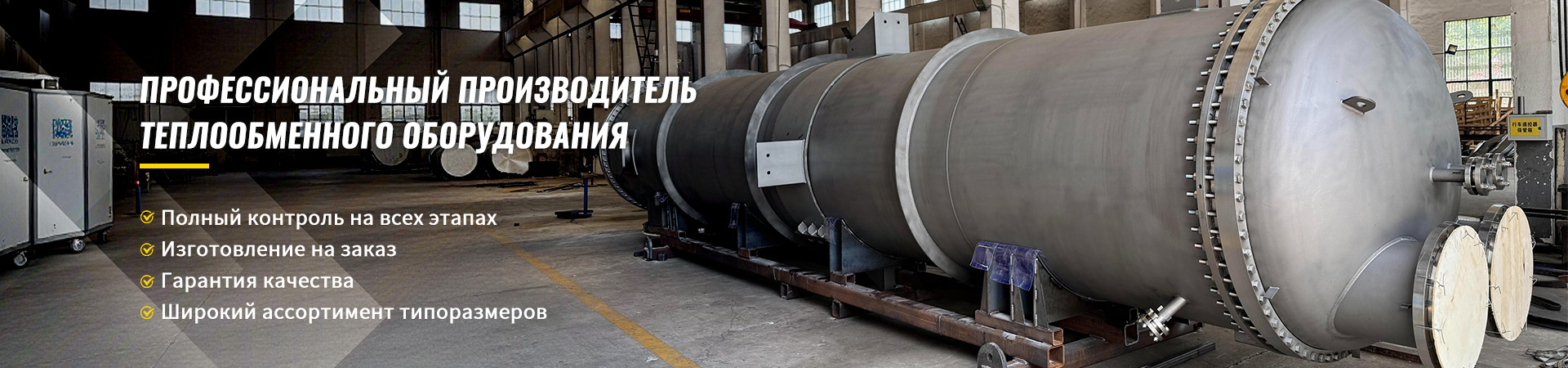
When choosing a supplier, it is critical to pay attention not only to the ability to weld polypropylene, but also to a deep understanding of metallurgy and international quality standards. A striking example of a company where the engineering approach is at the forefront isWuxi Kaisheng Electric Power and Petrochemical Equipment Co.,Ltd" Although the company's core focus is on the design and manufacture of complex heat transfer equipment (titanium shell and tube units, high pressure ASME heat exchangers, air coolers) and components for the oil and gas industry, their experience in working with the highest class materials directly correlates with the quality requirements of tank equipment.
Wuxi Kaisheng specialists work daily with carbon, stainless, alloy steels, as well as titanium, copper and nickel alloys (such as N06625, C70600, C46400). Certified to stringent international PED and ASME standards, their products demonstrate exceptional corrosion resistance and the ability to operate under high pressure and temperature. Этот уровень компетенции в подборе марок стали и контроле сварочных процессов является тем эталоном, к которому следует стремиться при заказе любых емкостных аппаратов. Когда производитель понимает разницу между поведением нержавеющей стали 321 и морской латуни в агрессивных средах, он с гораздо большей ответственностью подходит и к выбору основы для полипропиленовой футеровки — стали Ст3сп5 или 09Г2С.
Опыт таких компаний, как «Уси Кайшэн», работающих на глобальном рынке и предоставляющих индивидуальные решения для судостроения, опреснения воды и энергетики, подтверждает простую истину: надежность оборудования закладывается на этапе выбора материалов и соблюдения технологической дисциплины. Даже если вы заказываете резервуар с полимерной футеровкой, наличие у производителя опыта работы со сложными сплавами и международными сертификатами качества служит дополнительной гарантией того, что стальной корпус вашего резервуара будет изготовлен безупречно, а сварные швы выдержат любые эксплуатационные нагрузки.
Frequently Asked Questions
Какой срок службы резервуара со стальным корпусом и футеровкой из полипропилена?
При соблюдении температурного режима и отсутствии механических повреждений срок службы полипропиленовой футеровки составляет 10-15 лет. Стальной корпус, окрашенный снаружи атмосферостойкой эмалью, служит 20 лет и более. Ключевым фактором долговечности является отсутствие циклических термоударов и правильная эксплуатация (отсутствие абразивного воздействия, не предусмотренного проектом).
Можно ли ремонтировать футеровку в случае повреждения?
Да, полипропилен поддается ремонту. Небольшие повреждения (порезы, прожоги) устраняются методом экструзионной или горячей воздушной сварки непосредственно на месте эксплуатации без демонтажа емкости. Для этого выпускаются ремонтные комплекты. Однако ремонт должен выполнять квалифицированный специалист, так как неправильная подготовка кромок приведет к повторному разрушению шва.
Выдерживает ли такой резервуар работу под вакуумом?
Да, но только при условии специального конструктивного исполнения. Корпус должен быть усилен кольцами жесткости, а футеровка должна иметь механическую связь со стенками (через шпильки или сетку), чтобы предотвратить схлопывание. Максимальный допустимый вакуум рассчитывается индивидуально для каждого проекта и указывается в паспорте изделия. Стандартные емкости работают только под атмосферным давлением или небольшим избыточным давлением (до 0.05 МПа).
В чем разница между PP-H и PP-B?
PP-H (гомополимер) обладает высокой химической стойкостью и жесткостью, но меньшей ударной вязкостью при низких температурах. PP-B (сополимер с этиленом) более эластичен и морозостоек, но чуть менее химически стойк к некоторым окислителям. Для большинства химических сред при температурах выше 0°C рекомендуется PP-H. Для уличных резервуаров в северных регионах или сред с ударными нагрузками лучше выбрать PP-B.
Conclusion and recommendations for action
Покупка резервуара со стальным корпусом и футеровкой из PP — это инвестиция в безопасность и бесперебойность вашего технологического процесса. Цена, которую вы платите сегодня, напрямую влияет на риски аварий и затраты на обслуживание в ближайшие 10 лет. Не гонитесь за самой низкой стоимостью тонны металла, обращайте внимание на технологию изготовления, квалификацию персонала и наличие референс-листа у производителя. Правильно подобранный и качественно изготовленный резервуар окупится за счет отсутствия внеплановых остановок производства и затрат на ликвидацию последствий коррозии.
Если вы столкнулись со сложностями в подборе оборудования или сомневаетесь в корректности полученного коммерческого предложения, наши эксперты готовы провести бесплатный аудит вашего технического задания. Мы поможем оптимизировать конструкцию без потери надежности и рассчитать реальную стоимость владения объектом.Contact us todayдля получения детальной консультации и расчета стоимости вашего проекта. We also recommend that you check out ourкаталогом стандартных решений, где представлены типовые конфигурации с актуальными ценами.