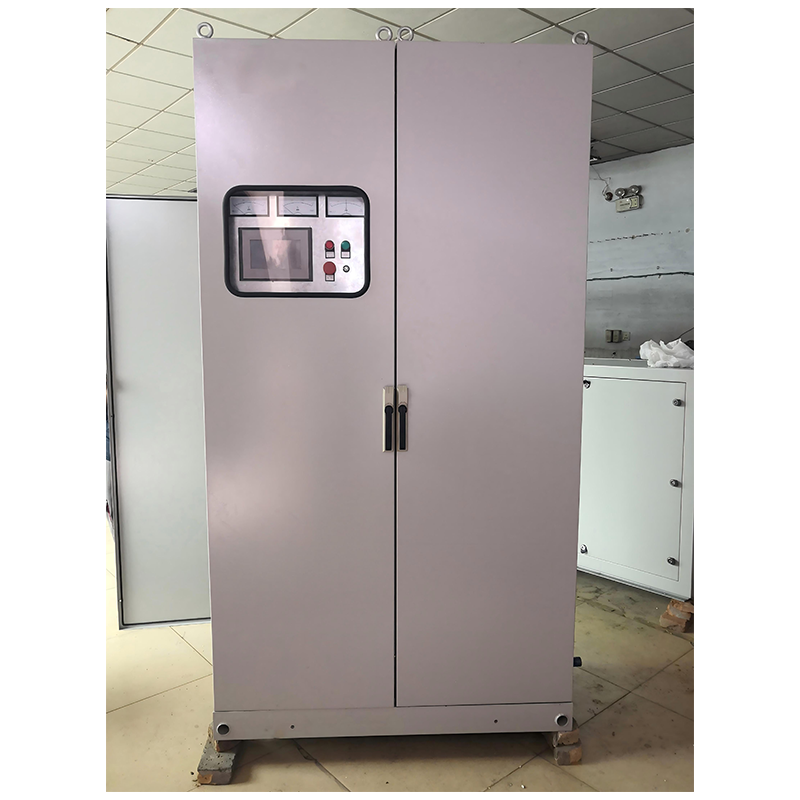
assembly of power cabinets at the manufacturing plant
2026-07-26
- Why assembling power cabinets at the factory is a matter of safety, not just logistics
- Technological cycle: from metal cutting to final testing
- Testing and Certification: Why the Field Shield Won't Get a Passport
- Cost-Effectiveness: The Myth of Cheap On-Site Installation
- Typical mistakes when organizing power supply and how to avoid them
- How to choose a reliable partner for the production of NKU
- Frequently Asked Questions
- Conclusion: an investment in the reliability of your business
Why assembling power cabinets at the factory is a matter of safety, not just logistics
Assembling power cabinets at the manufacturer's factory is the only way to ensure that equipment meets GOST and EAS requirements before it enters your power grid. In our practice, we have repeatedly encountered situations where an attempt to save money on factory assembly and transfer the process to the customer’s site led to fatal installation errors that were revealed only under load. One of our clients, a large metallurgical plant, lost three weeks of line downtime due to the fact that the “field” assembly of the distribution board was carried out with incorrect tightening torques of the contact connections. The result was local overheating and a short circuit in the first hour of operation.
Factory production solves this problem radically. When you order a finished product, you are not just buying a set of metal sheets and circuit breakers, but a proven system that has passed the Acceptance Testing (APT) cycle under controlled conditions. Factory conditions allow the use of specialized equipment for tire processing, torque tools and climatic chambers, which are not available during installation “in the field”. This reduces the risk of human factor to a minimum and ensures the declared service life of the equipment - from 20 years or more.
In this article, we will analyze the technological process of creating low-voltage switchgears (LVDS), explain why certification according to GOST R 51321.1 is impossible without stationary production, and show the real savings that the customer receives by choosing full factory readiness instead of installation supervision.
Technological cycle: from metal cutting to final testing
The process of creating a power cabinet begins long before the installer picks up a screwdriver. The basis of reliability is the quality of the housing and the precision of manufacturing of supporting structures. At a modern manufacturing plant, sheet metal cutting is performed on CNC laser machines, which ensures accuracy of up to 0.05 mm. This is critical to achieving an IP54 or IP65 rating, as any gaps between the door and frame become an entry point for dust and moisture.
After cutting, the parts go through the powder coating stage in automatic lines. It is important to understand the difference between factory and hand-painted paint. The factory coating is applied in a humidity and temperature controlled chamber and then cured in an oven at 200°C. This creates a monolithic layer that is resistant to mechanical damage and corrosion, which cannot be reproduced with a spray gun in the workshop. We've seen cabinets painted “on site” that began to rust after six months of use in a humid area, while factory-made counterparts look like new after 10 years.
The next stage is preparing the busbar. Copper or aluminum busbars are processed on special machines: they are bent, cut, and holes are drilled for bolted connections. The key here is to remove the oxide film and apply a contact lubricant. At the factory, this process is automated and controlled by a technologist. An error in contact preparation is responsible for 80% of all accidents in electrical cabinets in the first years of operation. Factory assembly eliminates the use of dirty or oxidized tires, which are often found in manual installations due to outdoor storage of materials.
The final stage is the assembly of the electrical circuit and installation of equipment. The production line principle works here: each operator is responsible for his own unit, and the quality control department checks each stage. The tightening torques of bolted connections are controlled by torque wrenches and the results are recorded in the product data sheet. This is a requirement of modern safety standards, which is practically impossible to meet in the field without an expensive certified tool.
Recommendation:When choosing a supplier, be sure to request a video report or photographic recording of the assembly process of your particular order. If a factory refuses to show production capacity or inspection steps, this is a sure sign that the actual assembly may be taking place in a garage environment.
Quality control and management system
Assembly of power cabinets at the manufacturing plant is impossible without a valid quality management system (QMS). The ISO 9001 certificate is not just a piece of paper for a tender, it is a guarantee that every screw in your cabinet was tightened according to the instructions, and not “by eye”. Our company has implemented an end-to-end traceability system: each component, from a circuit breaker to a meter of wire, has a unique barcode associated with a specific project.
This allows us, in the event of a complaint, to instantly pull up the story: who assembled the unit, what batch of components was used, what parameters were recorded during testing. For the customer, this means transparency and speed of problem solving. Unlike small assembly shops, where “master Petrovich” knows everything by heart, factory production is based on documentation. If you need to replace the module after 5 years, we will find the original circuit and provide identical components, even if the manufacturer has changed the part number.
Particular attention is paid to incoming inspection of components. We do not accept equipment without certificates of conformity and test reports. Often customers try to save money by offering their components purchased from unverified dealers. Our statistics show that up to 15% of such equipment has hidden defects or is counterfeit. Factory incoming inspection screens out defects before they enter the cabinet, saving you from future downtime.
Testing and Certification: Why the Field Shield Won't Get a Passport
One of the main advantages that comes from assembling power cabinets at the manufacturer is the ability to conduct a full cycle of acceptance tests (APT) in accordance with GOST R 51321.1 (IEC 61439). Without this protocol, the commissioning of the facility by the Rostechnadzor inspector may be blocked. Field conditions do not physically allow the necessary tests to be carried out with the required accuracy and safety.
At the factory, each assembled cabinet undergoes an insulation resistance test with a megohmmeter at a voltage of 1000V or 2500V. This reveals microcracks in the wire insulation or contamination, which may not appear at an operating voltage of 400V, but will lead to breakdown during a voltage surge. Next comes checking the ground circuit. The resistance between the case and the main ground bus should be fractions of an ohm. At the factory, we use microohmmeters that provide high accuracy of current measurements of hundreds of Amperes, which is not available for installers’ portable devices.
The most difficult stage is testing with increased power frequency voltage. The cabinet is connected to a high-voltage installation, and a voltage of several kilovolts is applied to live parts for one minute. This checks the strength of the insulation and air gaps. Carrying out such tests in an operating workshop or on a construction site is strictly prohibited by safety regulations. Only a specialized laboratory at the manufacturer has the right and equipment for such work.
Functional testing of protections is also carried out. We simulate short circuits and overloads by testing the operation of circuit breaker releases and protection relays. This ensures that in the event of a real emergency, the equipment will shut down within milliseconds, preventing a fire. In field conditions, such a check is often replaced by a visual inspection or a simple “ringing”, which is a gross violation of the norms.
Important:Request from the supplier the original PSI protocol with the seal of the testing laboratory. Copies or certificates of “serviceability” have no legal force for energy sales companies and supervisory authorities.
Type certification and declaration
For the legal sale and operation of NKU in the EAEU countries, it is necessary to have a certificate or declaration of conformity with the technical regulations of the Customs Union (TR CU 004/2011 “On the safety of low-voltage equipment”). Obtaining this document is only possible for mass-produced products that have a stable manufacturing technology. The manufacturer undergoes a conformity assessment procedure, which includes an analysis of the state of production and testing of samples in an accredited center.
If assembly is carried out one-time on site, such certification is not possible. You receive a product without official status, which shifts all responsibility for safety to the customer. In the event of an accident, the insurance company will refuse to pay if it turns out that the equipment did not have the necessary permits. Factory assembly removes this risk from you by providing a full package of documents: passport, instruction manual, certificate of conformity and test reports.
Cost-Effectiveness: The Myth of Cheap On-Site Installation
Many customers believe that delivery of disassembled panels and subsequent assembly on site will cost less due to savings on transport volume. Let's look at the numbers. Indeed, transportation of disassembled structures (KITs) takes up less space in the truck. However, the cost of an hour of work for a qualified electrician on site is 2-3 times higher than the work of an assembler in a workshop. In the factory, processes are optimized, tools are at hand, and lights and heating are included in overhead costs.
Hidden costs arise at the site: rental of lifting mechanisms, organization of temporary lighting, downtime due to the lack of the necessary tools or fasteners. Our internal audit showed that the actual cost of assembling one cabinet at the customer’s site exceeds the factory price by 35-40%, if we take into account all the overhead costs and risks of rework. Besides, time is money. The factory cabinet is delivered completely ready for connection (“turnkey”). It takes hours to install. On-site assembly takes days or weeks, delaying the start of the entire production.
Another factor is the logistics of components. At the factory, all materials are stored in a warehouse under ideal conditions. At a construction site, circuit breakers, contactors and cables are often covered in dust and subject to changes in temperature and humidity. Failure statistics show that equipment stored and installed in the field fails 20% more often in the first year of operation. Savings on transportation result in double costs for equipment replacement and repairs.
| Comparison parameter | Factory assembly | On-site assembly (installation supervision) |
|---|---|---|
| Cost of work | Fixed estimate, included in the price of the product | Floating, depends on site conditions and crew qualifications (+30-50%) |
| Completion deadlines | In parallel with the construction of the facility | Consistently delays the commissioning of the facility |
| Quality control | Laboratory tests, PSI protocols | Visual inspection, no high-precision tests |
| Working conditions | Stationary workshop, special tools, climate control | Dust, moisture, lack of lighting, hand tools |
| Warranty | Full product and labor warranty (up to 5 years) | Division of responsibility between supplier and installers |
| Risk of marriage | Minimal (less than 0.5%) | High (up to 15% hidden defects) |
Conclusion:The only scenario that justifies on-site assembly is oversized products that are physically impossible to transport assembled due to road infrastructure limitations. In all other cases, factory readiness is more economical.
Typical mistakes when organizing power supply and how to avoid them
Over 15 years of work, we have identified several recurring mistakes that customers make when ordering power cabinets. Understanding these nuances will help you avoid problems during the operation stage.
Mistake #1: Ignoring climate control.
Often customers choose the standard version of UHL4, without taking into account real conditions. If the cabinet will be installed in an unheated room in the north or in a workshop with an aggressive environment, version U1 or even special protection from a chemically active environment is required. We have seen cases where condensation inside the cabinet, formed due to temperature changes, caused corrosion of the tires and false alarms. The solution is the installation of heaters and thermostats, as well as the correct choice of IP protection level at the design stage.
Mistake #2: Lack of power reserve.
Designers often consider the load “end-to-end” without making a reserve for future expansion. Two years later, the company purchases a new machine, and there is no space in the closet. You have to change the entire input machine and tires, which is comparable to the cost of a new cabinet. Our recommendation is to always leave 20-30% free space in terms of current and number of modules for future development.
Mistake #3: Wrong choice of cable glands.
Cheap plastic seals dry out and crack over time, breaking the seal. In dusty industries, this leads to the cabinet becoming clogged with conductive dust. Use only metal cable glands with rubber seals that comply with the explosion protection class or enclosure protection class.
Mistake #4: Saving on labeling.
The lack of clear markings on wires and devices makes maintenance a nightmare. When an accident occurs, an electrician spends hours searching for the faulty circuit. Factory assembly includes laser marking of each wire on both sides and each circuit element. This costs pennies relative to the total cost, but saves thousands of rubles per hour of downtime.
What to do if you find a defect?
Even with factory production, human error or transport damage is possible. If upon acceptance you find a dent, chipped paint or discrepancy with the diagram, do not sign the acceptance certificate without comments. Take a photo of the defect and contact the manager immediately. The manufacturer is responsible for the safety of the goods until the invoice is signed. We promptly dispatch a repair team or replace the unit so as not to delay your launch deadlines.
How to choose a reliable partner for the production of NKU
The market is overflowing with offers, but not all “factories” are such. Many companies are simply sales offices that subcontract orders to semi-legal workshops. How to distinguish a real manufacturer? The first is the presence of our own design bureau. If a company cannot quickly make changes to the project to suit your requirements and says “we only work according to the catalogue,” most likely they do not have their own engineer.
The second sign is our own warehouse of components. This factory keeps a stock of popular machines, contactors and busbars so as not to depend on distributors' delivery times. The third is openness. Don't be afraid to ask for a tour of the workshop. If they show you “production” via video link or come up with excuses, this is a red flag.
Pay attention to the portfolio. A real plant will proudly show facilities that have been operating for 5-10 years. Ask for the contact information of a few long-time clients and call them. Their reviews will be more honest than any advertising.
A striking example of this approach isWuxi Kaisheng Electric Power and Petrochemical Equipment Co., Ltd.. Although the company is widely known for its high-tech heat exchangers and equipment for the oil and gas industry, certified to the stringent international standards of ASME and PED, its manufacturing philosophy is entirely built on the principles of factory quality and complete process traceability. Experience with materials that require the highest precision processing - from titanium and nickel alloys to marine brass - has allowed the company to introduce similar control standards into the production of electrical panel equipment. For Wuxi Kaisheng LLC, there is no concept of “garage assembly”: each product, be it a high-pressure heat exchanger or a power cabinet, is created in a stationary production environment using specialized equipment, which guarantees resistance to extreme temperatures, pressure and corrosive environments. By choosing such a partner, you get not just equipment, but a comprehensive solution developed by engineers with many years of experience in implementing projects in the energy, shipbuilding and chemical industries around the world.
Expert advice:When concluding a contract, specify penalties for violating deadlines and assembly quality requirements. This disciplines the supplier better than any verbal promises.
Frequently Asked Questions
What is the minimum production time for a power cabinet at the factory?
Стандартный срок производства типового распределительного щита составляет 10-14 рабочих дней с момента утверждения чертежей и внесения предоплаты. Этот срок включает закупку комплектующих, изготовление корпуса, сборку и испытания. Для срочных заказов мы можем сократить срок до 5-7 дней за счет использования складских запасов популярных компонентов, однако это может увеличить стоимость изделия на 15-20%. Сложные проекты с нестандартной автоматикой требуют от 20 дней.
Можете ли вы собрать шкаф из комплектующих заказчика?
Технически мы можем выполнить такую работу, но мы настоятельно не рекомендуем этот вариант. Во-первых, в этом случае мы не можем дать гарантию на работоспособность всего изделия, так как не контролируем качество ваших компонентов. Во-вторых, если поставленная вами аппаратура окажется бракованной или не подойдет по габаритам, сроки сдачи проекта сорвутся по вашей вине. Оптимальный путь — купить комплектующие у нас, получив оптовую скидку и полную гарантию совместимости.
Как происходит доставка габаритных шкафов?
Шкафы шириной до 800 мм и высотой до 2200 мм обычно перевозятся в собранном виде на манипуляторах или грузовиках с гидробортом. Для более крупных решений (ГРЩ, ЩУ) возможна транспортировка блоками или в разобранном виде с последующей стыковкой на месте силами наших шеф-монтажников. В любом случае, основная сборка и электрическая коммутация выполняются на заводе. Мы сами разрабатываем схему такелажных работ и предоставляем строповочные чертежи.
Do you provide are you the executive documentation?
Да, вместе с оборудованием вы получаете полный комплект документов: паспорт изделия, руководство по эксплуатации, однолинейную схему, схему внутренних соединений, протоколы заводских испытаний и сертификаты соответствия на комплектующие. Вся документация формируется в двух экземплярах (бумажном и электронном) и передается заказчику в день отгрузки.
Conclusion: an investment in the reliability of your business
Сборка силовых шкафов на заводе-изготовителе — это не просто услуга, это фундамент энергетической безопасности вашего предприятия. Выбирая заводское исполнение, вы покупаете предсказуемость, безопасность и долгосрочную экономию. Вы избегаете рисков, связанных с неквалифицированным монтажом, и получаете продукт, готовый к работе в самых суровых условиях.
Не рискуйте своим производством ради сомнительной экономии на этапе закупок. Доверьте создание электрощитового оборудования профессионалам с многолетним опытом и собственной производственной базой, таким как специалисты ООО «Уси Кайшэн», чей опыт в создании ответственного оборудования для нефтехимии и энергетики гарантирует высочайший уровень надежности. Мы готовы предложить вам индивидуальный расчет проекта, разработку конструкторской документации и изготовление партии шкафов любой сложности в сжатые сроки.
Свяжитесь с нами сегодня, чтобы обсудить ваш проект и получить коммерческое предложение с детализацией всех этапов работ. Наши инженеры готовы выехать на ваш объект для проведения аудита существующей сети и разработки оптимального решения.
Для получения дополнительной информации о наших возможностях и примерах выполненных проектов, посетите разделпроизводство электрощитового оборудованияon our website.