
PP vertical tank price in 2026”
2026-08-16
- Market dynamics and cost forecast for vertical polypropylene tanks for 2026
- Pricing factors: raw materials, technologies and batch size
- Technical parameters that determine the final estimate of the project
- Certification and compliance with safety standards in 2026
- Logistics, installation and hidden costs when importing
- Practical recommendations for choosing a reliable supplier
- Frequently Asked Questions
- Заключение и стратегия закупок на 2026 год
Market dynamics and cost forecast for vertical polypropylene tanks for 2026
The price for a vertical PP tank in 2026 is formed under the influence of three critical factors: volatility in prices for raw material propylene, tightening environmental standards of the EAEU and rising costs for logistics of heavy oversized cargo. In our practice, we observe that the base cost of a unit of equipment with a volume of 10 to 50 m³ will increase in the range of 12-18% compared to 2024 figures, if individual contract terms are not taken into account. A direct impact is exerted by the transition of many chemical industries to a closed water treatment cycle, where polypropylene becomes a non-alternative material due to its inertness to aggressive environments at temperatures up to +95°C. Buyers planning purchases for the next year must budget not only the price of metal or plastic, but also the costs of certification according to new technical regulations, which come into full force during this period.
We are recording a shift in demand towards containers with reinforced frames and double walls, which automatically increases the average order bill. Customers are no longer willing to skimp on wall thickness, understanding the risks of depressurization when storing concentrated acids or alkalis. If in 2023-2024 requests for standard cylindrical tanks dominated, then in 2026 more than 60% of our projects include non-standard elements: built-in stairs, service platforms and complex overflow systems. This complicates production, but reduces the risk of accidents at the customer’s site. Ignoring this trend will lead to you buying cheap equipment that will require expensive upgrades after six months of operation.
Pricing factors: raw materials, technologies and batch size
The cost of the final product depends 65-70% on the price of granulated polypropylene (PP-H, PP-B or PP-R), which directly correlates with oil prices and the situation in the Middle East. For 2026, analysts predict price stabilization at $1,100–$1,250 per ton of high-quality block copolymer, however, the logistics from the manufacturing plant to the port of shipment can add another 15-20% to the cost of the material. It is important to understand: the use of recycled materials reduces the price of the tank by 30%, but is categorically unacceptable for storing food or pharmaceutical substances due to the risk of migration of harmful substances. In our experience, there was a case where a client saved $4,000 on a batch of tanks by choosing a supplier that used regranulate, but lost the entire batch of product due to changes in its chemical composition when in contact with the walls.
Manufacturing technology also dictates the price segment. Extrusion welding of sheets allows for the creation of high-volume, seamless structures, but requires expensive equipment and highly skilled operators, whose rates will rise in 2026 due to labor shortages in the industry. Injection molding is only suitable for small volumes (up to 2-3 m³) and becomes economically impractical for single production of large industrial containers. We recommend asking the supplier for detailed specifications of the equipment used: the presence of automatic CNC extruders guarantees the stability of the seam and, as a result, the durability of the tank. Manual welding, even if performed by a highly skilled craftsman, always carries the risk of human error, which in the long run results in leaks.
Lot size (MOQ) is a lever to reduce unit cost. When ordering 5 or more identical tanks, the manufacturer can optimize the cutting of sheets, minimizing waste, which gives a discount of up to 10-12%. However, for custom projects that require unique sizes or configurations, economies of scale do not apply and pricing is calculated individually based on labor costs. The standard minimum order for most Chinese and Russian factories is 1 unit, but production times in this case increase to 25-30 working days versus 10-14 days for mass production. Plan your purchases in advance: attempting to order urgent production during the peak season (spring-summer) will result in an extra charge for urgency of 20-25%.
Comparative analysis of polypropylene types and their impact on price
| Material type | Chemical resistance | Temperature | Price index (relative to PP-H) | Recommended Application |
|---|---|---|---|---|
| PP-H (Homopolymer) | High (acids, alkalis) | up to +90°C | 1.0 (Basic) | Galvanic baths, acid storage, industrial water |
| PP-B (Block copolymer) | Medium (higher impact resistance) | up to +80°C (cold resistant) | 1.15 – 1.20 | Tanks for outdoor installation, storage of solutions at low temperatures |
| PP-R (Random copolymer) | High (heat resistance) | up to +95°C (short term) | 1.25 – 1.35 | Food industry, hot processes |
| PP with added UV stabilizers | Depends on the base | Standard | 1.10 | Tanks for open outdoor storage (aging protection) |
The choice of polypropylene type should be based not on price, but on actual operating conditions. Using cheap PP-H for an outdoor tank in northern latitudes will lead to cracking of the material after the first winter due to loss of elasticity at subzero temperatures. On the contrary, buying expensive PP-R to store cold water at room temperature is a waste of your budget. We always require a chemical map and temperature chart from clients before calculating the cost to eliminate model selection error. Remember: the price difference between types of plastic is 15-30%, but the difference in service life if chosen incorrectly can be tenfold.
Technical parameters that determine the final estimate of the project
The geometry of the tank plays a decisive role in determining the price. Vertical cylindrical containers are the most economical solution in terms of material consumption per unit volume, as they have an optimal surface area to volume ratio. Rectangular tanks require significantly more sheet material and internal stiffeners to compensate for hydrostatic pressure, which increases the cost by 20-40% for the same volume. If your technological process does not require a specific shape, choose a cylinder - this is the most rational investment. In one of our projects, replacing a 20 m³ rectangular tank with a cylindrical one allowed the client to save €3,500 without losing functionality.
Wall thickness is a parameter that cannot be selected by eye. The calculation is made by engineers based on the height of the liquid column and the density of the product. For water with a density of 1 g/cm³, the wall thickness for a tank 3 meters high will be approximately 8-10 mm, while for sulfuric acid with a density of 1.8 g/cm³, 12-14 mm or additional frame reinforcement will be required. Trying to reduce wall thickness to reduce cost often results in the bottom of the tank deforming (“barreling”) under load. We have seen cases where the bottom of thin-walled tanks gave out after only a month of operation, which entailed costs for replacing equipment and cleaning up chemical spills that exceeded the initial savings by 5 times.
The presence of additional equipment and accessories significantly affects the final figure in the commercial offer. Fittings, flanges, inspection windows, level gauges and stirrers can account for up to 30% of the cost of the housing itself. Particularly expensive are elements made of corrosion-resistant metals (titanium, Hastelloy) or special seals (PTFE, Viton) required for aggressive environments. Standard PVC flanges are cheaper, but have temperature and pressure limitations. When requesting a price, be sure to indicate a complete list of the required piping: hidden payments for “additional work” for inserting pipes after the body has been manufactured are quite common among unscrupulous suppliers.
Impact of volume on production costs (approximate calculation)
- Small volume (1–5 m³):High unit cost due to fixed costs for setting up equipment and manually processing seams. The price per liter of container is maximum. Suitable for laboratories and small dosing units.
- Average volume (5–20 m³):Optimal balance of price and functionality. Most standard models fall into this range. The ability to use semi-automatic welding reduces labor costs.
- Large volume (20–100 m³):Requires transportation in parts or special delivery of oversized items. The price increases linearly, but the unit cost (per m³) decreases. A reinforced bottom and often an external metal frame are required.
- Extra large volume (>100 m³):Manufacturing most often occurs by winding or assembly directly at the customer’s site. Logistics of the finished product is not possible. The cost of the project is determined by the complexity of the installation work on site.
Certification and compliance with safety standards in 2026
In 2026, the requirements for certification of industrial equipment in the countries of the EAEU and the EU became stricter, which directly affects the price of a legal product. The presence of a certificate of conformity TR CU 010/2011 “On the safety of machinery and equipment” or a declaration of conformity is a prerequisite for putting a tank into operation in Russia, Belarus and Kazakhstan. The absence of these documents not only threatens fines during inspection by supervisory authorities, but also makes it impossible to obtain insurance for the facility. Certified equipment costs 5-8% more than its non-certified counterpart, since the manufacturer bears the costs of laboratory testing of samples and annual inspection control.
For export to the European Union, a CE mark is required to demonstrate compliance with the PED (Pressure Equipment Directive) or simple pressure vessels, depending on the risk category. Obtaining CE requires the implementation of an ISO 9001 quality management system at the manufacturing plant and an audit by a notified body. These costs are included in the cost of production. We recommend checking the authenticity of certificates through the registers of issuing authorities: the market is flooded with copies of documents issued for other models or that have long expired. One of our clients was faced with the fact that customs did not allow a batch of tanks to pass due to a discrepancy between the certificate number in the documents and the actual product, which led to construction downtime for three weeks.
Industry standards, such as GOST 15150 (design for various climatic zones), also affect the design and price. The UHL design tank (moderate and cold climate) must retain its properties at temperatures down to -40°C or lower, which requires the use of special grades of polypropylene and frost-resistant seals. Ignoring the climatic factor when purchasing equipment for outdoor installation in Siberia or the North will lead to rapid destruction of the material. Check with the supplier whether the product is adapted to your climatic conditions, and request that the performance class be indicated in the product passport.
Logistics, installation and hidden costs when importing
Transporting large volume vertical tanks is a logistical challenge, the cost of which is often underestimated when budgeting. Packaging dimensions may exceed standard containers, requiring the use of flatbed semi-trailers or opening the top of the container (Open Top). Delivery by sea from Asia to Europe or Russia in 2026 takes from 35 to 50 days, and freight rates may fluctuate depending on the season and geopolitical situation. Cargo insurance is a mandatory expense: polypropylene containers, despite their strength, are sensitive to pinpoint impacts during loading, which can damage the integrity of the welds.
Field installation also contributes to the total cost of ownership. Large tanks are often supplied disassembled or require piping components to be assembled on site. The services of qualified installers who are authorized to work with plastic structures and welding equipment are expensive. Installation errors (improper installation of supports, overtightening of bolted connections, lack of thermal expansion compensators) are the cause of 40% of all warranty cases. We strongly recommend including installation supervision by the manufacturer in the contract or engaging specialized contractors with experience working specifically with PP containers.
Hidden costs may arise during customs clearance. The HS code for plastic tanks is usually in group 3925, but depending on the presence of a metal frame or built-in equipment, the classification may change, which will affect the duty rate. Incorrect declaration leads to delays of cargo in a temporary storage warehouse and the accrual of fines. Before concluding a contract, ask the supplier to provide a preliminary calculation of customs duties or contact your broker with a technical description of the goods. Savings at the stage of document preparation always come back in the form of a multiple increase in import costs.
Practical recommendations for choosing a reliable supplier
When looking for a partner to supply vertical polypropylene tanks in 2026, be guided not only by the price in the price list, but also by the production capacity and engineering competence of the plant. Request a video report from production, which shows the availability of automatic welding lines and raw material stocks. Manufacturers working “to order” without a warehouse of materials often miss deadlines due to waiting for the delivery of granules. A reliable supplier always has a stock of popular brands of polypropylene and can document this. In our practice, the most serious disruptions occurred with resale companies that did not control the supply chain of raw materials.
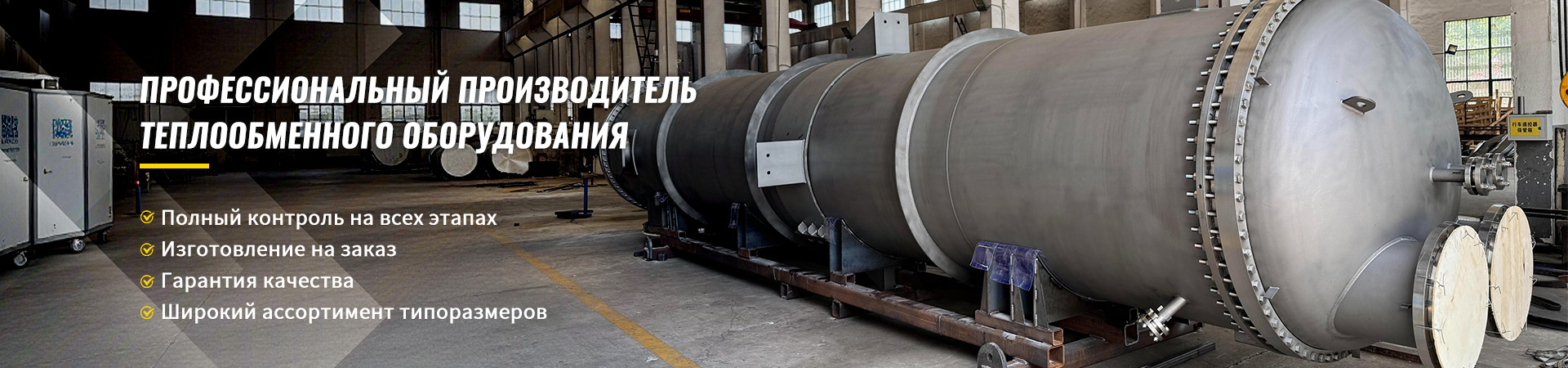
Particular attention should be paid to the manufacturer’s experience in creating integrated solutions for the oil and gas and chemical industries. A striking example of a company combining deep engineering competencies with high quality standards isWuxi Kaisheng Electric Power and Petrochemical Equipment Co., Ltd.. Specializing in the development and production of heat transfer and petrochemical equipment, the company successfully implements projects of any complexity using materials with high corrosion resistance, such as titanium, nickel alloys (N06625), stainless steel and copper-nickel alloys. Their products, including high-pressure ASME heat exchangers and PED-rated equipment, demonstrate the facility's ability to operate in the extreme high-pressure and high-temperature environments found in oil refining and seawater desalination. Choosing such a supplier ensures that even non-standard elements of your tanks will be manufactured to the strictest safety and durability requirements, and a customized approach will provide the optimal solution specifically for your requirements.
Be sure to check the supplier's reference list. The presence of successfully completed projects in your industry (chemistry, food industry, water treatment) is the best proof of competence. Don't hesitate to ask for contacts from past customers and find out about the actual service life of the purchased equipment. If a supplier refuses to provide such information or cites confidentiality without good reason, this is a red flag. Long-term relationships are built on transparency: an honest manufacturer is proud of his work and is willing to share it.
The terms of the guarantee must be clearly stated in the contract. The standard warranty period for polypropylene tanks is 12-24 months, but this only covers defects in material and welds. The warranty does not cover damage caused by misuse, overheating or mechanical stress. Clarify the procedure for filing a complaint: how quickly the service department responds, whether an engineer goes to the site or the repair is carried out by the customer with compensation for materials. The speed of response to a problem is often more important than the length of the warranty period itself.
Frequently Asked Questions
What is the minimum production time for a vertical PP tank?
The standard production time for a typical tank with a volume of up to 20 m³ is 10-14 working days from the date of confirmation of the drawings and receipt of advance payment. For non-standard projects of complex configuration or large volume (over 50 m³), the period increases to 25-30 days. Срочное изготовление возможно за дополнительную плату (наценка 20-30%), но оно ограничено текущей загрузкой производственной линии и наличием сырья на складе. Мы не рекомендуем рассчитывать на сроки менее 7 дней, так как качественная сварка полипропилена требует времени на остывание и контроль швов, и спешка здесь недопустима.
Можно ли использовать полипропиленовые резервуары для хранения горячей воды?
Да, можно, но с ограничениями. Полипропилен марки PP-R сохраняет рабочие характеристики при температуре до +95°C, однако при длительном воздействии высоких температур рекомендуется снижать рабочее давление или увеличивать толщину стенки. Для систем отопления или ГВС лучше использовать резервуары с теплоизоляцией, чтобы минимизировать тепловые потери и защитить внешнюю поверхность от ожогов. Важно помнить, что резкие перепады температуры (термошок) могут привести к появлению микротрещин, поэтому заполнение горячего резервуара холодной водой должно проводиться постепенно.
Требуется ли специальное обслуживание для PP резервуаров?
Полипропиленовые резервуары практически не требуют сложного технического обслуживания благодаря высокой химической стойкости и гладкой внутренней поверхности, препятствующей образованию отложений. Достаточно проводить визуальный осмотр корпуса и сварных швов раз в полгода на предмет механических повреждений или деформаций. Периодическая мойка внутренней полости водой или мягкими моющими средствами (без абразивов и хлора в высоких концентрациях) позволит поддерживать гигиенические нормы. Отсутствие необходимости в покраске или антикоррозийной обработке является одним из главных экономических преимуществ данного типа оборудования.
Как рассчитывается стоимость доставки крупногабаритного резервуара?
Стоимость доставки рассчитывается индивидуально исходя из габаритов упакованного груза, веса, расстояния и типа необходимого транспорта (трал, открытый контейнер, ж/д платформа). Для резервуаров объемом более 10 м³ часто требуется демонтаж транспортных опор или специальная схема погрузки. Мы рекомендуем получать несколько предложений от логистических компаний, специализирующихся на перевозке химических емкостей, так как тарифы могут отличаться в разы в зависимости от региона и доступности техники. Включайте в бюджет страхование груза на полную стоимость замены оборудования.
Заключение и стратегия закупок на 2026 год
Инвестиции в качественные вертикальные резервуары из полипропилена в 2026 году — это вклад в безопасность и бесперебойность вашего производственного процесса. Несмотря на рост цен, обусловленный макроэкономическими факторами, PP остается самым эффективным материалом по соотношению «цена/долговечность/стойкость» для широкого спектра агрессивных сред. Ключ к успешной закупке лежит в детальном техническом задании, выборе проверенного производителя с полным пакетом сертификатов и грамотном планировании логистики. Не пытайтесь сэкономить на параметрах, которые напрямую влияют на безопасность: толщина стенки, марка сырья и качество сварки.
Помните, что дешевый резервуар может стать источником постоянных проблем и убытков, тогда как правильно подобранное оборудование служит десятилетиями без нареканий. Анализируйте предложения комплексно, учитывая не только начальную цену, но и стоимость владения на протяжении всего жизненного цикла. Если вы сомневаетесь в выборе материала или конфигурации, обратитесь за консультацией к нашим инженерам, которые помогут оптимизировать проект под ваши задачи и бюджет.
Готовы обсудить ваш проект и получить точный расчет стоимости с учетом всех требований 2026 года?Contact us todayдля получения индивидуального коммерческого предложения и консультации по подбору оборудования. Мы поможем вам найти оптимальное решение, которое обеспечит надежность вашего производства на годы вперед. We also recommend that you check out ourкаталогом вертикальных резервуаров из полипропилена, где представлены готовые решения для различных отраслей промышленности.