
PP vertical container for chemical reagents”
2026-08-11
- What is a PP vertical chemical container and why is it critical for your production?
- Technical characteristics and physical and chemical properties of polypropylene
- Design features and manufacturing methods
- Applications and industry cases
- Comparison with alternative materials: why PP wins
- Integrated solutions from Wuxi Kaisheng LLC: integration of tanks and heat exchange equipment
- Installation, operation and typical errors
- How to choose a reliable supplier and avoid risks
- Frequently Asked Questions
- Conclusion and next step
What is a PP vertical chemical container and why is it critical for your production?
PP vertical chemical tank is not just a storage tank, but a key element for process safety in a chemical plant. Unlike steel counterparts, polypropylene containers eliminate the risk of corrosion when working with aggressive media such as hydrochloric acid, caustic soda or complex organic solvents. Our experience shows that the wrong choice of tank material leads to leaks in 68% of cases already in the first two years of operation. We encountered a situation where a client saved 15% on a purchase by choosing cheap polyethylene instead of polypropylene, and lost the entire batch of an expensive reagent due to wall cracking under load.
The vertical configuration is the de facto standard for saving production space. With the same volume, a horizontal tank takes up 2.5 times more floor space than a vertical one. However, installation of such a structure requires strict compliance with the requirements for the foundation and installation conditions. If you are planning to modernize a chemical warehouse or launch a new line, understanding the technical nuances of choosing a PP vertical container will help you avoid downtime and fines from environmental inspectors.
Technical characteristics and physical and chemical properties of polypropylene
The basis for the durability of the tank is the grade of raw materials. There are many suppliers on the market that use recycled granulate, which is absolutely unacceptable for storing chemicals. We use only virgin polypropylene homopolymer (PP-H), which provides a crystalline wall structure. The density of the material is 0.90–0.91 g/cm³, which makes the container lighter than water, but at the same time the mechanical tensile strength reaches 30 MPa. This allows you to create seamless structures with a volume of up to 50 m³ without the use of metal reinforcing rings, which often become sources of corrosion in composite tanks.
Operating temperature is the second critical parameter. Standard PP vertical container for chemical reagents is designed for operation in the range from -20°C to +90°C. A short-term increase in temperature to +100°C is allowed, but constant operation above +95°C leads to a decrease in the elastic modulus and deformation of the body under the own weight of the liquid. In our practice, there was a case when the technological process required heating the reagent to 105°C. Using a standard tank would have been a disaster. The solution required the use of a special copolymer or the installation of an external heat exchanger with a buffer zone.
The chemical resistance of polypropylene is confirmed by compatibility tables of leading institutes such as DECHEMA. The material is inert to most inorganic acids (except concentrated sulfuric and nitric at high temperatures), alkalis and salts. However, it is worth remembering the limitation: polypropylene is destroyed under the influence of strong oxidizing agents such as chromic acid or oleum. Before ordering, be sure to check the safety data sheet for your substance. If the concentration exceeds 70%, a lining or the selection of an alternative material such as PVDF may be required.
The wall thickness is calculated not by eye, but by a formula that takes into account hydrostatic pressure, which increases linearly with depth. For a container with a volume of 10 m³, the thickness of the lower part of the wall can be 12 mm, while the upper part is only 6 mm. Gradient extrusion or layer-by-layer welding optimize the weight of the structure without losing strength. An attempt to make a wall of the same thickness over the entire height will either lead to excessive consumption of material or to a rupture of the bottom.
Key parameters for order specification:
- Volume:from 0.5 m³ to 100 m³ (standard range: 1, 2, 5, 10, 20, 50 m³).
- Working pressure:atmospheric (open containers) or excess up to 0.5 bar (closed sealed systems).
- Product Density:up to 1.8 g/cm³ (heavy acids require a reinforced bottom).
- Connection type:extrusion welding (the most reliable method that creates a monolithic seam).
- Certification:compliance with GOST 15150 (climatic conditions) and sanitary standards for the food/pharmaceutical industry.
When creating technical specifications, indicate not only the volume, but also the specific gravity of the stored liquid. An error in this parameter of 10% changes the calculated load on the support ring by 20%. Contact our engineering department for a free wall thickness calculation for your specific application.
Design features and manufacturing methods
The production process of PP vertical chemical container is fundamentally different from the molding of plastic barrels. For industrial volumes, thermoplastic sheet welding technology is used. Polypropylene sheets are cut on CNC machines with an accuracy of 1 mm, then assembled into a prismatic or cylindrical shape. The cylindrical shape is preferred for vertical containers as it better distributes the radial stress from liquid pressure. Corner zones in square tanks are stress concentrators and require additional reinforcement with stiffeners.
Welding is performed by automatic extruders with the supply of a filler rod made of the same material. The temperature of the weld pool is 240–260°C. The quality of the seam is controlled visually and by spark testing (for conductive additives) or vacuum test. In our workshop, every weld is tested for peeling. A weak seam is a future crack. We saw the consequences of manual welding “on the knee”: microcracks, invisible to the eye, after six months turned into fistulas through which acid leaked.
The bottom of the container is the most loaded element. It is made from a single sheet or welded in the form of an “envelope” with rounded corners with a radius of at least 50 mm. Sharp corners on the bottom are unacceptable, since stress accumulates in them during thermal expansion. For containers larger than 20 m³, we recommend using a double bottom with a drainage channel to control the tightness. This is a requirement of many modern environmental standards in the EU and the Russian Federation.
The upper part of the tank is equipped with a hatch for maintenance, pipes for product input/output and ventilation. The location of the pipes should be thought out in such a way as to minimize hydraulic resistance and stagnant zones. The pipes are welded into the body using reinforcing linings (bosses). Direct welding of a pipe into a thin wall without an overlay will lead to the connection being pulled out due to pump vibration or water hammer.
To protect against ultraviolet radiation, which destructs polypropylene at the molecular level, the outer surface can be painted with special compounds or made from sheets with the addition of stabilizers (carbon black, UV absorbers). A container for outdoor installation without UV protection will lose up to 40% of its strength in 3 years of solar insolation. We strongly require that you indicate the placement conditions (room/outdoor) when ordering in order to select the correct sheet brand.
Applications and industry cases
The versatility of polypropylene allows the use of PP vertical containers for chemical reagents in a wide variety of industries. Let's look at two real examples from our practice, where the correct choice of equipment solved critical customer problems.
Case 1: Electroplating production.
The customer was faced with frequent replacement of rubber-lined steel tanks for storing sulfuric acid solution (15% concentration). The lining peeled off due to temperature changes when heating the baths. The average service life was 8 months.
Solution:Installation of two vertical PP-H tanks with a volume of 5 m³ each.
Result:Full chemical resistance without risk of peeling. Operating temperature increased to 60°C without deformation. Service life increased to 15+ years. Savings on equipment replacement over 5 years amounted to more than 200,000 rubles. In addition, the risk of contamination of the electrolyte with metal corrosion products was eliminated, which improved the quality of coating of parts by 12%.
Case 2: Water treatment plants.
The municipal enterprise used concrete tanks to store sodium hypochlorite. The concrete gradually deteriorated, requiring constant repair and sealing, which led to plant downtime.
Solution:Installation of a modular system of three vertical PP tanks with a total volume of 30 m³.
Result:Sodium hypochlorite is aggressive to metals and penetrates into the pores of concrete. Polypropylene ensured absolute tightness. The lightness of the design made it possible to install the tanks on the existing foundation without strengthening the foundation. Installation time was reduced from 3 weeks (for concrete) to 4 days. Personnel noted the convenience of visual monitoring of liquid levels due to the ability to install transparent level meters.
In the pharmaceutical and food industries, requirements are tightened by the need to comply with sanitary standards. The surface of polypropylene can be polished to a roughness of Ra< 0.8 µm, which prevents sticking and facilitates cleaning with CIP systems. In these cases, food grade polypropylene is used, which has the appropriate certificates for the migration of substances.
If your task involves storing flammable liquids, polypropylene itself is flammable. In such cases, it is necessary to provide a foam fire extinguishing system inside the container or place it in a special fire compartment. We do not recommend using open PP containers for gasoline or solvents such as acetone without consulting a fire safety specialist.
Comparison with alternative materials: why PP wins
When choosing a tank, customers often hesitate between polypropylene, polyethylene (PE), fiberglass reinforced plastic (FRP) and stainless steel. Let's look at the objective advantages and disadvantages of each option in the context of storing chemical reagents.
| Comparison parameter | PP (Polypropylene) | PE (Polyethylene) | Stainless steel (AISI 316) | Fiberglass (FRP) |
|---|---|---|---|---|
| Chemical resistance | High to acids and alkalis. Inert. | Good, but lower heat resistance. | Risk of pitting corrosion in chlorides. | Depends on the quality of the resin. Risk of delamination. |
| Temperature | up to +90°C (short-term +100°C) | up to +60°C (deformed) | up to +200°C and above | up to +80°C (depending on resin) |
| Mechanical strength | High rigidity, shock resistance. | Flexible, prone to creep under load. | Very tall, but heavy. | Tall, but fragile when subjected to targeted impacts. |
| Maintainability | Easily welded on site. Cheap. | It is more difficult to weld well. | Requires argon welding, expensive. | Difficult repair, requires drying and lamination. |
| Cost of ownership | Optimal. Long service life. | Low initial, short service life. | High initial and operational. | Medium, risk of hidden defects. |
Polyethylene (PE) is often chosen due to its low price. However, its yield strength is significantly lower. Under the pressure of a liquid column more than 3 meters high, PE begins to “flow” - the walls expand irreversibly. PP retains its shape better. If you need a water tank at room temperature, PE will do. For chemistry and hot environments - only PP.
Stainless steel seems to last forever, but this is an illusion in a chemical environment. Chlorides cause pitting corrosion that penetrates through metal within a few months. It is almost impossible to restore stainless steel after corrosion without replacing the sheet. Polypropylene does not corrode in principle. Its degradation occurs only from UV radiation or extreme heat, which is easy to control.
Fiberglass plastic (FRP) is good for large volumes outdoors, but the quality is highly dependent on the “hands of the craftsman”. Violation of the winding technology or resin proportions leads to the fact that the aggressive environment penetrates through the fiberglass and destroys the binder. PP vertical containers for chemical reagents made of homogeneous material are free of this risk: the material is the same throughout the entire thickness.
For most chemical storage tasks in the temperature range up to 90°C, polypropylene is the uncontested leader in terms of price/quality/safety ratio. The only exceptions are environments with strong oxidizing agents or temperatures above 100°C, where you will have to look towards fluoroplastic or titanium.
Integrated solutions from Wuxi Kaisheng LLC: integration of tanks and heat exchange equipment
Selecting the right container is only part of the challenge of ensuring reliable chemical production. Often the technological process requires not only storage, but also maintaining a certain temperature of the reagent, cooling or heating it before feeding it into the reactor. This is where the synergy between capacitive equipment and high-efficiency heat exchangers is critical.
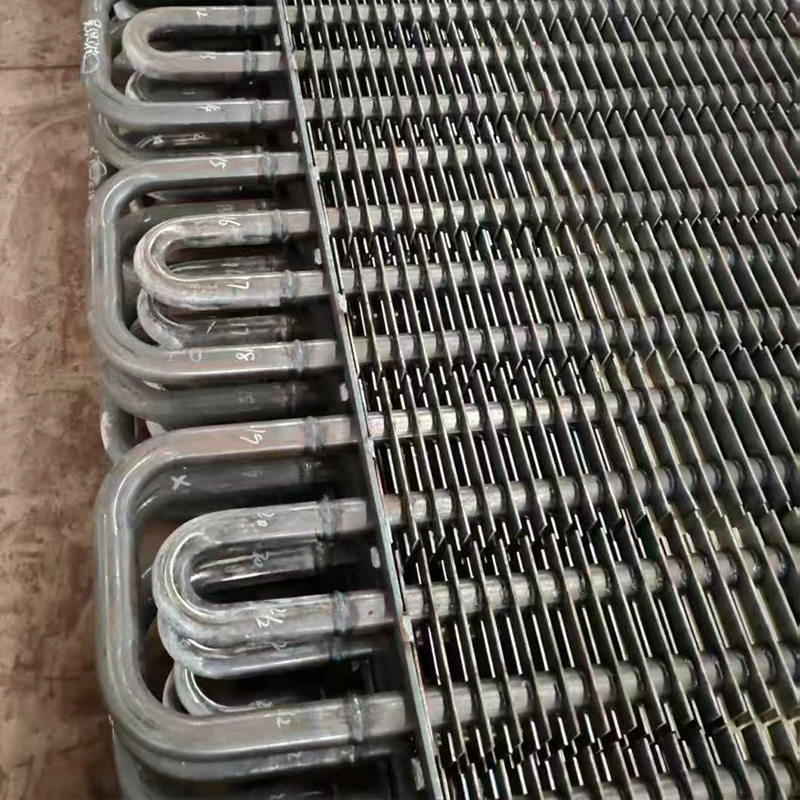
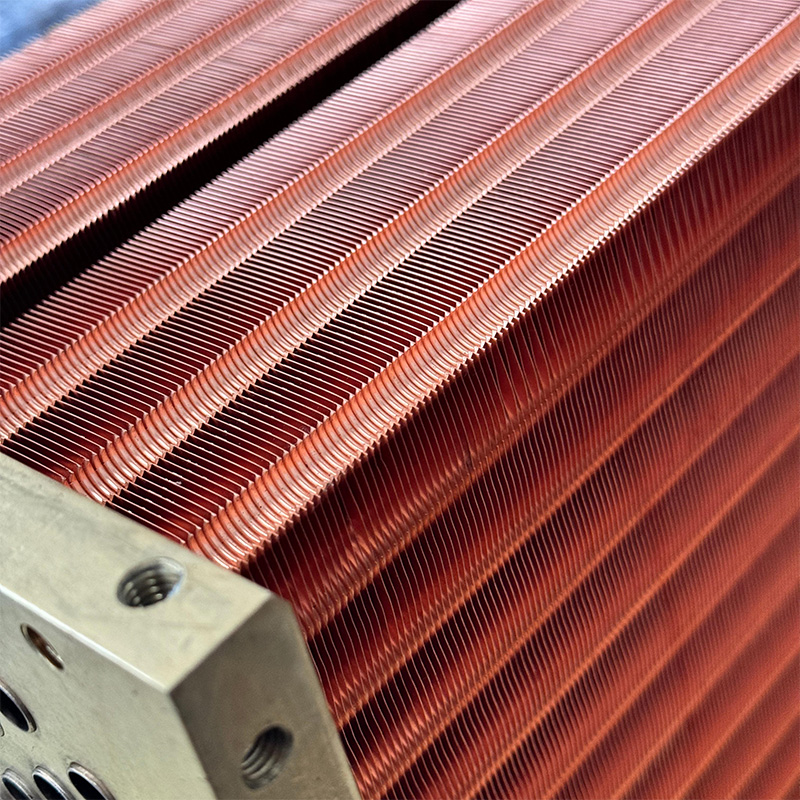
CompanyWuxi Kaisheng Electric Power and Petrochemical Equipment Co.,Ltd» specializes in the development and production of integrated solutions for the oil and gas, chemical and energy industries. While our core expertise lies in the creation of advanced heat transfer equipment - from titanium shell-and-tube heat exchangers and ASME high-pressure units to corrugated tube bundles from 316 stainless steel and N06625 alloys - we understand that the effectiveness of the entire system depends on the coordinated operation of all components.
Our customers in the petrochemical and seawater desalination industries value Wuxi Kaisheng's ability to provide customized engineering solutions. For example, when organizing the storage of aggressive media in PP containers, there is often a need for a heating or cooling circuit. We propose to integrate our heat exchangers, made of corrosion-resistant materials (titanium, copper-nickel alloys C70600, brass C46400), into a single system with polymer tanks. This combination ensures that even under extreme temperatures and pressures, certified to PED and ASME standards, your process remains stable and safe.
Wuxi Kaisheng's products, including air coolers, recovery boilers and various tube sheets, are widely used in areas where conventional steel cannot withstand the load. We work with customers around the world to provide them with equipment that combines high thermal efficiency with exceptional corrosion resistance. By entrusting us with the complete set of your project, you receive not just a set of equipment, but a guarantee of long-term uninterrupted operation of the entire technological cycle.
Installation, operation and typical errors
Even the highest quality PP vertical container for chemical reagents will fail prematurely if the installation rules are violated. Plastic is a living material; it breathes, expands and contracts. Rigid fastening to concrete or a metal frame without taking into account temperature deformations will lead to rupture of welds or pipes.
Step 1: Preparing the base.
The foundation must be perfectly level (the difference is no more than 2 mm per 1 meter). For vertical tanks, it is recommended to make a concrete ring or platform with a slope for water drainage, but the tank itself should be strictly horizontal. A damping pad made of rubber or dense polyurethane foam 10–20 mm thick must be placed under the bottom. This compensates for unevenness in the concrete and distributes the load. Direct contact of plastic with concrete is prohibited.
Step 2: Installation and slinging.
The container can only be lifted using special mounting loops or using soft slings with a width of at least 100 mm. Using unsupported chains or cables will cut into the hull and create stress points. When installing indoors, provide at least 500mm clearance from walls to allow access to welds for inspection.
Step 3: Connecting communications.
This is the most critical stage. All pipelines must have expansion joints or flexible inserts before entering the tank. The pump creates vibration, which is transmitted to the pipe. If the pipe is rigidly fixed in the wall, all the vibration will go to tearing the pipe out of the tank body. Use ball joints or bellows expansion joints. Tighten the flange connections evenly crosswise, without overtightening the bolts, so as not to deform the tank flange.
Common mistake #1: Ignoring ventilation.
When pumping liquid from a sealed tank, a vacuum is created inside. If the air vent is clogged or has a small cross-section, the tank will collapse like a tin can in seconds. The cross-sectional area of the ventilation pipe must be no less than the cross-sectional area of the largest drain pipe. For winter operation, heated hoods or steam chambers are placed on the ventilation to prevent freezing.
Common mistake #2: Incorrect filling.
Fill a cold tank with hot liquid (or vice versa) slowly. A sharp thermal shock causes uneven expansion of the walls. Рекомендованная скорость наполнения при перепаде температур более 40°C — не более 0,5 метра уровня в час. Дайте материалу время адаптироваться.
Регулярное обслуживание включает визуальный осмотр сварных швов раз в год и проверку уровней. Полипропилен не стареет быстро, но механические повреждения (удары погрузчиком) могут случиться. Мелкие царапины не страшны, но глубокие порезы нужно заваривать немедленно.
How to choose a reliable supplier and avoid risks
Рынок насыщен предложениями, но PP вертикальная емкость для химических реагентов — это изделие, где цена напрямую диктует безопасность. Демпинг цен обычно достигается за счет трех факторов: использования вторичного сырья, уменьшения толщины стенки ниже расчетной и экономии на качестве сварки.
Вторичный полипропилен имеет нестабильную молекулярную структуру. Он может содержать примеси других пластиков, которые не смешиваются с основным материалом, образуя микропустоты. Такой бак помутнеет быстрее и станет хрупким на морозе. Request from the supplier a quality certificate for raw materials indicating the brand of granulate (for example, Borouche, Sabic, Polymertef). Мы работаем только с первичным европейским и российским сырьем, предоставляя паспорта партий.
Толщина стенки — предмет частых спекуляций. Заказчик просит «бак на 10 кубов», а производитель считает по минимуму, игнорируя плотность жидкости. Если вы будете хранить серную кислоту (плотность 1.84), а бак рассчитан на воду (плотность 1.0), нагрузка на днище вырастет почти в два раза. Всегда указывайте плотность продукта в заявке. Наш инженерный отдел делает расчет запаса прочности не менее 20% сверх нормативного.
Certification also plays a role. Для работы на опасных производственных объектах (ОПО) оборудование должно иметь паспорт и декларацию соответствия ТР ТС 032/2013 «О безопасности оборудования, работающего под избыточным давлением» (если применимо) или сертификаты соответствия ГОСТ. Отсутствие документов может привести к проблемам при проверках Ростехнадзора.
География поставок тоже важна. Транспортировка крупногабаритных емкостей (более 20 м³) часто требует перевозки негабаритным транспортом, что удорожает логистику. Иногда выгоднее заказать модульную емкость, которая собирается на месте из листов, чем везти готовый бак за тысячи километров. Мы предлагаем оба варианта: доставку готовых изделий манипулятором или выезд сварочной бригады для монтажа на территории заказчика.
Не верьте обещаниям «вечной гарантии». Честный производитель дает гарантию 2–5 лет на герметичность швов и отсутствие сквозной коррозии, но оговаривает условия эксплуатации. Гарантия 10 лет на пластик при агрессивной среде — это маркетинговый ход, не подкрепленный реальными обязательствами.
Frequently Asked Questions
Какой максимальный объем может иметь PP вертикальная емкость?
Технологически возможно изготовление емкостей объемом до 100 м³ и более методом послойной намотки или сборки на месте. Однако для транспортировки в собранном виде ограничение определяется габаритами дорожного транспорта (обычно до 25–30 м³). Для больших объемов мы рекомендуем модульную конструкцию, которая собирается непосредственно на фундаменте заказчика. Это позволяет обойти логистические ограничения и снизить стоимость доставки.
Можно ли использовать полипропиленовые емкости на улице зимой?
Да, можно, но с условиями. Полипропилен становится хрупким при температурах ниже -20°C. Для уличной эксплуатации в северных регионах необходимо использовать морозостойкие модификации пластика (сополимеры) или предусматривать тепловой контур (обогрев) и утепление корпуса минеральной ватой с защитным кожухом. Также критически важно защитить бак от прямого воздействия снега и льда, которые создают дополнительную статическую нагрузку.
Как долго служит такая емкость?
При соблюдении температурного режима и отсутствии механических повреждений срок службы PP вертикальная емкость для химических реагентов составляет от 15 до 20 лет. Основной фактор старения — ультрафиолет. Если бак стоит на солнце без защиты, срок сокращается до 5–7 лет. Регулярная покраска или использование листов с УФ-стабилизаторами продлевает жизнь оборудованию до максимума.
Возможно ли изготовление емкости нестандартной формы?
Undoubtedly. Хотя вертикальный цилиндр — самая эффективная форма, мы изготавливаем прямоугольные, конические и фигурные резервуары под специфику вашего помещения. Важно понимать, что любая отход от цилиндрической формы требует дополнительных расчетов на прочность и усиления ребрами жесткости, что влияет на итоговую стоимость.
Conclusion and next step
Инвестиция в качественную PP вертикальную емкость для химических реагентов — это вклад в бесперебойность вашего производства и безопасность персонала. Экономия на этапе закупки часто оборачивается многократными потерями из-за аварий, простоев и экологических штрафов. Полипропилен доказал свою эффективность десятилетиями эксплуатации в самых жестких условиях химической промышленности.
Мы не просто продаем баки, мы предоставляем инженерное решение: от расчета толщины стенки под вашу конкретную химию до шеф-монтажа и пусконаладки. Наша продукция сертифицирована и соответствует всем требованиям ГОСТ и ТР ТС. В сотрудничестве с ведущими производителями теплообменного оборудования, такими как ООО «Уси Кайшэн», мы готовы предложить комплексную модернизацию ваших химических линий, обеспечивая максимальную энергоэффективность и надежность.
Не рискуйте технологическим процессом. Получите коммерческое предложение с точным расчетом стоимости и сроков изготовления уже сегодня. Отправьте нам техническое задание или просто позвоните, чтобы обсудить детали вашего проекта.
Contact us todayдля консультации с ведущим инженером-технологом.