
Retargeting campaigns for visitors to factory websites”
2026-09-03
- Why 95% of industrial website visitors leave without an application and how retargeting brings them back into the sales funnel
- Specific behavior of B2B audiences on industrial portals
- Technical architecture and audience segmentation for maximum ROI
- Content strategy: from technical characteristics to business benefits
- Selection of platforms and distribution channels in the Russian-speaking segment
- Legal aspects and working with personal data (FZ-152)
- Analytics, success metrics and budget optimization
- Frequently asked questions (FAQ)
- Conclusion: Retargeting as a strategic asset of the plant
Why 95% of industrial website visitors leave without an application and how retargeting brings them back into the sales funnel
In our practice of working with the B2B sector of metallurgy, energy and heavy engineering, we are faced with a harsh reality: even the most advanced plant website converts only 1-3% of traffic into an application. The remaining 97% are qualified engineers, buyers and technical directors who studied the specifications, compared prices, but left for competitors or postponed the decision indefinitely.Retargeting campaigns for factory website visitorsis not just a marketing tool, but a critical mechanism for maintaining attention in a long transaction cycle, where the decision to purchase equipment worth millions of rubles can take from 3 to 18 months.
Many industrial enterprises mistakenly believe that if a customer has visited a catalog page for CNC machines, heat exchangers or hydraulic presses, he is already “warm”. This is a dangerous misconception. In reality, the visitor is often at the stage of collecting information for technical specifications (TOR). If you don't cement your brand in his mind through consistent communication after he leaves the site, he'll forget about you within 48 hours. We analyzed more than 200 industrial campaigns and found that the implementation of competent retargeting increases the return of users to the site by 43%, and the cost of lead acquisition (CPL) is reduced by an average of 35% compared to cold search traffic.
This guide was written not by theorists, but by practitioners who work daily with the budgets of industrial holdings. Here you will not find general phrases about “increasing loyalty.” We will analyze specific mechanics of audience segmentation, frequency settings for different stages of the funnel, and legal aspects of data processing in accordance with Federal Law-152 and international standards. Our goal is to give you a step-by-step algorithm that will turn lost traffic into actual shipped product shipments.
Specific behavior of B2B audiences on industrial portals
Understanding the psychology of the decision maker (DM) in an industrial enterprise is the foundation of any successful advertising strategy. Unlike a retail buyer who might impulsively buy a drill, a design engineer or purchasing director acts rationally, slowly and with a high degree of responsibility.Retargeting campaigns for factory website visitorsmust be based solely on a deep understanding of this behavior. Ignoring the specifics of the B2B cycle leads to waste of the budget and irritation of potential clients.
The decision cycle in industry is rarely linear. Typically, a group of people are involved in the process: the chief engineer approves the technical parameters, the purchasing department negotiates on price, and the finance director approves payment. A visitor to your site today may simply be a performer collecting data for an internal report. He goes to a specific product page, downloads a PDF catalog, looks at the drawings and leaves. Without retargeting, you lose contact precisely at the moment when internal discussion of your candidacy begins among the client’s colleagues.
We have identified three key types of behavior of visitors to industrial sites that require different approaches to retargeting:
- "Researcher":The user views the general sections “About the company”, “Certificates”, “Production”. His interest has not yet been formed specifically for the product. He needs evidence of the plant’s reliability, cases and confirmation of compliance with GOST/ISO.
- "Specifier":The person who went to the product card, studied the characteristics table, looked at the documentation. It compares you to your competitors on technical parameters. He needs highly specialized offers, comparative tables and delivery conditions.
- "Buyer":The one who visited the “Contacts”, “Details” page or the “Request CP” form. He is ready for dialogue, but he may be hampered by price, timing, or lack of a specific model in stock. He needs a direct commercial offer and an incentive to act “here and now.”
In our practice, there was a case when a large metalworking plant launched aggressive retargeting to all visitors without segmentation. The result was disastrous: engineers who were simply looking for reference information on welding standards began to complain about the intrusiveness of advertising for machines that they did not need at the moment. This led to a negative perception of the brand in the professional community. We immediately stopped the campaign, revised the segmentation logic and separated the streams. Only after this the ROI increased from negative values to 240%.
It is important to understand that in the B2B sector, “quick sale” is a myth. Retargeting here works as a reminder tool and maintains the status of an “active supplier” in the client’s mind. When, after 3 months, the customer has a real need for equipment, he will remember the brand that was competently and unobtrusively present in his information field all this time.
Technical architecture and audience segmentation for maximum ROI
EfficiencyRetargeting campaigns for factory website visitorsdirectly depends on the granularity (detail) of segmentation. Launching a single advertisement to the entire site audience is the path to low conversion. An industrial website contains hundreds of pages, and a visitor to the “Vacancies” page and a visitor to the “Hydraulic Guillotine Shears” page have completely different intentions. Pixel and tag adjustments must be done with surgical precision.
The first step is to implement end-to-end analytics and correctly configure tracking systems (Yandex.Metrica, Google Analytics 4, VK Pixel). However, a standard code installation is not enough. It is necessary to configure Events for each significant action. For an industrial site, critical events are: viewing more than 3 pages per session, time on the site more than 2 minutes, downloading a price list, going to the “Certificates” section, filling out any feedback form.
We recommend creating the following dynamic segments for retargeting:
- Segment “Hot Leads”:Visitors who were on specific product pages for more than 60 seconds OR downloaded a survey/technical specification. The lifespan of a segment is 7 days. For this group, we show advertising with a direct call to action: “Get a cost estimate in 2 hours,” “Order a test sample.”
- Segment "Warm Explorers":Visitors to product categories, but who did not go to the cards of specific models. The lifespan is 30 days. Content: reviews of advantages, videos from production, comparison with analogues, articles on the use of equipment.
- Segment “Trust and Authority”:All site visitors over the last 90 days, excluding those who have already submitted a request. Content: company news, participation in exhibitions, obtaining new ISO 9001 certificates, interview with the chief designer.
- Segment "Refuseniks":Those who added an item to the cart (or started filling out the CP form) but did not complete the action. The lifespan is 14 days. Content: special offers, extended warranty, free shipping, answers to common objections.
Particular attention should be paid to excluding users who have already converted. There is nothing more annoying to a client who has already signed a contract than advertising “Buy our machine.” Integration of the CRM system with advertising accounts is mandatory. As soon as the transaction status changes to “Successfully completed”, the user must be excluded from all advertising segments or transferred to the loyalty segment with an offer of service and spare parts.
In one of the projects for the supply of pumping equipment, we discovered an interesting pattern. The segment of users who visited the “Service and Parts” page, but did not purchase basic equipment, with proper retargeting, converted into buyers of consumables with high frequency. This opened up a new revenue channel that was not initially thought of. We set up a separate campaign with an emphasis on inventory availability and shipping speed, which resulted in a 15% increase in turnover per quarter.
Technical implementation requires constant monitoring. Cookies do not last long, especially given the tightening of browser policies (Safari, Firefox, Chrome). The use of server-side tracking is becoming a necessity to save user data in the industrial segment, where the transaction cycle is long, and losing a contact even for a week can cost a contract.
Content strategy: from technical characteristics to business benefits
Retargeting creatives for factories should not be similar to banners for online clothing stores. Bright colors, flashing “BUY” buttons and emotional slogans work poorly here and even harm the reputation of a serious manufacturer. B2B audiences value facts, figures and professionalism.Retargeting campaigns for factory website visitorsmust convey expertise and reliability.
The main mistake many marketers make is trying to sell a product directly through retargeting. In industry, the product is complex, expensive, and requires integration into the customer's existing processes. Therefore, the content strategy should move along the path of education and removal of objections. Your job is to become a consultant, not a salesperson.
Here are the types of creatives that perform best in our experience:
- Cases with numbers:Instead of “Our machines are the best,” use “How a plant in Yekaterinburg increased line productivity by 22% thanks to modernization.” Indicate specific metrics: reduction in scrap, energy savings, reduction in changeover time.
- Production video:Short videos (15-30 seconds) showing the actual assembly process, quality control, and quality control work. This covers the fear of “garage production” and confirms the scale of the plant. Video content increases trust by 40% compared to static images.
- Comparison tables:Visualization of the advantages of your equipment over competitors or outdated models. Emphasis on the durability of components, availability of spare parts and quality of metal.
- Expert content:Webinar announcements, links to White Papers, checklists for choosing equipment. This positions the company as a Thought Leader.
Frequency Capping is a critical parameter. In B2C you can show ads 10 times a day, but in B2B this will cause rejection. The optimal frequency for industrial retargeting is 2-3 impressions per week per user. We recommend using the “3-7-14” rule: the first 3 days after the visit - an intensive reminder about the product, from days 4 to 7 - educational content, from days 8 to 14 - soft brand presence.
Ad texts should be concise and hit home with the target audience. Avoid clichés like “personal touch” or “high quality.” Write specifically: “3-year warranty on the spindle”, “Shipment from warehouse in 24 hours”, “Compliance with TR CU 010/2011”. Use benefits language that the chief engineer and production director can understand.
One of our clients, a manufacturer of industrial filters, changed the approach to creatives. Instead of a photo of the filter, they began to publish graphs of pressure reduction in the system after installing their equipment. This immediately made technicians aware of the value of the product. The conversion to application increased by 2.5 times, although the visual part became less “colorful” from the designer’s point of view, but more useful for the engineer.
Selection of platforms and distribution channels in the Russian-speaking segment
Where exactly should you advertise to your potential clients? The choice of site depends on where your audience spends time. In Russia and the CIS, the ecosystem of advertising networks has its own specifics, which are different from the Western market.Retargeting campaigns for factory website visitorsrequires a multi-channel approach, since decision makers use different devices and platforms during the working day.
Yandex.Direct (YAN and Search):This is the undisputed leader for the Russian B2B market. The Yandex Advertising Network (YAN) covers thousands of thematic platforms, including industry portals, news aggregators and email services. Yandex algorithms do an excellent job of finding users who have shown interest in industrial topics. It is important to auto-target key phrases related to your equipment, even if the user did not visit your site, but looked for this information in other places.
VK Advertising (VKontakte):Don't underestimate social media in B2B. Modern engineers and buyers are real people who use social networks. VKontakte allows you to target not only by interests, but also by position, place of work (through database parsing) and participation in professional communities. Retargeting on VK is ideal for demonstrating video content and “humanizing” the brand.
MyTarget:A universal platform that allows you to run ads simultaneously on OK, VKontakte, Mail.ru and Yula. Good for reaching an audience over 35 years of age, which makes up a significant part of the management team at industrial enterprises.
Telegram:A new powerful channel for B2B. Many industry chats and channels are becoming a place to discuss professional issues. Placing advertisements in thematic channels through official platforms or seedings allows you to reach a narrow audience of experts. Retargeting in Telegram is still less developed, but using bots to capture audiences from the site and then send them out is a promising strategy.
An important nuance is cross-device tracking. An engineer can study the catalog on his work computer, but make decisions and communicate with suppliers in the evening from a tablet or smartphone. If your retargeting system does not combine these devices into one profile (Unified ID), you will lose conversions. We strongly recommend setting up campaigns with mobile adaptation of creatives in mind, as the share of mobile traffic in B2B is growing every year.
It is also worth considering placement in specialized industry media through programmatic buying programs. Displaying a banner on the portal Metalinfo.ru or Machinetools.ru gives much higher relevance than displaying it on an entertainment site, even if the cost per click is higher there. The quality of traffic is more important than its quantity.
Legal aspects and working with personal data (FZ-152)
Work with user data in Russia is strictly regulated by Federal Law No. 152-FZ “On Personal Data”. Ignoring these standards can lead to huge fines and blocking of resources, which is unacceptable for an industrial enterprise. When buildingRetargeting campaigns for factory website visitorsIt is necessary to maintain a balance between marketing effectiveness and legislation.
Collection of data through pixels of social networks and advertising networks is technically the processing of personal data (as IP address, device and behavioral data that can be identified are collected). Therefore, your website must have a Privacy Policy, which the user agrees to upon their first visit (via a pop-up cookie banner).
The consent text must clearly state the purposes for collecting data, including “marketing research and promotion of services.” We recommend not using default texts copied from the Internet, but adapting them to the specifics of your activity. The document must indicate which services (Yandex, VK, Google) are used for analytics and retargeting.
Particular attention should be paid to data storage. Servers processing data of Russian citizens must be physically located on Russian territory. When using foreign analytics tools (for example, old versions of Google Analytics without localization), there are risks of violating the law on data localization. Switching to domestic analogues (Yandex.Metrica, Roistat) minimizes these risks.
It is also important to provide the user with the opportunity to opt out of targeted advertising. Although it is technically difficult to completely disable retargeting for a specific person without removing them from the database, having an “Unsubscribe from advertising” link or instructions on how to disable personalization in your browser settings increases trust in the company and reduces the number of complaints.
There was a precedent in our practice when a company received an order from Roskomnadzor due to the lack of an updated privacy policy when using new functions of the VK pixel. The fine was small, but the reputational costs and time to eliminate violations diverted resources from core business processes. Proactively auditing legal documents before launching campaigns saves money and hassle in the long run.
Analytics, success metrics and budget optimization
Launching a campaign is just the beginning. The real work starts with data analysis and continuous optimization. In B2B retargeting, you can’t focus only on cost per click (CPC) or cost per application (CPL). These metrics are important, but they do not paint the full picture of investment performance. The main goal of the plant is product shipment and profit, so the focus should be on ROMI (Return on Marketing Investment) and LTV (Lifetime Value) of the client.
Key metrics we track in industrial campaigns:
- View-Through Conversion (VTC):Conversions that occurred after viewing an ad but without clicking on it. In B2B, this is a very important indicator, since the decision maker could see the banner, remember the brand, and later find the site through search and place an order.
- Assisted Conversions:The role of retargeting in the touch chain. Often retargeting is not the last click before a purchase, but it “warms up” the client in the early stages. Analytics should show the contribution of retargeting to the overall funnel.
- Frequency and coverage:Ensuring that advertising does not bore the audience. An increase in frequency with a drop in CTR (click-through rate) is a signal to replace creatives or expand the audience.
- Lead quality:Not all applications are equally useful. It is necessary to integrate CRM with advertising accounts in order to estimate the cost of not just a lead, but the cost of a qualified lead (MQL) and the cost of a closed transaction (SQL).
The optimization process must be continuous. We conduct A/B testing of creatives weekly. We change headlines, images, calls to action. Even a small 0.1% improvement in CTR across a large campaign results in significant budget savings. We are also testing different display time intervals. For example, it is more effective for plant managers to show ads in the afternoon or on weekends when they are planning a development strategy, and for engineers - during working hours.
It is important to analyze negative scenarios as well. If you see that many refusals or “junk” applications come from a certain segment, you need to reconsider the offer or exclude this segment. Sometimes the problem lies not in advertising, but in the landing page or the work of the sales department. Retargeting only brings traffic, but the entire complex of business processes converts it.
We use end-to-end analytics to link ad spend to actual revenue. This allows us to accurately say: “Every ruble invested in retargeting the Hydraulics segment brings 8 rubles in profit.” Such data is the basis for increasing the budget and scaling successful partnerships.
Frequently asked questions (FAQ)
What is the minimum budget needed to launch retargeting on an industrial website?
For an effective start in the B2B segment, we recommend a budget of 30,000 to 50,000 rubles per month per advertising platform. Smaller amounts will not allow you to collect a sufficient statistical base to optimize algorithms and reach the audience with the required frequency. Industrial retargeting is a long game, where consistency of presence is more important than sprinting.
How long should an ad be shown to one user?
The optimal retargeting period for complex industrial equipment is from 30 to 90 days. The transaction cycle is long, and a one-time reminder is not enough. However, after 90 days without active user actions (repeated visits, downloads), the effectiveness of advertising drops sharply, and it is better to exclude the audience or transfer it to a “cold” pool for branding.
Can retargeting be used to sell spare parts and services?
Yes, this is one of the most effective scenarios. The audience that has already purchased your equipment is the most loyal. Retargeting with the offer of original spare parts, routine maintenance or modernization shows a conversion rate that is 3-5 times higher than working with new customers. It is important here to segment the database by equipment model in order to offer relevant parts.
What to do if competitors intercept our audience through retargeting?
This is a common practice. It is impossible to protect yourself completely, but you can reduce the risks. First, increase the frequency of your impressions at key moments (immediately after a site visit). Secondly, create unique content (videos, cases) that is difficult to copy. Thirdly, use branded queries in contextual advertising to intercept those who, after your advertising, go looking for you in search.
Conclusion: Retargeting as a strategic asset of the plant
In conditions of high competition in the industrial equipment market,Retargeting campaigns for factory website visitorsceases to be an option and becomes a necessity. This is a tool that allows you to turn passive traffic into an active sales funnel, keeping the attention of qualified specialists throughout the entire decision-making cycle. Properly configured retargeting saves budget, increases brand awareness and, most importantly, brings real contracts.
Don't be afraid to experiment with formats, test new hypotheses and deeply analyze data. Industrial marketing requires patience and precision, but the return on investment from a well-structured communication system pays for itself many times over. Remember that your client has already shown interest by visiting the site. Your task is not to let him go to competitors, but to gently and professionally bring him to a deal.
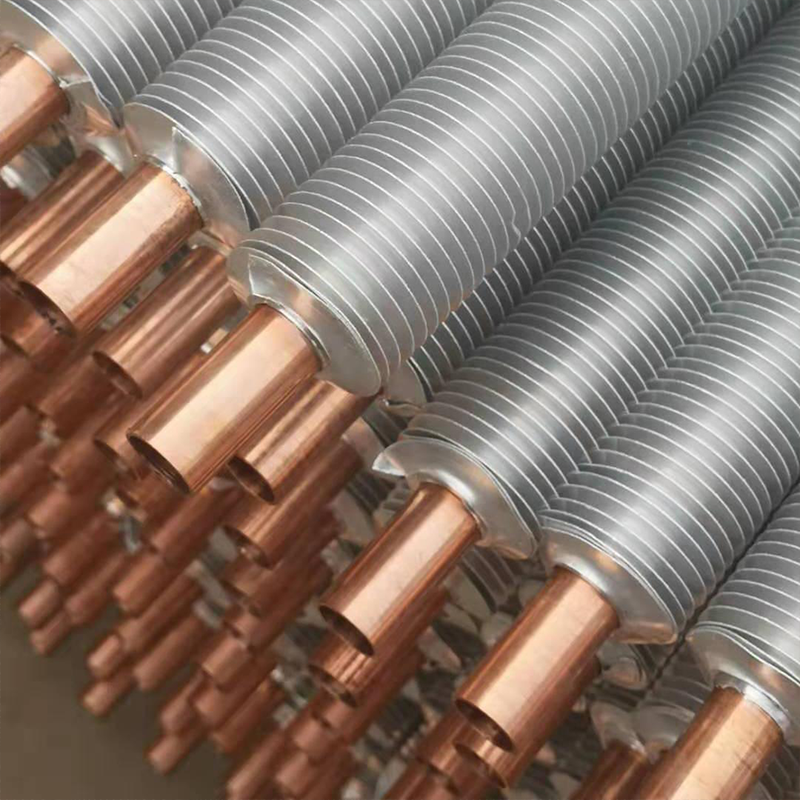
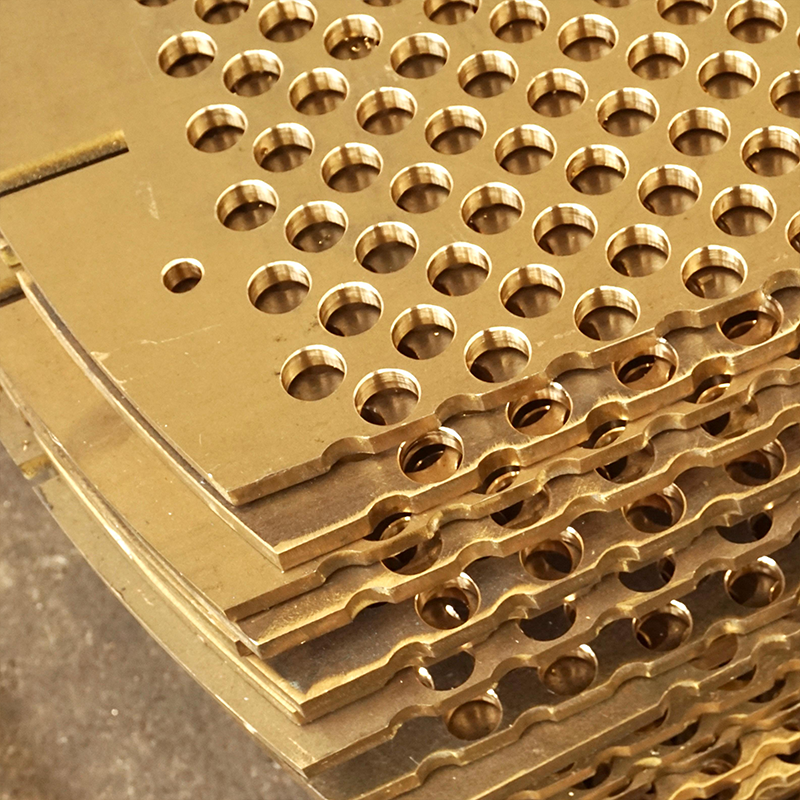
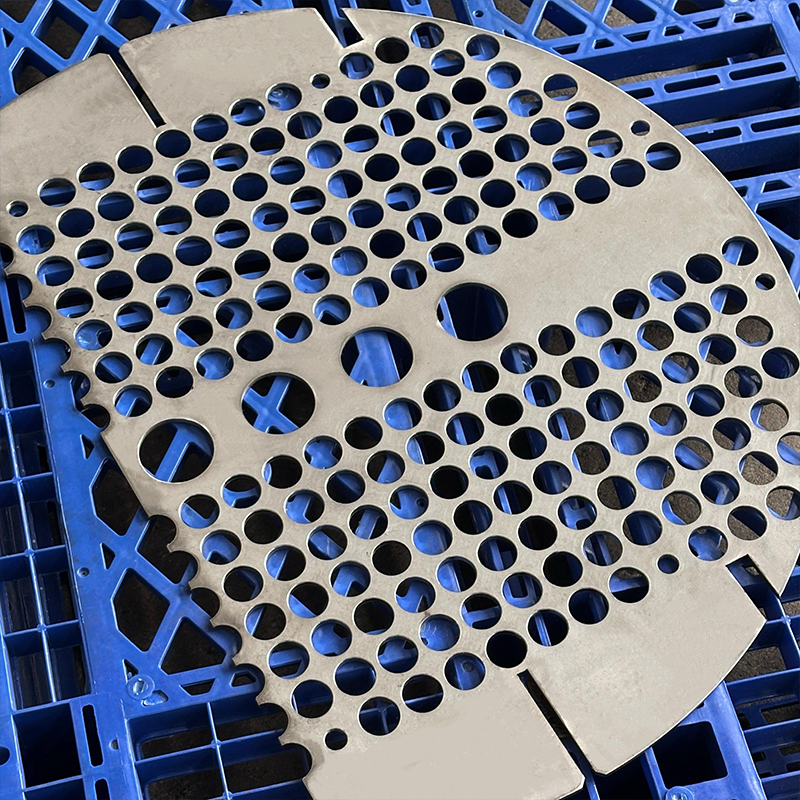
These principles are especially relevant for manufacturers of high-tech equipment such as heat exchangers and energy systems. For example, a companyWuxi Kaisheng Electric Power and Petrochemical Equipment Co., Ltd., which specializes in the design and manufacture of heat transfer equipment (titanium shell-and-tube heat exchangers, ASME high-pressure systems, 316 stainless steel corrugated tube bundles and C46400 marine grade brass), faces long decision cycles in the petroleum refining and chemical industries. Their PED and ASME certified products require detailed study by customer engineers. The introduction of retargeting allows such companies to constantly remind those specialists who have already studied catalogs but are not yet ready to place an order about their expertise in the field of corrosion resistance and thermal efficiency. This turns a complex technical product into a recognizable and reliable choice for global projects in shipbuilding, water desalination and energy conservation.
If you want to implement an effective retargeting system in your enterprise, avoid common mistakes and customize analytics to suit your KPIs, our team is ready to help. We specialize in marketing for the B2B sector and understand the specifics of selling complex equipment.
Contact us todayfor a free audit of your current advertising strategy and receive a personal development plan.