
Association of PE Tank Manufacturers"
2026-09-14
- What are PE tank industry associations and why do businesses need them?
- Entry criteria: how to distinguish a real association from a fiction
- Technical standards and quality control within communities
- Economic benefits of membership for customers and manufacturers
- The role of associations in import substitution and technology development
- Integration of advanced solutions: experience of international partners
- How to choose a reliable supplier through association registries
- Frequently Asked Questions
- Conclusion: why cooperation is the future
What are PE tank industry associations and why do businesses need them?
PE Tank Industry Associations- these are not just clubs of interests, but real tools for survival in the oversaturated market of polymer containers. In our practice of working with factories in Russia and the CIS, we see a clear trend: individual manufacturers are losing margins due to dumping, while members of industry associations dictate the terms of supply of raw materials and lobby for their quality standards. If you are purchasing containers with a volume of 50 m³ or more or are planning the construction of treatment facilities, understanding the structure of these associations will save you up to 15% of your budget and protect you from purchasing illiquid goods.
The market for polyethylene tanks will experience a structural breakdown in 2025-2026. Previously, the main criterion was the price per kilogram of the finished product. Now that environmental inspection requirements have become more stringent, and the cost of PE-80 and PE-100 granulates fluctuates unpredictably, supplier reliability is becoming a key factor. The associations take on the function of a filter: they weed out garage factories that weld seams without temperature control, and promote factories that use the latest generation of extruders. For the end customer, this means one thing: by purchasing from a member of such an association, you receive a guarantee that the container will not crack after two years of operation under load.
We encountered a situation where a large agricultural holding purchased a batch of tanks for storing liquid fertilizers from a manufacturer that was not a member of any professional community. The price was 12% below the market price. Result? After 14 months, microcracks began in the lower bottom area due to a violation of the spiral winding technology. The losses amounted to millions of rubles, not counting the cost of disposal of the spilled chemicals. This case showed us that the plant belongs to a reputableenterprise associationsoften more important than the discount on the list price.
Entry criteria: how to distinguish a real association from a fiction
Not every association that calls itself an association actually influences the quality of products. There is a problem in the industry of “pocket” organizations created by several factories solely to receive government subsidies or participate in tenders where specialized membership is required. RealPE Tank Industry Associationworks differently. It lives off contributions from participants and has strict admission regulations. We have developed a five-point checklist that we use when auditing potential partners for our clients.
The first and most important point is to have your own laboratory or a contractual arrangement with an accredited testing center. Members of serious associations are required to regularly submit samples of their welds for tensile strength and chemical resistance. If an association doesn't publish annual reports on the quality of its members' products, that's a red flag. The second point is participation in the development of the regulatory framework. Real market players sit on technical committees where they write new GOSTs and sets of rules. They know about changes in standards six months before their official publication.
The third criterion is the transparency of the register of participants. On the website of a real association there should be a list of factories indicating their specialization: some make only horizontal containers, some specialize in vertical silos, and some produce fittings and shut-off valves. The fourth point is educational activities. The industry suffers from a shortage of qualified extrusion welders. Serious associations conduct personnel certification and advanced training courses. The fifth point is protection of interests. When the rules for the disposal of polymer waste changed in 2024, it was the associations that achieved a delay in the implementation of new tariffs for their members, which saved small businesses from bankruptcy.
It is important to understand geographical reference. There are different competence centers in Russia and the EAEU countries. For example, associations based in industrial clusters of Tatarstan or the Leningrad region often have closer ties with the petrochemical giants that produce raw materials. This gives their members priority in the shipment of granulate during periods of shortage. This is critically important for the customer: if your supplier is part of such a structure, the risk of stopping its conveyor due to lack of raw materials is minimal.
Technical standards and quality control within communities
The main value it givesPE Tank Industry Associationto its client is the unification of quality requirements. In a chaotic market, each plant brews as best it can: some use manual extrusion with operator control “by eye,” others use automatic CNC lines. The association has internal standards that are often stricter than state GOSTs. This is not bureaucracy, but a necessity. Polyethylene is a capricious material. It requires adherence to welding temperature conditions with an accuracy of 5 degrees Celsius.
Let's look at a specific example with welds. According to the basic requirements of most associations, the strength coefficient of the welded joint must be at least 0.8 of the strength of the base material. An ordinary factory can supply a product with a coefficient of 0.6, and it will pass incoming inspection according to minimum state standards. But a member of the association is obliged to keep the bar higher. In our practice, there were cases when an independent examination showed that tanks from “single” factories began to leak during hydraulic tests with a pressure of 0.05 MPa, while the products of association members maintained 0.15 MPa without deformation.
Another aspect is the certification of raw materials. Associations require their members to use only virgin polyethylene grades PE-80 or PE-100 with a confirmed quality certificate. The use of recycled materials (regranulate) is allowed only for non-critical structures, for example, decorative casings, but never for containers for drinking water or aggressive chemicals. Violation of this rule will result in expulsion from the community. We saw one well-known factory lose its membership after a batch of 50 m³ vertical tanks was found to contain 15% recycled polypropylene mixed with polyethylene. This reduced the frost resistance of the product, and in winter several containers burst.
The standards also concern the geometry of products. For large vertical tanks, the ovality of the body is critical. If the deviation from the circle exceeds the permissible norms, when filled with liquid, uneven loads on the walls occur, leading to the destruction of the stiffeners. Association members use laser templates to control geometry during production. This increases the cost by 3-5%, but guarantees that the container will last 50 years, as stated in the passport.
The documentation is also worth mentioning. When working with members of associations, you receive a full package of accompanying documents: product passport, weld test reports, certificate of conformity TR CU 010/2011 “On the safety of machinery and equipment.” Moreover, many associations are introducing a traceability system: each seam is marked with a welder’s mark, and in the event of an accident it is possible to determine exactly who made the mistake. This increases the personal responsibility of workers and reduces the defect rate.
Economic benefits of membership for customers and manufacturers
Many people believe that working with associations makes the product more expensive. This is a misconception based on a superficial analysis of price tags. Yes, the entrance ticket to a quality association costs money, and these costs are included in the price. However, the total cost of ownership (TCO) of a tank from such a manufacturer is significantly lower. Let's do the math. A cheap tank lasts 7-10 years, after which it requires replacement or expensive repairs. A high-quality tank from a certified factory lasts 30-50 years. The difference in service life outweighs the initial savings many times over.
For manufacturers, membership inassociation of PE tank manufacturersopens access to wholesale purchases of raw materials. A combined order for hundreds of tons of granulate allows us to negotiate prices 10-15% lower than exchange prices. During periods of rising oil prices, this difference becomes a matter of survival. In addition, the associations organize joint logistics. Shipping large containers is a pain for any plant. The joint use of specialized transport and temporary storage warehouses reduces transport costs by 20%.
For customers, savings come in the form of reduced downtime risks. Imagine the situation: a milk storage container burst at a dairy plant. Production has stopped. While a new tank is being manufactured (and the production time for a large tank is from 3 to 6 weeks), the plant is losing money every minute. Suppliers from associations often hold safety stock of popular models or have the opportunity to urgently transfer an order to another partner plant within the association. Such mutual assistance is impossible between competitors who are not bound by common rules.
It is also worth noting access to engineering. Large projects such as wastewater treatment plants or oil terminals require complex load calculations. The small plant does not have high-level designers on its staff. Associations also maintain common engineering centers that help their members calculate complex projects for free or for a nominal fee. The customer receives a well-designed system, even if the physical production is located in a small enterprise.
Financial transparency is another plus. Members of associations are easier to verify. Their reputation is open, reviews from other clients are available. It is safer to work with them in terms of prepayment. In our practice, cases of fraud or failure to fulfill obligations on the part of members of large industry unions are rare, since the threat of exclusion from the community is worse for them than the loss of one contract.
The role of associations in import substitution and technology development
Events of recent years have radically changed the landscape of the polymer container market in Russia and Eurasia. The departure of Western vendors, such as large German and Italian manufacturers of rotational molding and extrusion equipment, has created a vacuum.PE Tank Industry Associationstook on the role of the locomotive of import substitution. They don’t just lobby for interests, they actively introduce new technologies.
One of the main tasks was the development of the production of large-sized containers with a volume of over 100 m³, which were previously purchased abroad. Russian factories, united in consortia, were able to solve the problem of the shortage of powerful extruders. They jointly invest in the purchase of equipment from Chinese and Turkish partners, adapting it to local conditions. Without cooperation, a single plant simply would not have been able to handle such investments.
In 2025, we are seeing a boom in the development of composite materials. Pure polyethylene is good, but some aggressive environments require additional protection. The associations finance R&D to create multilayer tanks, where the inner layer is made of a special chemical-resistant polymer, and the supporting frame is made of glass fiber-reinforced polyethylene. These developments are already entering the market, offering an alternative to expensive imported analogues made of stainless steel or fluoroplastic.
Educational programs play an important role. Personnel shortage is the main problem of the industry. Old specialists are leaving, young ones do not want to go to factories. Associations create training centers to train line operators and welders. A graduate of such a center not only knows how to press a button, but also understands the physics of the welding process. This directly affects the quality of the final product. We recommend that customers ask the supplier: “Where were your welders trained?” The answer “at an industry association training center” should be the best sign of quality.
Associations are also involved in standardizing installation methods. Often a tank breaks down not because of the poor quality of the product itself, but because of errors when installing the foundation or piping. Albums of typical installation units developed by the unions help builders avoid fatal mistakes. This is especially true for northern regions, where soil heaving can push an unsecured container out of the ground.
Integration of advanced solutions: experience of international partners
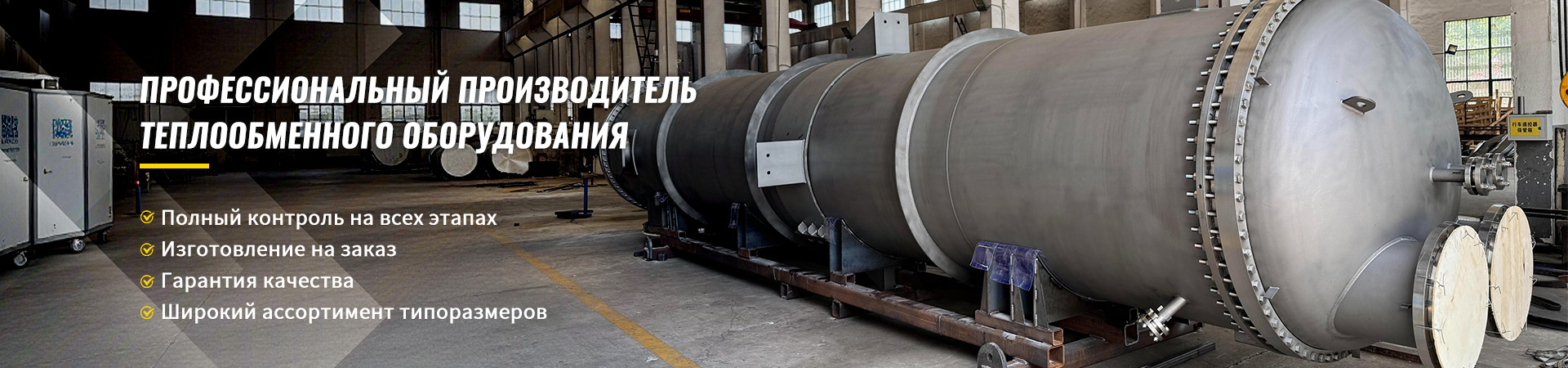
The development of industry standards and cooperation is not limited to the domestic market. Global experience shows that the success of large projects in oil refining and petrochemicals depends on the synergy between manufacturers of capacitive equipment and suppliers of high-tech components. A striking example of this approach is the companyWuxi Kaisheng Electric Power and Petrochemical Equipment Co., Ltd., which specializes in the development and production of complex heat transfer and energy equipment.
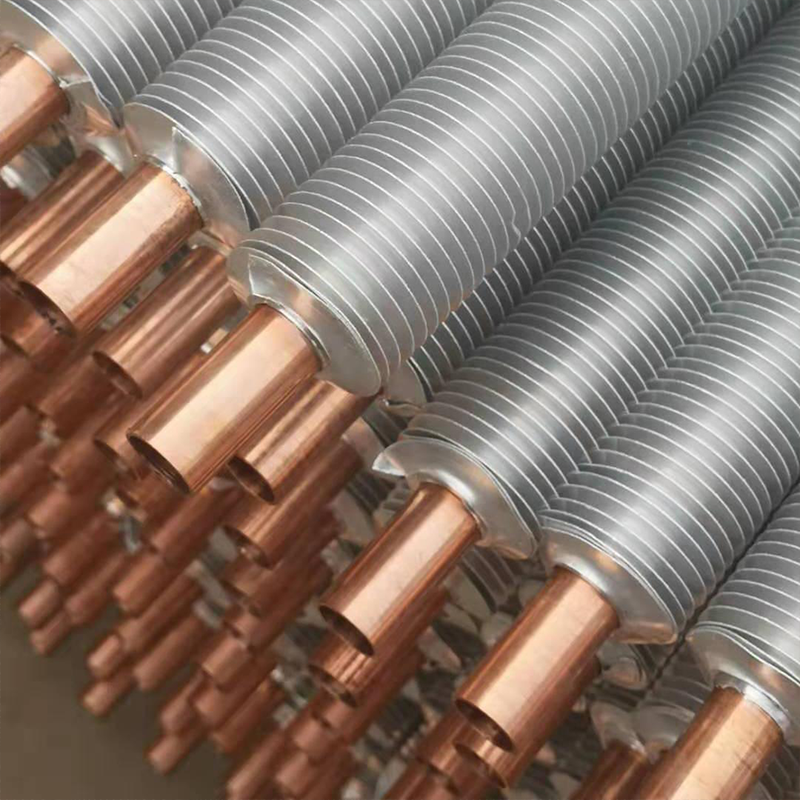
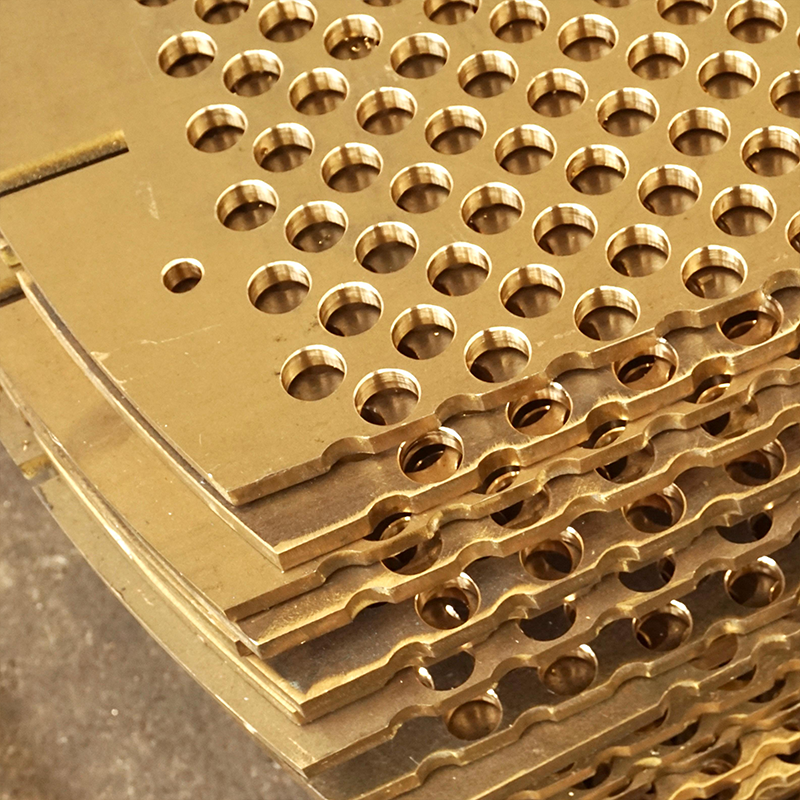
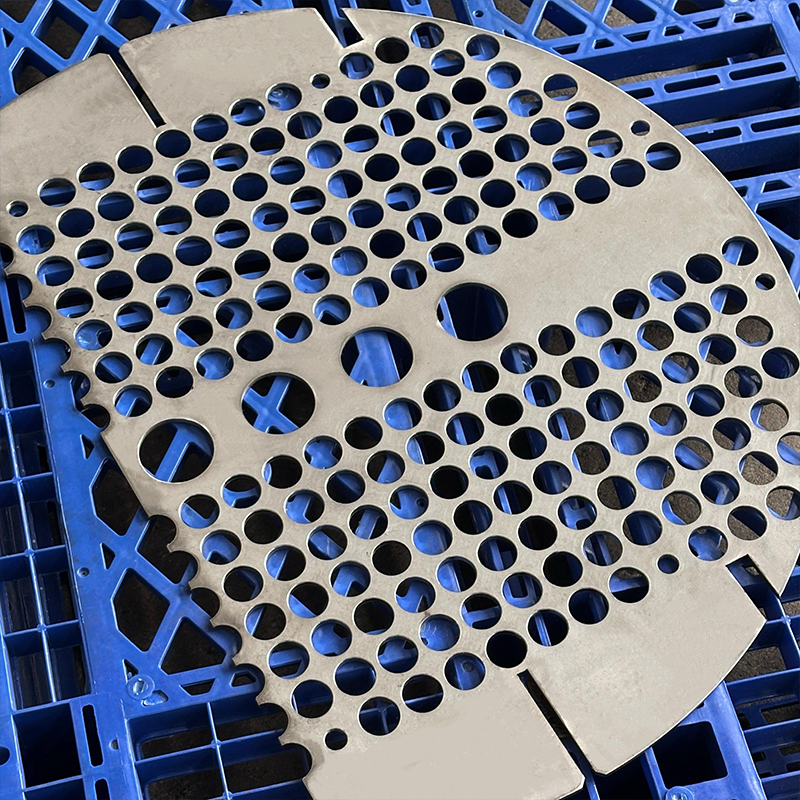
The company's products, including titanium shell-and-tube heat exchangers, ASME high-pressure units and corrugated tube bundles made from stainless steels (316, 321) and specialty alloys (C46400, C70600, N06625), ideally complement the infrastructure of modern chemical production facilities. As members of leading tank industry associations, Wuxi Kaisheng adheres to the strictest international PED and ASME certifications, ensuring high corrosion resistance and reliability even in the most corrosive environments. Their experience in creating air coolers, waste heat boilers and custom seawater desalination solutions demonstrates that the future of the industry lies in the integration of reliable tanks with highly efficient heat exchange systems.
For customers planning complex facilities, this approach means the ability to create a single ecosystem of equipment, where every element - from a plastic tank to a titanium heat exchanger - meets the highest quality standards. Cooperation with trusted manufacturers, whether members of local PE tank associations or international experts like Wuxi Kaisheng, helps minimize risks and ensure long-term smooth operation of plants in the shipbuilding, energy and chemical sectors.
How to choose a reliable supplier through association registries
So you've decided to buy a tank and want to use association filters to select a supplier. The algorithm of actions is simple, but requires care. Do not believe the words “Association Member” on the main page of the site without checking. Go to the official website of the relevant industry association. There should be a section “Register of Members” or “Our Members”. Check if your potential supplier's Taxpayer Identification Number (TIN) is there.
Please note your membership status. It may be valid, suspended or archived. If the status is "suspended", specify the reason. Perhaps the plant violated technical regulations or has debts on contributions. Also look at specialization. If an association unites pipe manufacturers, and your supplier makes tanks, this may simply be cross-membership, which does not guarantee competence specifically in tank construction. Look for specialized associations whose names include the words “containers,” “reservoirs,” or “polymer structures.”
Request a copy of your membership certificate from your manager. It must indicate the entry date and validity period. A recent certificate (issued in the current year) indicates that the plant is active and paying dues. The old certificate, which has been on the site since 2018, does not guarantee anything.
Use the association's reputation as leverage in negotiations. Tell the manager: “We see that you are a member of the XXX association. We expect that your products meet the internal quality standards of your association, and not just the minimum GOST standards.” This will show your competence and make the supplier more responsible. He will understand that you know the rules of the game and will check the seams and documents.
If a supplier is not a member of any association, this does not mean that he is bad. Perhaps this is a young, dynamic plant that has not yet joined the clubs. But in this case, the burden of quality control falls entirely on you. You will have to order an independent examination, demand the provision of raw materials with passports and personally be present during hydraulic tests. Working with a member of the association removes some of this headache, since a certain level of control has already been exercised from above.
Frequently Asked Questions
What is the largest association of manufacturers of plastic containers in Russia?
At the moment, the leader in the number of participants and influence is the NP “National Association of Manufacturers of Polymer Pipes and Shaped Products,” which also oversees the direction of tanks, although the focus is shifted to pipes. However, for narrow specialization specifically on reservoirs, it is worth paying attention to regional clusters, for example, associations in the Republic of Tatarstan, where many petrochemical production facilities are concentrated. There is no specific monopolist, the market is fragmented, but those unions that have accredited testing laboratories are considered the most authoritative.
Is it necessary to buy from a member of the association for government orders?
No, this is not enshrined in law. To participate in tenders under 44-FZ and 223-FZ, it is sufficient to have a TR CU certificate of conformity and the necessary SRO licenses (if installation is required). However, membership in a prestigious association can give additional points in the application evaluation criteria if the customer has specified this in the documentation as an indicator of business reputation. In commercial procurement, this is often a critical factor of trust.
Can the association help in court if products are defective?
The association itself is not a party to the purchase and sale agreement, so damages cannot be recovered directly from it. However, she can provide expert advice. If a quality dispute arises, an independent examination from a laboratory accredited by the association will carry high weight in court. In addition, community pressure on an unscrupulous participant often forces the plant to voluntarily replace the defect so as not to be excluded from the register.
Does membership in an association affect the price of a tank?
Straight up - yes, the price can be 5-10% higher due to certification costs, fees and the use of more expensive raw materials. Indirectly - no, since the service life of such a product is 2-3 times higher. Saving on price when buying a “gray” tank often results in double the cost of replacement after a few years. Professional buyers look at the cost of a liter of volume per year of operation, and not at the price tag per piece.
Where can I find a list of all active associations?
There is no single register of all public associations in the public domain. The best way is to search through industry portals like Plastinfo or participate in specialized exhibitions (for example, RosUpack or Buildex), where associations usually have their own stands. You can also request information from large suppliers of raw materials (Sibur, Nizhnekamskneftekhim), they know which factories are their strategic partners and are members of authoritative unions.
Conclusion: why cooperation is the future
The market for plastic tanks is moving away from the era of “wild capitalism”, where the one who made plastic cheaper won. The time of technology, standards and responsibility is coming.PE Tank Industry Associationsbecome the guarantor of this transition. For the buyer, this is a signal: here they follow the rules, here they monitor quality, here they will stand up for their reputation.
When choosing a supplier, do not chase the lowest price in the table. Look who is behind this plant. Does he have the support of the professional community? Does it meet internal industry standards? In the long term, these issues are more important than a 5 thousand ruble discount. Reliable capacity means peace of mind for your business for decades to come.
If you are planning a large project and need to select a reliable manufacturer that has passed industry standards, or are looking for comprehensive solutions that include high-tech heat exchange equipment, we are ready to help with supplier audits and technical consulting. Our experts know the strengths and weaknesses of each market player.
Contact us todayto receive advice on choosing equipment and checking contractors. We will help you find a solution that will last a long time.