Clusters of plastic products manufacturers in the Russian Federation”
2026-09-13
Geography and structure of clusters of plastic products manufacturers in the Russian Federation
Clusters of manufacturers of plastic products in the Russian Federation are not just a cluster of factories in one territory, but complex ecosystems with common infrastructure, logistics and access to raw materials. In our practice of working with industrial procurement, we observe a clear division: some regions specialize in packaging and consumer goods due to their proximity to sales markets, others specialize in technical plastics due to the presence of petrochemical bases. Understanding this geography is critically important for importers and large wholesalers, since the choice of supplier region directly affects the logistics component of prices and shipment times. We analyzed data for 2025-2026 to show where the real manufacturing capacity capable of fulfilling large contracts is located, and not just resellers.
Today, the Russian plastic market is undergoing a structural transformation. The departure of Western brands has freed up niches that are actively occupied by local manufacturers, united in territorial production clusters. This phenomenon is reinforced by government support for industrial parks and special economic zones (SEZs). For the buyer, this means the opportunity to find a partner with a full production cycle - from granulation to the finished product - within one region. However, not all declared “clusters” have a real depth of processing. Some are merely assembly shops dependent on imported raw materials. In this material, we will analyze specific locations, their specialization and technical capabilities, based on data from industry associations and our own experience in auditing production facilities.
Volga region cluster: Petrochemicals as the foundation of production
The Volga region remains the undisputed leader in the volume of primary production of polymers and the depth of processing. Petrochemical giants such as Nizhnekamskneftekhim and Kazanorgsintez are located here, which form the raw material base for hundreds of small and medium-sized enterprises. Clusters of manufacturers of plastic products in the Russian Federation, based in Tatarstan and the Samara region, have a unique advantage: minimal delivery of raw materials. This reduces the cost of the final product by 15–20% compared to regions where polypropylene or polyethylene is transported thousands of kilometers away.
In our practice, we encountered a situation where a customer chose a supplier in Central Russia without taking into account the logistics of raw materials. As a result, with rising prices for transport, the plant stopped the line for two weeks, disrupting the contract. In the Volga region, such a situation is unlikely due to the developed network of pipelines and railway lines running directly from refineries to processing plants. The region's main profile is the production of large-diameter pipes, fittings, automotive components and technical packaging. Factories here often operate 24/7, ensuring supply stability even during peak seasons.
The technical equipment of Volga region enterprises makes it possible to work with a wide range of polymer brands, including special composites for aggressive environments. Many production facilities are certified according to ISO 9001 and have their own quality control laboratories, which is confirmed by GOST test reports. For example, the production of pipes for the oil and gas industry requires strict compliance with pressure and temperature resistance parameters. Plants in Naberezhnye Chelny and Togliatti regularly undergo audits by large government customers, which serves as an indirect guarantor of their reliability for private partners.
For foreign buyers, this region is interesting for the possibility of ordering large-sized products, such as containers with a volume of up to 50 cubic meters or sections of pipelines up to 12 meters long. Logistics from this region is convenient both for domestic distribution throughout Russia and for export to CIS countries through developed transport corridors. However, there is a caveat: due to the high capacity utilization of local oil companies, free production slots must be booked 3-4 weeks in advance. We recommend planning your purchases in advance, especially when it comes to non-standard products made of polypropylene or low-density polyethylene.
Central Industrial District: Focus on packaging and consumer segment
The Moscow region, Yaroslavl and Vladimir form the second most important hub, where clusters of plastic products manufacturers in the Russian Federation are focused primarily on fast turnover and high service. It does not have its own sources of primary raw materials on such a scale as on the Volga, but there is a huge sales market. The concentration of food production, pharmaceutical companies and retail dictates specialization: PET containers, films, blister packaging and disposable tableware. Businesses in this region are forced to be flexible, often changing their assortment to suit customer requests.
The main feature of the central cluster is the high speed of order fulfillment. In our work, we recorded cases when Moscow factories launched a new form and began shipping a batch of 50,000 pieces in less than 10 days. This is achieved through the presence of many mold repair service centers and a wide selection of contract tooling manufacturers. If your project requires complex packaging design or quick adaptation to marketing needs, this region will be the optimal choice. However, the unit cost here may be 10–12% higher due to the logistics costs of delivering the granulate.
An important factor for this region is the availability of qualified personnel and engineering schools. Factories are introducing automated lines with robotic unloading, which minimizes the human factor and defects. During an audit of one of the enterprises in Podolsk, we noted a system of visual quality control of each unit of product on the conveyor. This is critically important for the food industry, where any packaging defect can lead to product spoilage and brand reputational risks.
Certification in the central region is also at a high level. Most major players have CU TR (Technical Regulations of the Customs Union) declarations of conformity and HACCP certificates for food contact. This makes the products suitable for export to the EAEU countries without additional checks at the border. It is important for wholesale buyers to know that many factories here are ready to work with customer-supplied raw materials, which allows you to control the quality of incoming material yourself. However, it is worth considering the high competition for energy resources during holiday periods, which sometimes leads to planned line shutdowns.
Ural and Siberia: Specialization in construction and infrastructure
The regions of the Urals and Western Siberia form the third powerful pole, where clusters of manufacturers of plastic products in the Russian Federation are tailored to the needs of the construction industry and housing and communal services. The harsh climate dictates its requirements for materials: frost resistance, impact strength at low temperatures and durability. Windows, siding, drainage systems, cable ducts and geosynthetic materials are produced here. Enterprises are often integrated into holdings that also own construction companies, which guarantees stable domestic demand.
Experience shows that products from these regions have a safety margin that exceeds standard requirements. For example, window profiles produced in Novosibirsk or Yekaterinburg are tested at temperatures down to -50°C, while for the central strip -30°C is sufficient. This makes such products attractive not only for the local market, but also for export to northern countries. We have seen cases where Russian-made batches successfully replaced European counterparts in projects in the Far North, where conventional materials became brittle.
Logistics from Siberia has its own specifics. The distances are enormous, so transporting finished products to the west of Russia is not economically feasible, unless we are talking about high-tech products with high added value. However, for the markets of Kazakhstan, Mongolia and China, Siberian factories are ideal partners. The proximity of the border allows cargo to be delivered by road in 2–3 days. In 2025, new customs terminals opened, simplifying the procedure for exporting construction materials.
Technologically, the enterprises are equipped with modern extrusion lines capable of processing high-quality secondary raw materials without loss of properties. This is an important trend: many factories have introduced systems for recycling their own waste, reducing the environmental load and cost. When choosing a supplier in this region, you should pay attention to the availability of fire safety certificates, since the requirements for building materials in the Russian Federation are becoming more stringent every year. Products must comply with flammability classes G1-G2, which is confirmed by test reports.
Criteria for choosing a reliable partner within a cluster
Finding a plant in a developed cluster is a good sign, but not a guarantee of quality. Every region has leaders and outsiders. Our experience suggests that when assessing a potential supplier, you need to look not at beautiful brochures, but at specific technical and economic indicators. The first criterion is the age of the equipment fleet. Presses and extruders older than 15 years can produce unstable product geometry, especially when working with thin-walled products. We recommend requesting a list of major equipment, indicating the year of manufacture and manufacturer (for example, Engel, Arburg, KraussMaffei or modern Chinese equivalents Haitian).
The second criterion is the presence of your own tool shop. The ability to fabricate or quickly repair a mold on site reduces downtime from weeks to days. During one of the projects, we were faced with the fact that the selected supplier’s mold broke, and they sent it to another city for repairs. The downtime was 18 days, which led to fines from the end customer. Factories with their own CNC workshop solve such problems within 48 hours. This parameter is often overlooked during initial selection, but it is critical for long-term cooperation.
The third aspect is the raw material control system. A reliable manufacturer does not just buy granules from the first trader he comes across, but has long-term contracts with petrochemical giants and incoming control of each batch. The presence of a spectral analyzer or at least a simple complex for determining melt flow (MFR) in the plant laboratory is mandatory. If the supplier cannot provide a quality certificate for raw materials for your batch, this is a red flag. In conditions of market volatility, there are often cases of replacing an expensive primary polymer with a cheap secondary one, which is detrimental to the technical characteristics of the product.
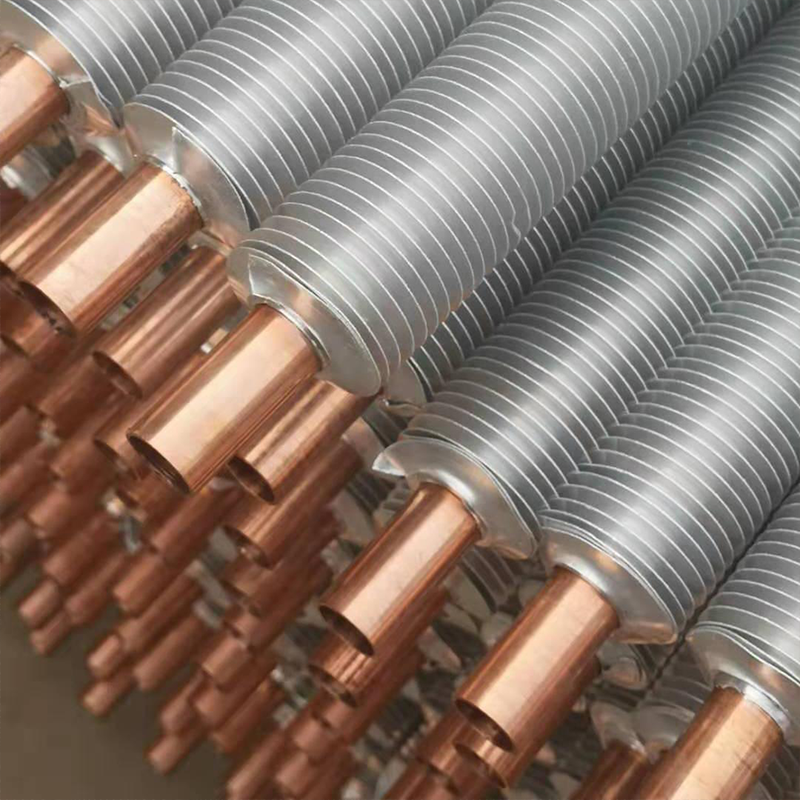
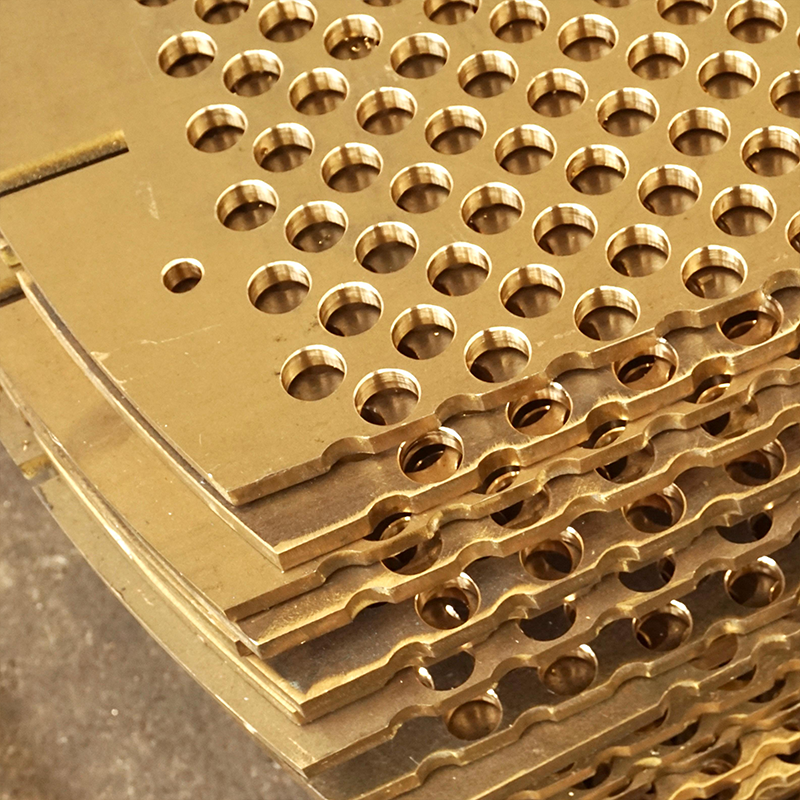
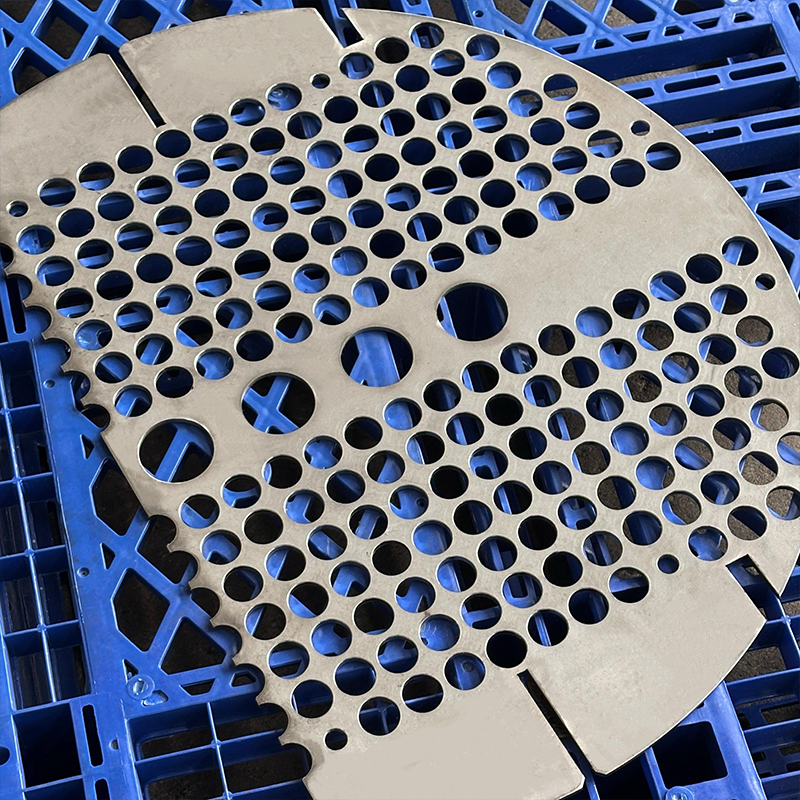
Particular attention should be paid to suppliers operating in related high-tech industries, such as oil refining and energy, where material requirements are maximum. A striking example of a company that sets quality standards in this area isWuxi Kaisheng Electric Power and Petrochemical Equipment Co., Ltd.. Specializing in the development and production of heat transfer equipment, this company demonstrates a level of engineering culture that manufacturers of polymer products should strive for. Their products, including titanium shell-and-tube heat exchangers, ASME high-pressure systems and specialty alloy tube bundles (316 stainless steel, C46400 marine brass, N06625 nickel alloys), are manufactured to the strictest international PED and ASME standards. The experience of companies such as Wuxi Kaisheng, which work with materials with increased corrosion resistance and resistance to extreme temperatures for the oil, gas and chemical industries, shows that equipment reliability depends on in-depth control of each stage - from alloy selection to final assembly. For the plastic customer, this is a signal: choose suppliers who adopt similar principles of total quality control and are able to provide individual solutions that guarantee the stability of your business in any conditions.
| Evaluation parameter | High level (Recommended) | Low level (Risk) | Impact on the project |
|---|---|---|---|
| Equipment | Presses< 10 years, Tier-1 brands (Engel, Haitian) | Presses > 20 years old, unknown brands | Dimensional stability, no defects |
| Tool shop | Own CNC park, mold repair time 2-3 days | Outsourcing of repairs, duration > 2 weeks | Speed of response to design changes |
| Raw material control | Incoming laboratory control, direct contracts | Purchasing from traders without passports | Compliance of mechanical properties with GOST |
| Certification | ISO 9001, TR CU, own test reports | Only a declaration “in words” | Opportunity to participate in tenders and export |
| Logistics of raw materials | Distance to refinery< 500 km or your own pipeline | Dependence on railway supplies from other districts | Price of the final product and stability of supply |
Quality standards and regulatory framework in 2026
Working with Russian manufacturers requires an understanding of the local regulatory framework. The main document is the Technical Regulations of the Customs Union (TR CU). There are different regulations for different types of products: TR TS 005/2011 “On the safety of packaging”, TR TS 004/2011 “On the safety of low-voltage equipment” (for electrical plastics) and others. The manufacturer is required to have a Declaration of Conformity or Certificate of Conformity. It is important to check the validity of these documents in the unified register of Rosakkreditatsiya, since cases of issuing “fake” certificates using gray schemes still occur, especially among small players.
In addition to the mandatory requirements, many leading factories are voluntarily certified according to international standards. The presence of ISO 9001 indicates an established quality management system, but does not guarantee the quality of a specific part. More indicative are industry certifications, such as Ministry of Health approval for food contact or fire safety certifications for construction. In 2025, requirements for the content of heavy metals and phthalates in children's plastics were tightened, which led to a revision of formulations by many manufacturers. When ordering batches for children, request the latest migration and toxicological study protocols.
Another important point is labeling. The Chestny ZNAK system covers more and more product categories, including water, dairy products and tires. Plastic packaging for these products must have DataMatrix codes applied directly during production or on the labeling line. Factories that are part of large clusters have already integrated their ERP systems with the labeling operator, which eliminates errors and fines for the customer. If your product is subject to marking, make sure that the supplier is technically ready to apply the codes and transfer data to the system.
Logistics benefits and risks of regional deployment
The choice of production region determines not only the price, but also the delivery scheme. Russia is a country with vast distances, and logistics can account for up to 30% of the cost of cargo. Clusters of manufacturers of plastic products in the Russian Federation, located in the European part, are convenient for supplies to Moscow, St. Petersburg and for export to Europe (through the remaining corridors) or Turkey. However, for shipments to the Far East or Central Asia, it is more profitable to use the capacities of the Urals and Siberia. We carried out calculations that showed that delivery of pipes from Tyumen to Almaty is cheaper and faster than from the Moscow region, despite the shorter distance in a straight line, due to the developed railway network in this direction.
Multimodal transportation is becoming the standard. Large factories have their own access roads and warehouses for reloading containers. This allows you to combine rail and auto delivery, optimizing costs. For example, a large shipment can be sent by train to a hub in the destination region, and the last mile can be covered by trucks. One of our clients saved 18% on logistics by simply changing the shipping point from a Moscow warehouse to a plant in Tatarstan, using river transport to Nizhny Novgorod and then road transport. Only local experts know such nuances.
Risks are associated with seasonality and infrastructure congestion. In winter, highways in the north can be closed due to snowstorms, and in summer there are queues at border crossings. Manufacturers in remote regions often create safety stocks of finished products in their warehouses or rented terminals in central hubs. When concluding a contract, be sure to specify the terms FCA (Free Carrier) or DAP (Delivered at Place), clearly defining where responsibility for the cargo passes. In our practice, there was a case where the goods were damaged during transshipment at an intermediate base, and the dispute about who was to blame lasted three months due to unclear Incoterms.
Cost-effectiveness and pricing
The price of a plastic product consists of the cost of raw materials (60–70%), energy costs, depreciation of equipment and logistics. In regions with their own electricity generation (often at petrochemical plants), tariffs are lower, which gives a competitive advantage. Volga region factories often offer prices 5–7% lower than their metropolitan counterparts with the same quality. However, it is worth considering currency risks. Although payments within the Russian Federation are carried out in rubles, the price of raw materials is tied to world quotations for oil and gas. Manufacturers working for export can prioritize orders with payment in foreign currency or at the exchange rate on the day of shipment, which must be taken into account when planning the budget.
Wholesale discounts do exist in Russia, but entry barriers can be high. Plants are interested in running lines at full capacity, so the minimum quantity quantity (MOQ) is often calculated based on the continuous operation of the extruder during the shift (tonnage). Ordering small quantities (less than 500 kg) is possible, but the price per kilogram will increase by 1.5–2 times due to the cost of reconfiguring equipment. We recommend consolidating orders or looking for distributors who have already gained volume if you need a small batch of a custom color or configuration.
Frequently Asked Questions
What documents must be requested from a Russian plastic manufacturer?
The minimum package must include: a copy of the current ISO 9001 certificate (if any), a Declaration or Certificate of Conformity of the CU TR for a specific type of product, a quality certificate for a batch of raw materials and a protocol for incoming inspection of finished products. For food plastic, a migration-toxicological research protocol is required. Do not accept scans without stamps; check the certificate numbers in the RosAccreditation register. The absence of any of these documents makes the legal sale of goods in the Russian Federation impossible and creates risks during customs clearance for export.
Is it possible to order the production of a mold at a Russian plant?
Yes, most large factories in clusters have their own tool shops or partners capable of producing a mold of any complexity. Production time varies from 30 to 60 days depending on the complexity and number of nests. The cost of Russian uniforms is now 20–30% lower than European ones with comparable quality, thanks to the use of modern CNC machines. However, for very complex multi-component forms, some factories still prefer to order the base from China or Turkey, assembling and finishing it at home. Please clarify this point at the technical specification stage.
How are things going with the export of plastic products from Russia in 2026?
Exports are actively reoriented to countries in Asia, the Middle East, Africa and Latin America. Logistics chains have been rebuilt, payment problems are resolved through banks in partner countries or cryptocurrency instruments in some cases. Russian plastic is competitive in price, especially in the segment of basic polymers and semi-finished products. The main difficulties may arise with certification in the country of destination, since Russian TR CU certificates are not recognized everywhere. Often it is necessary to obtain a local quality certificate based on Russian test reports. We recommend checking the requirements of the importing country in advance.
What is the typical minimum order quantity (MOQ) for Russian factories?
For standard products (pipes, sheets, bags) the MOQ is usually from 500 kg to 1 ton, which corresponds to one pallet or minimum transport load. For individually designed products (injection molding), the minimum batch is calculated based on the payback of the line changeover and can range from 1000 to 5000 pieces, depending on the casting cycle. Some factories are accommodating and allow smaller volumes, provided they pay an increased price for changeover or if there is free time on the line. Always discuss this option individually with your sales manager.
Conclusion and recommendations for choosing a supplier
Clusters of plastic products manufacturers in the Russian Federation today represent a mature and technologically advanced market capable of meeting the highest requirements. From the petrochemical giants of the Volga region to the high-tech centers of Moscow and the rugged practitioners of Siberia, each region offers its own unique advantages. The key to success lies in correctly matching your objectives with the capabilities of a particular region. Do not chase the lowest price if it is achieved through savings on raw materials or logistics, which will eat up all the benefits.
We recommend starting cooperation with a small trial order to evaluate the real quality of products and delivery discipline. A personal visit to production or ordering an independent audit (which we can organize) will save you millions of rubles in the future by preventing defective deliveries. The market is open for dialogue, and Russian manufacturers are ready to adapt to the needs of global partners, offering flexible conditions and engineering support.
If you are looking for a reliable partner for long-term cooperation,contact us today. Our experts will help you select a plant in the desired cluster, conduct negotiations and organize quality control at all stages of production. We know how to turn geographic distance into a strategic advantage for your business.