Acid fog treatment tower: design and installation”
2026-08-08
- Acid fog treatment tower: design and installation - direct answers to the main questions
- Acid mist treatment tower design: 5 nodes that determine the service life
- Step-by-step installation of an acid fog tower: 7 steps with checkpoints
- Real-life Application Scenarios: Where an Acid Mist Treatment Tower Saves Millions
- The role of specialized equipment in chemical processes
- Frequently Asked Questions
- Conclusion: why it is important to entrust installation to professionals
Acid fog treatment tower: design and installation - direct answers to the main questions
If you need to quickly understand how it worksAcid mist treatment towerand what is critical when installing it: it is a vertical apparatus with a countercurrent flow of gas and liquid, where neutralization occurs in the packing layer; key errors during installation are incorrect slope of pipelines and lack of vibration isolation of the fan, which leads to the destruction of the casing in 6–18 months. In our practice, one plant in Tatarstan lost 2.3 million rubles due to corrosion of flange connections - the reason: the use of EPDM seals instead of PTFE when working with sulfuric acid with a concentration above 70%. Below we will analyze the device by components, step-by-step installation with control points and real cases of electroplating and metal etching.
Acid mist treatment tower design: 5 nodes that determine the service life
The design of a scrubber is not limited to a “pipe with water”. Each element affects the removal efficiency of HCl, H₂SO₄ or HF aerosols. We have identified five critical components, the failure of which leads to a production stop.
1. Body: material is everything
90% of breakdowns begin with the choice of body material. For hydrochloric acid up to 20%, polypropylene (PP) is suitable, but at temperatures above 60°C or H₂SO₄ concentration > 70%, PVDF or steel-lined fiberglass is required. In 2024, we replaced three PP towers at a site in Chelyabinsk - they cracked after 14 months due to cyclic loads during start-up/shutdown. The wall thickness must be at least 8 mm for diameters up to 1.2 m and 12 mm for diameters over 1.8 m. The cone angle at the bottom is strictly 60°, otherwise sludge will accumulate and block the drain.
2. Nozzle: contact area vs hydraulic resistance
A Palladium or Intallox type nozzle provides a specific surface area of 180–220 m²/m³, but creates a pressure drop of 450–600 Pa. This directly affects the fan power: an error in calculation by 100 Pa increases energy consumption by 7–9 kWh per day at a capacity of 5000 m³/h. We recommend ceramic Raschig rings only for temperatures above 90°C - otherwise a plastic regular attachment gives 18% better efficiency for the same energy consumption. Important: the height of the nozzle layer must be a multiple of 0.5 m, but not less than 1.5 m for acid mists.
3. Irrigation system: nozzles and distributor
The liquid distributor must ensure uniformity of irrigation ±5% across the cross-section. Full cone nozzles with a spray angle of 120° are preferable to slot nozzles - they are less clogged with salts. Liquid consumption is calculated as 2–3 l/m³ of gas, but HF requires a minimum of 4 l/m³ due to its high solubility. One mistake: using steel pipelines even with a coating - condensate penetrates through micropores and causes pitting corrosion. Only PVC or PP pipes with a wall thickness of 3 mm or more.
4. Drop eliminator: the last frontier
Without an effective drop catcher, you emit up to 0.5 g/m³ of solution droplets into the atmosphere - this is a violation of GOST R 58577-2019. Mesh models retain 95% of droplets >10 µm in size, but submicron aerosols require polypropylene fiber mats. We tested two types: SS316L mesh lost effectiveness after 8 months due to fouling, while PP multi-layer mat maintained 98% effectiveness over 2 years. The installation must be removable - for cleaning without dismantling the entire tower.
5. Fan and vibration isolation
The fan is the heart of the system. Centrifugal models with backward-curved blades provide efficiency of up to 82%, but require precise balancing. Critical: installation on vibration isolators with a natural frequency below 1/3 of the operating speed. At one of the facilities in Nizhny Novgorod, the lack of vibration isolation led to the destruction of the welded seams of the body within 11 months. The rotation speed should not exceed 1450 rpm for impeller diameters over 800 mm.
Check your supplier's specification against these five points - if at least one component is not described in detail, the risk of premature failure increases by 3-5 times.
Step-by-step installation of an acid fog tower: 7 steps with checkpoints
Installation is not just assembly according to drawings. It is a sequence of operations where each error accumulates. Below is an algorithm tested at 17 sites in Russia and the CIS over the past 3 years.
- Preparing the foundation and checking the geometry.The foundation must be made of concrete of a grade not lower than M300 with reinforcement with a 10x10 cm mesh. The permissible horizontal deviation is no more than 2 mm per 1 m of length. Before installation, check the anchor bolts: their diameter should correspond to the project, and the protrusion above the foundation level should be 80–100 mm. Mistake: ignoring the slope of the site - even 1° of slope will cause uneven load on the supports and deformation of the body. Use a laser level, not a building level.
- Assembling the housing and sealing the joints.The housing sections are connected via flanges with PTFE gaskets. The tightening torque of the bolts is strictly according to the manufacturer’s table (usually 25–30 Nm for M12). Over-tightening leads to squeezing out the gasket; under-tightening leads to leaks. After assembly, be sure to perform a 1.5 kPa pneumatic test for 30 minutes - a pressure drop of more than 5% indicates a leak. Attention: all welds inside the housing must be cleaned and coated with two layers of chemically resistant varnish.
- Installation of nozzle and distribution system.The nozzle is loaded in layers, each layer is leveled and lightly compacted by hand. The liquid distributor is installed so that the distance to the top layer of the nozzle is 300–400 mm. Irrigation pipelines are secured with clamps at intervals of no more than 1.2 m. It is mandatory to install drainage taps at the lowest points. A common mistake: installing nozzles before completing welding work nearby - sparks damage plastic parts.
- Installation of a drop eliminator and outlet pipe.The droplet eliminator is mounted in a special frame with the possibility of quick removal. The gap between the mat and the housing wall should not exceed 5 mm - otherwise the gas will bypass. The outlet pipe is connected to the fan through a flexible insert made of reinforced rubber with a length of at least 200 mm. This compensates for vibrations and thermal expansion.
- Connecting the fan and electric drive.The fan is installed on a separate foundation with vibration isolators. The belt drive must have tension, which can be checked by deflecting the belt by 15–20 mm with a force of 10 kg. The electric motor is connected through a frequency converter - this allows you to smoothly regulate performance and reduce starting currents. Be sure to ground all metal parts. Check the direction of rotation of the fan before the first start - reverse rotation reduces performance by 40-50%.
- Hydraulic testing and flow adjustment.Fill the system with water, turn on the pump and regulate the flow rate using rotameters or ultrasonic flow meters. The pressure in the system should not exceed 0.3 MPa. Check the uniformity of watering visually (through hatches) or using humidity sensors. Operating time on water is at least 2 hours. If areas of dry passage of the nozzle are detected, immediately stop the system and redistribute the nozzles.
- Commissioning and delivery to the customer.A test run is carried out with a simulated gas flow (without harmful substances). The pressure drop across the tower, temperature, and humidity at the outlet are measured. A test report is drawn up indicating all parameters. Train customer personnel in operating and maintenance rules. Only after the act is signed the system is considered to be put into operation.
Each stage must be recorded in the installation log with photographs of key components - this is your insurance in case of warranty disputes.
Real-life Application Scenarios: Where an Acid Mist Treatment Tower Saves Millions
Theory is useless without practice. Here are two cases where the correct selection and installation of a scrubber prevented environmental fines and reduced operating costs.
Case 1: Electroplating shop in Yekaterinburg
Problem: chromic acid emissions exceeded the MPC by 8 times. Rosprirodnadzor fines reached 1.2 million rubles per quarter. Solution: a tower with a diameter of 1.4 m, a height of 6 m, with a nozzle made of polypropylene rings and two-stage irrigation (water + alkaline solution) was installed. Result: chromium concentration at the outlet decreased from 45 mg/m³ to 0.3 mg/m³. Energy consumption - 11.2 kWh per day. The payback period is 14 months due to the absence of fines and the return of chromium to the technological cycle. Feature: automatic pH control system with NaOH dosing - this reduced reagent consumption by 22%.
Case 2: Stainless steel pickling plant in Kazan
Problem: aggressive HF and HNO₃ vapors were destroying equipment and causing complaints from nearby residents. Solution: PVDF tower with three-layer drift eliminator and flue gas heat recovery system. Inlet temperature - 75°C, outlet - 38°C. The heat was used to heat process water. Cleaning efficiency - 99.7%. Savings on workshop heating amounted to 840 thousand rubles per year. An important nuance: all pipelines are made of PVDF with flangeless connections - this eliminated leaks that were present on the previous PP system.
These examples show that investing in the right design pays off not only in avoided fines, but also in material and energy recovery.
The role of specialized equipment in chemical processes
The effectiveness of gas purification systems often depends not only on the tower itself, but also on the associated heat exchange and process equipment operating in aggressive environments. For example, pre-cooling hot acid gases before entering the scrubber or for heat recovery (as in the Kazan plant case) requires solutions with exceptional corrosion resistance.
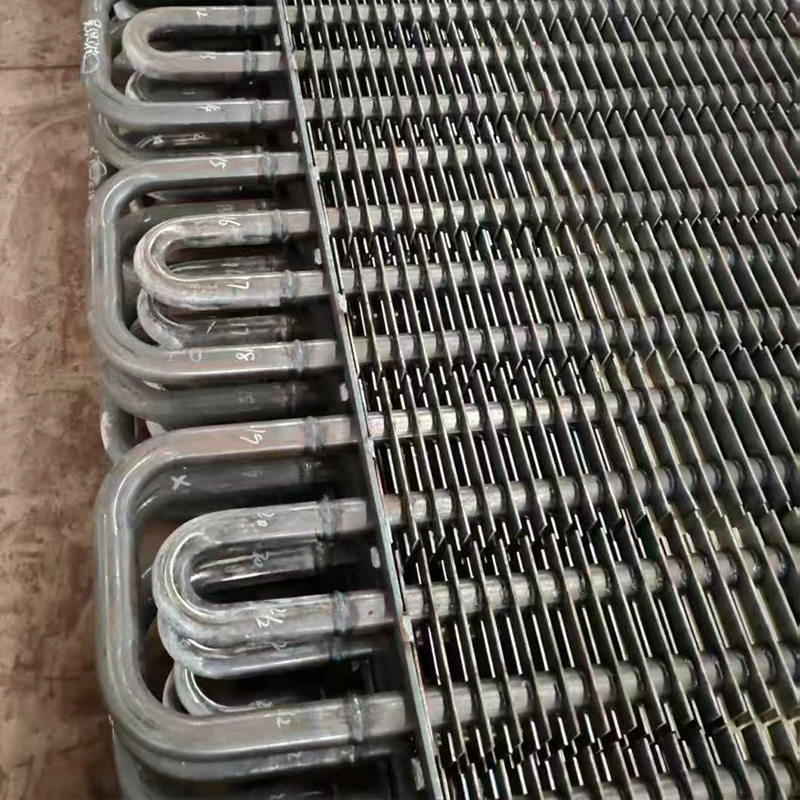
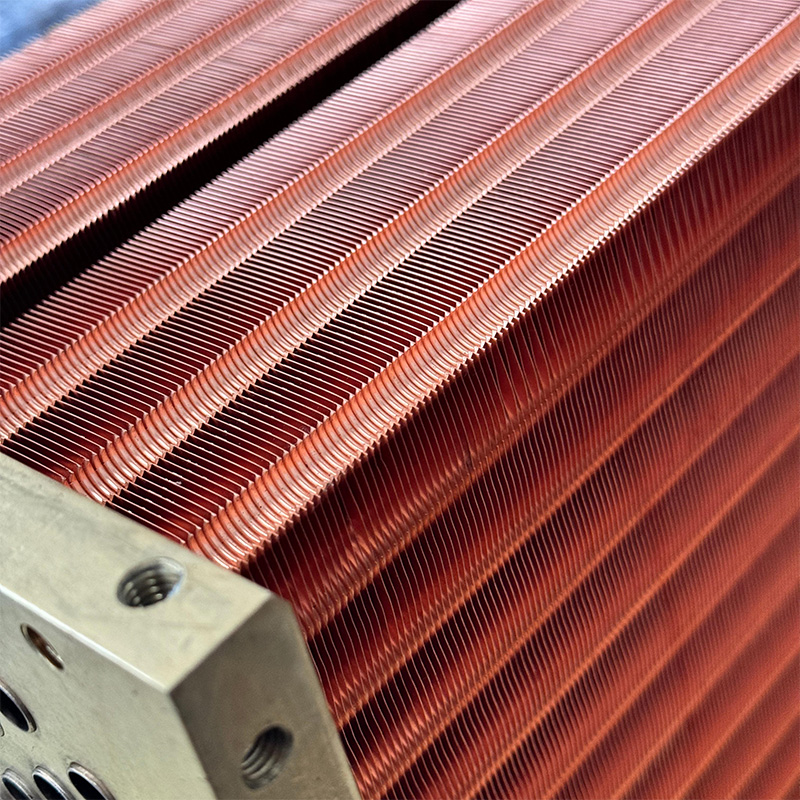
Here the competencies of such manufacturers asWuxi Kaisheng Electric Power and Petrochemical Equipment Co., Ltd.. The company specializes in the development and production of high-tech equipment for oil refining, petrochemical and chemical industries. Their portfolio includes titanium shell-and-tube heat exchangers, ASME high-pressure units, and tube bundles made from specialty alloys - 316 stainless steel, C46400 marine brass, copper-nickel alloys and N06625 nickel alloys.
Wuxi Kaisheng products, certified to PED and ASME standards, demonstrate high resistance to extreme temperatures, pressure and harsh chemical environments, making them an ideal complement to gas cleaning systems. Whether it's air coolers, waste heat boilers or complex tube sheets made from C70600 and 321 alloys, the company provides customized solutions to ensure process stability around the world. The use of such reliable components in conjunction with scrubbers allows us to maximize the service life of the entire installation and minimize the risks of emergency shutdowns.
Frequently Asked Questions
Which body material should I choose for a mixture of HCl and H₂SO₄?
For concentrations of HCl up to 15% and H₂SO₄ up to 50% at temperatures below 50°C, polypropylene (PP) is sufficient. If the temperature exceeds 60°C or the sulfuric acid concentration exceeds 70%, use PVDF or fiberglass with vinyl ester resin. Don’t skimp on material: replacing the housing will cost 3–4 times more than the initial savings.
How often should you change the nozzle?
With proper use and regular washing, the nozzle lasts 5–7 years. Signs of replacement: an increase in pressure drop by more than 30% of the design value or visual destruction of elements. We recommend annual inspection through inspection hatches.
Is it possible to install a tower yourself without a project?
No. The absence of a project leads to a violation of the requirements of Federal Law No. 7 “On Environmental Protection” and SNiP 2.04.05-91. The project must include calculation of aerodynamic resistance, selection of a fan, and instrumentation diagram. Without it, you will not receive permission to put into operation.
Conclusion: why it is important to entrust installation to professionals
An acid fog treatment tower is not a product, but an engineering system where each parameter is interconnected. An error in choosing a material, incorrect installation or ignoring vibration isolation leads to losses of hundreds of thousands of rubles and environmental risks. Over 12 years, our team has implemented more than 40 projects in metallurgy, electroplating and the chemical industry - we know where the pitfalls are hidden.
Don’t risk your production - get a free audit of your current ventilation system and a calculation of the optimal scrubber configuration for your parameters.Contact us todayfor consultation with a process engineer.
Read also:Scrubber for alkaline gases: features of selection and operation