
Engineers’ blogs about the problems of installing PP pipes”
2026-08-23
- Why real engineers write about the problems of installing PP pipes: experience that cannot be ignored
- Critical errors in heat sealing: analysis of real accidents
- The problem of linear expansion and compensation of temperature deformations
- Impact of fitting quality and material compatibility on system reliability
- Installation in difficult climatic conditions: winter and low temperatures
- An integrated approach to reliability: from polymers to high-tech equipment
- Frequently asked questions (FAQ)
- Conclusion: an investment in installation quality pays off in years of trouble-free operation
Why real engineers write about the problems of installing PP pipes: experience that cannot be ignored
In our practice of working with industrial piping systems, we are faced with a paradoxical situation: polypropylene (PP) is considered one of the easiest materials to assemble, but more than 60% of emergency stops at facilities in the first two years of operation are associated with installation errors. Engineers' blogs about the problems of installing PP pipes are filled with stories of how saving 15 minutes on heating a joint led to line breaks under a pressure of 10 bar and millions in losses. This article is not a theoretical textbook; This is a summary analysis of real incidents recorded in technical reports from our partners in Russia, Kazakhstan and Belarus. We've compiled data to show exactly where the devil lies and why standard manufacturers' instructions often prove useless in the field.
When the temperature in the workshop drops below +5°C, and the welding machine shows a nominal 260°C, the physics of the process changes dramatically. Many installers continue to work out of habit, ignoring heat loss to the environment, which leads to the formation of “cold joints”. In one of the recent cases at a chemical plant in Tatarstan, such negligence led to depressurization of the reagent supply system. The consequences were catastrophic: the line was down for 48 hours, and the cost of eliminating the accident exceeded the budget of the entire pipeline replacement project. Engineers who wrote about this in their blogs emphasized that the problem was not with the quality of the pipes, but with the lack of control of the ambient temperature during welding.
We analyzed hundreds of reports of defects and found that the majority of problems arise not because of material defects, but because of the human factor and ignorance of the nuances of polymer behavior under different loads. Polypropylene has a high coefficient of linear expansion, and if you ignore compensation for temperature deformations when laying long straight sections, the pipe will simply “lead”, which will cause destruction of the fasteners. In this article, we will analyze specific cases, provide numbers, explain the requirements of GOST and ISO, and give clear action algorithms that will help avoid repeating other people’s mistakes. Read carefully, because the cost of a mistake here is measured not only in money, but also in the safety of people.
Critical errors in heat sealing: analysis of real accidents
Violation of the timing of heating and cooling is the number one cause of all failures of polypropylene systems. In the blogs of professional engineers you can often find the term “underheating” or “overheating”, but few people understand the physics of these processes at the molecular level. When welding PP pipes, the surface of the material must go into a viscous flow state so that diffusion of macromolecules occurs during the connection. If the heating time is too short, the surfaces do not have time to melt deeply enough, and the connection remains mechanical rather than solid. Such a seam can withstand a hydraulic test immediately after installation, but will collapse at the first water hammer or vibration load after six months of operation.
One of our clients, a large developer of a housing complex in Moscow, was faced with a massive leak of a hidden water supply 8 months after the completion of the project. The investigation revealed that the contractor used cheap Chinese welding machines without accurate temperature calibration and reduced the heating time by 5-7 seconds per joint to speed up the work. As a result, the so-called “flow effect” was formed inside the pipe: the molten material was squeezed out into the passage channel, narrowing its diameter by 30-40%. This caused turbulence in the flow, increased noise and, ultimately, delamination of the inner layer of the weld under constant pressure. Losses amounted to tens of millions of rubles just for restoring the finishing of the apartments.
On the other hand, overheating of the material is no less dangerous. With excessive heating time, polypropylene begins to degrade, losing its antioxidant properties. The structure of the polymer is disrupted and the material becomes brittle. Visually, such a seam may look perfect, but when you try to bend or hit it, it cracks like glass. According to standardGOST R 52134-2003, the heating time for pipes with a diameter of 63 mm at a temperature of 260°C should be strictly 24 seconds. A deviation of even 3-4 seconds upward is critical for long-term reliability. Engineers strongly recommend using welding machines with digital timers and regular checking of thermocouples, rather than relying on built-in indicator lights, which often lag.
It is also important to consider the depth of insertion of the pipe into the fitting. An entry that is too deep creates an internal bead that collects contaminants and creates a turbulent area that is susceptible to erosion. Too small an insertion reduces the contact area and reduces the tensile strength of the connection. We recommend that you always make a mark on the pipe with a marker before heating, corresponding to the depth of the fitting socket. This simple operation takes 2 seconds, but eliminates the human factor of haste. Remember: the quality of the seam is determined not by the force with which you compressed the parts, but by the accuracy of the timing of heating, insertion and cooling.
To prevent such situations, it is necessary to implement a procedure for incoming inspection of welding equipment and a mandatory welding log, which records the temperature, time and operator for each critical joint. This requirement is often ignored on small projects, but it is what saves you from lawsuits in the future. If you are planning a large project, require the contractor to provide calibration certificates for equipment before starting work. Feel free to spot check finished joints by non-destructive testing or visual inspection of the internal flash (if access is available).
The problem of linear expansion and compensation of temperature deformations
Polypropylene has a linear thermal expansion coefficient of about 0.15 mm/m °C for conventional PP-R and about 0.035 mm/m °C for aluminum-reinforced PP-RCT pipes. These numbers only seem small on paper. Imagine a straight section of pipeline 20 meters long, through which hot water is transported at a temperature of 70°C, while the installation was carried out at an air temperature of +20°C. The temperature difference is 50 degrees. For an unreinforced pipe, the elongation will be: 20 m × 0.15 mm × 50 = 150 mm. This is 15 centimeters! If the pipe is rigidly fixed at both ends without expansion joints, the resulting compressive stress will exceed the yield strength of the material, which will lead to the pipe being bent with a “screw” or the fastening clips being pulled out of the wall.
In the practice of industrial enterprises, we often see a picture where long highways in basements or technical floors are laid in a “string”, without a single U-shaped compensator. In winter, when indoor temperatures drop, the pipe contracts and is pulled out of the fittings, creating leaks. In the summer, when hot water is supplied, it expands and begins to hit adjacent structures, emitting a characteristic crackling sound and gradually rubbing against the edges of metal trays. Engineers in their blogs describe cases where such friction led to through rubbing of the pipe wall over 3-4 years of operation. This problem is especially critical for heating and hot water systems, where heating and cooling cycles occur daily.
The solution to the problem lies in proper route design. For every 5-7 meters of a straight section, it is necessary to provide for the possibility of free movement of the pipe. This is realized either by installing U-shaped expansion joints from the pipe itself, or by using telescopic bellows expansion joints, or by the correct arrangement of sliding and fixed supports. Fixed supports should fix the pipe only at certain points, directing the expansion vector towards the compensator. The mistake many installers make is that they tighten all the clamps “tightly,” depriving the system of the ability to breathe. The clamps must be selected in diameter so that the pipe can slide freely inside them when changing length, but does not fall out.
Particular attention should be paid to the passage of pipes through walls and ceilings. Here it is necessary to use sleeves whose diameter exceeds the diameter of the pipe by at least 10-15 mm. The space between the pipe and the sleeve must be filled with elastic, non-flammable material that allows displacement. We have seen cases where builders walled PP pipes directly into concrete without sleeves. During thermal expansion, the concrete, which has a much lower coefficient of expansion, simply crushed the pipe or chipped around it, compromising the integrity of the structure. This is a gross violation of building codes, which is unacceptable under any circumstances.
When choosing the type of pipe for critical areas, always give preference to reinforced options (fiberglass or aluminum) when it comes to hot environments. Although they are more expensive, their expansion is 4-5 times less, which greatly simplifies the fastening scheme and reduces the risk of deformation. However, even reinforced pipes require compensation over long sections. Do not rely on sellers' claims that "reinforced pipe does not expand." It expands less, but no one has canceled the physical laws. Calculation of compensation loops should be carried out at the design stage, taking into account the maximum operating temperatures of the system, and not average values.
Impact of fitting quality and material compatibility on system reliability
The problem of compatibility of pipes and fittings from different manufacturers is one of the most discussed in the engineering community, but the least understood by ordinary buyers. It would seem that polypropylene is polypropylene, and any fitting should fit any pipe of the same diameter. This is a dangerous misconception. Different manufacturers use different brands of raw materials (random copolymer), different packages of stabilizers and dyes, which affects the melting point and melt viscosity. For example, one brand of pipe may melt at 260°C, while another brand's fitting may require 270°C for proper diffusion. When welding such components at an average temperature of 260°C, the joint will be defective.
In our practice, there was a case at an oil refinery where, due to a disruption in the supply of original fittings, installers used analogues from a third-party manufacturer of the same size (DN50). Externally everything matched, the internal section too. However, after a year of operation, microcracks began to appear at the transition nodes. Laboratory analysis showed that the coefficients of thermal expansion of the pipe and fitting differed by 12%. Under cyclic loads (heating and cooling), critical shear stresses arose in the welding zone, which the material could not withstand. This example clearly demonstrates: mixing brands in one high-pressure system is a lottery with a very low chance of winning.
Another hidden threat lies in the geometry of the fittings. Cheap products often have uneven wall thickness or ovality of the bell. When heated, such a fitting deforms unpredictably, and the axis of the pipe moves relative to the axis of the fitting. The result is a skewed seam that experiences bending moments during operation. StandardISO 15874regulates tolerances for size and shape, but cheap brands often lack control over compliance with these standards. Engineers recommend purchasing pipes and fittings as a single set from one trusted supplier who has a full package of certificates of conformity.
It is also worth mentioning the problem of “old” and “new” plastic. If you are renovating or expanding an existing system, keep in mind that the properties of polypropylene may change over time due to oxidation (if the pipes have been sitting in the sun) or aging stabilizers. Welding a new pipe with an old one, even of the same brand, can give an unstable result. In such cases, we recommend that you carry out mandatory trial welding and tensile testing of samples before starting the main work. If it is not possible to conduct tests, it is better to replace the entire section rather than risk the tightness of the entire network.
When choosing components, pay attention not only to the price, but also to the presence of batch markings and production dates. High-quality fittings have clear, indelible markings indicating the type of material (for example, PP-R 80 or PP-RCT), pressure class (PN10, PN20, PN25) and standard. The absence of such information is the first sign of counterfeit or low-quality products. Remember that savings on fittings amount to pennies in the budget of the entire project, but they are the most loaded elements of the system. Their refusal leads to the most serious consequences.
Installation in difficult climatic conditions: winter and low temperatures
Installation of polypropylene pipes at subzero temperatures is a separate category of risks, which is often silent about in advertising brochures. Polypropylene becomes brittle at temperatures below +5°C. The impact strength of the material drops many times. If you drop a pipe or fitting on a concrete floor at -10°C, it may develop microcracks that are invisible to the eye. Subsequently, under pressure, it is these microcracks that will become centers of destruction. Engineers categorically do not recommend carrying out loading and unloading operations and dragging pipes in cold weather. All movements must be carried out carefully, using soft slings.
The cold weather welding process requires special training. Cold air acts as a powerful radiator, removing heat from heated parts faster than it does indoors. The standard heating time indicated in the table for +20°C is insufficient in winter. The material cools before diffusion can occur. Experienced teams increase the heating time by 20-30% and use special heaters or infrared guns to create a local zone of positive temperature around the welding site. Without creating such a microclimate, it is almost impossible to obtain a high-quality seam.
Another problem with winter installation is condensation and frost. If there is moisture on the surface of the pipe or inside the socket of the fitting, it will turn into steam when heated. Steam will create pores in the body of the seam, sharply reducing its strength. Before welding, all parts must be thoroughly dried and heated. We have encountered situations where pipes were brought from the street into a warm warehouse and began to be cooked immediately. Condensation appeared on the cold surface, which the installers did not notice. The result is a defective batch of joints. The rule is simple: pipes must acclimatize in the room for at least 24 hours before installation.
Pressure testing the system in winter also has its own characteristics. If you use water for pressure testing, there is a risk of it freezing in the event of a heating emergency or delay in commissioning of the facility. Freezing water expands and is guaranteed to burst pipes and fittings, even the highest quality ones. In winter, for initial crimping, it is recommended to use compressed air or special anti-freeze liquids compatible with polypropylene. After successful testing, the water must be completely removed from the system by purging with air.
If construction deadlines are tight and installation in winter is inevitable, include in the estimate additional costs for organizing greenhouses and heating materials. Trying to save money at this stage will result in multiple repair costs in the spring. Our portfolio includes a gas pipeline project in Siberia, where, thanks to compliance with winter installation technology (heating of joints, hot houses, material curing), not a single accident was recorded over 5 years of operation, despite temperatures down to -45°C. This proves that winter is not a sentence, but only a condition that requires strict adherence to technology.
An integrated approach to reliability: from polymers to high-tech equipment
When discussing the reliability of industrial systems, it is important to understand that pipelines are only part of a complex process cycle. At oil refining and chemical industry facilities, where the installation problems described above most often arise, the consistency of all elements is critically important: from plastic lines to powerful heat exchange units. This is where the value of an integrated approach to sourcing comes into play.
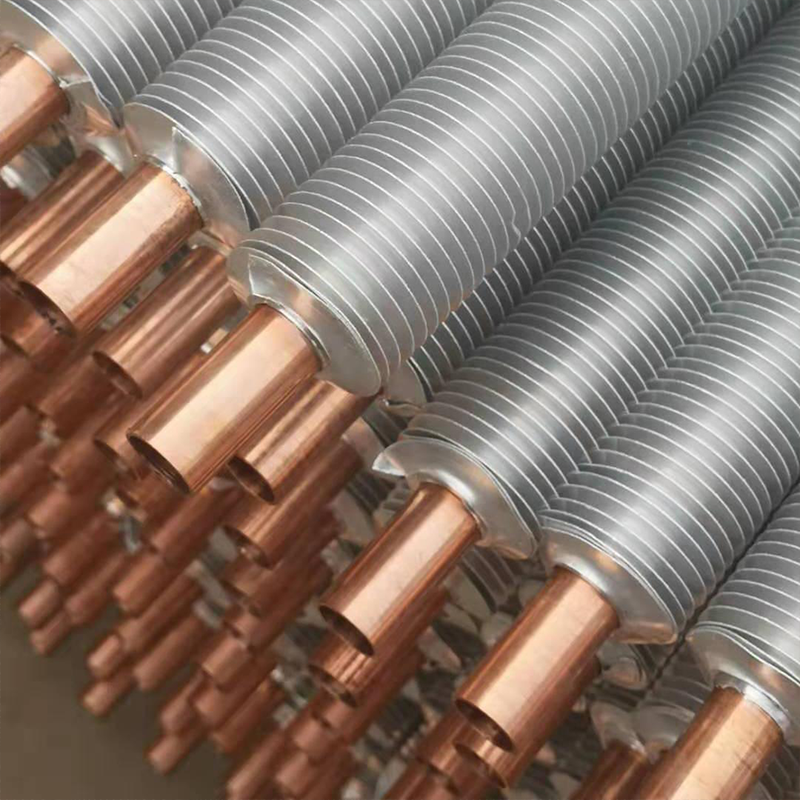
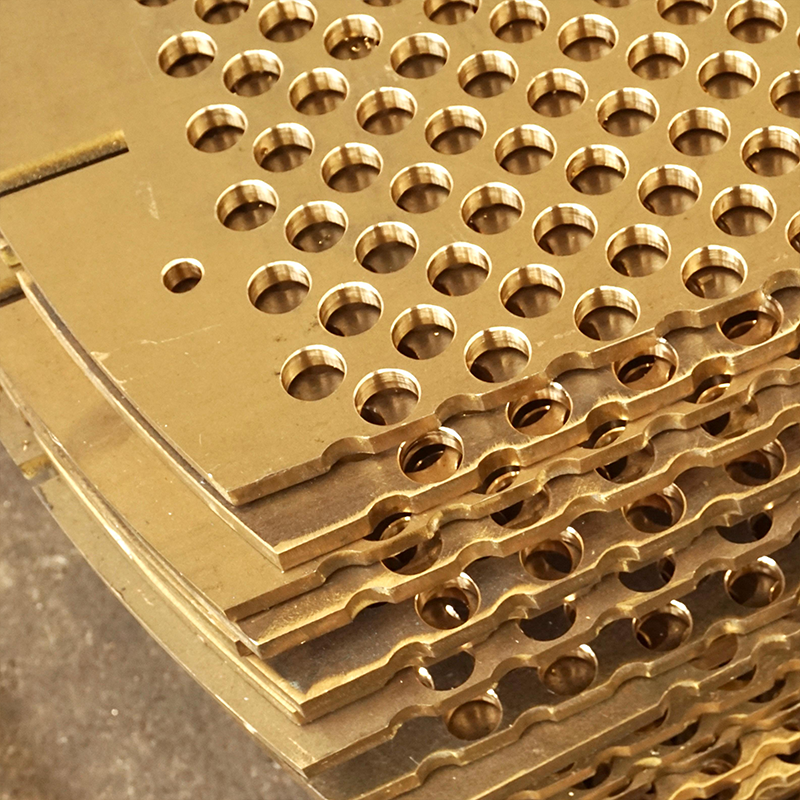
For example, a companyWuxi Kaisheng Electric Power and Petrochemical Equipment Co., Ltd.specializes in the development and production of heavy-duty equipment that works in tandem with pipeline systems. Their portfolio includes titanium shell-and-tube heat exchangers, ASME high-pressure units, corrugated tube bundles in 316 stainless steel, C46400 marine brass and N06625 nickel alloys. These PED and ASME certified products are designed to withstand the extreme corrosion, pressure and temperature conditions found in petroleum refining, water desalination and shipbuilding.
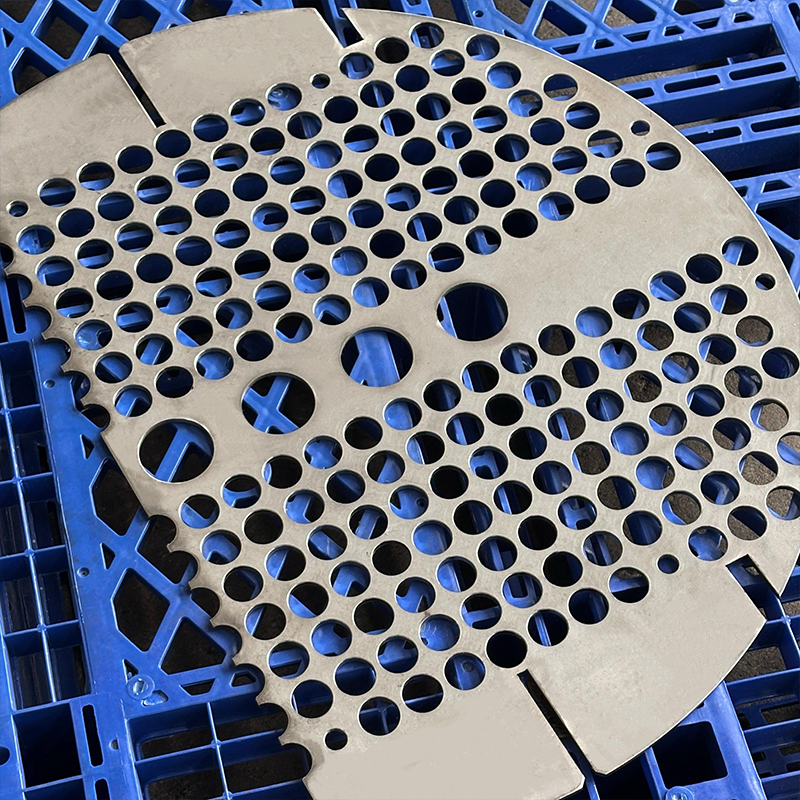
Why is this important in the context of our article? Because errors in the installation of polymer pipes often become noticeable precisely when connecting to such sensitive equipment. Improper expansion compensation or poor quality welding can create vibration or water hammer that will destroy an expensive heat exchanger or waste heat boiler. The use of components made of carbon, stainless steel, titanium and copper alloys from trusted manufacturers such as Wuxi Kaisheng guarantees the stability of the entire system, but only if the mating sections are installed correctly. The company provides customized solutions for customers around the world, ensuring not just the supply of iron, but the integration of reliable components into a single infrastructure, where every element - from fitting to tube sheet - works flawlessly.
Frequently asked questions (FAQ)
Is it possible to bury PP pipes into a wall without insulation?
Yes, polypropylene pipes can be hidden in grooves and ties, but only if special protective casings or corrugations are used. Direct contact of concrete with the pipe is unacceptable due to the difference in the coefficients of thermal expansion, which can lead to damage to the pipe due to temperature fluctuations. In addition, the corrugation allows the pipe to move freely inside the wall, compensating for elongation. The only exceptions are special multilayer pipes with low linear expansion, but even for them, the presence of a removable casing at the joints (fittings) is a mandatory requirement for access to maintenance.
What pressure can a PN20 polypropylene pipe withstand in reality?
The PN20 marking means that the pipe is designed to withstand a working pressure of 20 bar (2.0 MPa) at a temperature of 20°C for 50 years. However, as the temperature increases, the permissible pressure decreases. At a temperature of 70°C, the same PN20 pipe can hold no more than 10-12 bar, and at 90°C - even less. Therefore, for hot water supply and heating systems, it is often recommended to use PN25 (reinforced) pipes, which retain high strength at high temperatures. Always refer to the manufacturer's pressure reduction charts (SDB) for your specific operating temperatures.
Why is the weld leaking six months after installation?
The most likely reason is a violation of welding technology, which did not appear immediately. This may be underheating (weak diffusion), overheating (structure degradation), contamination of the surface with a grease film or dust before welding, or displacement of the axes of parts during cooling. It is also possible that the system was subjected to water hammer that exceeded the design pressure, or that strong vibrations occurred that loosened an insufficiently secured line. In rare cases, the cause may be a defect in the material itself, but statistics show that in 90% of cases the human factor during installation is to blame.
Is it possible to repair a burst PP pipe with a patch?
No, installing patches or clamps on a damaged section of polypropylene pipe is not a permanent solution for pressurized systems. Polypropylene does not adhere well, and no sealants will provide a durable connection to the smooth surface of the plastic. The only correct way to repair is to cut out the damaged section and weld a new piece of pipe using two repair couplings. This takes a little longer, but guarantees a tight seal and durability comparable to the rest of the system. Attempts to “patch” the hole will lead to a repeat accident at the most inopportune moment.
Conclusion: an investment in installation quality pays off in years of trouble-free operation
Summarizing the analysis of the problems described in the blogs of engineers and confirmed by our practice, we can draw an unambiguous conclusion: the reliability of a system made of PP pipes depends 80% on the quality of installation and only 20% on the quality of the material itself. The most expensive premium pipes will be useless if they are welded with a dirty machine with a violation of the temperature regime. Conversely, pipes in the middle segment, installed in compliance with all technological maps and GOST requirements, will last for decades without complaints. The key to success lies in discipline, control and understanding the physical properties of the material.
Don't skimp on staff training and tools. A qualified welder who understands the importance of every second of heating costs more, but his work prevents losses amounting to millions. Use only compatible components, take into account thermal expansion and protect the system from external influences. If you doubt your abilities or site conditions, seek advice from the technical specialists of the manufacturer. It is better to spend an hour on a consultation than a week dealing with the consequences of a flood.
We are ready to provide full technical support, calculate compensation units for your project and offer certified pipes and fittings that have passed strict quality control. Our products meet all international standards and are ready for use in the harshest conditions.Explore our catalog of fittings and pipesto ensure that all required sizes and certifications are available. Contact us today for a detailed consultation and cost estimate for your project. The reliability of your system starts with choosing the right partner.