
Discounted high quality PP tank”
2026-08-15
- Why the discounted price of a high quality PP tank should not be the only selection criterion
- Technical parameters: how to distinguish real PP-H from a fake
- Pricing analysis: where does the real discount come from?
- Typical errors during installation and operation that negate quality
- Production process and quality control at the factory
- Areas of application and specific requirements
- An integrated approach: from heat exchangers to capacitive equipment
- How to place an order correctly and avoid risks
- Frequently Asked Questions
- Conclusion and recommendations for choosing a supplier
Why the discounted price of a high quality PP tank should not be the only selection criterion
In our practice of purchasing industrial equipment over the past 15 years, we have repeatedly encountered a situation where customers were chasing the minimum cost, ignoring the chemical resistance of the material. One of our clients in Novosibirsk lost a batch of finished products and the 5000 liter tank itself after just three months of operation, because they chose a supplier who offered a “high-quality PP tank at a discount” of 40% below the market. Laboratory analysis revealed that instead of polypropylene brand PP-H (homopolymer), resistant to aggressive environments, recycled polyethylene or cheap copolymer PP-B was used, which is destroyed by acids at temperatures above 40°C. This article is written by manufacturing engineers who have seen the consequences of such mistakes, and our goal is to give you clear parameters to evaluate real quality, not marketing promises.
The market for polymer containers in Russia and the CIS countries is oversaturated with offers where the word “quality” is used as an empty phrase. Real quality is determined not by the gloss of the surface, but by the structure of the weld, the absence of internal stresses in the sheet and the compliance of raw materials with international standards ISO 9001 and GOST 15150. When you see an offer to buy a tank at a big discount, you should ask yourself the question: how does the manufacturer reduce the price? Most often, savings are achieved by reducing wall thickness below design, using adhesive instead of extrusion welding, or eliminating hydrostatic pressure control tests. We'll break down each of these risks in detail so you can tell the difference between a good deal and a potential disaster.
Technical parameters: how to distinguish real PP-H from a fake
Polypropylene (PP) is not one material, but a family of polymers with radically different properties. For the manufacture of chemical tanks, the only correct choice is propylene homopolymer (PP-H). Its density is 0.90–0.91 g/cm³, and its continuous operating temperature reaches 100°C. In contrast, random copolymer (PP-R), often used in plumbing, begins to lose hardness already at 60-70°C, and block copolymer (PP-B) has low chemical resistance. If the supplier cannot provide a certificate indicating a specific brand of raw material (for example, Borouche, Sabic, Basell or a high-quality Chinese equivalent of Sinopec), this is the first red flag.
Wall thickness is the second critical parameter, which is often falsified in pursuit of lower prices. For a tank with a volume of 10 m³ operating under atmospheric pressure, the minimum wall thickness should be at least 10-12 mm if the height of the liquid column exceeds 2 meters. Some unscrupulous manufacturers offer walls with a thickness of 6-8 mm, arguing that this is due to the “improved design of the stiffeners.” In our practice, we carried out strength calculations for such “lightweight” containers: when filled to the brim, the deformation of the walls reached 15 mm, which led to rupture of the welds in the corners. A 20% discount on material is not worth the risk of spilling 10 tons of sulfuric acid or alkali.
The method of joining the sheets also determines the durability of the product. The only reliable method for industrial tanks is hot air extrusion welding with a filler rod of the same material. Adhesive joints or welding with a hairdryer (hand-held device) are unacceptable for containers with a volume of more than 500 liters that work with aggressive media. Over time, the glue loses its elasticity and is washed away by the aggressive environment, forming microcracks. Extrusion welding ensures a solid seam, the strength of which is at least 85% of the strength of the base material. Request from the supplier a photo report of the welding process or a video recording of seam inspection before shipment.
Ultraviolet (UV) resistance is another aspect that is overlooked when purchasing outdoor tanks. Pure polypropylene is destroyed by sunlight in 2-3 seasons, becoming brittle. A high-quality tank should contain UV stabilizers (carbon black or special additives) in the mass of the material, and not just be painted on the outside. You can check this with a simple test: scrape off a small layer of the surface. If white or gray material of a different shade is visible under the colored layer, it means that the protection has only been applied superficially and will quickly disappear. Real stabilized PP has a uniform color throughout the entire thickness of the sheet.
Comparative table of material characteristics
| Parameter | PP-H (Homopolymer) | PP-B (Block copolymer) | PE-HD (Polyethylene) | Recycled raw materials |
|---|---|---|---|---|
| Chemical resistance | Excellent (acids, alkalis) | Medium (not suitable for oxidizing agents) | Good, but lower than PP | Unpredictable, risk of dissolution |
| Operating temperature | up to +100°C | up to +60°C | up to +60°C | up to +40°C |
| Tensile strength | High | Medium (shockproof) | High | Low, brittle in the cold |
| Weldability | Ideal (extrusion) | good | Requires special electrodes | Bad, pores in the seam |
| Service life (street) | 15-20 years (with UV protection) | 10-15 years | 10-15 years | 1-3 years |
Pricing analysis: where does the real discount come from?
When you are looking for "discount high quality PP tank", it is important to understand the cost structure of the product. Raw materials (polypropylene granules) make up about 60-70% of the final price of the product. Prices for oil and polymer granules are exchange-traded and transparent. If a supplier offers a price significantly lower than the cost of raw materials plus a minimum markup for processing, this is physically impossible without violating the technology. A real discount can only arise through a wholesale order (MOQ from 5 pieces), seasonal sales of finished goods warehouse or direct delivery from the manufacturing plant without intermediaries.
A common deception scheme is to indicate the price for a tank without taking into account additional elements. They tell you an attractive figure for a “bare” container, but when placing an order it turns out that hatches, pipes, support frames, ladders and an overflow system are paid separately and cost another 30-40% of the base price. Additionally, shipping of large items is often excluded from the initial quote. We recommend requesting a final turnkey specification delivered to site (Incoterms DDP or DAP) to compare actual costs.
Another hidden factor is the warranty. Cheap tanks are often sold with a 6 month or no warranty, with the wording "inspect upon receipt". A high-quality factory-made tank made of PP-H should have a guarantee of at least 24 months for the tightness of the seams and the integrity of the body. Manufacturers who are confident in their product are ready to stipulate penalties in the contract for product failure due to the fault of the manufacturer. The absence of such clauses in the contract is a sign that the seller plans to disappear after receiving payment.
Certification also affects the price. Tanks manufactured in accordance with GOST or having an EAC (Eurasian Conformity) certificate undergo mandatory laboratory tests, which increases their cost. Cheap analogues are often imported as “household products” or “semi-finished products”, bypassing strict quality control. For storing food products or hazardous chemicals, the use of uncertified containers can lead to fines from Rospotrebnadzor or environmental services, which will be many times greater than the amount saved.
Typical errors during installation and operation that negate quality
Even the most expensive and high-quality polypropylene tank can fail prematurely if it is not installed correctly. Polypropylene has a high coefficient of linear expansion (0.15 mm/m °C). This means that a tank with a volume of 10 m³, when the temperature of the contents changes from 10°C to 50°C, will change its geometric dimensions by several centimeters. If such a tank is rigidly fixed to the foundation with anchor bolts without compensating gaps, the resulting thermal stresses will tear the body or deform the bottom. Correct installation involves installing sand or rubber dampers on a leveling pad and freely fastening the pipes using bellows expansion joints.
The second common mistake is uneven distribution of load on the bottom. Polypropylene sheets have a yield strength. If the tank is installed on an uneven surface or on separate supports (feet) without a solid base, the point load from the weight of the liquid will lead to sagging of the bottom and cracks in the welding zone. For containers with a volume of more than 2 m³, a solid concrete base or a steel frame with frequent spacing of crossbars (no more than 300-400 mm) is required. Ignoring this requirement for the sake of saving on preparatory work is a direct path to replacing equipment within a year.
The third point is the compatibility of the stored medium with the sealing material. The body itself may be made of ideal PP-H, but if the gaskets in the hatches or flange connections are made of ordinary EPDM rubber, and you store organic solvents or oils, the seals will swell and leak. Always check the chemical resistance data sheet not only for the body, but also for all auxiliary elements. In our practice, there was a case where a client stored concentrated nitric acid in an excellent tank, but used cheap plastic taps, which corroded within two weeks, starting a chemical fire.
Protection against mechanical damage is also often ignored. Although PP has good impact resistance, sharp objects, falling tools or careless forklift operation may damage the wall. Scratches with a depth of more than 10% of the wall thickness become stress concentrators and points of initiation of corrosion cracking. When installing tanks in production facilities, it is recommended to install protective barriers or use tanks with a metal casing. Don't rely on the idea that "plastic can handle anything."
Production process and quality control at the factory
To make sure you're buying a truly high-quality product, it helps to understand how it's made. The process begins with cutting polypropylene sheets on CNC machines, which guarantees the accuracy of the geometry and the absence of chips. This is followed by molding of the parts (if the tank is not rectangular) by thermoforming or bending. The most critical stage is welding. The modern plant uses automatic extruders that maintain a stable air flow temperature and bar feed speed. Operators must be certified plastic welders (similar to NAKS for metals).
Quality control includes several stages. Visual inspection allows you to identify pores, lack of penetration and contamination in the seam. Deeper control is carried out by spark testing (for tanks with a conductive layer) or ultrasonic flaw detection of seams. A mandatory step for each tank is a hydraulic test. The container is filled with water, kept under load for 2-4 hours and inspected for leaks and residual deformations. Only after successfully passing these tests does the tank receive a quality certificate and labeling.
The documentation accompanying the product must include: a product passport with a serial number, a certificate of material conformity (chemical analysis), a hydraulic test report, installation and operating instructions, and a warranty card. The absence of any of these documents makes it impossible to make claims in the future. When ordering a batch of tanks, we recommend including in the contract the right to have an inspector visit the plant to audit production before shipment. This is standard practice for large B2B contracts.
Areas of application and specific requirements
Different industries have different requirements for polypropylene tanks. In galvanic production and pickling shops, the main threat is acid fumes and high temperature solutions (up to 80-90°C). Here, the thickness of the walls and the presence of an effective ventilation system for the space between the double walls (if a double-wall construction is used) are critical. For the food industry (storage of juices, milk, food additives), the decisive factor is the availability of safety certificates for contact with food and the possibility of full sanitization (CIP washing). The surface inside must be perfectly smooth, without pores or weld beads where bacteria can multiply.
In water treatment plants and wastewater neutralization systems, tank volumes can reach 50-100 m³. This is where structural rigidity comes to the fore. Stiffeners are used that encircle the body, or a frame structure made of rolled metal lined with PP sheets. It is a mistake to try to make a huge tank only from plastic without an external power frame - this is economically impractical and technologically risky. For such objects, we recommend modular assembly on site, since transportation of a monoblock of this size is impossible.
Polypropylene is limited in its suitability for storing fuels and lubricants (fuels and lubricants) and petroleum products due to the risk of static electricity. In such cases, it is necessary to use antistatic additives in the material or ground the container with special buses. The permeability of polypropylene to some light hydrocarbon fractions should also be taken into account. In these scenarios, multi-layer materials or tanks made from special modified PP are often used.
An integrated approach: from heat exchangers to capacitive equipment
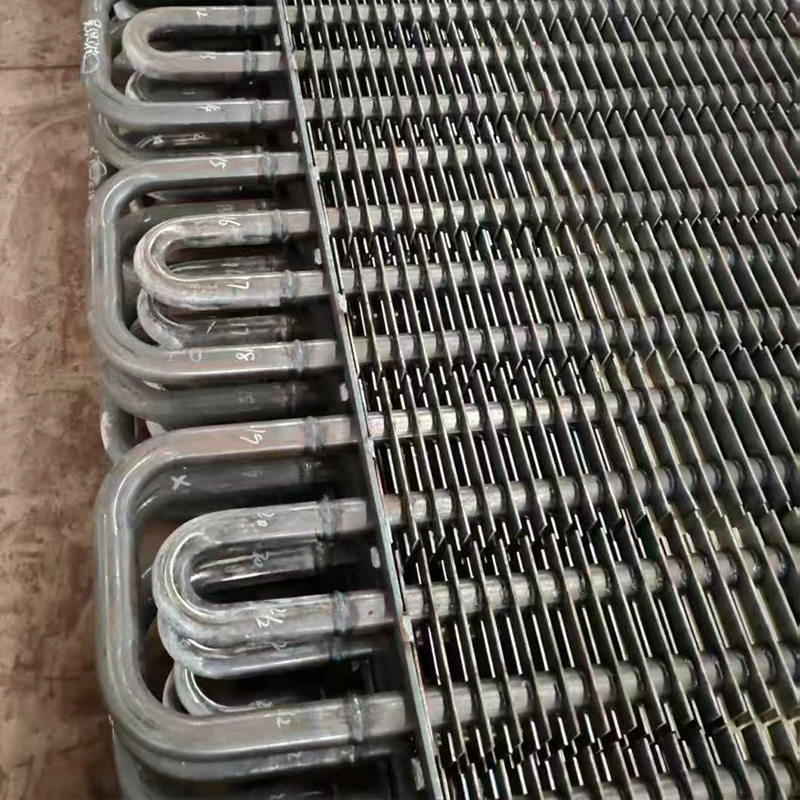
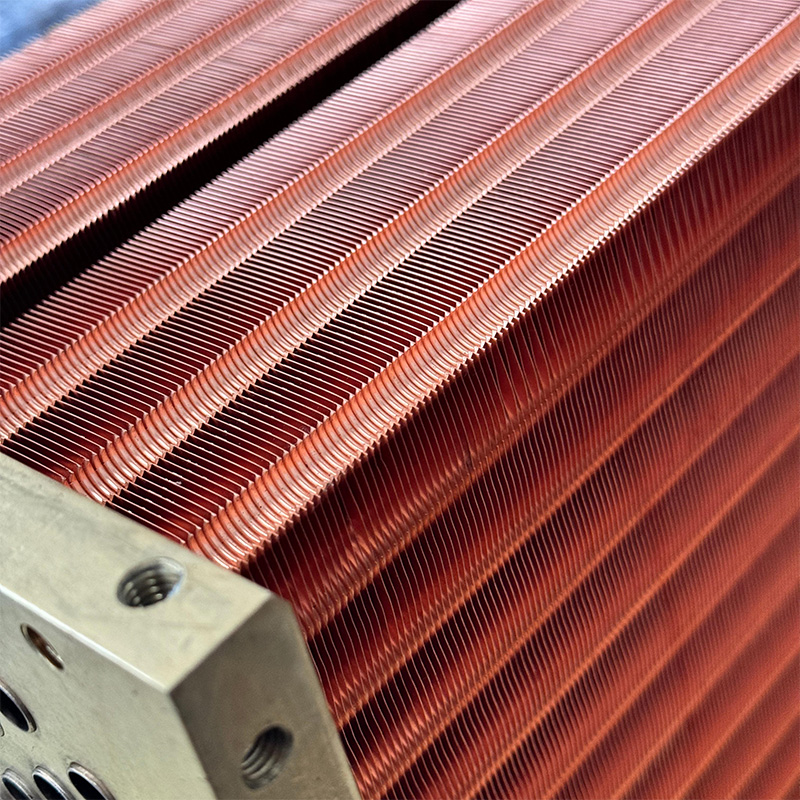
Selecting a reliable supplier often depends on its ability to provide comprehensive solutions for complex process chains. A prime example of a company that combines deep engineering expertise with high production standards isWuxi Kaisheng Electric Power and Petrochemical Equipment Co., Ltd.. While the company's core competency is the design and manufacture of advanced heat transfer equipment—including titanium shell-and-tube heat exchangers, ASME high-pressure units, 316 stainless steel corrugated tube bundles, C46400 marine brass, and N06625 nickel alloys—their competencies directly intersect with the requirements for quality tanks.
Wuxi Kaisheng's experience in working with exotic alloys (titanium, copper-nickel alloys C70600, 321 stainless steel) and product certification to the strictest international PED and ASME standards speak of a manufacturing culture where corrosion resistance and reliability are the No. 1 priority. The company's approach to the production of air coolers and waste heat boilers for the oil refining, chemical industry and seawater desalination is absolutely identical to the requirements for producing the ideal PP tank: careful selection of materials, precision welding and multi-stage quality control. By ordering equipment from manufacturers with such a background, you receive not just a “capacity”, but an engineering solution created with an understanding of all the nuances of operation in aggressive environments under high pressure and temperature. Wuxi Kaisheng's global supply experience confirms that quality stability is only possible if we have our own developed production base and a qualified team of engineers.
How to place an order correctly and avoid risks
When creating technical specifications (TOR) for the purchase of a tank, be as specific as possible. Specify not only the volume, but also the exact dimensional restrictions (ceiling height, width of the doorway for entry), properties of the stored liquid (concentration, temperature, specific gravity), number and diameter of pipes, type of supporting structure. The more detailed the technical specifications, the more accurate the commercial proposal will be and the less likely it is to pay additional fees during the implementation process. Avoid the wording “a tank of approximately 5 cubic meters” - require a drawing with reference to the area.
Pay attention to the terms of payment. Reliable manufacturers work on an advance payment of 30-50%, the rest - upon readiness for shipment or after signing the acceptance certificate at the site. Requirements for 100% prepayment from new suppliers should raise red flags. Also check the company’s reputation: the presence of its own production website (not just a one-page landing page), real photos of the production with the date of shooting, reviews from independent sources.
The logistics of polymer tanks requires a special approach. Large empty containers take up a lot of space but weigh relatively little. However, they are susceptible to deformation if improperly strapped. Транспортировать их нужно только на ровной платформе, закрепив ремнями через мягкие прокладки. Запрещено бросать или кантовать резервуары. При приемке товара обязательно проверьте целостность упаковки и отсутствие видимых повреждений before подписания накладной. Скрытые дефекты сварки могут проявиться только под нагрузкой, но явные вмятины или трещины должны быть зафиксированы сразу.
Frequently Asked Questions
Какой максимальный объем резервуара из PP можно изготовить?
Технологически возможно изготовление резервуаров из полипропилена объемом до 100 м³ и более. Однако ограничение накладывает не возможность сварки, а логистика и транспортабельность. Моноблочные резервуары объемом до 20-25 м³ можно доставить автомобильным транспортом в собранном виде. Для больших объемов применяется метод модульной сборки: листы и заготовки привозятся на объект заказчика, где наши специалисты проводят окончательную сварку и монтаж. Это позволяет создавать емкости любых размеров непосредственно в эксплуатационном помещении или на открытой площадке.
Сколько времени служит резервуар из полипропилена?
Срок службы качественного резервуара из первичного PP-H при соблюдении условий эксплуатации (температурный режим, отсутствие механических перегрузок, УФ-защита для уличной установки) составляет от 15 до 25 лет. В агрессивных средах с высокими температурами (близкими к предельным) ресурс может снижаться до 10 лет. Ключевым фактором долговечности является качество сварных швов. Если швы выполнены с нарушением технологии, разрушение начнется именно с них через 2-3 года. Регулярный визуальный осмотр и обслуживание продлевают жизнь оборудования.
Можно ли ремонтировать полипропиленовые резервуары?
Да, одним из главных преимуществ полипропилена является его ремонтопригодность. Механические повреждения, трещины или свищи можно устранить методом экструзионной сварки даже в условиях эксплуатации (после осушения и очистки зоны ремонта). Для этого не требуется демонтаж емкости. Существуют специальные ремонтные комплекты с прутками того же цвета и марки. Важно, чтобы ремонт выполнялся квалифицированным персоналом с соблюдением технологии подготовки кромок. Неправильный ремонт может привести к распространению трещины дальше.
Выдерживает ли PP воздействие мороза?
Полипропилен сохраняет свои механические свойства при температурах до -20°C…-30°C (в зависимости от марки и наличия модификаторов). Однако при экстремально низких температурах материал становится более хрупким. Ударные нагрузки зимой (например, падение тяжелого предмета на замерзший бак) могут привести к раскалыванию. Для уличной эксплуатации в северных регионах рекомендуется использовать марки PP с повышенной ударной вязкостью или предусматривать обогрев/утепление емкости в зимний период. Пустой резервуар на морозе более уязвим, чем заполненный.
Как рассчитать необходимую толщину стенки?
Расчет толщины стенки зависит от высоты столба жидкости, плотности среды и диаметра резервуара. Существует эмпирическая формула и нормы расчета (например, DIN или внутренние стандарты заводов). Для воды (плотность 1 г/см³) при высоте 2 метра минимальная толщина обычно составляет 8-10 мм. При увеличении высоты на каждый метр толщина должна возрастать. Для агрессивных сред часто добавляют запас прочности 1-2 мм на коррозионный износ. Мы настоятельно рекомендуем не заниматься самодеятельностью, а запросить расчет у инженеров завода-изготовителя, предоставив им точные параметры вашей задачи.
Conclusion and recommendations for choosing a supplier
Покупка промышленного оборудования — это инвестиция в безопасность и бесперебойность вашего производства. Фраза «высококачественный резервуар из PP со скидкой» не должна вводить вас в заблуждение: скидка возможна, но она не должна достигаться за счет жизненно важных параметров вроде толщины стенки или марки сырья. Рынок предлагает множество вариантов, но лишь единицы производителей готовы подтвердить свои слова протоколами испытаний и реальными кейсами долгой эксплуатации.
Мы рекомендуем выбирать поставщика, который предлагает полный цикл услуг: от инженерного расчета и проектирования до производства, доставки и шеф-монтажа. Наличие собственной сервисной службы и склада запчастей — дополнительный плюс. Не бойтесь задавать неудобные вопросы о происхождении гранул и квалификации сварщиков. Честный производитель всегда открыт к диалогу и готов продемонстрировать свои возможности.
Если вы ищете надежное решение для хранения химических реагентов, воды или пищевых продуктов, обратите внимание на наши предложения. Мы специализируемся на изготовлении емкостей из первичного полипропилена с полным пакетом сопроводительной документации и гарантией качества.Изучите каталог резервуаров из полипропиленана нашем сайте, чтобы ознакомиться с типовыми моделями, или свяжитесь с нашими инженерами для расчета индивидуального проекта. Помните: скупой платит дважды, особенно когда речь идет о кислотах и больших объемах.
Свяжитесь с нами сегодня для получения детального коммерческого предложения и консультации технолога. Мы поможем подобрать оптимальную конфигурацию, которая обеспечит баланс между стоимостью и надежностью, исключив риски аварий и простоев.