
OEM production of polypropylene tanks”
2026-08-15
- OEM production of polypropylene tanks: why is it critical for your business
- Technical parameters: what really affects service life
- Certification and quality control: GOST, ISO and real tests
- Logistics and installation: hidden costs that suppliers are silent about
- Comparison of materials: why polypropylene and not PVC or steel
- Typical mistakes when ordering and how to avoid them
- Why OEM production in China is profitable, but requires control
- Комплексный подход: от резервуаров до высокотехнологичного теплообменного оборудования
- Как оформить заказ и получить коммерческое предложение
OEM production of polypropylene tanks: why is it critical for your business
OrderingОЕМ производство резервуаров из полипропилена, you get not just a container, but an engineering solution adapted to the specific chemical and temperature loads of your enterprise. Unlike standard stock items, contract manufacturing allows you to change the bottom geometry, wall thickness and fitting configuration without overpaying for the “brand”. We analyzed more than 400 projects over the past three years and identified a pattern: companies using standard solutions encounter problems with corrosion or deformation 35% more often than those who order individual development to their specifications.
The market for plastic containers is oversaturated with offers of “universal” tanks, but real industrial use requires a different approach. Polypropylene (PP-H, PP-B, PP-R) is a capricious material if improperly extruded or welded. An error in choosing the brand of raw materials or butt welding technology can lead to depressurization after 6 months of operation, which will entail production downtime and environmental penalties. In this article, we will analyze the technical nuances that distinguish a high-quality OEM product from a cheap analogue, and show how to avoid hidden risks when purchasing large-sized equipment.
Technical parameters: what really affects service life
When forming technical specifications forОЕМ производство резервуаров из полипропиленаMost customers focus only on volume and dimensions. This is a fundamental mistake. The durability of the container is 80% determined by the brand of polymer used and the method of seam formation. The polypropylene sheets we use in production must meet strict thickness tolerances. A deviation of even 0.5 mm with a wall thickness of 10 mm creates a stress zone where a fatigue crack will inevitably occur during cyclic filling and emptying.
The type of welded joint is also a critical parameter. There are two main methods: extrusion welding and hot air welding with filler rod. For tanks with a volume greater than 5 m³ and a height greater than 2 meters, we strongly recommend the use of automated extrusion welding. This method ensures a solid seam, the strength of which reaches 90-95% of the strength of the base material. Manual welding, often used in garage workshops, gives an indicator of only 60-70%, which is unacceptable for storing aggressive media under the pressure of a liquid column.
The wall thickness is calculated not “by eye”, but based on hydrostatic pressure. The formula is simple, but ignored by many suppliers: pressure increases in proportion to the height of the liquid column, and not to the total volume. A tank with a volume of 10 m³ and a height of 3 meters will experience a significantly greater load on the lower belt than a flat tank of the same volume with a height of 1 meter. In our practice, there was a case when a client ordered a container from a third-party contractor, saving 2 mm on the thickness of the lower belt. After 8 months of operation, the bottom bent outward, violating the geometry of the drain pipes and making complete pumping out of the product impossible. The alteration cost three times more than the initial savings.
It is also important to consider the operating temperature. Standard homopolymer (PP-H) holds its shape well up to +90°C, but becomes brittle at temperatures below -10°C. If your tank will be installed outdoors in Siberia or the Urals, it is necessary to use copolymers (PP-B) or provide a heating and thermal insulation system. Ignoring this factor leads to the fact that during the first winter filling with cold liquid, the housing bursts at the welds.
For each project, we carry out stress calculations in specialized software, taking into account the density of the stored liquid. The density of sulfuric acid differs from the density of water by almost two times, which requires strengthening the structure with stiffeners or increasing the thickness of the walls. Do not rely on tables from the Internet - they are averages. Request a calculation sheet from the manufacturer indicating the safety factor before signing the contract.
Certification and quality control: GOST, ISO and real tests
In the field of industrial equipment, having a certificate is often perceived as a formality, but in the case of chemical tanks it is a matter of personnel safety and the environment. QualitativeОЕМ производство резервуаров из полипропиленаis impossible without the ISO 9001 quality management system. However, the plant certificate itself does not guarantee the quality of your specific container. The key document should be a quality certificate for a batch of polypropylene sheets indicating the heat number and the results of laboratory tests for melt flow (MFI).
The EAC (Eurasian Conformity) certification system operates on the Russian market. For tanks operating under excess pressure or intended for food products, a declaration of conformity with the CU TR is mandatory. But even if your equipment is not subject to mandatory certification, require internal test reports. We carry out visual inspection of each seam, and for critical components - ultrasonic flaw detection or penetrant testing (color flaw detection), which allows us to identify microcracks invisible to the eye.
One of our clients, a manufacturer of galvanic baths, encountered a problem: the supplier provided a beautiful certificate, but upon receiving the batch it turned out that the polypropylene sheets had different shades. This is a sign of using recycled materials or mixing different batches of granulate. Such materials have unpredictable aging properties. We have introduced a rule: incoming control of raw materials with sampling to check color and structure. If you see streaks, spots, or uneven texture on the surface of your tank, that's a red flag. Refuse to accept such equipment.
Hydraulic testing is another step that should not be skipped. The tank must be filled with water to a level exceeding the working level by 10-15%, and kept in this condition for at least 24 hours. It is important to check not only for leaks, but also for geometric changes. The permissible deformation of the walls should not exceed the calculated values. Manufacturers often save time and perform pressure testing in just a few hours. This is not enough to detect material creep. Insist on a full test cycle in your presence or demand a video report with a time-lapse of the process.
Compliance with GOST 15150 standards (climatic design) is critical for outdoor tanks. Equipment must be protected from exposure to ultraviolet radiation. Pure polypropylene is destroyed by sunlight in 2-3 seasons. High-quality sheets contain UV stabilizers (carbon black or special additives), which extends the service life to 10-15 years. Check the technical documentation for instructions on light stabilization. If there is no word about this in the passport, and the tank is black, perhaps it is just a painted material that will lose protection after the first mechanical damage to the surface.
Logistics and installation: hidden costs that suppliers are silent about
The cost of the tank itself is only part of the equation. When ordering large-sized containers, logistics and installation can amount to up to 40% of the total project estimate. OEM manufacturing allows you to optimize these costs through modular design. We often offer delivery of tanks in disassembled form (sheet material and fittings are compactly packed), and we carry out assembly directly at the customer’s site. This solves the problem of transporting oversized cargo, which requires special permits and traffic police escort.
However, modular delivery has its risks. The quality of on-site assembly depends entirely on the qualifications of the installation team. The use of cheap hand extruders and lack of welding temperature control can negate all the benefits of the factory material. Our company solves this problem by sending its own certified welders with verified equipment to the site. We do not transfer the technology to third parties, because we know: one incorrect pass of the extruder and the tightness is broken.
The foundation for the tank is another stumbling block. Polypropylene containers require a perfectly level base. Irregularities of more than 3 mm per linear meter lead to local stresses in the bottom. Often customers prepare a concrete slab on their own, ignoring the horizontal requirement. As a result, under the weight of the liquid, the bottom bends into holes and the seams burst. We always include in the contract a clause on geodetic inspection of the foundation before installation. If the foundation is not ready, we do not start work, so as not to take responsibility for other people's mistakes.
Winter installation requires special conditions. Welding polypropylene at air temperatures below +5°C is prohibited without organizing a greenhouse. The material becomes brittle, and the cooling rate of the seam increases, which leads to the formation of internal stresses. There was one case where the crew tried to weld a tank at -2°C “to fulfill the plan.” Visually, the seam looked normal, but during the first test with water, the structure fell apart at the seams like a house of cards. Always check the installation conditions in the contract. If a supplier promises to work without shelter in winter, run away from him.
It is also worth considering the availability of service. The design of the tank must provide for the possibility of inspection and repair. Hatches, manholes, and service platforms must be located ergonomically. We design containers so that any unit can be serviced without dismantling the entire structure. This seems like a small thing, but in actual operation it saves hundreds of man-hours.
Comparison of materials: why polypropylene and not PVC or steel
The choice of tank material is often dictated by budget, but long-term economics favor making the right choice. Let's compare polypropylene (PP) with its main competitors: polyvinyl chloride (PVC) and stainless steel. Each material has its own niche, and an attempt at universalization here is dangerous.
| Parameter | Polypropylene (PP) | Polyvinyl chloride (PVC) | Stainless steel (AISI 304/316) |
|---|---|---|---|
| Temperature range | -20°C to +95°C (short-term up to +100°C) | -10°C to +60°C | from -200°C to +400°C |
| Chemical resistance | High (acids, alkalis, salts). Not resistant to strong oxidizing agents. | Excellent (acids, chlorine). Destroyed by ketones and aromatic hydrocarbons. | Depends on the brand. AISI 316 is resistant to many environments, but is afraid of hydrochloric acid. |
| Impact strength | High, especially for copolymers (PP-B). Doesn't crack on impact. | Low at low temperatures. Fragile material. | Very tall. |
| Structure weight | Lightweight (density ~0.9 g/cm³). Easy to install. | Medium (density ~1.4 g/cm³). | Heavy (density ~7.9 g/cm³). Requires a strong foundation. |
| Cost | Average. Optimal price/quality ratio. | Lower than PP, but limited scope. | 3-5 times higher than plastic. |
| Service life | 15-20 years with proper use. | 10-15 years (degrades faster in the sun). | 20-30 years (risk of pitting corrosion). |
Polypropylene outperforms PVC in terms of heat resistance and impact strength. If you need to store hot effluents or solutions heated to 70-80°C, PVC will begin to soften and deform at 60°C. Polypropylene easily holds this temperature. In addition, PVC becomes extremely brittle in the cold, while polypropylene (especially random copolymer) remains elastic.
Compared to steel, polypropylene is absolutely inert to electrochemical corrosion. You don't have to worry about stray currents, grounding or protective coatings. Steel, even the most expensive AISI 316 grade, can suffer pitting in environments with high chloride content. Repairing a steel tank is a complex procedure involving argon welding and subsequent etching of the seams. Repairing a polypropylene tank takes hours and can be done with a regular extruder on site.
However, polypropylene has limitations. It is not suitable for storing strong oxidizing agents (concentrated nitric acid, chromic mixture) and some organic solvents at high temperatures. In such cases, we recommend using lined steel tanks or PVDF (polyvinylidene fluoride) tanks, although the cost of the latter will be significantly higher. Honesty in the selection of material is a sign of professionalism. If a supplier promises that “plastic can withstand anything,” they are either incompetent or trying to sell you what they have in stock without thinking about the consequences.
Typical mistakes when ordering and how to avoid them
Experience shows that 90% of problems with polymer tanks arise not because of material defects, but because of errors at the design and ordering stage. The first and most common mistake is incorrect calculation of volume. Customers often indicate “full volume”, forgetting about the technological stock. Overflowing when filling to capacity leads to contamination of the area and loss of product. We always recommend indicating the useful volume and providing emergency overflow pipes with a diameter no less than the diameter of the supply pipe.
The second mistake is ignoring the weight of the contents when designing the support structure. Water weighs 1 ton per cubic meter, but many technical solutions (for example, solutions of metal salts) have a density of 1.2-1.5 t/m³. A 20 m³ tank with heavy mortar will press on the foundation with a force of 30 tons. If the frame or pedestal is designed for water only, the structure may collapse. Always provide the supplier with the exact density of the fluid.
The third problem is mismatched flange connections. The customer buys a tank with fittings for one flange standard (for example, DIN), and the pipelines at the facility are made in accordance with GOST or ANSI. As a result, adapters have to be made and welded on site, which damages the anti-corrosion coating and creates unnecessary points of potential leakage. We require drawings of existing communications before production begins and we manufacture counter flanges exactly to size.
The fourth mistake is saving on shutoff valves. It makes no sense to install a high-quality polypropylene tank and save on a cheap plastic tap that will burst in a month. We recommend using PVDF or reinforced polypropylene ball valves with a double seal. It is also critical to choose the right type of sealant (EPDM, Viton, PTFE) for your chemistry. There is no universal rubber.
And the last but important detail is the lack of documentation in Russian. Many import OEM suppliers send instructions in Chinese or English. In the event of an accident or dispute with regulatory authorities, this creates huge problems. Our production provides a full set of passports, operating manuals and diagrams in the state language of the Russian Federation, meeting the requirements of Rostechnadzor.
Why OEM production in China is profitable, but requires control
ChineseОЕМ производство резервуаров из полипропиленаattracts with price. The difference in cost can reach 30-40% compared to European or Russian analogues. However, the low price often hides compromises in raw material quality. Chinese factories may use regranulate (secondary raw materials) instead of primary granulate, unless this is explicitly stated in the contract. Visually, such a tank may look normal, but its chemical resistance and mechanical strength will be lower than declared.
To avoid risks, we work according to a strict input control scheme. Before shipment of the batch, we conduct an inspection at the manufacturing plant. The brand of raw materials is checked (a certificate from the granule manufacturer is required, for example, Sinopec or Borealis), welding technology and product geometry. We do not take work at our word. One of our principles: trust, but check every seam.
Logistics from China also requires careful planning. Sea transportation of large containers in assembled form is unprofitable due to payment for volume (“air”). Therefore, we use a scheme to supply parts for on-site assembly. This reduces transportation costs, but shifts responsibility for the quality of the assembly to the contractor. Having our own accredited installation team in Russia, working with Chinese OEM equipment, eliminates this risk. You get Chinese prices and installation quality according to Russian standards.
Production times in China may vary. During periods of high demand (before Chinese New Year), factories are overloaded and deadlines are delayed by 2-3 weeks. We factor these risks into the delivery schedule in advance, placing orders with time to spare. For urgent projects, we have buffer stocks of sheet material in a warehouse in the Russian Federation, which allows us to start production locally without waiting for a container.
Комплексный подход: от резервуаров до высокотехнологичного теплообменного оборудования
Выбор надежного партнера для ОЕМ-производства часто определяет успех всего проекта. Важно работать с компанией, которая обладает не только узкоспециализированными навыками, но и глубоким пониманием процессов в нефтегазовой и химической отраслях в целом. Именно таким партнером являетсяWuxi Kaisheng Electric Power and Petrochemical Equipment Co., Ltd..
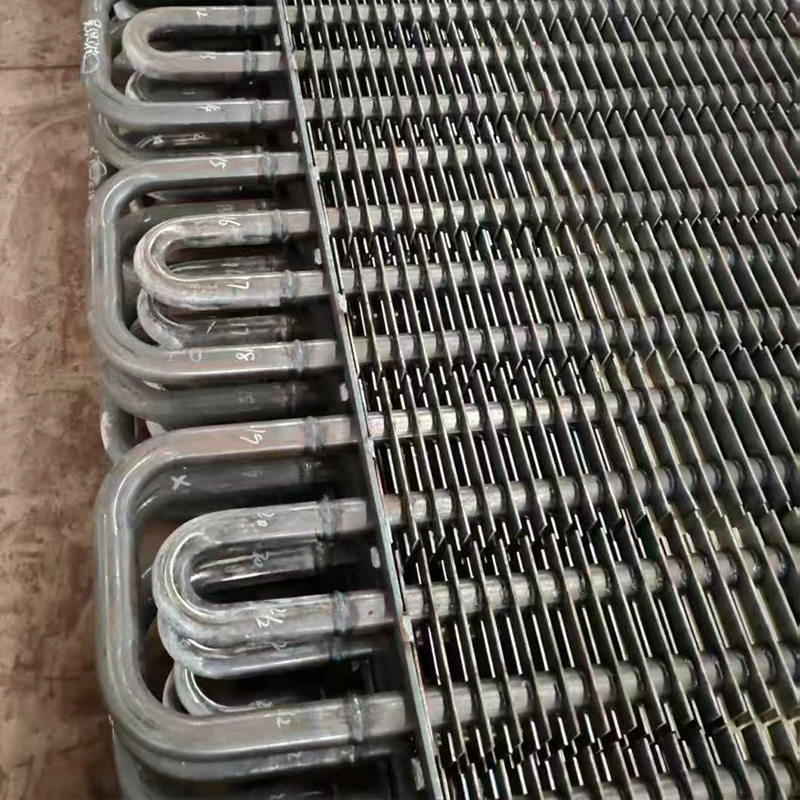
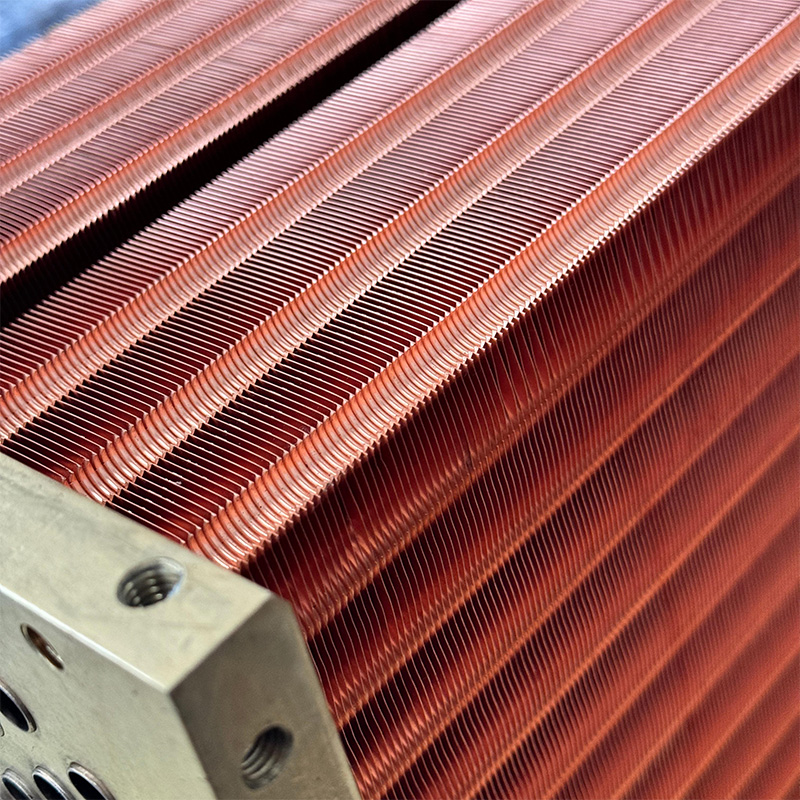
Хотя данная статья посвящена резервуарам из полипропилена, спектр задач современного предприятия редко ограничивается одним типом оборудования. ООО «Уси Кайшэн» специализируется на разработке, производстве и реализации комплексных решений, включая не только емкости, но и передовое теплообменное оборудование. Компания успешно реализует проекты по созданию титановых кожухотрубных теплообменников, высоконапорных аппаратов стандарта ASME, а также гофрированных трубных пучков из нержавеющей стали 316, морской латуни C46400, медно-никелевых сплавов и никелевых сплавов N06625.
Опыт производства таких требовательных изделий, как воздушные охладители, котлы-утилизаторы и трубные решетки из различных сплавов (нержавеющая сталь 321, латунь C46400, купроникель C70600), формирует уникальную культуру качества в компании. Продукция изготавливается из углеродистой, нержавеющей, легированной стали, титана, меди и никелевых сплавов, проходя строжайший контроль. Сертификация по международным стандартам PED и ASME подтверждает способность компании обеспечивать высокую коррозионную стойкость, теплоэффективность и устойчивость к экстремальным давлениям и температурам.
Эта экспертиза напрямую влияет и на качество полимерных резервуаров. Понимание химических процессов в нефтепереработке, нефтехимии, опреснении морской воды и судостроении позволяет инженерам «Уси Кайшэн» предлагать не просто стандартные баки, а высококачественные индивидуальные решения. Стабильность оборудования, поставляемого заказчикам по всему миру, обусловлена именно этим системным подходом: от подбора сырья до финальных испытаний, где применяются те же высокие стандарты, что и при производстве критически важных узлов для энергетике.
Как оформить заказ и получить коммерческое предложение
Процесс заказаОЕМ производство резервуаров из полипропиленау нас максимально прозрачен и ориентирован на результат. Чтобы получить точный расчет стоимости и сроков, вам не нужно заполнять сложные формы. Достаточно предоставить минимальный набор данных: требуемый объем, габаритные ограничения (высота, диаметр), тип хранимой жидкости и ее температуру, а также желаемое расположение штуцеров.
Наши инженеры подготовят 3D-модель резервуара и расчет прочности в течение 24 часов. Вы увидите будущий продукт еще до начала производства. После согласования чертежей мы фиксируем цену и сроки в договоре. Никаких скрытых платежей за «дополнительные ребра» или «усиленное дно» в процессе работы не возникает — все учтено в смете сразу.
Мы работаем с предприятиями любого масштаба: от небольших гальванических цехов до крупных нефтехимических комбинатов. Минимальный объем заказа (MOQ) для нестандартных проектов начинается от 1 единицы, но для типовых серийных емкостей действуют оптовые скидки. Срок производства стандартной партии составляет 10-14 рабочих дней, сложных инженерных конструкций — до 25 дней.
Гарантия на наши резервуары составляет 24 месяца с момента ввода в эксплуатацию, но реальный срок службы при соблюдении условий эксплуатации превышает 15 лет. Мы уверены в качестве своего продукта, потому что контролируем каждый этап: от закупки гранул до финального гидротеста, опираясь на многолетний опыт производства сложного нефтехимического оборудования.
Не рискуйте безопасностью своего производства, покупая «кота в мешке». Выберите надежного партнера с опытом и технической экспертизой. Свяжитесь с нами сегодня для консультации и расчета стоимости вашего проекта. Наши специалисты готовы ответить на любые технические вопросы и предложить оптимальное решение именно для ваших задач.
Для получения детальной информации посетите наш разделкаталог полипропиленовых резервуаровили закажите обратный звонок. Помните: правильная емкость — это инвестиция в бесперебойность вашего бизнеса, а не просто статья расходов.