
Horizontal PP tank for petroleum products”
2026-08-12
Horizontal PP tank for petroleum products: technical requirements and selection of supplier
Choosinghorizontal PP tank for petroleum products, industrial plants face the need to balance chemical resistance of a material, mechanical strength of a structure, and cost of ownership. Unlike their steel counterparts, polypropylene containers are not subject to corrosion when storing aggressive media such as sulfuric acid or alkalis, however, their use for storing pure petroleum products requires strict adherence to temperature conditions and grounding rules. Our experience shows that 70% of accidents at storage facilities are not related to the destruction of the housing, but to errors in the installation of supporting structures and violations of electrostatic safety.
In this article, we will analyze the critical parameters for choosing horizontal tanks made of polypropylene (PP), analyze real operational cases in the Russian climate, and provide a clear algorithm for checking the supplier. We will not use marketing slogans - only facts confirmed by laboratory tests and production practice.
The critical role of the material: why PP and not steel or PVC
Polypropylene (PP-H, PP-B, PP-R) has become the de facto standard for chemical engineering due to its unique combination of properties. For the storage of petroleum products, the key factor is the inertness of the material to hydrocarbons. Steel tanks require internal anti-corrosion treatment, which degrades over time, leading to rust contamination of the product. Polypropylene does not have this disadvantage.
However, there is a common misconception that any plastic is suitable for any liquid. In our practice, there was a case when a client ordered a container made of homopolymer (PP-H) to store a mixture with a high content of aromatic solvents at a temperature of +60°C. After 8 months of operation, the bottom of the tank lost its rigidity and deformed under the weight of the liquid. The reason lay in the wrong choice of raw material brand: such conditions required a copolymer (PP-B) or a reinforced structure with stiffeners.
When choosinghorizontal PP tank for petroleum productsThree material parameters must be taken into account:
- Flash point and operating temperature:Standard polypropylene retains properties up to +90°C. A short-term increase to +100°C is acceptable, but prolonged exposure above this point leads to creep of the material.
- UV stability:If the tank is installed in an open area, an anti-ultraviolet stabilizer (soot or special additives) must be added to the mass. Without this, the service life is reduced from 20 years to 3-5 years due to surface cracking.
- Antistatic properties:Petroleum products have high electrical resistivity. When draining and filling, static electricity occurs. Pure polypropylene is a dielectric. For safe operation, a potential equalization system and external grounding of the metal frame or built-in elements are required.
Don't skimp on the brand of raw materials. Sheets from proven European or high-quality Asian manufacturers (for example, Simona, Rochling or analogues) are more expensive, but guarantee predictable behavior of the material for decades. Cheap regranulate may contain impurities that reduce chemical resistance.
Design features of horizontal tanks
The horizontal design dictates specific requirements for the strength of the housing. Unlike vertical containers, where the main load is distributed evenly across the walls, a horizontal cylinder experiences significant deflection loads, especially if the support is not carried out correctly.
Reinforcement system and stiffeners
For volumes over 5 m³, the use of a smooth-walled structure is unacceptable. Manufacturers use two main methods of amplification:
- Outer rings:They are welded from the outside in increments of 500–1000 mm. This is the most reliable method that allows you to increase the wall thickness locally without increasing the cost of the entire sheet.
- Frame harness:The tank is placed in a metal frame (usually St3 steel with powder coating or stainless steel). The frame takes the weight of the liquid, relieving the load on the plastic.
An important nuance: when using a metal frame, the contact between metal and plastic must be softened with rubber gaskets. Direct contact will lead to abrasion of polypropylene on metal due to thermal expansion (the coefficient of linear expansion of PP is 10 times higher than that of steel).
Welds as a risk zone
The quality of welded joints determines the tightness of the product by 90%. Modern production uses hot air extrusion welding with a filler rod. Visual inspection of the seam is insufficient. Reliable factories test witness samples for tensile strength. The strength of the seam should be at least 85–90% of the strength of the base material. If the supplier can't provide a welding test report, that's a red flag.
Pay attention to the geometry of the bottom. The flat bottom of large horizontal tanks is prone to sagging (“belly”). The optimal solution is a bottom with a slight cone or convexity outward, or the mandatory use of supporting saddle supports along the entire length of the cylinder, rather than point supports.
Comparative analysis: Horizontal PP vs Steel vs Fiberglass
To make an informed decision, it is necessary to compare polypropylene with alternatives in the context of petroleum product storage. Below is a table based on actual operating data in temperate and cold climates.
| Parameter | Horizontal PP tank | Steel tank (coated) | Fiberglass Reinforced Plastic (GRP) Tank |
|---|---|---|---|
| Corrosion resistance | Absolute. Does not rust, does not require painting inside. | Depends on the quality of the coating. Risk of under-film corrosion after 5-7 years. | High, but depends on the quality of the resin and barrier layer. |
| Structure weight | Lightweight (density ~0.9 g/cm³). Installation without heavy equipment. | Heavy. Requires a strong foundation and a crane. | Average. Lighter than steel, but heavier than PP. |
| Temperature range | From -20°C to +90°C (short-term up to +100°C). | From -60°C to +300°C. | From -40°C to +120°C (depending on the resin). |
| Maintainability | High. Cracks and holes are welded on site in 1 hour. | Low. Requires stopping, cleaning, sandblasting and painting. | Complex. Requires specialized resins and drying conditions. |
| Service life | 20+ years with UV protection. | 10-15 years before major renovation. | 15-20 years. |
| Cost of Ownership (TCO) | Low (no maintenance costs). | High (regular anti-corrosion). | Average. |
From the table it is clear thathorizontal PP tank for petroleum productswins in the categories of maintenance and weight, but loses to steel in heat resistance. If your technological process involves heating petroleum products above +95°C, polypropylene will not be suitable - you will have to consider lined steel or special grades of stainless steel. For standard storage of diesel fuel, gasoline or oils at ambient temperatures, PP is the optimal choice in terms of price/quality ratio.
Typical mistakes when ordering and installing
Over the years, we have identified recurring problems that lead to financial losses for customers. Avoid them by following our recommendations.
Mistake #1: Ignoring thermal expansion.
Polypropylene expands significantly. If the piping is rigidly fixed to the foundation and welded to the tank nozzles without expansion joints, during the first heating/cooling cycle the nozzle will be torn off from the body. We have seen cases where entire sections of pipes have broken the neck of a tank. Solution: use bellows expansion joints or U-shaped loops on the connections and floating supports.
Mistake #2: Wrong foundation.
A horizontal tank must be supported by saddles along the entire circumference or by at least two wide supports with a radius corresponding to the curvature of the tank. Installation on brick pillars or narrow channels without gaskets leads to point loads, wall piercing and depressurization. The foundation must be perfectly level. A height difference of more than 5 mm over a length of 3 meters is unacceptable.
Mistake #3: Saving on shutoff valves.
Often customers buy a high-quality tank, but save on ball valves by installing cheap Chinese analogues with unreliable seals. The leak occurs precisely at the tank-tap connection. Use flange connections with paronite or Teflon gaskets suitable for petroleum products and check bolt tightness with a torque wrench.
Production process and quality control
Understanding how it is madehorizontal PP tank for petroleum products, will help you differentiate between a professional manufacturer and a garage workshop. The technological process includes the following stages:
- Sheet cutting:A CNC machine is used for precise cutting. Manual cutting with scissors produces uneven edges, which impairs the quality of welding.
- Bending:The sheets are heated in an oven to a plastic state and bent on rollers. It is important to control the temperature so as not to overheat the material (it will become brittle) or underheat it (cracks will appear during bending).
- Body welding:Automatic or semi-automatic extrusion welding. The operator must be certified as a plastic welder.
- Installation of fittings:The pipes are welded in with reinforcement with overlay sheets (bobs) to distribute the load.
- Hydraulic tests:Mandatory stage. The reservoir is filled with water for 24 hours. The absence of leaks and deformations is checked. The test report must be handed over to the customer.
A certified manufacturer always provides a quality certificate for raw materials (certificate of the sheet manufacturer) and as-built documentation for welds. The absence of these documents makes the product warranty fictitious.
An integrated approach to equipping petrochemical facilities
Selecting a tank is only part of the task of creating a reliable storage and processing system. Modern enterprises strive to work with suppliers who can cover the full range of needs: from storage tanks to complex heat exchange equipment. A striking example of such an integrated approach is the companyWuxi Kaisheng Electric Power and Petrochemical Equipment Co., Ltd..
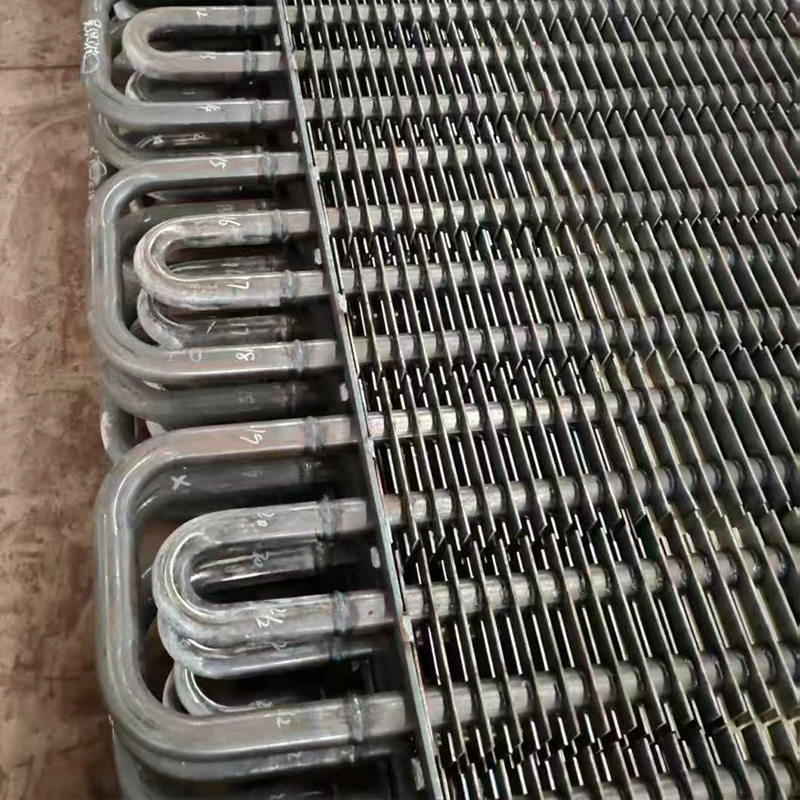
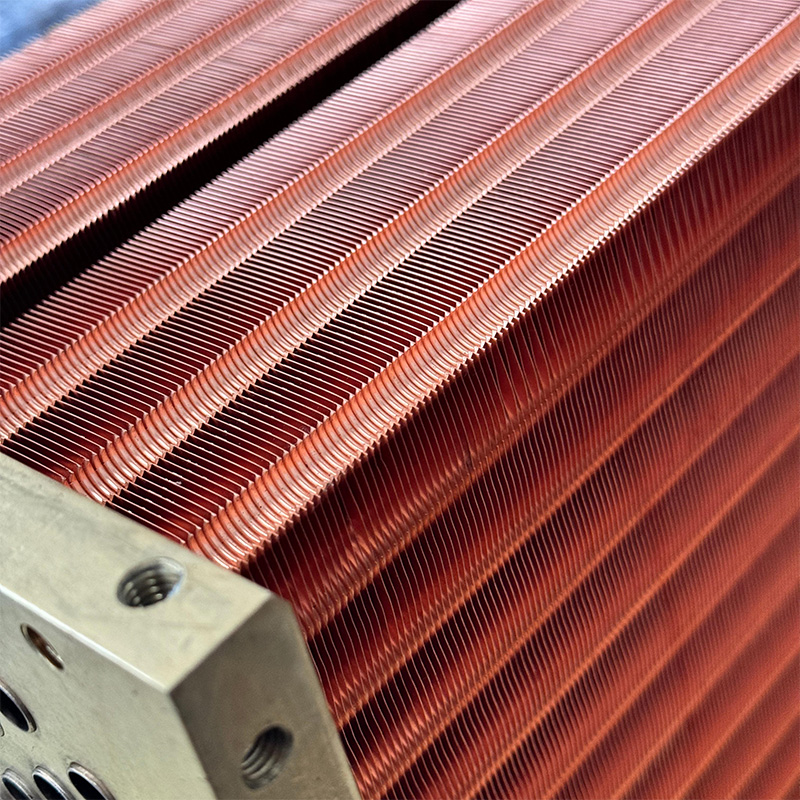
Specializing in the development and production of high-tech solutions for the oil refining and chemical industries, the company offers not only standard equipment, but also customized engineering solutions. Wuxi Kaisheng LLC's portfolio includes titanium shell-and-tube heat exchangers, ASME standard high-pressure units, corrugated tube bundles made of 316 stainless steel, C46400 marine brass and copper-nickel alloys. Products made from carbon steel, alloy steel, titanium and nickel alloys (including N06625) are certified to international PED and ASME standards.
This level of competence ensures that when upgrading your tank fleet, you get a partner who understands the specifics of corrosion resistance, pressure and temperature requirements at all nodes of the process chain. Whether you need a simple storage tank or a complex heat exchange system for seawater desalination or shipbuilding, reliable equipment and stable quality are paramount.
Logistics and installation: specifics of large dimensions
Transporting horizontal tanks with a volume of more than 10 m³ is often difficult due to restrictions on the width and height of roads. In such cases, it is advisable to order production in sections with subsequent assembly and welding at the customer’s site. This increases the cost of work by 15–20%, but solves logistical problems.
When installing on site, it is important to protect the welding equipment from wind and precipitation. Welding polypropylene in the open air with a wind stronger than 5 m/s is prohibited - the air flow cools the welding zone faster than the diffusion of materials, which leads to the formation of lack of penetration. Use temporary shelters or awnings.
Grounding is a critical safety element. The tank body must be connected to the enterprise grounding circuit with a copper conductor with a cross-section of at least 10 mm². The contact area must be stripped down to metal (if there is a frame) or a special clamp must be used to pierce the insulation (for built-in metal elements). A spark of static electricity when filling a container with light fractions of petroleum products can lead to an explosion.
Economic justification for choice
Pricehorizontal PP tank for petroleum productsis formed based on the weight of the raw materials, the complexity of the design and the volume of the batch. Although the initial cost may be comparable to painted steel, the total cost of ownership (TCO) of polypropylene is lower.
Let's consider an example calculation for a tank with a volume of 20 m³:
- Steel:Purchase + delivery + installation + anti-corrosion (every 5 years) + downtime for repairs. Over 10 years you will have spent approximately 140% of the initial cost.
- PP:Purchase + delivery + installation. Maintenance costs are close to zero. Over 10 years you pay 100% of the initial cost.
In addition, the liquidity of polypropylene containers is higher. A used PP tank that has not had contact with toxic substances is easy to clean and can be sold or repurposed. A steel tank with corrosion is often only used for scrap.
How to choose a reliable supplier: checklist
The market is saturated with offers, but not all manufacturers are the same. Use this checklist when negotiating:
- Request photos of finished objects:Ask to see tanks that have been in use for more than 3 years. Photos from the warehouse are not suitable.
- Find out the source of raw materials:The manufacturer must name the brand of polypropylene sheet. Refusal to answer or mention of “high-quality Chinese plastic without a brand” is a sign of poor quality control.
- Check the equipment:The presence of automatic welding machines (for example, Leister, BAK) indicates a serious approach. Hand-held hair dryers are only acceptable for minor repairs.
- Warranty conditions:The warranty should cover not only the material, but also the work of the welders. The standard term is from 2 to 5 years.
- Engineering support:A good supplier will offer a calculation of wall thickness and support diagram, and will not just ask “how much volume do you need?”
Development prospects and new standards
The industry is moving towards increasing the unit capacity of rotational molding and extrusion plants, which allows for the creation of high-volume, seamless tanks. However, for long horizontal containers, sheet welding technology remains dominant due to transport size limitations.
In 2025–2026, environmental regulations regarding polymer recycling are expected to become stricter. This could lead to higher prices for virgin polypropylene, as the use of regranulate in food and chemical containers will be limited by new directives. Purchasing equipment now allows you to fix the price before the expected growth of the raw materials market.
Conclusion and recommendations for action
Horizontal PP tank for petroleum productsis an investment in the safety and stability of your production. A properly designed and manufactured container will last for decades, protecting your product from contamination and the environment from leakage. The key to success lies in the details: choosing the grade of polypropylene, qualifications of welders and compliance with installation rules.
Do not take risks by entrusting the storage of aggressive media to unverified contractors. The required reliability is achieved only in cooperation with the plant, which has its own engineering service and a fleet of modern equipment.
If you are planning to modernize your tank fleet or launch a new storage line, contact our engineers to receive a detailed technical and commercial proposal. We will audit your requirements, calculate the optimal configuration and prepare a project taking into account all safety standards.
Catalog of horizontal tanks | Order a project calculation
Frequently Asked Questions
What is the maximum volume of a horizontal PP tank?
It is technologically possible to manufacture tanks with a volume of up to 100 m³ or more. However, logistics pose a limitation. The maximum diameter that can be transported by road without special permits is about 2.5–2.8 meters. For larger volumes, we recommend a modular design: several smaller tanks combined into a battery, or on-site manufacturing. This ensures warranty coverage and simplifies delivery.
Is it possible to store gasoline in a polypropylene tank?
Yes, polypropylene is chemically resistant to gasoline, diesel fuel and oils. However, gasoline is a flammable liquid (flammable liquid). The main requirement here is not chemical resistance, but fire safety. The tank must be equipped with breathing valves, fire arresters and a grounding system. It is also recommended to install the tank in a concrete embankment or under a canopy to protect it from direct sunlight, which can increase the vapor pressure inside the tank.
What wall thickness should I choose for a 10 m³ tank?
For a horizontal tank with a volume of 10 m³, the minimum wall thickness is usually 10–12 mm, subject to the presence of external stiffening rings or a supporting frame. If the structure is frameless, the thickness can reach 15–20 mm, which significantly increases the cost of the product. The exact calculation depends on the density of the product (for heavy oils the load is higher than for light fractions) and the support pattern. Our engineers perform this calculation free of charge when submitting an application.
Will the PP tank withstand temperatures down to -40°C?
Polypropylene retains impact strength down to -20°C. At temperatures below -20°C the material becomes brittle. Для эксплуатации в условиях Крайнего Севера (-40°C и ниже) необходимо использовать специальные морозостойкие марки сополимеров (PP-B block copolymer) или предусматривать обогрев резервуара (паровой или электрический) и теплоизоляцию. Conventional homopolymer (PP-H) can crack due to mechanical shock or vibration at extremely low temperatures.
Сколько времени занимает изготовление?
Стандартный срок производства типового горизонтального резервуара объемом до 20 м³ составляет 10–14 рабочих дней с момента подписания договора и поступления аванса. Для нестандартных проектов с индивидуальным расположением штуцеров или сложной системой усиления срок может увеличиться до 20–25 дней. Срочное изготовление возможно за дополнительную плату, но мы не рекомендуем спешить в ущерб контролю качества сварных швов.