
Augmented reality for repairing plastic pipes”
2026-08-29
- Augmented reality for repairing plastic pipes: from theory to practice on site
- Technical requirements and selection of equipment for field conditions
- Integration of BIM models and preparation of data for AR systems
- Step-by-step protocol for using AR in diagnostics and repairs
- Economic justification and analysis of return on investment
- Problems of implementation and limitations of technology in the realities of the CIS
- Development prospects: AI and predictive analytics
- Frequently Asked Questions
Augmented reality for repairing plastic pipes: from theory to practice on site
In our engineering practice, we encountered a situation where pipeline downtime due to an installation error cost the customer more than 400,000 rubles per hour. Traditional methods for diagnosing and restoring polyethylene (HDPE) and polypropylene (PPR) systems often rely on paper diagrams, which become obsolete before construction is completed, or on the memory of the foreman.Augmented reality for plastic pipe repairceased to be a futuristic concept and became a tool that reduces downtime by 35-45% in real industrial conditions. This technology overlays digital data directly onto a physical object through glasses or a tablet, allowing you to see hidden defects, precise joint coordinates and pressure parameters in real time. We are not just talking about “digitalization”, we are discussing a specific tool that prevents the human factor - the main cause of accidents in water supply and gas distribution systems.
The purpose of this guide is to analyze the technical nuances of implementing AR solutions without marketing fluff. You will learn what equipment actually works in low light and dusty conditions, how to integrate BIM model data with field work, and what GOST and ISO standards must be taken into account when accepting such work. Whether you are making a decision to purchase equipment or select a contractor to modernize your service department, this information will save you budget and reputation.
Technical requirements and selection of equipment for field conditions
Selecting an AR device in the industrial sector is fundamentally different from the consumer market. Glasses that work great in the office can become a useless piece of plastic in a trench or machine room. In our practice, there was a case when a batch of cheap Android glasses failed after two days of work due to construction dust getting into the ventilation holes, which led to overheating of the processor and stopping work on a critical section of the gas pipeline. Therefore, the first step is strict filtering of devices by protection class and ergonomics.
When working with plastic pipes, which often require butt welding or the use of electrofusion fittings, the operator needs his hands free. Helmets with a closed visor are preferable to hand-held tablets. The key parameter here is the viewing angle (FOV). To correctly display the marking of the cutting site or heating zone, a minimum of 40 degrees horizontally is required. Devices with a shallower angle create a “peeping through a keyhole” effect, which forces the operator to constantly move his head, increasing fatigue and the risk of error.
The second critical parameter is autonomy and the ability to hot-swappable batteries. The repair crew works in 10–12 hour shifts. The device must hold a charge for at least 6 hours of active use with the camera and Wi-Fi/5G module turned on. We recommend models with replaceable magazine-style batteries so that replacement takes no more than 30 seconds without turning off the system. Support for glove input mode is also important, since installers rarely work with bare hands, especially at low temperatures typical for the northern regions of Russia.
Environmental protection must be IP65 or higher. Plastic pipes are often installed in damp basements, wells or open areas. Water contact with the optics is unacceptable. In addition, the device must withstand falls from a height of 1.5 meters onto concrete, since in a hurry during an emergency, equipment often ends up on the ground. Having an ATEX certificate (for hazardous areas) is mandatory when it comes to repairing gas polyethylene pipelines, where any spark from faulty electronics can lead to disaster.
The optical system must support simultaneous localization (SLAM) without external markers. In new workshops or clean trenches, this works well, but in old communications, littered with soil or reinforcement, the algorithms often lose orientation. Professional solutions use a combination of lidar and depth cameras to build a map of space in conditions of weak surface texture. Black plastic pipes are particularly difficult for computer vision due to the lack of contrasting details, so having active infrared illumination in the device is a requirement, not an option.
Recommendation:Before purchasing a batch of devices, ask the supplier for a demonstration of operation under conditions simulating your facility (dust, darkness, black pipe surfaces). Don't believe the beautiful videos from the studio.
Integration of BIM models and preparation of data for AR systems
The augmented reality headset itself is useless without a high-quality digital model of the object. The main problem we face is the discrepancy between the design documentation and the as-built diagrams. On paper, the pipe runs strictly along the axis, but in fact it is shifted by 15 centimeters due to the bypass of an obstacle made by the installers six months ago. If you load the original BIM project into the AR system without updating it, overlaying the virtual model on a real pipe will show an error where there is none, or will hide a real defect.
The preparation process begins with laser scanning of existing communications. We use terrestrial laser scanners with an accuracy of no worse than 2 mm at a distance of 10 meters. The resulting point cloud is processed in specialized software (for example, Autodesk Recap or Leica Cyclone) to create an up-to-date 3D model. Only after checking this model with the actual state of the object is the data exported to a format compatible with the AR engine (usually FBX, OBJ or specific formats like USDZ for the Apple ecosystem or glTF for Android/Windows).
The most important stage is the semantic enrichment of the model. Simple pipe geometry is not sufficient. Each element must contain metadata: material (PND 100, PPR), diameter, pressure in the system, date of last service, type of connection. This data should be available to the operator when hovering over a specific node. In our practice, the introduction of such metadata has reduced the time required to search for information about the characteristics of a fitting from 15 minutes (searching in a magazine) to 3 seconds (looking at an object).
Particular attention should be paid to linking the model to the real world. For this, markers or georeferencing are used. Indoors, we recommend using visual markers (QR codes or special ArUco tags) placed on supporting structures that will not be dismantled. In underground communications where GPS does not work, inertial navigation in combination with visual references is necessary. A reference error of more than 5 centimeters makes it impossible to use AR to accurately mark the location of a cut-in or repair.
Data transfer to the device must occur over a secure channel. Industrial networks are often segmented, and direct connection of glasses to a corporate server may be blocked by security policies. We recommend using intermediate gateways with data caching. This allows you to work offline, loading the required section of the model in advance, which is critical for facilities in remote areas without a stable Internet connection.
Action:Conduct an audit of your current as-built documentation. If your drawings are more than 3 months out of date, start the project with laser scanning, otherwise implementing AR will only create chaos.
Step-by-step protocol for using AR in diagnostics and repairs
The implementation of technology requires a clear algorithm of actions. Chaotic use of gadgets on a construction site leads to injuries and defects. Below is the regulation we have developed, which minimizes risks and maximizes the efficiency of the process of restoring the integrity of polymer pipelines.
- Initial calibration and environment check.The operator puts on the device and starts the interpupillary distance and focusing calibration procedure. The system then scans the room to build a depth map. At this stage, it is important to ensure that the lighting is sufficient for the cameras to operate (minimum 300 lux). A common mistake is starting work without checking the charge of all sensors, which leads to loss of tracking in the middle of the process. Make sure that the protective glass is clean, as even a fingerprint can confuse the pipe edge recognition algorithm.
- Loading the current model section and linking.Using a voice command or gesture, the desired pipeline segment is selected from the database. The system requests location confirmation. The operator points the camera at pre-set markers or characteristic nodes (valves, flanges) to link the virtual model. If the system reports a discrepancy of more than 20 mm, you must manually correct the position or check the markers. Ignoring warnings about desynchronization leads to the fact that the cutting mark will end up on a healthy section of the pipe.
- Visual diagnostics and overlay of flaw detection data.When aimed at a pipe, the system highlights potential risk areas derived from service history or ultrasonic inspection data. For example, areas with plastic discoloration or mechanical damage are highlighted with a red outline. The operator sees internal stresses or wall thickness at a specific point, if this data was entered into the model. This makes it possible to identify hidden defects that are invisible to the eye, such as microcracks due to material fatigue.
- Marking the intervention area and instructions.Before physical work begins, the AR system projects cut lines or heating zones directly onto the surface of the pipe. For electrofusion couplings, the system shows the exact position of the contacts and controls the stripping area. The operator sees step-by-step instructions: “Clean 20 mm”, “Degrease”, “Install the heater”. A timer is built into the field of view, controlling heating and cooling times. A violation of the time interval is recorded by the system and entered into the work log.
- Quality control and documentation of results.After the repair is completed, the operator activates the recording mode. The system automatically takes photographs of each stage with superimposed data (temperature, time, coordinates). The video with the master’s comments is uploaded to cloud storage and linked to the object’s passport. This forms an unbroken chain of evidence of the quality of work performed for the customer and supervisory authorities.
Safety is critical. An operator wearing augmented reality glasses has limited peripheral vision. An assistant must be present in the work area to monitor the environment and warn of moving equipment or other workers. We strongly discourage working alone using AR headsets in active industrial areas.
Tip:Print this checklist and keep it in the work manager's cubicle. Deviation from point No. 2 (binding) is the cause of 80% of positioning errors during repairs.
Economic justification and analysis of return on investment
The introduction of any new technologies in the B2B sector comes down to the issue of money. The cost of one professional AR headset ranges from $3,000 to $5,000, plus software and integration costs. For a small installation organization this is a significant amount. However, if we consider the economics of the process by year, the picture changes. Let's count with specific numbers based on our cases.
The average time to find a defect in a complex pipeline section using the traditional method (using diagrams and probes) is about 45 minutes. Using AR, this time is reduced to 7–10 minutes. Saving - 35 minutes per call. At an industrial enterprise downtime rate of 50,000 rubles per hour, each minute saved costs about 830 rubles. One trip saves approximately 29,000 rubles in fines or compensation for downtime. With 200 visits per year, savings on diagnostic time alone amount to 5.8 million rubles, which completely covers the cost of a fleet of 5 devices and their maintenance.
The second factor is a decrease in defects. Errors when welding plastic pipes caused by human factors (overheating, underheating, displacement) amount to up to 12% under normal conditions. Using an AR assistant with timers and position control reduces this figure to 1.5%. Remaking one joint with a diameter of 315 mm costs about 15,000 rubles (materials + labor + re-installation of equipment). Preventing just 20 such errors per year pays for half the cost of the equipment.
The third, often ignored aspect is staff training. Training a qualified welder of polyethylene pipes takes from 3 to 6 months. With the use of AR systems operating in mentor mode, the time it takes for a newbie to reach full productivity is reduced to 3 weeks. The system prompts actions in real time, insuring an inexperienced employee. This allows teams to scale up faster during peak seasons without losing quality.
However, there are also hidden costs. Software licenses are often subscription-based (SaaS), which creates an ongoing expense. Updating content and maintaining the relevance of models requires the allocation of a separate specialist or outsourcing of these functions. Without regular updates of the digital twin, the value of the system drops to zero after six months of operation.
| Comparison parameter | Traditional method | AR method | Effect |
|---|---|---|---|
| Diagnosis time | 45–60 min | 7–10 min | 80% reduction |
| Possibility of installation error | 10–12% | 1–2% | 6 times reduction |
| The need for paper documentation | High (drawings, magazines) | Missing (digital footprint) | Saving paper and archives |
| Entry threshold for staff | High (experience required) | Medium (system teaches) | Fast scaling |
| Implementation cost | Low (tool) | High (hardware + software) | ROI 6–12 months |
Calculation:Take the number of your emergency outings over the past year and multiply by the average customer downtime. Divide by 60 and multiply by the cost of an hour of downtime. This is your potential savings in the first year.
Problems of implementation and limitations of technology in the realities of the CIS
Despite the obvious advantages,augmented reality for plastic pipe repairfaces a number of serious obstacles when implementing in Russian and post-Soviet realities. The first and most important thing is the quality of the source data. In many operating organizations, documents are stored in the form of yellowed paper diagrams from the 80s that have never been digitized. Creating a digital twin of such infrastructure requires enormous survey costs, which often exceed the budget for the AR technology itself.
The second barrier is the conservatism of the staff. Older workers often view glasses as a toy or tracking tool. In our practice, there was a case of sabotage when experienced welders deliberately contaminated lenses or “lost” devices in order to return to their usual working methods. Successful implementation requires not only technical training, but also competent work with motivation explaining that the gadget makes work easier and does not replace a person.
Technical limitations also play a role. Operation at extremely low temperatures (below -20°C) reduces battery life by 2–3 times. Condensation formed when moving from a cold warehouse to a warm collector can completely block the optics. Solutions exist (heated cases, moisture-proof wipes), but they complicate logistics and require additional discipline from employees.
There is also a software issue worth mentioning. Most of the leading platforms are developed by Western companies. Under sanctions restrictions, access to updates, cloud services and technical support may be difficult or completely stopped. This creates risks of dependence on foreign software. Russian analogues are under active development, but are still inferior to market leaders in terms of ready-made component libraries and stability of tracking algorithms.
Finally, the legal framework. At the moment, GOST and SNiP do not contain direct indications of the possibility of using AR data as official as-built documentation. Hidden work deeds still require a paper signature and seal. The legal status of video recordings with overlaid graphics remains a gray area, which forces companies to duplicate processes: doing everything in AR for themselves and filling out paperwork for inspection authorities.
Strategy:Start a pilot project at one new facility, where you yourself control the creation of as-built documentation. Do not try to digitize the entire old fund at once - this is a utopia.
Development prospects: AI and predictive analytics
The future of plastic pipe repair lies not just in overlaying a picture, but in data mining. The next stage of evolution is the integration of artificial intelligence directly into AR glasses. The device’s camera will be able to analyze the structure of the seam in real time, identifying pores and lack of fusion even before the joint cools down. Computer vision algorithms, trained on thousands of examples of defective joints, will instantly signal to the operator: “Attention, temperature is insufficient, risk of delamination.”
Predictive analytics will allow you to move from reactive repairs to planned preventative ones. By analyzing the history of loads, temperature conditions and visual changes in plastic, the system will be able to predict the remaining life of a pipe section. Instead of waiting for a breakthrough, the operations team will receive a notification: “Node #45 requires replacement within 3 months.” This radically changes the economics of maintenance, allowing you to plan resources and avoid emergency situations.
The development of 5G networks will open up opportunities for remote expert support in high definition without delays. A specialist from the central office will be able to see the same as a worker on site and draw clues directly into his field of vision in real time. This will solve the problem of shortage of qualified personnel in remote regions.
We are on the verge of changes that will make paper magazines and tape measures into museum pieces. But the way to get there is through careful data preparation, training people, and an honest look at the limitations of technology today.Augmented reality for plastic pipe repair- this is not a magic wand, but a powerful lever, the effectiveness of which depends on the competence of the one who controls it.
Frequently Asked Questions
Is it possible to use regular smartphones instead of special glasses?
It's technically possible to run an AR app on a powerful smartphone, but it's ineffective for professional repairs. The main problem is the lack of freedom of hands. The welder or installer needs to hold the pipe, tool or fitting. Constantly removing and removing the phone disrupts the technological process and the sterility of the welding area. In addition, the smartphone screen has a small viewing angle and is inconvenient for long-term reading of data in bright sun or in the dark. The glasses provide an overlay of information directly into your field of vision, leaving your hands free.
What to do if there is no Internet at the site?
Professional AR solutions for industry are designed with offline functionality in mind. The necessary 3D models and instructions are downloaded to the device in advance via Wi-Fi at the base or office. Localization and image recognition occur using the computing power of the device itself (on-device processing), without recourse to the cloud. Data about the work performed (photos, videos, logs) are saved in the internal memory and are synchronized with the server automatically as soon as the device enters the network coverage area.
Is special training required for staff?
Yes, basic training is required. Personnel must master not only interface skills (gestures, voice commands), but also digital hygiene rules (calibration, optics care, data security). However, the learning curve is very steep: most workers master basic functionality within 2-3 days of practice. The main obstacle is not technical difficulty, but the psychological acceptance of the new tool. It is important to involve authoritative team members in the testing process early on.
Does AR data meet regulatory requirements?
Currently, the legislation of the Russian Federation and CIS countries requires paper execution of acts of hidden work and execution schemes with live signatures. AR data (video recording, telemetry) serves as an excellent internal quality control tool and evidence base in controversial situations, but so far cannot completely replace paper document flow for handing over an object to a state commission. The situation is changing, and in a number of pilot projects digital signatures and photo recording are already accepted, but a mass transition has not yet occurred.
What is the cost of implementing such a system?
The cost consists of three parts: hardware (glasses/tablets), software (licenses, development for specific tasks) and integration services (scanning, creating models, training). The budget for a pilot project for one team (2 sets of equipment + software) usually starts from $15,000 – $20,000. Full-scale implementation at an enterprise depends on the number of teams and the complexity of the infrastructure. The payback period with proper use ranges from 6 to 14 months.
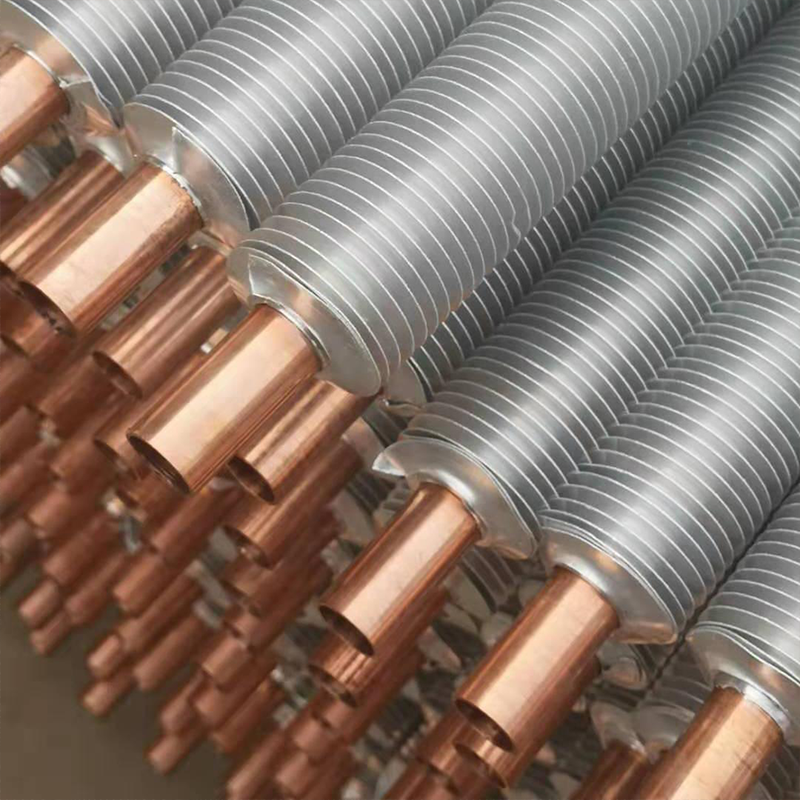
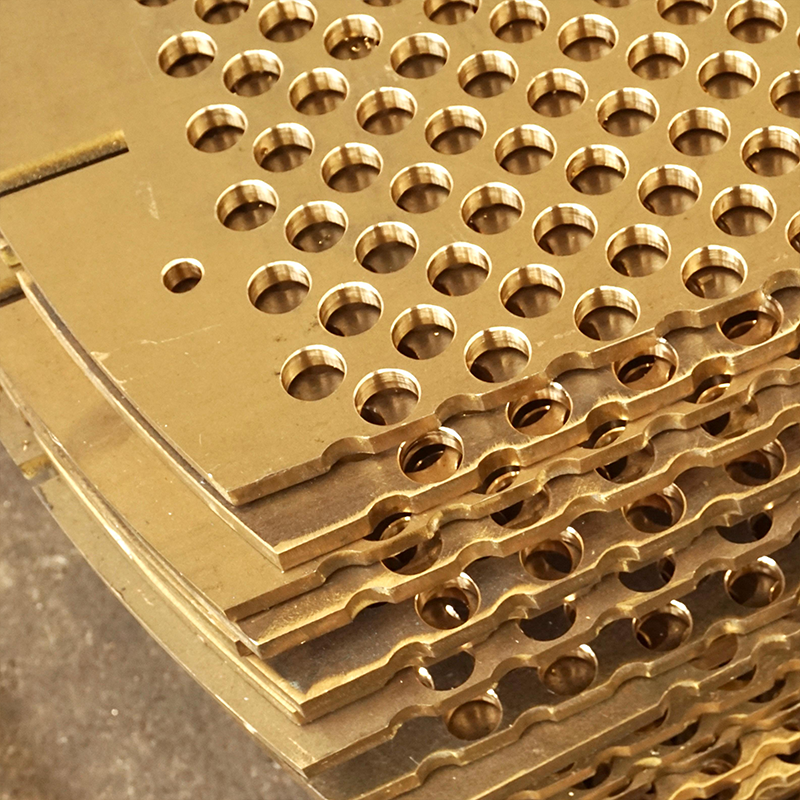
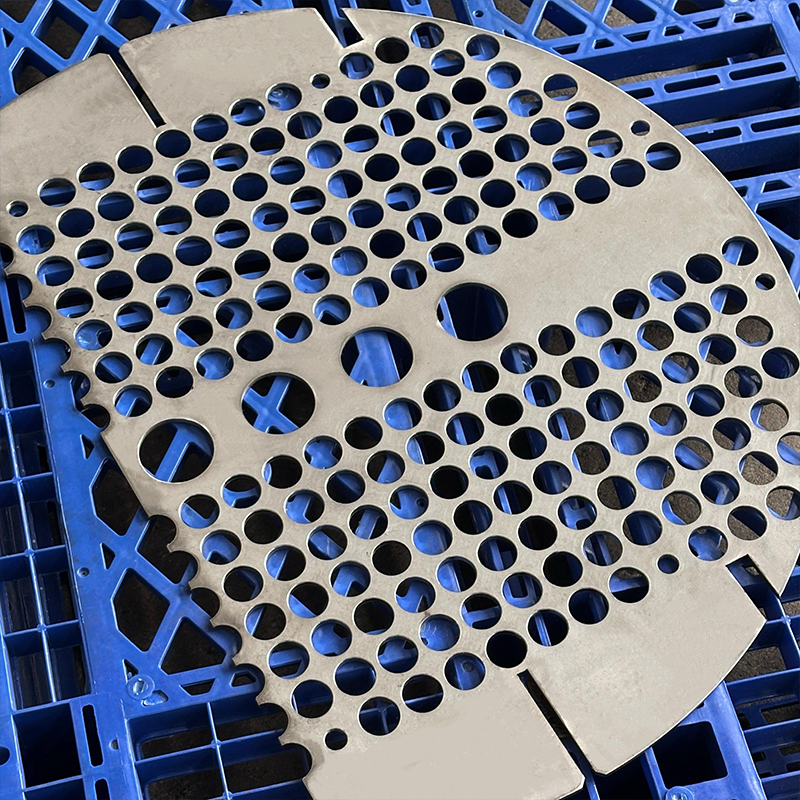
The introduction of innovation requires partnerships with reliable suppliers who understand the specifics of industrial installation. An integrated approach to ensuring the reliability of infrastructure facilities includes not only digital diagnostic tools, but also the use of high-quality physical equipment. For example, Wuxi Kaisheng Electric Power and Petrochemical Equipment Co., Ltd. specializes in the development and production of critical components for the power and petrochemical sectors. Their products, including titanium shell-and-tube heat exchangers, ASME-standard high-pressure units, and corrosion-resistant alloy tube bundles (316 stainless steel, C46400 marine brass, copper-nickel alloys), ensure system durability in the most aggressive environments. PED and ASME certified equipment from Wuxi Kaisheng is widely used in oil refining, chemical industry and shipbuilding, demonstrating high resistance to pressure and temperature. Combining advanced monitoring technologies such as AR with reliable equipment from trusted manufacturers creates the foundation for the safe and efficient operation of industrial facilities.
If you are ready to discuss the details of adapting AR solutions to your needs or need advice on choosing equipment,contact us today. Our experts will help you audit your processes and calculate the real economic effect.
For more detailed information about welding standards for polyethylene pipes and modern quality control methods, we recommend that you familiarize yourself with our materialGuide to HDPE Pipe Welding Standards.