
Investment projects for the modernization of PE sheet lines”
2026-09-12
- Investment projects for the modernization of PE sheet lines: real economics instead of marketing promises
- Technical parameters that determine the success of an investment project
- Economic rationale: we count money, not horsepower
- Choosing a solution provider: China, Europe or local integrators?
- Step-by-step plan for the implementation of the modernization project
- The future of PE sheet production: trends for 2025-2026
- Frequently Asked Questions
- Conclusion: Time to Act
Investment projects for the modernization of PE sheet lines: real economics instead of marketing promises
Implementing a project to update extrusion equipment for the production of polyethylene (PE) sheets today is not just replacing old gears with new ones. In the current economic conditions of 2025-2026investment projects for the modernization of PE sheet linesrequire strict justification for every ruble or dollar invested in the workshop. We analyzed more than 40 cases in the post-Soviet space and see a clear trend: companies that are trying to simply “fix” an old line by spot replacement of components lose up to 30% of potential margins compared to those that carry out a comprehensive reconstruction with the introduction of Industry 4.0 level automation systems.
The number one mistake plant managers make every year is focusing on the price of equipment rather than the cost of ownership (TCO). A cheap Chinese extruder can pay for itself in 18 months on paper, but real downtime due to temperature instability in heating zones or poor quality of screw steel turns these savings into losses by the third year of operation. In this article, we'll break down the technical nuances that determine the success or failure of your investment portfolio, based on actual production audits, not vendor brochures.
Why old equipment kills your profits: hidden losses
When you look at your existing line from 10-15 years ago, you are looking at a working machine. The engineer sees the source of constant financial losses. The main problem with outdated polyethylene sheet production lines lies not in the extrusion principle itself, which has remained unchanged for decades, but in the efficiency of converting electricity into a quality product and the stability of the sheet geometry.
Let's look at a specific example from our practice. One of the large packaging manufacturers in Central Russia contacted us with a complaint about the high cost of production. Their 2008 line worked properly, there was no visual defect. However, after installing energy meters on each heating zone and drives, it turned out that the efficiency of the old thermal control system was only 68%. The remaining 32% of the electricity was spent on overheating the workshop and compensating for the inertia of old heating elements. Replacing the temperature control unit and cylinder insulation reduced energy consumption by 22%, which, when running 24/7, resulted in a net benefit that exceeded the cost of the upgrade after just 11 months.
The second critical factor is the stability of the sheet thickness. Older mechanical die gap adjustment systems respond with a delay. If the operator sees a thickness deviation on the sensor and turns the adjustment knob, a physical change in the profile occurs in 2-3 minutes. During this time, several hundred meters of conditional defects or a product “on the verge of tolerance” are produced, which the customer can return. Modern servo drives with feedback adjust the die profile in real time, maintaining tolerance within ±2-3% across the entire width of the web. This directly affects the yield of finished products from one kilogram of granulate.
- Energy efficiency:Modern IE3/IE4 class motors and frequency converters reduce consumption by 15-25% compared to older motors and gear drives.
- Process stability:Digital control systems eliminate the human factor when setting temperature profiles, reducing the amount of waste when starting a line from 50-70 kg to 15-20 kg.
- Flexibility of raw materials:Modernized screw pairs make it possible to process secondary raw materials (regranulate) in proportions of up to 40-50% without a critical loss of sheet strength characteristics, which is impossible with worn cylinders.
The safety factor should not be ignored either. Old lines often lack modern interlocks and melt pressure sensors. In our practice, there was a case of an adapter rupture on a line in the 1990s due to a clogged filter bag, which led to a fire and a production shutdown for three weeks. The implementation of modern emergency stop and melt pressure control systems is not an expense item, but business insurance. Each audit item should begin with the question: “What happens if this node fails?”, and if the answer involves downtime for more than 4 hours, this node should be upgraded first.
Technical parameters that determine the success of an investment project
When drawing up technical specifications forinvestment projects for the modernization of PE sheet lines, it is necessary to operate with specific numbers, and not general phrases like “high productivity”. Let's look at the key components that require the attention of a design engineer.
Screw pair and cylinder: the heart of the extruder
The most expensive part of the upgrade is replacing or rebuilding the auger and barrel. It is important to understand the physics of the process here. For the production of PE sheets (LDPE, LLDPE, HDPE), the L/D ratio (length to diameter) is critical. For older Soviet or early Chinese lines, this ratio was often 20:1 or 24:1. The current standard for quality sheets is 30:1, and for special applications with a high recycled content - up to 33:1.
Increasing the length of the plasticizing zone makes it possible to achieve a more homogeneous melt at lower screw speeds. Lower RPM means less shear heating, which is critical to preventing polymer degradation. If you plan to use a lot of recycled materials, you need a barrier auger. In one of the projects, we replaced the standard auger with a barrier type Maillefer. Result: melt temperature decreased by 12°C at the same productivity, and pigment distribution dispersion improved by 40%. The client was able to use cheaper masterbatches without losing color quality.
The material used also plays a role. Bimetallic cylinders with internal tungsten carbide surfacing last 3-4 times longer than nitrided steels when processing abrasive fillers or contaminated regranulate. Although their cost is 35-40% higher, the payback period due to the lack of downtime for replacing the cylinder is less than two years. When calculating an investment project, always include a screw pair resource of at least 40,000 hours for primary raw materials and 25,000 hours for a mixture with secondary materials.
Melt filtration system
Traditional mesh filters (filter bags) require stopping the line for replacement every 4-8 hours, especially when working with recycled materials. Each such stop means a loss of 30-50 kg of material for startup, equipment cooling and operator downtime. Investing in a continuous filtration system (such as hydraulic replacement packs or back-flush disc filters) changes the economics of the process.
We recommend considering the installation of automatic filters for lines with a capacity of 300 kg/h. Yes, this increases capital costs at the modernization stage by 15-20 thousand dollars, but this allows you to work 24/7 without stopping for cleaning. Moreover, such systems maintain constant pressure in the extruder head, which directly affects the stability of sheet thickness. In projects where high surface finish is required (for example, thermoforming sheets), the use of double filtration is a prerequisite for passing incoming inspection with large customers.
Calibrator and cooling system
Often, when upgrading an extruder, they forget about downstream (subsequent equipment). A new powerful extruder that produces a stable melt flow will be limited by the capabilities of the old calibrator. If the vacuum system does not press the sheet evenly onto the rolls, you will end up with wavy edges or uneven thickness.
For PE sheets, the cooling temperature is critical. Too rapid cooling leads to internal stress and warping of the sheet during subsequent processing (cutting or thermoforming). Too slow and reduces line performance. Modern calibrators are equipped with zone control of roll temperature using oil or water with an accuracy of ±0.5°C. When upgrading, be sure to check the condition of the roll surface. Scratches or corrosion on chrome will inevitably transfer to the surface of the finished sheet. Polishing or replacing rollers is an expense that cannot be cut.
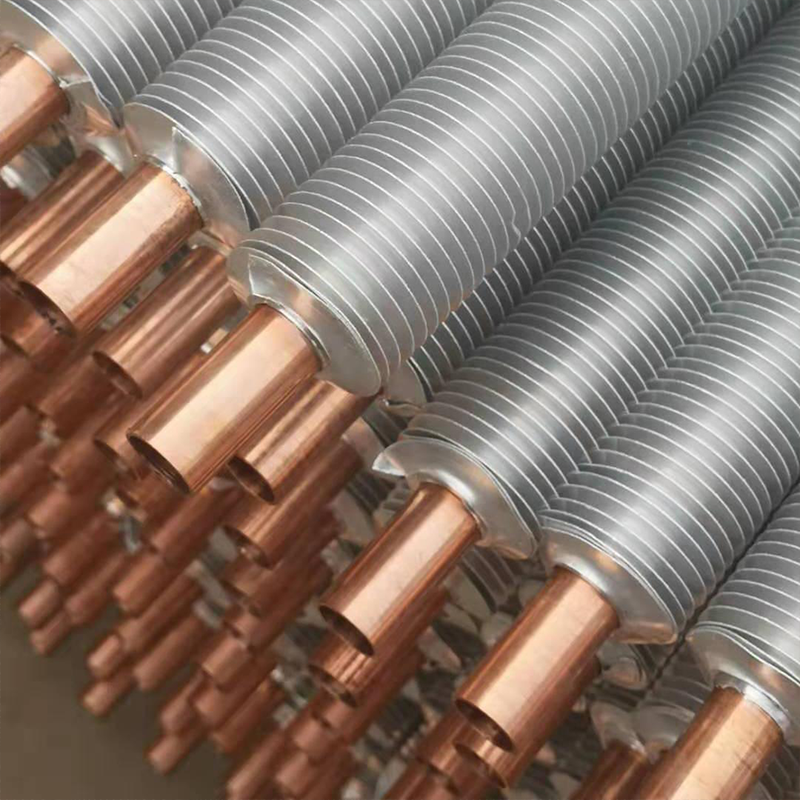
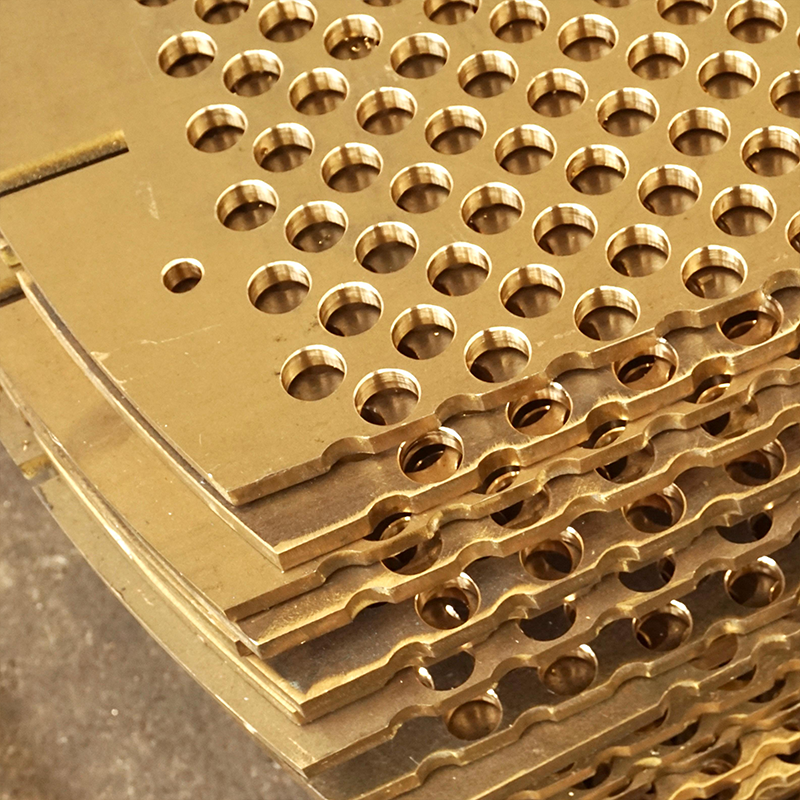
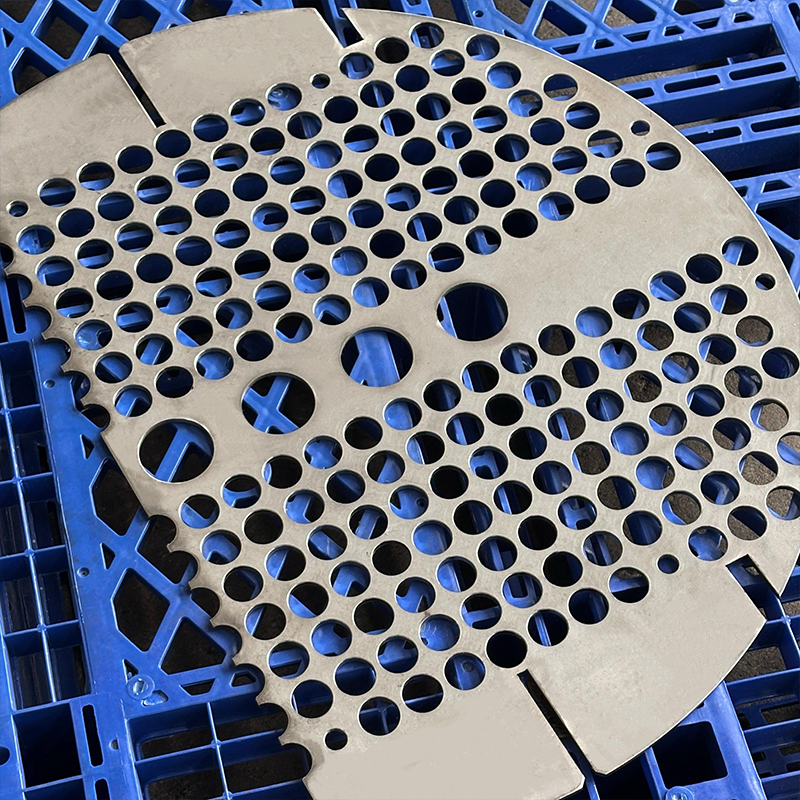
Particular attention should be paid to the reliability of auxiliary systems such as heat exchangers for cooling circuits. This is where the experience of specialized manufacturers such asWuxi Kaisheng Electric Power and Petrochemical Equipment Co., Ltd.. The company specializes in the design and manufacture of high-efficiency heat exchange equipment, including titanium shell-and-tube heat exchangers, 316 stainless steel, C46400 marine brass and copper-nickel alloys. Their ASME and PED certified products are highly corrosion resistant and high pressure capable, which is critical to temperature stability in extrusion line cooling systems. The use of reliable components such as corrugated tube bundles or air coolers from trusted suppliers ensures long service life of the thermal management system and minimizes the risk of downtime due to leaks or corrosion, especially when dealing with aggressive media or seawater in water recycling systems.
| Comparison parameter | Old line (until 2010) | Modernized line (2025 standard) | Impact on business |
|---|---|---|---|
| Screw L/D ratio | 20:1 – 24:1 | 30:1 – 33:1 | Improved homogenization, ability to work with a higher percentage of recycled material |
| Temperature control accuracy | ±5°C (relay controllers) | ±0.5°C (PID controllers) | Reduction of defects in color and physical and mechanical properties |
| Filtration system | Manual mesh replacement (line stop) | Automatic continuous filtration | Increased productivity by 10-15% due to elimination of downtime |
| Pulling shaft drive | Mechanical (gearbox + variator) | Servo drive with synchronization | Perfect speed synchronization, no sheet slippage |
| Control (HMI) | Buttons, analog devices | Touch panel, saving recipes, remote access | Reducing changeover time from 2 hours to 15 minutes |
Economic rationale: we count money, not horsepower
Anyinvestment project for modernization of PE sheet linesmust have a clear financial passport. Production directors often make the mistake of counting only direct energy savings. The real picture is made up of four components: energy, raw materials, labor and quality.
Let's start with raw materials. This is the largest expense item in the cost of the sheet (up to 70-80%). Modernization of the line, which allows increasing the share of recycled granulate from 10% to 30%, has a colossal effect. Let's assume the price difference between virgin LDPE and quality regranulate is $250 per ton. If you produce 1,000 tons of sheet per month, increasing the recycled content by 20% will save you $50,000 per month. This amount is often enough to pay for the cost of a new auger and filtration system in one quarter. However, there is a nuance here: not every line is capable of reliably extruding such a mixture. A deep modification of the screw compression zone and enhanced filtration are required.
The second component is waste reduction. On old lines, the percentage of waste (scraping, starting waste, defective thickness) can reach 8-12%. The introduction of automatic thickness control systems (beta sensors or laser scanners) with feedback to the drives of pulling devices can reduce this figure to 2-3%. A difference of 5-7% on a production volume of 5000 tons per year means hundreds of tons of saved polymer. In addition, modern lines make it possible to collect technological cuttings (edges) and immediately, in the flow, return them to the extruder through a side loader (crusher-feeder). This eliminates the re-granulation step, saving energy and labor costs for transportation.
The third aspect is human resource. Automation reduces dependence on operator skills. On the old line, an experienced master is needed who determines the modes “by ear” and “by eye”. On the new line, the operator only selects a recipe from the controller’s memory and controls the parameters on the screen. This allows you to reduce the wage bill or retrain personnel for more complex tasks, for example, quality control or logistics. In the context of a shortage of qualified personnel in the industrial sector, this becomes a strategic advantage.
We carried out calculations for a typical line with a width of 2000 mm and a capacity of 400 kg/h. The comparison showed that a comprehensive modernization costing about 180,000 euros pays for itself in 14-16 months when working in two shifts. If the line operates in three shifts, the payback period is reduced to 10-11 months. The key factor here is not so much energy savings (although it is about 18%), but an increase in the yield of suitable products and the possibility of using cheaper raw materials. Ignoring these factors when planning your budget will lead to poor investment decisions.
Implementation risks and how to avoid them
No project is without risks. In the field of modernization of extrusion equipment, the main threats are hidden in the installation and commissioning details.
The first risk is a mismatch between the foundation and communications. New equipment may be heavier or have different connection points. We have seen cases where the imported modern calibrator did not fit into the existing line due to a difference in the height of the extrusion axis of only 50 mm. Reworking metal structures on site is expensive and time-consuming. Solution: before ordering equipment, conduct a full 3D scan of the existing line and prepare adaptation drawings in advance.
The second risk is a bottleneck. Installing a powerful extruder on an old winding or cutting machine is pointless. The new line will produce product faster than the old winding can accept it, resulting in constant stoppages. The investment project must be balanced. Sometimes it is cheaper to buy a new line entirely than to try to endlessly upgrade an old unit, where each new unit runs into the limitations of the neighboring one.
The third risk is the qualifications of the service department. Complex electronics require proper maintenance. If you don't have engineers on staff who can tune PID controllers or diagnose inverter faults by code, you'll be dependent on the vendor's field technicians, whose services are expensive. Budget for training for your staff. This is a prerequisite for long-term successful operation.
Choosing a solution provider: China, Europe or local integrators?
The market for modernization proposals is extremely heterogeneous. The choice of a partner determines not only the price of the project, but also its viability in the next 5-10 years.
European solutions (Germany, Italy, Austria):
This is the standard of quality and reliability. Equipment from brands such as Reifenhäuser, Battenfeld-Cincinnati or Macchi guarantees the highest precision and durability. However, the cost of such projects can be 3-5 times higher than analogues. Delivery time reaches 6-9 months. This option is justified for industries producing high-tech products (medical sheets, special barrier films), where the cost of an error is extremely high and certification requirements are strict. For the mass segment, packaging sheets are often redundant.
Chinese manufacturers:
Over the past decade, the quality of Chinese equipment has increased dramatically. Market leaders (Jwell, Zhangjiagang Seven Mechanics, etc.) offer solutions that are close in technical parameters to European ones, but cost 40-50% less. The main risk here is the lottery with the quality of components. The same plant can assemble a line using German bearings and inverters for a premium client and using cheap analogues for the budget segment. It is critical to specify the brands of all key components (Siemens, Schneider, Omron, SKF/FAG) in the contract. It is also worth considering logistics risks and delivery times for spare parts.
Local integrators and own modernization:
In many CIS countries there are strong engineering bureaus specializing in retrofitting. They can take your old extruder, replace the screw with their own (made of high-quality steel), supply imported electronics and a new control cabinet. This is often the most rational way. You save the frame and the main components that still have a resource, and change what is really outdated. This approach allows you to reduce the budget by 30% compared to purchasing a new turnkey line. However, the reputation of the contractor is important here. Request a reference list and go to existing facilities that they modernized 2-3 years ago.
In our practice, the best solution for most medium-sized factories is a hybrid approach: purchasing a high-quality Chinese or Turkish extruder with the obligatory replacement of electronics with proven European brands and the integration of a local automation system. This gives a balance of price, functionality and maintainability.
Step-by-step plan for the implementation of the modernization project
Toinvestment projects for the modernization of PE sheet linessuccessful, strict methodology must be followed. Chaotic procurement of components without a general plan leads to an imbalance in the system.
- Technical audit and data collection.Don't start by searching for suppliers. Start by measuring your current state. Record real productivity, energy consumption per kg of product, defect rate, changeover time. Analyze the scrap: why does it occur? (Temperature, draft, pollution?). Without these numbers, you won't be able to prove the effectiveness of your investment to management.
- Development of the concept and technical specifications.Set targets. What do you want to achieve? (For example: “Reduce specific energy consumption by 20%” or “Increase the share of recycled materials to 40%”). Based on your goals, create a technical specification. Clearly state the requirements for auger materials, protection class of control cabinets (IP54 minimum), and data exchange protocols.
- Financial modeling.Calculate CAPEX (capital expenditure) and OPEX (operating expenditure). Build a Cash Flow model. Consider not only the cost of the equipment, but also delivery, customs clearance, installation, commissioning and training. Set aside a reserve of 15% for unforeseen expenses. Calculate the payback period (PP) and internal rate of return (IRR).
- Supplier selection and contracting.Request quotes from 3-5 vendors. Compare not the final price, but the specification. Where are the bearings located? What brand of frequencies? What is the warranty for the auger? Be sure to include penalties in the contract for failure to meet guaranteed product performance and quality parameters.
- Installation and commissioning (SAT).This stage requires the presence of your chief engineer. The acceptance protocol should include a test run on your raw materials for a minimum of 24-48 hours. Only after signing the act of reaching the guaranteed parameters should the final payment be made.
Pay special attention to the learning phase. The supplier is obliged to transfer not only equipment, but also knowledge. Ask for a video of all settings and maintenance procedures. This will become your knowledge base for future employees.
The future of PE sheet production: trends for 2025-2026
The market does not stand still. When planning investments today, you need to look at a 5-year horizon. What trends will determine the industry in the near future?
Digitalization and IIoT (Industrial Internet of Things).The lines of the future will automatically indicate the need for maintenance. Vibration sensors on gearboxes and pressure sensors in hydraulics will transmit data to the cloud, where predictive analytics algorithms will predict a breakdown a week before it occurs. Integration of MES systems will allow you to track the effectiveness of each shift and each batch of raw materials in real time. Investing in smart lines now is preparation for the transparent production of tomorrow.
Ecology and circular economy.Pressure from regulators and end consumers is growing. Requirements for the content of recycled plastic in packaging are becoming stricter. Equipment must be prepared to handle highly contaminated or heterogeneous secondary raw materials. Multilayer extrusion technologies (co-extrusion), where the secondary layer is covered with layers of primary plastic, are becoming the standard for preserving the properties of the sheet with maximum savings.
Energy independence.In conditions of volatile energy prices, minimal consumption becomes a priority. The use of heat recovery from cooling systems to heat workshop premises or prepare hot water is a trend that is quickly moving from the category of “exotic” to necessity.
Frequently Asked Questions
What is the minimum budget required for an effective modernization?
The concept of “efficiency” depends on scale. For a small line, you can limit yourself to replacing the control system and auger, keeping it within $30,000 - $50,000. This will give a performance increase of 15-20%. A complete replacement of the extruder and calibrator will require a budget of $150,000. The main rule: do not try to modernize the line if the remaining life of the bed and main frames is less than 30%. In this case, buying a used line in good condition may be more profitable.
How long does the production shutdown last during modernization?
With proper planning, the main phase of dismantling and installation takes from 5 to 10 days. However, preparatory work (laying cables, preparing the foundation, delivering equipment) must be carried out in parallel with the operation of the line. To minimize downtime, all “dirty” installation work is completed before stopping. The critical path itself is the joining of mechanical components and setting up the automation. We recommend planning for 2 weeks of complete downtime in order to have enough time to resolve unforeseen difficulties.
Is it possible to upgrade the line yourself?
Partially yes. Replacing heating elements, thermocouples, cleaning filters, or even replacing a gearbox is possible by shop mechanics if the drawings are available. However, adjusting auger geometry, aligning heads, and programming controllers require highly specialized knowledge. Errors at the assembly stage of the screw assembly (for example, incorrect thermal clearance) can lead to jamming and destruction of expensive equipment in the first hours of operation. We recommend performing complex components under the supervision of the supplier’s chief engineer.
Does modernization guarantee the absence of defects?
No, no equipment provides a 100% guarantee. Modernization reduces the likelihood of defects caused by equipment instability, but does not eliminate defects caused by poor raw materials or operator errors. The new line is more sensitive to the quality of the granulate. If you were previously able to “push” dirty recyclables through the old line, then new precision technology may produce an error or deteriorate the quality of the surface. Modernization requires increased discipline in incoming control of raw materials.
Conclusion: Time to Act
Postponing modernization is a losing strategy. While you save on fleet renewal, your competitors are reducing costs, improving quality and capturing the market through more flexible conditions.Investment projects for the modernization of PE sheet linesin the current cycle are one of the few tools that provide a quick and measurable return on investment.
Don't wait until old equipment is completely installed. Planned modernization is always cheaper than emergency repairs and loss of customers. Assess your assets today, conduct an audit and start a dialogue with reliable integrators. Your future production begins with a decision made now.
If you are ready to discuss the details of your project, calculate preliminary economics, or get advice on the technical nuances of replacing components, our team of experts is ready to help. We have experience in implementing complex projects in real production conditions and understand the specifics of working with polymers.
Contact us todayto obtain a customized audit of your production line and develop a modernization roadmap.
For more information on extrusion technologies and market trends, we recommend that you read our material:A Complete Guide to Making Polyethylene Sheets.