
Chinese factory: investment casting for cars
2026-08-05
Chinese plant: investment casting for cars - the reality of deliveries in 2026
Today, at the beginning of 2026,Chinese factory: lost wax casting for carshas ceased to be just a source of cheap prototypes and has become a key strategic partner for European and Russian automakers. We are witnessing a fundamental shift: whereas five years ago the main motivation was saving up to 40% on unit costs, now the decisive factor is technological flexibility and the ability to produce complex geometric shapes from high-temperature alloys that cannot be achieved with traditional sand casting. In our experience working with dozens of manufacturing sites in Zhejiang and Guangdong provinces, we see that modern Chinese foundries are equipped with robotic waxing and sintering lines, the level of automation of which often exceeds that of older European factories.
However, the market is not homogeneous. Behind the loud statements about “high technology” lies a huge layer of handicraft workshops that are unable to ensure the stability of the chemical composition of the alloy. One of our clients, a large supplier of turbine components, was faced with a situation where a batch of 5,000 valve bodies was rejected at the incoming inspection due to microporosity caused by a violation of the temperature regime of calcination of the molds. This mistake cost them three months of production downtime. That is why choosing a specific plant requires not just browsing the catalog, but an in-depth audit of quality control processes. In this article, we will analyze the technical nuances that distinguish professional production from garage production, and give specific recommendations for choosing a supplier, based on real data over the past year.
Technological audit: what happens inside a modern workshop
The lost wax casting process is one of the most complex in metalworking as it combines polymer chemistry, furnace thermodynamics and alloy metallurgy. When you evaluate a potential partner, the first question should not concern price, but the technology for making master models and ceramic shells. Leading Chinese factories today use silicone molds with vacuum casting of wax models, which ensures dimensional accuracy up to IT8-IT9. This is critical for automotive components such as turbine wheels or fuel injection components, where tolerances are measured in hundredths of a millimeter.
In our practice, we identify three key stages where hidden defects, invisible during external inspection, most often occur. The first stage is the assembly of wax trees. If an operator manually assembles models onto a gating system without the use of robotic manipulators or templates, the risk of displacement of the symmetry axes increases by 15-20%. The second stage is the application of a ceramic shell. Here, the humidity in the room and the drying time of each layer are critical. Factories that skimp on climate control experience ceramic delamination when pouring metal, which leads to the entire batch being rejected. The third stage is heat treatment and hardening. The lack of real-time spectral analysis of each heat is a red flag for any buyer.
We recommend requesting from the supplier a video report of the coating process and protocols of furnace temperature conditions for the last six months. Feel free to ask about the scrap rate. An honest factory admits that in mass production the normal level of defects for complex parts is 3-5%, but not higher. If they promise you 0% defects or, on the contrary, are silent about this indicator, this is a sign of unprofessionalism. For the automotive industry, where part reliability directly impacts safety, transparency of this data is more important than a $2 per kilogram discount.
Materials and alloys: specifics of automotive applications
The automotive industry dictates stringent requirements for materials. Unlike the jewelry or souvenir industry, structural steels, stainless alloys and nickel-based heat-resistant superalloys are used here. Chinese factories specializing in the automotive industry must have certificates for compliance with international standards ASTM, AISI, DIN and, which is especially important for the CIS market, GOST. The most popular grades in 2025-2026 were stainless steels of the 304 and 316L series for exhaust systems, as well as alloy steels 40Cr and 42CrMo4 for loaded transmission components.
Particular attention should be paid to heat-resistant alloys such as Inconel 718 or Hastelloy, which are used in new generation turbochargers. Casting of these materials requires induction furnaces with vacuum melting or melting under a protective argon atmosphere. Conventional air furnaces lead to oxidation of alloying elements and loss of mechanical properties. During one of our audits, we discovered that some plants were replacing original charge material with recycled scrap of unknown origin. This reduces the cost of raw materials by 30%, but makes the part unsuitable for operation at high temperatures and vibration loads.
When ordering castings, be sure to indicate the required mechanical properties: yield strength, tensile strength and elongation. A good supplier will offer heat treatment (hardening and tempering) immediately after casting to relieve internal stress. Ignoring this stage can lead to the part becoming deformed during the operation of the car. We insist that the terms of reference include a clause on the mandatory supply of witness samples from the same heat as the main batch for independent testing in your laboratory.
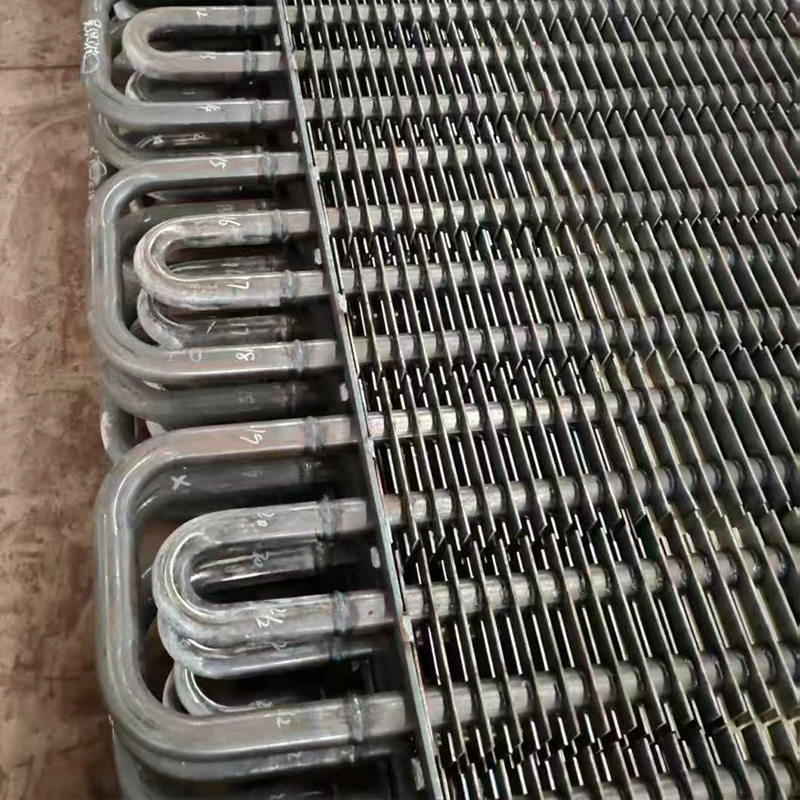
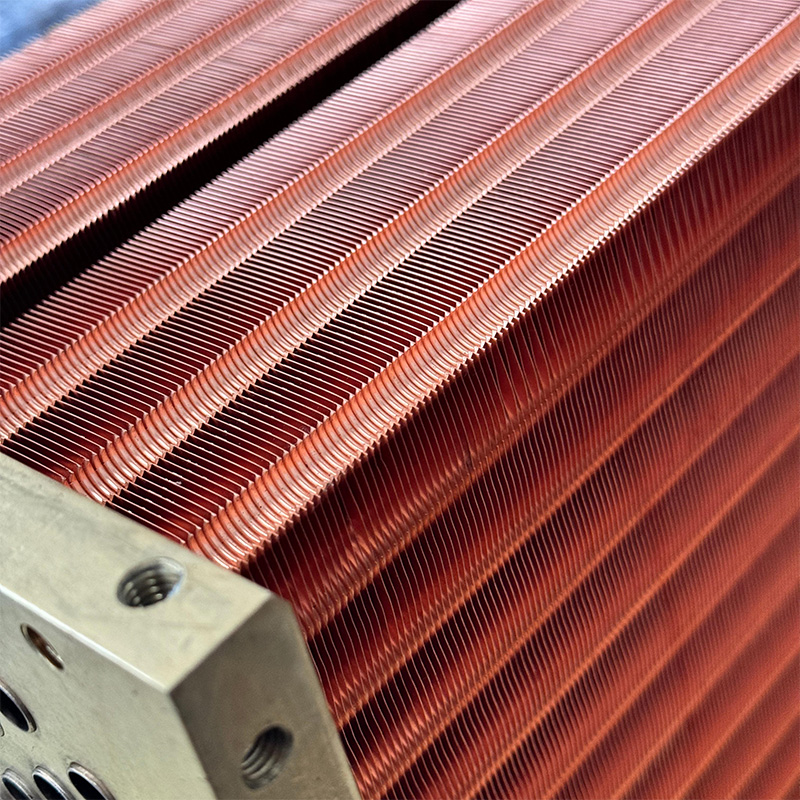
High standards for working with complex alloys are the norm not only for leading automotive plants, but also for leaders in related heavy industry sectors. A striking example of this approach is the companyWuxi Kaisheng Electric Power and Petrochemical Equipment Co., Ltd.. While their core expertise lies in the heat transfer and oil and gas industries, their experience in titanium, nickel alloys (N06625), C46400 marine brass and high-pressure steels to ASME and PED standards demonstrates the same level of technological maturity required by the automotive industry. Wuxi Kaisheng's ability to provide high corrosion resistance and performance under extreme pressure and temperature conditions confirms that Chinese manufacturing has reached a level where material quality and precision processing (such as tube sheets or corrugated bundles) become a guarantee of the reliability of the final product. This experience of integrating different metal alloys into complex assemblies is an excellent guide when choosing a casting supplier: look for plants whose competencies are proven in working with similarly demanding sectors of the economy.
Quality control and certification: a barrier for unreliable suppliers
Trust in a Chinese manufacturer is built on documents and results of non-destructive testing (NDT). The ISO 9001:2015 certificate is a basic minimum, but it is not enough for the automotive industry. A real proof of competence is the presence of the IATF 16949 certificate, which is specific to the automotive industry and requires the implementation of a strict defect tracking system. In addition, for deliveries to Russia and the EAEU countries, a mandatory requirement is the presence of a declaration of conformity with the technical regulations of the Customs Union (CU TR) and EAU marking.
The standard package of documents for a batch must include a chemical analysis (Chemical Composition Report), a mechanical test report (Mechanical Test Report) and the results of ultrasonic or x-ray testing (UT/RT Report). In our practice, there was a case when the supplier provided beautiful certificates signed by the “quality manager,” but upon independent testing in a third laboratory it turned out that the sulfur content in the steel was twice the norm, which made the metal brittle. Therefore, rule number one: never accept paper reports without verification.
We recommend including in the contract a provision for the right of inspection by a third party (eg SGS, Bureau Veritas or TUV) prior to shipment. The inspector must check not only the dimensions of the parts, but also the packaging process, labeling and the presence of all accompanying documents. The cost of such an inspection is about $300-500, but it insures you against losses of tens of thousands of dollars. Also pay attention to the traceability system: each batch must have a unique heat number, which allows you to track the history of the material from the moment of purchasing the charge to the final shipment.
| Control parameter | Requirements for the automotive industry | Frequent violations at low-cost factories | Detection method |
|---|---|---|---|
| Chemical composition | Strict compliance with AISI/DIN/GOST (tolerance ±0.05%) | Use of recycled scrap, excess S and P content | Spectral analysis in an accredited laboratory |
| Geometry | IT8-IT9 tolerances, no warping | Deformation due to improper cooling or removal from sprues | 3D scanning or CMM inspection |
| Internal defects | No pores, cavities, cracks (class 1-2 according to standards) | Gas porosity, shrinkage cavities in thick sections | X-ray (RT) or Ultrasound (UT) |
| Surface | Roughness Ra 3.2 – 6.3 microns, no burning | Burnt ceramics, rough surface due to coarse sand fraction | Visual inspection with a magnifying glass, comparison with the standard |
| Mechanical properties | Meets hardness and toughness requirements | Lack of heat treatment or violation of hardening conditions | Testing of witness samples on a tensile testing machine |
Logistics and economics: calculating the total cost of ownership
The price per kilogram of casting is just the tip of the iceberg. When importing from China, you must consider the Total Cost of Ownership, which includes freight, customs duties, VAT, insurance and incoming inspection costs. In 2026, logistics routes have stabilized, but delivery times still vary from 25 to 45 days depending on the destination port and type of transport (sea or rail via Kazakhstan). Direct air freight for heavy metal castings is not economically feasible except for urgent samples.
An important factor is packaging. Metal parts are susceptible to corrosion during sea transportation due to high humidity and salty air. Reliable factories use vacuum packaging with silica gel and wooden boxes treated according to the ISPM 15 standard. Neglecting this requirement results in the container arriving with rust, the removal of which requires additional costs for sandblasting or etching. In one case, our customer received a batch of camshafts covered in a layer of rust because the supplier skimped on corrosion inhibitors, which increased the overall cost of remanufacturing the parts by 15%.
The economic efficiency of cooperation with China remains the same for orders of 500 kg and above. For small batches (less than 100 kg), the cost of preparing tooling (wax molds) can make the unit price prohibitive. However, many factories offer a shared tooling service if the geometry of the part allows it, or compensate the cost of tooling when a certain annual order volume is reached. This point must be fixed in the contract in advance. It is also worth remembering currency risks and choosing reliable payment schemes, for example, letters of credit or payment through guarantors, to avoid fraud.
How to choose a reliable partner: step-by-step algorithm of actions
Selecting a plant is not a lottery, but a structured Due Diligence process. Start by analyzing the website and having actual production photos rather than stock images. Ask for a video conference directly from the shop floor to see the equipment in action and the finished product warehouse. Ask specific technical questions: What spectral analysis equipment do they use? How often are ovens calibrated? Do they have experience with your type of parts? Answers must be immediate and confident.
- Request a commercial proposal with details.Don't accept the "price depends on the drawing" answer. Submit a 3D model (STEP or IGES) and a drawing with tolerances. Request a detailed calculation, which separately indicates the cost of the material, the cost of the wax model, the cost of the ceramic shell, the cost of melting and post-processing. This will show how transparent the supplier is.
- Ordering Pre-production Samples.Never start mass production without sample approval. Pay for the production of 5-10 pieces according to your drawing. Test them in your laboratory for chemical composition and geometry. If the samples do not meet the requirements, refuse cooperation, even if the price was attractive.
- Quality system audit.Request copies of ISO 9001 and IATF 16949 certificates and check their validity on the certification body's website. Ask for internal audit reports from the last year. Having a real quality management system is more important than having a new machine.
- Test batch.Please place a trial order for a small batch (eg 50-100kg) before your main order. This will allow you to evaluate the stability of quality, compliance with deadlines and quality of packaging in real logistics conditions.
- Legal protection.Sign an agreement that clearly states penalties for defects, missed delivery dates, and non-compliance with specifications. Specify the jurisdiction for dispute resolution and refund conditions. Chinese law protects contracts written in Chinese, so request a bilingual contract.
Industry development prospects and trends in 2026
The investment casting market in China continues to evolve towards high automation and environmental friendliness. The trend for 2025-2026 is the introduction of 3D printing of wax models and ceramic molds. This technology allows the production of highly complex parts with internal cooling channels that were previously impossible or required expensive machining. For the automotive industry, this opens up new opportunities in creating lightweight engine designs and exhaust systems, which directly affects the reduction of fuel consumption and CO2 emissions.
Another important area is green casting. Under pressure from international environmental standards, Chinese factories are actively switching to water-soluble binders for ceramic shells and water recycling systems. This not only improves the environment, but also increases the stability of the process, eliminating the influence of the human factor when preparing suspensions. Buyers from Europe and Russia are increasingly including environmental criteria in their tender requirements, and factories that ignore this trend are losing contracts.
We predict further consolidation of the market: small workshops will be replaced by large holdings with a full production cycle. This is beneficial for customers, as it reduces the risk of supply disruptions and simplifies communication. However, competition for qualified personnel will increase, which may lead to a moderate increase in prices for high-end casting services. Investing in long-term partnerships with trusted factories is now the best strategy for protecting the supply chain.
Frequently Asked Questions
What is the minimum order quantity (MOQ) for investment casting?
The minimum order quantity varies greatly depending on the complexity of the part and the cost of the tooling. For standard stainless steel parts, most factories are ready to accept orders from 50-100 kg of total batch weight. However, if a unique wax mold is required, the MOQ can be increased to 500-1000 pieces to amortize the tooling cost. In some cases, the plant may offer to divide the cost of tooling between several clients if the geometry of the part is standard. Always discuss the possibility of reimbursing the cost of the mold once a certain annual purchase volume is reached.
How long does it take to produce the first batch?
The full cycle of development and production of the first batch usually takes from 4 to 6 weeks. Of this time, 2-3 weeks are spent on designing and manufacturing molds for wax models, 1 week on casting and approval of control samples, and another 2-3 weeks on mass production and packaging. The time frame can be reduced to 3 weeks using existing tooling or accelerated 3D mold printing methods, but this will incur a 20-30% increase in cost. Plan your inventory around this lead time, especially considering logistics.
Гарантируете ли вы соответствие химического состава заявленным маркам стали?
Ответственные заводы гарантируют соответствие химического состава и предоставляют сертификат завода-производителя металла (Mill Certificate) вместе с партией. Более того, они проводят собственный спектральный анализ каждой плавки перед заливкой. Однако окончательную гарантию дает только независимая экспертиза. Мы настоятельно рекомендуем проводить выборочный анализ в аккредитованной лаборатории в стране назначения. В случае выявления несоответствия, контракт должен предусматривать полную компенсацию убытков и возврат стоимости партии. Доверие важно, но верификация обязательна.
Возможно ли получение деталей с последующей механической обработкой?
Да, большинство крупных китайских заводов предлагают услугу «под ключ», включающую не только литье, но и финишную механическую обработку (ЧПУ), термообработку и нанесение покрытий. Это значительно упрощает логистику и снижает риски повреждения деталей при транспортировке между разными подрядчиками. При заказе такой услуги важно предоставить чертежи с указанием допусков на обработку и требований к чистоте поверхности. Контроль качества в этом случае должен охватывать все этапы, от литья до финальной геометрии.
Как осуществляется оплата и какие риски существуют?
Стандартная схема оплаты включает предоплату 30-50% для запуска производства и остаток 50-70% после предоставления фото/видео отчета о готовности груза и копий документов. Для новых поставщиков безопаснее использовать аккредитив (Letter of Credit) или оплату через защищенные платформы с гарантом. Основные риски включают качество продукции, срыв сроков и проблемы с логистикой. Минимизироват ь их можно через тщательный аудит, поэтапную оплату и привлечение независимых инспекторов перед финальным платежом. Никогда не переводите 100% предоплаты неизвестному поставщику.
Conclusion and next step
Сотрудничество с Китаем в сфере литья по выплавляемым моделям открывает огромные возможности для оптимизации затрат и доступа к передовым технологиям, но требует профессионального подхода и постоянного контроля. Ошибки на этапе выбора поставщика могут стоить очень дорого, тогда как грамотное партнерство становится конкурентным преимуществом вашего бизнеса. Рынок 2026 года предлагает зрелые решения и надежных партнеров, готовых работать по международным стандартам качества.
Если вы ищете проверенного партнера для производства автомобильных компонентов методом литья по выплавляемым моделям, не рискуйте временем и бюджетом на самостоятельный поиск. Наша команда обладает глубоким опытом аудита китайских заводов и готова помочь вам найти оптимальное решение под ваши задачи. Мы знаем, какие вопросы задать, чтобы отсеять ненадежных исполнителей, и как выстроить процесс так, чтобы вы получили продукт высшего качества точно в срок.
Contact us today, чтобы обсудить ваш проект и получить консультацию по выбору производителя. Мы поможем вам ориентироваться на сложном рынке китайского литья и обеспечим надежную поставку компонентов для вашего автомобиля.Запросить аудит поставщикаorузнать подробнее об услугах литья.