Conversion of leads into sales of plastic pipes”
2026-09-03
- Why 80% of applications for plastic pipes do not become contracts
- Lead technical qualification: filter for screening out unreliable suppliers
- Trust factor: EAC certification and production transparency
- Logistics and total cost of ownership (TCO) calculations
- Working with objections and cases from real practice
- Automation and response speed as a competitive advantage
- Pricing strategy: flexibility without dumping
- Conclusion: From transaction to partnership
Why 80% of applications for plastic pipes do not become contracts
Conversion of leads into plastic pipe sales is a critical metric that separates successful factories from those who simply waste their advertising budget. In our practice of working with manufacturers of HDPE and PVC pipes, we observe a clear pattern: technical specialists rarely buy from the first supplier they come across. They compare, doubt and look for a catch. If your commercial response does not contain specific figures on pressure, chemical resistance or shipping times for EAC-certified products, the application goes to a competitor. We analyzed more than 500 closed transactions in the industrial pipeline sector and found that decisions are made not on the basis of price per meter, but on the basis of trust in the ability to deliver the batch on time without defects.
The market has changed. Buyers in Russia and the CIS countries in 2026 have become much more careful. Sanction pressure and logistical gaps forced them to double-check each supplier. One of our clients, a large agricultural holding, lost two months of downtime due to the fact that the pipe supplier was unable to confirm the actual availability of raw materials for the production of a batch with a diameter of 630 mm. Now they require not just a price list, but a video report from the warehouse and a copy of the GOST certificate of conformity before paying the invoice. This article will show you how to turn a cold request into a signed contract using data transparency and deep technical expertise instead of empty promises.
Lead technical qualification: filter for screening out unreliable suppliers
The first stage of the sales funnel is not a manager’s call, but the ability of your website or CP to answer the engineer’s hidden question: “Can this pipe work under my conditions for 50 years?” Most companies make the mistake of offering one-size-fits-all solutions. In reality, the conversion of leads into sales of plastic pipes directly depends on how accurately you meet the technical requirements of the project. When we are contacted with a request for pipes for aggressive environments, we do not start talking about price. We ask about the temperature of the transported liquid, the presence of ultraviolet radiation and the required ring stiffness class SN.
In our practice, there was a case when a manufacturing plant lost a major client due to ignorance of the nuances of SDR (standard dimensional ratio). The client needed pipes for non-pressure sewerage with a high ground load, but was offered a thin-walled solution for internal distribution. The pipes became deformed three months after installation. Losses amounted to millions of rubles, and the supplier's reputation was destroyed. To avoid this, we have implemented a technical qualification checklist. If you sell HDPE pipes, you must know the difference between PE80 and PE100 grades of polyethylene. PE100 allows you to make the wall thinner at the same pressure, which saves up to 15% of material, but is more expensive. The engineer knows this. If your manager confuses these concepts, the deal will fall through.
A critical parameter is the melt index (MFI). For pipe extrusion it should be low, usually in the range of 0.2–0.4 g/10 min. A high MFI indicates that the raw material is intended for injection molding rather than pipe production. Such products will be fragile. We always indicate this parameter in the specification, even if the client has not asked. This is a signal of expertise. The buyer sees that you control the quality of raw materials, and do not just resell what is in stock. Trust grows instantly.
Another filter is color coding. According to GOST and international standards, pipes for gas have yellow stripes, for water - blue, for sewage - orange or gray. An attempt to sell a white pipe for external sewerage in the southern region is doomed to failure. UV radiation destroys unstabilized plastic in one season. We openly tell our clients: “If you plan to install in the open sun, take only black pipe with soot or stabilized orange. The white one will crumble." Such honesty, based on the physics of the process, works better than any sales scripts.
Action: Audit your technical sheets. Make sure that they indicate not only the diameter and length, but also the SDR, grade of raw materials, ring stiffness class and operating temperature range. If this information is not available, add it today.
Trust factor: EAC certification and production transparency
In the current market realities, documentary evidence of quality has become more important than beautiful packaging. The conversion of leads into sales of plastic pipes drops sharply if the supplier does not have an up-to-date certificate of compliance with TR CU 003/2011 “On the safety of wheeled vehicles” (for tank trucks) or specialized standards for pipelines. But having a piece of paper is just a minimum. Real trust is built on the ability to check this paper in the RosAccreditation register. We encountered a situation where unscrupulous competitors sent scans of expired certificates. The client checked the number in the database, saw the status “Canceled” and immediately stopped negotiations.
EAC (Eurasian Conformity) certification is not just a formality for customs. This is a guarantee that the product has passed laboratory tests for hydrostatic strength and resistance to rapid crack propagation. For industrial customers, especially in the oil and gas sector, the absence of the EAC mark on the pipe itself is grounds for rejecting the entire batch at the incoming inspection. We recommend that our partners post on their website not just a picture of the certificate, but a link to the registry or a QR code leading to the certification body’s page. This removes 90% of the questions about legitimacy.
In addition to mandatory certification, there are voluntary standards that increase the status of the supplier. For example, compliance with ISO 9001 indicates an established quality management system. But an even more compelling argument is the presence of our own testing laboratories. When we show a potential client a video of us crushing or impact testing a pipe at minus 20°C, the level of skepticism drops to zero. The client sees: they don’t guess here, they measure here.
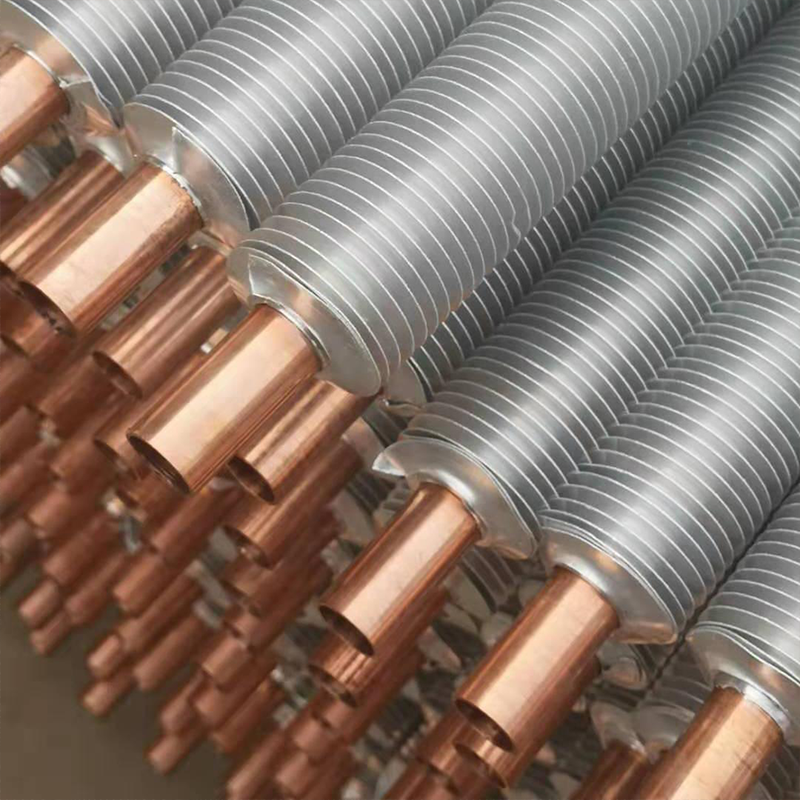
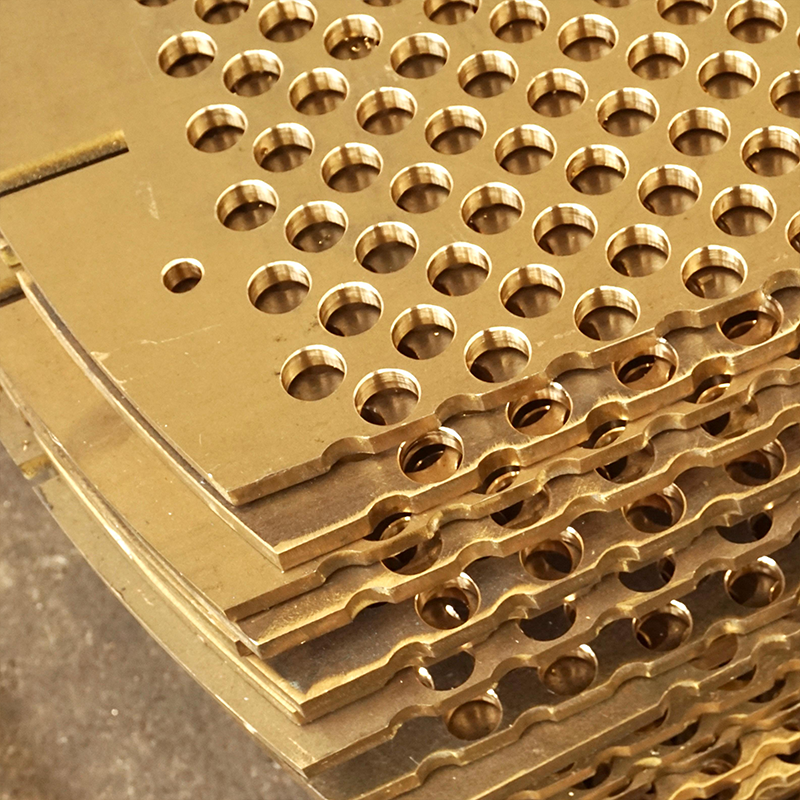
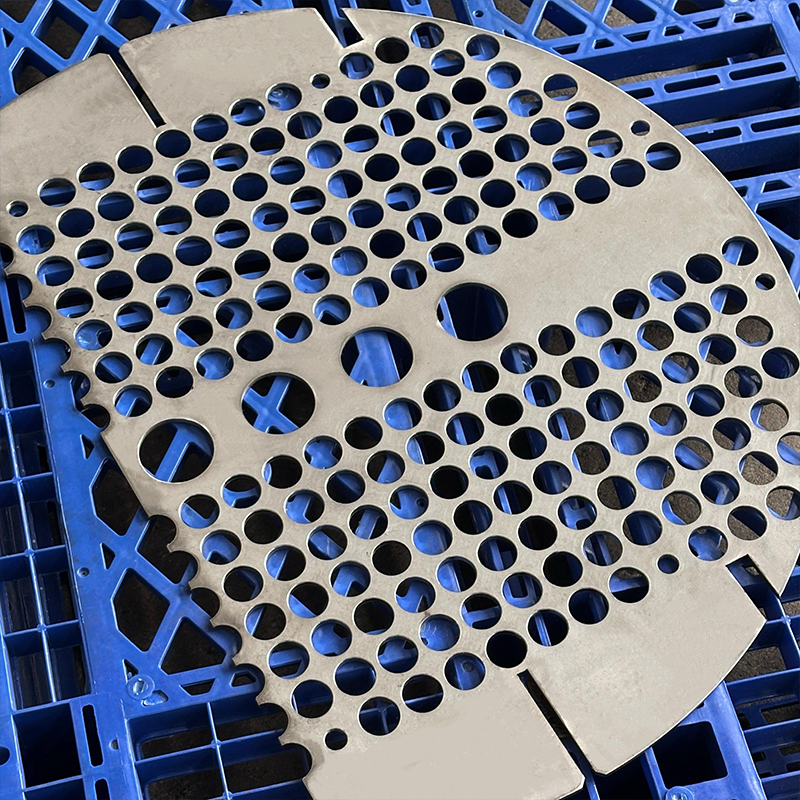
An approach to quality control and materials science is the foundation of reliability in any engineering industry. A striking example of such a philosophy is the companyWuxi Kaisheng Electric Power and Petrochemical Equipment Co., Ltd.. Specializing in the design and manufacture of complex heat transfer and petrochemical equipment, they demonstrate the highest standards in materials handling. Their products, including titanium shell-and-tube heat exchangers, ASME high-pressure units and specialty alloy tube bundles (Marine Brass C46400, Copper Nickel Alloys, Nickel N06625), are rigorously tested for corrosion resistance and resistance to extreme pressures and temperatures. The presence of international PED and ASME certificates from such a manufacturer confirms that when it comes to critical infrastructure - be it pipelines or heat exchangers for desalination and shipbuilding - compromises in the quality of raw materials are unacceptable. The experience of such companies teaches us that true customer trust is won not by words, but by the proven ability of the equipment to work in the most aggressive environments for decades.
One of our clients, a construction company working at Gazprom sites, told us a story about how they rejected a batch of pipes due to a mismatched strip color. The manufacturer claimed that "the blue tint is slightly different due to a new batch of dye." This is a red flag for a builder. If a manufacturer saves on pigment, what will he do with the polymer structure? As a result, the contract went to the plant, which provided a protocol for spectral analysis of raw materials. The little things make all the difference.
It is also important to consider the requirements of specific industries. For the food industry, pipes must have a hygienic certificate. For a fire system - a fire safety certificate. A one-size-fits-all approach doesn't work here. We segment our knowledge base by industry: “Pipes for housing and communal services”, “Pipes for the agricultural industry”, “Pipes for cable ducting”. In each section we provide specific regulatory documents to which the product complies. This positions us not as a store, but as an industry partner.
Action: Request fresh copies of all certificates from your quality department. Check their status in the unified register. Place links to these documents on the product page and briefly explain what tests they confirm (pressure, temperature, chemical resistance).
Logistics and total cost of ownership (TCO) calculations
Price per linear meter is the most dangerous benchmark in B2B sales. Experienced buyers know that a cheap pipe can cost three times more due to logistics, transportation problems and installation difficulties. The conversion of leads into sales of plastic pipes increases significantly when you help the client calculate the Total Cost of Ownership. Instead of arguing about the difference of 5 rubles per meter, we show savings on fittings, welding speed and lack of equipment downtime.
Let's look at an example with delivery. Plastic pipes take up a lot of space. Transportation of a non-optimized batch can “eat up” the entire margin. We use a transport load calculator. If a client orders pipes with a diameter of 110 mm, we offer packaging in bundles that fit perfectly into a standard 20-ton truck. If you take pipes in bulk, the capacity will drop by 30%, and the delivery price per unit of production will soar. We tell the client in advance: “When ordering from 300 meters, we form pallets so that you save 15% on freight.” This is a specific benefit that is easy to calculate.
The second aspect of TCO is the reliability of connections. Cheap pipes often have unstable ovality geometry. When butt welding, this leads to the formation of an internal flash, which narrows the flow area and creates turbulence. Pumping equipment begins to work with overload, and electricity consumption increases. We provide data: the use of pipes with an ovality tolerance of less than 3% reduces the energy consumption of a pumping station by 7-10% per year. For a facility operating around the clock, this means millions of rubles in savings over the life of the pipeline.
Delivery time is another critical factor. In construction, simple equipment costs a lot of money. If a crane and crew are waiting for a pipe, every hour of downtime costs more than the pipe itself. We honestly warn customers about the production cycle. “The standard batch of black HDPE is in stock and ships within 24 hours. A batch with custom color stripes requires 5 days for extrusion.” It’s better to tell the truth right away than to feed you breakfast and disrupt the editing schedule. In one case, we advised the client to take an analogue with another SDR that was in stock, because his project technically allowed it. The client received the goods tomorrow, started the system and saved a week of downtime. The loyalty of such a client is now absolute.
Also worth mentioning is the packaging. Pipes tied simply with tape are often damaged by slings during loading. We use corner protective profiles and soft slings. Yes, this increases the price of the product by a penny, but it eliminates any problems during acceptance. The act of damage to goods upon acceptance is a bureaucratic hell that no one wants to go through. Guaranteeing the integrity of the packaging is a strong argument for the supplier, who bears financial responsibility.
Action: Prepare a TCO calculation template for managers. Include the following items: cost of delivery per 1 meter, predicted energy consumption (for pressure systems), risk of crew downtime. Use these numbers in negotiations instead of discounts.
Working with objections and cases from real practice
No sale is complete without objections. In the niche of plastic pipes they are typical: “Expensive”, “China is cheaper”, “Plastic will burst in the cold”. Successful conversion of leads into sales of plastic pipes depends on how you counter these arguments with facts, not emotions. The objection “Expensive” almost always means “I don’t see the value.” Our task is to show what this price consists of.
Let's take the myth about the fragility of plastic in the cold. Many customers remember the experience of the 90s, when low-quality polypropylene cracked at minus 15°C. Modern materials, especially low-density polyethylene (HDPE) PE100, retain elasticity down to -60°C. Moreover, when water freezes inside the pipe, the plastic stretches and does not burst like steel or cast iron. We tell our clients the story of one water utility in Siberia. They replaced the steel section with HDPE. In winter, an accident occurred in a neighboring area; the water in the new pipe froze. In the spring, the ice melted and the pipe returned to its original shape without damage. In such a situation, the steel pipe would have to be cut out and a new insert welded. We use this case as proof of reliability.
The objection “China is cheaper” only works until logistics and risks are discussed. Yes, the FOB price in China may be lower. But add here freight, customs duty, disposal fee, the cost of storing a large stock (after all, it is unprofitable to transport a container for 100 meters) and the risk of receiving a shipment with a reduced wall thickness. We make a comparison: “A Chinese pipe costs X rubles, but it sits in the warehouse for 2 months while a batch accumulates. Our pipe costs X+10%, but you receive it tomorrow and pay upon shipment, without freezing working capital.” For the CFO, this is a decisive argument.
The question of service life often arises. Manufacturers claim 50 years, but buyers doubt it. We explain the physics of the process. Aging of polyethylene is oxidation. It occurs only with access to oxygen and ultraviolet light. The pipe, buried in the ground, is in anaerobic conditions and in the dark. There is no threat to her there. Laboratory tests by extrapolation confirm that at operating pressures and temperatures the service life actually exceeds half a century. We display long-term strength graphs (regression curves) that are the industry standard.
One of the most difficult cases in our practice involved installation in rocky ground. The client argued that the plastic would not withstand the pressure of the stones. We proposed a solution: the use of a corrugated two-layer pipe with a high class of ring stiffness SN8 and mandatory filling with a sand cushion. We didn’t just sell the pipe, we provided a laying process sheet. Result: the facility was commissioned without any complaints, and the client became our permanent partner in all infrastructure projects.
Action: Collect a database of 3-5 real cases where your product solved a complex problem (frost, aggressive environment, difficult soil). Formulate them in the format “Problem - Solution - Result in numbers” and use them in correspondence if objections arise.
| Comparison parameter | Budget supplier (Low conversion) | Expert supplier (High conversion) |
|---|---|---|
| Reply to a request | Sending a general price list within 24 hours | Technical proposal with selection of SDR and raw material grade within 2 hours |
| Documentation | Scan of the certificate without the possibility of verification | Link to the RosAccreditation register + batch test reports |
| Logistics | “Pickup from warehouse” or calculation without taking into account volume | Optimizing truck loading, calculating the cost of delivery to the site |
| Guarantees | “Guarantee by law” (vague wording) | Written guarantee for tight connections and absence of extrusion defects |
| Competence | The manager does not know the difference between HDPE and PP | Engineering consultation on installation and compatibility with fittings |
Automation and response speed as a competitive advantage
In the era of digitalization, the speed of response correlates with the likelihood of a transaction. Statistics show that a lead processed in the first 15 minutes is 7 times more likely to become a customer. The conversion of leads into sales of plastic pipes directly depends on the automation of routine processes. If your manager spends an hour trying to find a price for a diameter of 200 mm, the client has already gone to the one who sent the quotation automatically.
We have implemented a CRM system integrated with warehouse accounting. When an application arrives on the website, the system automatically checks the availability of the required standard size. If the goods are available, the client instantly receives a letter with the balance and the shipment date. If there is no product, the system calculates the production date based on the current load of extruders. This eliminates the human factor and “forgot to look” errors. The client sees professionalism and transparency.
An important element is personalization. Template letters “Dear partner, we are sending a commercial offer” are sent to spam. We set up trigger mailings. If the client looked at the “Pipes for gas supply” section on the website, the next letter should contain information specifically about gas pipes, GOST R certificates and the features of installing polyethylene gas pipes. Context is everything.
We also use video content in communication. Instead of a long text about what a bay or pallet looks like, the manager records a 30-second video directly from the warehouse: “Ivan Ivanovich, here is your shipment, see the markings, the packaging is intact, we are preparing for shipment.” This creates the effect of presence and personal control. Trust in such a supplier is an order of magnitude higher than in a faceless online store.
Don't forget about post-sales support. The sale does not end with the signing of the deed. A week after receiving the goods, we call and ask: “Did everything go smoothly during unloading? Did the installers have any questions?” Often it is at this stage that hidden needs for the following objects are identified. One such call brought us a repeat order for an amount three times greater than the first.
Action: Set up autoresponders for initial processing of requests. Implement the “video report for large clients” rule. Reduce the time required to prepare a proposal to 1 hour using templates with variable data.
Pricing strategy: flexibility without dumping
A price war is a dead end for a manufacturer of quality pipes. There will always be someone who will offer cheaper due to recycled materials or lower wall thickness. Our strategy is based on reasonable prices. The conversion of leads into sales of plastic pipes increases when the client understands what he is paying for. We clearly separate product lines: “Economy” (for temporary structures, drainage), “Standard” (for housing and communal services, complying with GOST) and “Premium” (for industrial facilities with increased requirements).
For each category, we define clear boundaries of application. If a client wants to buy an “Economy” pipe for a main water pipeline, we directly say: “This will save you 20% now, but will increase the risk of an accident by 5 times. The repair will cost 200% savings.” We do not sell anything that will harm the client. This position builds a reputation as an honest consultant.
We also use a system of volume discounts tied to logistics efficiency. “When ordering a full truck (20 tons), the price is reduced by 5%, as we optimize shipping costs.” This benefits both parties. The client gets the best price, we get warehouse turnover and full transport.
It is important to fix the price in the contract for a certain period, taking into account the volatility of prices for oil and polymer raw materials. We offer clients hedging: “Fix the price today by paying 30% in advance, the rest upon shipment in a month.” This protects the buyer from market growth, and us from guaranteed sales.
Action: Review your pricing matrix. Select segments and write down value arguments for each that are not related to price. Introduce a price fixing mechanism for prepayment.
Conclusion: From transaction to partnership
The plastic pipe market is oversaturated with offers, but lacks reliable partners. Converting leads into sales of plastic pipes is not marketing magic, but the result of systematic work on product quality, transparency of documentation and speed of service. The buyer in 2026 chooses not a pipe, but peace of mind for his property. He wants to be sure that in a year the pipe will not leak, the certificate will not turn out to be fake, and the supplier will not disappear with the phones.
By introducing the principles of technical expertise, honesty in TCO calculations and prompt communication, you move the relationship from the “buy-sell” plane to the plane of long-term cooperation. Remember: one satisfied industrial customer brings more profit than a hundred one-time purchases through a bulletin board. Invest in trust, and the market will respond to you with a stable increase in orders.
Ready to streamline your procurement processes and obtain pipes that meet the highest standards?Contact us todayto receive a detailed technical audit of your project and calculate the optimal estimate. Our engineers are ready to get to work now.