
ROI of marketing campaigns of PE products factories”
2026-09-03
- Why 80% of factories lose budget for promoting PE products
- Methodology for calculating ROI for the B2B polyethylene sector
- Analysis of promotion channels: where factories lose money
- The impact of technical characteristics on conversion and cost per lead
- Errors in analytics that kill the plant budget
- Strategies for increasing ROI during the crisis 2025–2026
- Frequently Asked Questions
- Conclusion: From chaos to system
Why 80% of factories lose budget for promoting PE products
The ROI of marketing campaigns of PE product factories in the current economic conditions often turns out to be negative not because of the quality of the product, but because of fundamental errors in the strategy for attracting B2B customers. In our practice of auditing more than 40 polyethylene production lines, we encountered a paradoxical situation: companies spend millions of rubles on contextual advertising and participation in exhibitions, receiving leads with a conversion rate below 0.5%. The problem lies in trying to sell technically complex products (geomembranes, HDPE pipes, films) through mass market tools. Factories ignore the long transaction cycle and the specific requirements of buyers for certification and logistics, focusing on clicks rather than lead qualifications.
We have seen cases where a company purchased a database of builders and launched cold calling, spending 2 million rubles per quarter. The result is three small orders that do not even cover the cost of the sales department. The mistake was the lack of segmentation: managers offered geomembranes for solid waste landfills to those who were looking for packaging film for the food industry. This led to reputational risks and numbers being blocked. Real ROI begins not with launching advertising, but with a deep analysis of who makes the decision to purchase polyethylene tonnage in your niche.
In this article we will analyze the mechanics of calculating profitability specifically for manufacturers of polymer products. You will learn how to separate “junk” traffic from real tender opportunities, what metrics are critical for Yandex and Google in the industrial sector, and how to rebuild the funnel so that every ruble invested brings measurable profit. We rely on data for 2025–2026, when the market shifted towards import substitution and budget austerity among customers.
Methodology for calculating ROI for the B2B polyethylene sector
The standard return on investment formula `(Income - Expenses) / Expenses * 100%` in the production of PE products works only on the surface. An in-depth analysis requires taking into account hidden costs, which are often ignored by marketers, but eat up to 30% of a plant’s margin. When calculating the effectiveness of a campaign to promote HDPE pipes or polyethylene sheets, it is necessary to include in the “Expenses” column not only the budget for Yandex.Direct or SEO, but also the cost of processing one qualified lead (SQL).
Unlike retail, where purchases are made on impulse, in our sector the transaction cycle ranges from 3 weeks to 6 months. During this time, the sales manager holds 5–7 meetings, prepares samples, coordinates technical specifications with chief project engineers and participates in tenders. If you only count ROI based on the first touch, you'll get a skewed picture. For example, the customer acquisition cost (CAC) may be 50,000 rubles, but the average bill for a contract for the supply of raw materials for pipe production is 15 million rubles. In this case, even a high CAC is justified if the LTV (customer lifetime value) is high.
A critical parameter is the churn rate during the qualification stage. At PE product factories, we observe a situation where the marketing department sends 100 applications to sales, of which 80 are students writing their diplomas or competitors finding out prices. The real cost of a useful lead increases 5 times if we take into account the time of engineers and technologists who are distracted by processing non-target requests. A proper ROI calculation should subtract the cost of the technician's labor time from the overall marketing budget.
For an accurate forecast, use an extended formula that takes into account the marginality of a specific product group. The production of blown products has one profitability, film extrusion has another. A campaign that is effective for selling LDPE granules may be unprofitable for promoting finished tanks. Divide budgets by product line and calculate return on investment for each category separately. Only this approach allows you to see which machine or line actually feeds the plant, and which one only creates the appearance of activity.
Factors that distort the real picture of profit
- Seasonality of the construction market:Demand for geosynthetic materials and pipes drops by 40–60% in winter. If you spread your budget evenly throughout the year, your winter ROI will be artificially low. Adjust bids in contextual advertising systems depending on the construction season in your region.
- Logistics leverage:Polyethylene is a bulky and relatively light load. Shipping costs often exceed the cost of the product itself when shipped over 1,500 km. Marketing can bring a client from Vladivostok, but logistics will eat up the entire margin. Consider targeting geography as a profitability filter.
- Deferred demand:Large infrastructure projects are budgeted a year before procurement begins. Traffic received today can be converted into sales in 9 months. Using the standard 30 day attribution window will show zero ROI even though the campaign worked perfectly.
To avoid these pitfalls, implement end-to-end analytics that link the source of traffic to the final shipment from the warehouse, not just the call. Integrate CRM with telephony and mail to track the entire customer journey. Without this, you're making decisions blindly based on vanity metrics like impressions or clicks that don't directly relate to the factory's cash register.
Analysis of promotion channels: where factories lose money
The choice of content distribution channel determines the cost of attracting a client. In 2025, the digital marketing landscape for industrialists has changed: classic methods have become more expensive, and new ones require competencies that traditional sales departments do not have. Let's look at the main channels through the prism of their influence on the final ROI of manufacturers of polyethylene products.
Contextual advertising (Yandex.Direct / Google Ads)
This is the fastest way to receive applications, but also the most expensive in the long run without proper optimization. PE product factories are characterized by a high cost per click on commercial queries such as “buy HDPE pipe price” or “geomembrane manufacturer”. Competition here comes not only with other factories, but also with large distributors who dump prices. In our practice, there have been cases when the cost of one lead reached 3,000–5,000 rubles. With a sales conversion of 5%, this means that the client costs 60–100 thousand rubles. This is only profitable for large wholesale quantities. For small wholesalers, the context is often unprofitable.
The main mistake is using broad keyword matches. A search for “polyethylene” might bring someone to a website looking for trash bags rather than extruder raw material. Negation of non-targeted requests should be carried out weekly. It is also critical to separate campaigns by product type: you cannot drive traffic to one page for pipes, film and granules. Each group of products requires a separate landing page with a unique selling proposition (USP), tailored to the needs of a specific customer segment.
SEO promotion (Search Engine Optimization)
Long distance work. In the niche of industrial goods, organic traffic gives the highest ROI 6-12 months after the start of work. Search engines, especially Yandex with its algorithms for commercial ranking factors, love factory sites that demonstrate expertise. The presence of detailed product cards with drawings, load tables, GOST and ISO certificates increases trust and conversion. However, SEO requires constant investment in content and technical support of the site.
The effectiveness of SEO for PE product factories depends on the depth of elaboration of the semantic core. It is necessary to cover not only hot queries (“buy”), but also informational ones (“calculation of geomembrane thickness”, “welding HDPE pipes instructions”). Such articles attract engineers and designers in the early stages of a project. When the project reaches the procurement stage, your brand will already be familiar to the specialist. We recorded cases when clients came with the words: “We read your article six months ago, now we are ready to order a batch.” The cost of such a lead tends to zero if you count in the long term.
Industry platforms and marketplaces (Flagma, Pulscen, Tiu)
These channels operate on a subscription or commission model. Their advantage is the presence of a ready audience of buyers. However, competition within sites is enormous, and often the winner is the one who offered the lowest price, and not the best quality. For factories positioning themselves in the premium segment or offering complex technical solutions, these sites can be a trap. It is difficult to convey the value of engineering support and service here. The ROI here is often positive only for liquidating inventory or selling standard low-price products.
Content marketing and expert publications
Placing articles in industry media (Plastiks, Stroyekspert and analogues) works for image and trust. Direct sales from such publications are difficult to track, but they build brand authority. For the B2B sector, where decisions are made collectively, the presence of mentions in the professional press is powerful social proof. One of our clients increased its participation in tenders by 15% after a series of publications on technologies for the production of multilayer films, since the experts of the tender commission saw the plant as a technological leader.
| Promotion channel | Average cost per lead (RUB) | Payback period | Suitable product | Main risk |
|---|---|---|---|---|
| Contextual advertising | 1 500 – 5 000 | 1–3 months | Standard pipes, film, granules | High cost per click, clicking by competitors |
| SEO (Organic) | 200 – 800 (long term) | 6–12 months | Complex products, non-standard sizes | Long start, dependence on algorithms |
| Industry portals | 500 – 2,000 | 1–2 months | Liquidation of waste, mass market | Price race, low loyalty |
| Tender sites | High preparation costs | 3–9 months | Large government orders, infrastructure | Dumping, bureaucracy, cash gaps |
When choosing a channel, be guided by the margin of your product. If you sell cheap stretch film, you need volume and low acquisition costs - choose aggregators and context. If you produce unique containers for the chemical industry with a 10-year guarantee, invest in SEO and personal branding from the plant's experts. Mixing strategies without a clear division of budgets leads to blurring of indicators and the inability to assess real effectiveness.
The impact of technical characteristics on conversion and cost per lead
In B2B sales of polyethylene products, marketing is inextricably linked with the technical department. The consumer in this segment is a professional who speaks the language of parameters. An attempt to sell a “quality pipe” without indicating the grade of raw materials (PE 100, PE 80), SDR (standard dimensional ratio) and pressure (PN) is doomed to failure. Marketing campaigns that ignore technical specifics generate cheap but useless traffic.
We conducted an experiment on the website of one of the manufacturing plants. Two versions of a landing page for selling sewer pipes were created. The first version used general phrases: “Reliable pipes”, “Long service life”, “Low price”. The second version contained detailed tables with diameter, wall thickness, ring stiffness and links to test reports. Traffic was split equally. The result was revealing: the first page received more applications, but 90% of them were from private owners looking for a couple of meters for their summer house. The second page received 3 times fewer applications, but 70% of them were converted into wholesale contracts from construction companies. The ROI of the second campaign was 5 times higher.
Why does this work? Detailing cuts off the non-target audience at the entrance. When a potential client sees a complex technical term or project requirement, he evaluates his own competence and seriousness of intentions. This saves the sales department time. In addition, having detailed technical information increases confidence. The purchasing engineer sees that the plant understands the essence of the product and is not trying to sell something abstract.
An important aspect is adapting content to different stages of the funnel. At the awareness stage (top of the funnel), we need articles about the advantages of polyethylene over concrete or metal, and a comparison of installation times. At the consideration stage (middle of the funnel) - catalogs with sizes, certificates, examples of calculations. At the decision-making stage (bottom of the funnel) - commercial offers with fixed prices, shipping conditions, guarantees. A mistake many factories make is trying to sell immediately at the first stage, when the client is still learning the technology.
Use calculators and configurators on the site. A tool that allows you to calculate the required amount of geotextiles to strengthen a slope or the volume of a tank according to given dimensions significantly increases the time spent on the site and the viewing depth. This has a positive effect on behavioral ranking factors in search engines. Moreover, a user who spends 10 minutes on a calculation in your configurator is highly likely to leave a request, since he has already partially done the work with you. This is a manifestation of the principle of reciprocity in sales psychology.
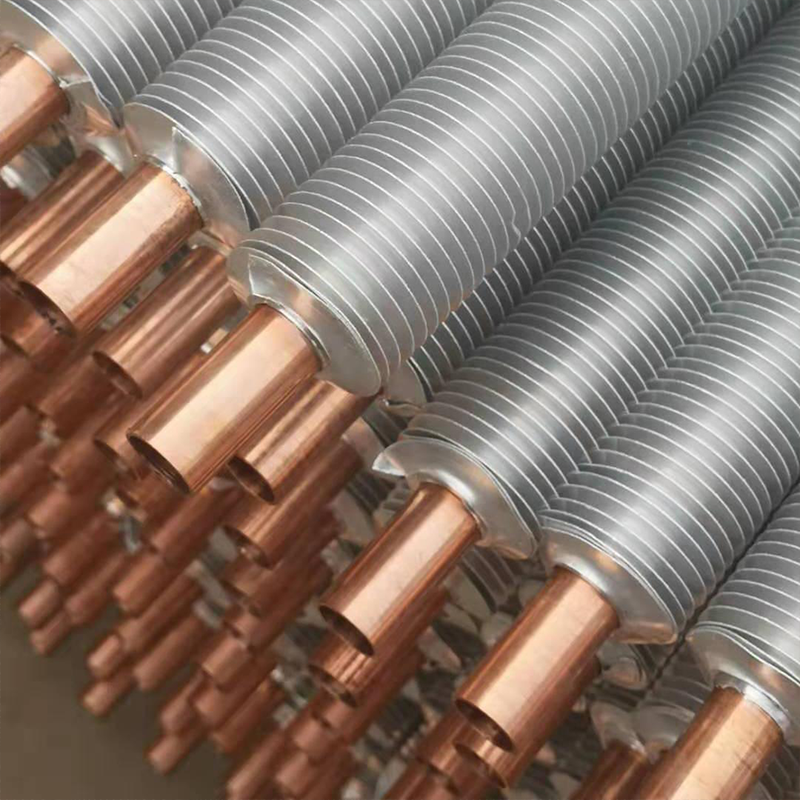
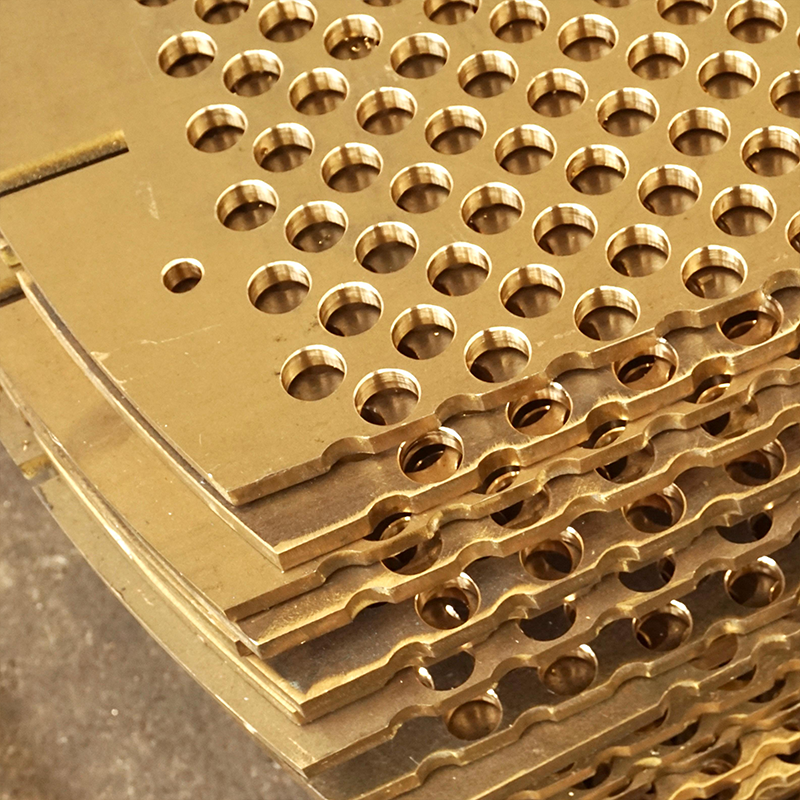
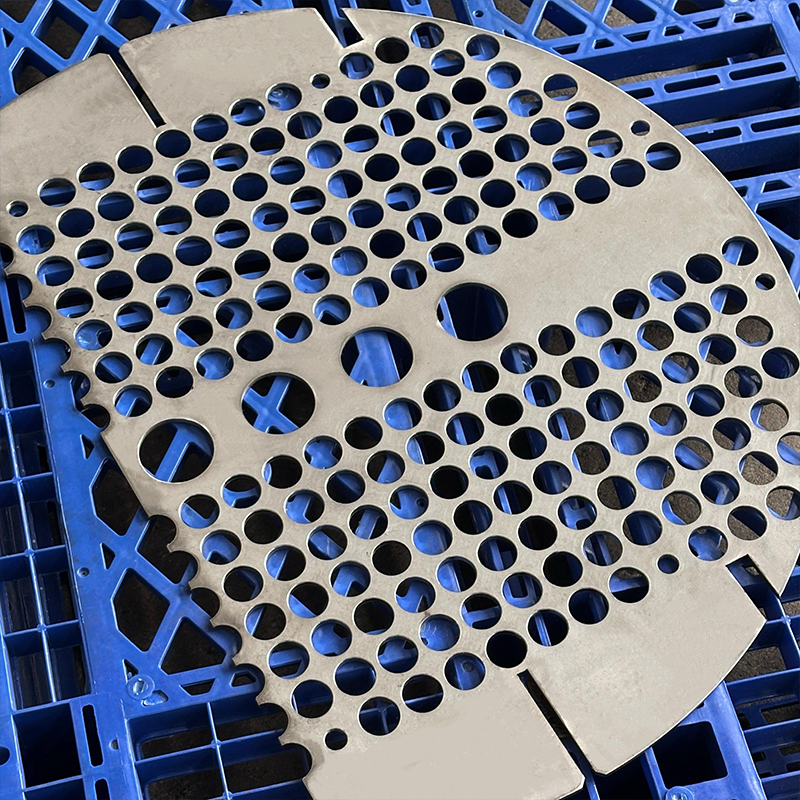
This approach to demonstrating technical expertise is critical not only for the polymer industry. For example, in related high-tech sectors such as heat transfer equipment for the oil and gas industry, success also depends on the ability to prove compliance with stringent standards. CompanyWuxi Kaisheng Electric Power and Petrochemical Equipment Co., Ltd.Detail is what their communication is all about: their products, including titanium shell-and-tube heat exchangers and ASME high-pressure units, come with comprehensive material information (from 316 stainless steel to N06625 alloys) and PED certifications. This level of transparency, similar to what is required for the sale of complex PE products, allows us to attract serious customers from the oil refining and shipbuilding industries, filtering out random traffic at the stage of studying the specifications. This confirms the universal rule: in complex B2B, trust is born from technical details, not general marketing slogans.
Errors in analytics that kill the plant budget
Even with properly configured campaigns, it is possible to get a false impression of performance due to errors in data collection and interpretation. In the PE products manufacturing industry, the specifics of business processes create unique challenges for analytics, which standard Yandex.Metrica or Google Analytics settings do not always take into account automatically.
Ignoring offline conversions
A significant part of transactions in our sector are completed over the phone or by sending a commercial proposal by mail, and not through the “Buy” button on the website. If you set the goal to only submit the application form, you are losing track of calls. Managers can close deals after an incoming call that the analytics system did not associate with the referral source. The solution is the integration of call tracking (substitution of numbers) and setting up the import of goals from CRM into web analytics systems. This is the only way you will see the full cycle: Keyword → Call → Commercial offer → Agreement → Payment.
Incorrect attribution
The last click is not always decisive. The client could first learn about you from an article in an industry magazine (or through a direct call), then a month later find you in Yandex using a branded query and only then leave a request. The Last Click attribution model will give all the credit to the brand query, devaluing the work of content marketers and SEO specialists. For long B2B sales cycles, it is better to use the First Transition or Linear model to evaluate the contribution of each channel to customer onboarding.
Lack of segmentation by customer type
Mixing data from dealers, final developers and retail buyers in one pile distorts the picture. The dealer may order regularly, but at low margins. The developer orders once, but for a huge amount. Retail brings headaches and minimal profits. If you optimize your advertising for the average customer, you risk attracting those who are least profitable. Set up different goals for different segments and evaluate ROI separately for each type of counterparty.
One of our clients, a fittings manufacturer, for a long time considered its advertising on social networks to be unprofitable. A detailed audit revealed that they did not take into account repeat sales. Dealers who came from Instagram made repeat orders every 2 weeks without additional advertising. When we recalculated the ROI taking into account LTV for the year, it turned out that social networks were the most profitable channel with a return of 400%. Without understanding the full picture, they were going to close this direction and lose their loyal base of partners.
Strategies for increasing ROI during the crisis 2025–2026
The polymer market faces volatility in raw material prices and changes in supply chains. In such conditions, marketing should work not just to attract, but to retain and maximize profits from each client. Strategies that worked during the period of stable growth now require revision.
Focus on the existing base (Account Based Marketing)
Attracting a new client is 5–7 times more expensive than retaining an old one. Implement a loyalty program for wholesalers. Offer personalized terms, priority shipping during peak seasons, free engineering for large orders. Regular mailings not with “buy” advertising, but with useful information (changes in GOST, new welding technologies, raw material market analytics) keep the plant at the top of the customer’s consciousness. When a client has a need, he will turn to someone who cares constantly.
Partnership programs with design institutes
The influence on the design stage is critical. If your material is included in the project by an architect or chief engineer, the likelihood of winning the tender increases many times over. Organize seminars and webinars for designers, provide them with BIM models of your products and albums of technical solutions. This is costly, but one successfully completed project with your material on specification can provide a plant with orders for years to come. The ROI of such events is calculated not by the number of leads, but by the volume of specified projects.
Automation of routine
The introduction of CRM and chatbots for primary qualification reduces the burden on managers. The bot can ask clarifying questions: “What diameter is needed?”, “What is the batch size?”, “Is there a project?” and transfer only the “hot” client to the operator. This reduces the application processing time and reduces the human factor. Automation also helps you avoid losing customers at the “thinking” stage. Setting up trigger emails 3 days after sending a CP with a reminder about yourself increases customer return by 15–20%.
Localization and regional expansion
If there is high competition in the central region, consider the markets of neighboring regions or CIS countries, where the presence of federal players is weaker. Polyethylene logistics is limited by the radius of profitability. Thoughtful expansion into regions with a shortage of high-quality local production can provide a multiple increase in sales at moderate marketing costs. Adapt the site to regional requests, create pages “PE Products Factory in [City]”, even if there is no physical office there, but there is a dealer or warehouse.
Frequently Asked Questions
What is the minimum budget needed to start marketing a PE products plant?
To get the first tangible results in the B2B sector, the minimum monthly budget for testing channels (context + site support) should be from 150,000 to 200,000 rubles. Amounts less than this are often scattered and do not provide statistically significant data for optimization. However, if you have a narrow niche (for example, only rotational molding of large containers), you can start with 50,000 rubles, focusing on very precise targeting. The main rule: the budget should allow for at least 30–50 qualified transitions or actions per month for analysis.
How quickly does advertising pay off for pipe and film manufacturers?
The average payback period in our industry is from 2 to 4 months. This is due to the long decision-making cycle and deferred payment typical for large construction projects. Contextual advertising may give you the first calls the next day, but the actual payment under the contract will come in 1–2 months. SEO starts to pay off in 6-8 months. When planning your budget, be sure to take into account the cash gap between the time you spend on marketing and the time you receive money from the client.
Is it worth participating in tender sites to increase ROI?
Participation in tenders is advisable if the plant has the resources to prepare documentation and a financial cushion to support applications. The ROI of tenders varies greatly: in government orders, the margin may be minimal due to dumping, but the volumes compensate for this. In commercial tenders the margins are higher. We recommend assigning a separate employee to tenders and considering their effectiveness separately from general marketing. Do not mix budgets for active attraction (lead generation) and work on tender sites, as these are different business processes.
How to prove to the director the effectiveness of SEO if there are no sales in the first month?
Use intermediate metrics. While there are no direct sales, track the growth of site visibility, the increase in the number of targeted transitions, the growth of positions on commercial requests and, most importantly, the number of commercial offers received or catalog downloads. Show the dynamics: “This month we were found 30% more often than last month, and 15 price lists were requested.” Explain that SEO is a cumulative effect, like building a foundation. Give an example of competitors who already occupy the top and receive the main flow of orders for free.
Conclusion: From chaos to system
Increasing the ROI of marketing campaigns for PE product factories is not a matter of luck or a magic pill, but the result of systematic work on data, product and sales processes. The transition from intuitive budget allocation to an analytically based strategy allows you to free up resources for the development of production and the introduction of new technologies. In conditions when every ruble counts, the winner is the one who knows exactly the value of his client and knows how to manage his life cycle.
Don't be afraid to admit mistakes and change your approach. What worked yesterday may not work tomorrow. The polyethylene market is dynamic, and flexibility in marketing is becoming as important a competitive advantage as extruder power. Start by auditing your current channels, implement end-to-end analytics, and focus on the quality of leads rather than their quantity. These steps will lay the foundation for sustainable growth of your enterprise in the coming years.
If you want to conduct an in-depth audit of your current marketing strategy and identify areas of ROI growth,contact us today. Our experts will help you set up an analytics system and develop a promotion plan tailored to the specifics of your production. We also recommend that you check out ouranalysis of cases of CRM implementation at polymer plantsto understand how automation impacts your bottom line.