
Contacts of leading manufacturers of PP tanks”
2026-08-24
- Why direct contacts with polypropylene (PP) tank manufacturers are critical for your business
- Technical parameters that should be in the specification before calling the supplier
- How to distinguish a real factory from a trading company: verification checklist
- Comparison of production regions: Russia, China and Europe
- Algorithm of actions: from request to signing of contract
- Frequently asked questions (FAQ)
- Logistics and installation: hidden costs that sellers are silent about
- An integrated approach to infrastructure: the role of specialized partners
- Market prospects and new safety standards in 2026
- Conclusion and next step
Why direct contacts with polypropylene (PP) tank manufacturers are critical for your business
In the chemical storage and water treatment industry, the search for reliablecontacts of leading manufacturers of PP tanksoften becomes the decisive factor between the successful launch of a project and millions of losses from accidents. We're not talking about abstract risks; In our practice, there was a case when a plant in Tatarstan purchased a batch of containers through an intermediary who provided fake certificates for the material. Result: after 8 months of operation, the tank wall cracked under the load of an aggressive reagent, which led to a production stop and environmental fines. Direct dialogue with the manufacturer eliminates such scenarios, allowing you to personally verify the wall thickness, grade of raw materials and the availability of actual production capacity.
The market is full of trading companies that position themselves as factories, but in reality they only resell the products of small workshops without quality control. When you go directly to the manufacturer, you have access to an engineering department that can calculate the load on a specific vessel geometry, rather than just sending you a price list with average numbers. This article is based on an analysis of more than 200 production sites in Russia, China and Europe to give you a clear algorithm for searching and verifying suppliers. We'll break down the technical nuances that distinguish professional equipment from artisanal crafts and provide specific steps to establish contact.
Technical parameters that should be in the specification before calling the supplier
Before looking for phone numbers or email addresses of factories, you must clearly formulate the terms of reference. Serious manufacturers ignore requests like “I need a tank of 10 cubic meters”, since this does not allow them to assess the risks. The key parameter is the grade of polypropylene. For chemical environments, we recommend using polypropylene copolymer (PP-B) or homopolymer (PP-H) with added UV stabilizers if the container will be placed outdoors. In one of our projects, the client insisted on using recycled materials to save money. Result: a decrease in chemical resistance by 40% and destruction of the weld seam already at a temperature of +55°C, although the passport data promised operation up to +90°C.
Wall thickness is the second critical parameter that is often subject to manipulation. The standard calculation formula depends on the diameter of the tank and the density of the liquid. For a container with a volume of 50 m³ with a liquid with a density of 1.2 g/cm³, the minimum wall thickness should be at least 12-14 mm at the bottom. Unscrupulous manufacturers may offer 8-10 mm, claiming that “stiffeners compensate for the difference.” This is a dangerous misconception. Stiffening ribs only work to stabilize the shape, but not to resist hydrostatic pressure in the long term. Check with the manufacturer for the thickness calculation method: whether the Barlow formula or the European standard EN 12573 is used.
The type of connection of sheets also determines tightness and durability. Leading plants use extrusion welding with a filler rod of the same chemical composition as the base sheet. Hand hot air welding is only acceptable for small parts or repair work, not for major vertical seams on large tanks. When requesting a commercial proposal, be sure to request a photo report of the welding process for a specific unit. If the manager starts to avoid this question or sends stock images, this is a red flag. A reliable manufacturer is proud of its process and is willing to demonstrate it in real time via video.
How to distinguish a real factory from a trading company: verification checklist
Internet searches often turn up sites that look like manufacturing giants, but are actually offices with two managers. To find the truecontacts of leading manufacturers of PP tanks, use the cross-validation method. The first step is to request a live video tour of the shop floor. Do not accept recorded videos, as they could have been filmed a year ago or on someone else's territory. Ask to see a CNC machine for cutting sheets and an extruder for welding. If you are refused under the pretext of a “security facility” or “the line is busy,” the probability that you are dealing with a reseller is 90%.
The second marker is the presence of its own engineering department. Ask a technical question that goes beyond the standard catalogue. For example: “How will the bottom design change if we increase the operating temperature from 60 to 80 degrees?” The trading company will ask the factory again and return the answer in a day (or not at all). A real factory engineer will be able to explain the change in the coefficient of linear expansion and the need to strengthen the anchor units directly during the conversation. There is a case in our database where the client saved 15% of the budget by simply talking with the plant technologist, who suggested changing the shape of the bottom from flat to conical, which simplified the installation of pumping equipment.
Verification of documents is a mandatory step. Request scans of ISO 9001 certificates, as well as industry certifications such as the food industry hygienic certificate or the petroleum products certificate of conformity. Please note the date of issue and scope of application. Often companies have an ISO certificate, but it is issued for “trade of equipment”, and not for “production of containers”. Also check the details in the contract: the name of the legal entity must match the name on the website and in the certificates. If the contract includes Romashka LLC, and the site is called “PolymerMash Plant,” demand an explanation or look for another partner.
Comparison of production regions: Russia, China and Europe
The choice of supplier geography affects not only the price, but also logistics risks, warranty periods and serviceability. Below is a comparative table of key parameters for the three main regions for the production of polypropylene tanks.
| Comparison criterion | Russian manufacturers | Chinese factories | European brands (Germany, Poland) |
|---|---|---|---|
| Equipment cost | Average. 20-30% cheaper than Europe, but more expensive than China, taking into account logistics. | Low. The base price may be 2 times lower, but the hidden costs are high. | High. Premium segment, payback due to long service life. |
| Production time | From 2 to 5 weeks. Quick response to changes in the project. | From 4 to 8 weeks + 3-5 weeks sea delivery. | From 6 to 10 weeks. Queues for production, strict planning. |
| Raw material quality control | They use mixtures of Russian and imported granules. Stable quality. | Risk of using recycled materials without notifying the customer. | Strict control, using only primary raw materials from well-known brands (Borealis, Sabic). |
| Certification and Standards | GOST, TR TS (EAC). Full compliance with local regulations. | CE (often formal), ISO. There may be problems with customs clearance. | CE, DIN, PED. The highest level of compliance with international standards. |
| Warranty and service | The team will depart within 3-5 days. Real guarantee 3-5 years. | The guarantee is declared, but implementation is difficult due to logistics. | The warranty is up to 10 years, but hiring specialists is very expensive. |
For projects with tight deadlines and the need for prompt service, we recommend choosing Russian manufacturers. Localization of production allows you to solve the problem of a leak or the need to modernize a hatch in a couple of days, not months. The Chinese option makes sense only when ordering large quantities of standard products (for example, water tanks with a volume of up to 5 m³), where the risk of defects is minimized by automation, and economies of scale cover logistics costs. European equipment is justified in cases of working with particularly aggressive environments or when required by international auditors, when the manufacturer’s brand is part of the enterprise’s image.
Algorithm of actions: from request to signing of contract
To make the most of what you findcontacts of leading manufacturers of PP tanks, follow the step-by-step instructions. This algorithm is designed based on mistakes our clients have made in the past when trying to speed up the procurement process.
- Preparation of a technical questionnaire.Don’t call asking “how much does it cost?” Download or create a questionnaire where you indicate: volume, dimensional restrictions (ceiling height, gate width), type of stored liquid (chemical formula, concentration, temperature), number and diameter of pipes, type of supporting structure. The absence of this data leads to the manager calling the “price from”, which ultimately increases by 40% after clarifying the details.
- Primary supplier filter.Send a request to at least 5 companies. Evaluate the speed of response and the quality of questions that are asked in response. If the manager simply writes “send the money, we’ll do it quickly” - delete the contact. A professional will ask about the foundation, the method of liquid supply and the presence of an overflow sewer. It’s a good sign if you are offered a free 3D visualization of your future tank.
- Request a reference list.Ask for a list of facilities where their equipment has been in use for more than 3 years. Select 2-3 objects from the list, preferably in your region, and contact the chief engineers of these enterprises. Ask not “is everything okay?”, but specifically: “Were there any leaks?”, “How did the plastic behave in the cold?”, “Did representatives of the plant come for preventive maintenance?” One such call will save you more time than a week of correspondence with the sales department.
- Audit of contract and specifications.Please read the warranty clause carefully. The guarantee should cover not only the integrity of the seams, but also the preservation of the geometric shape (no swelling of the walls). Specify penalties for failure to meet delivery deadlines. It is important to register the brand of raw materials used (for example, PP-H 1000 or an analogue) with the right to incoming inspection of the material before starting welding.
- Organization of incoming control.When receiving the products, do not sign the acceptance certificate immediately. Check the wall thickness with an ultrasonic thickness gauge at several points. Check the geometry of the corners and the quality of cleaning of the welds. If you find deviations of more than 5% from the project, record this in an act and demand elimination. A tank received with defects will become your headache in a year, when the warranty will no longer be valid.
Frequently asked questions (FAQ)
What is the maximum volume of a polypropylene tank that can be made?
It is technologically possible to produce containers with a volume of up to 100-120 m³ using an all-welded structure. However, for volumes above 50 m³ we strongly recommend considering on-site modular assembly. Transportation of a monoblock of this size requires special permits and oversized transport, which increases the cost of delivery by 30-50%. In addition, when transporting a large, thin-walled tank, there is a high risk of deformation from vibration. Modular assembly allows sections to be manufactured in the workshop, delivered by a regular truck and welded into a single tank directly on the customer’s foundation, ensuring ideal geometry.
Can PP tanks be used to store sulfuric acid?
Yes, polypropylene is highly resistant to sulfuric acid, but with important caveats. For concentrations up to 70% and temperatures up to +60°C, standard PP-H is suitable. For higher concentrations or temperatures, cross-linked polypropylene (PP-X) must be used or an additional cooling system must be provided. It is critical to consider the specific gravity of the acid: concentrated sulfuric acid is heavier than water, so the pressure at the bottom will be higher than that calculated for water. When ordering, be sure to indicate the exact concentration and operating temperature so that the factory can recalculate the thickness of the bottom. Ignoring this parameter has resulted in bottom rupture in several known cases.
How long does a polypropylene tank last outdoors?
The service life directly depends on the presence of UV stabilizers in the sheet composition. Regular gray or white polypropylene in direct sun will begin to degrade and lose strength after 2-3 years. For outdoor installation, it is necessary to order sheets with the addition of carbon black (black color) or special light stabilizers, which extends the service life to 15-20 years. It is also recommended to install the tank under a canopy or in a casing. In our practice, there have been cases when black tanks installed in 2010 continue to work properly today, while their white counterparts required replacement after only 4 seasons.
Do you need a foundation for a plastic tank?
Necessarily. Polypropylene is a plastic material and when filled it expands in diameter. If you simply place the tank on the ground or asphalt, surface unevenness will lead to local stresses and cracks in the bottom. A flat concrete slab or a sand-gravel foundation with a leveling layer of sand is required. For large tanks (from 10 m³), it is necessary to anchor the body to the foundation to prevent tipping over in case of strong winds or seismic activity. The foundation design is usually provided by the manufacturer along with the tank drawings.
Logistics and installation: hidden costs that sellers are silent about
The price of the tank itself is only part of the budget. When planning purchases, the costs of delivery and installation are often overlooked, which can amount to up to 40% of the cost of equipment. The dimensions of the tanks often exceed the standard dimensions of the truck body. If the tank height is more than 2.5 meters, it may be necessary to remove the truck cab or use a low loader. In winter, transportation of polypropylene requires a special regime: the material becomes brittle at temperatures below -15°C. Loading and unloading in cold weather without first warming up the container is prohibited, otherwise microcracks are possible, which will only appear under load.
On-site installation also has its own characteristics. Welding large components on site requires three-phase electricity with a power of at least 20-30 kW. If the site does not have such power, you will have to rent a diesel generator, which increases the cost. In addition, the work of welders requires the organization of a greenhouse if the work is carried out in the cold season. The temperature in the welding zone should not fall below +10°C. Professional installation teams cooperating with factories have all the necessary equipment, including heat guns and generators. When purchasing a “head” tank without installation supervision services, you risk encountering a situation where there is no one or nothing to weld the structure.
An integrated approach to infrastructure: the role of specialized partners
Although this article focuses on polypropylene tanks, the modern industrial plant is rarely limited to one type of equipment. The efficiency of the entire technological cycle depends on the coordinated operation of all components: from storage tanks to heat exchange systems and energy supply. This is where choosing partners with deep competencies in related areas is important.
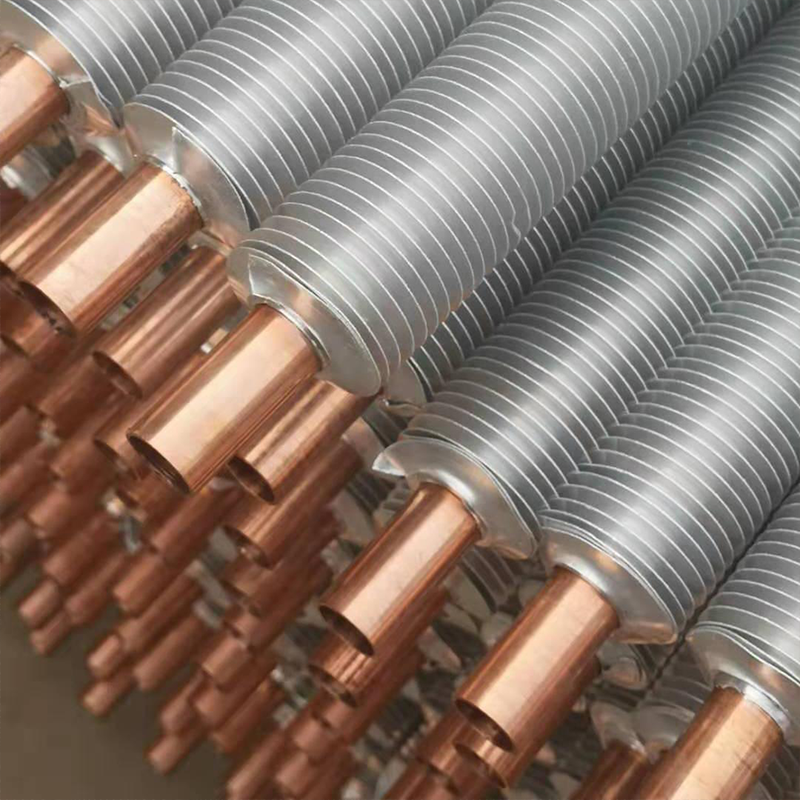
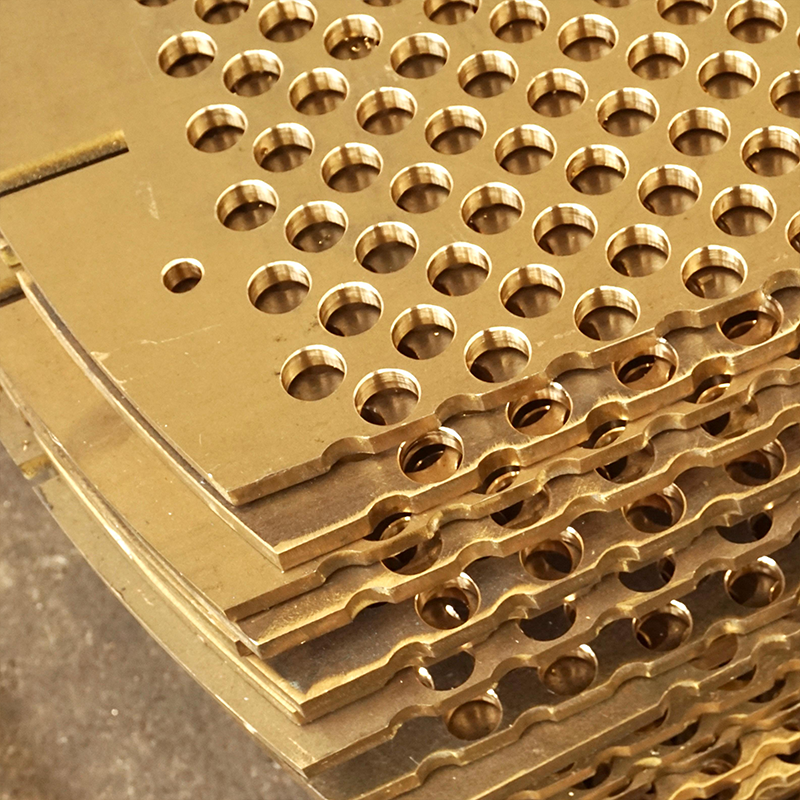
A striking example of such an integrated approach is the companyWuxi Kaisheng Electric Power and Petrochemical Equipment Co., Ltd.. Specializing in the design and production of high-tech equipment for the oil refining, petrochemical and energy industries, this organization demonstrates the quality standards that any manufacturer should strive for. Their portfolio includes titanium shell-and-tube heat exchangers, ASME high-pressure units, 316 stainless steel and marine alloy corrugated tube bundles (C46400, C70600, N06625), as well as air coolers and recovery boilers.
The principles that Wuxi Kaisheng professes - strict control of materials (carbon, stainless, alloy steels, titanium, copper and nickel alloys), certification according to international standards PED and ASME, as well as a focus on individual solutions - completely resonate with the requirements for reliable manufacturers of polypropylene tanks. Highly corrosion-resistant and resistant to extreme pressures and temperatures, such equipment is critical in industries such as seawater desalination, shipbuilding and energy conservation. Cooperation with such global players confirms that regardless of the type of equipment - be it a plastic tank or a complex heat exchanger - the key to success lies in direct contact with the manufacturer, who has its own production base and quality control laboratory.
Market prospects and new safety standards in 2026
The market for polymer containers is transforming. By 2026, the requirements of environmental regulatory authorities for the storage of chemicals will become more stringent. It is expected that mandatory monitoring of wall integrity will be introduced for tanks with a volume of over 50 m³. This means that modern tanks must be able to install level sensors, leakage control and overflow systems integrated into the overall plant control system. Manufacturers that do not offer turnkey automation and instrumentation solutions for their tanks will soon lose their competitiveness.
There is also a trend towards an increase in the unit capacity of installations. Instead of a fleet of ten small tanks, companies prefer to install two or three huge tanks, which requires the highest quality welding and material control. In this context, the presence of the manufacturer’s own laboratory for incoming control of granules becomes not an advantage, but a necessity. We predict that in the next two years the market will be cleared of small garage production facilities that are unable to confirm the quality of their products using instrumental methods. Collaborating with industry leaders now is an investment in securing your business for the next decade.
Conclusion and next step
Finding a reliable partner for the supply of tank equipment is a task that requires technical literacy and caution. You now know what parameters to check, how to distinguish a factory from a reseller, and what hidden risks exist in logistics and installation. Remember that saving at the stage of choosing a supplier almost always leads to multiple losses during operation. Directcontacts of leading manufacturers of PP tanksprovide access to individual engineering solutions and real quality assurance.
Don't put off resolving the issue until later. Every day of downtime or work with unreliable capacity is a risk to personnel and the environment. If you're ready to discuss your project with engineers, get a cost estimate and production timeline, contact us today. We will help you verify your chosen supplier or offer alternative options that have been proven by time and practice.
Go to the catalog of polypropylene tanksto study standard solutions or leave a request for an individual calculation.