
Answers to questions about the delivery of large containers”
2026-08-24
- Answers to questions about shipping large containers: straight answer and key risks
- How to choose transport for containers of different sizes and weights
- Fastening and rigging technology: preventing damage along the way
- Documentary support and customs nuances for oversized items
- Frequently asked questions (FAQ)
- Specifics of delivery to remote regions and winter conditions
- Cost-effectiveness: how to reduce costs without risk
Answers to questions about shipping large containers: straight answer and key risks
The main question that worries logisticians and buyers isanswers to questions about the delivery of large containerscomes down to three factors: choosing the type of transport according to the dimensions (oversize or container), proper rigging preparation to prevent deformation of the hull during rolling, and the availability of permits for transit through border zones. If the container exceeds the standard dimensions of a 40-foot container (height more than 2.59 m or diameter more than 2.35 m), you automatically fall into the category of oversized cargo, which increases the cost of transportation by 30-45% and requires the development of an individual fastening scheme. In our experience, we have seen cases where saving $200 on professional slinging resulted in welds losing seal due to vibration in transit, rendering the tank unsuitable for pressure service.
Delivery of industrial tanks with a volume of 10 to 100 cubic meters is not just “transporting an iron barrel.” This is a complex engineering problem where an error in calculating the center of gravity can lead to the trawl overturning when turning. Below we will analyze specific scenarios based on real cases of deliveries to regions with different infrastructure, and give clear instructions on how to avoid equipment downtime and cargo damage.
How to choose transport for containers of different sizes and weights
The first decision that determines the budget and timing is the cargo classification. Many customers mistakenly believe that if the container fits into the container in volume, then there will be no problems. However, the critical parameter is not only the volume, but also the distribution of mass. An empty stainless steel tank has a low center of gravity but a huge windage, while a tank filled with water or chemicals creates enormous stress on the vehicle's axles.
For containers with a diameter of up to 2.3 meters and a length of up to 11.8 meters, the optimal solution remains a standard 40-foot container (Dry Van). This is the cheapest option that protects the cargo from precipitation and dust. But there is a nuance here: the weight of an empty large tank is often small, so the problem arises not with overload, but with fixation. If you do not use wooden beams and tensioning belts every 1.5 meters, the container will begin to “walk” inside the container. We recorded a case where, during sudden braking of a train, an unsecured container pierced the front wall of the container, damaging adjacent cargo.
If the diameter of the container exceeds 2.4 meters or the height including support legs exceeds 2.6 meters, a standard container is no longer required. This is where two options come into play: Open Top (a container with a tent roof) or a Lowboy trailer. Open Top allows you to load the container with a crane from above, which is convenient for objects without wide gates, but requires ordering a special awning to protect from rain during the journey. A low-frame trawl is required for super-heavy structures weighing more than 25 tons or for tanks more than 3 meters high.
When choosing between sea and road transport, consider not only the price, but also the permissible load on the roadway in the destination country. In some regions of the CIS, the axle limit is 6 tons, which makes transporting heavy containers on a regular semi-trailer impossible without obtaining a special permit. Sea delivery in a container eliminates this problem until the port of unloading, but shifts it to the shoulders of the road carrier at the “port-warehouse” section.
Recommendation:Before booking transport, request a packaging drawing (Packing List) from the manufacturer with the exact dimensions of the package. Compare these figures with the internal dimensions of the container and the dimensional restrictions of the route. Don’t take the manager’s word that it will “fit in” - ask for a load calculation in cubic meters and tonnages.
Shipping Method Comparison Chart
| Parameter | Standard container (40′ DV) | Open Top Container | Low-bed trawl (Oversized) |
|---|---|---|---|
| Max. load diameter | up to 2.35 m | up to 2.35 m (including spacers) | up to 4.5 m (depending on resolution) |
| Weather protection | Full | Tent only (risk of leaks) | Not available (packaging required) |
| Cost (relative) | 100% (Base) | +15-20% | +40-60% + cost of permits |
| Difficulty loading | High (requires forklift or crane to push in) | Medium (loading by crane from above) | Low (direct installation by crane) |
| Risk of damage | Medium (vibration against walls) | High (moisture ingress) | Low (with proper slinging) |
Fastening and rigging technology: preventing damage along the way
The most common cause of complaints when accepting large containers is dents on the body and damage to the thermal insulation. This is not due to impacts, but due to improper lashing. The metal body of the tank, especially if it is made of thin sheet stainless steel AISI 304 or 316, is not designed to withstand point loads from steel cables. When vehicles move, dynamic loads arise that can reach 1.5 G during emergency braking.
In our practice, there was a case when a client insisted on using chains instead of synthetic slings to save time. As a result, the chains cut through the polyurethane foam insulation layer and left deep scratches in the metal, breaking the passive protective layer. Restoring anti-corrosion properties in the field was more expensive than the delivery itself. Therefore, rule number one: the contact point between the sling and the container must be protected by soft pads (corners) with a thickness of at least 10 mm.
For cylindrical horizontal containers, the use of wooden saddles (cradles) is critical. The container should not rest on its own support legs during transportation if the distance between the legs is large. This creates a lever effect: when the body rolls during a turn, the central part of the tank sags, causing plastic deformation of the bottom. Wooden saddles distribute weight along the entire circumference, turning a point load into a distributed one.
The number of attachment points is regulated by the EN 12195-1 standard. For cargo weighing up to 10 tons, there are at least 4 attachment points (two on each side). For loads over 20 tons, the number of points increases, and the angle of inclination of the slings relative to the horizontal should be from 30 to 60 degrees. If the angle is too sharp, the vertical component of the fastening force drops and the load may bounce on uneven roads. We always require forwarders to provide a photo report of the slinging diagram before shipping.
Pay special attention to pipes and flanges. These are the most fragile structural elements. Under no circumstances should slings be attached to the nozzles or used as support points. All open flanges must be closed with blind plugs and additionally protected with wooden boxes. On one project, we lost a week in customs because an inspector found an open flange that could allow moisture to enter and required a complete repacking of the cargo right at the terminal.
Action:Request a Lashing Plan from the supplier prior to shipment. Make sure it shows where to install the wood saddle posts and uses soft corner profiles. Deviation from the scheme is a reason to stop shipment.
Documentary support and customs nuances for oversized items
The logistics of large containers depends not only on physics, but also on bureaucracy. Errors in documents lead to delays at the border, fines and even seizure of cargo. The main document is the invoice and packing list, but for oversized cargo this is not enough. Customs authorities require a detailed description of the HS Code. Typically, large containers are classified in group 7309 (reservoirs, tanks, tanks and similar containers of ferrous metal) or 7310 (for smaller volumes). An error in one digit of the code can change the duty rate from 0% to 15%.
When importing into the EAEU countries (Russia, Belarus, Kazakhstan), it is critically important to have a certificate of conformity or a declaration of conformity with the technical regulations of the Customs Union (TR CU 032/2013 “On the safety of equipment operating under excess pressure”). If the container is intended to work under pressure, it is subject to mandatory certification. Without EAC marking, the cargo will not be released from customs. We encountered a situation where a batch of containers was delayed for three weeks because the manufacturer applied the CE mark instead of the EAC mark, considering them to be equivalent. For customs these are different jurisdictions.
For road transport of oversized items, a special permit is required. It is issued by the Ministry of Transport or authorized bodies for a specific route. The validity period of such a permit is limited, and the route is strictly fixed. Deviation from the route even by 5 kilometers will invalidate the permit. Obtaining a permit takes 5 to 14 business days, so delivery must be planned in advance. During the season (May-September) the deadlines may increase due to the workload of the issuing authorities.
Another hidden stumbling block is the vehicle inspection report. Before loading, the driver is required to provide a certificate confirming that the body is in good condition and that there are no sharp protruding parts that could damage the cargo. If there are nails or rusty staples sticking out in the body, and you have not checked this, responsibility for damage to the insulation will fall on you as the shipper, and it will be extremely difficult to prove the carrier’s guilt after the fact.
Source: Federal Customs Serviceregularly updates requirements for filing declarations for equipment. We recommend checking the current duty rates immediately before concluding a contract, as they may vary depending on the country of origin of the goods.
Tip:Include the Incoterms DAP (Delivered at Place) clause in the contract so that the responsibility for obtaining transit permits and clearing customs lies with the seller or his forwarder. This shifts the risk of bureaucratic delays to the supplier.
Frequently asked questions (FAQ)
Is it possible to transport a container with residual liquid inside?
Absolutely not. Even a small amount of liquid (50-100 liters) creates a free surface effect. When the vehicle moves, this liquid will flow from side to side, causing sudden shifts in the center of gravity. This can lead to the truck tipping over when turning. Additionally, chemical residues may react with the housing material when exposed to air or changes in temperature. Before shipment, the container must be completely drained, purged with compressed air and dried. Shipping documents must include a certificate confirming the absence of hazardous substance residues.
What is the maximum length of the container for unaccompanied transport?
For road transport in most countries of Europe and the CIS, the maximum length of cargo without registration in the “oversized” category and without an escort vehicle is 20 meters (as part of a road train). However, the width is limited to 2.55 meters and the height to 4 meters. If your container is longer than 20 meters or wider than 2.55 meters, a transportation design is required and, as a rule, a cover vehicle (pilot) is required that drives in front or behind and warns other vehicles of the danger. The cost of an escort vehicle service can reach 30% of the freight cost.
What to do if upon acceptance a dent is found on the body?
Do not sign the acceptance certificate without comments. Immediately draw up a Commercial Act with the participation of a representative of the carrier. Take a photograph of the damage in relation to the scale bar and the general plan of the body. It is important to record whether the seal has been broken. Invite an independent expert or a manufacturer's representative to assess the severity of the damage. Small dents in the insulation shell can be repaired on site, but dents in the supporting metal body, especially in the area of welds, require laboratory stress analysis. Often, on-site repair is cheaper than a return, but only if the manufacturer agrees in writing to local refurbishment.
Does the color of the container affect transportation conditions?
At first glance this seems strange, but yes, it has an effect. Dark containers (black, dark blue) in the sun heat up much more than light ones. If the container is painted with dark paint and is placed in an open area or in a transparent tent in the summer, the temperature of the metal may exceed 60-70°C. This is dangerous for rubber flange seals, which may lose elasticity or become deformed. Heat can also cause the air inside a closed container to expand and create excess pressure. It is recommended to transport dark containers in opaque tents or at night.
Specifics of delivery to remote regions and winter conditions
Delivery to northern latitudes or regions with poor road networks adds another layer of complexity. In winter, metal becomes brittle. The impact strength of steel decreases at temperatures below -20°C. If you are planning to deliver a large container in winter to Siberia or the Far East, make sure that the steel grade corresponds to the HL (Cold Resistant) climate design. Ordinary steel St3sp can crack if hit hard by a stone from under the wheels in the cold.
A winter road means not only snow, but also reagents. Salt solutions that are sprinkled on routes have an aggressive effect on unprotected areas of the metal. If the container comes without an outer casing (in “bare” metal), it must be additionally wrapped in shrink film or protected with a preservation lubricant. In our practice, there was a case when, during 10 days of travel on a winter road, a salt suspension eroded the fresh primer on new supports, and the client accepted the rusty load.
For regions without hard surfaces (dirt roads, winter roads), structural rigidity is critical. Thin-walled, large-diameter containers can collapse under their own weight when subjected to strong shaking. In such cases, the manufacturer must install temporary internal struts (cross braces), which are removed only after installation on the foundation. The cost of these temporary structures is negligible compared to the risk of losing the geometry of the tank.
Also consider seasonality. Spring thaw (April-May) often closes traffic for heavy loads on many regional roads. During this period, axle load restrictions apply. Planning the delivery of large containers for this period is risky - there is a high probability of cargo being idle at intermediate warehouses for weeks while waiting for permission to travel or improvement of road conditions.
Recommendation:When ordering containers for northern regions, ask the factory for a quality certificate indicating the impact strength KCU/KCV at subzero temperatures. This is your main argument in case of a dispute about the quality of the metal after transportation.
Cost-effectiveness: how to reduce costs without risk
Logistics of large containers can account for up to 40% of their cost. How to optimize costs? The first method is to dismantle the removable elements. Stairs, service platforms, hatches and external cladding often increase the size of the cargo, transferring it from the “standard” category to “oversize”. If the design allows, it is better to send these elements on a separate pallet in disassembled form, and transport the main container in a clean cylinder. On-site assembly will take 1-2 days, but will save thousands of dollars in freight.
The second method is cargo consolidation. If you order several containers, try to place them on one trip, using the “matryoshka” method (if the diameters allow) or dense grouping on the trawl. However, remember the rules of compatibility: you cannot load containers with different chemical residues (even after washing) into one container without reliable insulation.
The third factor is the choice of unloading port. Sometimes it is cheaper to transport a container by sea to a more distant port, but with a better railway line, than to transport it to the nearest port, from where you will then have to drag it 500 km along broken roads on a trawl. Carry out a multimodal calculation: sea + railway often wins over sea + auto for distances over 1000 km.
Don't forget about insurance. The carrier's standard liability is limited to 2 SDR (special drawing rights) per kilogram of weight, which can amount to pennies for a lightweight but expensive stainless steel container. Be sure to take out additional cargo insurance “against all risks” (All Risks), including the risk of falling, deformation and theft. The policy costs about 0.1-0.2% of the cost of the cargo, but saves the budget in case of force majeure.
Result:Answers to questions about the delivery of large containers are always individual, but are based on strict adherence to rigging rules, the correct choice of type of transport and advance paperwork. Savings at the preparation stage invariably lead to a multiple increase in costs at the elimination stage. Entrust transportation to specialized companies with experience in working with industrial equipment, and not to universal logistics providers.
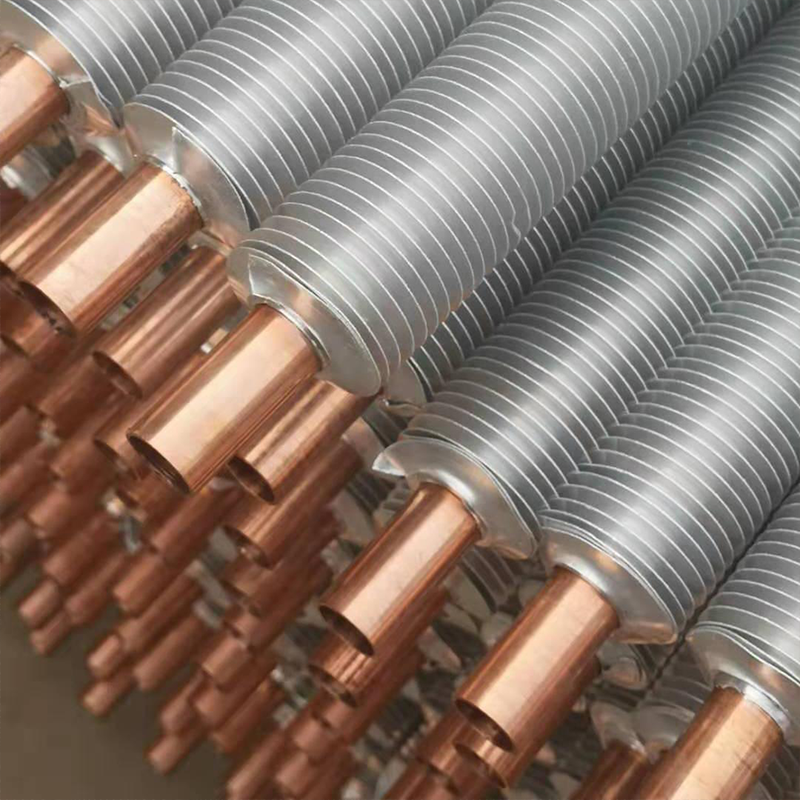
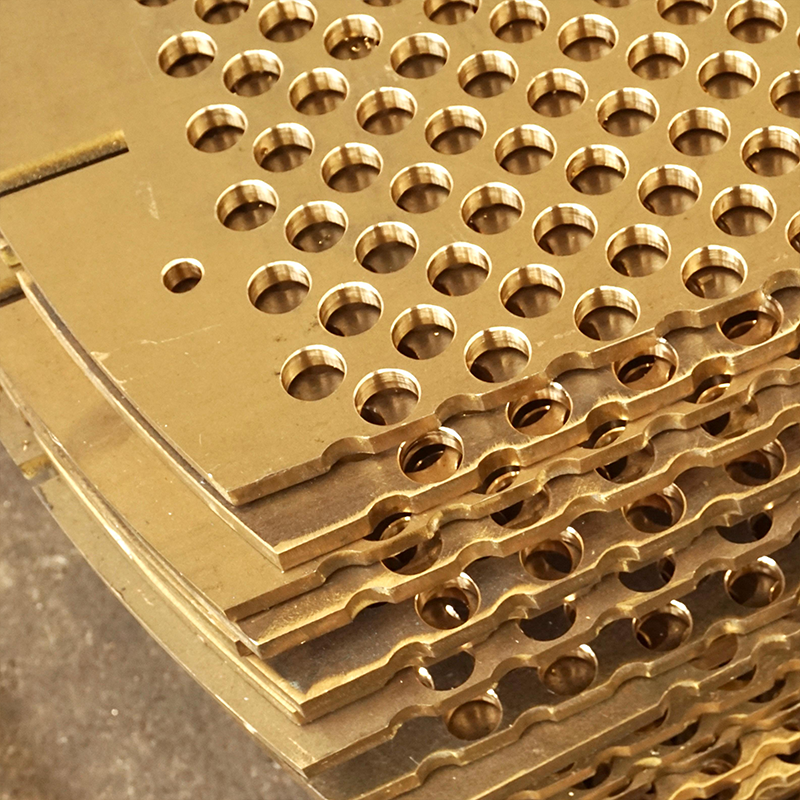
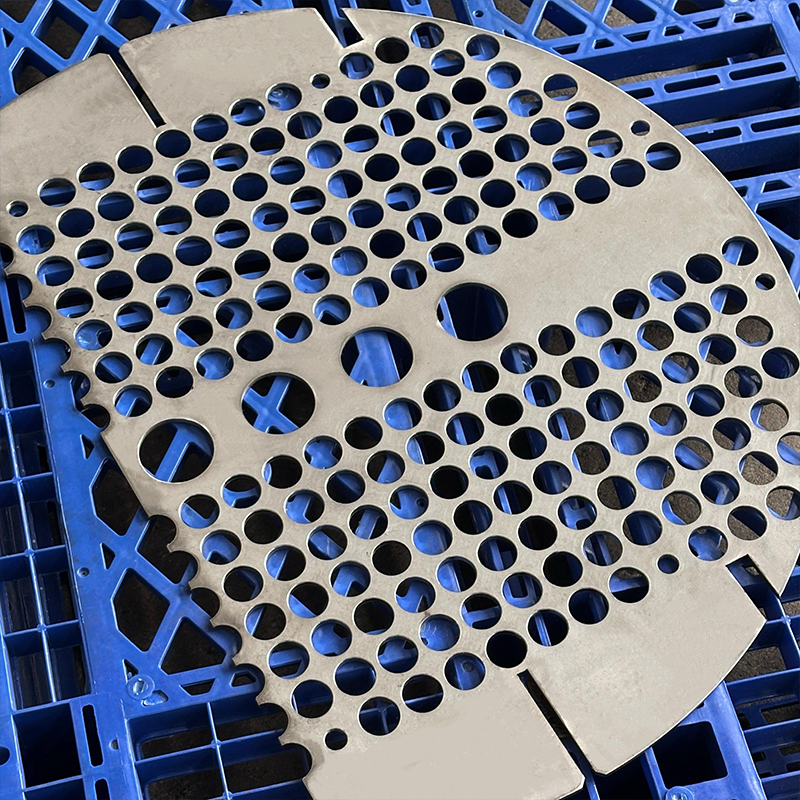
The quality of the source equipment plays a decisive role in successful logistics. For example, company productsWuxi Kaisheng Electric Power and Petrochemical Equipment Co., Ltd., specializing in the development and production of heat transfer and petrochemical equipment, is designed from the outset to meet high transportation and operating requirements. Their products, such as titanium shell-and-tube heat exchangers, ASME high-pressure units, and specialty alloy tube bundles (316 stainless steel, C46400 marine brass, N06625 nickel alloys), are subject to stringent PED and ASME certification. Thanks to the use of materials with high corrosion resistance and resistance to extreme temperatures and pressure, Wuxi Kaisheng equipment better withstands difficult transportation conditions, including winter regions and sea crossings. The company provides customized solutions for customers around the world, ensuring stable supplies to the oil refining, chemical, shipbuilding and energy industries.
If you are planning to purchase tanks and need advice on a logistics plan or checking technical documentation,contact us today. We will help you calculate the optimal route and check the readiness of your cargo for shipment to avoid downtime and damage.
Read also our materials on the topic:technical characteristics of industrial tanksandon-site installation instructions for tanks.