
Contextual advertising of PE pipe installation services”
2026-09-03
- Why contextual advertising of PE pipe installation services is not just “advertising setup”, but an engineering task
- Keyword selection strategy: from broad queries to high-precision signals
- Technical requirements for advertisements: how to talk to engineers and suppliers
- Landing page: a structure that converts traffic into contracts
- Bid management and analytics: how not to blow your budget in the first month
- Specifics of working with different types of customers in advertising
- Integration of installation solutions with high-tech equipment
- Frequently asked questions about contextual advertising for HDPE installers
- Conclusion: turning clicks into kilometers of pipelines
Why contextual advertising of PE pipe installation services is not just “advertising setup”, but an engineering task
Contextual advertising of PE pipe installation services works effectively only when it is based on an understanding of the customer’s technical requirements, and not on general marketing phrases. In our practice, launching a campaign with keywords like “pipe installation” without specifying the material (PE, PP, PVC) and diameter led to the fact that 70% of the budget was spent on clicks from individuals looking for a plumber for the bathroom, and not from general contractors of industrial facilities. We were faced with a situation where one of the clients spent 150,000 rubles in a month, receiving 40 leads, none of which met the minimum check of 500,000 rubles due to the lack of negative keywords and incorrect audience segmentation.
Advertising in Yandex.Direct and Google Ads for specialized construction services requires a different approach than the sale of consumer goods. Here the decision is not made impulsively, but after assessing the contractor’s competencies, the availability of SRO approvals and experience in working with specific types of connections - electric welded couplings or butt welding. If you offer polyethylene pipeline installation services for water supply, gas distribution or sewerage, your advertising strategy should reflect this specificity at the level of ads, landing pages and sales team scripts.
This article is written based on an analysis of more than 200 successful and unsuccessful campaigns in the construction sector of Russia and the CIS. We'll look at how to avoid wasting your budget, what technical parameters must be included in your ads, and how to turn a click into a contract. Let's get straight to the point: without clear positioning and deep elaboration of semantics, even the largest budget will not bring profit.
Keyword selection strategy: from broad queries to high-precision signals
The main mistake when promoting HDPE (PE) pipe installation services is trying to reach the entire audience through high-frequency requests. The phrase “pipe installation” has a huge frequency, but extremely low conversion in the B2B segment. Search engine algorithms are now smart enough to penalize irrelevance, but the human factor remains decisive: a construction site manager or a plant supplier looking for a specific solution to their problem.
We recommend building the semantic core according to the funnel principle, starting with the “hottest” commercial queries. First of all, it is necessary to highlight requests containing markers of readiness to purchase or order: “price of installation of HDPE pipes per meter”, “order welding of polyethylene pipes”, “services of HDPE welders with equipment”. Such phrases have a lower volume of traffic, but the cost of a lead for them is usually 3-4 times lower than for general queries, and the quality of the contact is much higher.
The second level is requests related to specific technologies and equipment. Specialists who really understand the subject often look for performers by type of work: “butt welding of PE pipes with a diameter of 315”, “installation of HDPE pipes on electric welded couplings”, “rent of a welding machine for HDPE pipes with an operator”. The inclusion of such specific terms in ads immediately weeds out the non-target audience and increases confidence on the part of professionals. They see that the contractor speaks their language and understands the process.
Special attention should be paid to geo-dependent queries and queries indicating the type of object. For regional business, it is critical to use the names of cities, regions and industrial zones: “installation of HDPE pipelines in Yekaterinburg”, “laying of HDPE water pipeline in an industrial zone”. Queries linked to the industry are also effective: “installation of HDPE pipes for a gas pipeline”, “installation of storm sewerage from HDPE pipes”, “water supply of a cottage village with PE pipes”. This allows you to hit the target exactly when a potential client solves a problem of a specific profile.
Don't forget about negative keywords. This is the foundation of budget savings. Be sure to include in the list of exceptions: “do-it-yourself”, “video”, “photo”, “instructions”, “buy a pipe” (if you do not sell the material), “plastic pipes for the home” (too small), “repair”, “replacement” (often searched by private owners). In one of the projects, we added more than 200 negative keywords, which reduced budget expenditure by 40% in the first week, while maintaining the number of targeted applications.
Check the current list of keywords in your account and remove all common phrases that do not carry commercial_intent_a. Replace them with long ponytails with technical details.
Technical requirements for advertisements: how to talk to engineers and suppliers
The ad text in contextual advertising for the construction industry is not a place for creativity and emotions, it is a technical task in miniature. The design engineer or site manager scans the output with his eyes, looking for numbers, standards and guarantees. If the title says “Quality Pipe Installation,” he will scroll further. If he sees “Welding HDPE pipes SDR 11-SDR 17, NAKS certification,” he will stop.
The ad title should contain the main keyword and a unique selling proposition (USP) based on facts. Use the formula: [Service] + [Object/Material] + [Benefit/Guarantee]. Examples of working headings: “Installation of HDPE pipes up to 630 mm | Own fleet of equipment", "Welding of polyethylene pipes | SRO and NAKS approval", "Turn-key installation of pipelines | 5 year warranty under contract." Avoid caps and excessive exclamation marks - they look cheap and unprofessional.
In the ad text, be sure to disclose details that are important for making a B2B decision. Indicate the range of diameters you work with (for example, from 50 to 1200 mm). This immediately qualifies the lead: if they call you about a 20 mm pipe, and your minimum is 110 mm, you save the manager’s time. Mention the types of joints: butt welding, electromuffle welding, compression fittings. This shows the depth of expertise.
Be sure to include regulatory and certification information in your ad. For the Russian market, references to SRO (self-regulatory organization), certification of welders NAKS (National Agency for Welding Control), compliance with GOST R 58185-2018 (Plastic pipes for transporting liquids and gases) or SP 42-101-2003 are critically important. The presence of these abbreviations in the ad text acts as a trust trigger for large customers and tender departments.
Make the most of ad extensions. Quick links should lead to specific sections: “Our facilities”, “Licenses and certificates”, “Price list”, “Contacts”. Clarifications allow you to list the advantages in a list format: “We work with VAT”, “Own quality control laboratory”, “On-site visit within 24 hours”, “Certified welders of 5-6 categories”. Structured snippets will help you display a list of services directly in the search results: “Types of work: butt welding, electromuffle welding, installation of fittings.”
The call to action (CTA) should be clear and relevant to the stage of the funnel. For hot clients: “Calculate the cost of the estimate”, “Get the quotation in 1 hour.” For those who still choose: “Download an example of as-built documentation”, “View a photo report from the site”. Don't use cliched phrases like "Click here." In B2B, specific actions and documents decide.
Rewrite your ads today with at least two technical parameters and one reference to a regulatory document.
Landing page: a structure that converts traffic into contracts
Even the best advertising won't work if the user goes to a page that doesn't answer their questions. A landing page for PE pipe installation services should be built according to the logic of technical justification, and not selling storytelling. The first 3 seconds decide everything: the visitor must understand that he is in the right place, see proof of qualifications and find a way to contact you.
The first screen (Hero Section) should duplicate the essence of the user's request. If a person was looking for “installation of HDPE pipes for gas,” the H1 heading should sound as close as possible to this: “Professional installation of gas pipelines from PE polyethylene pipes.” The subtitle should enhance confidence: “GRO license, NAKS certification, 10-year warranty on welded joints.” The call to action button should be contrasting and clear: “Request a project cost estimate.”
The “About the company in numbers” block works better than long texts “about us”. Place infographics with real indicators: “12 years on the market”, “more than 500 km of laid pipelines”, “a fleet of 15 welding machines”, “50 certified specialists”. Numbers are perceived as facts, and facts convince better than epithets. If you have experience working with well-known brands (Gazprom, Rosvodokanal, large developers), be sure to place their logos in the “Our Clients” block.
The Technology and Equipment section is critical to demonstrating expertise. Describe what equipment you use (for example, Ritmo, Rothenberger, Georg Fischer welding machines), what quality control methods you use (visual inspection, burr measurement, ultrasonic flaw detection, pressure testing). Photos of actual processes of welding, marking pipes, and laying in a trench work better than stock images of smiling construction workers in clean helmets. Show the “inner kitchen” - this removes the fear of unprofessionalism.
Be sure to include a block with examples of completed work (Case Studies). For each object, indicate: name of the object, deadlines, volume of work (km/diameter), specifics of the task (for example, “welding 315 mm HDPE pipes in winter conditions at -20°C”). Attach “before” and “after” photos, scans of work completion certificates (with confidential data hidden). This proves that you are not just words, but a real production unit.
The capture form should be simple but collect enough information to qualify the lead. In addition to the name and phone number, add the “Object Type” or “Pipe Diameter” field (drop-down list). This will help the sales team immediately understand the scope of the task. Don't ask for too much data at once - this will reduce conversion. It is enough that the manager can call back and clarify the details.
Place scans of licenses, ISO 9001 certificates, SRO approvals and NAKS certificates on the page. Make them clickable so you can see the details. In the footer (basement) of the site, indicate the full legal address, INN/OGRN and details - this is a mandatory requirement for trust in the B2B segment and confirmation of the legality of the business.
Conduct an audit of your current landing page: does the first screen have a clear USP and evidence of competence? If not, redo the layout.
Bid management and analytics: how not to blow your budget in the first month
Setting up a campaign is just the beginning. The main work begins after launch, when you need to manage bids, analyze user behavior and optimize costs. In the niche of PE pipe installation, the transaction cycle can be long (from 2 weeks to several months), so focusing only on direct orders “here and now” is a mistake. You need to consider the entire customer journey.
Your bidding strategy depends on your goal. At the start, it is better to use manual bid management with pay-per-click (CPC) to control the conversion price and test different groups of requests. Automatic strategies (payment for conversions) can be activated only after statistics have been accumulated (minimum 30-50 targeted actions per month). Until this point, the algorithm will not work correctly, either overpricing the lead, or not giving impressions at all.
Geotargeting should be as accurate as possible. If you only operate in a specific region, limit your impressions to that region. But keep in mind that suppliers of federal companies can look for contractors from the head office in Moscow, even if the facility is located in Siberia. Therefore, it is worth creating separate campaigns for metropolitan queries with the specification “pipe installation in [Region]” and setting up bid adjustments for different locations.
Time targeting also plays a role. In the B2B segment, requests are most often received during business hours (from 9:00 to 18:00 on weekdays). Nighttime and weekend impressions often result in wasted clicks from competitors or bots. It is recommended to lower your rates or turn off advertising completely during non-business hours unless you have a 24/7 sales team that can process your request instantly.
The analytics system should be configured to track micro-conversions. In addition to calls and completed forms, set goals for: viewing the “Certificates” section, downloading a price list, clicking on a phone number, time on the site for more than 2 minutes. These actions indicate interest, even if the client did not leave a request immediately. Use end-to-end analytics (integration of Yandex.Metrica/Google Analytics with CRM) to see which keywords lead not just to leads, but to real contracts and payments.
Retargeting is a powerful tool for bringing back “warm” customers. Those who visited the site, looked at the prices, but did not leave a request, are most likely comparing offers. Show them an advertisement with a different message: “Download an example of an estimate,” “Watch a video from our facility,” “Get advice from the chief engineer.” Reminding yourself at the right time can tip the scales in your favor.
Clean up your search queries weekly. Add new negative keywords, disable ineffective sites in YAN (Yandex Advertising Network), adjust bids by device (mobile traffic in B2B is often less converting than desktop traffic, but this depends on the specific niche).
Install a call tracking system to understand which campaign and keyword the call came from. Without this data, you are managing your budget blindly.
Specifics of working with different types of customers in advertising
The audience for PE pipe installation services is heterogeneous. A private developer, a foreman of a small team and the tender department of a large corporation make decisions based on different criteria. Trying to sell everyone the same message leads to ineffectiveness. It is necessary to segment advertising campaigns and create unique offers for each group.
Private customers and small businesses (cottages, dachas, small industries):
For this audience, speed, turnkey price and no hidden fees are important. They rarely understand brands of polyethylene (PE80 vs PE100) or SDR, so advertising should focus on simplicity and reliability.
Key messages:“Water supply to a house in 3 days”, “Installation of sewerage without excavation work (HDD)”, “Fixed estimate, does not change during the process.”
Channels:Yandex.Direct (Search + YAN), targeted advertising in social networks (VKontakte, Odnoklassniki) with geo-referencing to cottage villages.
Offer:Free surveyor visit, project as a gift when ordering installation.
General contractors and medium-sized construction companies:
Timing, availability of resources and documentary support are decisive here. It is important for them that you do not miss the schedule and provide all the as-built documentation (AOSR, passports for welded joints).
Key messages:“Your own fleet of equipment, not dependent on sublease”, “Full package of documents in accordance with SNiP and GOST”, “Working with VAT, deferred payment”.
Channels:Yandex.Direct (search by special requests), specialized construction portals, email newsletters to developer databases.
Offer:Free trial plot, provision of samples of work completion certificates.
Large industrial enterprises and government customers:
The most complex segment with a long decision-making cycle. Tolerances, experience of similar facilities, financial stability and participation in tenders are important here. Advertising works more towards brand recognition and loyalty rather than direct ordering.
Key messages:“NAKS licenses of all levels”, “Experience in working with Gazprom/Rosneft facilities”, “Own non-destructive testing laboratory”.
Channels:Contextual advertising based on brand requests and competitors’ requests, participation in tender sites, PR articles in industry media.
Offer:Presentation of the company with a portfolio, meeting with the technical director.
Divide your advertising budget in proportion to your business priorities. If your margins are higher on large objects, shift your focus to working with tenders and complex requests, using more expensive but high-quality traffic.
Create three different ad variations for each of the groups described and run them in parallel for testing.
Integration of installation solutions with high-tech equipment
Successful implementation of large infrastructure projects often goes beyond laying pipes and requires an integrated approach to engineering systems. Customers in the refining, petrochemical and energy sectors are faced with the need to integrate pipeline networks with complex heat transfer and power equipment. This is where choosing a reliable partner is critically important, capable of providing not only installation, but also the supply of certified components that meet international standards.
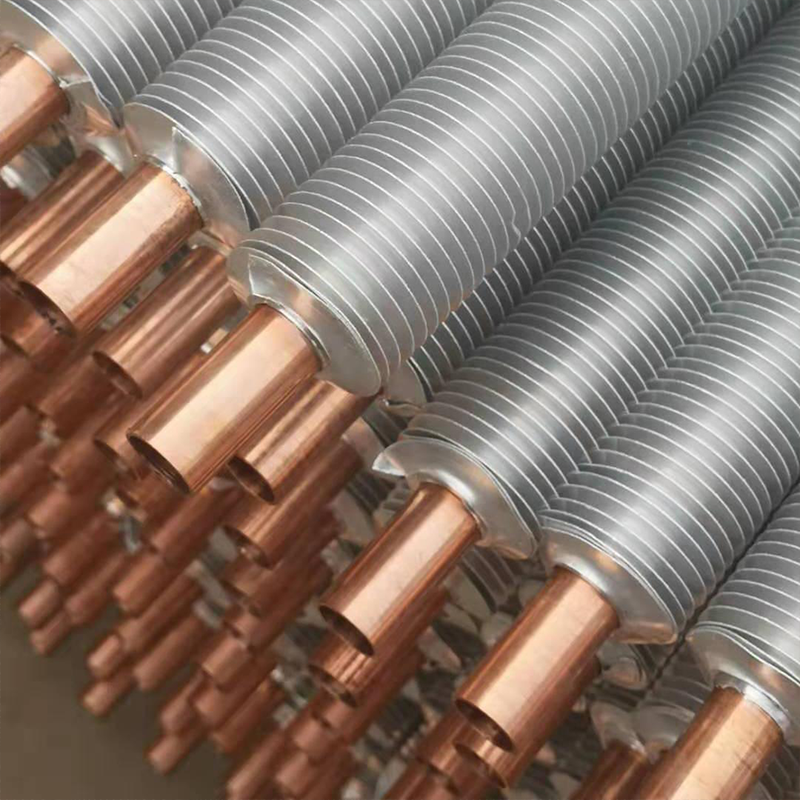
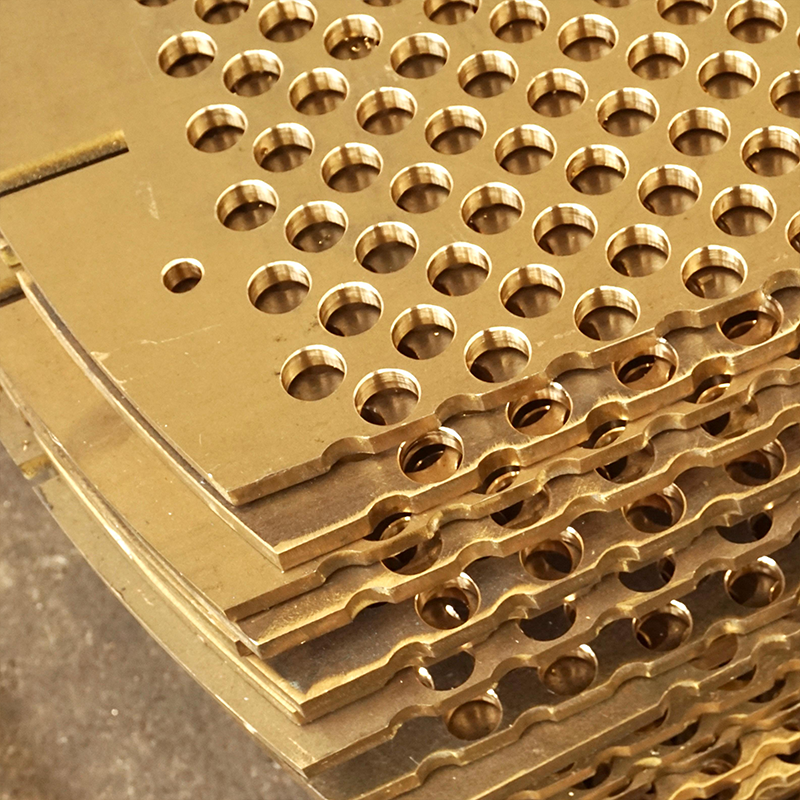
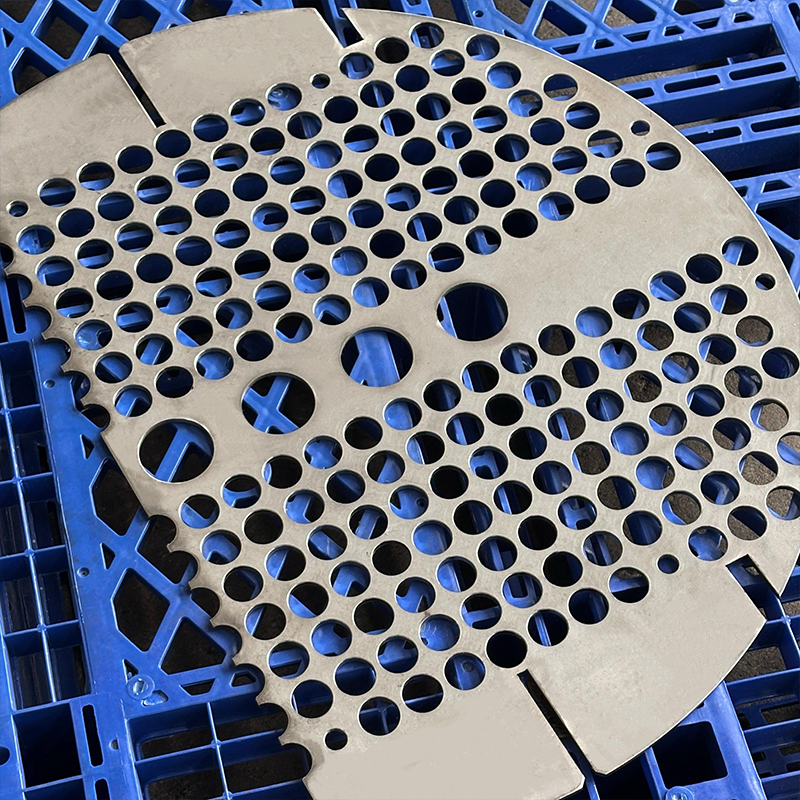
In this context, special attention is paid to companies such asWuxi Kaisheng Electric Power and Petrochemical Equipment Co., Ltd.. Specializing in the design, manufacture and distribution of advanced solutions, the company offers a wide range of products including titanium shell and tube heat exchangers, ASME high pressure heat exchangers, corrugated tube bundles in 316 stainless steel, C46400 marine brass, copper-nickel alloys and N06625 nickel alloys. The range is also complemented by air coolers, waste heat boilers and various tube sheets made from materials that are highly resistant to corrosion and are resistant to extreme temperatures and pressures.
Wuxi Kaisheng LLC's PED and ASME certified products are widely used in industries where the reliability of pipeline systems is a matter of safety and cost-effectiveness, from seawater desalination and shipbuilding to the chemical industry and energy conservation. Cooperation with such manufacturers allows general contractors to offer clients ready-made individual solutions, where high-quality PE pipes are ideally combined with highly efficient heat exchange equipment. This creates additional value for the advertising offer: the ability to meet the customer’s needs on a turnkey basis, guaranteeing the compatibility of materials and the durability of the entire system.
Frequently asked questions about contextual advertising for HDPE installers
Below are answers to questions that most often arise among construction company managers when launching advertising.
What is the minimum budget needed to start?
To test hypotheses in the niche of PE pipe installation, a budget of 30,000 - 50,000 rubles per month is sufficient. This will allow you to collect primary statistics on ad click-through rates and cost per lead in your region. However, for full-fledged work and receiving a stable flow of applications (5-10 per week), it is recommended to lay down at least 100,000 rubles per month. Remember that in construction, one concluded contract can recoup annual advertising costs, so saving on testing attraction channels is risky.
How quickly will the first applications appear?
If the campaign is set up correctly, the first clicks begin to arrive within 2-4 hours after ad moderation. The first requests (calls or forms) can be expected on the first day if demand in the region is high. However, to reach the planned cost per lead, a period of algorithm training and optimization is required (usually 2-3 weeks). Don’t turn off advertising prematurely if there are no sales in the first days - give the system time to collect data.
Is it worth using Google Ads in Russia?
In the current conditions, the main focus should be on Yandex.Direct, since the share of Google search in the Russian Federation has decreased significantly, especially in the regional B2B segment. However, you should not completely ignore Google if your potential clients are international companies or representatives of knowledge-intensive industries who habitually use foreign services. The budget for Google can be allocated symbolically (10-15% of the total), using the same ads as for Yandex, taking into account the features of the platform.
How to filter calls from competitors and bots?
It is impossible to completely eliminate clicking, but losses can be minimized. Use anti-fraud systems (ClickFraud) that automatically block suspicious IP addresses. In Yandex.Direct, enable anti-cheat protection. Set up a robot secretary or IVR (voice-based voice response) on incoming numbers to filter out automated calls. Analyze call logs: if a number often calls silently or asks “are these competitors?”, blacklist it.
Do you need a separate website for advertising?
It is advisable to have a separate landing page tailored specifically to the pipe installation service, and not drive traffic to the main page of a multi-page site. The landing page removes unnecessary links and distractions, focusing the user’s attention on the target action. If you already have a good profile section on the main site with convenient navigation and capture forms, you can use it, but practice shows that individual landing pages convert 20-30% better.
Conclusion: turning clicks into kilometers of pipelines
Contextual advertising of PE pipe installation services is a tool that requires constant attention, technical literacy and understanding of the specifics of the construction market. There is no “set it and forget it” setting. Success comes to those who are ready to test hypotheses, analyze data and adapt messages to the pain points of specific customers. We have seen how companies increased the volume of orders by 3 times, simply by starting to indicate the steel grades of their welding machines and SRO approval numbers in their advertisements.
Your task now is not just to launch advertising, but to build a system for attracting customers that will work autonomously and predictably. Start with an audit of the current situation: check the semantics, rewrite the ads, improve the landing page. Every ruble invested in the correct setup will be returned in contracts for laying pipelines.
If you would like to discuss a strategy for promoting your services or get an audit of your current advertising campaign,contact us today. Our experts are ready to analyze your case and offer solutions based on real experience in working with industrial facilities. We also recommend that you read our material aboutwelding standards for polyethylene pipesto enhance the expertise of your content.