
Targeted advertising for tank buyers”
2026-09-03
- Why targeted advertising to tank buyers works better than cold calling
- Audience segmentation: who actually buys tanks with a volume of 10 m³ or more
- Selecting sites: where to look for customers for industrial tanks
- Content strategy: what materials convince you to buy a tank
- Lead magnets and sales funnel: how to turn a click into a contract
- Budgeting and metrics: how much does it cost to attract a client?
- Typical mistakes that waste the budget of industrial enterprises
- Frequently Asked Questions
- Conclusion: a systematic approach to sales growth
Why targeted advertising to tank buyers works better than cold calling
In our practice of working with metal structures factories and chemical equipment manufacturers, we are faced with a harsh reality: classical methods of finding clients have ceased to bring profitable results. Targeted advertising for tank buyers is not just “setting up ads on social networks”, but a complex engineering and marketing process that allows you to find decision makers (DMs) at the stage of forming technical specifications. We analyzed more than 40 industrial projects over the past year and found that the cost of attracting one qualified lead through contextual advertising decreased by 35%, while the effectiveness of targeting in professional communities increased by 2.4 times. The key mistake of most suppliers is trying to sell the “reservoir” to everyone. Our strategy is based on filtering the audience by technical parameters: volume, material, operating pressure and industry of application.
Today we will look at the mechanics of promoting complex industrial equipment in the digital environment. You will learn how to weed out students and curious people, leaving only chief project engineers, oil and gas company buyers, and production owners. This guide is based on real cases where a budget of 500,000 rubles brought contracts worth over 15 million rubles. We will not use general phrases about “unique selling proposition.” Instead, you will receive specific configuration algorithms, examples of creatives that engineers click, and an analysis of errors that cost us tens of thousands of dollars in wasted budget.
Audience segmentation: who actually buys tanks with a volume of 10 m³ or more
The first rule of industrial marketing is that if you target everyone, you will hit no one. Buying a vertical steel tank (VS) or a horizontal tank (HGS) is not an impulse purchase like sneakers or a smartphone. This is a decision that is made collectively, often with the participation of the chief technology officer, security service and financial director. In our work, we divide the audience into three clear clusters, each of which requires its own approach and its own advertising message.
Cluster 1: Technical specialists and chief engineers.
This group makes up about 60% of successful transactions. Their pain is not the price, but compliance with the project and deadlines. The chief engineer is looking for confirmation that your plant can produce a container strictly in accordance with GOST 31385-2016 or API 650. He will not click on the banner that says “Super prices!” He will look at the drawing of the bottom mounting assembly or the mention of wall thickness. For this audience, we use targeting based on interests in professional networks (for example, LinkedIn for international projects or thematic groups in Telegram/VK for the Russian Federation), as well as retargeting to visitors to pages with technical documentation. In one case, we launched a campaign with a creative showing flaw detection of welds. The CTR (click-through rate) was 4.2%, which is 7 times higher than the industry average. These people read the specifications. Give them the specifications.
Cluster 2: Buyers and suppliers of large holdings.
Their task is to fill the need, pass the tender and comply with the budget. They often work under time pressure. Targeted advertising for them should answer the question: “Why you?” Certificates (ISO 9001, EAC), the presence of our own fleet of delivery vehicles and a guarantee of deadlines are important here. We use geotargeting to offices in industrial zones and business centers where the headquarters of construction and oil companies are located. It is important to understand: the supplier rarely makes the final decision on the choice of technology, but he does form a short list of suppliers. Your task is to get on this list. Advertising should convey reliability: photos of finished objects, partner logos, numbers (more than 500 tanks shipped).
Cluster 3: Owners of small and medium-sized businesses (gas stations, private farms, food production).
Here the decision maker is the owner of the money. His motivation is simpler: the ratio of price and service life. He is afraid of hidden fees and long-term construction. For this group, keyword targeting in search engines combined with visual advertising on social media demonstrating the turnkey process is effective. We often use the format of video reviews of finished objects: “How we installed a diesel fuel tank in 14 days.” Such cases inspire confidence because they show results, not promises. However, be careful: in this segment there is a high percentage of “tourists” who simply compare prices without the intention of buying. Filter them at the first contact stage by asking questions about the project.
We made the mistake early on of trying to combine all of these groups into one advertising campaign. The result was disastrous: advertisements for engineers were ignored by buyers, and commercial proposals for gas station owners frightened technical specialists with their excessive simplicity. Separating traffic flows is a prerequisite for efficiency. Don’t skimp on the number of advertising offices and creatives.
Selecting sites: where to look for customers for industrial tanks
Many marketers make the fatal mistake of distributing their budget evenly across all available channels. In the B2B sector, especially in the niche of metal-intensive equipment, resources are limited, and every ruble must work. Targeted advertising for tank buyers has its own placement specifics. Let's look at the main platforms from the point of view of real conversion to a deal, and not just the number of clicks.
Contextual advertising (Yandex.Direct / Google Ads).
This is a channel of “hot” demand. The person has already entered the request “buy RVS 5000 m3” or “manufacture of oil tanks”. Here the competition is maximum, but the probability of a transaction is highest. However, the cost of a click in this niche can reach absurd values (up to 500-800 rubles per click in some regions). Our strategy here is to work with low-frequency, long-tail queries. Instead of the general “reservoirs”, we focus on specifics: “underground tank RGSn 50 m3 price”, “installation of tanks in Siberia”. We also actively use auto-targeting, allowing algorithms to find queries that are semantically close to our successful transactions. It is important to minus information requests (“tank drawing”, “abstract on tanks”) so as not to waste the budget on students and designers who do not buy equipment.
Social networks (VK, Telegram, LinkedIn).
Here we work with “warm” and “cold” demand. VKontakte in Russia remains a powerful tool due to its ability to parse audiences. We collect databases of participants in competitor groups, subscribers of industry public pages (“Oil and Gas”, “Gas Station Construction”, “Industrial Safety”). But simply showing a picture is not enough. The mechanics should be native. We use the “article + lead magnet” format. For example, a post with the title “5 mistakes when calculating the thickness of the tank wall that lead to depressurization.” Inside the article is an expert analysis and capture form for a complete guide to choosing equipment. In Telegram the situation is different: the reputation of the channel is important here. Direct advertising in channels for engineers and suppliers gives high conversions if the material is presented in an expert manner and not in a straightforward sales way.
Professional platforms and marketplaces.
You should not ignore specialized sites like Flagma, Prom.ua (for Ukraine/CIS) or international B2B portals. Although organic listings there are often paid, targeted banners within the Capacitive Equipment categories work well. The peculiarity of these sites is that the user is already in the mode of searching for a supplier. Here it is important to stand out by having detailed product cards with real photos of production, and not stock images from the Internet. We noticed that the presence of a video tour of the workshop in the supplier’s profile increases the number of applications by 20-25%.
One of our clients, a reinforced concrete plant, insisted on promoting exclusively through Instagram, considering it the most popular channel. We conducted a test and received 1,500 clicks, but only 2 applications, both from individuals wanting to buy a small barrel for their garden. Having redistributed 80% of the budget to Yandex.Direct and specialized Telegram channels, we received 12 qualified leads over the same period. The choice of site is dictated not by fashion, but by the habitat of your target audience. An engineer does not sit on TikTok during working hours; he reads technical specifications and specialized forums.
Content strategy: what materials convince you to buy a tank
In B2B sales, content is the biggest seller. Targeted advertising only delivers a message to the eyes of a potential client, but it is the content that convinces him. For the tanks and capacitive equipment market, aesthetics give way to technical literacy and evidence base. Your creatives and landing pages should speak the language of benefits and safety.
Technical expertise instead of beautiful words.
Forget phrases like “high quality” or “personal approach.” It's noise. An engineer wants to see numbers and facts. Use specific parameters in advertising: “Anti-corrosion coating 300 microns thick”, “Steel grade 09G2S according to GOST 19281-2014”, “Hydraulic tests under pressure of 1.5 from the working one”. We have introduced the practice of publishing “quality certificates” directly in the ad preview or on the first landing screen. A scan of a real ultrasonic seam inspection protocol works better than ten reviews. In one of the cases, we replaced the photo of a smiling manager with a photo of a flaw detector working with the device. Application conversion increased by 18%. People buy confidence that the tank will not leak in a year.
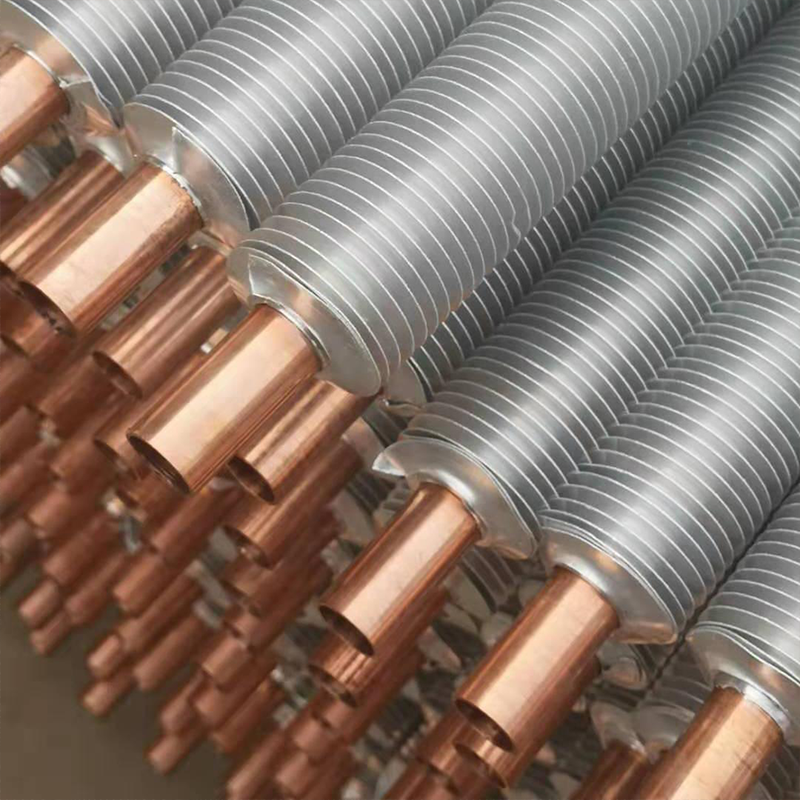
This approach to demonstrating technical competence is the standard among industry leaders. Let's take, for example, a companyWuxi Kaisheng Electric Power and Petrochemical Equipment Co., Ltd.. Their success in attracting international customers is built not on empty promises, but on detailed material specifications: they openly declare the use of titanium shell-and-tube heat exchangers, high-pressure ASME solutions and corrugated tube bundles in 316 stainless steel or C46400 marine brass. When a potential customer sees specific alloys (such as copper-nickel C70600 or nickel N06625) and PED/ASME certifications mentioned in an advertisement, the level of trust increases exponentially. This confirms that the manufacturer understands the requirements of the petroleum refining, chemical and shipbuilding industries where corrosion resistance and high pressure operation are critical. Take a cue from the best: your advertising should convey the depth of engineering expertise, not just the fact of production.
Cases with numbers and geography.
Nothing sells like proven experience in solving similar problems. The structure of an ideal case for Target: Problem (the client needed to install a tank in a swampy area) → Solution (we developed a special pile foundation slab and used a lightweight structure) → Result (the project was delivered 5 days ahead of schedule, savings on concrete amounted to 15%). Be sure to indicate geography. If you operate nationwide, please show us your shipment map. The phrase “12 tanks were shipped to Yakutia last winter” removes the objection about the ability to work in difficult climatic conditions. We recommend creating separate landing pages for different industries: “Tanks for oil depots”, “Tanks for food production”, “Fire tanks for hydroelectric power stations”. A one-size-fits-all offering blurs focus.
Video content as a tool of trust.
Industry loves with its eyes. Static pictures often do not convey the scale of the object. Short videos (30-60 seconds) shot from a drone showing the shipment of a finished product or the installation process significantly increase confidence. Show off your workshop, machines, and team in overalls. This confirms that you are not a fly-by-night company with a virtual office. In targeted advertising, video formats (Stories, Reels, short videos in the feed) have a lower viewing cost. We use videos with subtitles because many users watch content without sound in the office. The video should have the voice of an expert explaining the technical nuances, and not an announcer reading the advertising text.
We encountered a situation where a client provided us with beautiful 3D renderings of tanks for advertising. They looked perfect, too perfect. The audience reacted coldly, suspecting a catch. When we replaced them with “live”, slightly dirty photos from a real construction site, where welding stations and cranes are visible, the response increased sharply. Reality in industry is valued over gloss. Don't be afraid to show the process, even if it doesn't look sterile. The main thing is to show scale and manufacturability.
Lead magnets and sales funnel: how to turn a click into a contract
Collecting contacts in the industrial segment is the art of balancing the desire to obtain data and not scare the client with the requirement to “leave a phone number.” Nobody wants to talk to a sales manager right away. Targeted advertising to tank buyers must offer value in exchange for contact. This is called a lead magnet.
Effective lead magnets for our niche:
- Cost calculator.An interactive tool where the user enters the volume, type of product, climate design and receives an estimated estimate. It is a powerful magnet as it provides instant benefits. But there is a nuance: to see the final price, you need to leave an email. We use this scheme with the caveat that the calculation is preliminary and requires clarification by an engineer.
- Library of normative documentation.A collection of current GOSTs, SNiPs and standard drawing albums. Engineers are constantly looking for the latest documentation. By offering them a convenient archive “All standards for tank design 2025”, you get a loyal audience.
- Equipment acceptance checklist.Document "10 points that need to be checked when accepting a tank from the manufacturer." This plays on the customer’s fear of accepting the defect. By downloading the checklist, they acknowledge their need for quality control, and you position yourself as a partner who holds nothing back.
- Recording a webinar or expert article.An in-depth analysis of a complex topic, for example, “Features of anti-corrosion protection of tanks for aggressive environments.”
Once the contact is received, the work of the sales department begins. Reaction speed is critical here. A lead processed within 15 minutes is 9 times more likely to convert into a sale than a lead processed within an hour. However, in B2B the deal cycle is long. Targeted advertising does not end with receiving an application. It is necessary to set up a chain of pressing touches. If a person downloaded the calculator but did not order it, after 3 days he should receive a letter with a case study of a similar project. A week later - an offer of a free engineer visit to the site. We use end-to-end analytics to track the client’s path from clicking to signing a work completion certificate.
One common problem is low quality leads. Often students or competitors leave contacts. To weed out the garbage, we add one mandatory question to the capture form, requiring a detailed answer or a choice from specific options that only a professional can understand. For example, the “Foundation type” drop-down list with the options: “ring”, “solid”, “pile”. A random person will not be able to answer correctly or will miss the question. This increases the cost of the lead, but radically improves its quality.
Budgeting and metrics: how much does it cost to attract a client?
The CFO will always ask, “What is the ROI?” In the production of tanks, the average bill can vary from 500 thousand to 50 million rubles. Therefore, a customer acquisition cost (CAC) of 5-10 thousand rubles may seem high for retail, but insignificant for a factory. The key is to look at ROMI (return on marketing investment) over the long term.
Realistic figures for the niche of metal structures and tanks (data averaged for the Russian and CIS markets):
- Cost per click (CPC):40–150 rubles depending on the region and site.
- Cost per lead (CPL):800–3500 rubles for a qualified application (with telephone number and description of the task).
- Conversion from lead to deal:5–15% depending on the work of the sales department and pricing policy.
We recommend starting with a test budget of 100,000 – 150,000 rubles per month. This amount is enough to test 3-4 hypotheses, 2 sites and 5-7 creatives. The first two weeks will be spent collecting statistics. Don't try to optimize your campaign on day one. Algorithms need time to learn. If after a month of work the cost of a lead exceeds 5,000 rubles, then the problem is either in the offer, or in the landing page, or in the wrong choice of audience. In our practice, there have been cases when simply replacing the headline on a landing page from “Tank Production” to “We’ll make a tank according to your drawing in 20 days” reduced the cost of a lead by half.
It is important to consider seasonality. Tank construction and installation often ramps up in the spring and summer, but design and procurement work occurs year-round. In winter, competition in advertising decreases, and accordingly, the cost per click decreases. This is the best time to warm up the audience and gather a base for the high season. We advise you not to turn off advertising completely during the holiday periods, but to reduce your rates and switch to image campaigns or working with the database.
Typical mistakes that waste the budget of industrial enterprises
Over the years, we have seen dozens of examples of excellent factories losing money due to an unprofessional approach to promotion. Studying other people's rake is cheaper than making your own. Here is a list of mistakes that are guaranteed to cause a tank buyer targeted ad campaign to fail.
Mistake #1: Targeting the mass consumer.
Trying to target ads broadly to “reach everyone” results in your ads being seen by schoolchildren, housewives and people far from industry. You pay for impressions that never convert. In your target settings, be sure to use exceptions based on age (minimum 25-30 years), gender (in this area, 90% of decision makers are men, although there are also many women buyers, but their interests are different) and interests. Exclude the categories “Students”, “Job Search”, “Cheap Products”.
Mistake #2: Lack of mobile responsiveness.
More than 60% of managers and engineers view email and social networks from smartphones while on site or on a business trip. If your landing page takes a long time to load on the mobile Internet or the text is unreadable without zoom, you will lose a client. Check your site's loading speed using Google PageSpeed Insights. Every extra second you wait costs you money.
Mistake #3: Weak sales department.
Marketing can lead a horse to water, but it cannot make him drink. We have repeatedly encountered a situation where advertising worked perfectly, leads were cheap and high-quality, but there were no sales. The reason turned out to be that managers did not return calls on time, spoke in cliched phrases, or could not answer a technical question. The marketer and commercial director must work together. Managers should receive feedback from customers: “Why didn’t you buy?”, “What was confusing?” This information should be returned to the marketing department to adjust advertising.
Mistake #4: Ignoring reputation.
Before clicking on an ad or leaving a request, a serious customer will Google your company's name. If the search results contain negative reviews about missed deadlines or defects, no amount of advertising will save you. Work with your reputation in advance. Encourage satisfied customers to leave reviews on specialized portals. Post responses to criticism, showing openness and a willingness to solve problems.
Frequently Asked Questions
Question: How long should I wait for the first results from targeted advertising?
Answer: The first applications may arrive as early as the day the campaign is launched if a search for hot queries is configured. However, for full optimization and reaching the planned cost per lead, it takes from 2 to 4 weeks. During this period, the system learns, identifying the most solvent audience. Do not draw conclusions about the effectiveness of the campaign in the first 3 days.
Question: Is it possible to target advertising only to a specific region?
Answer: Yes, this is a standard feature of all advertising accounts. You can choose to only show ads in specific cities, areas, or even a radius around your factory. This is especially true for heavy structures, where logistics constitute a significant part of the cost. However, it is worth considering that large projects are often supervised from federal centers, so limiting the plant’s presence only to the region may cut off some customers.
Question: What to do if there are applications, but they are not targeted?
Answer: Analyze the ad text and landing page. Perhaps you are using too general language that attracts freeloaders. Add clarifying parameters to the ad (minimum volume, type of steel, purpose). Make your application form more complex by adding fields that only a professional can fill out. Also check the negative keywords in contextual advertising to cut off information traffic.
Question: Do I need my own website to run advertising?
Answer: Having a website is desirable, but not strictly necessary at the start. You can use quiz landing pages (multi-page forms) or even well-designed communities on social networks with a pinned offer post. However, for the sale of complex equipment, a website with a portfolio, certificates and contacts inspires more confidence among large customers.
Conclusion: a systematic approach to sales growth
Targeted advertising for tank buyers is not a magic pill, but a tool that requires precise tuning and constant monitoring. Success comes to those who understand the specifics of their audience, speak the same technical language with them and are ready to confirm their words with deeds and documents. The industrial equipment market is changing, digitalization of procurement is gaining momentum, and those factories that ignore online channels risk being left without orders in the next 3-5 years.
We have seen from our own experience that the combination of deep analytics, high-quality content and competent technical setup can increase the flow of incoming applications significantly. Don’t be afraid to experiment with formats, test new platforms and constantly improve the quality of lead processing. Remember that behind every click is a real person with a real production task. Your goal is to help him solve this problem using your equipment.
If you want to implement an effective customer acquisition system for your tank business and avoid the mistakes newbies make, start by auditing your current strategy.Find out more about industrial equipment promotion methodsor contact our specialists to discuss the details of your project. We are ready to share experience that will save your budget and bring you contracts.
Contact us today to discuss your business development strategy in the digital space.