
Crisis Communications for Tank Manufacturers”
2026-09-04
- Why silence is worth more than a fine: the real cost of the crisis for the tank plant
- Typology of threats: from a seam defect to a geopolitical storm
- Algorithm of actions: the first 24 hours after the impact
- Specifics of working with technical audiences and customers
- Working with the media and digital footprint in a negative environment
- Psychology of trust: why honesty is more profitable than lying
- Preventive measures: preparing before a crisis occurs
- Restoring Reputation: The Long Way Back
- Case study: quality standards as the foundation of trust
- Frequently asked questions (FAQ)
- Conclusion: Crisis as a point of growth
Why silence is worth more than a fine: the real cost of the crisis for the tank plant
In our practice of managing the reputation of industrial enterprises, we have seen how one unfortunate comment in an industry Telegram chat brought down the supplier’s stock quotes by 15% in one day.Crisis Communications for Tank Manufacturers- this is not about writing beautiful press releases when everything is fine. This is a tough survival system that determines whether your plant will be left with orders after a tank explosion, a recall of a steel shipment, or sudden sanctions against your logistics partner. If you think the quality of your welding speaks for itself, you're wrong: in the age of digital noise, silence is perceived by the market as an admission of guilt.
We have been working with manufacturers of capacitive equipment for more than 12 years and know one scary statistic: 68% of large contracts in the oil and gas sector fail not because of the technical parameters of the product, but because of a loss of trust in the supplier during a force majeure event. When an accident occurs at a customer's site or a material defect is discovered, you have exactly 4 hours to take control of the situation. After this, the windows of opportunity close, and the information field is filled with competitors and skeptics. This article was written by engineers and PR specialists who have experienced real industrial fires and lawsuits. There is no theory from textbooks here, only algorithms that saved real factories from bankruptcy.
Typology of threats: from a seam defect to a geopolitical storm
Before building a defense strategy, you need to clearly classify the enemy. In the production of tanks (both vertical steel RVS and horizontal RGS), risks are divided into three unequal categories, each of which requires its own reaction protocol. An error in classification results in you putting out fires with gasoline: trying to explain technical nuances where you need to apologize, or vice versa.
Technical incidents and manufacturing defects
This is the most common group of problems. A crack in the shell detected during ultrasonic testing (UT) after shipment; discrepancy between wall thickness and design values; violation of the anti-corrosion coating during transportation. In our practice, there was a case when a batch of tanks with a volume of 5000 m³ was rejected by the customer due to paint bubbles. The plant tried to prove that this was a “cosmetic defect that does not affect strength.” Result: loss of a client, a fine under the contract and publication of photos of defects in specialized media.
The main rule here is that technical language must be translated into safety language. Don’t say “violation of enamel application technology.” Say: “A deviation has been identified, which we are eliminating before it affects the service life of the container.” For a customer in oil refining, what is more important is not a perfect picture, but a guarantee of no leaks after 10 years. If you hide a defect, but it comes up during hydraulic tests at the client’s site, this is the end of your reputation. Transparency at the production stage works better than heroic attempts to hide defects.
Logistics collapses and missed deadlines
Tanks are oversized cargo. Their delivery often depends on the weather, road conditions, ferry crossings and customs posts. A delay in the delivery of a tank to a refinery under construction can stop the entire investment project. Fines for downtime of customer equipment and personnel amount to millions of rubles or dollars daily. The crisis here comes at the moment when it becomes obvious: the trawl is broken, the bridge is destroyed or the border is closed.
Many manufacturers make the fatal mistake of announcing a delay at the last minute, hoping to get through. This is unacceptable. As soon as you become aware of the risk of schedule disruption (even if the probability is 50%), you must initiate communication. Suggest a Plan B: delivery in installments, use of an alternative route, or temporary replacement of equipment. The client will forgive the problem if he sees that you are already working on a solution. Silence before the deadline is perceived as sabotage.
Reputation attacks and information leaks
In conditions of high competition in the metal structures market, cases of black PR are not uncommon. Competitors may spread rumors about your financial troubles, the use of substandard metal, or the lack of the necessary SRO licenses. This also includes situations where your tanks are mentioned in the context of an environmental disaster (oil spill), even if the fault lies with the operator and not the manufacturer.
Here the reaction speed must be instantaneous. You need ready-made application templates and direct communication channels with key industry publications. You cannot ignore such falsehoods, hoping that “the truth will come out.” In the B2B sector, the truth comes out too late, when the contract has already been signed with another supplier. Your task is to provide facts: metal quality certificates, independent examination reports, copies of licenses. Facts should be packaged so that they can be copied and pasted into a news story without editing.
Algorithm of actions: the first 24 hours after the impact
When thunder strikes, there is no time for meetings. We have developed a strict “First 24 Hours” regulation, which we implement at all client enterprises. This algorithm is based on the principle of prioritizing safety and honesty over speed of excuses.
- Fact Gathering (Hour 0-2):Create an emergency group consisting of the chief engineer, quality director and head of the press service. No guesswork. Just the facts: what happened, where, when, whether there were victims, what volume of products was affected. Document all data. A mistake at this stage (for example, misjudging the scope of the defect) will lead to a loss of confidence later. We have seen cases where underestimation of the problem led to a double scandal.
- Internal blocking (Hour 2-4):Issue an order prohibiting any comments from employees outside the crisis headquarters. One careless post by a shop foreman on a social network can ruin the work of lawyers. All requests from the media and clients are redirected to a single contact center. Employees should know the uniform wording: “The comment will be provided by an official representative of the plant within 2 hours.”
- Initial Stakeholder Notification (Hour 4-8):Contact key customers whose orders are affected personally. A call from the CEO works better than any letter. Communicate that you are aware of the problem, are investigating it, and have the situation under control. Do not legally admit guilt unless it is obvious, but acknowledge the fact that the situation occurred. Empathy is more important here than legal casuistry.
- Public Statement (Hour 8-24):Post an official statement on the website and send it to your partners. The structure of the statement should be as follows: the fact of what happened -> measures taken right now -> impact on customers (honestly) -> timing of the next update of information. Avoid bureaucratic language like “appropriate measures have been taken.” Write in human language: “We have stopped the line, we are checking every weld, the shipment will be delayed by 3 days.”
It is important to remember: in the first hours, no one expects the perfect solution from you. Everyone is waiting for your reaction. Passivity is interpreted as indifference to the safety of people and the safety of goods. Being active, even if a solution has not yet been found, demonstrates control over the situation.
Specifics of working with technical audiences and customers
The audience for tank manufacturers is unique. This is not a mass consumer who can be reassured by a beautiful picture. Your readers are chief project engineers, technical directors of oil companies, representatives of supervisory authorities (Rostekhnadzor). They speak the language of GOSTs, SNiPs and technical specifications (TU). Trying to use marketing clichés (“innovative approach,” “market leader”) at a time of crisis will only cause them irritation and suspicion.
Your communication should be full of specifics. Instead of “we have improved the quality,” write “we have increased the ultrasonic testing step from 200 mm to 100 mm on all circumferential welds.” Instead of “strict control”, indicate “the entire batch of rolled sheets passed incoming control for compliance with GOST 19903-2015 with the provision of chemical analysis protocols.”
We recommend preparing a “library of evidence” in advance. This is a folder with current ISO 9001 certificates, NAKS (National Welding Control Agency) licenses, reports of past successful projects and testimonials. At the moment of crisis, you take out the necessary document and attach it to the answer. This shifts attention from emotion (“they screwed up”) to rational perception (“they have a system, the failure was pinpointed and fixed”).
Pay special attention to the language of responsibility. Avoid passive voice (“mistakes were made”). Use active voice indicating the subject of the action (“our quality control department identified a deviation”). This shows that there are people within the company who are responsible for the results. Anonymity creates fear of a repeat of the situation.
Working with the media and digital footprint in a negative environment
Industry media (such as “Oil and Gas Vertical”, “Construction and Real Estate”, specialized portals) play the role of an arbiter in disputes. Getting blacklisted by such publications means losing visibility for thousands of potential customers. However, journalists are people too, and they value exclusivity and efficiency.
If an accident occurs involving your product, do not try to buy silence or threaten legal action (unless the claim is 100% justified). It works like a boomerang. The best strategy is to become the journalist's primary source of information. Give him access to production, show him how you fix the error. Turn a negative occasion into a story about how serious you are about quality. The story “Plant X recalled a batch of tanks to prevent a possible accident” sounds much better than “Plant X hid the defect that led to the spill.”
In the digital environment, it is important to monitor not only news, but also forums, comments on social networks and reviews on maps. Often the negativity begins with one angry comment from the driver who waited a long time for loading, or from the installer who did not have enough fasteners. Respond to each such comment publicly, offering to resolve the issue in a private message, but showing others that you are not ignoring the issues.
Use SEO tools to drive out negativity. Publish positive cases, technical articles, interviews with experts from your plant. The more quality content you release after the crisis, the lower negative news will drop in search results. But this needs to be done naturally, without a sharp jump in activity, which looks like cheating.
Psychology of trust: why honesty is more profitable than lying
In the B2B segment, especially in the construction of hazardous production facilities, trust is the currency. It cannot be printed, but it is very easy to lose. Our experience shows that clients are ready to forgive a technical error if they see sincere repentance and systematic work on mistakes. But they will never forgive lies.
Trying to hide a metal defect or falsify a quality certificate is a road to nowhere. In the era of open data and mutual integration of counterparty databases, deception will inevitably be revealed. And then it will no longer be a question of replacing a couple of sheets, but of terminating all contracts and including them in the register of unscrupulous suppliers.
We observed a case where a tank manufacturer honestly informed the customer that the subcontractor supplied steel with a deviation in grade. The plant took on the costs of dismantling and replacement, missing the deadline by 2 weeks. The customer, appreciating the honesty and willingness to bear losses for the sake of safety, not only did not terminate the contract, but also recommended this plant to other companies as “the most reliable partner.” In the long term, this story brought more money to the plant than the pennies saved on metal.
Trust is built on predictability. If you always report problems quickly and offer solutions, the client will begin to perceive you as part of their security team, rather than as an external enemy who wants to deliver the property at any cost.
Preventive measures: preparing before a crisis occurs
The best crisis communications are those that did not have to be used to their full potential because the crisis was prevented or minimized by preparation. Every tank manufacturer should have a “Crisis Manager's Suitcase”. What should it contain?
- Current contact database:Phone numbers and personal emails of key persons for all major customers, editors of industry media, representatives of supervisory authorities. These contacts should be updated quarterly.
- Application templates:Prepared texts for different scenarios (delivery delay, manufacturing defect, accident, cyber attack). They need to be adapted to the situation, but the frame must be ready.
- Legal expertise:An agreement with a law firm specializing in industrial law, which is ready to connect 24/7. Any public statement must be weighed against the risks of admitting guilt.
- Staff training:Regular trainings for employees of the sales department, quality service and line managers. They must know what to say and what not to say. Role-playing games “Journalist attacks” help relieve stress in a real situation.
- Media field monitoring:Subscription to brand mention monitoring services. You should find out about the problem from the monitoring system before an angry client calls you.
It is also critical to conduct regular audits of your own processes. Often a signal of an impending crisis is visible in advance: an increase in the number of complaints, staff turnover in the welding department, disruptions in the supply of raw materials. Ignoring these “weak signals” within the company leads to loud scandals outside.
Restoring Reputation: The Long Way Back
Once the fire is out, the hardest part begins—recovery. A reputation will not heal in a week. You will need a consistent campaign to regain trust. Start by keeping all the promises made during the crisis. If you said that you will introduce a new stage of control, show photos and videos of this process. If you were promised compensation, pay it quickly.
Launch a series of content that demonstrates your expertise and openness. Hold an open day for partners. Publish a detailed case study without identifying the names of those responsible, but with a detailed description of the technical reasons and measures taken. Such content shows the maturity of the company.
Don't be afraid to return to the topic of the crisis in a safe format. “How we changed production after the incident in 2024” is a great topic for an article. This shows that the company is drawing conclusions and developing. Staticity frightens, evolution attracts.
It is also important to work with loyal customers. Ask them to leave fresh reviews and publish cases of collaboration. The “voice of friends” drowns out the “cry of enemies.” But do it sensitively, without turning lobbying into spam.
Case study: quality standards as the foundation of trust
To understand how theory works in practice, consider the example of a company for which transparency and technical excellence became a shield in difficult times.Wuxi Kaisheng LLC, specializing in the development and production of heat transfer, power generation and petrochemical equipment, was faced with the need to confirm the reliability of its solutions in the face of increasingly stringent international safety requirements.
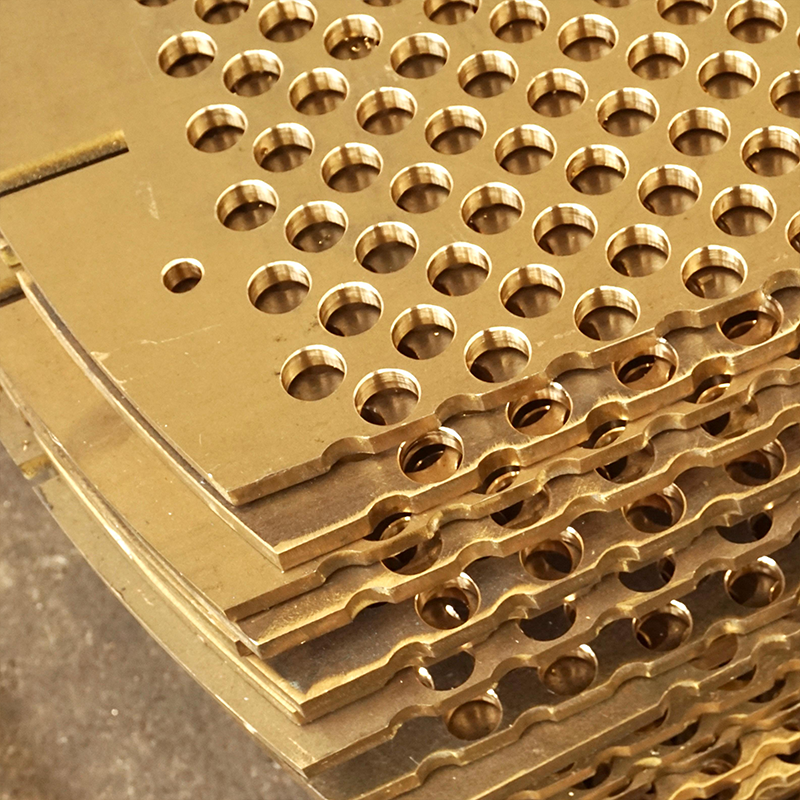
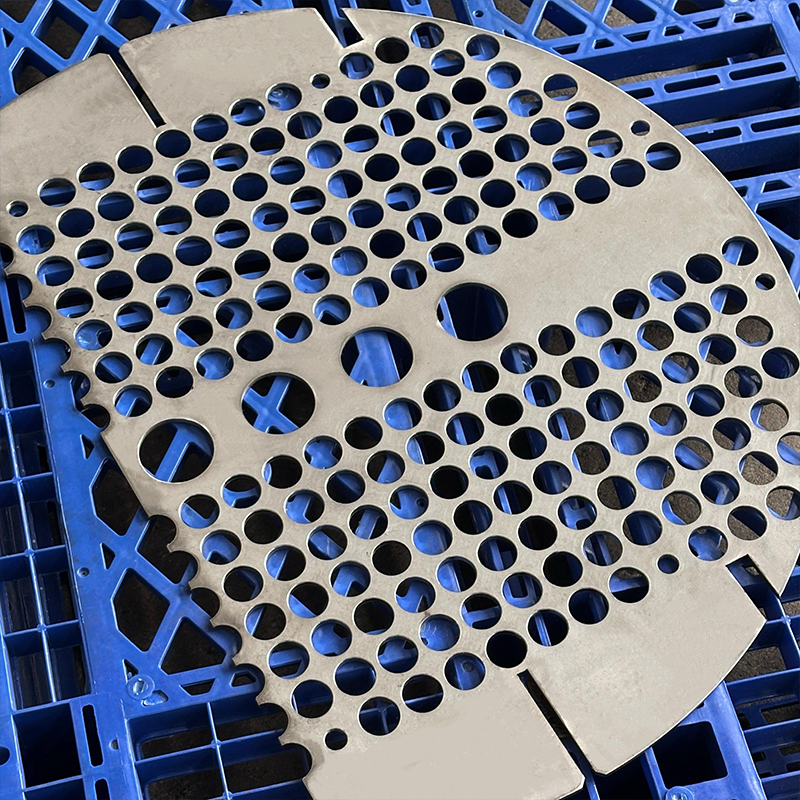
The company's product line includes high-tech products such as titanium shell and tube heat exchangers, ASME high pressure vessels, corrugated tube bundles made of 316 stainless steel, C46400 marine brass, copper-nickel alloys and N06625 nickel alloys. The company also produces air coolers, waste heat boilers and complex components such as tube sheets made of 321 steel and C70600 alloys. The key success factor was not just a declaration of quality, but the presence of valid international PED and ASME certificates confirming corrosion resistance and the ability to work at extreme pressures and temperatures.
When doubts arose in the industry about the suppliers of certain grades of steel for seawater desalination and shipbuilding projects, Wuxi Kaisheng did not resort to empty assurances. The company promptly provided partners with complete documentation, test reports and confirmation of the use of carbon, stainless, alloy steels, as well as titanium and nickel alloys of strict control. Thanks to a pre-prepared “evidence library” and a culture of openness, the company not only retained existing contracts in the oil refining and chemical industries, but also expanded its supply geography, proving that stable equipment and customized solutions are possible even in turbulent periods. This example clearly demonstrates that investments in certification and integrity pay off handsomely in times of crisis.
Frequently asked questions (FAQ)
What to do if a fake about the bankruptcy of our plant appeared on social networks?
Don't get into arguments in the comments. Immediately publish an official refutation on the main page of the site and in your official channels with a link to the financial results or a letter from the partner bank. Send a request to the site administration to remove the slander. At the same time, contact the top 5 key clients personally and assure them of the company’s sustainability. Ignoring a fake leads to panic among suppliers and demands for advance payment.
How to respond to a customer’s complaint if the plant’s fault is obvious?
Admit the fact of the violation immediately, without excuses like “human factor”. Offer a specific remediation plan (repair, replacement, discount) with clear deadlines. Take on all associated costs for the client. Move the dialogue from the plane of “who is to blame” to the plane of “how to fix it faster.” Apologize publicly if the incident becomes known to a wider audience. Honesty reduces aggression.
Is it necessary to comment on an accident at the customer’s site if the tank is ours?
Yes, but very carefully. Until the completion of the commission's official investigation (with the participation of Rostechnadzor and independent experts), do not admit guilt or give reasons. Your statement must express your concern, your willingness to cooperate with the investigation, and provide all technical documentation. The phrase “We are waiting for the commission’s conclusion to understand the reasons” is safe and professional.
Is it possible to delete negative reviews on profile portals?
Only if they violate the rules of the site (insults, spam, lack of facts). In all other cases, deletion causes the Streisand effect - the negativity multiplies in other places. It's better to respond constructively to a review, offer a solution to the problem, and show other readers that you are working on complaints. The answer should be polite and to the point.
Who should head the crisis headquarters: a director or a PR manager?
The headquarters should be headed by the first person of the company (General Director), since only he has the authority to make quick financial and organizational decisions. The PR manager acts as the head of the communications working group, prepares texts and coordinates channels, but strategic decisions (stopping production, recalling a batch) are made by the director. Dividing responsibility in times of crisis is unacceptable.
Conclusion: Crisis as a point of growth
Tank manufacturing is a high-risk, high-responsibility business. Mistakes here are expensive, but the ability to properly manage the consequences of mistakes is even more expensive.Crisis Communications for Tank Manufacturersis not a set of manipulation techniques, but a philosophy of openness and professionalism. Companies that come through a crisis with flying colors emerge stronger. They cut off unreliable partners, unite the team and build immunity to future shocks.
Don't wait for a thunderstorm to check your umbrella. Start building an anti-crisis protection system today. Check your contacts, renew your certificates, conduct training exercises with your team. Remember: at the moment of truth you will not have time to think, you will only have time to act according to plan.
If you want to assess your company's preparedness for crisis situations or need to develop a custom communications plan for complex industrial projects,contact our industrial PR experts. We will help you turn your vulnerabilities into proof of reliability.