
Internal communications in plastic products factories”
2026-09-04
- Why internal communications at plastic factories determine your margins
- Critical requirements for pneumatic supply systems for extruders and injection molding machines
- Organization of thermal control and mold cooling systems
- Systems for centralized supply of raw materials and vacuum transport
- Power supply and automation: hidden savings reserves
- Safety and ecology: compliance with 2026 standards
- Frequently Asked Questions
- Conclusion and next steps
Why internal communications at plastic factories determine your margins
Internal communications in plastic factories are not just pipes and cables laid under the workshop floor. This is the circulatory system of the enterprise, on which the cost of a kilogram of finished products directly depends. In our practice, we have seen factories where heat losses in steam pipelines amounted to up to 18% of total energy consumption, which, given current gas and electricity tariffs in 2026, means a direct loss of competitiveness. When you are designing or upgrading an extrusion or injection molding plant, an error in calculating the diameter of the air line can lead to a 0.3 bar drop in pressure at the machine, causing a batch failure costing tens of thousands of rubles.
We have been working with manufacturers of polymer products for more than 15 years and we know: ignoring utility networks at the workshop planning stage always leads to costly rework. One of our clients in Tatarstan was faced with a situation where, after launching a new line for the production of PET preforms, it turned out that the existing recycling water supply system could not cope with the heat load. The result is equipment downtime for 3 weeks and an urgent purchase of additional chillers at an inflated price. This article is written for chief engineers and technical directors who want to avoid such scenarios and build an effective infrastructure the first time.
Critical requirements for pneumatic supply systems for extruders and injection molding machines
Compressed air is the second most important energy carrier in a modern plastics plant after electricity. The operation of pneumatic cylinders of injection molding machines, extrusion blowing systems and automated manipulators requires air of stable quality and pressure. In our practice, we have encountered cases where the use of cheap compressors without proper air preparation led to the failure of proportional valves costing from 50,000 to 150,000 rubles every six months.
The main problem that manufacturers of plastic products face is condensation and oil in pneumatic lines. When operating a water ring extruder or granulator, air humidity increases sharply. If the dew point is not controlled, water enters the pneumatic mold clamping cylinders. This causes rod corrosion and clamping force instability, which is critical for precision casting of technical parts. We recommend installing refrigeration dryers with a minimum dew point of +3°C, and for lines supplying sensitive control electronics, adsorption dryers with a dew point of -40°C.
The diameter of pipelines is often calculated incorrectly. Many designers use outdated standards that do not take into account the peak air consumption of modern high-speed machines. When several pneumatic valves of the ejectors of the sprue removal system open simultaneously, the pressure in the line may drop below the critical 5.5 bar. The ISO 8573-1:2010 standard clearly regulates the cleanliness classes of compressed air. For the production of medical products from polypropylene or polyethylene, it is necessary to comply with class 1 for oil content (no more than 0.01 mg/m³).
The material of the pipes also matters. Over time, steel pipes corrode inside, creating oxides that clog fine filters. We strongly recommend the use of aluminum modular piping systems. They do not rust, have a smooth internal surface that reduces pressure loss due to friction, and make it easy to expand the network without welding. The cost of such systems is 20-25% higher than steel ones, but the service life exceeds 25 years, and maintenance costs are minimal.
- Network pressure:Maintain an operating pressure of 6.0–6.5 bar at the machine inlet. A drop below 5.5 bar leads to an increase in the casting cycle and defects.
- Dew point:Not higher than +3°C for the general network, -40°C for control areas and instrumentation.
- Filtration:It is mandatory to install class 4 (1 micron) coalescent filters in front of each consumption area.
- Pipe slope:Main pipelines must have a slope of at least 1-2% in the direction of air movement to drain condensate to drainage points.
Check your current pneumatic supply circuit: if you have “blind” dead-end sections of pipes longer than 2 meters, immediately install drainage machines there. This is where the bulk of water and oil accumulates, which sooner or later will get into the equipment.
Organization of thermal control and mold cooling systems
The efficiency of a casting or extrusion cycle is 70% determined by the cooling rate of the product. Improperly designed internal communications for supplying coolant (water or oil) create overheating zones in the tooling, leading to warping of parts and increased cycle times. At one of the factories for the production of plastic pallets, we recorded a temperature difference between the inlet and outlet of water from the mold of 12°C, with a norm of 3-5°C. This meant that the water inside the mold channels was practically boiling, forming vapor locks that blocked the heat dissipation.
To organize a competent cooling circuit, it is necessary to divide the systems into low-temperature (mold cooling, 10-20°C) and high-temperature (thermal control of extruder cylinders, 150-300°C). Mixing these circuits through common collectors is a gross mistake. The use of one pump group for different temperature conditions leads to the fact that the pump operates either with excess pressure (overconsumption of electricity) or with insufficient pressure (underheating/undercooling).
The most important parameter is the coolant flow rate. It must be turbulent (Reynolds number > 4000) to ensure maximum heat transfer coefficient. If the speed is laminar, a boundary layer is formed at the channel walls, acting as a heat insulator. To achieve turbulence in the narrow channels of modern high-speed molds, pressures of up to 6-8 bar and special frequency-controlled pumps are often required. Conventional centrifugal pumps are ineffective here.
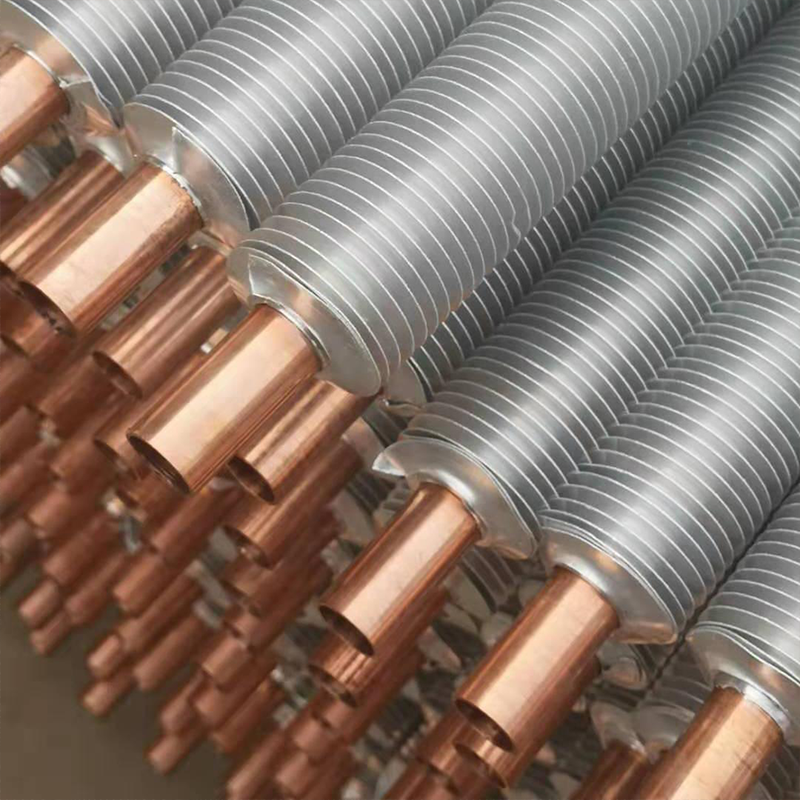
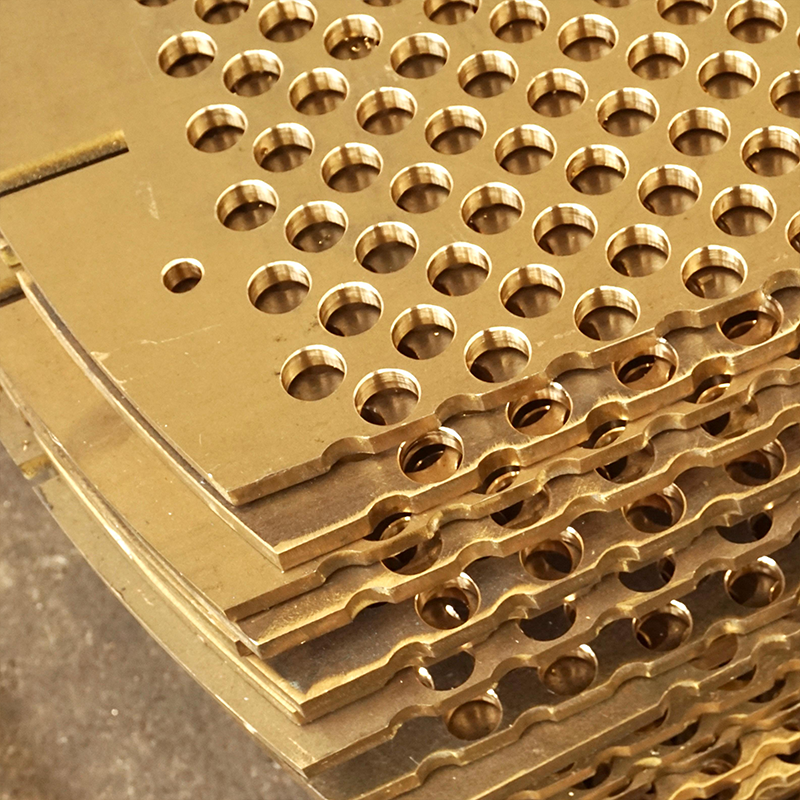
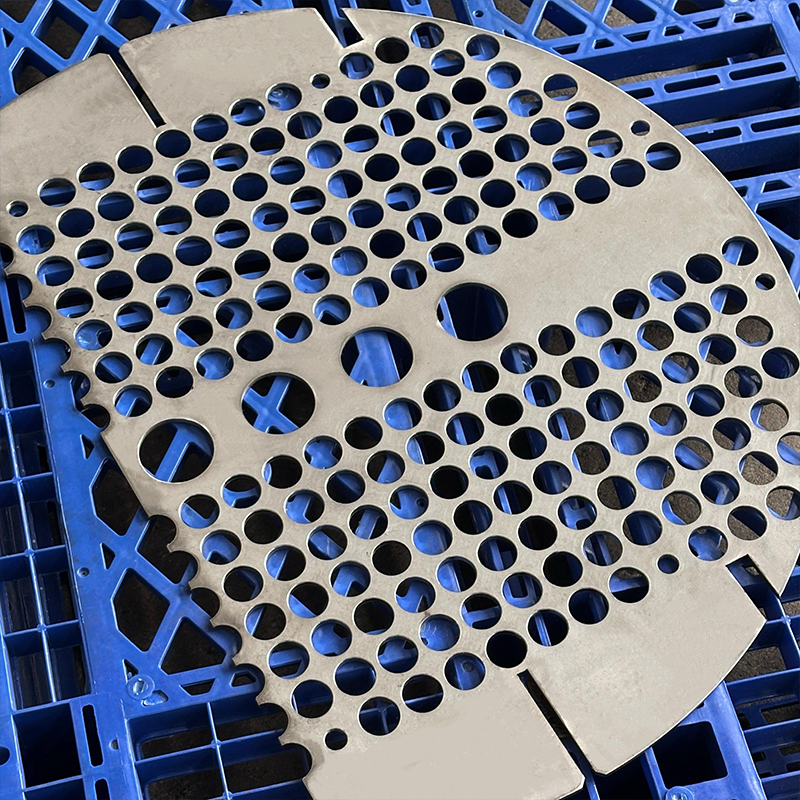
The quality of water in circulating water supply systems (chilled water circuits) requires constant monitoring. Hard water leads to the formation of scale on the walls of chiller heat exchangers and inside the mold channels. A layer of scale just 1 mm thick reduces heat transfer by 10-15%. Here, choosing the right heat exchange equipment plays a key role. For example, companies likeWuxi Kaisheng Electric Power and Petrochemical Equipment Co., Ltd.specialize in developing high-efficiency solutions such as titanium shell-and-tube heat exchangers and 316 stainless steel corrugated tube bundle units. Their ASME and PED certified products offer exceptional corrosion resistance and thermal efficiency, critical for harsh environments or seawater systems used in some refrigeration cycles. The use of such reliable components, including tube sheets made of special alloys (C46400, C70600), helps prevent channel clogging and ensure stable heat transfer even at high pressures and temperatures.
We recommend using a chemical water treatment system with automatic dosing of corrosion inhibitors and biocides in combination with high-quality heat exchange equipment. Regular water analysis (at least once a quarter) helps prevent canals from becoming overgrown.
| Parameter | Low temperature circuit (Cooling) | High temperature circuit (Heating) | Risks of violation |
|---|---|---|---|
| Coolant | Water with antifreeze (glycol) | Thermal oil or superheated water | Winter freezing or oil coking |
| Operating temperature | 5°C – 25°C | 80°C – 350°C | Product deformation, cycle lengthening |
| Pipe material | Polypropylene (PP-R), stainless steel | Seamless steel, fluoroplastic hoses | Pipe burst, personnel burns, fire |
| Isolation | Mandatory to prevent condensation | Mandatory for keeping warm and safe | Energy losses up to 20%, risk of mold in the workshop |
| System pressure | 3 – 6 bar | 10 – 16 bar (for high temperature water) | Depressurization of connections |
When installing thermal oil pipelines, pay special attention to thermal expansion compensators. When heated from 20°C to 300°C, oil increases its volume significantly. The absence of U-shaped expansion joints or bellows units will lead to deformation of the pipes and destruction of the supports. Use only seamless pipes made of steel grade 20 or 09G2S that have passed hydrotests.
Systems for centralized supply of raw materials and vacuum transport
Manual loading of extruder and injection molding hoppers is becoming a thing of the past. Modern factories for plastic products use centralized supply systems for raw materials, which ensure process continuity and eliminate the human factor. However, incorrect calculation of such systems leads to crushing of granules (formation of a fine fraction), changes in bulk density and, as a consequence, instability of the weight of the product.
The basic operating principle of vacuum transport is the creation of a vacuum in the receiver located above the machine. A key design mistake is the choice of pipe diameter. A pipe that is too narrow increases the air flow rate, which leads to abrasive wear of the elbows (especially when transporting glass-filled composites) and crushing of brittle materials such as PS or PMMA. A pipe that is too wide will reduce speed, causing material to hang up and lines to become clogged.
Different types of polymers require different transport modes. Polyethylene and polypropylene can be transported in a dense phase with low air speed (10-15 m/s), which minimizes pipe wear and crushing. Acrylates and polystyrene require a dilute phase at high speed (20-25 m/s) to prevent plugging, but this increases the risk of dust generation. We recommend installing flow and pressure sensors on each section of the line to automatically adjust the operation of the vacuum generators.
Filtration of the air leaving the receivers is a critical element. Fine dust generated by the friction of granules must be effectively separated, otherwise it will enter the vacuum pumps or the workshop atmosphere, creating an explosive atmosphere. According to ATEX standards (or Russian analogues of GOST R IEC 60079), rooms with a concentration of polymer dust require the use of explosion-proof equipment. Filters should have a pulse backflush system configured so as not to disturb the vacuum in the line during cleaning.
The location of highways should ensure a minimum number of horizontal sections of long length. Horizontal transport is less efficient than vertical transport and requires more energy. If a horizontal section is unavoidable, provide inspection hatches every 3-4 meters for cleaning in case of blockage. Use AISI 304 stainless steel pipes with polished internal surfaces for food processing and painted carbon pipes for technical plastics.
Check your butterfly valves for worn blades. A gap between the blade and the body of more than 0.2 mm leads to air leaks and a drop in system performance by 30-40%. Replace seals regularly, without waiting for the line to stop completely.
Power supply and automation: hidden savings reserves
A plastic products factory is an energy-intensive production facility. Extruders, injection molding machines, crushers and chillers consume megawatts of power. The quality of internal electrical communications directly affects the service life of drives and controllers. Harmonic distortions in the network created by frequency converters can overheat transformers and cause false alarms.
We observed a situation where, at a PVC profile production plant, frequent shutdowns of auger frequency units occurred due to voltage drops when starting powerful exhaust fans. The solution turned out to be simple: separating the power circuits for powering the motors and control circuits, as well as installing chokes at the input of the frequency converters. This reduced the level of harmonics and stabilized the network.
Cable routes must be laid taking into account the thermal impact from hot zones of equipment (extruder cylinders, mold heating zones). Using standard PVC cable near areas with temperatures above 60°C will cause the insulation to dry out and cause short circuits. Use heat-resistant cables with XLPE or silicone insulation in hot areas. All cable trays must be grounded in accordance with the PUE (Electrical Installation Rules).
The automated process control system (APCS) requires a separate, clean ground line. The ground loop resistance for low-current systems should not exceed 4 ohms, and it is better to strive for 1 ohm. Separating the lands (power and data) prevents interference from pressure and temperature sensor signals, which is critical for maintaining process accuracy.
The implementation of a real-time energy consumption monitoring system makes it possible to identify ineffective operating modes. For example, if the extruder operates with the screw underloaded, the specific energy consumption per kg of product increases. Current sensors installed on the main drives transmit data to the SCADA system, allowing the operator to optimize loading. The payback of such a monitoring system at an average plant is 6-9 months due to reduced energy costs.
Don't skimp on contact connections. Poor contact in the power cabinet is the main cause of fires in industrial facilities. Use torque screwdrivers when tightening terminals and conduct thermal inspection of connections with a thermal imager at least once a year under load.
Safety and ecology: compliance with 2026 standards
Internal communications in plastic products factories must comply with increasingly stringent industrial safety and environmental requirements. Volatile organic compound (VOC) emissions from the processing of some polymers, noise from compressors and crushers, and the risk of fire all require engineering solutions at the network design stage.
Aspiration (exhaust ventilation) systems must be designed not only to remove heat, but also to capture microdust and gases. PVC processing lines that emit hydrogen chloride during degradation require the installation of scrubbers or activated carbon filters. Simply venting air into the street is now punishable by huge fines from Rosprirodnadzor. The cleaning efficiency should be at least 95-98%.
Noise reduction in pneumatic transport and compressor systems is a mandatory requirement of SanPiN. The noise level in the work area should not exceed 80 dBA. The use of silencers on the exhausts of vacuum pumps, soundproof enclosures for compressors and vibration isolators under equipment reduces the burden on personnel and reduces the risk of occupational diseases. In our practice, there have been cases when the lack of vibration isolation led to the destruction of concrete foundations under heavy extruders within 5-7 years of operation.
Marking of pipelines in accordance with GOST 14202-69 is mandatory. Color indication of flow direction and pipe contents helps personnel quickly navigate in an emergency situation. Red - fire extinguishing, yellow - gas, green - water, brown - oil, gray - ventilation. Ignoring this rule complicates repairs and increases the risk of maintenance errors.
Emergency shut-off valves must be installed at all energy inputs into the workshop. In the event of a fire or leak, the operator must be able to shut off the supply of gas, steam or compressed air in a single action from a safe area. Automatic valves, triggered by smoke or pressure drop sensors, are standard in modern production.
Conduct an audit of your ventilation system: if there is a persistent smell of burnt plastic in the workshop even when the equipment is working properly, it means that local suction systems are not working effectively. Increase the air exchange rate or check the tightness of the air ducts.
Frequently Asked Questions
Which pipe material is better to choose for pneumatic lines: steel or aluminum?
For new projects we definitely recommend aluminum modular systems. Steel pipes are subject to internal corrosion, the products of which (rust and scale) enter pneumatic tools and valves, causing them to wear out. Aluminum does not rust, is easier to install (snap-on assembly without welding) and has less flow resistance due to its smooth surface. Although the initial cost of aluminum is higher, the 10-year total cost of ownership is lower due to the elimination of painting, leak repair and filter replacement costs.
How often do filters in a compressed air preparation system need to be changed?
The frequency of replacement depends on the intensity of work and the filtration class, but there is a rule: pre-cleaning cartridges are changed every 3-6 months, carbon filters - once a year or when an oil smell appears, microfilter membranes - when the pressure drop is more than 0.5 bar. However, the best indicator is visual inspection of a contamination indicator (if available) or regular laboratory analysis of the air for oil and moisture content. Do not wait for complete blockage, this creates unnecessary resistance to the compressor.
Is it possible to use one pump group to cool several extruders of different power?
Technically possible, but economically and technologically infeasible without the use of frequency converters and balancing valves. Different extruder power means different coolant consumption. If you turn on a high-power and low-power extruder at the same time, the low-power extruder will have excessive flow (cavitation or water hammer is possible), and the high-power one will be insufficient. The correct solution is to use primary-secondary circulation rings or individual frequency-controlled pumps for each zone or group of homogeneous equipment.
What to do if the elbows in the vacuum transport system are constantly clogged?
Pounding elbows usually indicate an incorrect conveying speed or bend radius. For bulk plastics, the bending radius must be at least 5-6 pipe diameters (R = 5D). Sharp 90-degree turns dampen the flow velocity and cause material to settle. Try increasing the air speed (if the material is not brittle) or replacing the standard elbows with special wear-resistant ones with a large radius or replaceable ceramic inserts. Also check for air leaks through loose connections to the point of clogging.
Is a special permit required for installing gas pipelines in a workshop?
Yes, any work related to gas supply (natural gas, propane-butane) requires a project agreed upon with the local authorities of Rostechnadzor and carried out by licensed organizations. Unauthorized tapping or use of uncertified pipes and fittings is prohibited and entails criminal liability in the event of an accident. For compressed air and water, such strict restrictions do not apply, but compliance with SNiP and GOST is mandatory to guarantee safety.
Conclusion and next steps
Internal communications in plastic factories are the foundation on which the efficiency of the entire production is built. Errors embedded in pipes and cables during the construction phase will cost you money every day of operation in the form of excessive energy consumption, downtime and defects. Investments in quality materials, competent design and professional installation pay off faster than buying a new extruder.
Don't delay upgrading your utility networks. Start with an audit: measure the actual pressure, temperature and flow parameters of your current systems. Compare them with the equipment specifications. The difference will show you hidden savings reserves. If you are planning to expand production or build a new workshop, contact specialists who understand the specifics of polymer processing, and not just know how to lay pipes. Pay special attention to the selection of heat exchange equipment: use of certified solutions from leading manufacturers, such asWuxi Kaisheng LLC, can significantly improve the reliability of your cooling and heating systems, providing long-term resource savings.
We are ready to help you develop an optimal internal communications scheme, select equipment and carry out installation supervision. Our engineers have experience in implementing projects at plants with a capacity of 500 to 5000 tons per month.Contact us todayfor consultation and calculation of preliminary estimates. Remember that reliable infrastructure is the key to sustainable profits in the world of plastics.