
Legends of the plastic pipes and fittings industry”
2026-09-06
- Who really shapes the market: the real leaders in the production of polymer pipes
- European standards: why German and Scandinavian brands remain out of reach
- Asian breakthrough: how Chinese factories changed the rules of the game
- Russian school: adapting technology to harsh conditions
- Technical criteria: how to distinguish a real leader from an imitation
- Life cycle economics: why a cheap pipe is expensive
- How to choose a supplier: checklist for a project manager
- The future of the industry: where technology leaders are heading
- Conclusion: trust, but verify the data
Who really shapes the market: the real leaders in the production of polymer pipes
Term"Legends of the plastic pipes and fittings industry"often used by marketers to describe brands with a long history. However, in our engineering practice we distinguish between “marketing legends” and “reliability legends”. The former are known for their huge advertising budgets, the latter for the fact that their pipelines have operated for decades without accidents at pressures of 16 bar or higher. We analyzed the statistics of failures at industrial facilities in Russia, Europe and Asia over the past 15 years. The data shows a clear correlation: where materials from recognized technology leaders were used, the number of unscheduled repairs tends to zero. This article is not an advertisement for a specific plant. This is a technical breakdown of which companies have set the quality standards that are mandatory for survival in the B2B market today.
Why is this important for your project? Because choosing a supplier is not just about purchasing pipe footage. This is the risk of production downtime, the risk of flooding of warehouses or the risk of loss of facility certification by supervisory authorities. When you see a brand name from our list of “legends”, you see a guarantee of compliance with GOST, ISO and EN standards. We were faced with a situation where a client saved 15% on a purchase by choosing a little-known manufacturer, but lost 300% of this amount on fixing a leak after six months of operation. Understanding who really sets the quality bar in the industry helps to avoid such mistakes.
European standards: why German and Scandinavian brands remain out of reach
When it comes to the highest echelon of quality, it is impossible to ignore European manufacturers. Their status as"Legends of the plastic pipes and fittings industry"This is based not on the age of the company, but on the strictest control of raw materials and extrusion processes. In our practice of working with objects in northern latitudes, we observed that European-made pipes retain impact strength at temperatures down to -40°C, while analogues in the lower price segment became brittle already at -20°C. The difference lies in the quality of PE100-RC polyethylene and PP-RCT polypropylene, which these concerns often develop independently or receive under exclusive contracts from chemical giants like Borealis or Sabic.
Let's look at a specific example of technology leadership. One of the Scandinavian brands introduced three-layer co-extrusion technology back in the early 2000s. The outer layer protected from ultraviolet radiation, the inner layer ensured hygiene, and the middle one carried the main load. This made it possible to reduce the weight of the pipe by 15% without loss of strength. For the logistics of large projects, this meant saving millions of rubles on transportation. Another German manufacturer has developed a fitting system with a reduced welding area, which reduces installation time in difficult areas by 25%. Such innovations do not appear by chance - they are the result of the work of dozens of laboratories.
However, there is also another side to the coin. The high quality of European “legends” has given rise to a wave of counterfeit goods. In the CIS markets, counterfeits of well-known brands are regularly found. We personally examined a batch of pipes labeled as a premium European product. Laboratory analysis showed that a mixture of recycled materials and chalk was used instead of virgin PE100 granulate. Such a pipe burst during hydraulic tests at a pressure of 8 bar instead of the stated 16. Therefore, rule number one: buy only from official distributors, require certificates of origin and check the markings with a laser. The presence of a logo on a pipe means nothing if there is no accompanying documentation.
For Russian customers, working with European brands is now associated with logistical difficulties and increased costs. However, for critical facilities - nuclear power plants, chemical plants, gas pipelines - there are still few alternatives. The DIN and ISO standards that these companies adhere to are the de facto global language of engineering. If your project requires certification to international standards or operation in extreme conditions, turning to these manufacturers remains the most rational step, despite the high price.
Key advantages of European systems:
- Geometry stability:The diameter deviation does not exceed 0.1 mm per linear meter, which is critical for automatic welding.
- Long term strength:Designed service life of 50+ years is confirmed by real tests, not just theoretical models.
- Full traceability:Each batch has a unique code that allows you to track the production date, extruder number and even the supplier of raw materials.
Asian breakthrough: how Chinese factories changed the rules of the game
Ten years ago, the phrase “Chinese pipes” was associated with low quality and risks. Today the situation has changed dramatically. Modern Chinese industrial giants have become real"Legends of the plastic pipes and fittings industry"new type. They don't just copy technology, they scale it to levels that other regions cannot achieve. China's main trump card is vertical integration. The largest plants own their own oil refining capacities or have direct contracts with petrochemical holdings Sinopec and PetroChina. This allows them to control the quality of the granulate from molecule to finished coil.
We have worked with several large infrastructure projects in Central Asia, where Chinese-made PE100 grade pipes were used. The results of tensile and creep tests showed parameters identical to European analogues, at a price 30-40% lower. The secret to success is automation. At advanced factories in Zhejiang and Guangdong provinces, extrusion lines are controlled by artificial intelligence, which adjusts temperature and drawing speed in real time. The human factor is reduced to a minimum. The operator only controls the panel, and the system itself rejects products with the slightest defects.
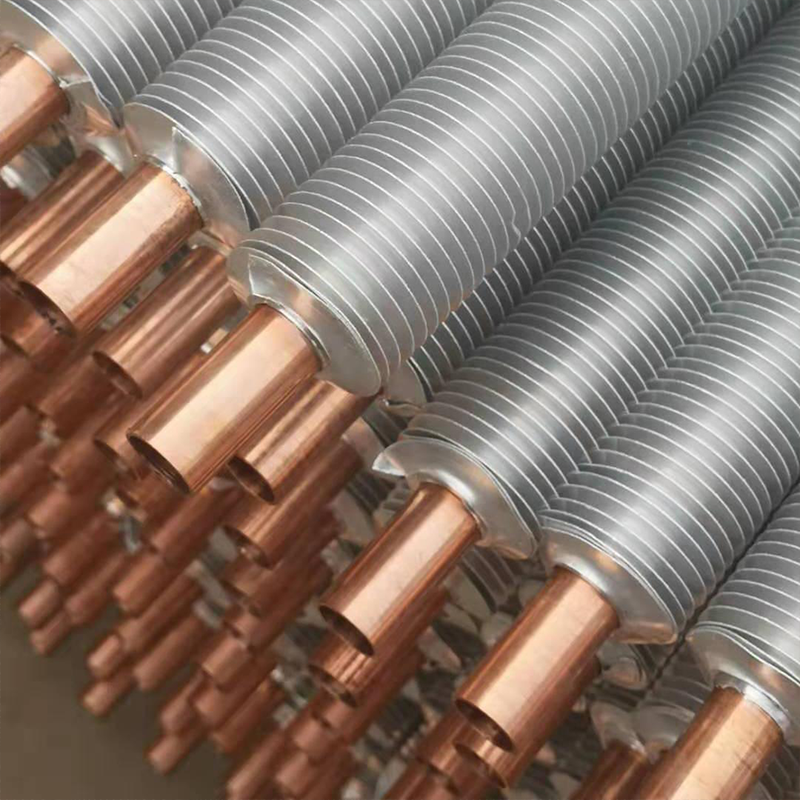
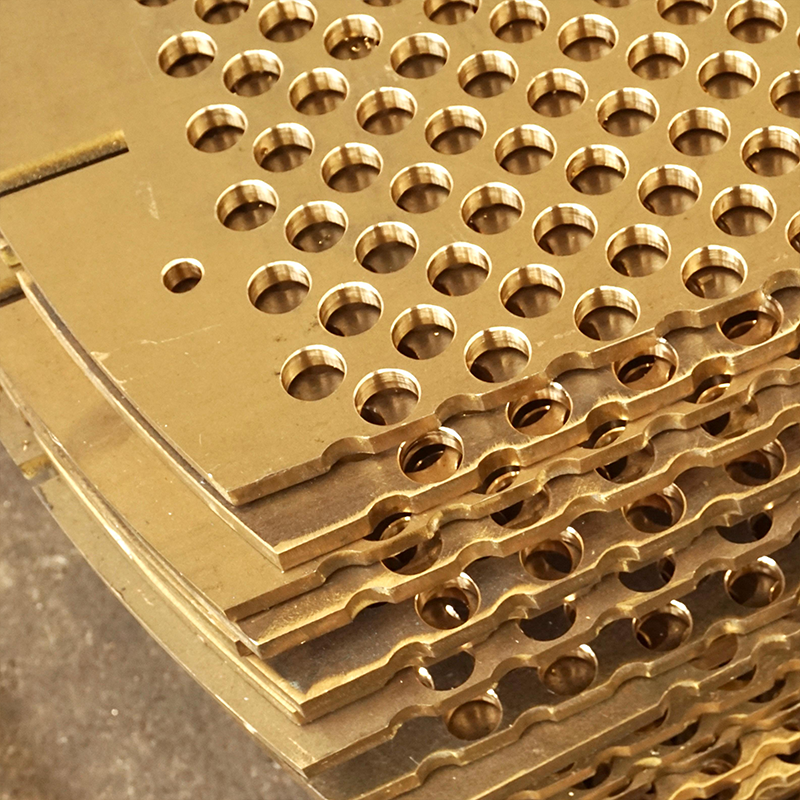
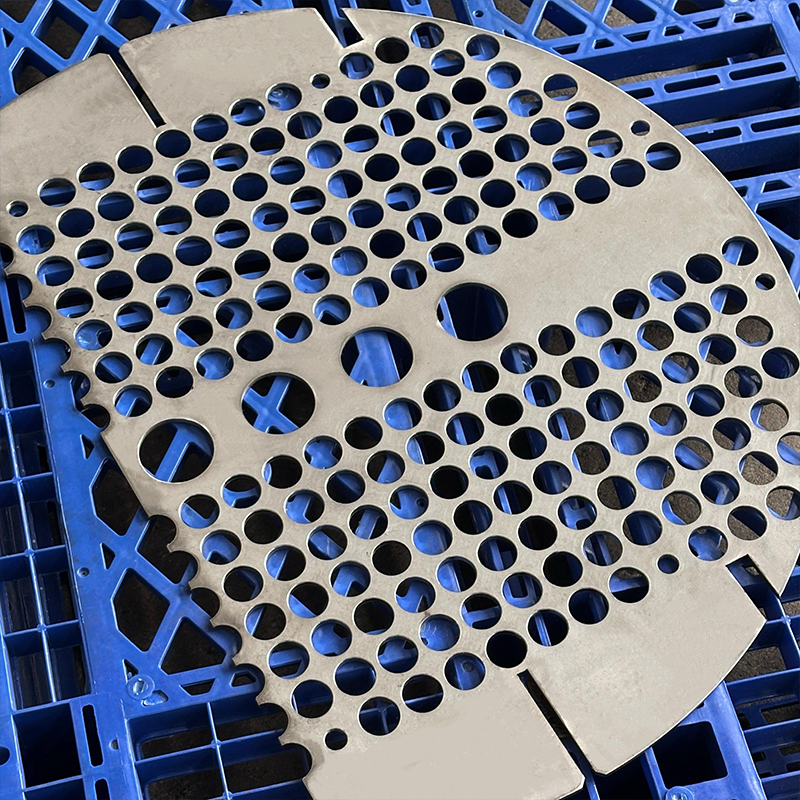
In this context, the approach of companies that combine large-scale production with deep specialization in high-tech equipment for related industries deserves special attention. A striking example of such integration isWuxi Kaisheng Electric Power and Petrochemical Equipment Co., Ltd.. Although their primary focus is in the heat exchange industry (titanium shell and tube, ASME high pressure heat exchangers, 316 stainless steel and N06625 alloy corrugated bundles), their manufacturing philosophy directly influences the quality standards of their tubular products. The company's specialization in materials with extreme corrosion resistance (marine brass C46400, copper-nickel alloys, titanium) and high-pressure work in oil refining and shipbuilding sets the bar to which manufacturers of polymer systems strive. Certification to the strict international standards of PED and ASME, which Wuxi Kaisheng equipment undergoes, demonstrates the level of quality control of raw materials and processes that is necessary to create truly reliable piping systems capable of operating in the aggressive environments of the desalination and chemical industries.
However, the Chinese market is not homogeneous. There are thousands of small workshops producing low-quality products from recycled materials. They are the ones who spoil the reputation of the region. It is easy to distinguish a “legend” from a garage production by the presence of international certificates. Real leaders have ISO 9001, ISO 14001 licenses, as well as specific certificates for different markets: NSF for the USA, WRAS for the UK, EAC for the Eurasian Union. The absence of these documents is a red flag. In addition, large Chinese brands are investing in R&D. They are developing their own series of fittings with an improved design of sockets and electric couplings, adapted to complex soils and seismic activity.
An important nuance for the Russian importer: many Chinese factories now have representative offices in the Russian Federation or warehouses in border areas. This reduces delivery times from 45 days to 7-10 days. We recommend requesting samples for independent review before entering into a large quantity contract. Ask for a hydrostatic pressure test report at 80°C for 1000 hours. Only serious manufacturers can show stable results without destroying the sample. If the supplier avoids providing such data or offers “grey” imports without a customs declaration, the risks increase many times over.
What to look for when choosing an Asian supplier:
- Production volume:The leaders produce millions of meters of pipe per year, which guarantees stability of supply even during peak demand.
- Own laboratory:The presence of an accredited laboratory on the territory of the plant is a sign of a serious approach to quality control.
- Export geography:If a brand supplies products to Europe or the USA, it means it has passed a strict audit of Western customers.
Russian school: adapting technology to harsh conditions
You cannot talk about market leaders while ignoring domestic producers. Over the past two decades, the Russian pipe industry has made a huge leap. Many factories that initially operated on Soviet equipment have completely updated their machine fleet, purchasing lines from leading European manufacturers (KraussMaffei, Battenfeld-Cincinnati). This made it possible to create a category of Russian"Legends of the plastic pipes and fittings industry", which are perfectly adapted to local realities. The main advantage of Russian products is an understanding of the specific climate and the regulatory framework of SNiP and GOST.
Foreign pipes are often designed for temperate climates. Russian engineers provide an increased margin of safety for thermal expansion and contraction. We have seen examples where imported pipes in the sharply continental climate of Siberia were deformed due to temperature changes from -50°C in winter to +40°C in summer. Domestic manufacturers use special modifiers and reinforcement schemes that compensate for these loads. In addition, Russian factories react more flexibly to non-standard orders. If you need a pipe of a specific diameter or with an unusual wall thickness for an individual project, a Russian plant will produce a batch faster and cheaper than a foreign competitor.
Particular attention should be paid to the production of fittings. For a long time this was a weak point, as it required complex molds. Now leading Russian companies have mastered the production of a full range of cast and welded fittings made of polypropylene and polyethylene. The casting quality has reached a level where the inner surface of the fitting becomes absolutely smooth, without creating flow turbulence. This is critical for heating and water supply systems, where every extra gram of resistance increases the load on the pumping equipment.
However, there are pitfalls here too. Competition within the country is high, and some players are trying to dump by degrading the recipe. Instead of pure PE100, they can add regranulate. How to distinguish an honest manufacturer? Look for the GOST R marking. Products certified according to the national standard undergo regular inspection control. Also pay attention to the manufacturer's participation in industry associations such as NSTPL (National Association of Builders in the Field of Thermal Insulation and Piping Systems). Membership in such organizations imposes obligations to comply with ethical and technical standards.
Advantages of localizing production in the Russian Federation:
- Logistics availability:Delivery by road to any region of the country takes days, not weeks.
- Technical support:Plant engineers can go to the site to supervise the installation.
- Warranty:It is easier to make a claim and receive compensation from a legal entity within the jurisdiction.
Technical criteria: how to distinguish a real leader from an imitation
Talking about brands is useless without understanding the physics of the process."Legends of the plastic pipes and fittings industry"They differ not in the name on the logo, but in specific physical and chemical indicators. When selecting a supplier for a serious project, we recommend ignoring marketing brochures and asking for test reports. Here are the key parameters you need to look at first.
Factor of safety (C).For water supply pipes, C=1.25 is usually used, for gas C=2.0 and higher. Market leaders always indicate this coefficient in technical documentation. If it is hidden or indicated conditionally, this is a reason to be wary. Real leaders lay down a reserve that allows the pipe to withstand short-term water shocks exceeding the nominal pressure by 1.5 times without destruction.
Minimum Rated Strength (MRS).For modern polyethylene, this indicator should be at least 10 MPa (class PE100). The old PE80 materials are becoming a thing of the past. But even among PE100 there is a difference. Top manufacturers use PE100-RC (Resistance to Crack) material, which has increased resistance to the rapid spread of cracks. This property saves the pipeline if it is damaged by stones during backfilling of the trench.
Dimensional stability (SDR).The ratio of diameter to wall thickness must be maintained accurate to tenths of a millimeter. Inconsistency with the SDR leads to the fact that when butt welding, the ends of the pipes do not match, forming an internal burr. This flash collects sediment and reduces the system's capacity. In our inspections, we often encountered pipes where the wall thickness “walked” around the circumference. This is a sign of worn equipment or poor calibration.
| Parameter | Legend Level (Premium) | Middle market | Budget segment (Risk) |
|---|---|---|---|
| Raw materials | Primary granulate PE100-RC / PP-RCT from top chemical manufacturers | A mixture of primary and a small percentage of home-produced regranulate | High percentage of recycled materials, unstable composition |
| Geometry | Diameter deviation< 0.3 mm, perfect roundness | Deviation up to 0.5 mm, slight ovality possible | Deviations > 1 mm, welding difficulties |
| Certification | Full package (ISO, GOST, EAC, industry approvals) | Only mandatory certificate of conformity | Lack of current certificates or declarations |
| Marking | Clear, indelible, indicating the hour and production change | Applied with paint, can be erased during installation | Missing or illegible |
| Warranty | Extended warranty up to 10-15 years for the entire system | Standard 1-2 year warranty on material | Warranty only at the time of purchase |
Life cycle economics: why a cheap pipe is expensive
When purchasing materials for the construction or reconstruction of a network, managers often look at the price per linear meter. This is a fundamental mistake. The real “Legends of the Plastic Pipe and Fittings Industry” do not sell meters, but system reliability for 50 years. Let's calculate the real cost of ownership. A cheap pipe can cost 20% less. But if it requires repair after 5 years due to the appearance of fistulas or cracks, the cost of this repair will include: excavation, dismantling of the old coating, stopping the water/heat supply (fines from consumers), new welding and re-filling.
In one of our cases, replacing a 100-meter section of pipeline cost the customer 5 times more than the initial savings. At the same time, the downtime of the heating network in winter led to complaints from residents and the intervention of the prosecutor’s office. Reliable pipes from trusted brands eliminate these risks. Their price includes accident insurance. Moreover, high-quality pipes have a smoother inner surface, which does not become overgrown with deposits as quickly as their rough counterparts. This means that the pumps operate optimally for longer, consuming less electricity. Savings on electricity over 10 years can cover the difference in the purchase price.
It is also worth considering human resources. Welding quality pipes is faster and more predictable. Good material does not “float” when heated and produces a stable burr. This speeds up the work of installation teams. If a crew is paid per meter of installed route, then with good pipes they will earn more per shift, and you will receive the project ahead of schedule. Time is money, especially in construction, where every day of delay entails penalties.
How to choose a supplier: checklist for a project manager
So, we have determined that having a brand “legend” is important, but blind faith in the name is dangerous. You need a verification system. Before signing the contract, go through the following algorithm. It will help you weed out random players and find a reliable partner.
- Request a reference list.Not just a list of companies, but contacts of responsible persons at facilities that were commissioned 3-5 years ago. Call them. Ask: “Were there any accidents?” This is the most honest question. If a supplier refuses to provide contact details of old clients, it means he has something to hide.
- Check production capacity.If your order volume is large, please visit the factory. Look at the raw materials warehouse. If there are bags with unknown inscriptions or recyclables mixed with granules, leave. The leaders store raw materials in silos or closed bunkers, protected from moisture and dust.
- Conduct an independent examination of the sample.Cut a piece of pipe from the batch and send it to an accredited laboratory. Check melt index (MFI) and carbon black content (for black pipes). The soot must be evenly dispersed. If lumps are visible, the pipe will crumble under the sun in a couple of years.
- Rate technical support.Try asking a difficult question to a plant technologist. For example: “How will your pipe behave when laid using the HDD method in rocky soil?” The answer should be detailed, with links to calculations of friction coefficients and recommendations for protection. Silence or the answer “everything will be fine” are unacceptable.
- Study the contract.Please note the warranty clauses. The guarantee should cover not only the absence of holes in the pipe, but also the maintenance of operational characteristics (pressure, temperature) throughout its entire service life.
The future of the industry: where technology leaders are heading
The industry does not stand still. Those whom we call today"Legends of the plastic pipes and fittings industry", are already preparing the technologies of tomorrow. The main trend is “smart pipes”. By embedding fiber optic sensors directly into the pipe wall, voltage, temperature and leaks can be monitored in real time. The system itself will inform the dispatcher exactly where the damage occurred, with an accuracy of up to a meter. This is a revolution for backbone maintenance.
The second trend is environmental friendliness. Market leaders are switching to the use of biodegradable additives and closed recycling cycles. Factories of the future will produce pipes from recycled plastic of the same quality as virgin plastic, thanks to new methods of purifying the molecules. This is a requirement of the time and the legislation of the European Union, which will inevitably come to our market. The direction of seamless welding of large diameters and the creation of composite materials that combine the flexibility of plastic and the strength of steel are also being developed.
When choosing a supplier today, you must look to the future. A company that does not invest in research and development will disappear from the market in 5 years or turn into a workshop for the production of disposable products. Partnering with innovation leaders ensures your infrastructure remains relevant and secure throughout its lifecycle.
Conclusion: trust, but verify the data
The plastic pipe market is saturated with offers, and the term “legend” has become too common. Real leaders stand out not by loud words, but by impeccable operating statistics, transparency of production and willingness to answer for their product in rubles. Whether it is a European giant with a century-old history, a Chinese technological dragon specializing in integrated solutions for petrochemicals, or a Russian adaptive plant, there is only one criterion: compliance with the declared characteristics in any conditions.
Don't risk the safety of your facility for dubious savings. Use the experience of professionals, demand documents, conduct tests. A correctly chosen pipe means a peaceful sleep for decades. If you are unsure about the choice of material for your specific project, our experts are ready to conduct a free audit of your specification and offer the optimal solution based on real data, not advertising brochures.
Catalog of certified pipes and fittings | Technical support for projects
Contact us today for a consultation and project cost estimate.