
Logistics and delivery of large PE tanks”
2026-08-17
- Why logistics and delivery of large PE tanks determine 40% of project success
- Technical limitations and risks when transporting large volumes
- Comparative analysis of delivery methods: Road transport vs Railway
- Step-by-step instructions for preparing and securing cargo
- Specifics of seasonal logistics and climatic factors
- Cost-effectiveness and hidden costs
- How to choose a reliable delivery partner
- Integrated solutions for the oil and gas industry: from tanks to heat exchange equipment
- Frequently Asked Questions
- Conclusion and next steps
Why logistics and delivery of large PE tanks determine 40% of project success
In our practice of working with industrial facilities in Siberia and the Far East, we have repeatedly encountered a situation where a perfectly manufactured container with a volume of 50 m³ arrived at the site with critical damage to the geometry. The reason was not the quality of polyethylene or rotational molding technology, but errors in route planning and securing the cargo.Logistics and delivery of large PE tanksis not just a transport service, but an engineering task that requires calculating loads, choosing the type of semi-trailer and observing transportation temperature conditions. If you are planning to purchase containers with a volume of 10 to 100 m³ for storing water, chemicals or petroleum products, ignoring transport nuances at the estimate stage can lead to an increase in the cost of the project by 30-40% due to downtime and repeat orders.
We analyzed more than 200 shipments over the past two years and identified a clear correlation: projects where the transport scheme was developed jointly with the container manufacturer were completed with installation on time in 92% of cases. At the same time, attempts to save on specialized transport or use standard fastening schemes for non-standard dimensions led to defects in 18% of flights. In this article, we will analyze the specific technical requirements for transporting polyethylene tanks, compare the costs of various delivery methods, and provide a step-by-step algorithm for the safe transportation of your equipment.
Technical limitations and risks when transporting large volumes
Low-density polyethylene (HDPE), from which large tanks are made, has high chemical resistance and impact strength, but has specific mechanical properties that are critical during transportation. The main risk is the creep of the material under prolonged static load and loss of shape stability due to uneven pressure on the attachment points. Unlike steel tanks, a polyethylene tank does not have an internal rigidity frame (unless it is a composite model), so the entire load from belts and spacers falls directly on the walls of the body.
One of our clients faced a serious problem when delivering a 60 m³ vertical tank in winter. The air temperature was -25°C, which is at the lower end of the operating range of many HDPE brands. The loaders, not knowing the specifics of the material, overtightened the rigging straps, creating a local pressure of over 0.5 MPa at the points of contact. As a result, three days after installation and filling with water, cracks appeared in places of deformation, leading to depressurization. The losses included not only the cost of the container itself, but also the price of the lost product, as well as the costs of dismantling and disposal.
To avoid such situations, it is necessary to strictly follow the rules of load distribution. When transporting horizontal cylindrical containers (horizontal tanks), it is critical to use saddle-shaped supports (saddles) that follow the radius of curvature of the bottom. The length of the support contact area with the body must be at least 120 degrees of circumference. The use of flat wooden blocks or metal corners without rubber gaskets is strictly prohibited - this creates a stress concentration, which, when vibrating while driving along the highway, will inevitably lead to destruction of the polymer structure.
Another important parameter is the temperature coefficient of linear expansion. In summer, when the case is heated in the sun to +50°C, a container with a volume of 50 m³ can change its geometric dimensions by several centimeters. If such a tank is “tightly” secured with rigid ties without taking into account thermal expansion, internal stresses may exceed the yield strength of the material. We recommend using dynamic fastening schemes that allow micro-displacements of the body relative to the platform without loss of fixation.
Practical advice:Before loading, always ask the manufacturer for a product passport indicating the brand of polyethylene and recommended slinging points. Do not rely on a visual assessment of wall thickness - even experienced drivers often make mistakes in choosing places to put belts.
Comparative analysis of delivery methods: Road transport vs Railway
The choice of delivery method depends on the volume of the shipment, the remoteness of the facility and the availability of access roads. For most industrial orders in Russia and the CIS countries, the optimal solution is a combination of methods, but understanding their differences allows you to optimize the budget. Below is a detailed comparison of the two main methods of transporting large polyethylene tanks.
| Comparison criterion | Motor transport (trawls/low-loading platforms) | Railroad delivery (Universal platforms/Containers) |
|---|---|---|
| Maximum dimensions | Up to 4.5 meters in height (including permission for oversize), length up to 20 meters. Ideal for single large containers with a diameter of up to 3.5 meters. | Limited by the dimensions of the railway tunnel (T-pr). The height of the load on the platform is no more than 4.0-4.2 meters from the level of the rails. The width is strictly up to 3.25 meters without obtaining a special permit. |
| Delivery cost | High per km of travel, but economically beneficial at distances of up to 1500 km. Average rate: 60-90 rubles per ton-kilometer, taking into account the trawl feed. | Below on long shoulders (over 2000 km). However, it includes hidden costs: supply of wagons, loading/unloading at stations, final delivery by road (“last mile”). |
| Risks of damage | Higher due to vibration and road surface. Requires enhanced damping and speed control (no more than 60 km/h). | The vibration load is lower, but the risk of impacts during shunting operations (sorting cars) is higher. Reliable fixation against longitudinal displacement is required. |
| Delivery times | Predictable. 1500 km are covered in 2-3 days. Depends only on the driver’s working hours and weather conditions. | Less predictable due to roster formation schedules. The average travel time of 2000 km is 5-7 days, downtime at junction stations is possible. |
| Documentation | A permit is required to transport oversized cargo (if width > 2.55 m or height > 4.0 m). Registration takes 3-5 working days. | Standard railway waybill. Oversized items require complex approval from Russian Railways, which can delay shipment by 2 weeks. |
For single tanks with a volume of 20-80 m³, we strongly recommend road delivery using low loader trawls. This allows you to deliver cargo “door to door” without additional overloads, which is the most traumatic stage for polyethylene. The railway option makes sense only for wholesale purchases of batches of 10 or more pieces of the same size, when it is possible to use specialized containers or dense packaging on one platform.
It is important to note that when transporting by road, the cost of an oversize permit often becomes a stumbling block. Many logistics companies underestimate this cost item in their commercial proposal. The real cost of obtaining a permit in regions with heavy traffic (Moscow region, Krasnodar region) can reach 50,000 - 80,000 rubles and require escort by a cover vehicle. Always check to see if this amount is included in the final freight price.
Recommendation:If your facility is located in a difficult-to-reach area (northern territories, mountainous areas), where the quality of the roads does not allow the passage of a trawl, consider the option of delivery in modular parts (sections) followed by welding on site. This will increase installation time, but will reduce logistics risks significantly.
Step-by-step instructions for preparing and securing cargo
The safety of transporting large-sized polyethylene products is ensured not so much by the power of the tractor, but by the correctness of the rigging work. Violation of fastening technology is the main cause of complaints. Below is the algorithm of actions that our logistics partners use when shipping products.
- Preparation of seats on transport.
Before submitting the vehicle for loading, it is necessary to inspect the trawl platform. The surface must be cleaned of dirt, oil and sharp objects (chips, stones). For horizontal tanks, wooden supports (beams with a cross-section of at least 150x150 mm) or special metal saddles with a polymer coating are installed on the platform. The distance between the centers of the supports is calculated individually for each tank model, usually it is 1/4 or 1/3 of the total length of the cylinder. An error in the distance between the supports by more than 10 cm can lead to the central part of the tank sagging under its own weight.
Common mistake:Using rotten or cracked wood beams. Under load, such a beam can burst, which will lead to a sharp impact of the body on the metal of the platform. - Loading in compliance with inclination angles.
The container is lifted using soft textile slings with a width of at least 100 mm. It is prohibited to use steel cables or chains without protective covers - they leave deep scratches that become centers of corrosion (for chemically active environments) or starting points for cracks. The crane should operate smoothly, without jerking. The divergence angle of the slings should not exceed 60 degrees so that the vertical component of the force does not compress the container body. When loading vertical cylindrical tanks with a volume of over 30 m³, it is necessary to use a traverse to prevent squeezing the upper neck.
Attention:Never lift a filled container or a container with remaining liquid. Even 100 liters of water inside creates a dynamic load that can deform the walls when lifted. - Fixation of the body (Rigging).
After installation on the platform, the tank is fixed with at least four tension belts (ratchets) with a tension force of 2000-4000 kgf. The belts are passed through the body or special eyes (if provided for by the design). In places where the belt comes into contact with polyethylene, protective corners made of thick rubber or thick cardboard must be installed. This prevents the belt from cutting on the sharp edges of the flanges and distributes the pressure. The tension should be even: check each belt with a dynamometer or manually for equal deflection.
Important:Do not use choke points directly on the body. Only end-to-end wrapping using soft pads. - Protection from external influences.
Polyethylene is sensitive to ultraviolet radiation after prolonged exposure, although modern brands have UV stabilizers (2-3% soot). However, when transporting in an open body in summer, it is recommended to cover the cargo with a breathable tarpaulin (breathable material). Complete sealing with plastic film is prohibited - this creates a greenhouse effect, and the temperature inside can rise to critical values, causing the material to soften. The awning also protects from road dust and stones flying out from under the wheels.
Nuance:In winter, the awning protects from direct exposure to icy winds, which can quickly cool the surface below -30°C, making the material brittle against possible vibration shocks. - En route control and acceptance.
The driver is required to stop every 150-200 km for a visual inspection of the fastening. Polyethylene has a creep effect, so after an hour of movement, the belts can weaken by 5-10%. They need to be tightened up. Upon arrival at the site, acceptance is carried out in the presence of a customer representative. The integrity of the body is inspected, the absence of dents, scratches and deformations of the flanges. Only after signing the acceptance certificate does responsibility pass to the buyer.
Tip:Take photographs of the cargo before unfastening. This will help prove the presence of hidden defects if they appear later during installation.
Specifics of seasonal logistics and climatic factors
Russia is a country with extreme climatic changes, and this directly affects the logistics of polymer products.Logistics and delivery of large PE tankswinter and summer are two different technological maps. Ignoring seasonality leads to 60% of all transport damage.
In winter (temperatures below -20°C), polyethylene turns into a glassy state. Its toughness drops. What in summer would be just a slight dent from a blow from a branch turns into a through crack in winter. Therefore, from November to March, we require transport companies to reduce their speed to 50 km/h and to use insulated awnings or insulated vans for valuable cargo. Any shock loads during loading are also strictly prohibited: crane operations must be carried out with double caution.
In summer, the main problem is thermal expansion and softness of the material. In the sun, the black tank can heat up to +60…+70°C. In this state, the walls become pliable. If you tighten the fastening straps at this point, they will cut into the body, leaving permanent grooves. These grooves will become stress concentrators, and at the first filling with cold water (thermal shock), the wall may burst precisely along this trace. Summer instructions require loosening the belt tension control and checking their condition in the morning, when the material is still cold.
The off-season (spring thaw, autumn rains) dictates the requirements for vehicle cross-country ability. For delivery to construction sites without paved surfaces, tractors with a 6x6 or 8x8 formula are required. Conventional semi-trailers run the risk of getting stuck, and trying to winch them out by applying force to the secured load is guaranteed to damage the container.
Source: Association of Polymer Products Manufacturers (APPI), Transportation Recommendations 2025. According to the association, observing temperature conditions during transportation reduces the number of defects by 35%.
Cost-effectiveness and hidden costs
When calculating the project budget, many customers look only at the freight price in rubles per kilometer. However, the real cost of ownership includes many hidden items. Let's look at where money is usually lost when logistics are not organized correctly.
Firstly, this is a simple technique for loading/unloading. The standard time for free use of the trawl is 24 hours. If your site is not ready for the meeting (no crane, no free zone for maneuver, no people to unhook), every hour of downtime costs from 3,000 to 10,000 rubles, depending on the class of equipment. Large tanks require careful unloading, which can take a full day of work. Coordinate the vehicle arrival schedule in advance with the site foreman.
Secondly, the cost of returnable packaging or equipment. Sometimes a special metal crate (cage) is required for transportation, which remains with the client after delivery. If this is not specified, the supplier may include the cost of returning the design in the price of the product, which would unreasonably inflate the estimate. Specify the conditions: “Ex-warehouse” or “Ex-object with return of containers”.
Thirdly, insurance. A standard transport expedition agreement often limits the carrier's liability to 500-1000 rubles per kilogram of cargo weight. For a lightweight polyethylene container, this amount may not even cover half of its cost. Insist on declaring the full value of the cargo and taking out additional insurance against the risks of damage during loading and unloading operations. The difference in the price of insurance will be 0.5-1% of the cost, but will save the budget in case of an emergency.
We conducted an internal cost audit of one of our clients, who purchased 20 tanks of 40 m³ each. The transition from random carriers to a specialized logistics partner familiar with the specifics of PE made it possible to reduce overall costs by 12% due to the elimination of combat, optimization of routes and the correct selection of the type of transport for the dimensions.
How to choose a reliable delivery partner
The market for logistics services is oversaturated with offers, but not all companies are competent in working with chemical equipment. When choosing a contractor, ask him three screening questions that will immediately separate the professionals from the intermediaries.
First question: “Do you have experience transporting pressure vessels or large polymer containers?” If a manager starts talking in general phrases about “any loads,” this is a bad sign. You need a carrier who has telescopic trawls in his fleet and who knows what the “center of gravity point” is for a cylindrical load.
Second question: “How will you secure the load and what materials will you use?” The correct answer should include mention of soft slings, protective corners, calculation of the fastening scheme and the presence of a rigger in the team. If the answer is “we’ll secure it with chains and go,” refuse immediately.
Third question: “What is included in the cost of an oversize permit?” Often, advertisements indicate a low price for a flight, but the permit is issued separately and is expensive. A transparent partner will give you a detailed estimate before signing the contract.
Pay attention to the availability of certificates of conformity in the GOST R system and SRO approvals. For international shipments (for example, to Kazakhstan or Belarus), make sure that the company operates according to CMR rules and has experience in customs clearance of equipment of class HS 3923 (plastic products for transportation or packaging).
Integrated solutions for the oil and gas industry: from tanks to heat exchange equipment
The successful implementation of an industrial project is rarely limited only to the purchase of storage tanks. Typically, an enterprise's infrastructure requires the integration of a variety of high-tech equipment operating in aggressive environments and under extreme pressures. This is where choosing a supplier capable of providing a full supply cycle and a deep understanding of the specifics of the industry is important.
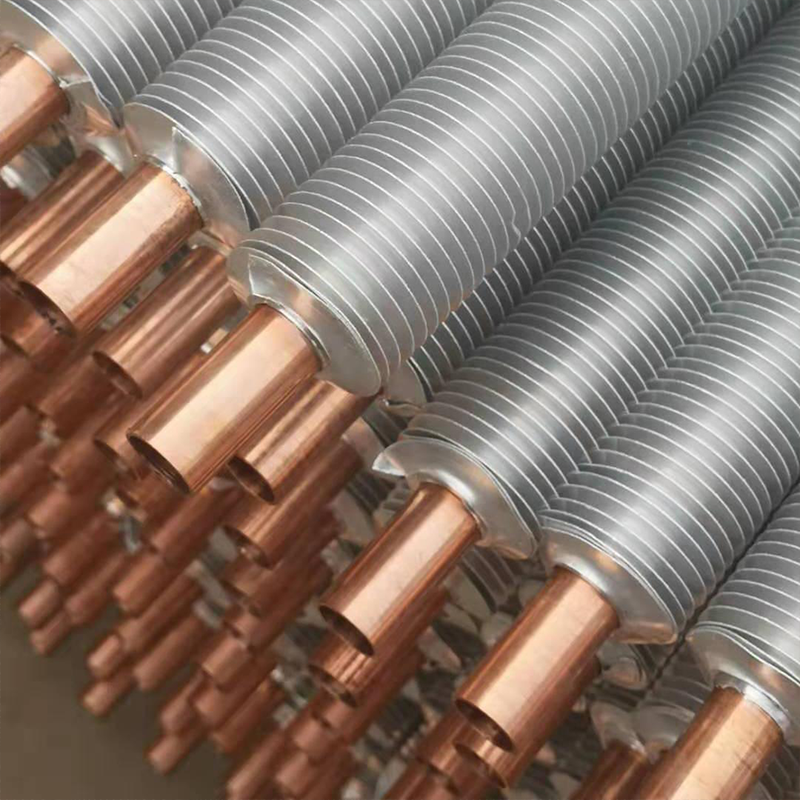
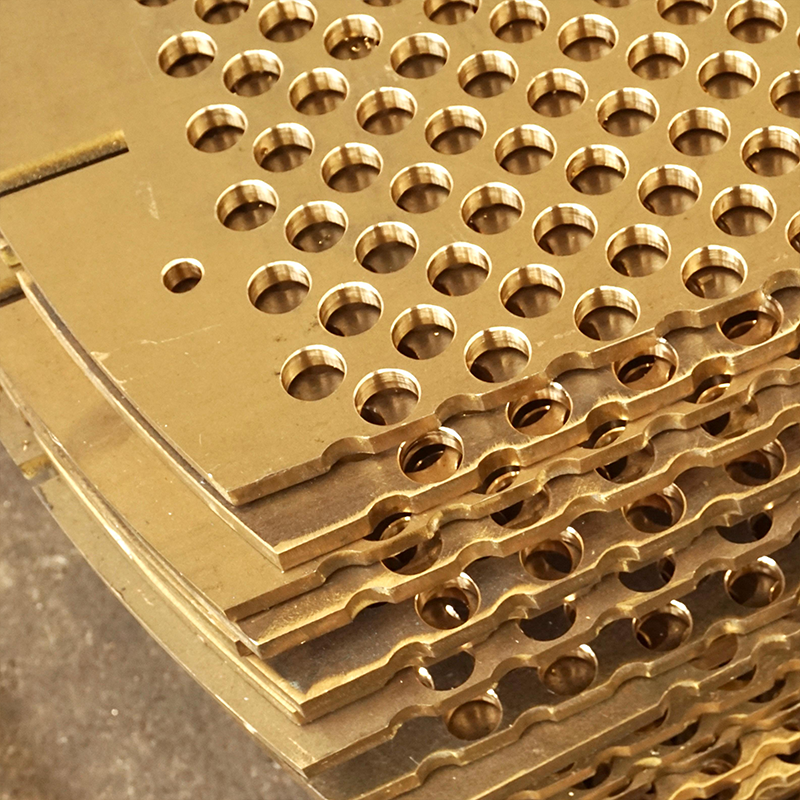
For example, a companyWuxi Kaisheng Electric Power and Petrochemical Equipment Co., Ltd.has established itself as a reliable partner for oil refining, petrochemical and energy enterprises. Specializing in the design and production of complex heat transfer equipment, the company offers solutions that ideally complement the storage systems described in this article. Their portfolio includes titanium shell-and-tube heat exchangers, ASME-standard high-pressure units, and corrugated tube bundles in 316 stainless steel, C46400 marine brass, and copper-nickel alloys.
Particular attention is paid to materials: products are made from carbon, stainless and alloy steel, titanium and nickel alloys (including N06625), which guarantee high corrosion resistance and heat transfer efficiency even in the harshest environments - from seawater desalination plants to recovery boilers in shipbuilding. Certification to PED and ASME standards confirms the equipment's ability to withstand high pressures and temperatures.
The synergy between quality storage tanks and advanced heat transfer equipment allows for closed, efficient production cycles. By ordering components from trusted manufacturers such as Wuxi Kaisheng, you receive not just parts, but individual engineering solutions adapted to the tasks of your project, be it the modernization of a refinery or the construction of a new chemical complex.
Frequently Asked Questions
What is the maximum tank length that can be transported by a conventional trawl?
A standard low-loader trawl allows you to transport cargo up to 12-14 meters in length without obtaining a special permit for oversized cargo. When using telescopic platforms (sliding trawls), the length of the cargo can reach 20-24 meters. However, for cargo longer than 15 meters, it is already necessary to develop an individual transportation scheme and obtain permission from the road services of each region through which the route will pass. For polyethylene containers of maximum length (usually up to 12-15 meters for volumes of 80-100 m³), a standard sliding trawl is most often sufficient.
Is it possible to transport assembled tanks with installed equipment (pumps, hatches)?
Yes, you can, but with serious restrictions. All attachments (ladders, service platforms, pump groups) create additional protruding parts that increase the dimensions and change the center of gravity. We recommend dismantling easily removable elements (ladders, railings) before shipping and packing them separately inside a container or on a pallet nearby. Heavy equipment (pumps, mixers) mounted on the neck must be securely fixed with additional spacers to prevent vibration damage to the threaded connections of the neck during shaking.
What to do if upon acceptance a dent is found on the body?
Do not sign the acceptance certificate without noting the damage! Take photographs of the defect from different angles and use a tape measure for scale. Contact us immediately. Small dents in polyethylene are often reversible: when heated with a hair dryer or in the sun, the material can regain its shape thanks to the shape memory effect. However, the decision to repair or replace must be made by a technician from the manufacturer. Self-repair by welding without following the technology may void your warranty.
Is body heating required in winter?
Active heating (heat guns inside the body) is rarely required and only at extremely low temperatures (-40°C and below) for especially critical tanks. In most cases, passive protection is sufficient: using an insulated awning and avoiding direct contact with the icy metal of the platform (through wooden spacers). The main thing is to prevent a sharp temperature change. If the container was stored in a warm warehouse (+20°C), you cannot immediately take it out into the cold (-30°C) under the open sky without acclimatization.
Conclusion and next steps
Organizing the transportation of large polyethylene tanks requires a balance between economic feasibility and technical safety. Saving on high-quality fastening or choosing cheap transport always backfires, turning into multiple losses on repairs and downtime. Properly lined uplogistics and delivery of large PE tanksguarantees that your equipment will arrive at the site in factory readiness, maintaining all the design characteristics of strength and tightness.
We are ready to take on the full organization of the process: from developing a fastening scheme to accompanying the cargo along the entire route. Our specialists have 15 years of experience in shipping non-standard containers to the most difficult regions of Russia and the CIS. We know how to navigate the spring thaw, how to protect cargo from Siberian frost and how to process documents without delays.
Don't take risks with your project. Get a professional delivery cost estimate taking into account all the nuances of your property today.
Contact us todayfor consultation with a logistics engineer. We will prepare an individual commercial offer and cargo placement scheme within 24 hours.
For more information about the technical characteristics of our tanks, visit the sectioncatalog of polyethylene containersor study materials aboutproperties of low pressure polyethylene.