
Certification of PP tanks for the food industry”
2026-08-17
Certification of PP Tanks for the Food Industry: A Complete Guide to Compliance with EAEU Regulations
Obtaining permits for containers made of polypropylene (PP) for contact with food products is not a bureaucratic formality, but a critical stage in allowing equipment to be used in the territory of the Eurasian Economic Union. Without a valid certificate of state registration (SGR) or declaration of conformity with TR CU 005/2011, the use of such tanks in production is illegal and entails fines of up to 600,000 rubles, confiscation of products and suspension of the enterprise. In our practice, we encountered a situation where a batch of containers with a volume of 50 m³ was blocked at customs due to the lack of migration tests of a specific dye used in the labeling, which led to downtime of the bottling line for 14 days and losses to the customer.
The certification process for PP tanks requires a deep understanding of the material's chemical inertness, operating conditions and specific technical regulations. We will analyze each stage: from selecting laboratory samples to passing inspection control, based on the real experience of introducing more than 200 pieces of equipment into the food industry of Russia and the CIS countries.
Regulatory framework and legal requirements
The main regulatory document is the Technical Regulations of the Customs Union TR CU 005/2011 “On Packaging Safety”. It is this standard that sets the maximum permissible concentrations (MAC) of substances migrating from the container material into the food product. For polypropylene, the key parameters are general migration (no more than 10 mg/dm²) and specific migration of heavy metals, phenol, formaldehyde and other toxic elements.
It is important to understand the difference between declaration and state registration. A declaration of conformity is issued for a serial production or batch and confirms the safety of the packaging as a product. However, if the tank is classified as equipment that comes into contact with food during the production process (for example, fermentation or raw material storage tanks), a Certificate of State Registration (CGR) is often required. The SGR is issued by Rospotrebnadzor after a sanitary and epidemiological examination and is valid for an indefinite period throughout the entire EAEU.
Ignoring the requirements of TR CU 005/2011 creates a direct threat to the reputation of the food manufacturer. Consumers today are extremely sensitive to issues of environmental friendliness and safety. The presence of the “EAC” marking and certificate details on the tank body becomes a competitive advantage during audits of large retail chains and international holdings.
When preparing documentation, it is necessary to clearly define the HS code. For plastic tanks, this is usually position 3925, but if the tank is supplied as part of a production line with pumps and mixers, the classification may shift to group 84, which will require additional confirmation according to TR CU 010/2011 “On the safety of machinery and equipment.”
Chemical resistance of polypropylene and impact on safety
Polypropylene (PP) was not chosen by the food industry by chance. Its molecular structure provides high resistance to acids, alkalis and organic solvents, making it ideal for storing juices, dairy products, vegetable oils and alcoholic beverages. However, not all PP brands are created equal. Homopolymer (PP-H) has maximum chemical resistance, but lower impact strength at low temperatures. Copolymers (PP-B, PP-R) withstand thermal shock better, but may have different migration characteristics.
During the tests, we identified a critical dependence of the rate of migration of substances on the operating temperature. When working with hot media (above 60°C), the diffusion of plastic components accelerates exponentially. Therefore, when certifying tanks for pasteurization or hot filling, the laboratory must conduct tests at elevated temperatures that simulate real-life process conditions. If the documentation states a range of up to +90°C, but tests are carried out only at +20°C, the certificate will be invalidated at the first inspection.
Particular attention should be paid to additives. Pure polypropylene is safe, but stabilizers, antioxidants and pigments added by the sheet manufacturer must have their own safety certificates. We have repeatedly encountered refusal to issue a State Registration Certificate due to the fact that the supplier of PP sheets used carbon black or dyes that were not intended for food contact. It is the responsibility of the applicant to verify the supply chain of raw materials.
Mechanical processing also affects safety. Welds made in violation of technology (overheating, underheating) create zones with an altered crystal structure, where bacteria accumulation and increased migration are possible. Laboratory tests include checking that the seams are intact and that there are no pores that could become a source of corrosion or product contamination.
Stages of the certification procedure and laboratory tests
The process of obtaining permits is strictly regulated and consists of sequential steps, violation of the order of which leads to delays. The first stage is product identification. The applicant provides a technical description, drawings, specifications of materials and a supply agreement. At this stage, the certification scheme (serial production or batch) and the list of necessary tests are determined.
The second stage is sampling. An inspector of an accredited body or the applicant himself (in the case of a batch scheme) selects samples of tanks or cuts out fragments of material (sheets, welded joints) for transfer to the laboratory. Important: samples must be representative. You cannot send a sheet from one manufacturer for testing and make a tank from a sheet from another. The markings on the samples must match the markings in the quality certificate.
The third stage is laboratory research. This is the longest and most crucial period. Tests are carried out in accredited centers that have a certificate from the Federal Accreditation Agency. Basic tests include:
- Definition of general migration:the sample is placed in model media (distilled water, 3% acetic acid, 10% ethanol, olive oil) for a certain time at a given temperature. Then the mass of substances transferred into the medium is measured.
- Specific migration analysis:chromatographic examination for the presence of heavy metals (lead, cadmium, mercury), phenol, formaldehyde, primary aromatic amines.
- Organoleptic tests:assessment of the influence of the material on the taste, smell and color of the model environment. Polypropylene should not impart any foreign flavors to the product.
- Physical and mechanical tests:testing tensile strength, elongation at break, resistance to falling (for transport containers).
The fourth stage is an analysis of the state of production (if serial production is certified). Experts visit the manufacturer’s plant to assess the quality control system, storage conditions for raw materials and the readiness of the incoming control laboratory. For imported products, this stage is replaced by an audit of the plant in the country of origin or the provision of an ISO 9001 certificate.
The fifth stage is document registration. After successfully passing all tests and analyzing the protocols, the certification body registers a declaration or issues a SGR in the unified register of Rospotrebnadzor. Only from this moment the products receive the right to be labeled with the EAC mark and can be legally sold.
Typical mistakes when preparing documentation
Failure statistics show that 70% of problems arise not because of the poor quality of the polypropylene itself, but because of errors in the application form and the discrepancy between the data provided and reality. The most common mistake is incorrect indication of the contacting medium. If the declaration says “water”, but in fact the tank contains wine or a fermented milk product with a fat content of 3.5%, this is a violation. Fatty media extract substances from plastic much more actively than aqueous ones. Always specify the maximum corrosive environment that the tank will come into contact with.
The second common mistake is ignoring the temperature regime. Many applicants specify standard conditions (+20°C), although the process involves washing tanks with steam or hot water (+85°C). Test reports obtained without taking into account the temperature load do not protect the manufacturer in the event of claims from regulatory authorities. We recommend that you always leave a temperature margin of 10-15 degrees when submitting data to the laboratory.
The third problem is inconsistency in labeling. The EAC mark must be applied directly to the product or a label attached to it. The document must indicate the exact dimensions of the sign. It often happens that on a website or in a catalog a sign is drawn incorrectly (proportions are violated), which is formally a violation of labeling rules. It is also necessary to indicate the expiration date or date of manufacture, since polymers age.
The fourth mistake concerns importers. When importing finished tanks from abroad (for example, from China or Turkey), many try to use certificates from the country of origin. This is impossible. Products trading on the EAEU market must have documents of a single standard. Foreign certificates (CE, FDA) can serve as additional proof of quality, but do not replace Russian certification. Moreover, having an FDA certificate simplifies obtaining a SGR, as it confirms the high level of control at the plant, but does not eliminate the need for local laboratory tests.
Comparative analysis of requirements: Russia vs EU vs USA
For companies exporting or using imported equipment, it is important to understand the differences in approaches to polymer safety. Although the basic principles are similar, the details of the regulations differ significantly.
| Comparison parameter | EAEU (TR TS 005/2011) | European Union (Regulation EC 10/2011) | USA (FDA 21 CFR 177.1520) |
|---|---|---|---|
| Regulatory act | Technical regulations of the Customs Union | EU Commission Regulation No. 10/2011 | Code of Federal Regulations Title 21 |
| Approach to the list of substances | Positive list of permitted monomers and additives. Anything not on the list is prohibited. | Union List (more than 900 positions). Strict control of specific migration. | List of approved polymers and additives with restrictions on conditions of use. |
| Model environments | Water, vinegar, ethanol, fats (olive oil or substitutes). | 10% ethanol, 3% acetic acid, 20% ethanol, vegetable oils, Tenax (for dry products). | Water, heptane (fat replacer), 8% ethanol, 50% ethanol. |
| Total migration limit | 10 mg/dm² contact surface | 10 mg/dm² (or 60 mg/kg for small containers) | There is no general limit; it is regulated through solvent extraction. |
| Confirmation document | SGR or Declaration of Conformity | Declaration of Compliance (DoC) from the manufacturer | Letter of Guarantee / No Objection Letter from FDA |
| Validity period | SGR - for an indefinite period, Declaration - up to 5 years | Indefinitely, subject to unchanged composition | Indefinitely subject to conditions |
As can be seen from the table, the EAEU requirements are closest to European ones, which facilitates the adaptation of imported equipment. However, the procedure for obtaining a SGR in Russia is more formalized and requires the mandatory participation of a third party (certification body), whereas in the EU the manufacturer often declares compliance on the basis of internal tests. For the Russian market, the presence of a paper document with an official seal is a mandatory condition for passing inspections by Rospotrebnadzor.
Specifics of certification of large-sized tanks
Certification of large containers (volume 10 m³ and above), which are manufactured by extrusion welding directly at the customer’s site, has its own nuances. It is impossible to bring such a tank to the laboratory. In this case, a certification scheme for a batch or a single product is used with an expert visiting the installation site.
The expert checks the quality of welds visually and instrumentally (for example, by spark breakdown or ultrasound), selects samples of cuttings from walls and seams to be sent to the laboratory. Providing welding process proficiency (WPS) protocols and welder qualifications is critical. If installation is carried out by unskilled workers without permits, the risk of receiving a negative conclusion tends to 100%.
We recommend ordering a preliminary examination of the tank design at the design development stage. This will avoid situations where a finished welded tank has to be remade or disposed of due to the impossibility of confirming its safety. For example, using the wrong filler rod (rod) for welding can change the chemistry of the weld and render the entire structure unsuitable for food use.
The influence of color and secondary raw materials on test results
Natural (translucent) polypropylene is the easiest to test. Adding pigments complicates the task. Some dyes, especially bright colors (red, yellow, blue), contain heavy metals or organic compounds that can migrate. When ordering colored sheets for food purposes, ask the supplier for a safety data sheet for a specific batch indicating the codes of the masterbatches used.
The use of recycled polypropylene (recyclate) for the production of containers in contact with food is prohibited by technical regulations in the Russian Federation and the EAEU. Even a small content of regranulate (5-10%) to reduce the cost of construction will lead to failure of tests for specific migration and organoleptic properties. Laboratory methods now make it possible to easily detect traces of recycling by the presence of polymer degradation products. Saving on raw materials here results in the loss of the entire contract.
In our practice, there was a case where a client tried to certify drinking water storage tanks made from a mixture of virgin and recycled PP. Tests showed that the maximum permissible concentration for aldehydes was exceeded by 4 times. The batch had to be melted down into technical pallets, and the manufacturer’s reputation suffered. Always use only food grade virgin material.
Duration and cost of the procedure
The processing time depends on the certification scheme and the workload of laboratories. Drawing up a declaration of conformity for serial production takes on average 10-15 working days if ready-made test reports are available. If new tests are required, the period is extended by 14-21 days. Issuing a State Registration Certificate is a longer process, from 30 to 45 days, due to the need to undergo an examination by Rospotrebnadzor.
The cost consists of several components: fees of the certification body, cost of laboratory tests (depending on the number of indicators and model environments), visit of an expert (if needed). On average, the budget for certification of one type of tank varies from 80,000 to 250,000 rubles. You should not chase dumping: certificates that are too cheap are often issued by fly-by-night companies, and such documents are easily canceled during the first check of the registry.
Plan your budget in advance. Include certification costs as a mandatory item in the project estimate. An attempt to start operating without documents “at your own peril and risk” is not economically feasible. Fines and equipment downtime will cover the cost of registration many times over.
Inspection control and renewal of documents
Receiving a certificate is not the end, but the beginning of responsibility. The serial production certification scheme provides for annual inspection control. The certification body checks whether the raw materials, technology have changed, or whether new complaints from consumers have appeared. If the changes are significant, additional testing is required.
The declaration of conformity is registered for a period of up to 5 years. After this period, the procedure must be repeated. The SGR is valid indefinitely, but if legislation changes or hazardous properties of products are identified, it may be suspended. Maintain contact with the certification body and promptly inform about changes in the product design.
Keep samples of each production batch. In the event of a controversial situation with regulatory authorities, the ability to conduct repeated tests on stored samples (“arbitration sample”) can save the company from huge fines. This is a rule of good manners and an element of competent risk management.
Practical recommendations for buyers and technologists
When selecting a PP tank supplier, request copies of current certificates before signing the contract. Check their relevance in the RosAccreditation register (fsa.gov.ru). Please note that the scope of the certificate matches your objectives. If the document says “for cold water”, but you need to store hot syrup, this document will not work.
Require the supplier to provide a quality certificate for each batch of sheet material indicating the heat number and the results of incoming inspection. This will allow you to trace the origin of raw materials in case of problems. Reputable manufacturers pride themselves on transparency in their supply chain and do not hesitate to provide this data.
Include a structural safety margin in the tank design. Certification confirms safety, but does not guarantee eternal service. Taking into account safety factors when calculating wall thickness will extend the life of equipment and reduce the risks of emergency situations associated with depressurization.
An integrated approach to equipping production lines
Although this article focuses on polymer tanks, modern food and chemical production is rarely limited to one type of equipment. Often a production line is a complex complex, where polypropylene containers are adjacent to high-tech heat exchangers and components made of special alloys. For example, processes of pasteurization, cooling or heating of media require reliable heat exchange equipment capable of operating in aggressive environments under high pressure.
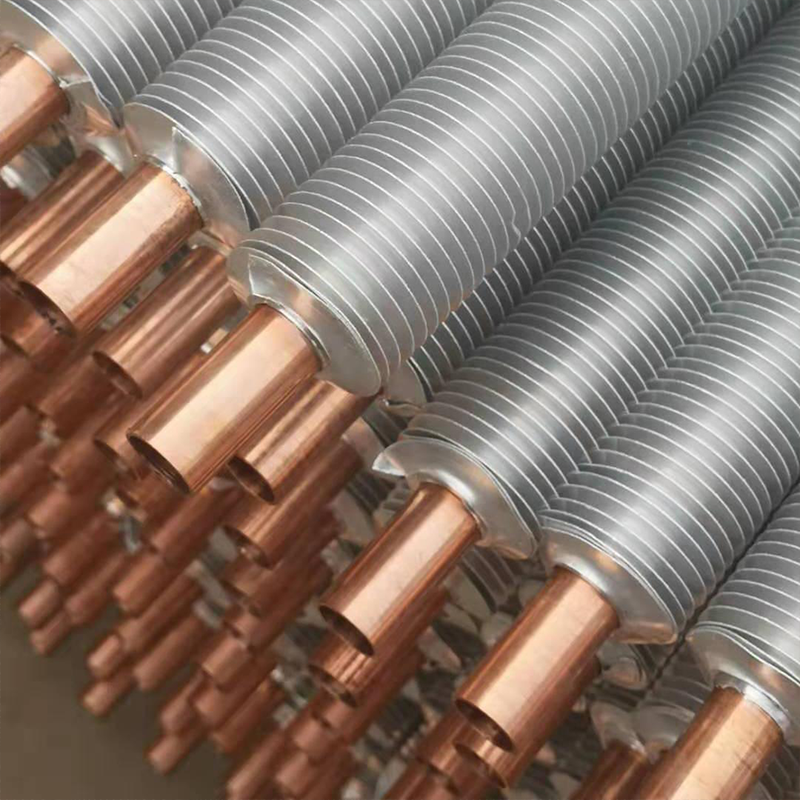
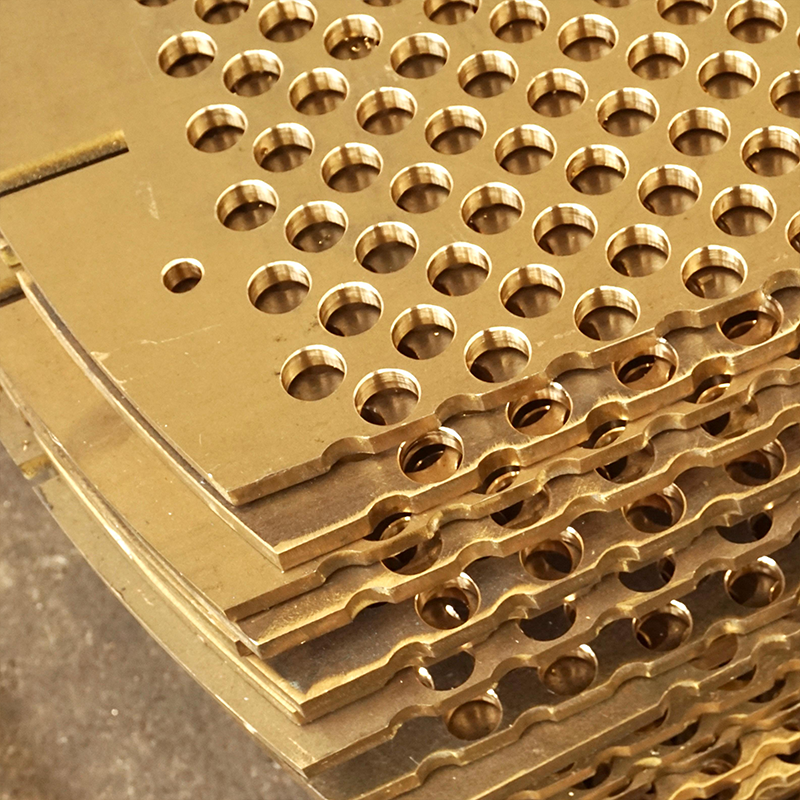
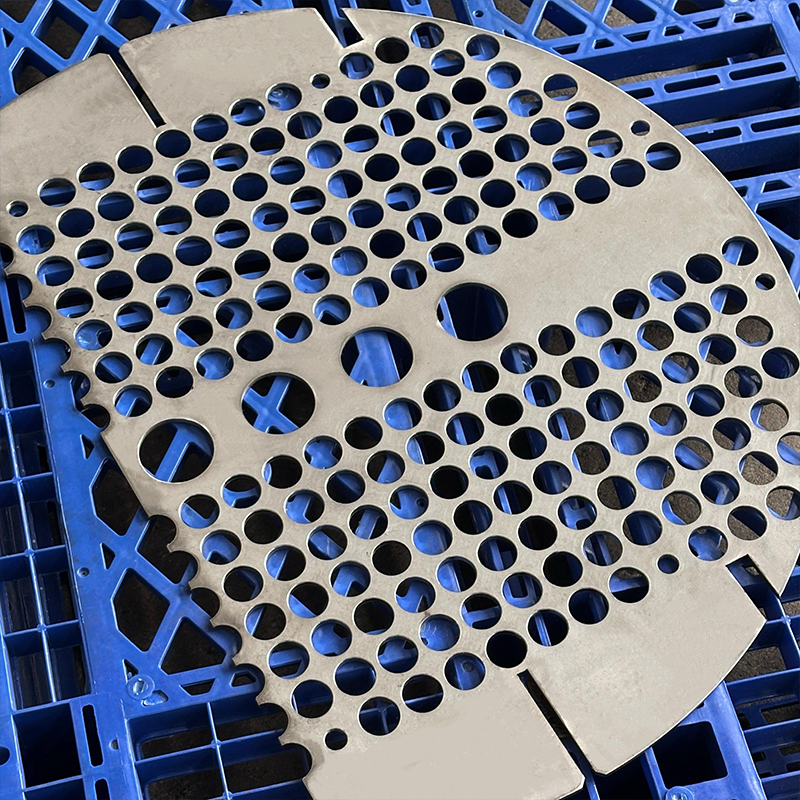
In this context, it is important to choose partners with expertise not only in the field of polymers, but also in the production of complex metal-intensive equipment. CompanyWuxi Kaisheng Electric Power and Petrochemical Equipment Co., Ltd.specializes in the development and production of just such solutions. Along with capacitive equipment, the company produces titanium shell-and-tube heat exchangers, ASME high-pressure units, corrugated tube bundles made of 316 stainless steel, C46400 marine brass, copper-nickel alloys and N06625 nickel. The company's portfolio also includes air coolers, waste heat boilers and various components such as tube sheets made of 321 steel and C70600 alloys.
Wuxi Kaisheng products are made from carbon, stainless, alloy steel, as well as titanium, copper and nickel alloys, which provide exceptional corrosion resistance and thermal efficiency even in the extreme conditions of oil refining, petrochemicals, seawater desalination and shipbuilding. Having international PED and ASME certifications confirms the company's ability to provide customized solutions of the highest quality to customers around the world. This integrated approach allows customers to cover the needs of the entire technological cycle from one reliable supplier, guaranteeing compatibility of materials and a single quality standard for all components of the line.
Frequently Asked Questions
Can one certificate be used for different tank sizes?
Yes, this is possible if the tanks are made of the same material (same grade PP), using the same technology and have an identical design, differing only in geometric dimensions (scaling). In this case, one test report describes the typical design, and the certificate lists all standard sizes. However, if the wall thickness, reinforcement method or welding type changes, separate testing will be required for the new modification.
Is certification required for tanks that do not directly touch the product (eg external cooling jacket)?
No, if contact with food is excluded by design. External elements, protective covers, support frames and cooling jackets, separated by a sealed wall, are not subject to TR CU 005/2011. They may require confirmation of safety under other regulations (for example, electrical safety or machine safety), but they do not require a sanitary and hygienic assessment. The main thing is to prove the tightness of the dividing partition.
What if the supplier claims that their material is FDA certified and that is enough?
The FDA (USA) certificate is an excellent indicator of quality, but does not legally replace EAEU documents in Russia, Belarus, Kazakhstan and other countries of the union. Customs authorities and Rospotrebnadzor accept only documents of a single standard (SGR or CU TR Declaration). The presence of the FDA can speed up the process of obtaining a Russian certificate (as proof of the safety of raw materials), but you will still have to issue a Russian document. Ignoring this requirement will result in a ban on sale or operation.
How quickly can I get a certificate urgently?
An accelerated procedure is only possible by optimizing sample logistics and priority scheduling in the laboratory, but the physical and chemical processes of the tests themselves cannot be shortened. The minimum realistic time frame for express registration of a declaration is 5-7 working days, provided that the samples are already in the laboratory and comply with the standards. Attempts to “buy a piece of paper” in 1 day without tests lead to receiving a false document, which is canceled during the first check, and the user becomes subject to criminal liability for forgery of documents.
Do plastic covers and hatches need to be certified separately?
If covers and hatches are supplied with the tank as a single item, they are included in the overall tank certification. If they are sold separately as spare parts or components, they are subject to independent conformity assessment, since they also come into contact with the product (vapor phase or when opened). The material of seals (gaskets) must also be tested for migration resistance.
Conclusion and next steps
Certifying polypropylene tanks for the food industry is a complex but manageable process that requires attention to detail at every stage, from raw material selection to final labeling. Properly executed documents not only protect against fines, but also open access to major tenders, cooperation with international brands and guarantee the safety of the end consumer. Mistakes at the design or procurement stage are costly, so taking a professional approach to compliance is an investment in business sustainability.
Don't let bureaucratic barriers slow down the development of your production. Proper preparation of technical documentation and choosing a reliable certification partner will save you months of work and millions of rubles in potential losses. Remember that food safety starts with the quality of each component in the line, and the polypropylene tank is one of the most important links in this chain.
If you are planning the purchase or production of capacitive equipment and want to ensure that your certification plan is correct, contact our experts. We will audit your documentation, help you choose the right scheme for confirming compliance and accompany the process until you receive the finished certificate.Contact us todayfor consultation on your project.
For more information on requirements for other types of industrial equipment, check out our sectionindustrial equipment certification, where current data on EAEU standards is collected.