Marketing strategies for PP products factories”
2026-08-22
- Why old marketing approaches no longer work for PP product factories
- Transformation of the buyer's portrait: from buyer to chief engineer
- Digital ecosystem of the plant: website as a lead qualification tool
- Content Marketing: Proving Expertise Through Education
- Working with reputation and social proof in B2B
- Integration of online and offline channels: synergy of exhibitions and digital
- Performance measurement: metrics that matter to the plant
- Conclusion: Moving from Product Seller to Development Partner
Why old marketing approaches no longer work for PP product factories
The market for polypropylene products in 2025-2026 is experiencing a tectonic shift, which is ignored by 80% of manufacturing enterprises.Marketing strategies for PP product factories, based solely on catalog displays and participation in general industry exhibitions, have ceased to generate profitable leads. In our practice, we observed how a plant with modern German equipment was idle by 40% due to the lack of a target flow of orders, while a competitor with an outdated fleet of machines loaded the lines to full capacity thanks to targeted work with design institutes. The problem is not the quality of the granulate or the accuracy of the extrusion, but a fundamental misunderstanding of who makes purchasing decisions today.
The situation is aggravated by the fact that the deal cycle in the B2B polymers sector has lengthened. While five years ago a purchasing manager could select a pipe or fitting supplier in two weeks by comparing prices in an Excel spreadsheet, the process now involves chief engineers, safety specialists and even CFOs assessing supply chain risks. The traditional “we make quality pipes” approach is no longer a unique selling proposition (USP). The buyer already knows that you make pipes; he cares whether you can guarantee delivery of 10,000 linear meters by a specific date in case of force majeure, whether you have new EAC certificates and how flexible your payment terms are.
This article does not offer abstract advice like “manage social media.” We will analyze specific, proven promotion mechanics for polypropylene manufacturers who operate in the current economic realities of Russia and the CIS countries. You will learn how to restructure your sales department to work with technical specialists, what data must be on your website to pass the filter of tender commissions, and why content marketing for a plant is not blog articles, but technical reports and savings calculations.
Transformation of the buyer's portrait: from buyer to chief engineer
The first rule of effectivemarketing strategy for a PP products plant— stop selling to “purchasing managers.” In the industrial polypropylene segment (pipes for the chemical industry, sheets for tanks, complex fittings), the final decision maker (DM) has shifted. The purchasing manager performs the function of an administrator: he collects commercial proposals, checks the availability of documents and coordinates logistics. But technical approval of the brand and specification is given by the chief engineer of the project or technologist of the enterprise.
In our practice, there was a case when a large plastics plant lost a contract for the supply of 50 tons of polypropylene sheets for the construction of wastewater treatment plants. The sales department spent a month convincing the buyer of a low price, sending samples, and offering discounts. However, the contract went to a competitor whose offer was 7% more expensive. The reason became clear after the fact: the chief engineer of the project required confirmation of the material’s resistance to a specific aggressive reagent at a temperature of 60°C for 10 years. The competitor provided a test report from an accredited laboratory and a calculation of the safety factor, and our client provided only a general GOST certificate of conformity. The purchaser had no authority to ignore the engineer's opinion.
This means your marketing content should speak the language of technical risks and engineering calculations, not price advantages. When you create a presentation or fill out the “About Products” section on a website, ask the question: “Will this text answer the technologist’s doubts?” Phrases like “high quality” and “reliable partner” are information noise for an engineer. He needs specifics: operating temperature range, MFR (melt index), UV resistance according to ISO 4892, food grade or chemical resistance.
The strategy should include the creation of specialized materials for technical audiences. These could be:
- Detailed chemical resistance charts:Interactive tables where the engineer can select the medium (acid, alkali, solvent) and temperature to see the recommendation for the grade of polypropylene (PP-H, PP-B, PP-R).
- Cases with numbers:Not just a photo of the object, but a description of the problem (“corrosion of steel pipes led to leaks after 3 years”) and the solution (“replacing pipes with PP increased the service life of the unit to 15 years, saving the maintenance budget by 200%”).
- Technical webinars:Online sessions are not about sales, but about solving installation problems, butt welding and electrofusion welding, and features of designing thermoplastic pipelines.
By shifting the focus of communication to a technical expert, you automatically increase trust on the part of the buyer, who sees you as a professional partner who can cover his rear with management. Action: Analyze the last 10 lost tenders and identify at what stage (technical or commercial) your proposal was rejected.
Digital ecosystem of the plant: website as a lead qualification tool
In 2026, the website of the manufacturer of polypropylene products serves as the first sales department and technical consultant at the same time. Most factories make a critical mistake by turning their web resources into digital brochures from the 90s: static pictures of pipes, a list of equipment and a “leave a request” feedback form. This approach kills conversion because it does not respond to the needs of the modern buyer, who conducts 70% of market research anonymously, without contacting managers.
Efficientmarketing strategy for PP product factoriesrequires the implementation of self-service functionality. A potential client visiting your resource is often looking for an answer to a specific technical question: “What pipe diameter should I choose for a flow rate of 50 m³/hour?” or “Do you have fittings for connecting PE and PP?” If he doesn't find an answer in 30 seconds, he goes to a competitor. Your website should contain hydraulic resistance calculators, unit configurators, CAD drawings for download and BIM models.
We saw an example when one of the market leaders implemented a simple calculator on the website for the weight of a coil of polypropylene pipe depending on the length and diameter. This tool has attracted thousands of visitors per month. Why? Because foremen and suppliers needed to quickly understand how many vehicles would be needed to transport the order. This useful tool became an entry point: the user received the value for free, left an email to receive the calculation result, and the sales department received a “warm” lead with specific need parameters.
The structure of an ideal factory website should include the following mandatory elements to increase trust and conversion:
- Section "Certificates and tests":Not just PDF scans, but a structured database. Possibility to download the CU TR declaration of conformity, fire certificate, hygienic report. For export to the EAEU countries, the presence of the “Honest SIGN” marking and detailed information about it are required.
- Knowledge Base (Wiki):Articles written by plant engineers. Topics: “Errors when welding polypropylene”, “The influence of ambient temperature on installation”, “Comparison of PP-RCT and conventional PP-R”. This demonstrates expertise (E-E-A-T) and helps with SEO for low-frequency queries.
- Production transparency:Video tours of workshops, demonstration of laboratory quality control. In B2B, buying is a risk. Video content that shows actual production, inventory, and product testing reduces the perceived risk of collaboration.
It is also important to adapt the site for mobile devices. Superintendents and engineers often search for information directly on site, using a smartphone. If your pipe size chart is not readable on a phone screen, you are losing a customer. Action: Audit your site from the perspective of a user looking for an urgent technical solution, and remove barriers to getting information without calling a manager.
Content Marketing: Proving Expertise Through Education
Content in the industrial sector should not be entertaining. Its sole purpose is to reduce buyer uncertainty and demonstrate the depth of the manufacturer’s competencies.Marketing strategies for PP product factories, built on educational content, create a long-term asset that lasts for years. Unlike contextual advertising, which stops bringing in customers immediately after the budget stops, high-quality technical materials continue to generate leads through organic search.
One of our clients, a manufacturer of industrial polypropylene tanks, launched a series of articles and videos about common mistakes when designing tanks for storing aggressive media. They analyzed real cases of destruction of competitors' tanks due to incorrect choice of wall thickness or lack of stiffeners. These materials did not directly advertise their products, but positioned the company as the leading expert in the industry. The result was that design institutes began to include the recommendations of this plant in their specifications at the design stage of facilities.
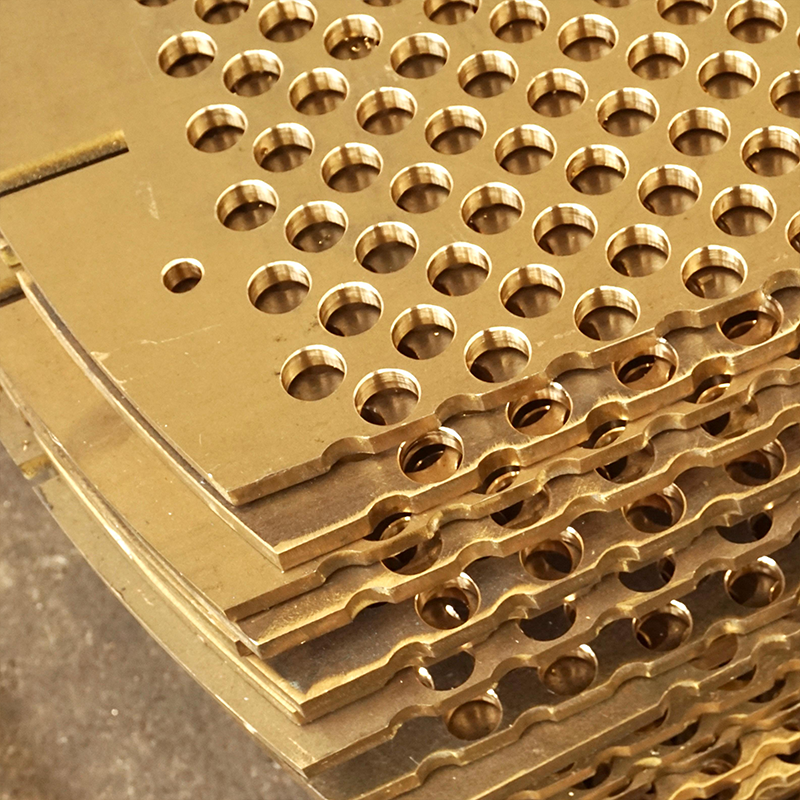
A similar approach to demonstrating technical depth is also typical for related high-tech industries. For example, a companyWuxi Kaisheng Electric Power and Petrochemical Equipment Co., Ltd., specializing in the production of heat exchangers and components for the oil and gas industry, builds its reputation not on general phrases, but on detailed documentation. Their customers in the petrochemical and water desalination sectors receive comprehensive data on the corrosion resistance of titanium shell-and-tube heat exchangers, the performance of N06625 alloys or C70600 copper-nickel compositions, as well as ASME and PED certifications. This level of transparency and technical specificity - from the description of corrugated tube bundles to the parameters of waste heat boilers - becomes the standard for how an industrial manufacturer should communicate with the chief engineer of the customer, be it a supplier of polymer pipes or complex heat exchange equipment.
Content formats that work best for polymer plants:
- Comparative reviews of materials:An honest analysis of when to use polypropylene (PP), and when it is better to choose polyethylene (PE) or PVC (PVC). Acknowledging the limitations of your material (e.g., “PP is not recommended for temperatures above 90°C under pressure”) is more credible than claiming versatility.
- Installation and operating instructions:Detailed guides with photos and videos. How to properly store pipes in a warehouse to avoid deformation? What current should be set when butt welding for a pipe with a diameter of 110 mm? Such materials become reference books for installers.
- R&D reports:Publication of the results of your own research. For example, tests on material aging under the influence of ultraviolet radiation or cyclic loads. This is proven by the presence of our own laboratory and quality control.
Distribution of such content should go through professional channels: industry portals (for example, Plastinfo, PlasticToday), specialized groups on Telegram and LinkedIn, mailing lists to the partner database. The key point is authorship. The materials must be signed by real plant employees: the chief technologist, the head of the quality control department. This enhances the “Experience” factor in the eyes of search engines and readers.
Don't be afraid to use complex language. Your audience is professionals. They will appreciate the terminology and depth of immersion. Simplifying the material to the level of the average person may, on the contrary, scare off a qualified customer who will doubt your competence. Action: Create an outline of 5 technical articles that answer the most common questions from your support engineers and publish them in the next month.
Working with reputation and social proof in B2B
In the B2B world, reputation is built not on “5-star” reviews, but on proven cases and recommendations from reputable partners. For a polypropylene products plant, the presence of federal-level facilities in its portfolio or cooperation with well-known engineering companies is a powerful signal of reliability. However, many manufacturers bashfully hide this information deep in the site or limit themselves to logos without context.
A proper reputation management strategy involves actively publishing detailed cases (practical examples). The structure of an ideal case for the industrial sector looks like this:
- Task:Description of the customer’s problem (for example, “it is necessary to replace a section of a heating main in dense urban areas without stopping traffic”).
- Solution:What specific products were used (pre-insulated PP pipes, specific fittings), what installation technologies were used.
- Process:Photos from the site, stages of work, difficulties overcome (work in winter, complex geology).
- Result in numbers:Implementation time, budget savings compared to alternative materials, predicted service life.
- Customer quote:Direct speech from the chief engineer or project director with confirmation of quality.
We encountered a situation where a plant refused to publish a case study on working with a large petrochemical holding company due to bureaucratic difficulties in obtaining permission. As a result, they missed out on the opportunity to attract dozens of other clients in related industries who were looking for a supplier with experience in harsh environments. The agreement to publish the case should be included in the contract at the start of work.
It is also important to work with independent ratings and industry awards. Participation in competitions such as “Best Products of Russia” or specialized exhibitions (MosBuild, Aquatherm) with subsequent coverage of victories increases authority. But even more important is the presence of large customers in the registers of qualified suppliers (Gazprom, Rosneft, Transneft). Mentioning the status “Supplier of OJSC Gazprom” on the main page of the site works more powerfully than any advertising.
Don't forget about working with negativity. In the industrial sector, complaints are inevitable. How a plant responds to a claim becomes part of its public history. An open description of the process of debriefing, admitting a mistake (if there was one) and paying compensation shows the maturity of the business. Secrecy gives rise to rumors of unreliability. Action: select the three most successful projects over the past year and prepare detailed cases for them with photos and savings figures for the customer.
Integration of online and offline channels: synergy of exhibitions and digital
Many plant managers pose the question bluntly: “What is more effective: an exhibition or the Internet?” The correct answer is: it is not an either/or choice, but a need for integration.Marketing strategies for PP product factoriesin 2026 require a seamless customer transition between the physical and digital worlds. The exhibition has ceased to be a place for making deals “here and now”; it has become a platform for establishing personal contacts and collecting leads, which are then “followed up” through digital channels.
A typical mistake is participating in an exhibition without digital preparation. The stand is decorated with samples of pipes, paper catalogs are handed out, which end up in the trash after an hour. The visitor leaves and the connection is lost. The modern approach involves the use of QR codes at the stand, leading to special landing pages with expanded information, video presentations of equipment and a meeting registration form. The paper catalog is replaced by access to an electronic documentation library, which opens after scanning a business card.
Before the exhibition, a targeted advertising and email marketing campaign should be carried out inviting specific individuals (chief engineers, buyers) to visit the stand. After the exhibition, it is critical not just to enter contacts into CRM, but to launch a series of personalized letters: “It was a pleasure to discuss the problem of corrosion at your facility with you, I am sending you the promised calculation of the resistance of our PP-H to your environment.”
Offline events are also evolving. Instead of huge expensive stands at all exhibitions in a row, it is more effective to hold your own technical seminars or open days at the factory. Inviting potential clients to production allows you to show scale, production culture and laboratory control live. This creates an effect of presence and trust that cannot be achieved through a monitor screen. One day at a factory for a group of 10 key clients can bring in more contracts than a week at a general exhibition.
Use trade show data for retargeting. Upload your database of visitors (if permitted by the event rules and personal data legislation) into Yandex and VK advertising accounts to “stalk” them with useful content on the Internet for a month after the event. Action: Develop a plan for participating in the next industry exhibition, including digital mechanics for collecting contacts and post-event communication.
Performance measurement: metrics that matter to the plant
The introduction of new marketing tools is pointless without a system for measuring results. The mistake of many production workers is focusing on “vanilla” metrics such as the number of likes on social networks or total traffic to the site. For a polypropylene products plant, these figures are secondary. The only important goals are cost per qualified lead (CPL) and lead-to-sale conversion (LTV).
The analytics system should track the customer’s journey from the first touch to the shipment of products. Which sources provide orders that actually buy? It often turns out that traffic from contextual advertising for the requests “buy pp pipe price” results in many calls from retail buyers or small resellers that are not of interest to a factory operating in bulk. At the same time, one article in an industry magazine or presentation at a conference can bring only 3 applications, but each of them will turn into a contract worth millions of rubles.
It is necessary to implement end-to-end analytics by linking advertising channels with the CRM system and data from the sales department. Managers should note the source of the application and the reason for the success or failure of the transaction. This is the only way to understand the real impact of marketing strategies. For example, if you see that clients who downloaded a technical report from the website close deals 3 times more often, it means that the budget needs to be reallocated to promoting this particular material.
An important indicator is also the share of repeat sales and recommendations. In the B2B sector, retaining a customer is cheaper than attracting a new one. If your marketing strategy is built on quality service and technical support, your Net Promoter Score (NPS) will increase, leading to organic growth through word of mouth in the professional community. Action: set up the required “Application Source” field in your CRM and start a monthly conversion analysis for each promotion channel, cutting off ineffective expenses.
Conclusion: Moving from Product Seller to Development Partner
The market for polypropylene products is becoming more mature and competitive. The era when it was possible to sell any volume of manufactured products simply due to the availability of goods in the warehouse is over. Today, the winning plants are those that build deep customer relationships based on expertise, transparency and the ability to solve complex engineering problems.Marketing strategies for PP product factoriesmust evolve from simply informing about product availability to creating a comprehensive customer support ecosystem.
Success lies in the combination of high production technologies and high communication standards. Your product is more than just a shaped piece of plastic. This is a guarantee of uninterrupted operation of your clients’ water supply, sewerage or chemical production systems for decades to come. Marketing must convey this responsibility and confidence in every contact: on a website, on a social network, at an exhibition and in a telephone conversation.
Start your transformation today. Overhaul your website, update your content, train your sales team in consultative selling techniques, and start measuring performance in contracts rather than calls. Investments in smart marketing in the industrial sector have a long-term multiplier effect, creating a sustainable competitive advantage that is difficult to copy.
Are you ready to reconsider the approach to promoting your products and bring your plant to a new level of orders?Contact us todayto audit your current marketing strategy and develop a customized growth plan. We'll help you turn your technical expertise into a powerful sales tool.