
Certificates of conformity for export of tanks”
2026-08-22
- Why will your cargo get stuck at the border without the correct documents?
- Key technical regulations for tank equipment
- Differences between Certification and Declaration
- Step-by-step algorithm for obtaining permits
- Common import mistakes and ways to avoid them
- The role of EAC marking and product traceability
- Specifics of working with different types of tanks
- How to check the authenticity of a certificate before paying
- Experience of leading manufacturers: the example of Wuxi Kaisheng LLC
- Conclusion and strategy for successful export
Why will your cargo get stuck at the border without the correct documents?
The lack of an up-to-date certificate of conformity for the export of tanks is not just a bureaucratic delay, it is a guaranteed demurrage of the cargo at customs for a period of two weeks to several months and the risk of confiscation of the consignment. In 2026, the customs authorities of the EAEU countries (Russia, Belarus, Kazakhstan) and neighboring states will tighten control over the import of capacitive equipment, requiring not just the presence of paper, but verification of its authenticity through the RosAccreditation registers. We regularly encounter a situation where Chinese or Turkish suppliers send clients “certificates”, which in fact turn out to be ordinary factory declarations without legal force in the importer’s territory. The result is predictable: the cargo sits in a temporary storage warehouse, accumulating huge fines for over-storage, while the buyer frantically searches for a certification body willing to carry out retroactive testing. To avoid this financial trap, it is necessary to clearly understand the difference between types of permits and the requirements of specific technical regulations.
Key technical regulations for tank equipment
The export of tanks to the CIS countries and the Eurasian Economic Union is regulated by a strict system of technical regulations, ignoring which makes the legal commissioning of equipment impossible. The main document defining the safety of your products is TR CU 032/2013 “On the safety of equipment operating under excess pressure.” This regulation covers the vast majority of industrial tanks, including vertical steel tanks (VST), horizontal tanks (HTS) and underground storage facilities, if the operating pressure exceeds 0.05 MPa. However, many exporters make the critical mistake of thinking that this document alone is enough. In reality, if the tank is intended for storing petroleum products, chemically active substances or food liquids, additional requirements of TR CU 005/2011 (on packaging safety) or specific sanitary standards come into force. For example, when supplying containers for the food industry, a state registration certificate (SGR) is required, confirming the migration of harmful substances from the wall material into the product. Ignoring this nuance leads to the fact that even with a TR TS 032 certificate, you will not be able to obtain permission from Rospotrebnadzor to use the equipment for its intended purpose.
In our practice, there was a case when a large manufacturing plant sent a batch of acid storage tanks, having issued only a pressure declaration. At the border, the cargo was blocked because the sealing material did not have confirmation of chemical resistance according to the safety data sheet of the substance. The client lost three months and 15% of the contract value for recertification of sealing elements. It is important to understand: the compliance confirmation scheme depends not only on the type of vessel, but also on the group of liquid, the temperature of the medium and the volume of the container. For equipment of the first hazard category (high pressure, toxic media), a certification procedure is required with the participation of an accredited laboratory and analysis of the production state. For less hazardous objects, it is permissible for the manufacturer to accept the declaration on the basis of his own evidence, but this requires the availability of test reports from recognized laboratories. Do not try to save money at the stage of choosing a scheme - an error in classification will lead to cancellation of the document at the first inspection by supervisory authorities.
To successfully complete the procedure, you will need to prepare a comprehensive set of technical documentation, which will become the foundation for issuing a permit. Customs brokers and certification bodies require not just drawings, but a complete product passport with strength calculations, data on welding materials and results of non-destructive testing (ultrasonic testing, radiography). Particular attention is paid to labeling: each tank must have a plate indicating the certificate number, date of manufacture and EAC circulation mark. The absence of this plate or the discrepancy between the data on it and the data in the certificate is grounds for refusal to release the goods. We recommend requesting a draft marking from your manufacturer in advance and checking it with the requirements of GOST 34347-2017 to eliminate the human factor. Remember that the certificate of conformity for the export of tanks is a living document tied to a specific series or batch, and any changes to the design require changes to the original documentation.
Differences between Certification and Declaration
Many importers confuse the two as interchangeable terms, which is a fundamental mistake with serious legal consequences. A certificate of conformity is issued exclusively by an accredited certification body after full testing of samples in the laboratory and, in some cases, analysis of the state of production. This document guarantees a high level of trust on the part of supervisory authorities and is often required to participate in government tenders or work with hazardous production facilities (HIF). The declaration of conformity, on the other hand, is accepted by the applicant (manufacturer or importer) on the basis of its own evidence, although tests must still be carried out in an accredited laboratory. Legal responsibility for the accuracy of the data in the declaration lies entirely with the applicant, while the issuing authority is partially responsible for the certificate. If you plan to supply standard low pressure tanks for commercial use, a declaration may be sufficient. But for complex engineering structures operating under high pressure or with aggressive media, the market requires a certificate.
The process of obtaining these documents differs radically in terms of time and cost. Registration of a declaration usually takes from 5 to 10 working days if ready-made test reports are available, while full certification with an expert visiting the plant can take 3-4 weeks. The cost also varies: declaration is cheaper, but the risks during verification are higher. If discrepancies are identified in the declared products, penalties can reach millions of rubles, plus confiscation of the batch. The certificate provides a certain amount of insurance: if questions arise, you have an independent expert’s opinion confirming safety. When choosing a route, it is important to consider the batch size. For a one-time delivery (batch), you can issue a declaration or a contract certificate, which is faster and cheaper. For mass production and regular export, it is more advisable to obtain a series certificate for a period of up to 5 years, which will allow you to import products without additional procedures for each shipment.
Below is a comparison table to help you choose the right path to compliance depending on the characteristics of your equipment:
| Comparison criterion | Certificate of Conformity (TR TS) | Declaration of Conformity (TR CU) |
|---|---|---|
| Who issues | Accredited certification body | The applicant (manufacturer or importer) registers with the authority |
| Responsibility | Solidary (body + applicant) | Entirely on the applicant |
| Tests | Mandatory in an accredited laboratory + production analysis (often) | Mandatory in an accredited laboratory (based on your evidence) |
| Validity period | Up to 5 years (per series), per batch - without time limit (but valid as long as the batch exists) | Up to 5 years (per series), per batch - unlimited for a given batch |
| Cost | Above (includes the work of experts, visiting the plant) | Below (main costs - laboratory) |
| Application | High-risk equipment, government procurement, hazardous production facilities | Standard equipment, mass segment |
The choice between these formats should be based on a thorough analysis of the HS code and the requirements of specific technical regulations. You cannot arbitrarily choose declaration instead of certification if the regulations directly indicate that a certificate is mandatory for a given product group. An attempt to substitute concepts will result in refusal of customs clearance. If you are in doubt about the classification of your tank, it is better to play it safe and order a preliminary examination from the certification body - this service is inexpensive, but will save you enormous amounts of money on logistics and fines.
Step-by-step algorithm for obtaining permits
The process of legalizing the export of tanks requires a strict sequence of actions, violation of which leads to the return of documents for revision and loss of time. The first step is to identify the products and determine the applicable technical regulations. You need to know exactly the HS code of your tank, since the list of required standards depends on it. An error at this stage is fatal: if you start processing documents using the wrong code, the entire package will be invalid. The second step is the selection of a conformity assessment scheme (for example, 1C, 3C, 4D), which depends on whether the production is serial or a single batch, as well as on the degree of risk of the equipment. At this stage, the question is decided whether an inspector needs to visit the manufacturing plant to audit production.
- Preparation of technical documentation.This is the most time-consuming stage. You will need: detailed general drawings, strength calculations (for pressure vessels), product data sheet, instruction manual, safety justification. All documents must be translated into Russian and certified by a notary or the seal of the applicant. Pay special attention to the description of materials: steel grades, characteristics of welding wires, data on anti-corrosion coating must coincide with reality. Any discrepancy between the drawing and the actual product identified during random inspection will cause refusal.
- Sampling and laboratory testing.According to the chosen scheme, a representative of the certification body selects samples of products or draws up a sampling report from the batch. Samples are sent to an accredited testing laboratory. Test reports are the main evidence. The laboratory checks tightness, strength of seams, wall thickness, quality of anti-corrosion protection and compliance of geometric dimensions with the declared ones. Important: the laboratory must have an accreditation certificate for exactly those test methods that are required for your type of tank.
- Analysis of production status (if required).For certification schemes for mass production, experts travel to the plant. They check the presence of a quality management system (ISO 9001), qualifications of welders, calibration of measuring instruments and assembly technology. In our practice, we have seen cases where excellent tanks did not receive a certificate due to the lack of metal incoming inspection logs or overdue checks of pressure gauges in the workshop. Preparation for an audit should be as thorough as the preparation of the product itself.
- Examination of documents and registration.After receiving positive test reports and a production analysis report (if any), the certification body expert conducts a final examination of the entire package of documents. If everything is in order, the certificate form or declaration is registered in the unified register of Rosakcreditation. Only after making an entry in the register, the document is considered valid. A printout from the registry website with the entry number has the same legal force as the paper original.
- Labeling and customs clearance.Having received the registration number, you are required to apply the EAC circulation mark to each product and to the accompanying documentation. Without this sign, customs will not release the cargo. Next, a package of documents (contract, invoice, packing list, certificate/declaration, product passport) is transferred to the customs broker for processing of the declaration of goods (DT).
A common mistake in step 2 is trying to use old test reports or test results from laboratories that have lost accreditation. Always check the laboratory's registry status before submitting samples. Another pitfall is the validity period of protocols. Some types of tests have a limited shelf life of the results (usually 1 year). If a lot of time passes between the test and submission, you may be forced to redo the tests.
Common import mistakes and ways to avoid them
One of the most common problems is the discrepancy between the actual weight and dimensions of the tank and the data specified in the certificate and invoice. Customs posts often carry out weight controls, and if the discrepancy exceeds the permissible 5-10%, an in-depth inspection begins. This may lead to suspicion of false declaration in order to evade customs duties. The solution is simple: before shipment, carry out final weighing and measurement of finished products and enter accurate data in all accompanying documents. It’s better to spend a day redoing papers than a week dealing with the customs post.
The second critical mistake is the lack of translation of technical documentation into Russian or poor-quality translation. The tank passport, installation manual and labels must be understandable to Russian operating personnel and Rostechnadzor inspectors. The use of machine translation without editing often leads to distortion of technical terms, which is interpreted as a violation of the requirements of the CU TR. We strongly recommend ordering technical translation from specialized bureaus with experience in working with industrial documentation, and having it certified by the translator’s signature.
The third problem is attempts to import used or refurbished equipment as new. Customs authorities have learned to identify traces of use: scratches on flanges, traces of fastening on the foundation, abrasions of insulation. The importation of used pressure equipment requires a separate, much more complex procedure for assessing residual life and safety. Attempting to pass off an old tank as a new one will result in confiscation and legal action. If you plan to supply refurbished containers, honestly declare their status and prepare the appropriate package of documents for assessing the safety of used equipment.
And finally, ignoring the requirements for packaging and preservation. Tanks often arrive with damaged paintwork due to poor fixation in the container or hold of the ship. Although this does not immediately affect functionality, the acceptance committee at the buyer's plant may reject the batch due to loss of presentation, which will result in complaints and returns. Make sure that the cargo securing scheme in the container is developed by professionals and complies with the standards of sea transportation, and that the conservation materials comply with the climatic conditions of the route.
The role of EAC marking and product traceability
The EAC (Eurasian Conformity) circulation mark is a visual confirmation that your products have passed all the necessary conformity assessment procedures and are safe for use on the market of the Eurasian Economic Union. The application of this mark is regulated by strict rules: it must be clear, contrasting, continuous and located on the product itself (usually on a plate) and in the accompanying documentation. The size of the sign is not strictly regulated, but it must be clearly visible. It is important to remember that the EAC mark can only be appliedafterobtaining a registered certificate or declaration. Applying a sign before completing the procedure is a violation and entails administrative liability.
Since 2024-2025, Russia has been actively implementing a system of digital labeling and traceability of goods (“Chestny ZNAK” and analogues for industrial products). Although mass marking of Data Matrix codes has not yet become total for large industrial tanks, the trend towards digitalization is obvious. In the future, each certificate will be linked to a digital twin of the product, containing the entire history of its production, testing and movement. Exporters should now think about implementing accounting systems that allow them to generate unique identifiers for each unit of production. This will simplify customs clearance and interaction with regulatory authorities, since the inspector will be able to read the code and instantly see the entire history of the tank in the system.
The absence of labeling or its incorrect application is grounds for prohibiting the release of products into circulation. Customs officers may require a sample of the markings to be provided prior to inspection. If there is no plate on the tank with the serial number, date of manufacture and EAC mark, the cargo will most likely be placed in a temporary storage warehouse until the violations are eliminated. In some cases, if on-site marking is not possible (for example, the tank has already been painted and installed), a decision from the certification body on the procedure for marking is required. But it is better not to lead to such situations and provide a place for the sign at the design stage.
Specifics of working with different types of tanks
Certification requirements vary greatly depending on the type of media being stored and the design of the container. Foroil and petroleum products tanks (RVS, RGS)The key aspect is fire safety and tightness. Here, special attention is paid to the quality of welds and the presence of spill prevention systems. Additional approval from the Ministry of Emergency Situations is often required, especially if the object is classified as particularly dangerous. When exporting such containers, a fire safety certificate is required.
Forfood tanks(containers for milk, wine, water) the main priority is hygienic safety. Materials in contact with the product (steel AISI 304, 316, internal coatings) must have state registration certificates (SGR). The surface inside the tank must be polished to a certain roughness class to prevent the growth of bacteria. Any burrs or unevenness of internal welds are unacceptable. During certification, microbiological washes and tests for migration of chemicals are carried out.
Chemical tanksand containers for acids require detailed justification of the chemical resistance of materials. The documentation must clearly indicate which reagents and at what concentrations and temperatures the tank can operate. Universal formulations “for chemical media” will not work here—we need specifics. An error in the selection of sealing or coating material can lead to an accident, so experts check that the materials comply with the safety data sheet of the chemical product.
When working with cryogenic tanks or containers for liquefied gases, the requirements for thermal insulation and operation at extremely low temperatures are added. Here, the low temperature properties of the metal (toughness) are critical to avoid brittle fracture. Testing includes thermal cycling and vacuum insulation performance testing.
How to check the authenticity of a certificate before paying
The market for certification services is saturated with offers from fly-by-night companies selling “fake” documents. Purchasing such a certificate is a direct road to problems with the law. How to protect yourself? The first and main way is to check in the official register of the Russian Accreditation Service (fsa.gov.ru). Enter the certificate or declarant number in the search bar. If the document is real, you will see complete information: product name, manufacturer, certification body, validity period and status (valid/suspended/cancelled). If there is no entry in the registry, the document is fake, no matter how beautiful it looks on paper with stamps.
The second sign of reliability is that the certification body has a valid accreditation certificate for exactly the group of products that you are importing. The scope of accreditation is a list of OKPD2 codes and technical regulations for which the organization has the right to issue documents. You can also check the scope of accreditation on the website of the Russian Accreditation Agency. If a company offers to certify tanks, and its certificate only indicates “household appliances” or “clothing”, such a certificate will be canceled upon the first inspection.
The third marker is adequate timing and price. Registration of a real certificate with tests cannot cost 5 thousand rubles and be done in one day. Laboratory testing itself takes time and costs money. If you are offered a “certificate in an hour without samples”, this is 100% scam. Such documents are easily identified by customs, since they are not automatically checked against databases. Saving on legal certification will result in the loss of the entire cargo and reputation.
Experience of leading manufacturers: the example of Wuxi Kaisheng LLC
Successful entry into the EAEU market is impossible without a partnership with a manufacturer, who initially builds compliance with international standards into the process of developing and manufacturing equipment. A striking example of this approach is the companyWuxi Kaisheng Electric Power and Petrochemical Equipment Co.,Ltd" Specializing in creating high-tech solutions for the oil, gas and energy industries, the company demonstrates the importance of combining advanced technology with rigorous compliance.
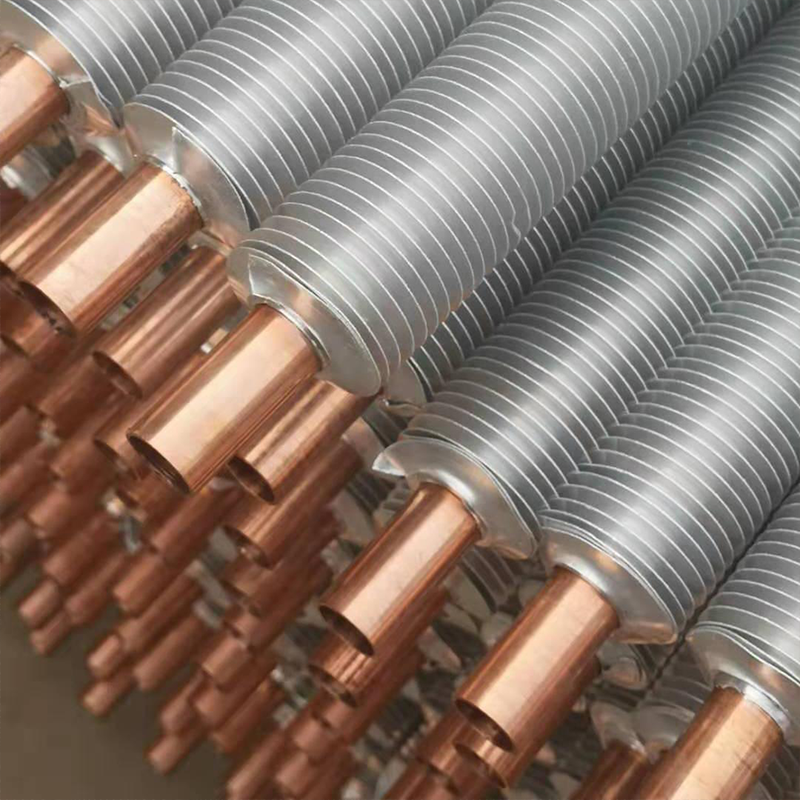
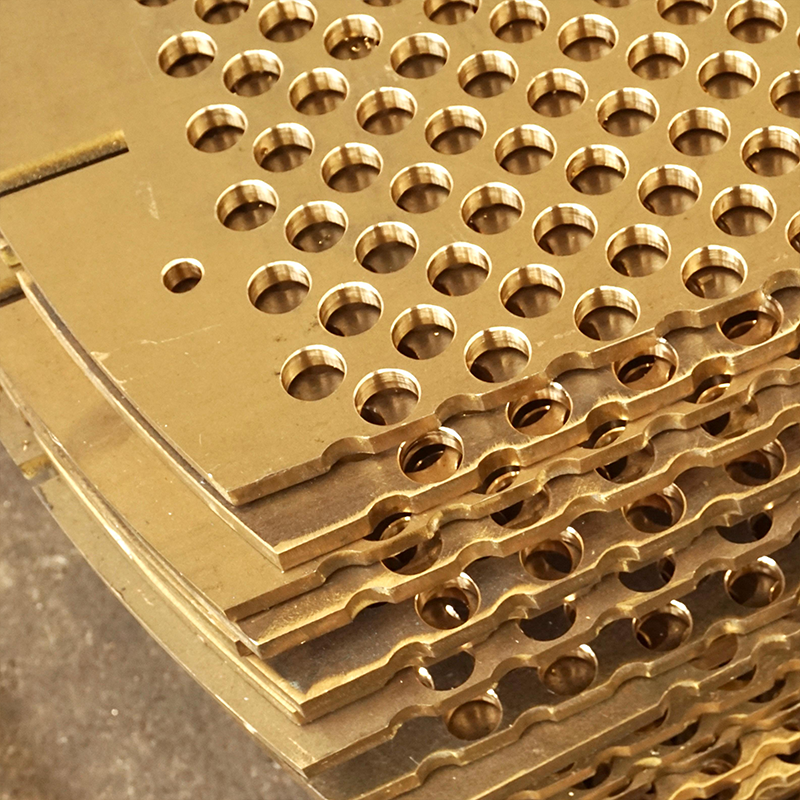
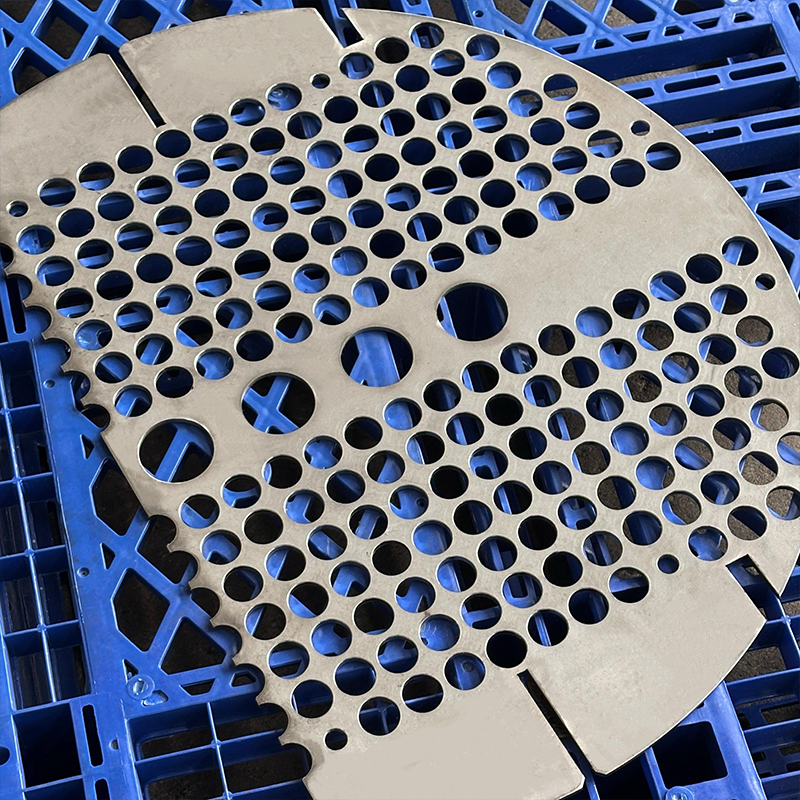
The company's portfolio includes a wide range of mission-critical equipment, from titanium shell-and-tube heat exchangers and ASME high-pressure vessels to 316 stainless steel corrugated tube bundles, C46400 marine brass and N06625 nickel alloys. It also produces air coolers, recovery boilers, and various components such as tubesheets made from 321 steel and C70600 copper-nickel alloys. Products are manufactured from carbon, stainless, alloy steel, titanium, copper and nickel alloys to provide exceptional corrosion resistance and the ability to operate under extreme pressures and temperatures.
A key advantage for importers is that Wuxi Kaisheng equipment is already certified to strict international PED (Pressure Equipment Directive) and ASME standards. This indicates that the plant has a well-functioning quality control system, the necessary documentation and experience in passing complex audits. Such a database greatly simplifies the procedure for obtaining additional permits for the EAEU market, since the main technical parameters and test reports have already been confirmed at the highest level. The company provides customized solutions and stable equipment to customers around the world in the petroleum refining, chemical, water desalination and shipbuilding industries. Choosing a partner with a similar reputation minimizes the risks of denial of certification and speeds up the introduction of products to the market.
Conclusion and strategy for successful export
Successful export of tanks to the CIS countries is not built on luck, but on scrupulous compliance with regulatory requirements and transparency of processes. Certificates of conformity are not just pieces of paper for customs, they are a risk management tool that protects your investment and the reputation of your partner. Investments in high-quality preparation of documentation, honest laboratory tests and work with accredited bodies pay off in the absence of downtime at the border and long-term customer trust. The market is becoming more and more transparent, and attempts to bypass the system are becoming economically unprofitable.
If you are planning large-scale shipments or are faced with difficulties in classifying your equipment, do not risk acting blindly. Professional support at the pre-export stage allows you to identify bottlenecks in advance and develop an optimal strategy for confirming compliance. We are ready to help you understand the nuances of technical regulations and select reliable partners for certification so that your cargo arrives at the recipient on time and at no extra cost.
Contact us todayfor consultation on certification of your products and obtaining an individual action plan for entering the EAEU market. Our experts will help you avoid common mistakes and ensure smooth passage of your tanks through customs control.