
Training of personnel in welding of polyethylene pipes”
2026-08-27
- Training personnel in welding polyethylene pipes: why standard courses do not work
- Physiology of the process: what happens inside the seam and where the errors lie
- Butt welding: step-by-step algorithm and typical pitfalls for beginners
- Electrofusion welding: automation does not replace the human factor
- Certification and regulatory framework: GOST, DVS and international standards
- Practical assessment: how we test skills in the field
- An integrated approach to reliability: from pipe welding to high-tech equipment
- Frequently Asked Questions
- Conclusion: investment in personnel pays off in system reliability
Training personnel in welding polyethylene pipes: why standard courses do not work
In our practice, covering more than 15 years of working with pipeline systems in the harsh climatic conditions of Russia and the CIS, we have identified a critical problem: up to 60% of emergency depressurization on polyethylene networks occur not due to defective material, but due to operator errors during butt or electrofusion welding.Personnel training in welding polyethylene pipesis not a formality for obtaining approval, but the only way to ensure that the connection will withstand the design pressure of 10-16 bar for 50 years of operation. We have seen cases where qualified metal welders, retrained for HDPE in two days without extensive practice, created “cold welds” that failed during the first hydraulic test. This article is based on real-life experience implementing training programs on production sites and provides specific steps, parameters and caveats that will save your budget from re-installing utility lines.
If you are a project manager or chief engineer, your task is not just to send people to courses, but to implement a competency monitoring system. Below we will look at why theory without testing on specific types of devices (especially in the diameter ranges DN 63–DN 315 and DN 400+) leads to disastrous results, and how to build a learning process that actually works.
Physiology of the process: what happens inside the seam and where the errors lie
Understanding the physics of polyethylene melting is the foundation, without which any training turns into profanity. Unlike steel welding, where the operator sees the melt pool and can visually assess the quality of the penetration, the process of joining polyethylene (PE 80 and PE 100) occurs in a closed volume between the heating mirror and the ends of the pipes. The operator acts blindly, relying solely on the readings of pressure gauges, timers and compliance with temperature conditions. Right heretraining of personnel in welding of polyethylene pipesshould focus on a sense of the material and an understanding of polymer rheology.
When the ends of the pipe are heated to a temperature of 200–220°C, the polymer goes into a viscous flow state. The key parameter here is the holding time under pressure. If the operator releases the pressure too early, the molecular chains do not have time to diffuse into each other, forming a weak interface. If the pipe is kept under pressure after cooling, residual stresses arise, which can lead to cracking of the seam after several months of operation. In our practice, there was a case on a high-pressure gas pipeline in Siberia, where a team that had undergone accelerated training exceeded the cooling time by only 15%. The result was brittle failure of three joints at 8 bar pressure during system startup. The damage amounted to millions of rubles, and the cause was found only after opening the trench and laboratory analysis of the fracture.
The training program should include an in-depth analysis of the following physical aspects:
- Thermal conductivity of PE:Polyethylene does not conduct heat well. This means that heating the massive walls of large diameter pipes requires strict adherence to the heating time. An error in timing even by 10 seconds for a pipe with a diameter of 630 mm can lead to underheating of the inner surface of the wall.
- Material shrinkage:When cooled, polyethylene shrinks significantly. Training should teach personnel to compensate for this process by correct pressure profiling during the cooling phase to avoid the formation of depressions in the flash.
- Environmental influence:Welding at air temperatures below +5°C or above +40°C requires adjustment of technological maps. Standard device settings obtained in summer will lead to defects in winter. We insist that every welder be able to manually recalculate the heating time depending on the current air temperature and wind.
Remember: a good HDPE welder knows that he is not welding a pipe, but molecular bonds. Every step of the process, from trimming to complete cooling, is critical. At the next stage of training, we move from theory to strict regulation of actions.
Butt welding: step-by-step algorithm and typical pitfalls for beginners
Butt welding remains the most common method of joining pipes with a diameter of 50 mm and above. However, the simplicity of the equipment is deceptive.Personnel training in welding polyethylene pipesThe joining method should be built around strict adherence to seven stages, each of which has its own pitfalls. We have developed a checklist that we use to evaluate our employees and recommend it as the basis for any training program.
- Preparation and alignment.The pipes must be secured in the clamps of the apparatus so that the misalignment of the ends does not exceed 10% of the wall thickness. A common mistake made by beginners is insufficiently cleaning the clamps from dirt and snow, which leads to the pipe slipping when the settling pressure is created. As a result of the displacement of the weld axis, a bending moment occurs, reducing the strength of the joint by 30–40%. Before starting work, always check that the grip jaws are clean and that the guides are lubricated.
- Trimming.The goal of this stage is to obtain perfectly parallel ends with minimal clearance. The depth of the chips removed must be at least 0.5–1 mm to remove the oxidized layer. Critical error: using dull knives. A dull knife does not cut, but crushes polyethylene, creating microcracks and heating the material by friction. We require blades to be replaced after every 50 to 70 trim cycles, regardless of their appearance. After trimming, the gap between the ends should not exceed 0.3 mm for pipes up to DN 110 and 0.5 mm for larger diameters.
- Heating and burr formation.The heating element (mirror) is installed between the ends. The pressure is applied smoothly until a primary burr appears with a height of 0.5–1 mm. It is important here not to overheat the end. The holding time under initial pressure depends on the SDR (standard dimensional ratio) of the pipe. Error: attempt to speed up the process by increasing the mirror temperature above 225°C. This leads to degradation of the polymer and the appearance of bubbles in the seam. The temperature should be controlled by a built-in thermometer with an error of no more than ±3°C.
- Relieving pressure and removing the mirror.After the formation of the primary flash, the pressure is reduced to zero, and the mirror is quickly removed. The time for this operation (“transition time”) is strictly standardized (usually 4–6 seconds depending on the diameter). Exceeding this time leads to the formation of an oxide film on the hot ends, which interferes with diffusion. This is one of the most common causes of hidden defects, which cannot be detected by visual inspection.
- Upsetting (welding).The ends are brought together at a given speed, and a working upsetting pressure is created. At this moment, a secondary flash is formed. It is important to ensure smooth running of the hydraulic cylinder. Jerks lead to uneven distribution of the melt. The height and width of the secondary burr must correspond to tables DVS 2207-1 or GOST 33852. Too small a burr indicates insufficient pressure or overheating, too large indicates excessive pressure.
- Pressure aging.The pressure is maintained during the entire cooling time. Relieving pressure before the seam has cooled below 40°C is strictly prohibited. Crystallization processes are still ongoing inside the seam. Early release of pressure will cause the seam to open due to thermoelastic stresses. The cooling time is calculated using a formula depending on the wall thickness. For an SDR 11 pipe with a diameter of 225 mm this is about 25–30 minutes.
- Visual inspection and marking.After cooling, the burr is inspected. It should be symmetrical, without pores, inclusions or color changes. The burr width must be within acceptable limits. Only after a successful inspection is the joint marked with a welder’s mark indicating the date and number of the joint. Lack of labeling makes it impossible to track liability in the future.
During practical exercises, we specifically simulate emergency situations: a power outage in the middle of a cycle, a hydraulic breakdown, a sharp gust of wind. Personnel must know the algorithm of actions in an emergency situation. For example, if the mirror is removed and the joining of pipes is delayed for more than 10 seconds, the joint is subject to unconditional rejection and rework. Attempts to “save” such a junction are unacceptable.
Electrofusion welding: automation does not replace the human factor
Many people mistakenly believe that electrofusion welding completely eliminates the influence of operator qualifications, since the process is controlled by the device’s microprocessor. This is a dangerous misconception. Yes, the device controls the time and heating current, but preparing the connection is 90% dependent on human hands.Personnel training in welding polyethylene pipesWhen using electrofusion joints, attention should be paid to surface preparation and fixation, since these are the stages that remain outside the scope of automation.
The main problem with electrofusion joints is poor preparation of the pipe surface inside the coupling. An oxide layer, dirt, moisture or grease stains prevent fusion. In our practice, we have encountered cases of leaks at gas inlets, caused by the fact that the installer was too lazy to remove the oxide layer with a scraper to the entire depth of the spirals. Training should instill the skill of mandatory scraping (scratching) the surface of a pipe with special scrapers or attachments on a drill until a matte appearance appears along the entire length of the stripping. The depth of layer removal should be 0.1–0.2 mm.
The second critical aspect is the fixation of the pipes. When heated, polyethylene expands. If the pipes are not firmly secured in the positioners, they will begin to be squeezed out of the coupling, exposing the heating coil. This leads to local overheating and burnout of the coupling body. We require the use of specialized clamps or wedges that ensure the unit remains stationary during the entire welding cycle and subsequent cooling (at least 10–15 minutes after the end of the machine’s operation).
It is also necessary to train staff to read barcodes. Modern couplings have an individual welding parameter map encoded in a barcode. Manual entry of parameters (time and voltage) is allowed only in extreme cases and requires double checking. An error in one heating time digit can result in underheating or overheating. It is also important to consider the ambient temperature. Most modern devices have a temperature sensor, but if it is placed far from the welding site (for example, lying in the sun while the coupling is in the shade), the correction will be incorrect. The operator must understand the principle of temperature compensation and, if necessary, make manual adjustments according to the fitting manufacturer's chart.
Special attention should be paid to quality control. Visually checking the quality of an electrofusion weld is more difficult than a butt weld. The output indicators (plastic pins) should extend a certain amount. If the indicator does not come out or comes out unevenly, this is a sign of a defect. However, the absence of an indication does not always guarantee tightness. Therefore, in the training program for critical facilities (gas, chemistry), we include a module on non-destructive testing, including ultrasonic diagnostics of finished components.
Certification and regulatory framework: GOST, DVS and international standards
The legitimacy of the installation of polyethylene pipelines is confirmed by the presence of appropriate certificates among the personnel. In Russia and the EAEU countries, the admission system is regulated by a number of regulatory documents, knowledge of which is a mandatory part of the course.Personnel training in welding polyethylene pipescannot be considered complete without explaining the requirements of GOST R 58117-2018, SP 62.13330 (for gas distribution systems) and international standards DVS 2207.
According to current rules, welders must undergo initial training before being allowed to work, periodic certification at least once a year, and extraordinary certification when technology or equipment changes. The welder's certificate must contain information about the types of joints mastered (butt, socket, electrofusion), diameter ranges (for example, up to 160 mm, up to 315 mm, over 315 mm) and types of materials (PE 80, PE 100, PE 100-RC).
It is important to note the differences in approaches. The European standard DVS 2207-1 regulates in detail welding parameters for each diameter and SDR, being a kind of “bible” for technologists. Russian GOST 33852 is harmonized with European standards, but has its own characteristics in terms of acceptance control. For example, requirements for the shape and size of the burr may vary slightly. The training program should provide a comparative analysis of these standards, especially if the company plans to work on sites with a foreign investor or export products.
We also pay attention to industrial safety requirements. Welding work on existing gas pipelines or in security zones requires the issuance of a work permit and compliance with special fire safety measures. Although polyethylene does not burn with an open flame like wood, molten polymer upon contact with a spark can ignite, and the smoke from burning PE is toxic. Personnel must know the fire hazard classes of the work area and the rules for using personal protective equipment (heat-resistant gloves, safety glasses, protective clothing made of non-flammable materials).
To confirm qualifications, we recommend conducting certification in the presence of an independent expert or a representative of a supervisory authority (Rostekhnadzor, Gosgaznadzor). The practical examination must involve welding test specimens, which are then subjected to mechanical tests (tensile and flattening) in the laboratory. Only successful completion of these tests gives the right to access to real objects.
Practical assessment: how we test skills in the field
The theoretical exam is just a filter for knowledge of terminology. The true level of skill is revealed only in the field. Our qualification methodology simulates real-life work situations, often creating artificial challenges to test a welder's resilience and adaptability.Personnel training in welding polyethylene pipesends with a series of practical tests, the results of which are entered into the employee’s personal record.
The first stage of the test is “Blind Welding”. The candidate is given a pipe and apparatus, but a technical card with parameters (heating time, pressure, cooling time) is not provided. The welder must independently determine the SDR of the pipe, measure the wall thickness with a caliper, calculate the parameters from memory or using reference tables, and make the joint. This test weeds out those who are used to working according to a template without understanding the essence of the processes. An error in choosing a mode of more than 10% leads to immediate failure.
The second stage is working in limited conditions. Welding is carried out in a trench 1.5 meters deep, in a tight space, possibly in water or mud. The ability to organize a workplace, protect the apparatus from soil getting into the hydraulics, and correctly install positioners in difficult conditions is tested. We evaluate not only the quality of the seam, but also the production culture. Dirty tools, abandoned pipe cuttings, lack of fencing around the work area - all this affects the final assessment.
The third stage is defect detection. The candidate is presented with five samples of joints made with various technology violations (underheating, overheating, displacement, contamination, premature pressure release). The welder’s task is to visually identify the defect, suggest the cause of its occurrence and propose a method of elimination or a verdict on the defect. This test tests analytical skills and experience. The ability to see a microcrack or irregular burr profile distinguishes a professional from a craftsman.
The final chord is destructive testing of samples welded by the candidate. The samples are cut and subjected to tensile testing until they break. The rupture point should be in the body of the pipe, and not in the seam. If the rupture occurs along a seam or brittle fracture is observed, the candidate is not certified. We do not make compromises: the cost of a mistake in the pipeline is too high.
An integrated approach to reliability: from pipe welding to high-tech equipment
The reliability of industrial communications is not limited only to the quality of welded joints of polyethylene pipes. It depends on the coordinated operation of the entire system, including heat exchange units, tanks and specialized equipment operating under extreme conditions of pressure and temperature. This is where choosing a supplier who can ensure that products meet strict international standards is important.
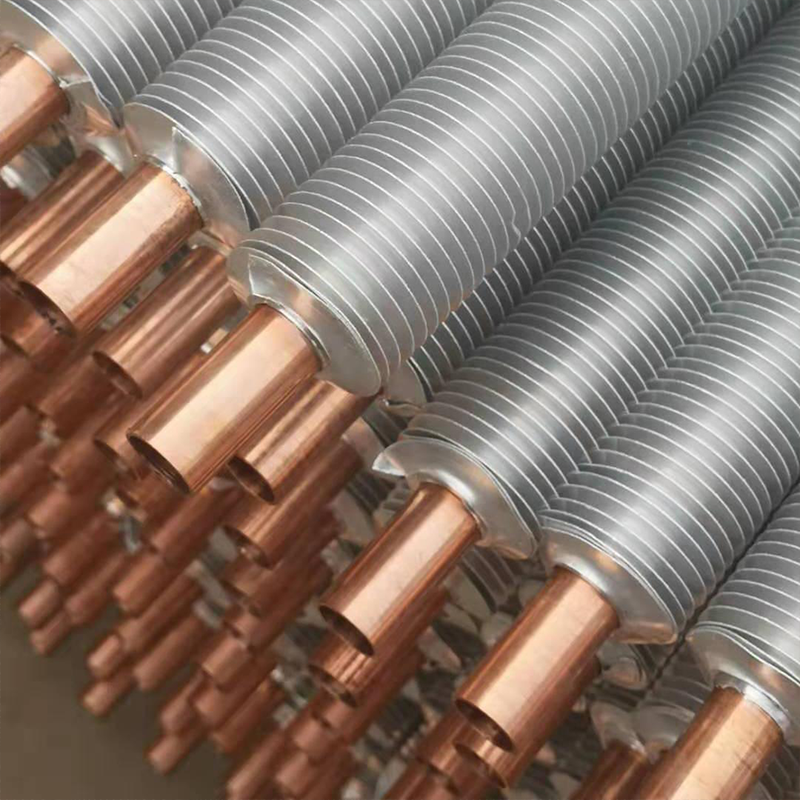
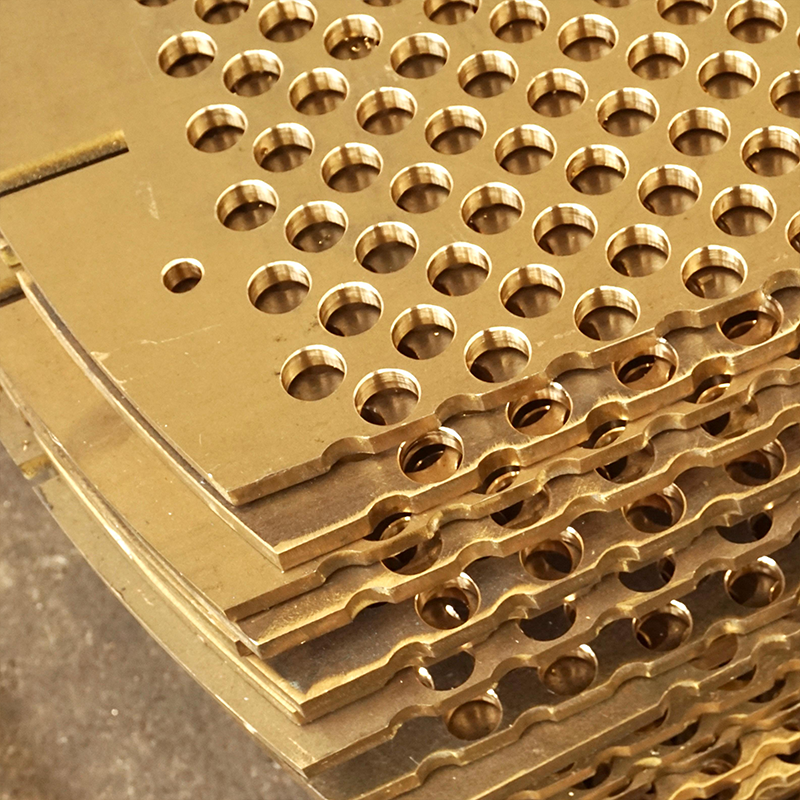
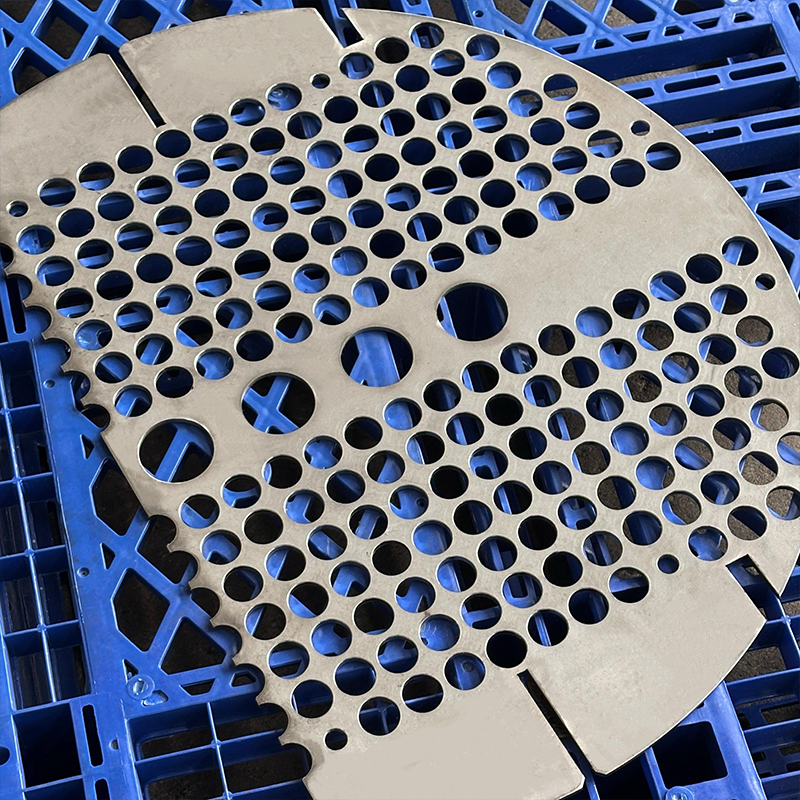
For example, a companyWuxi Kaisheng Electric Power and Petrochemical Equipment Co., Ltd.demonstrates this integrated approach, specializing in the design and manufacture of high-performance heat transfer and petrochemical equipment. Their products, including titanium shell-and-tube heat exchangers, ASME high-pressure units and corrugated tube bundles made from 316 stainless steel, C46400 marine brass or N06625 nickel alloys, are widely used in the petroleum refining, chemical and energy industries. HDPE welding requires precise techniques, as does the production of components such as air coolers, waste heat boilers or tubesheets made from alloys C70600 and 321, based on PED and ASME certification. The high corrosion resistance and thermal efficiency of their products are critical to the longevity of systems where even the slightest defect can lead to accidents. This example highlights: whether welding polyethylene or assembling a complex heat exchanger, the key to success lies in qualified personnel and equipment that meets the highest quality standards in the world.
Frequently Asked Questions
How long does it take to fully learn how to weld HDPE pipes?
The basic course for obtaining initial clearance usually takes 3 to 5 days of intensive practice. However, to obtain the qualifications of a welder of the highest category, allowing one to work on large-diameter gas pipelines (over 400 mm), at least 2-3 weeks of internship under the guidance of a mentor and performing dozens of training joints are required. You shouldn’t believe the promises of “training in 1 day” - this is profanity that will lead to marriage.
Is it necessary to retrain a welder when changing the brand of machine?
Yes, definitely. Interfaces, control logic and hydraulic characteristics of different devices (for example, Georg Fischer, Rothenberger, Chinese brands) may differ significantly. Even if the operating principle is the same, the transition time and mixing speed can be adjusted differently. It is enough to conduct a short-term briefing (4-8 hours) with 2-3 test joints on the new equipment for the employee to adapt.
Is it possible to weld polyethylene pipes at subzero temperatures?
Welding is allowed at temperatures down to -15°C (according to some standards up to -20°C), but only if special measures are taken. Pipes and apparatus must be kept in a warm room until the temperature equalizes, otherwise condensation will occur, which is unacceptable. The welding site must be enclosed with a windproof dome (warmhouse) with forced air heating. Heating and cooling times increase by 10–15%. Without creating such conditions, welding is prohibited.
What percentage of defects is considered acceptable?
Ideally, the defect rate should tend to zero. An acceptable level for highly qualified teams at critical facilities is considered to be less than 1–2% of the total number of joints. If the defect rate exceeds 5%, this is a signal of a systemic problem: either low qualifications of personnel, or equipment malfunction, or a violation of technology. In this case, work should be suspended until the reasons are clarified and extraordinary retraining is carried out.
Conclusion: investment in personnel pays off in system reliability
Polyethylene pipelines last for decades, but their durability begins in the first minutes of connecting the pipes. Saving on quality training, buying cheap courses “for show” or allowing untested specialists to work is a time bomb. The cost of eliminating one accident on an underground gas pipeline or water pipeline is tens of times higher than the cost of fully training the entire staff of welders.Personnel training in welding polyethylene pipesshould be a continuous process, including regular training, certification and exchange of experience.
We recommend that enterprise managers introduce internal mentoring schools, where experienced welders pass on skills to young specialists, and regularly conduct audits of welding technologies. Use modern non-destructive testing tools to randomly check the quality of seams. Remember: your brand and reputation depend on how securely every joint in your system is held together.
If you are looking for a reliable partner to provide certification training for your employees or need advice on implementing HDPE welding quality standards,contact us today. Our experts are ready to develop an individual training program taking into account the specifics of your facilities and the equipment used. We also recommend that you read our material aboutchoosing polyethylene pipes for industrial systemsto take a comprehensive approach to the issue of the reliability of your communications.