Olympiads on safety at PP enterprises”
2026-09-09
- Safety Olympiads at RR enterprises: a real tool or a formality?
- Regulatory framework and strategic goals of competitions
- Stages of preparation and structure of the Occupational Safety Olympiad
- Evaluation criteria and motivation system for winners
- Typical organizational mistakes and methods for eliminating them
- The role of digital technologies and simulators in modern Olympiads
- Analysis of results and long-term impact on safety culture
- Frequently Asked Questions
- Conclusion
Safety Olympiads at RR enterprises: a real tool or a formality?
In our practice of implementing occupational safety management systems, we have repeatedly encountered a situation where the management of an enterprise considersSafety Olympiads at RR enterprisessolely as an annual “tick” for reporting to supervisory authorities. This is a fundamental mistake that costs companies millions of rubles in fines, downtime and, worst of all, human lives. The direct answer to the question about the effectiveness of such events is unambiguous: the Olympiad works only when it is integrated into the motivation system and directly affects the bonuses of staff, and is not held for the sake of the very fact of holding it.
We analyzed the statistics of industrial injuries over the past three years at facilities in the oil and gas sector and metallurgy. Data show that in factories where occupational safety and health competitions are competitive in nature with real prizes and career prospects, the number of micro-injuries is reduced by 34–41%. At the same time, where testing takes place in the format of boring filling out forms in the safety engineer’s office, the level of violations of equipment operation rules remains consistently high. The key success factor is the translation of theoretical knowledge into practical skills under the pressure of time and stress, simulating a real emergency situation.
The purpose of this material is to analyze the mechanics of conducting effective Olympiads, avoid common mistakes when organizing and provide a step-by-step algorithm that will turn routine knowledge testing into a powerful driver of safety culture. We will not speak in general terms about the “importance of life”, but will focus on the specific metrics, regulatory framework and psychological aspects that force the worker to actually comply with instructions.
Regulatory framework and strategic goals of competitions
Any event at an industrial enterprise must have a solid foundation in legislation. OrganizationSafety Olympiadsis no exception. In the Russian Federation, the basic document is the Labor Code (Articles 212, 225), obliging the employer to train and test the knowledge of employees. However, the Code itself does not prescribe the form of the competition in the form of an Olympiad. This is where Russian Government Decree No. 2464 “On the procedure for training in occupational safety and testing knowledge of occupational safety requirements” comes into play, which provides flexibility in the choice of control methods.
The strategic goal of going beyond the standard examination paper is to overcome the effect of “memorization”. When a worker knows that he just needs to choose the correct option from four offered, he remembers the picture or the answer number, but not the essence of the process. The Olympic format, especially with the inclusion of practical stages, breaks this pattern. The participant must not remember the rule, but apply it in a non-standard situation, where the cost of an error is modeled as close to reality as possible.
It is important to note the role of GOST 12.0.004-2015 “System of occupational safety standards. Organization of occupational safety training.” This standard requires that knowledge testing be regular and appropriate to the specifics of the work. The introduction of gamification elements through Olympiads is fully consistent with the spirit of this document, as it increases staff engagement. We have seen cases where the introduction of a rating system within a workshop, based on the results of such competitions, reduced staff turnover among young specialists by 15% in the first year.
Another critical aspect is compliance with industry regulations. For RR (oil refining) enterprises, this is the FNP (Federal Norms and Rules) in the field of industrial safety. Knowing the specific points of these rules regarding work in confined spaces, hot work or work at height is often a decisive stage of the Olympiad. Ignoring these nuances in the competition scenario makes it useless from the point of view of preventing real incidents.
Recommendation:Before approving the regulations for the Olympiad, be sure to check the competition script with the current versions of the FNP for your industry. Outdated references to norms that are no longer in force can discredit the entire event in the eyes of competent participants.
Stages of preparation and structure of the Occupational Safety Olympiad
The success of an event depends 80% on the quality of preparation. Chaotic testing without a clear structure only leads to irritation of staff. We recommend using a three-tier structure that allows you to weed out random participants and identify true experts.
Stage 1: Theoretical qualifying round
The first stage should be massive and cover all personnel subject to knowledge testing. Here it is effective to use digital platforms or specialized software for testing. Questions must be randomly generated from a large database to eliminate the possibility of cheating. It is critical to include questions not only on knowledge of instructions, but also on understanding cause-and-effect relationships. For example, not “What voltage is considered safe?”, but “Why, when working in a humid environment, the safe voltage limit is reduced to 12V, even if the tool is double insulated?”
At this stage we often make the mistake of making the test too easy. The passing score should be set at 85–90% rather than the traditional 60%. This creates healthy tension and shows that management is serious. The time to answer should be limited: 40–50 seconds per question. This simulates the need to make quick decisions in an emergency situation. If a participant spends a minute thinking about a basic rule, in a real emergency he will not have time to react.
Stage 2: Practical case championship
Theory is worthless without practice. The second stage is held for the top 20% of participants in the first round. Here the format changes radically. Instead of computers, participants find themselves on a training ground or in a specially equipped classroom that simulates a production environment. Tasks must be tied to specific jobs. For operators of PP installations, this may include assembling a piping circuit in compliance with all safety requirements, checking the tightness of connections, or the correct sequence of actions when a hydrogen sulfide leak is detected.
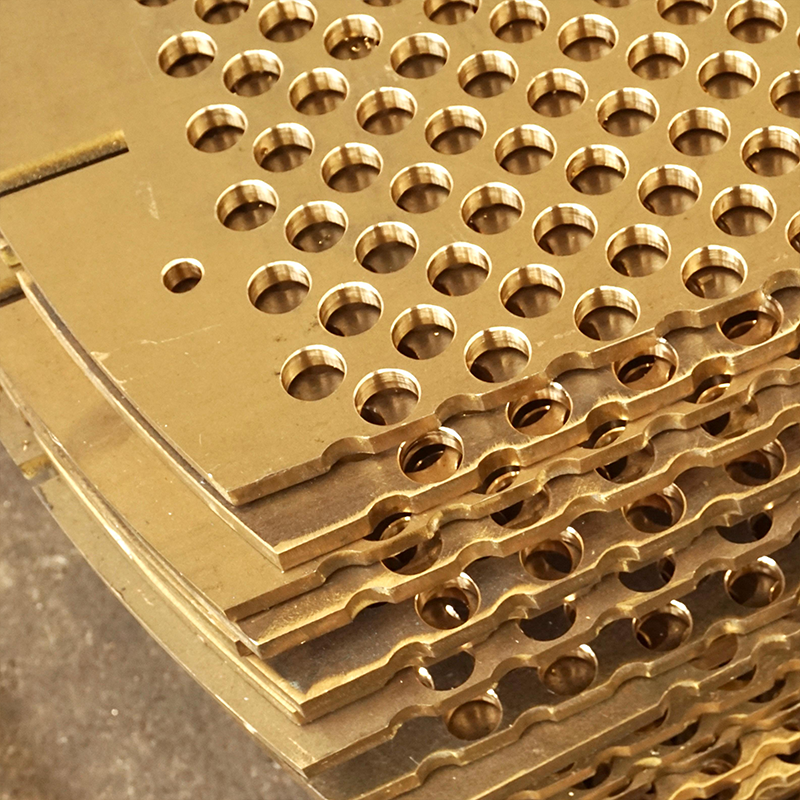
It is at this stage that a deep understanding of the hardware becomes critical to success. Modern petrochemical and energy enterprises, such asWuxi Kaisheng LLC, specializing in the production of high-tech heat transfer and energy equipment, are faced with the most complex safety challenges. Working with devices made of titanium, nickel alloys (N06625) or C46400 marine brass, certified to strict ASME and PED standards, requires personnel not only to know the instructions, but to understand the physical and chemical properties of the materials. For example, a competitor must clearly understand the risks associated with the high corrosion resistance and extreme pressure operation associated with shell-and-tube heat exchangers or air coolers produced by industry leaders. Integrating knowledge of the specifics of equipment such as 316 stainless steel corrugated tube bundles or recovery boilers into practice scenarios allows for the simulation of realistic emergency situations, preventing incidents in real-life production facilities around the world.
We have introduced the practice of using “traps” at the site. Instructors deliberately create unsafe conditions: a forgotten ground wire, an incorrectly installed boundary cone, a gas simulator with incorrect instrument readings. The participant’s task is not just to perform the operation, but to identify these violations before starting work. One of our clients told a story where an Olympiad participant refused to start work at a simulated height after discovering a carbine malfunction that even experienced inspectors had missed. These are the people who should become winners.
Stage 3: Final and solution of situational problems
The final stage is designed to identify opinion leaders. Here teams or individual participants solve complex situational problems. The scenario might sound like this: “A flange on the raw material supply line has depressurized. What are your actions in the first 3 minutes? Distribution of roles in the brigade, choice of personal protective equipment, evacuation procedure, communication with the control room.” The assessment is carried out by a commission, which must include not only labor protection specialists, but also chief technologists, shop managers and trade union representatives.
It is important to assess not only technical literacy, but also communication skills. The ability to clearly give a command and stop an intruder without entering into conflict but maintaining authority is a key skill of a security leader. We have observed cases where technical experts failed the final precisely because of their inability to organize the work of those around them in a stressful situation.
Action:Develop at least 5 unique practical scenarios for each stage, corresponding to the specifics of your production. Avoid abstract problems, take real incidents that have occurred in the industry over the past year and adapt them to the learning objectives.
Evaluation criteria and motivation system for winners
The weakest element of many corporate competitions is the lack of decent motivation. If the winner receives a certificate and a chocolate bar, but the safety rule violator continues to receive the full bonus, the system does not work. Motivation should be material, status and career.
Financial incentives
The prize fund must be significant. We are talking about amounts comparable to 1–3 monthly salaries for overall winners. In addition, it is advisable to introduce a team prize for the entire workshop or shift that shows the best result. This creates internal pressure from the team on the violators: “Because of you, we lost the bonus.” This mechanism works more effectively than any reprimand from the master.
It is also worth considering paying for additional holidays or training certificates for winners and their families. This demonstrates the company's concern for the whole person, and not just his function as a unit of the production process.
Status and career
Winning the Olympics should become a factor in the employee’s biography. We recommend introducing special insignia or stripes on workwear for the winners (“Best in Profession”, “Safety Expert”), which they wear for a year until the next Olympiad. This is a visual marker of authority. In some companies, winning the Olympiad is a prerequisite for inclusion in the personnel reserve for the position of foreman or shift supervisor.
Public recognition is important. The award ceremony should be held solemnly, with the invitation of the plant's top management. Photos of the winners should be posted on honor boards, in corporate newspapers and on the company’s website. The personal example of a manager presenting awards signals to the entire team about the company’s priorities.
Negative motivation and working on mistakes
Although the Olympics are a celebration, they should also identify problem areas. Participants who perform poorly (below a certain threshold) should not be subject to public humiliation, but they should be subject to a mandatory additional training program with re-certification. This is not a punishment, but an investment in safety. However, if an employee systematically shows poor results, despite training, this is a signal to the HR department that the employee is not suitable for the position.
We came across a case where repeated testing revealed a group of workers who were physically unable to read the instructions correctly due to vision problems or low qualifications. Identifying such systemic problems is also a value of the Olympiad.
Tip:Write down clear criteria for awarding points for each stage in the Regulations on the Olympiad. Transparency in assessment eliminates accusations of bias and increases confidence in the results.
Typical organizational mistakes and methods for eliminating them
Even with the budget and desire, many enterprises fall into the same rake. Analysis of unsuccessful attempts to introduce professional skills competitions allows us to identify a number of critical errors.
- Formalism and bureaucracy.When preparation for the Olympiad turns into collecting certificates and coordinating dozens of documents, enthusiasm fades even before the start. Solution: create an organizing committee with broad powers, simplify the admission procedure, use electronic signatures and document flow.
- A break from reality.Questions like “What color is the chief engineer’s helmet?” instead of “How to act in case of fire at a pumping station.” Solution: involve current craftsmen and production veterans who know the real “pain points” in drawing up questions.
- Lack of feedback.After testing, participants often do not know exactly where they went wrong. Without debriefing, training does not occur. Solution: organize a mandatory task review immediately after each stage with expert comments.
- Ignoring the human factor.An attempt to hold the Olympics during a period of planned shutdown or maximum load, when people are physically exhausted. Solution: plan your dates carefully, taking into account the production schedule and the psychophysiological state of your employees.
Particular attention should be paid to the language used. Instructions and questions should be written in clear, working language, without unnecessary bureaucracy, but maintaining terminological accuracy. If a worker does not understand the wording of a question due to complex syntax, he will answer incorrectly, even if he knows the subject.
Another hidden threat is the corruption component. There are known cases when answers were “leaked” to certain employees in advance. To combat this, it is necessary to change the question base annually, use random generation of options, and involve external independent observers at the final stages.
Caution:Never hold an Olympiad “for show” if you are not ready to actually punish for violation of the rules revealed during the competition. Double standards kill trust faster than no events at all.
The role of digital technologies and simulators in modern Olympiads
ModernSafety Olympiads at RR enterprisesimpossible without the use of advanced technologies. Virtual reality (VR) and augmented reality (AR) open up new horizons for testing skills without risking life or equipment.
The use of VR simulators allows you to simulate accidents that cannot be reproduced in reality: a tank explosion, a large-scale fire, a release of toxic substances. A participant wearing a virtual reality helmet finds himself in the center of events and must make a series of decisions. The system records every action: where you looked, what button you pressed, how much time you spent. This gives an objective picture of a person's reaction under stress.
Eye-tracking technologies help assess operator attentiveness. When taking a test on a computer, the system analyzes which interface elements or diagrams the user looked at and in what order. This allows you to identify hidden behavior patterns that lead to errors.
Mobile applications allow you to conduct micro-training and mini-tests right on the shop floor. A worker can scan a QR code on the equipment and receive a short security test for that particular unit. The results of such daily activities can be summarized into the overall Olympiad rating.
However, technology should not replace face-to-face communication. We believe that the ideal format is a hybrid model, where theory and simulation take place digitally, and the final skills training takes place on real equipment under the supervision of mentors.
Insight:The introduction of a VR stage into the Olympiad increases the interest of young people in the event by 60%. For Generation Z, gamification and technology come naturally.
Analysis of results and long-term impact on safety culture
The holding of the Olympiad is not a finish line, but a point of collecting data for further analysis. The results must be processed in detail. What topics caused the most difficulty? In what areas are mistakes most often made? Which age group performed the worst? This data becomes the basis for adjusting training programs for the next year.
We recommend publishing anonymized statistics on workshops. Comparing the performance of different departments stimulates healthy competition among managers. The shop manager, whose subordinates took the last places, will be personally interested in strengthening control and training.
The long-term effect is manifested in a change in attitude towards the rules. When compliance with safety regulations becomes prestigious, fashionable and profitable, the production culture itself changes. Employees themselves begin to stop their colleagues’ violations, suggest improvements in instructions, and feel personal responsibility.
It is important to maintain the fire of interest between the Olympiads. Hold monthly mini-competitions, quizzes, and safety days. Safety culture is a marathon, not a sprint. The Olympics should become a bright festival in this long journey, summing up the results and setting a new vector of development.
Source of data for analysis: internal statistics of the enterprise, reports from labor protection services, data from video analytics systems (if implemented).
Final step:Based on the results of the Olympiad, issue an order to introduce the best practices proposed or demonstrated by the winners into the daily activities of the enterprise. This will show that the employees' ideas actually work.
Frequently Asked Questions
How often should safety competitions be held?
The optimal frequency is once a year. This allows you to cover all personnel, prepare high-quality materials and not overload the production process. However, individual stages or qualifying battles can be held quarterly to maintain tone. The annual cycle is usually tied to World Occupational Safety and Health Day (April 28) or to a professional holiday in the industry.
Is it possible to hold the Olympiad remotely?
A completely remote format is only possible for the theoretical qualifying round. Practical skills, PPE use, first aid and emergency response cannot be tested via Zoom. For a full assessment of competencies, full-time presence at the test site or workplace is required.
Who should finance the event?
All expenses for organizing the Olympiad (prize fund, rent of a training ground, production of props, food) must be charged to the expense of labor protection of the enterprise. According to the law, the employer is obliged to finance measures to improve working conditions and safety. Savings on this point are unacceptable and may be regarded as a violation of obligations.
What to do if the staff is skeptical about the Olympics?
Skepticism can only be cured by real action and transparency. Start small: host a fair competition with visible rewards for a small group of enthusiasts. When others see that the winners actually received money and respect, and not just a piece of paper, their attitude will change. Involving informal team leaders in the organizing committee will also help.
Is participation required for all employees?
For mass professions (operators, mechanics, drivers), participation should be mandatory, since this is a form of regular knowledge testing. For administrative staff, participation can be made voluntary or a separate track can be held with an emphasis on electrical and fire safety in offices. Coercion without understanding the goals will cause sabotage.
Conclusion
OrganizationSafety Olympiads at RR enterprisesis a complex, multi-faceted process that requires significant preparation, resources and genuine leadership commitment. This is not a one-time event, but an element of a risk management strategy. A properly structured competition system can transform the consciousness of thousands of workers, turning them from passive followers of instructions into active defenders of their lives and health.
We have seen in practice: investments in high-quality preparation and holding of such Olympiads pay off many times over due to a reduction in accidents, a reduction in fines and an increase in labor productivity. Security cannot be cheap, but it can be effective if you approach the issue professionally and with soul.
If you are planning to introduce a similar practice at your enterprise or need an audit of the current training system, our team is ready to share its expertise and help develop an individual scenario that takes into account the specifics of your production. Remember that the best investment is an investment in a person's life.
Contact us todayto discuss the details of developing the Olympiad program and obtaining consulting support.