
Prospects for the plastic container market until 2030″
2026-08-19
- Global drivers and forecasts of the plastic containers market until 2030
- Technological evolution: from rotational molding to multi-layer structures
- Sectoral analysis: requirements of the food industry and agricultural complex
- Regulatory regulation and certification in the EAEU
- Procurement Economics: Hidden Risks and Total Cost of Ownership Calculation
- Supplier selection strategies and risk minimization
- Прогноз развития рынка и инвестиционные возможности
Global drivers and forecasts of the plastic containers market until 2030
The prospects for the market for plastic containers until 2030 are determined not simply by an increase in production volumes, but by a fundamental shift in polymer processing technologies and the tightening of environmental standards of the Eurasian Economic Union. By 2026, we are seeing a critical transition point: traditional rotational molding methods are giving way to high-precision blow molding for mid-range production, changing the purchasing economics for industrial plants. The market no longer tolerates one-size-fits-all solutions; Customers require containers with proven chemical resistance to specific aggressive environments and a guaranteed service life of at least 15 years under conditions of extreme temperature changes from -40°C to +60°C.
In our practice of working with large agricultural holdings and chemical plants in Russia and Kazakhstan, we record an increase in demand for specialized tanks with a volume of 10,000 to 50,000 liters. This is due to the need to create strategic reserves of liquid fertilizers and reagents in conditions of logistical instability. The mistake many buyers make is to focus only on the price per kilogram of a product, ignoring the cost of ownership, which includes the cost of repairing cracks, replacing seals and equipment downtime due to deformation of the walls under the pressure of the liquid column.
Analysis of data for the first quarter of 2026 shows that the segment of food plastic containers is growing at a faster pace - by 7.4% year on year. This is a direct result of the introduction of new sanitary regulations requiring the use of materials with full traceability of raw materials. Manufacturers who are unable to provide a quality certificate indicating the batch of primary polyethylene lose contracts with federal networks. We saw a case where a batch of grain storage silos was rejected at customs due to the lack of a substance migration certificate, although visually the products did not differ from the standard. This cost the supplier 12% of the contract value in penalties and reverse logistics costs.
Technological evolution: from rotational molding to multi-layer structures
The dominant technology for the production of large plastic containers - rotational molding - is undergoing a stage of deep modernization. Just five years ago, the main limitation of this technology was the unevenness of wall thickness at corners and geometry transitions. Today, the use of automatic temperature control systems in real time makes it possible to achieve a variation in wall thickness of no more than ±8%, which is critical for containers with a volume of over 20 cubic meters. For the buyer, this means predictable behavior of the tank when filling: the absence of local stresses that lead to cracking after 3-5 years of operation.
However, the market is moving towards composite solutions. Single-layer containers made of low-density polyethylene (HDPE) are gradually being replaced by three-layer structures using co-extrusion technology. The outer layer is responsible for resistance to ultraviolet radiation and mechanical damage, the middle layer provides structural rigidity and barrier properties, and the inner layer is made of food-grade or chemical-resistant plastic. In 2025, one of our clients, a dairy producer, was faced with the problem of raw materials oxidizing in conventional white tanks. Switching to three-layer containers with a black middle layer that blocks light solved the problem without the need to install additional canopies or cooling systems, saving the company about 4.5 million rubles annually.
It is important to understand the difference between HDPE and PP materials. Polypropylene has better heat resistance and can withstand short-term heating up to 100°C, which makes it indispensable for galvanic baths and containers for hot solutions. However, it is more fragile at low temperatures. If your site is located in an area with winter temperatures below -25°C, using pure polypropylene without impact modifiers is a serious mistake. We recommend using copolymers or reinforced versions for such conditions, even if their price is 15-20% higher. Saving on material in this case will lead to catastrophic consequences during the first winter thaw and subsequent freezing of the contents.
The trend towards increasing unit capacity of installations is also changing the supply landscape. Factories with machines with a furnace loading volume of more than 4,000 liters receive an advantage in the cost of production of large products. This creates an entry barrier for small workshops and consolidates the market around players with a serious equipment fleet. When selecting a supplier, be sure to inquire about the maximum heating chamber size. If a manufacturer claims the ability to manufacture a 30-ton container, but its equipment is designed for 15 tons, this means that the product will be welded from several parts. A weld on the vertical wall of a large tank is a risk zone where the stress concentration is maximum.
Sectoral analysis: requirements of the food industry and agricultural complex
The food industry dictates the most stringent standards for the quality of the surface of the inner walls of containers. Surface roughness Ra should not exceed 1.6 µm to prevent bacterial adhesion and biofilm formation. In 2026, the introduction of digital quality passports became mandatory for suppliers in the retail network. Each batch of pellets must have a digital footprint from the petrochemical plant to the final product. We work with manufacturers who use only primary raw materials of grades 273-83 or analogues with confirmed permission from Rospotrebnadzor. The use of recycled polyethylene, even high quality, for food purposes is now classified as a violation of the technical regulations of the Customs Union TR CU 005/2011.
In the agricultural sector, UV resistance and mechanical strength during transportation are becoming key factors. Tanks for storing liquid fertilizers (KASU, ZhKU) operate in an aggressive environment. Ammonium nitrate and urea require the use of stabilized grades of plastic with a soot content of at least 2-2.5%. Insufficient UV stabilizer content leads to the fact that after two seasons the walls of the tank become fragile, like glass. One of the farmers in the Krasnodar region lost 40 tons of expensive fertilizer due to the fact that the bottom of the tank burst during drainage. The examination showed that the supplier used a cheap masterbatch with a low concentration of stabilizer to reduce the price by 5 rubles per kilogram.
Logistics of water and technical fluids requires taking into account dynamic loads. Euro cubes (IBC tanks) remain the standard for shipping, but demand for stationary flexible tanks and modular plastic tanks is growing. The geometry of the neck and the location of the fittings are important here. An improperly positioned drain pipe can create a “dead zone” where sediment accumulates or cause cavitation when the pump is running. When ordering large quantities, we recommend carrying out 3D modeling of the piping at the stage of tank design. This avoids situations where a factory-welded flange does not align with the customer's mating piping, requiring costly rework on site.
The wastewater treatment industry is seeing an increasing need for sealed septic tanks and large volume storage tanks. The critical parameter here is the ring rigidity of the housing. A container buried in the ground experiences pressure from soil and groundwater. If the manufacturer did not provide stiffening ribs of sufficient height or used a wall that was too thin, the tank may be squeezed out by soil in winter or flattened when pumping out the contents in summer. The GOST R 52797-2007 standard regulates test methods, but many manufacturers ignore the requirements for wall thickness in the lower third of the product, where hydrostatic pressure is maximum.
Regulatory regulation and certification in the EAEU
Working in the Russian and CIS markets is impossible without a deep understanding of the certification system. The main document confirming the safety of plastic containers is the Declaration of Conformity with the Technical Regulations of the Customs Union. For food packaging this is TR CU 005/2011 “On the Safety of Packaging”, for industrial containers - often TR CU 010/2011 “On the Safety of Machinery and Equipment” or specialized GOSTs. Having a paper certificate is not enough; information must be entered into the unified register of the Russian Accreditation Agency. We regularly encounter situations where buyers accept declarations that have expired or are issued for products with different characteristics.
Fire safety certification is becoming increasingly important for warehouses. Plastic containers storing flammable liquids must meet strict fire resistance standards. Although polyethylene itself is a flammable material, the use of fire retardant additives and design solutions (for example, placement in concrete pallets or fireproof casings) allows it to pass inspection by the Ministry of Emergency Situations. Ignoring this aspect when designing a fuel and lubricants warehouse can lead to the shutdown of the enterprise by the inspection authorities. In 2025, several logistics centers were fined for storing fuel in containers that were not marked with a fire hazard class.
Environmental standards are also becoming stricter. The concept of extended producer responsibility (EPR) obliges companies to recycle packaging or pay an eco-fee. This encourages a shift to mono-materials, which are easier to recycle. Multi-layer containers with metal inserts or complex composite structures become less attractive for disposal at the end of their life cycle. The proportion of fully recyclable plastic tanks is projected to rise to 60% by 2028. Buyers should already include in the technical specifications a requirement for the possibility of recycling the product material.
International standards ISO 9001 and ISO 14001 are becoming a marker of supplier reliability. Factories that have passed these certifications have well-established quality control processes at every stage: from incoming control of pellets to final inspection of the finished product. Having an ISO certificate does not guarantee the quality of a specific batch, but it does indicate a systematic approach. We recommend that when auditing a supplier, you request reports of internal tensile and impact testing. If a plant doesn't conduct these tests regularly or doesn't have its own laboratory, that's a red flag.
Procurement Economics: Hidden Risks and Total Cost of Ownership Calculation
Unit price is just the tip of the iceberg in industrial purchasing economics. Total cost of ownership (TCO) includes delivery, installation, service, repair and disposal costs. A cheap recycled container can cost 30% less than its virgin plastic counterpart, but will last 5 years instead of 15. Additionally, the risk of leakage and product loss far outweighs the initial savings. In our practice, there was a case when a plant bought a batch of cheap acid tanks. A year later, massive leaks began at the seams. The costs of replacing the tank fleet, cleaning up the area from spills and downtime of production exceeded the initial purchase cost by 4 times.
Logistics of large plastic containers is a separate expense item. Transporting unrested tanks larger than 10 cubic meters is extremely inefficient: you pay for air transportation. Nesting technologies can reduce the amount of space occupied during transportation by 40-50%. However, not all structures allow stacking without the risk of bottom deformation. When ordering, specify the packaging factor: how many pieces fit in one truck. The difference between 4 and 6 containers on a flight can change the economics of a project by millions of rubles, especially for long-distance deliveries to Siberia or the Far East.
Warranty obligations are often formal in nature. Many manufacturers provide a 1-year warranty, excluding any mechanical damage, exposure to excess UV radiation and improper use. A real guarantee for the material should be at least 3-5 years, subject to operating conditions. Pay attention to the language in the contract: if it says “through-through defect warranty,” this will not cover loss of seal due to material creep or stress cracking. We recommend including in the contract a clause on independent examination in case of disputes, with a clear description of test methods.
The impact of currency fluctuations and raw material costs on the price of the final product remains high. Polyethylene is a petroleum product, and its price correlates with oil prices and exchange rates. Long-term contracts with fixed prices for a year are becoming rare. It is more profitable for buyers to enter into framework agreements with a pricing formula linked to stock exchange indices of raw materials. This allows you to avoid situations where the supplier disrupts deliveries due to the unprofitability of the contract during a sharp jump in polymer prices.
Supplier selection strategies and risk minimization
The selection of a partner for the supply of plastic containers should be based on a comprehensive assessment, and not just on a commercial offer. A critical parameter is the age of the rotary machine fleet. Equipment older than 15 years often does not provide stable temperature conditions, which leads to variations in product properties from batch to batch. Request a photo of the production site and specify the year of production of the main lines. A plant that invests in equipment upgrades is generally more reliable in the long run.
Having your own design bureau is another important criterion. The ability to adapt a standard product to your needs (change the location of the necks, add reinforcement for a specific stirrer, change the color) without lengthy approvals speeds up implementation. Standard solutions are not always suitable for specific technological processes. We worked with a client who required a container with a conical bottom to completely drain a viscous product. Most suppliers offered a standard flat or spherical bottom, which would require the installation of additional metering pumps. Making a custom mold was more expensive, but saved hundreds of thousands of rubles on equipment and electricity.
The supplier's reputation in the market is verified through industry associations and reviews from existing customers. Feel free to request reference contacts and call them. The questions should be specific: “Were there any complaints?”, “How quickly does the service respond?”, “Does the weight of the product correspond to the declared one?” Weight is an indirect but important indicator of quality. If a container weighing 100 kg should be according to the design, but 85 kg arrives, it means that the manufacturer saved on material by reducing the wall thickness. This directly affects strength and durability.
The financial stability of the supplier in conditions of high capital intensity of production plays a decisive role. A delay in shipment due to a cash gap at the plant can paralyze the work of your enterprise. Verifying the counterparty through services like SPARK or Kontur.Focus is required. Pay attention to the presence of arbitration cases, especially those related to failure to fulfill delivery obligations. In current market conditions, supply chain reliability is more important than minimum price.
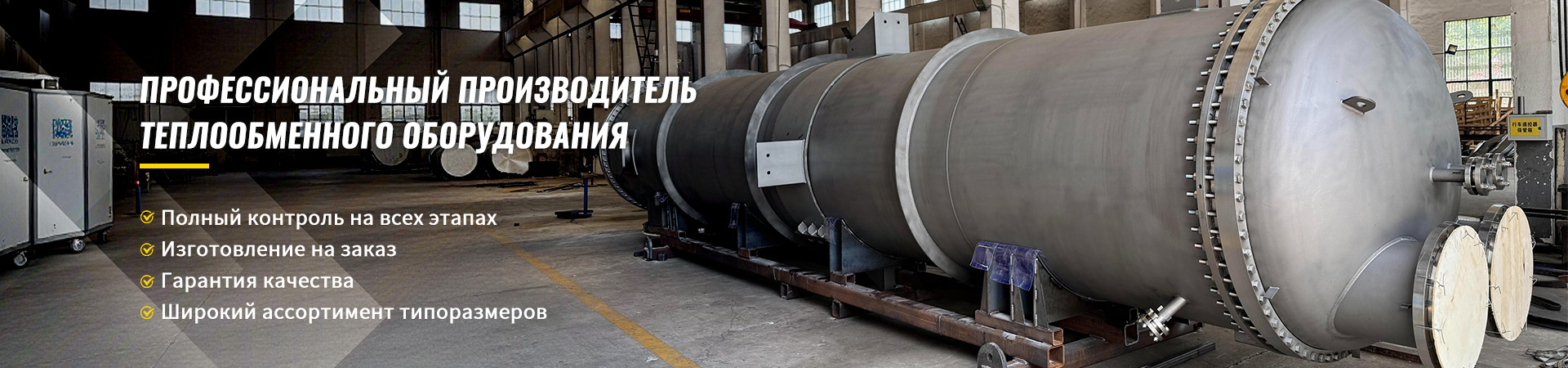
For complex infrastructure projects where plastic containers are only part of the system, choosing a partner who can provide a full cycle of engineering solutions is critical.Wuxi Kaisheng Electric Power and Petrochemical Equipment Co., Ltd.specializes in the design and production of high-tech equipment for the oil and gas and energy industries, including heat exchangers made of titanium and special alloys, air coolers and waste heat boilers. The company's ASME and PED certified products offer exceptional corrosion resistance and the ability to operate under extreme pressure and temperature conditions. Опыт «Уси Кайшэн» в создании индивидуальных решений для опреснения морской воды, судостроения и химической промышленности позволяет интегрировать пластиковые резервуары в сложные технологические линии с максимальной эффективностью. Сотрудничество с таким поставщиком гарантирует не просто поставку оборудования, а создание стабильной и безопасной инфраструктуры для заказчиков по всему миру.
Прогноз развития рынка и инвестиционные возможности
К 2030 году рынок пластиковых емкостей ожидает консолидация. Мелкие игроки, не способные инвестировать в автоматизацию и контроль качества, будут вытеснены крупными холдингами. Ожидается рост доли российских производителей сырья, что снизит зависимость от импорта гранул и стабилизирует цены. Локализация производства добавок и красителей также завершится в ближайшие 3-4 года. Это создаст благоприятные условия для развития отечественного машиностроения в сфере производства оборудования для переработки пластмасс.
Инновации в области “умных” емкостей станут новым трендом. Интеграция датчиков уровня, температуры и давления непосредственно в корпус бака при производстве позволит создавать готовые IoT-решения. Такие системы будут передавать данные в облако для предиктивного обслуживания и управления запасами. Пилотные проекты в нефтехимии уже показывают эффективность такого подхода, снижая количество аварийных ситуаций из-за перелива или сухого хода насосов. К 2028 году оснащение новых промышленных емкостей телеметрией станет стандартом де-факто для крупных проектов.
Экологичность останется главным драйвером. Развитие технологий химической переработки пластика позволит возвращать отслужившие емкости в производственный цикл без потери свойств. Замкнутый цикл производства снизит углеродный след продукции, что станет важным аргументом для экспо ртеров, работающих с европейскими партнерами, где углеродный налог уже стал реальностью. Инвестиции в технологии рециклинга сейчас — это залог конкурентоспособности через 5 лет.
Перспективы рынка пластиковых емкостей до 2030 года выглядят оптимистично, но только для тех участников, кто готов адаптироваться к новым требованиям качества, экологии и цифровизации. Рынок переходит от количества к качеству, от универсальности к специализации. Победа достанется тем, кто сможет предложить не просто бак, а инженерное решение проблемы хранения и транспортировки жидкостей.
Frequently Asked Questions
Какой срок службы у качественной пластиковой емкости из ПНД?
При соблюдении условий эксплуатации (отсутствие прямого солнечного света без защиты, температурный режим от -40 до +50°C, отсутствие механических перегрузок) срок службы емкостей из первичного ПНД составляет 15-20 лет. Ключевым фактором является наличие УФ-стабилизатора в составе материала. Без него деградация полимера начинается уже через 2-3 года, приводя к появлению микротрещин и потере герметичности. Мы рекомендуем выбирать емкости с гарантией на материал не менее 5 лет.
Можно ли хранить горячие жидкости в пластиковых баках?
Yes, but with restrictions. Емкости из полиэтилена (ПНД) рассчитаны на рабочую температуру до +60°C (кратковременно до +80°C). Для постоянных температур выше +60°C необходимо использовать емкости из полипропилена (ПП), которые выдерживают до +90…+100°C. Важно учитывать, что при повышении температуры механическая прочность пластика снижается. При хранении горячих жидкостей рекомендуется уменьшать нагрузку на стенки или выбирать емкости с увеличенной толщиной стенок и дополнительным армированием.
В чем разница между пищевым и техническим пластиком?
Основное отличие заключается в чистоте сырья и наличии разрешительной документации. Пищевой пластик изготавливается только из первичного гранулята, прошедшего строгий контроль на отсутствие токсичных примесей, и имеет декларацию соответствия ТР ТС 005/2011. Технический пластик может содержать до 30-50% вторичного сырья, что снижает его стоимость, но делает непригодным для контакта с продуктами питания. Использование технического бака для пищевых целей грозит серьезными штрафами и риском для здоровья потребителей.
Как правильно подготовить основание под большую пластиковую емкость?
Основание должно быть идеально ровным, твердым и непрерывным. Категорически запрещается установка баков на песок, щебень или отдельные кирпичи/блоки. Лучшее решение — монолитная бетонная плита или сплошной лист влагостойкой фанеры/OSB толщиной не менее 20 мм. Неравномерная опора приводит к концентрации напряжений в днище и образованию трещин под весом жидкости. Под емкость объемом более 5 кубов обязательно устройство ограждения или поддона для сбора возможных протечек.
Возможна ли установка нагревательных элементов в пластиковую емкость?
Да, возможна установка ТЭНов через специальные фланцевые соединения, предусмотренные конструкцией бака. Однако мощность нагревателя должна быть рассчитана так, чтобы плотность теплового потока не превышала допустимых значений для данного типа пластика (обычно не более 1-2 Вт/см² для ПНД). Локальный перегрев стенки в месте контакта с ТЭНом может привести к оплавлению и деформации. Рекомендуется использовать ТЭНы с терморегуляторами и защитой от перегрева, а также обеспечивать циркуляцию жидкости для равномерного распределения тепла.
Рынок пластиковых емкостей продолжает развиваться, предлагая все более совершенные решения для промышленности и быта. Правильный выбор поставщика и понимание технических нюансов позволят вам избежать лишних затрат и обеспечить надежность ваших технологических процессов. Если вы планируете масштабную закупку или нуждаетесь в нестандартном решении,contact us todayдля получения профессиональной консультации и расчета оптимальной конфигурации емкостей под ваши задачи.