
Production of polypropylene sheets: technologies and raw materials”
2026-08-10
Technologies for the production of polypropylene sheets: from raw materials to finished products
The production of polypropylene sheets is a complex technological process, where the quality of the final product depends 80% on the purity of the initial granulate and the accuracy of the extruder settings. In our practice, we have repeatedly encountered a situation where a batch of material that perfectly passed laboratory tests showed delamination during deep drawing already at the customer’s site. The reason lay not in the equipment, but in microimpurities of moisture in the raw materials that were not removed at the pre-drying stage. This article examines in detail the entire manufacturing cycle, from choosing a polymer grade to controlling the geometry of the finished sheet, so that you can avoid such risks when purchasing.
The industrial plastics market will undergo major changes in 2025-2026. Tightening environmental standards in the Eurasian Economic Union and the transition of many enterprises to closed water use cycles dictate new requirements for the chemical resistance of containers and tanks. Polypropylene (PP) remains the uncontested leader for aggressive environments due to its inertness, but its processing technologies are evolving. We're no longer talking about simply melting the pellets; modern production requires control of melt rheology with degree accuracy and the use of multi-layer dies to create composite structures.
Critical Role of Raw Materials: Homopolymer vs. Copolymer
The choice between homopolymer (PP-H) and copolymer (PP-B or PP-R) determines not only the price, but also the area of application of the product. The homopolymer has maximum chemical resistance and rigidity, making it ideal for the construction of plating line baths and acid tanks. However, it has a significant drawback: at temperatures below +5°C it becomes brittle. In our practice, there was a case when a tank made of pure PP-H cracked during winter transportation along the M-4 highway, although the operating loads were normal. This happened because the toughness of the material dropped critically low.
For environments where mechanical shock or temperature changes are possible, we strongly recommend the use of propylene-ethylene block copolymer (PP-B). Ethylene links in the polymer chain act as shock absorbers, increasing impact strength by 3-4 times even at subzero temperatures. However, this stability comes at the cost of reduced heat resistance: the maximum operating temperature of PP-B is usually limited to 90-95°C, while PP-H can withstand short-term heating up to 110-115°C. When ordering sheets, it is important to clearly indicate the required grade of raw materials, since it is almost impossible to visually distinguish them, and the difference in price can reach 15-20%.
Another critical parameter of raw materials is the presence of stabilizers. Polypropylene without additives is destroyed under the influence of ultraviolet radiation in a matter of weeks. For external use, it is necessary to use granulate with the addition of UV stabilizers (often based on soot or special organic compounds). We conducted our own tests: a sheet of unstabilized PP lost 40% of its tensile strength after 3 months of exposure to the open sun in the Krasnodar region. Always ask the supplier for a quality certificate indicating the brand of base polymer (e.g. Balen, Titan, Borealis) and the type of additives introduced.
Extrusion: the heart of the manufacturing process
The process of turning granules into sheets begins in the extruder, and it is here that the basic physical and mechanical properties of the material are established. Modern production uses twin-screw extruders, which provide more uniform mixing of the melt compared to single-screw analogues. The temperature in the heating zones varies from 180°C to 240°C depending on the brand of polymer and the speed of rotation of the screw. An error in setting the temperature profile by just 5-7 degrees can lead to polymer degradation, the appearance of bubbles or discoloration of the sheet.
The key element of the line is the filter system. Before entering the forming head, the melt passes through mesh filters with cells from 40 to 120 microns. This is necessary to remove any foreign matter that may become a source of stress in the finished product. In our workshop, we change filters every 4-6 hours of continuous operation, even if the pressure in the system has not yet reached a critical level. Saving on filters often leads to the fact that microscopic particles of burnt plastic (“fish eyes”) remain in the sheet, which become depressurization points during subsequent welding.
The die head determines the thickness and width of the sheet. To produce thick sheets (more than 20 mm), special heads with an adjustable jaw are used to compensate for uneven melt flow. The speed of material output is synchronized with the speed of the pulling shafts. If the drawing speed is too high, the molecules become oriented in the direction of movement, which leads to anisotropy of properties: the sheet will easily tear along, but will resist tearing across. Our task is to achieve isotropy so that the properties of the material are the same in any direction.
Cooling systems and geometry calibration
Immediately after leaving the head, the hot sheet enters the calender - a system of cooled rolls. This is the most critical area where the thickness and flatness of the product is formed. The water in the shaft channels must circulate at a constant temperature (usually 40-60°C), ensuring gradual and uniform cooling. Sudden cooling (“shock”) leads to internal stresses, which are released later during machining, causing warping of the part. We use three-roll calenders for sheets up to 30 mm thick and four-roll for thinner materials.
Thickness control is carried out in real time using non-contact sensors (radiation or ultrasonic) installed above the moving web. The system automatically adjusts the head jaw gap or the speed of the pulling devices so that the deviation does not exceed ±5% of the nominal value. For technical applications such as the manufacture of pressure vessels, the tolerance must be even tighter - within ±3%. The uneven thickness of the sheet creates problems during welding: burn-through is possible in thin places, and lack of penetration in thick places, which is unacceptable for sealed structures.
After the calender, the sheet passes through a final air cooling zone and is sent for cutting. It is important here to ensure that there are no drafts that can cause local overcooling of the edges. The finished product is wound into rolls (for thicknesses up to 2-3 mm) or cut into measured sheets of standard sizes (for example, 1500×3000 mm, 2000×4000 mm). Each batch is accompanied by a quality certificate, which indicates the actual thickness values at 5-10 points of the sheet, density and results of the melt flow test (MFI).
Specifics of production of reinforced and composite sheets
To enhance structural properties, co-extrusion or lamination technologies are increasingly being used. Reinforced polypropylene sheets contain fiberglass or mesh inside, which increases the elastic modulus of the material by 2-3 times. Such sheets are indispensable in the manufacture of large containers operating under load, where ordinary PP can creep (deform over time). The technology requires precise synchronization of the supply of the reinforcing layer and the polymer melt. Any displacement leads to the formation of voids and reduced adhesion between layers.
Another popular option is multi-layer sandwich sheets, where the inner layers are made from recycled materials or cheaper filled polypropylene, and the outer shells are made from high-quality, pure virgin material. This allows you to reduce the cost of the product by 20-30% without losing the chemical resistance of the surface that comes into contact with an aggressive environment. However, when welding such sheets, special care must be taken: if the depth of the seam groove exceeds the thickness of the outer layer, filler will get into the welding zone and the joint will not be airtight. We always warn our customers about this feature when shipping composite materials.
Quality control and compliance with GOST and ISO standards
In Russia and the CIS countries, the production of polypropylene sheets is regulated by a number of standards, the most important of which is GOST 15150 (design for various climatic zones) and industry specifications. Compliance with food contact directives and CE building regulations is required for export to Europe. Our laboratory complex carries out mandatory testing of each batch for tensile, Charpy impact strength and Vicat heat resistance. Particular attention is paid to the weldability test: a sample of two welded strips is torn in a testing machine, and the location of the break is recorded. If the tear occurs along the seam, the batch is rejected.
One of the hidden quality parameters is residual stress. We use the method of immersing the sample in hot oil (at a temperature of 135-140°C) for 15 minutes. If the sheet begins to warp or crack severely, this indicates a violation in the cooling mode of the extruder. This material is not suitable for deep thermoforming. Color stability is also checked: the white sheet should not turn yellow over time, and the black sheet should not fade under the sun. All test reports are stored in the archive for at least 5 years, which allows you to track the history of any shipped batch.
| Parameter | PP-H (Homopolymer) | PP-B (Block copolymer) | PP-R (Statistical copolymer) |
|---|---|---|---|
| Chemical resistance | Excellent (acids, alkalis) | good | good |
| Impact strength (+20°C) | Low | High | Medium/High |
| Impact strength (-10°C) | Very low (fragile) | High | Average |
| Max. operating temperature | up to 100-110°C | up to 90-95°C | up to 80-90°C |
| Transparency | Translucent/Matte | Opaque | Translucent |
| Main Application | Electroplating, chemical bakk | Tanks, pipes, bumpers | Food packaging, hot water pipes |
Common mistakes when choosing and using
Often customers try to save money by choosing sheets of the minimum allowable thickness, without taking into account the safety factor for corrosion and mechanical loads. In aggressive environments (for example, concentrated sulfuric acid at elevated temperatures), the rate of chemical wear of the surface can be 0.1-0.3 mm per year. If you take a sheet with a thickness of 5 mm instead of the calculated 8 mm, the service life of the container will be halved. We recommend that you always provide additional thickness, especially for stationary tanks whose replacement involves a production stop.
Another common problem is improper storage before processing. Polypropylene sheets, especially thin ones, are prone to sagging when stored in a vertical position without proper support. Over time, this leads to irreversible deformation (“banana”), which cannot be corrected by cutting. The material should be stored strictly horizontally on a flat pallet or rack with a support spacing of no more than 50 cm. Also, PP should not be stored near heat sources or in direct sunlight, even for a short time.
When welding sheets of different thicknesses or different grades (for example, trying to weld PP-B to PP-H), defects often occur. Although both materials are classified as polyolefins, their melting points and rheological properties are different. Mixing of melts leads to the formation of a non-uniform weld with low strength. If the design requires joining different types of plastic, special transition profiles or mechanical sealing methods should be used rather than attempting to weld them directly.
Market prospects and environmental trends in 2026
By 2026, demand for high-quality recycled polypropylene sheets (recycled) is expected to grow. Cleaning technologies make it possible to obtain granulate, which in its properties is almost as good as the primary one, but costs 30% less. Many large factories are already introducing lines for processing their own scraps and waste, closing the production cycle. This not only reduces costs, but also improves the company’s environmental rating, which becomes an important factor when participating in tenders of state corporations.
The direction of modifying polypropylene with nanoadditives to give it antistatic properties or increased fire resistance without the use of halogens is also gaining popularity. Such materials are in demand in electronics and the construction of public buildings. Manufacturers who can offer certified flame retardant PP sheets will fill a niche that is now almost entirely occupied by more expensive engineering plastics like PVDF or ABS.
Integration of solutions: from polymers to highly loaded metal equipment
While polypropylene is an excellent material for many chemical processes, modern industrial facilities often require a combination approach where plastic containers work in conjunction with highly efficient heat transfer equipment. This is where the company comes into the pictureWuxi Kaisheng Electric Power and Petrochemical Equipment Co., Ltd.. Specializing in the design and manufacture of complex heat transfer and petrochemical equipment, the company offers solutions that complement the capabilities of polymer materials where extreme pressure and temperature parameters are required.
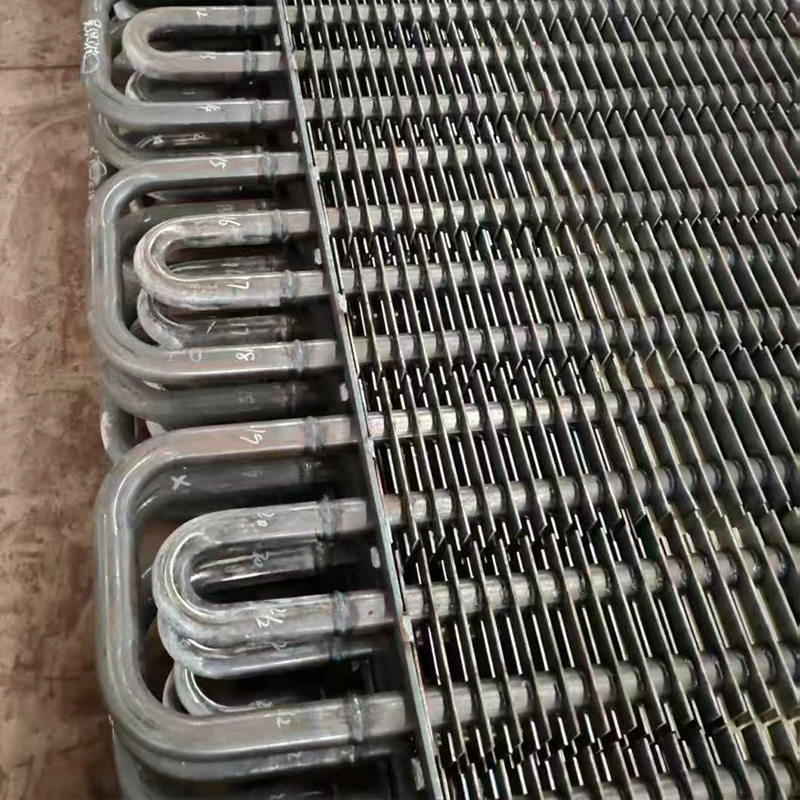
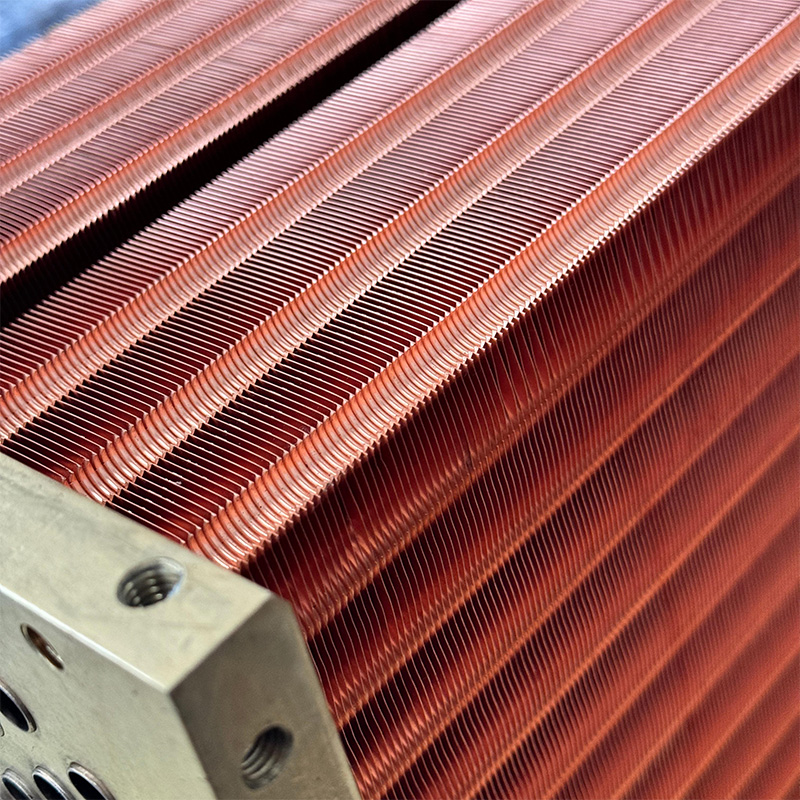
Wuxi Kaisheng's products include titanium shell-and-tube heat exchangers, ASME high-pressure units, corrugated tube bundles made of 316 stainless steel, C46400 marine brass, copper-nickel alloys and N06625 nickel. Certified to stringent international PED and ASME standards, these products offer outstanding corrosion resistance and thermal efficiency. They are widely used in oil refining, seawater desalination and energy conservation. For example, in a production line where polypropylene tanks are used to store aggressive reagents, heat exchangers made of titanium or special alloys from Wuxi Kaisheng provide precise temperature control of processes, guaranteeing the stability of the entire system. The company provides customized solutions and reliable equipment to customers around the world, creating a symbiosis of advanced polymer and metal technologies.
Frequently Asked Questions
What is the minimum order quantity and production time?
We work both with large wholesale orders from 1 ton, and with retail customers. The minimum quantity for non-standard colors or thicknesses is 300-500 kg. Standard white and black sheets in popular sizes (3000x1500mm) are often in stock and can be shipped within 1-2 days. Individual production of a batch takes from 5 to 10 working days, depending on the load of the extrusion lines. For urgent orders, it is possible to organize work in three shifts.
Can I order sheets in a custom color or with a logo?
Yes, we offer bulk polypropylene tinting services. You can choose any color from the RAL palette. However, it is worth considering that for bright and saturated colors (red, blue, green), the minimum circulation increases to 1 ton due to the need to wash the extruder and adjust the pigment dispensers. Application of the logo by embossing is possible directly during the production process if the order exceeds 2 tons. For smaller volumes, it is recommended to apply markings to finished products using silk-screen printing or laser engraving.
How to correctly calculate the required weight of sheets for my project?
The density of polypropylene is approximately 0.90-0.91 g/cm³. To calculate the weight of one sheet, multiply its length (m) by width (m) by thickness (mm) and by a factor of 0.91. For example, a sheet of 3x1.5 meters with a thickness of 10 mm will weigh: 3 * 1.5 * 10 * 0.91 = 40.95 kg. When ordering, always round the weight up, taking into account possible deviations in thickness (+5%) and packaging weight (wooden pallets, stretch film). Our managers can perform this calculation for you if you provide a cutting drawing.
Is your polypropylene suitable for food contact?
Yes, we produce sheets from food-grade polypropylene that comply with the requirements of TR CU 005/2011 “On packaging safety” and EU regulations No. 10/2011. This material does not contain toxic dyes, stabilizers, or heavy metals. It has an appropriate hygienic certificate. Food grade PP is often used to make cutting boards, pickling containers, and food industry conveyor parts. When ordering, be sure to specify the need to provide a copy of the certificate of conformity.
What guarantees do you provide for the products?
We provide a guarantee for compliance of geometric dimensions and physical and mechanical properties with those stated in the specification for 12 months from the date of shipment. The warranty does not cover damage caused by improper transportation, storage or violation of processing technology (welding, milling) on the part of the buyer. If hidden manufacturing defects are detected (delamination, bubbles inside the material), we will replace the defective batch free of charge at our own expense. All complaints are processed within 3 working days after receiving photo/video evidence.
Conclusion and recommendations for choosing a supplier
Производство листов из полипропилена — это баланс между стоимостью сырья, точностью оборудования и квалификацией технологов. Дешевый лист, купленный у непроверенного поставщика, может обернуться миллионными убытками из-за протечки резервуара или поломки детали в ответственном узле. Выбирая партнера, обращайте внимание не только на цену за килограмм, но и на наличие собственной лаборатории, возможность предоставления образцов для тестов и репутацию на рынке. Качественный полипропилен служит десятилетиями, оправдывая каждый вложенный рубль.
Если вы планируете закупку материалов для строительства химических емкостей, гальванических ванн или изготовления деталей машин, свяжитесь с нашими техническими специалистами. Мы поможем подобрать оптимальную марку материала, рассчитаем необходимое количество и предложим условия поставки, удобные для вашего бизнеса. Не рискуйте надежностью своего производства — доверяйте профессионалам с подтвержденным опытом.
Купить полипропиленовые листы оптом от производителяс доставкой по всей России и странам СНГ. Запросите коммерческое предложение прямо сейчас, чтобы получить актуальные цены и информацию о наличии на складе.