
Russian GOST standards for polypropylene pipes”
2026-08-19
- What is GOST for polypropylene pipes and why is it critical for your project
- Key GOSTs: Technical requirements and differences in standards
- Comparison of materials: PPR, PP-RCT and the influence of standards on choice
- Reinforcement and thermal expansion: Requirements of GOST 32415
- Certification process and product authentication
- Typical installation errors and their consequences according to GOST data
- Market trends 2025-2026: What awaits the industry?
- An integrated approach to engineering systems: From pipes to heat exchange equipment
- Frequently Asked Questions
- Conclusion and recommendations for choosing a supplier
What is GOST for polypropylene pipes and why is it critical for your project
Russian standards (GOSTs) for polypropylene pipes are not just bureaucratic requirements, but a fundamental set of technical conditions that determine the service life of your engineering system. Unlike European DIN standards or international ISO standards, Russian GOSTs take into account specific climatic loads characteristic of operation under conditions of sudden temperature changes from -40°C to +95°C. If you purchase products without a certificate of conformity to GOST R 52134-2003 or GOST 32415-2013, you risk receiving material that will collapse at the first water hammer or freezing. Our practice shows that an attempt to save on certification often leads to losses exceeding the cost of the pipes themselves by 10-15 times due to emergency repairs and production downtime.
In this article, we will analyze the key differences between Russian standards and Chinese GB/T and European DIN, analyze real cases of pipeline failures and give a clear algorithm for checking the supplier. You will learn which parameters really affect durability and which are just a marketing ploy. We will not use general phrases - only specific numbers, links to regulatory documents and the experience of real installation organizations.
Key GOSTs: Technical requirements and differences in standards
The main document regulating the production and use of thermoplastic pipes in Russia isGOST R 52134-2003“Thermoplastic pressure pipes and connecting parts for them for water supply and heating systems.” This standard is harmonized with international ISO 15874, but has a number of strict additions that are mandatory for execution on the territory of the Russian Federation. The second important document wasГОСТ 32415-2013, which introduced more stringent requirements for multilayer pipes reinforced with aluminum or fiberglass, which is especially relevant for central heating systems.
The main difference between Russian GOSTs is the long-term strength testing methodology. While European manufacturers often focus on standard conditions of 20°C, Russian standards require confirmation of the material’s performance under cyclic loads and extreme temperatures. For example, a PPR (Polypropylene Random Copolymer) pipe must withstand a pressure of 1.0 MPa at a temperature of 95°C for 1000 hours without breaking. Violation of this parameter by even 5% will result in the certificate being revoked.
We often encounter a situation where importers try to mislead customers by providing ISO certificates instead of GOST. This is a big mistake. The ISO certificate confirms the quality of the plant's management system, but does not guarantee product compliance with Russian climate standards. A pipe manufactured according to the Chinese standard GB/T 18742 may have an identical chemical composition, but differ in wall thickness or degree of polymer crystallinity, which will lead to brittle fracture in Russian winter conditions.
It is important to understand the working pressure (PN) classification. In Russia, the most popular pipes are PN10, PN16, PN20 and PN25. However, the PN25 marking according to GOST does not always mean the same as PN25 according to DIN. The Russian standard requires taking into account the safety factor, which for residential buildings is 1.5, and for industrial facilities can reach 2.0. Ignoring this coefficient when designing is a direct road to an accident.
Recommendation:Before signing a contract, request a test report from the supplier specifically according to GOST R 52134 methods. If the plant refuses to provide such data or refers only to internal laboratory reports, stop negotiations. The risk is too great.
Comparison of materials: PPR, PP-RCT and the influence of standards on choice
The choice of polypropylene type is dictated not only by the budget, but also by the requirements of a specific GOST for operating conditions. The Russian market is dominated by three main modifications: homopolymer (PP-H), block copolymer (PP-B) and random copolymer (PP-R). For hot water supply and heating systems, GOST R 52134 clearly recommends the use of PP-R (type 3) due to its high heat resistance and resistance to stress cracking.
In recent years, PP-RCT (crystalline random copolymer) material has been gaining popularity. Although there is no separate GOST specifically for PP-RCT yet, manufacturers certify it according to the general requirements of GOST 32415, proving increased ring stiffness. This makes it possible to produce pipes with a smaller wall thickness while maintaining the same operating parameters, which increases the internal diameter and throughput of the system by 15-20%.
Below is a comparative table of characteristics of the main types of pipes according to current Russian standards:
| Parameter | PP-H (Homopolymer) | PP-B (Block copolymer) | PP-R (Random copolymer) | PP-RCT (Enhanced) |
|---|---|---|---|---|
| Application according to GOST | Cold water, chemical waste | Sewage, cold water | Hot water, heating | High temperature heating |
| Max. temperature (short-term) | up to 60°C | up to 70°C | up to 95°C | up to 110°C |
| Impact strength at -20°C | Low (fragile) | High | Medium/High | Very high |
| Service life at 70°C/1MPa | < 5 years | ~ 10 years | >50 years | >50 years |
| Linear expansion coefficient | 0.15 mm/m°C | 0.15 mm/m°C | 0.15 mm/m°C | 0.13 mm/m°C |
One of our clients, a large developer in Siberia, was faced with the problem of massive cracking of pipes in unheated parking lots. They purchased cheap PP-B, relying on its frost resistance, but did not take into account the GOST requirement for protection from ultraviolet radiation and mechanical loads at subzero temperatures. As a result, 30% of the pipelines cracked in the first winter. Replacing it with reinforced PP-R according to GOST 32415 solved the problem, but cost the project an additional 4 million rubles.
When choosing between conventional PP-R and PP-RCT, it is worth considering life cycle economics. Yes, PP-RCT is 20-25% more expensive when purchased, but due to the increased internal diameter, lower power pumps can be used, saving energy. In addition, the smaller wall thickness speeds up the welding process, reducing labor costs for installers by 10-15%.
Action:Check the design documentation. If it simply says “polypropylene,” check the type of material. For heating risers, only require PP-R or PP-RCT with a certificate of conformity.
Reinforcement and thermal expansion: Requirements of GOST 32415
Polypropylene has a high coefficient of thermal expansion (about 0.15 mm per linear meter when heated by 1°C). This means that a three-meter pipe when heated from 20°C to 90°C will lengthen by almost 3 centimeters. If this expansion is not compensated for, the pipeline will begin to arch, creating enormous stress on fittings and support fixtures, which will inevitably lead to leaks.
GOST 32415-2013 regulates the use of reinforced pipes to minimize this effect. Reinforcement can be a continuous layer of perforated aluminum foil, fiberglass mesh or a composite layer. Aluminum reinforcement reduces the expansion coefficient to 0.03-0.05 mm/m·°C, making the behavior of the pipe close to its metal counterparts. Glass fiber gives an intermediate result of about 0.06-0.07 mm/m·°C.
In our practice, there was a case when the installation organization decided not to strip the aluminum before welding, using so-called “pipes without stripping”. The manufacturer claimed that a special adhesive layer allows direct welding. However, after two years of operation, delamination began at the welding points. Laboratory analysis showed that the adhesive degraded when exposed to a constant temperature of 85°C. GOST requires mandatory cleaning of the outer reinforcing layer with a trimmer to ensure a monolithic connection of polypropylene with polypropylene.
It is important to distinguish between external and internal reinforcement. Pipes with an outer aluminum shell require careful preparation (cleaning) before each connection. Pipes with internal reinforcement (foil inside the wall) or fiberglass are welded as usual, without stripping, which speeds up installation. However, pipes with internal aluminum have one hidden defect: if the extrusion technology is violated, the foil inside the pipe may peel off, which will block the flow of water. It is impossible to check this visually, so you should only trust brands with an impeccable reputation and a full package of documents in accordance with GOST.
For underfloor heating systems, where the temperature rarely exceeds 55°C, the use of unreinforced PN10 or PN16 pipes is allowed, since thermal expansion here is compensated by the screed itself and the pitch of the snake. But for radiator heating and hot water mains, reinforcement according to GOST is a mandatory safety condition.
Tip:When receiving a batch of pipes, be sure to check for markings indicating the type of reinforcement (for example, “GF” for fiberglass or “AL” for aluminum) and the working pressure class. The absence of markings on the pipe itself is a sign of counterfeit.
Certification process and product authentication
Legal circulation of polypropylene pipes in Russia is impossible without a Declaration of Conformity or a Certificate of Conformity. These documents are issued by accredited bodies based on the results of laboratory tests of samples. It is important to know: the declaration is drawn up by the applicant himself (manufacturer or importer) based on his own evidence, and the certificate is issued by the certification body after independent tests. For pipes used in drinking water supply, the presence of a sanitary-epidemiological certificate (now SGR - Certificate of State Registration) is also required.
How to distinguish a real document from a fake? First, check the declaration number in the unified register of the Russian Accreditation Service (fsa.gov.ru). If the number is not found or the document status is “suspended,” the goods cannot be imported. Secondly, pay attention to the HS code. For polypropylene pipes this is usually 3917 21 000 0. If a different code is indicated in the document, this is a cause for alarm.
A common mistake buyers make is trusting copied scans of certificates. Fraudsters often change dates and company names in Photoshop. Request an original or a notarized copy. Also check the validity period of the document. Certification is carried out for mass production (up to 5 years) or for a batch. If the certificate is issued for a batch, and you are offered regular deliveries, the scheme is illegal.
We recommend carrying out incoming inspection of each large batch. Even with all the papers, the geometry of the pipes may float. Take a caliper and measure the wall thickness at four points on the circle. The spread should not exceed the tolerances specified in GOST R 52134 (usually ±0.2-0.3 mm depending on the diameter). Also check the ovality of the pipe: it should not exceed 1-2% of the nominal diameter, otherwise the connection with the fittings will not be airtight.
Another marker of quality is color and surface. Pipes should be a uniform color (usually white, gray or green), without streaks, bubbles or inclusions. The surface should be smooth, matte or slightly glossy, but not rough. The presence of black dots indicates the use of recycled materials, which is strictly prohibited for drinking water pipes according to sanitary standards.
Algorithm of actions:1. Request a scan of the certificate. 2. Check the number in the RosAccreditation register. 3. Order a trial batch for geometry measurements and visual inspection. 4. Only after a successful test issue the main contract.
Typical installation errors and their consequences according to GOST data
Even the highest quality pipe that complies with all GOST standards can fail due to violations of installation technology. Service statistics show that 70% of accidents in polypropylene systems are not due to material defects, but to the human factor. Let's look at the most critical errors.
Overheating during welding.Each pipe and fitting has an optimal heating time depending on the diameter and wall thickness. For a 20 mm pipe this is usually 5-7 seconds at a welding machine temperature of 260°C. If you keep the pipe in the nozzle, the polymer becomes too liquid. When connecting, excess plastic is squeezed into the pipe, forming a powerful influx (burst), which narrows the flow area until it completely overlaps. In a heating system, this leads to airing and a drop in pressure in individual circuits.
Underheating and cold welding.The opposite situation is insufficient heating. The polymer does not have time to melt to the required diffusion depth. Externally the connection looks normal, but inside there is no monolith. Under pressure, such a joint acts like a membrane and sooner or later bursts. This often happens several months after hidden installation, when access to the pipe is already blocked with tiles or concrete.
No expansion compensation.As mentioned earlier, polypropylene expands greatly. Installers often forget to install expansion joints (U-shaped or loop) on long straight sections. As a result, the pipe rests against the wall or ceiling, bends and creates a constant load on the attachment points. Over time, the fasteners tear out of the walls, and the pipe begins to rub against the structure, wearing down to holes.
Violation of storage rules.GOST requires pipes to be stored indoors or under a canopy, protected from direct sunlight. Ultraviolet light destroys the molecular bonds of polypropylene, making it brittle. We have seen cases where pipes that had been lying in an open area in the sun for the summer broke at the first attempt to bend during installation. Such material no longer meets the declared characteristics, even if it was initially certified.
Use of unsuitable fittings.Trying to connect pipes from different manufacturers or different types (eg PP-R to PP-B) often results in incompatible melting points. The result is a leaky connection. It is also dangerous to use low quality metal threaded inserts. Thin-walled brass may burst when tightened or corrode if an alloy with a high zinc content is used.
Checkpoint:Before starting work, instruct welders. Be sure to make test welds on scraps and cut them lengthwise to evaluate the quality of the seam (it should be uniform, without pores or sagging).
Market trends 2025-2026: What awaits the industry?
The polypropylene pipe market in Russia is in a stage of active transformation. By 2026, building energy efficiency requirements are expected to become more stringent, which will directly impact the demand for insulated piping and materials with improved performance. An increase in the share of PP-RCT pipes and multilayer structures is predicted, capable of operating at higher temperatures and pressures, allowing the optimization of riser diameters.
Import substitution remains a key driver. The share of Russian manufacturers in the segment of high-quality heating pipes has already exceeded 60%. Leading factories are modernizing extrusion lines by introducing automatic systems for monitoring wall thickness and centricity. This allows us to reduce the defect rate to the level of leading European concerns. However, the raw material base still depends on the import of polypropylene granules, although the localization of raw material production is also growing.
Price pressure remains. The cost of logistics and energy affects the final price of the pipe. In 2025-2026, experts predict price stabilization within the inflation range, but jumps are possible when exchange rates or duties on imported equipment change. For large developers, this is a signal to conclude long-term contracts with fixed prices.
There is also a trend toward digitalization. More and more manufacturers are introducing QR codes on each pipe, allowing you to instantly check the certificate and batch via smartphone. This is the market's response to the problem of counterfeit goods. In the near future, the presence of such markings may become a mandatory requirement for large tenders.
Strategy:When planning purchases for 2026, consider switching to extended series pipes (Series) to improve system reliability without significantly increasing the cost of the project.
An integrated approach to engineering systems: From pipes to heat exchange equipment
The reliability of any industrial or energy system depends not only on the quality of the transport lines, but also on the efficiency of the heat exchange equipment. Selecting polypropylene pipes according to GOST is only the first step. Для сложных технологических процессов, таких как нефтепереработка, химическое производство или опреснение морской воды, требуются решения, работающие в экстремальных условиях высокого давления и агрессивных сред.
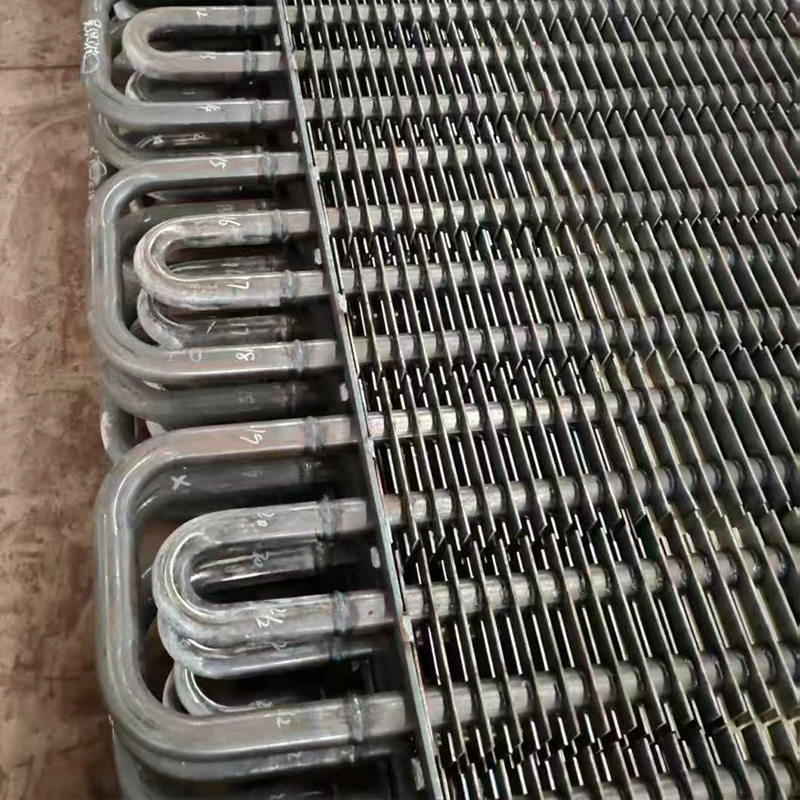
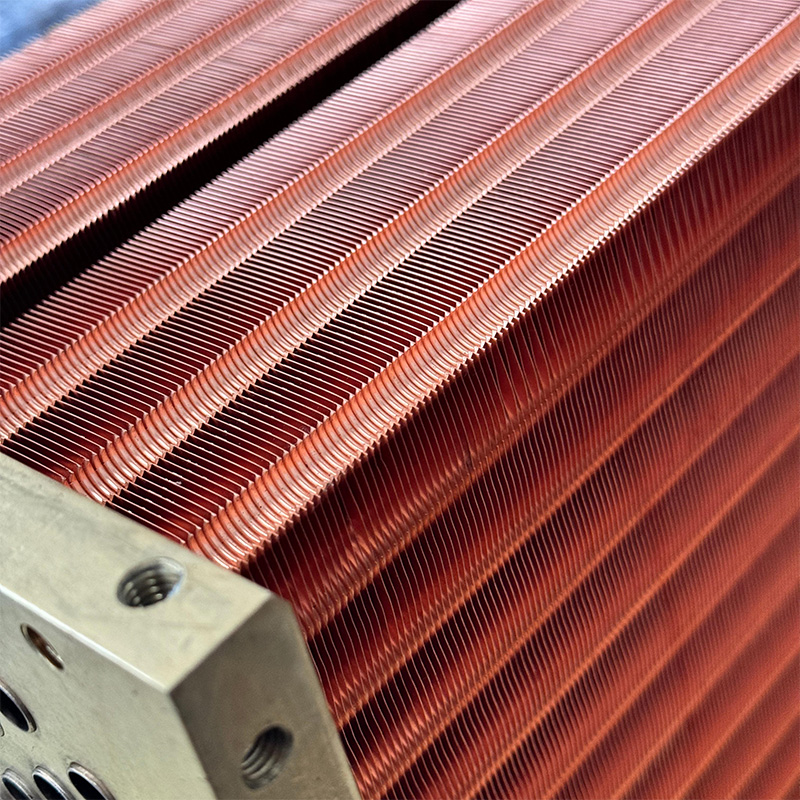
Здесь на сцену выходят специализированные производители, такие какWuxi Kaisheng Electric Power and Petrochemical Equipment Co., Ltd.. Компания специализируется на разработке и производстве высокотехнологичного теплообменного оборудования, которое идеально дополняет современные трубопроводные системы. Их портфолио включает титановые кожухотрубные теплообменники, аппараты ASME высокого давления, а также гофрированные трубные пучки из нержавеющей стали 316, морской латуни C46400 и медно-никелевых сплавов.
Продукция ООО «Уси Кайшэн» сертифицирована по международным стандартам PED и ASME, что гарантирует соответствие самым строгим требованиям безопасности и качества, аналогичным тем, что предъявляются к трубам по ГОСТ. Использование материалов вроде никелевых сплавов N06625 или трубных решеток из стали 321 обеспечивает исключительную коррозионную стойкость и теплоэффективность даже в самых тяжелых условиях эксплуатации. Такие решения широко применяются в судостроении, энергосбережении и нефтехимии, где надежность оборудования критична для бесперебойности всего производственного цикла.
Интеграция качественных полипропиленовых труб с передовым теплообменным оборудованием от проверенных поставщиков создает единую, отказоустойчивую систему. Это позволяет заказчикам по всему миру получать индивидуальные решения, которые не просто соответствуют нормам, но и превосходят их по эксплуатационным характеристикам.
Frequently Asked Questions
Какой ГОСТ является основным для полипропиленовых труб в России?
The main document isGOST R 52134-2003. Он распространяется на напорные трубы из термопластов (включая полипропилен) и соединительные детали для систем водоснабжения и отопления. Для многослойных труб применяетсяГОСТ 32415-2013. Эти документы определяют размеры, предельные отклонения, методы испытаний и требования к безопасности.
Можно ли использовать китайские трубы без сертификата ГОСТ?
Нет, использование труб без действующего сертификата соответствия ГОСТ или декларации о соответствии на территории РФ запрещено законом, особенно в коммерческом и жилищном строительстве. Продукция без сертификата не пройдет приемку надзорными органами (Госстройнадзор), а в случае аварии страховая компания откажет в выплате, ссылаясь на нарушение норм эксплуатации.
В чем разница между трубами PN20 и PN25?
Разница заключается в рабочем давлении и конструкции. PN20 — это обычно однослойная труба, рассчитанная на давление 20 бар при 20°C (но значительно меньше при высоких температурах). PN25 — это, как правило, армированная труба (алюминием или стекловолокном), способная выдерживать давление 25 бар при 20°C и сохраняющая высокие характеристики при 95°C. Для систем отопления рекомендуется использовать только PN25.
Как проверить качество трубы в домашних условиях?
Полностью проверить соответствие ГОСТ дома невозможно, но можно отсеять явный брак. 1. Проверьте маркировку (она должна быть четкой и несмываемой). 2. Осмотрите срез: стенка должна быть однородной, без расслоений и пузырей. 3. Попробуйте сжать трубу: она должна пружинить, а не хрустеть. 4. Понюхайте трубу при нагреве (осторожно): качественный полипропилен не имеет резкого запаха жженой резины или пластика.
Сколько служит полипропиленовая труба по ГОСТу?
Срок службы качественной полипропиленовой трубы, изготовленной и смонтированной в соответствии с ГОСТ, составляет не менее50 yearsпри соблюдении температурно-давленческого режима. Это гарантированный производителем срок, реальный ресурс может быть и больше при щадящих условиях эксплуатации.
Conclusion and recommendations for choosing a supplier
Соблюдение российских ГОСТов на трубы из полипропилена — это вопрос безопасности и экономической целесообразности вашего объекта. Попытки сэкономить на качестве материала или игнорировать требования стандартов приводят к катастрофическим последствиям в долгосрочной перспективе. Выбирайте поставщиков, которые готовы предоставить полные протоколы испытаний, имеют собственную службу технического контроля и не боятся независимой экспертизы.
Помните, что надежная система отопления и водоснабжения строится один раз и должна служить десятилетиями. Не рискуйте репутацией и бюджетом ради сиюминутной выгоды. Доверяйте только проверенным партнерам, работающим в правовом поле РФ, будь то производители труб или поставщики сложного теплообменного оборудования.
Если вы ищете надежного поставщика полипропиленовых труб, полностью соответствующих ГОСТ Р 52134 и ГОСТ 32415, с полным пакетом разрешительной документации и возможностью отгрузки крупных партий,contact us today. Наши эксперты помогут подобрать оптимальное решение для вашего проекта, рассчитают смету и обеспечат техническую поддержку на всех этапах реализации.
Для получения дополнительной информации о технических характеристиках нашей продукции посетите разделкаталог промышленной сантехники.