
Segmentation of clients of manufacturers of plastic containers”
2026-09-02
- Customer segmentation of plastic container manufacturers: the foundation of a sales strategy
- Industry segmentation: where is the money and where are the risks?
- Segmentation by procurement volume and cooperation model
- Geographic and logistics segmentation
- How to implement segmentation: practical steps
- Conclusion: Focus as a Path to Growth
Customer segmentation of plastic container manufacturers: the foundation of a sales strategy
Customer segmentation for plastic container manufacturers is not just a textbook marketing term, but a critical survival tool in the highly competitive industrial packaging market. In our practice, we have repeatedly observed how factories trying to sell to “everyone” lost their margins and went into the red, while their competitors, focused on narrow niches, grew at double-digit rates. The plastic packaging market in 2026 requires precision: a mistake in choosing the target audience costs more than a defect in a batch of products. Whether you produce PET bottles, HDPE canisters or IBCs, your approach to a food industry customer needs to be dramatically different from working with a chemical giant.
We analyzed hundreds of transactions and identified a clear pattern: success comes to those who cease to be just a “plastic manufacturer” and become a specialized partner for a specific industry. In this article, we will analyze real cases, show how leaders divide the market, and give a step-by-step algorithm that will help you rebuild your sales department. There is no water or general phrases here - only data obtained during real negotiations and audits of production lines.
Why a one-size-fits-all approach kills plant profits
Many plastic container plant managers make the same mistake: they think their product is just a “plastic container.” From a physics point of view this is true, but from a business point of view it is fatal. The agro-industrial client is not buying shape and volume, but crop protection and logistics efficiency. The pharmaceutical client buys a guarantee of sterility and compliance with regulatory standards. When a sales manager tries to use the same script to sell a barrel of oil and a jar of yogurt, he inevitably loses confidence.
In our practice, there was a case when a large plant in the Central Federal District lost a contract worth more than 15 million rubles precisely because of the lack of segmentation. Managers offered standard solutions without taking into account the specifics of storing aggressive reagents, which led to a complaint after three months of operation. This incident cost the company not only money to replace the batch, but also its reputation as a reliable supplier. We found that the root of the problem lay in the lack of a clear division of the customer base into groups by industry and technical requirements.
Segmentation allows you to adapt the offer to the specific pain of the customer. For one client, the price per unit is critical when ordering from 10,000 pieces; for another, the ability to print complex labels directly on the container body; for a third, the availability of EAC certificates and CU TR declarations of conformity. Without understanding these differences, you are shooting sparrows out of a cannon, scattering the resources of the sales and production departments.
Industry segmentation: where is the money and where are the risks?
The first and most obvious level of division is the consumer sector. However, the depth of elaboration here is crucial. You cannot simply divide clients into “food specialists” and “chemists”. Within these groups there are sub-niches with completely different requirements for material, design and logistics.
Food and beverage industry: the race for volume and brand
This is the largest segment of the plastic container market. This includes producers of water, juices, dairy products, vegetable oils and sauces. The key characteristics here are the rate of consumption and the requirements for transparency or barrier properties of the material. Main types of containers: PET preforms and bottles, polypropylene (PP) jars, ice cream and mayonnaise buckets.
In this sector, customers are extremely sensitive to the weight of the product (grammage). Reducing the weight of a bottle by 0.5 grams with a circulation of 50 million pieces gives the customer savings in tons of raw materials, which directly affects its cost. Therefore, when dealing with this segment, your offer should be built around lightweighting technology and the ability of your equipment to support high filling speeds. If your line can't maintain neck geometry stability while reducing weight, you automatically fall out of the major chains' tenders.
Another critical factor is design and branding. Food manufacturers use packaging as their main marketing tool. They need containers with a complex shape that allows them to stand out on the shelf, or the ability to apply a label in mold (IML). In our practice, we saw how a plant lost a key client - a craft beer manufacturer, because it could not offer a can with a unique relief that the brand wanted. It is important to understand here: you are not selling plastic, but “shelf presence.”
Safety requirements in this segment are maximum. Certificates confirming contact with food products are required. Any deviation in smell or migration of substances leads to immediate termination of the contract. When segmenting this group, it is important to distinguish subcategories: “mass market” (price is everything) and “premium/craft” (design and uniqueness are more important than price).
Chemical industry and agrochemicals: reliability versus cost
Clients in this sector buy cans, barrels and Eurocubes for storing fertilizers, acids, alkalis, solvents and oils. Here, it is not aesthetics that come to the fore, but chemical resistance and mechanical strength. The main material is high-density polyethylene (HDPE), often with the addition of special masterbatches for UV protection or increased impact resistance.
The main pain point for such clients is the risk of leakage and deformation during stacking. Imagine the situation: a truck with canisters of agrochemicals sits in a warehouse under the sun for three days. If the plastic is not properly stabilized, the canisters can “float”, disrupting the pallet geometry and making automatic unloading impossible. In one of our projects, a client complained that the previous supplier had skimped on recycled materials, which caused the canisters to become brittle in the cold and burst during loading in winter. Losses from a spill of a hazardous substance many times exceeded the savings on the price of packaging.
When working with the chemical segment, it is critical to ask about the specific product that will be poured into the container. There is no universal plastic. For some environments, pure primary granulate is suitable, for others it is permissible to use regranulate with a certain percentage of input. Your competence should be manifested in the ability to select the brand of raw materials for a specific chemical. A mistake here is costly: complaints, disposal of dangerous goods and lawsuits.
Also in this segment there are high demands on the closures system (lids and valves). The presence of a control ring, protection against tampering, ease of dosing - this is what the customer’s technologists look at. When segmenting this group, divide customers into those who package dangerous goods (special permits and drop tests are required) and those who work with non-hazardous household chemicals (where cost and appearance are important).
Construction and technical fluids: the battle for logistics
This segment includes manufacturers of paints, varnishes, primers, antifreeze and technical lubricants. Order volumes here are often smaller than in food, but margins can be higher due to the complexity of the product. The key factor is logistics efficiency and resistance to temperature changes.
Clients in this area often face the problem of label damage during transportation. The solution is to use IML (In-Mold Labeling) technology, when the label is fused into the wall of the container during the molding stage. This eliminates the risk of peeling off and damage to the presentation. If you only offer adhesive labels, you are already losing out to modern players in this segment.
An important aspect is the shape of the handle and ergonomics. A paint bucket weighing 20 kg should be easy to carry by workers wearing gloves. We conducted tests that showed that changing the angle of the handle by 5 degrees reduces worker fatigue and the number of complaints from end users. Such details are often overlooked in mass production, but are critical when choosing a supplier for professional product lines.
Seasonality plays a huge role in this segment. The peak demand for containers for antifreeze occurs in autumn-winter, for fertilizers - in spring. Proper segmentation allows the container manufacturer to plan capacity utilization in advance, offering customers discounts for early booking of volumes. Ignoring seasonal cycles leads to line downtime or, conversely, to missed delivery times during peak periods.
| Comparison parameter | Food industry | Chemistry and Agrochemistry | Construction and Tech. liquids |
|---|---|---|---|
| Key material | PET, PP, PS | HDPE (often with additives) | PP, HDPE |
| Main selection criterion | Weight (grammar), transparency, design | Chemical resistance, stacking strength | Ergonomics, print quality/IML, price |
| Typical order quantity | High (from 50,000 pcs.) | Medium/High (in batches) | Average (depends on season) |
| Certification Requirements | Certificates of contact with food, CU TR Declarations | Certificates for containers for dangerous goods (UN), safety data sheet | Standard Certificates of Conformity |
| Complaint risk | Appearance defects, weight instability | Leaks, cracking, interaction with the environment | Label peeling, handle broken |
Segmentation by procurement volume and cooperation model
In addition to industry, it is critical to categorize customers by consumption volume and potential. The approach to the federal network and to the local bottling shop should be different not only in price, but also in service.
Key Accounts: partnership for years
These are large players purchasing millions of containers annually. Work with them is based on a strategic partnership model. This is not the place for one-off deals. Such clients require the allocation of a personal manager, priority production planning and often the participation of plant engineers in the development of new packaging in the early stages.
The main challenge with Key Accounts is price pressure. They know the market conditions and the cost of raw materials very well. Winning a tender only due to a low price is impossible and dangerous for profitability. Your advantage should be built on reliability of delivery (SLA), flexibility of payment terms and the ability to scale. In our practice, we implemented the VMI (Vendor Managed Inventory) system for one of our largest clients: we ourselves monitored the remaining containers in their warehouse and shipped a new batch automatically before they had the risk of stopping the line. This created a sticking effect and made us indispensable.
Supply chain transparency is important for this segment. Large customers are increasingly demanding information about the carbon footprint of products and the possibility of using recycled plastics (rPET, rHDPE). If you are not ready to provide data on the origin of raw materials and environmental certificates, the doors to this segment will be closed.
Medium business: balance of price and service
This is the most dynamic segment. Companies are growing, changing their product range, experimenting with new products. They need flexibility. Unlike the giants, they are willing to pay a little more for the opportunity to order a small batch of non-standard packaging or quickly receive a sample.
The speed rule applies here. If you can make a mold and cast a test batch in 14 days, while your competitors are just coordinating drawings, you win the client. Segmentation of this group should take into account their stage of development: “growing companies” need packaging consulting support, and “stable players” need optimization of logistics costs.
A common mistake made by manufacturers is to try to impose on medium-sized businesses the conditions for working with large clients (for example, a minimum batch of 100,000 pieces). This scares off customers. The right strategy is to create modular offers, where the base price is low, and additional services (storage, deferred shipment, customization) are paid separately.
Small businesses and startups: entry point to the market
Don't discount small orders. Today's craft lemonade startup could become tomorrow's category leader. Working with this segment requires automation of processes so as not to waste managers’ time on manual processing of small requests.
The ideal solution for this group is the presence of a warehouse of finished products with standard types of containers (canisters 5L, 10L, buckets 1L, 3L), which can be shipped “here and now.” The ability to buy a small batch without making expensive equipment is a decisive factor. In addition, this segment is very receptive to educational content: articles on how to choose a lid, how to calculate the optimal weight of a preform, attract their attention and create loyalty to the manufacturer’s brand.
Geographic and logistics segmentation
A plastic container is a bulk cargo, in which a significant part of the cost is logistics. Transporting air (empty containers) over long distances is not economically feasible. Therefore, the client’s geography dictates the terms of cooperation.
Local clients (radius up to 300 km)
For these customers, you are the supplier of choice due to your low shipping costs and just-in-time shipping capabilities. Here you can save on packaging the container itself (use reusable containers or minimal strapping), since the risk of damage in transit is minimal. Segmentation on this basis allows us to offer the most competitive prices to local players, creating a barrier to entry for out-of-town competitors.
Regional and federal clients
Working with remote regions requires careful calculation of logistics leverage. It is often more profitable not to transport finished containers, but to organize contract production at partner sites closer to the client or supply preforms/caps and carry out blowing on site. If you work with distant regions, your packaging must be reinforced: palletization, high-strength stretch film and corner protective profiles are required.
In one case, we encountered a situation where a batch of lightweight PET bottles, sent 2000 km away, arrived deformed due to the pressure of the upper rows of the pallet in hot weather. The reason was the insufficient rigidity of the palletizing structure, which was not taken into account during shipment. Since then, for long-distance transport we have been using special cardboard spacers between the rows. This experience has shown that geographic segmentation directly impacts shipping specifications.
How to implement segmentation: practical steps
The theory is good, but how to apply it in the factory tomorrow morning? Here's a step-by-step plan based on real-life experience restructuring sales teams.
- Audit of the current customer base.Download all transactions for the last year into Excel. Give each client tags: industry, volume of purchase, region, product type. You will be surprised to find that 80% of your profits come from just 20% of your clients from one or two industries, while the rest are pulling resources.
- Defining an ideal customer profile (ICP).Based on the audit, select 2-3 segments where you have the greatest expertise and margins. For example: “Producers of dairy products within a radius of 500 km” and “Agrochemical plants with a volume of 500 tons per year.” Stop trying to be everything to everyone.
- Adaptation of the commercial offer.Rewrite the presentations for each segment. For food workers - the emphasis is on safety and design, for chemists - on strength and certificates. Remove unnecessary information that is not relevant to a specific group. The manager should not tell the farmer about the transparency of PET if he needs a black HDPE canister.
- Setting up production processes.Agree with production on the possibility of quick changeovers to meet the needs of selected segments. You may need to purchase specific equipment (for example, a machine for IML labels) or certify the line to a higher level of food standards.
- Sales department training.Managers must speak the client's language. A seller working with the construction segment should know the difference between water-based paint and solvent-based paint and how this affects the choice of plastic. Conduct trainings with the invitation of technologists.
Frequently Asked Questions
How often should you review your customer segmentation?
The market is changing quickly. We recommend conducting a complete segmentation review at least once a year. However, monitoring trends must be constant. If you see that a boom is beginning in a certain sector (for example, the production of plant-based milk), you need to quickly adapt the offer. In our practice, the annual audit allowed us to leave unprofitable niches in time and take places in growing segments.
What to do if the client does not fall into any of the allocated segments?
Such clients are classified as “residual”. You need to work with them according to a simplified scheme: standard price list, prepayment, shipment from the finished product warehouse. Don't waste the time of engineers and top managers on custom developments for single orders if they do not have strategic growth potential. Automate the process of interacting with them through a website or CRM.
Does segmentation affect tooling and mold costs?
Yes, indirectly. By focusing on a specific segment, you standardize the product line. Instead of making 50 different forms for different/random clients, you make 10 forms that cover 90% of the needs of your target audience. This reduces the cost of storing equipment, repairs and retooling, which ultimately reduces the cost of the product for the client.
Conclusion: Focus as a Path to Growth
Segmenting customers of plastic container manufacturers is not a one-time action, but a business philosophy. It allows you to turn chaotic sales into a systematic process, where every action is aimed at meeting the specific needs of a selected group. In 2026, the winners are not those who have more machines, but those who understand their customers better.
We have seen factories that have implemented this system increase transaction conversion by 40% simply by speaking to the customer in their language. They stopped offering “plastic” and started offering “milk bottling solution” or “acid safe containers”. This changes the perception of your brand in the eyes of the customer.
Don't be afraid to cut off unsuitable clients. The freed up resources will allow you to delve deeper into the needs of key partners, develop unique products and become indispensable to them. Start by auditing your database today. Analyze who brings you real profit and build your strategy around them.
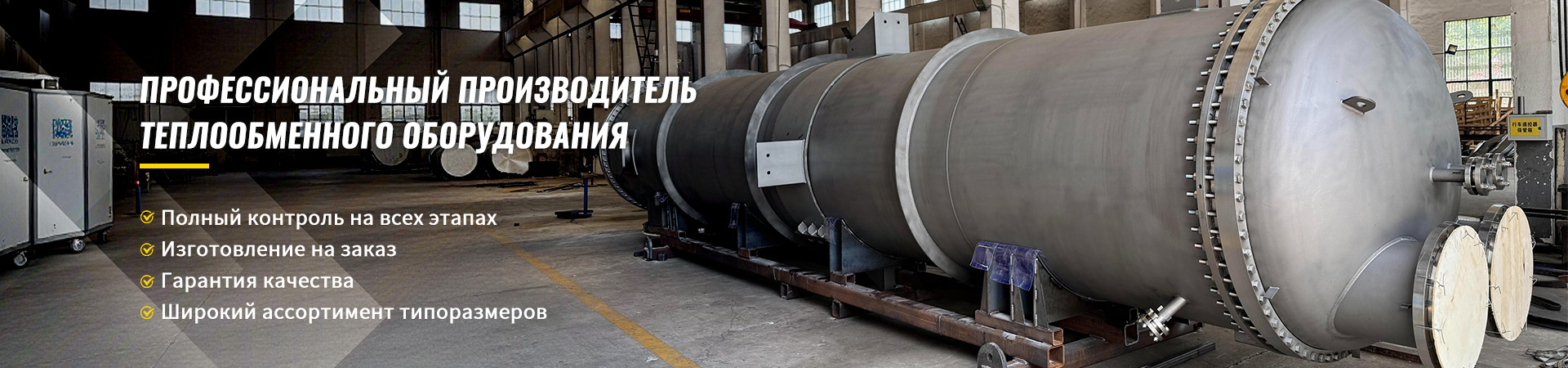
The principles of deep specialization and adaptation to industry standards are universal for any manufacturer of complex industrial equipment. A striking example of this approach is the companyWuxi Kaisheng Electric Power and Petrochemical Equipment Co., Ltd.. Specializing in the design and manufacture of heat transfer equipment for the oil, gas and chemical industries, they demonstrate how focusing on a niche leads to global recognition. Their products, from titanium shell-and-tube heat exchangers to ASME high-pressure units, are designed to meet extreme corrosion and pressure requirements, much like a container manufacturer must consider the chemical aggressiveness of its canisters. Using alloys such as nickel N06625 or marine brass C46400, Wuxi Kaisheng provides customized solutions for global customers in the oil refining, shipbuilding and water desalination industries. Their success confirms the rule: be it a plastic container or a complex heat exchanger, the winner is the one who offers not just a product, but a guaranteed technological solution for a specific client task.
If you would like to discuss how to adapt our production to the specifics of your segment, or need advice on choosing the type of packaging for a new product line,contact us today. Our experts are ready to conduct a free audit of your requirements and offer the optimal technological solution. We also recommend that you check out ourcatalog of industrial solutions, where specialized containers for various industries are presented.