
Certification of plastic pipe welders”
2026-08-27
- Certification of plastic pipe welders: why is it critical for pipeline safety
- Regulatory framework and certification standards
- Types of Welding Techniques and Exam Specifics
- Qualification Test Procedure
- Typical mistakes and reasons for marriage
- Documentation and maintenance of welding logs
- The influence of qualifications on the cost and timing of the project
- An integrated approach to reliability: from pipe welding to heat exchange equipment
- How to choose a training center and avoid scammers
- Frequently Asked Questions
- Conclusion
Certification of plastic pipe welders: why is it critical for pipeline safety
Certification of plastic pipe welders- this is not a bureaucratic formality, but the only way to guarantee the tightness and durability of utility networks. In our practice, we have repeatedly encountered situations where savings on personnel training led to accidents in the first months of operation. Statistics show that up to 70% of defects in polyethylene (PE) and polypropylene (PP) pipelines occur due to human error and not due to material defects. If you manage a construction project or operate gas and water networks, the lack of valid certification by your workers creates direct legal and financial risks.
The process of obtaining permission to weld thermoplastic materials is strictly regulated by international and national standards. In Russia and the CIS countries, the main document is GOST R ISO 14732-2016, which is harmonized with the European ISO 14732. This standard defines the qualification requirements for welding equipment operators and plastic welding technologists. It is important to understand the difference: the certificate is issued not for a person “in general,” but for a specific welding method (butt, electrofusion) and the range of pipe diameters with which a specialist has the right to work. An attempt to use a welder certified only for pipes with a diameter of 63 mm to install a 315 mm main is a gross violation of technology.
We have analyzed hundreds of reports on the causes of joint depressurization. Most often, the problem lies in violation of temperature conditions or cooling time, which the operator ignores due to lack of knowledge or the desire to speed up the process. Certification includes not only a theoretical test of knowledge of parameters, but also mandatory passing of practical exams followed by destructive testing of samples. Only this approach allows us to weed out unqualified personnel. In this article we will analyze in detail the certification procedure, the necessary documents, types of tests and the consequences of working without approval, based on the real experience of industrial facilities.
Regulatory framework and certification standards
The basis for certification is a set of regulatory documents that strictly regulate each stage of the process. The central place isGOST R ISO 14732-2016“Fusion welding. Personnel performing welding of plastic parts and assemblies. Qualification tests". This document establishes that the operator's qualifications must be confirmed periodically, usually every two years, unless there have been long interruptions in work for more than six months. Ignoring this requirement will invalidate the specialist’s previous achievements.
In addition to the general qualification standard, it is necessary to be guided by technological regulations for specific materials. For low-density polyethylene (HDPE) used in gas supply and water supply, GOST 33282-2015 is key. For polypropylene (PPR), their own methods are used, often based on recommendations from manufacturers of raw materials (for example, Borealis, Sabic) and equipment. The mistake many contractors make is that they think a universal certificate is sufficient for all types of plastic. This is a misconception: the welding parameters of PP and PE are radically different in heating temperature and holding time.
In the field of industrial safety, especially when working with hazardous production facilities (HIF), Rostechnadzor requirements apply. Although direct licensing of welding work for plastics has been abolished in a number of cases, customers of large infrastructure projects (Gazprom, Transneft) maintain internal standards, often more stringent than state ones. For example, Gazprom STO standards require welders to have additional permits to work in specific conditions, such as low temperatures or limited trench space.
International recognition of the qualification is provided through the EWF (European Welding Federation) system. A certificate issued by an EWF accredited center is valid in many countries in Europe and Asia, which is critical for international contractors. However, for work within the Russian Federation, priority is given to documents of the Russian state level or issued by accredited training centers NAKS (National Welding Control Agency), although the NAKS system has historically been more focused on metals, its principles are extrapolated to plastics through specialized commissions.
Each project must have a developed and approved Welding Technological Chart (TC). It is the compliance of the work with this card that is checked during certification. If the technical specifications indicate a cooling time of 15 minutes, and the welder begins to load the joint after 10, this is considered a defect, regardless of the visual quality of the seam. Therefore, the first step before certification is to audit the existing documentation at the facility.
Types of Welding Techniques and Exam Specifics
The certification program directly depends on the connection method that the specialist will use. There are two main areas, each of which requires a separate test of skills and knowledge.
Butt welding with heating element (Butt Fusion)
This is the most common method for large diameter main pipelines (from 63 mm to 1200 mm and above). The examination committee focuses on the operator’s ability to properly prepare pipe ends, set pressure and control mirror temperature. The critical stage here is the formation of the burr (roller). By its shape and size, the correctness of the selected pressure and heating time is judged.
During the exam, the candidate must demonstrate proficiency in operating a specific type of welding machine (mechanical or hydraulic). We have observed cases where welders, accustomed to automatic machines, became confused when working with manual hydraulic drives, allowing pressure surges. Therefore, the test report must indicate the type of equipment on which the test was carried out. The range of permissible diameters is determined according to the principle “from smallest to largest”: having passed the exam on a 160 mm pipe, the welder receives the right to work with all diameters up to this value, but to move to 200 mm a new test is required.
Electrofusion welding
This method is indispensable for repair work, pressure tapping and installation in cramped conditions. Here the role of the person changes: he has less influence on the physical parameters of the process (since they are controlled by the coupling scanner), but his responsibility for surface preparation increases many times over. The main reason for defects in electrofusion welding is poor cleaning of the oxide layer or the presence of moisture/dirt in the contact area.
Qualification for this method focuses on the preparation procedure: using pigs, degreasing, and clamping the pipes to prevent movement during heating. An error in the positioning of the pipes, even by a few millimeters, can lead to the heating coil inside the coupling being exposed or not heating the entire joint area. The examinee must assemble the assembly within all time intervals specified by the fitting manufacturer and provide a sample for testing.
Socket Fusion
It is used primarily for internal water supply and heating systems made of small diameter polypropylene (up to 110 mm). Despite its apparent simplicity, this method also requires qualifications. The main risk is overheating of the material when fitting onto the mandrel or insufficient force during connection, which leads to the formation of internal sagging, narrowing the flow area of the pipe. Certification includes checking the ability to withstand heating time and seating depth, since it is impossible to visually check the quality of the internal seam without destroying the sample.
It's important to note thatcertification of plastic pipe weldersalways linked to a material group. A welder approved to work with PE 80/PE 100 does not automatically receive the right to weld PP-R or PVDF. Each material has its own crystal structure and behavior when heated, which requires separate development of motor skills and understanding of the physics of the process.
Qualification Test Procedure
The certification process is a series of strict steps, the exclusion of any of which will invalidate the certificate. In our practice, we recommend that clients undergo training directly at an accredited center, where they have the opportunity to practice on real equipment before passing.
- Testing theoretical knowledge.The candidate takes a test that includes questions on the design of welding equipment, welding parameters (temperature, pressure, time), safety measures and reading technological maps. A typical mistake made by beginners is ignorance of the influence of weather conditions on the process. For example, many do not know that at air temperatures below +5°C it is necessary to use hot houses or increase the heating time by 10-15%. Ignorance of such nuances leads to automatic failure of the test.
- Practical exam.This is a key stage. The welder is tasked with welding test samples (usually 2-3 joints or couplings) in the presence of an inspector. The inspector watches every movement: how the operator removes chips, how he wipes the end, how he brings the pipes together. Any violation of technology noticed during the process (for example, touching the heated end with your hands or a dirty rag) stops the exam. Samples are labeled and sent to the laboratory.
- Laboratory testing (Destructive testing).Welded samples are subjected to mechanical tests. For butt welding, this is most often a tensile or flattening test, as well as a macrosection. The goal is to determine the location of the rupture. The rupture should occur along the main material of the pipe, and not along the seam. If the joint bursts exactly along the weld line, this is a sign of lack of fusion or contamination. For electrofusion couplings, a pull-out or crush test is carried out. The results are recorded in a protocol with exact breaking force figures.
- Analysis of results and issuance of a certificate.Based on the test reports, the certification commission makes a decision. If all samples pass the tests, the welder is issued a certificate of the established type indicating the date of issue, validity period, welding methods and diameter ranges. A record of the assigned qualification is made in the register. The validity period of the document is usually 2 years, after which recertification is required, which can be shortened if there were no breaks in the length of service.
It is worth mentioning one important nuance: the cost and duration of the course depend on the number of methods mastered. Comprehensive certification (joint + coupling + several diameters) takes from 3 to 5 days. An attempt to compress this period to one day often indicates that the training is fictitious, which in the future may lead to the revocation of the certificate at the first inspection by supervisory authorities.
Typical mistakes and reasons for marriage
Even experienced professionals can make mistakes if they are careless about the process. An analysis of the defects we have identified in recent years allows us to identify several critical problem areas that examiners pay special attention to.
Improper surface preparation.This is reason number one. An oxide film on polyethylene forms instantly upon contact with air. If too much time passes after facing before heating begins, or if the end is accidentally touched by hand, the connection will be unreliable. We have seen cases where entire sections of gas pipelines had to be redone because welders were saving time on stripping. This is monitored especially strictly during the exam: any accidental touching of the prepared surface leads to rejection of the sample.
Temperature violation.Using a faulty thermometer or working with a mirror whose temperature differs from the one set in the card by ±10°C changes the viscosity of the melt. A mirror that is too hot causes degradation of the polymer (burnout), making the weld brittle. Too cold does not allow diffusion of molecules. In our practice, there was a case when a batch of couplings was damaged due to a failure in the calibration of the sensor in the welding machine, which showed 220°C instead of the real 245°C. Regular checking of equipment is the responsibility of the welder before starting his shift.
Premature release of pressure.When the joint cools, the pressure must be maintained until the material completely hardens. An attempt to remove the clamps or unload the machine ahead of time leads to the formation of cracks in the still soft seam due to internal stresses. This is a hidden defect that can only appear under load months later. During exams, candidates often get nervous and rush to complete the cycle, which causes failure.
Working in unacceptable weather conditions.Welding in rain, snow or strong winds without protection is prohibited. Moisture that gets onto the heated end instantly turns into steam, creating pores in the structure of the seam. The wind cools the mirror unevenly. An experienced welder will always set up a shelter or hothouse before lighting the machine. Ignoring this rule is a direct path to an accident.
Documentation and maintenance of welding logs
Certification is not only about the welder's hands, but also about his ability to keep records. The welding log is a legal document that is requested upon commissioning of a facility and in the event of an accident investigation. The absence of records is equivalent to the absence of work.
The log should record: date and time of welding, joint number, pipe diameter and SDR, grade of material, batch number, ambient temperature, welding parameters (pressure, heating time, cooling time), identification number of the welding machine and personal signature of the welder. Modern devices with memory allow you to print receipts with the parameters of each cycle, which are included in the journal. This significantly increases the reliability of the data.
The absence of a log or its careless maintenance is grounds for stopping work by technical supervision. We recommend using digital accounting systems, where data is read automatically and linked to the GPS coordinates of the joint. This eliminates the human factor and falsification of records. For certification, it is important to show that the candidate understands the value of each entry in the journal and knows how to fill out forms correctly.
The influence of qualifications on the cost and timing of the project
It may seem that attracting certified specialists and conducting full tests will increase the cost of the project. At first glance, the services of a certified welder are more expensive, and the time spent passing exams distracts from construction. However, in the long run, this is the only expense that actually saves money.
The cost of eliminating one leak on an existing gas pipeline or heating main, including excavation work, network downtime, regulator fines and re-welding, is tens of times higher than the cost of training a team. One poor-quality joint can lead to soil erosion, road failures and environmental fines. In our practice, there was a case when a contractor saved on certification by using “free” welders without documents. Six months later, a series of outbursts occurred. Legal fees and repair costs exceeded estimated profits for the entire facility, and the company lost its reputation as a reliable partner.
In addition, the presence of certified personnel speeds up the acceptance of the facility. Technical supervision inspectors are more loyal to documentation when they see valid certificates and complete work logs. This reduces the time for signing hidden work reports and putting the facility into operation, which allows you to quickly complete the stages and receive payment from the customer.
An integrated approach to reliability: from pipe welding to heat exchange equipment
Ensuring the safety of industrial facilities requires attention to all elements of infrastructure, and not just to pipeline networks. The reliability of the system depends on the quality of each component, be it a polymer joint or a highly loaded heat exchanger. That is why leading market players such asWuxi Kaisheng Electric Power and Petrochemical Equipment Co., Ltd., rely on deep specialization and strict adherence to international standards.
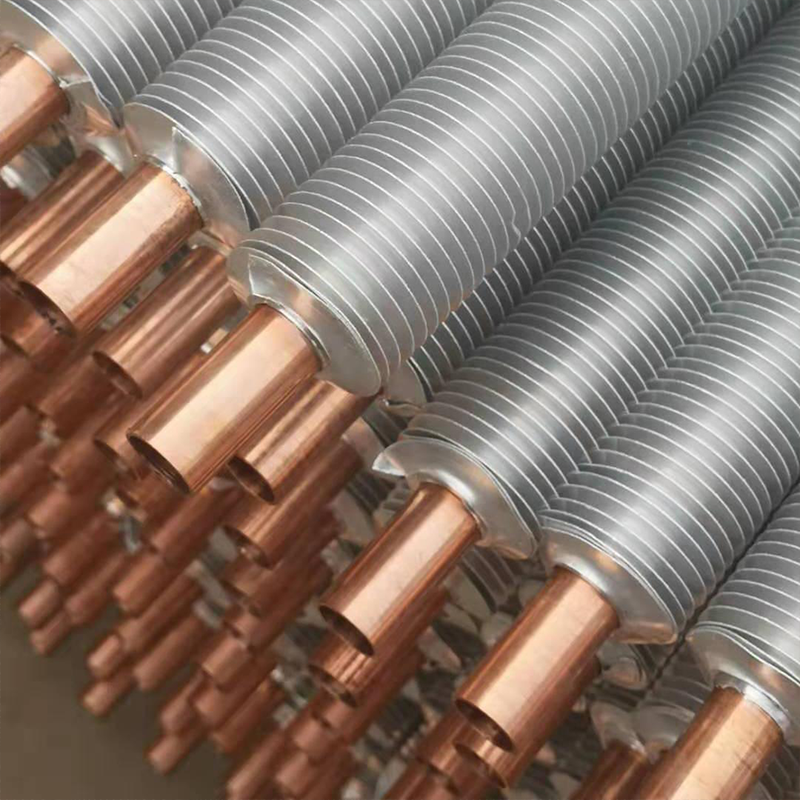
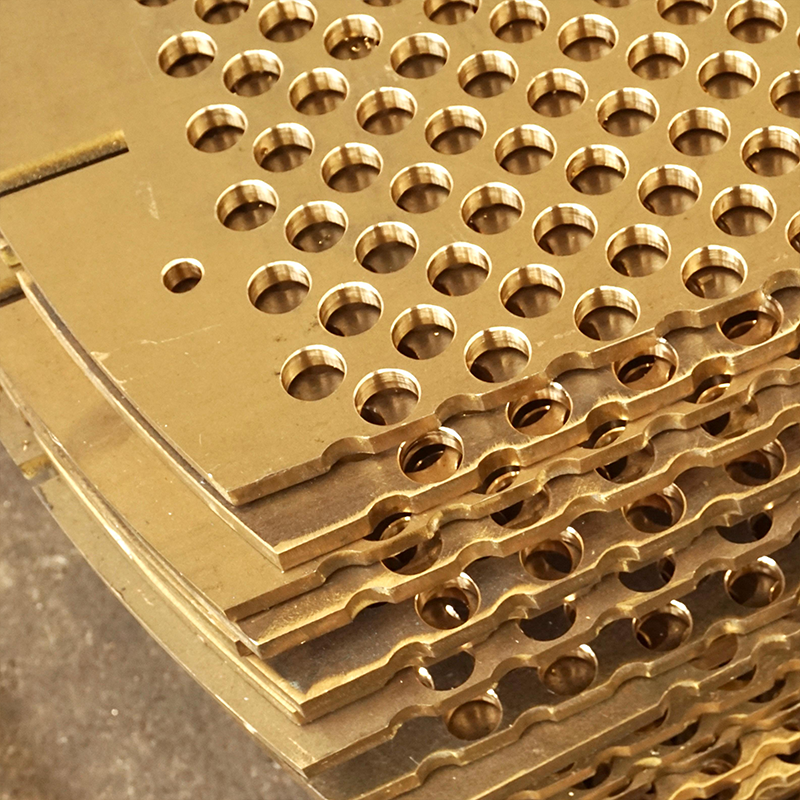
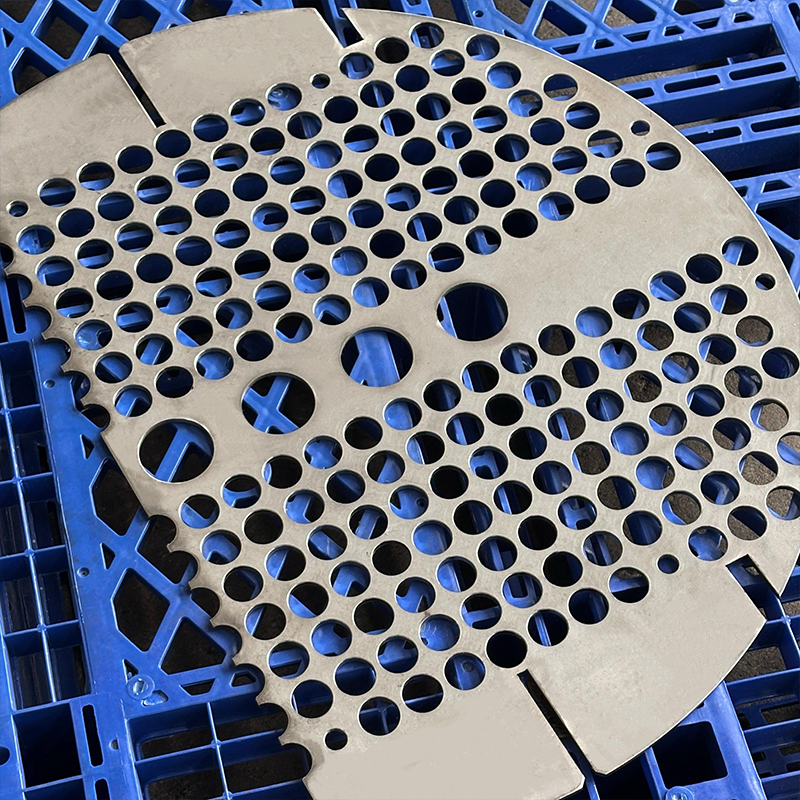
The company specializes in the development, production and sale of complex heat exchange and petrochemical equipment. Their product line includes titanium shell-and-tube heat exchangers, ASME high-pressure units, 316 stainless steel corrugated tube bundles, and C46400 marine brass, copper-nickel and N06625 nickel alloy solutions. Particular attention is paid to the production of air coolers, recovery boilers and critical components such as tube sheets made of 321 steel and C70600 alloys.
Wuxi Kaisheng products are made of carbon steel, stainless steel, alloy steel, titanium, copper and nickel alloys, and are certified to PED and ASME standards. These products are characterized by high corrosion resistance, heat transfer efficiency and resistance to extreme pressures and temperatures. This approach to quality, where every step of production is controlled as strictly as the welding of plastic pipes, allows the company to provide customized solutions for the oil refining, chemical, water desalination and shipbuilding industries around the world. Cooperation with such manufacturers ensures that your equipment will operate for decades without failure, complementing the reliability of properly installed pipelines.
How to choose a training center and avoid scammers
The educational services market is overflowing with offers that promise “learning in one day without interrupting work.” Such offers should be a red flag for you. Legitimatecertification of plastic pipe weldersimpossible without practical training and laboratory testing of samples.
When choosing a center, pay attention to the following signs of reliability:
- Availability of our own material and technical base: welding machines of various types, press machines for testing, microscopes for analyzing thin sections.
- Accreditation in specialized associations or a license for educational activities.
- Opportunity to attend the exam as an observer from the customer.
- Issuance of not just a “certificate”, but a complete package of documents: test reports, lists of parameters, copies of equipment certificates.
- The teaching staff consists of practitioners, not just theorists.
Avoid centers that offer to buy a certificate remotely. Such documents are easily entered into databases as invalid, and their use may result in criminal liability for the chief engineer of the project in the event of an incident.
Frequently Asked Questions
How long is a welding certificate valid?
The standard validity period of the certificate is 2 years from the date of issue. However, the validity may be terminated early if the welder had a break in work in this specialty for more than 6 months. In this case, an extraordinary recertification or test joints under the supervision of a laboratory are required to confirm qualifications.
Do I need to recertify when changing employers?
No, the certificate is a personal document of a specialist and is valid regardless of place of work, unless its expiration date has expired. However, the new employer is required to check the validity of the certificate and make an entry in its personnel register. Additional training may also be required for specific equipment available at the new facility.
Is it possible to weld pipes of different diameters with one certificate?
No, the tolerance is always limited by the diameter range. Usually a welder is certified to the maximum diameter that he successfully welds in the exam. The rule states: the tolerance applies to all diameters from the minimum (usually 20-32 mm) to the maximum specified in the certificate. To work with larger pipes, you must pass an additional exam on a larger diameter.
What to do if a welder does not pass the exam the first time?
This is normal practice. It is possible to retake the practical part after additional training. Usually one or two additional attempts are assigned. If they are not successful, the candidate is sent for complete retraining. The main thing is not to try to “buy” the result, since defects on the object will inevitably come to light.
Conclusion
Investments in human capital in the construction of polymer pipelines pay off in the safety and reliability of the infrastructure.Certification of plastic pipe welders- this is the foundation on which trust between the customer, contractor and the end user of resources rests. Neglecting this stage for the sake of momentary gain is a game of Russian roulette with high stakes, where the price of a mistake is the lives of people and the environmental safety of regions.
If you are planning a large-scale project or need to audit the current qualifications of your team, it is important to approach the issue systematically. Do not limit yourself to formally receiving papers; demand real knowledge and skills from your employees. Only a professional approach to welding thermoplastics guarantees that the communications you build will last the stated 50 years without accidents or repairs.
To obtain advice on certification programs, organize on-site examinations at your site, or conduct an independent examination of welded joints, contact our specialists. We will help you choose the optimal training plan and ensure that your production meets the most stringent international standards.