
Licensing of activities for the production of containers”
2026-08-27
- Licensing of container production activities: Direct answer and key requirements
- Regulatory framework and classification of hazardous equipment
- Material and technical requirements for the production facility
- Personnel potential and quality control system
- Step-by-step algorithm for obtaining a license in 2025-2026
- Typical mistakes and risks of refusal to issue
- Licensing costs and payback periods
- Frequently Asked Questions
- Conclusion and development strategy
Licensing of container production activities: Direct answer and key requirements
Licensing of container production activities in the Russian Federation is a mandatory procedure only for those enterprises that manufacture vessels operating under excess pressure above 0.07 MPa, or tanks for storing flammable liquids and liquefied gases. If your production produces ordinary plastic water tanks, metal barrels with a volume of up to 250 liters without pressure, or decorative containers, you do not need a state license - a certificate of compliance with the technical regulations of the Customs Union (EAEU) is sufficient. However, as soon as it comes to industrial equipment under pressure, ignoring the requirements of Rostechnadzor leads to criminal liability for the director and confiscation of the products. In our practice, we encountered a situation where a plant in Tatarstan launched a batch of heat exchangers without a formalized industrial safety examination report, which led to a shutdown of the conveyor for 4 months and fines exceeding the cost of the equipment itself.
The process of obtaining permission is strictly regulated by Federal Law No. 99-FZ “On licensing of certain types of activities” and Government Decree No. 1463 of the Russian Federation. The key barrier to entry into the market is not bureaucracy, but the presence of its own production base, certified specialists and a functioning quality control system. The state will not issue a license to a fly-by-night company or reseller that does not have welding stations, flaw detectors and laboratories for incoming metal inspection. We recommend immediately assessing the compliance of your workshop with the requirements of Rostekhnadzor Order No. 536 before paying the state fee, since refusal to issue a license due to inconsistency of the material and technical base occurs in 30% of initial applications.
Regulatory framework and classification of hazardous equipment
The basis for regulating the industry is the Technical Regulation of the Customs Union TR CU 032/2013 “On the safety of equipment operating under excess pressure.” This document defines the scope of application of licensing requirements. Licensing of container production activities affects equipment of hazard classes I and II. The first class includes vessels operating at a wall temperature of no more than 200°C, where the product of pressure (MPa) and volume (m³) does not exceed 0.2 for gases and 0.4 for liquids. The second class includes more powerful units, where the risk of destruction is higher. It is important to understand that if you produce containers for cryogenic liquids or liquefied petroleum gas (LPG), you are automatically subject to strict control, regardless of volume.
Unlike civilian goods, where declaration is sufficient, industrial containers require an industrial safety examination (ISA). This is not a formality, but a deep engineering analysis of design documentation and technological processes. According to the Pressure Equipment Manufacturers Association, about 15% of projects are rejected at the EDS stage due to errors in strength calculations or incorrect choice of steel grades. For example, the use of St3sp steel instead of 09G2S for operation at subzero temperatures below -40°C is a critical error that experts must identify. We have seen cases where manufacturers tried to save on metal, which led to brittle failure of the seams during hydro testing.
In addition to federal legislation, it is necessary to take into account industry standards GOST. For vertical steel tanks, GOST 31385-2016 applies, for horizontal ones - GOST 17032-2010. The licensing authority (Rostechnadzor) checks not only the presence of these standards in regulatory control, but also the actual compliance with technological maps. If the drawings indicate one welding mode, but welders in the workshop work differently, this is interpreted as a violation of licensing requirements. Our experience shows that the most common reason for license suspension is precisely the discrepancy between design documentation and actual production practice.
Criteria for classifying products as licensed
- Pressure:Excess pressure more than 0.07 MPa (for steam, gas, hot water).
- Temperature:Heating water above 115°C or other liquids to boiling point at pressure above atmospheric pressure.
- Volume:For vessels with pressure > 1.6 MPa, the volume must be more than 25 liters; for pressure 0.07–1.6 MPa - the product of pressure and volume > 0.2 m³·MPa.
- Wednesday:Presence of explosive, toxic or high-temperature atmospheres inside the container.
If your products do not fall under any of these points, licensing of activities for the production of containers does not apply to you, but you will need to issue a Certificate of Conformity TR CU 010/2011 “On the safety of machinery and equipment.” This is an important nuance: many entrepreneurs confuse these concepts and try to obtain a license where only declaration is required, wasting time and money. Always start by classifying your product according to HS codes and technical parameters.
Material and technical requirements for the production facility
Obtaining a license is impossible without confirmation of the availability of production premises and equipment owned or long-term leased (at least 1 year). Rostekhnadzor conducts an on-site inspection to make sure that the machines are actually in the workshop, and not in photographs in the presentation. The area of the room must correspond to the dimensions of the products being manufactured. For the production of large tanks (volume over 50 m³), covered areas with crane beams with a lifting capacity of at least 5 tons are required. Open areas are allowed only for the assembly stages of large-sized structures, provided that the welding stations are protected from precipitation.
Particular attention is paid to welding production, as this is a critical unit for the manufacture of containers. The enterprise must have welding power sources (semi-automatic, argon-arc welding), equipment for heat treatment of welded joints (stress furnaces) and stands for hydropneumatic testing. In our practice, there was a case when a company was deprived of its license because the heat treatment furnace failed, and the manufacturer did not notify the regulator about this and continued to ship products without relieving stress in the metal. This created a risk of fatigue failure after 2-3 years of operation.
Laboratory control is an integral part of the infrastructure. You can't send every metal sample to a third-party laboratory - it's too time-consuming and expensive for mass production. An in-house non-destructive testing (NDT) laboratory or an agreement with an accredited center located in close proximity is required (sample delivery time should not affect the production cycle). It is mandatory to have ultrasonic flaw detectors, radiographic units (with a license to work with sources of ionizing radiation) and capillary control. The absence of a log of NDT results or overdue verification of instruments is a guaranteed reason for refusal to renew a license.
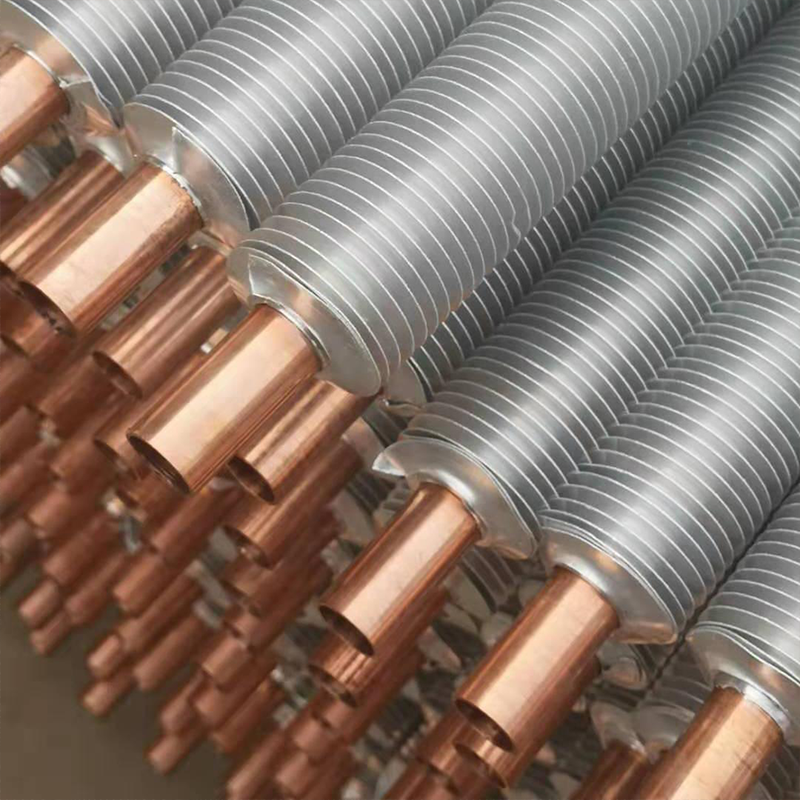
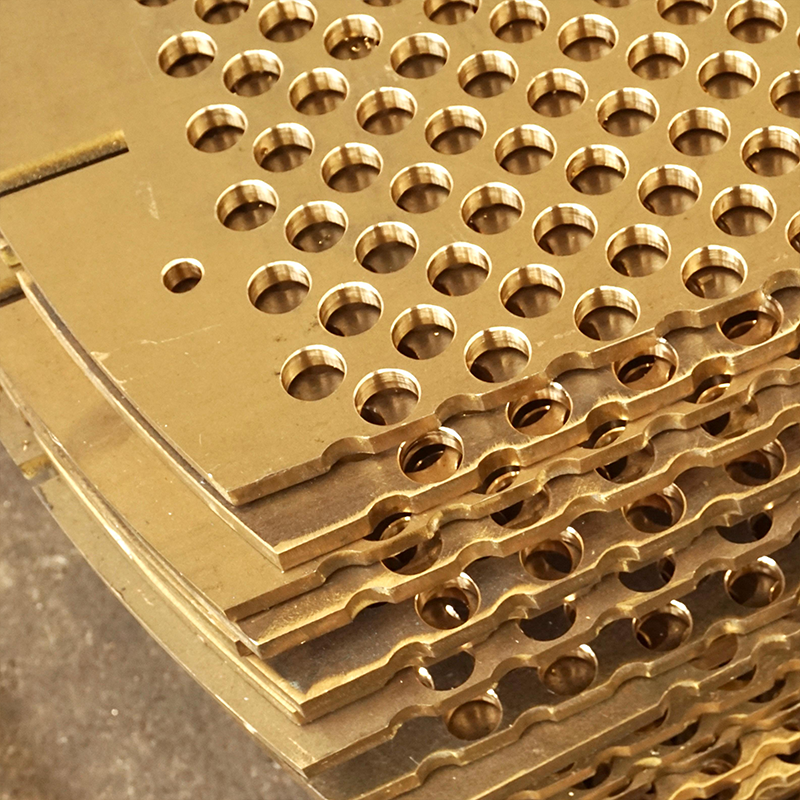
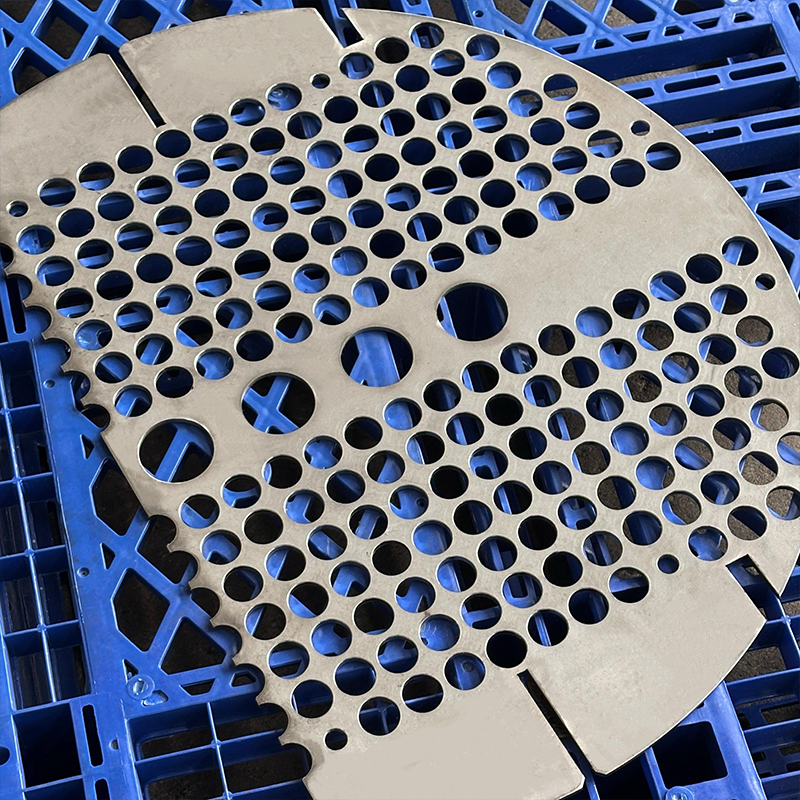
High standards of logistics are especially important for manufacturers of complex heat transfer and petrochemical equipment. A striking example of an approach that meets the most stringent international and Russian requirements is the companyWuxi Kaisheng Electric Power and Petrochemical Equipment Co., Ltd.. Specializing in the design and production of high-pressure heat exchangers (including ASME and PED standards), titanium shell-and-tube units and air coolers, the company demonstrates what a modern production base should look like. The use of materials such as 316 stainless steel, C46400 marine brass, copper-nickel alloys and N06625 nickel alloys in production requires not just equipment, but precise quality control at every stage - from incoming metal inspection to final hydraulic testing. The company's products, widely used in oil refining, the chemical industry and shipbuilding, confirm that only serious investment in technology and certification allows us to create equipment that is resistant to extreme pressures, temperatures and corrosive environments.
Minimum list of equipment for a license applicant
| Equipment type | Purpose | Condition Requirements | Common mistake |
|---|---|---|---|
| Sheet rollers | Molding of hull shells | Working stroke, matching sheet thickness | Use of worn shafts causing ellipse |
| Welding complexes (AFC) | Welding longitudinal and circumferential seams | Process automation, arc stability | Lack of welding process qualification (WPS) |
| Flaw detectors (UZK, RK) | Seam quality control | Verification at least once a year | Working with expired devices |
| Pumping units | Hydropressure testing | Smooth pressure adjustment, pressure gauge accuracy class 1.5 | Using technical rather than standard pressure gauges |
| Heat treatment furnaces | Welding stress relief | Automatic temperature recording | Lack of heating diagrams in the product data sheet |
It is important to note that equipment rental is possible, but the agreement must be registered and provide full access for your staff to operate these mechanisms. The situation when the machines belong to a partner, and your workers only “press buttons,” often raises questions from inspectors regarding the actual control over the technological process. We advise you to own at least key items, such as welding machines and measuring instruments, to eliminate the risk of lease termination in the middle of the test period.
Personnel potential and quality control system
Licensing of activities for the production of containers requires the presence of specialists with appropriate qualifications on staff. Simply hiring people with diplomas is not enough - their competencies must be confirmed by certification certificates from NAKS (National Welding Control Agency). At least two specialists must have level II or III in visual and measurement testing (VIT), and two more in ultrasonic (UZK) or radiographic (RK) testing. Without certified personnel who have the right to sign quality certificates, product release is legally impossible.
The chief engineer and technologist of the enterprise must have a higher technical education in the field of “Mechanical Engineering” or “Chemical Production Equipment” and work experience of at least 3 years. During the inspection, the licensee provides copies of work records and diplomas. A common problem we encounter is the formal presence of a chief engineer on staff who actually works elsewhere, while at the plant the process is managed by a foreman without a higher education. Rostechnadzor easily identifies such schemes through requests to the Pension Fund and interviews with employees. One of our clients lost his license precisely because the chief engineer was on leave without pay for six months while the plant was operating.
The quality management system (QMS) should not just be “on paper”, but actually function. The presence of an ISO 9001 certificate greatly simplifies the procedure, but does not completely replace the requirements of Rostechnadzor. It is necessary to develop and implement a Quality Manual, incoming materials control programs, operational process cards and defect logs. Particular attention is paid to the traceability of the metal: each plate or sheet must have a certificate from the manufacturer, and this number must be transferred to the passport of the finished container. Loss of connection between the metal and the product makes the container “orphan” from a safety point of view and cannot be used.
Requirements for personnel to obtain a license
- Head of the organization:Higher education, at least 5 years of experience in the industry, no criminal record for economic crimes.
- Welding specialists:NAKS certification (level not lower than II), valid certificates, regular retraining (every 3 years).
- Control engineers (QC):Specialized education, knowledge of NDT methods, the right to sign test reports.
- Working specialties:Welders must have stamps, fixed by order of the enterprise, and approval for specific types of welding (position in space, type of connection).
We recommend conducting an internal audit of personnel qualifications quarterly. There are situations when a welder’s certificate expires during a scheduled inspection by Rostechnadzor, and this equates to a lack of qualified personnel. Automating the accounting of certification deadlines helps to avoid such incidents. Remember: the human factor remains the main cause of accidents, so the regulator scrutinizes the personnel issue more carefully than the availability of machines.
Step-by-step algorithm for obtaining a license in 2025-2026
The licensing procedure has undergone changes due to the digitalization of government services. Now the main part of the interaction takes place through the State Services portal or the register of licenses, but physical verification remains mandatory for this type of activity. The period for consideration of the application is 45 working days, but the preparation of documents can take from 2 to 6 months, depending on the readiness of the enterprise. You should start with an audit of the current state of production by independent experts in order to identify weaknesses before the visit of officials.
The first step is to generate a package of documents, including an application, copies of constituent documents, proof of ownership of premises and equipment, lists of employees with copies of diplomas and certifications, as well as a description of the technological process. Errors at this stage will result in the application being returned without consideration. For example, if the process description does not indicate a hydraulic test operation or the heat treatment parameters are not specified, the application will be rejected. We strongly recommend using templates that are current for the current year, as requirements for file formats and electronic signatures change.
After receiving the documents, a date for the on-site inspection is set. Inspectors arrive at the site with a checklist covering everything from fire safety to keeping training logs. They may require demonstrations of the welding process “here and now,” check equipment settings, and interview workers. If the workshop is dirty, tools are scattered, and workpieces are not marked, this creates a negative impression and provokes an in-depth inspection. Successful completion of this stage ends with the issuance of an order to issue a license, which is placed in the register.
Stages of obtaining permits
- Preliminary audit:Analysis of the compliance of the workshop, equipment and personnel with the requirements of Resolution No. 1463. Identification and elimination of violations.
- Preparation of documentation:Development of technological regulations, labor protection instructions, production control programs. Collecting copies of property documents.
- Submitting an application:Filling out the form electronically, paying the state fee (7,500 rubles for 2025), attaching scanned copies.
- On-site inspection:Meeting of the Rostechnadzor commission, demonstration of production facilities, checking logs and interviewing personnel.
- Getting the result:If the decision is positive - an extract from the license register. If negative, you will receive an order to eliminate the comments and resubmit.
It is important to know: the license is issued for an indefinite period, but if the production address changes, the legal entity is reorganized, or the product range is expanded, changes must be made to the register. Ignoring this rule is considered working without a license. There is also a risk of cancellation if false information is detected in the documents. In our practice, there was a case when a company indicated a non-existent warehouse address, and the license was canceled retroactively, requiring the return of all profits received during the period of illegal activity.
Typical mistakes and risks of refusal to issue
Failure statistics show that 40% of problems are associated with a discrepancy between the material and technical base and the stated capabilities. Enterprises often overstate their capacity in documents in order to obtain a license for a wider range of work, but do not have actual equipment. Inspectors can easily check this using invoices for the purchase of metal and electricity: if you declare the production of 100 tanks per month, and the electricity consumption corresponds to a garage workshop, questions will arise. Honesty and adequate planning are more important than ambition here.
The second common mistake is a formal approach to the quality control system. There are documents, but they don't work. The logs are filled out “retroactively”, signatures are put by one person for everyone, test results are not entered into the product passport. During the inspection, the inspector may ask to pull up the archive for the last quarter and compare the metal batch numbers with the incoming inspection logs. Inconsistencies are interpreted as data falsification. We have seen large factories receive orders to suspend operations because a laboratory technician forgot to put a date on an ultrasonic testing log.
The third risk relates to subcontractors. Many factories outsource welding or painting. If the subcontractor does not have his own license or his activities are not agreed upon in your process plan, this is a violation. The licensee bears full responsibility for the quality of the product, even if the defect occurs on the side of the contractor. We recommend either having your own facilities, or concluding strict agreements with partners who have all the clearances, and including their areas in your quality control system.
Licensing costs and payback periods
The direct costs of obtaining a license are relatively small: the state duty is 7,500 rubles. However, indirect costs can reach several million rubles. This includes equipment modernization, laboratory certification, personnel training, documentation development and consultant services. On average, preparing an enterprise for inspection costs from 300,000 to 1,500,000 rubles, depending on the initial state. For small businesses, this is a significant investment, but it opens up access to tenders for the supply of equipment for the oil, gas and chemical industries, where turnover amounts to tens of millions.
Payback periods depend on production load. Having a license allows you to participate in procurement by state corporations (Gazprom, Rosneft, Transneft), which do not consider proposals without supporting documents. A contract for the supply of a batch of heat exchangers or receivers can cover all licensing costs in one go. In addition, legal status increases the confidence of private customers and allows you to work with imported components without customs risks.
Don't forget about fines for working without a license. For legal entities they range from 400,000 to 800,000 rubles with confiscation of products. In case of repeated violation, the manager may be disqualified for up to 3 years. Savings on legalizing activities in this sector are absolutely impractical. The capacitive equipment market is highly competitive, and having a complete package of documents is a basic filter for entering the game.
Frequently Asked Questions
Do I need a license to produce plastic Eurocubes?
No, licensing for the production of plastic containers (Eurocubes, water tanks, septic tanks) is not required if they are not designed to operate under excess pressure above 0.07 MPa and do not store liquefied gases. Such products are subject to mandatory certification or declaration of compliance with technical regulations TR CU 010/2011 and TR CU 005/2011 (packaging). All you need is test reports from an accredited laboratory.
Is it possible to obtain a license if the premises are rented?
Yes, you can. The main condition is that the lease agreement must be registered with Rosreestr and be valid at the time of inspection and during the entire validity period of the license. The agreement must clearly state the tenant's right to use the premises for production purposes. Temporary agreements or verbal agreements are not taken into account.
How long is a license valid?
A license for the production of pressure equipment is issued for an indefinite period. However, this does not exempt the enterprise from scheduled and unscheduled inspections by Rostechnadzor. If the legal form, address or reorganization changes, the license must be reissued within 15 working days.
What to do if your application is refused?
The decision to refuse will indicate specific reasons and points of regulations that were violated. You can correct the comments and resubmit your documents. The number of attempts is not limited, but each new submission requires payment of a state fee. It is recommended that you carefully review the inspection report and engage independent experts to correct deficiencies before resubmitting.
Conclusion and development strategy
Licensing activities for the production of containers is a difficult but necessary stage for any serious player in the industrial equipment market. This is not just a bureaucratic obstacle, but a mechanism that guarantees the safety of thousands of people who will operate your products. By approaching the issue systematically, investing in quality equipment and training, you create the foundation for a long-term business. The market demands reliability, and a license is your greatest asset of trust.
Don't try to circumvent requirements or skimp on security—the cost of error is too high. Use modern digital monitoring tools, automate quality control and keep your finger on the pulse of changes in legislation. If you are planning to enter new markets or expand your product range, start by auditing your capabilities today. A professional approach to licensing distinguishes a market leader from a temporary worker.
To receive detailed advice on preparing your production for licensing, developing technological regulations and supporting Rostekhnadzor inspections, contact our experts. We will help minimize risks and reduce the time required to obtain permission.Contact us todayto discuss your project.
Read also our materials on the topic:Certification of equipment according to TR CUandIndustrial safety requirements for vessels.