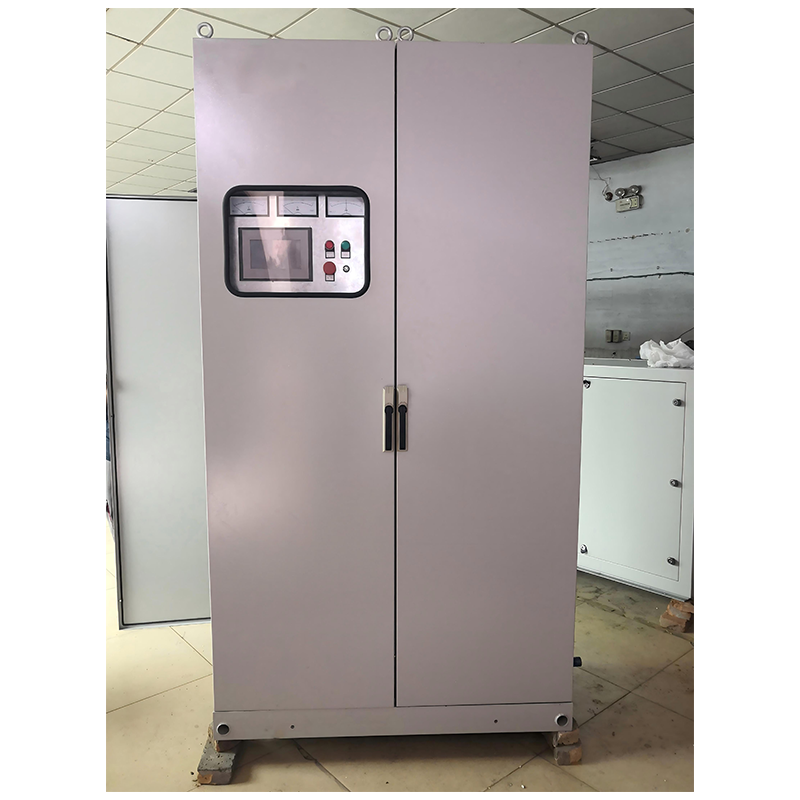

cooling systems for 380V power cabinets
2026-07-25
- Critical requirements for cooling systems for 380V power cabinets in industrial environments
- Accurate calculation of thermal load: why standard tables lie
- Comparative analysis of cooling technologies: air-to-air, water and compressors
- Condensation problem and IP protection: hidden threats to 380V electronics
- Integration with automated process control systems and remote condition monitoring
- Requirements of GOST and EAS standards for the Russian market
- Frequently Asked Questions
- Conclusion and recommendations for choosing a supplier
Critical requirements for cooling systems for 380V power cabinets in industrial environments
Efficient workсистемы охлаждения для силового шкафа 380Вdetermines not just the service life of electronic equipment, but the continuity of the entire production cycle. In our practice, we have repeatedly encountered situations where the failure of a frequency converter on an extrusion line led to a workshop shutdown for 48 hours and the loss of a batch of raw materials worth more than 2 million rubles. The reason has always been the same: the heat sink does not match the actual heat load at a network voltage of 380V. Many engineers make the fatal mistake of choosing HVAC equipment based solely on cabinet dimensions, ignoring the heat dissipation of internal components and external climatic factors. This article is based on fifteen years of experience implementing solutions in the metallurgy, oil and gas industry and mechanical engineering, where we have analyzed hundreds of overheating cases.
We will not use abstract language about “high quality.” Instead, we will analyze specific heat loss calculations, compare the efficiency of different types of coolers (air-to-air, air-to-water, compressor air conditioners) and show real temperature monitoring data. If you are designing a motor control cabinet with a power of 55 kW or more or assembling a distribution board for a transformer substation, this data will help you avoid emergency downtime. Making the right choice starts with understanding the physics of the process, not with looking at the supplier's catalog.
Accurate calculation of thermal load: why standard tables lie
Most selection errorsсистемы охлаждения для силового шкафа 380Вis laid down at the preliminary calculation stage. Typical situation: an engineer takes the total power of the installed equipment, multiplies it by the loss factor (usually 3-5%) and orders an air conditioner with a margin of 10%. In reality, this approach either results in insufficient cooling in the summer or condensation inside the cabinet in the winter. We conducted an audit of 40 industrial facilities in Siberia and the Krasnodar Territory and identified a systemic underestimation of the actual heat load by 25-40%.
The problem lies in harmonic current distortion. Modern 380V drives, especially variable frequency drives (VFDs), generate significant amounts of harmonics. These harmonics cause additional heating of power cables, chokes and the IGBT modules themselves, which is not taken into account in the manufacturer’s data sheet as “active power”. In one of the projects for a cement plant, we recorded the temperature inside the cabinet at 62°C with an external temperature of +28°C, although the design air conditioner should have kept it at 35°C. After installing a power quality analyzer, it turned out that the THDi harmonic level reached 18%, which increased the heat dissipation of the filter chokes by 35% above normal.
For correct selection, it is necessary to use the method of detailed summation of the losses of each component. The formula looks simple, but requires precise input:
- Losses in frequency converters:Typically 3-4% of the rated engine power at full load. However, when operating at low speeds, the efficiency of the drive's own fans decreases and the proportion of heat transferred to the cabinet increases.
- Losses in contactors and circuit breakers:Depends on the load current and contact resistance. For old devices, after 5 years of operation, the resistance can increase by 1.5 times due to oxidation.
- Losses in control transformers and power supplies:An often ignored source of heat. A low-power 500 VA transformer can generate up to 60 W of heat continuously.
- Solar radiation:If the cabinet is installed outdoors or near a window, direct sunlight can add up to 800-1000 W/m² of heat load to the roof and cabinet walls.
One of our clients experienced regular shutdowns of servo drives due to overheating in a foundry. The initial calculation showed the sufficiency of an air-to-air heat exchanger with a power of 2 kW. However, we did not take into account that the cabinet is located in the radiation zone from the furnace, and the air temperature around the cabinet reaches 55°C. The temperature difference (ΔT) between the internal and external environment became negative or close to zero, making passive heat exchange impossible. The solution required replacing it with a compressor air conditioner with a power of 4 kW, which increased the project budget, but saved the equipment from degradation.
Never rely on average coefficients for critical nodes. Conduct current and temperature measurements during peak operating hours of equipment before final system selection. This will take a day, but will save weeks of repairing the effects of overheating.
Comparative analysis of cooling technologies: air-to-air, water and compressors
Selecting the type of cooler for380V power cabinet cooling systemsdictated not only by budget, but also by environmental conditions. There are three main technologies on the market, each of which has clear limits of applicability. Failure to understand these boundaries leads to choosing a cheap but unworkable solution.
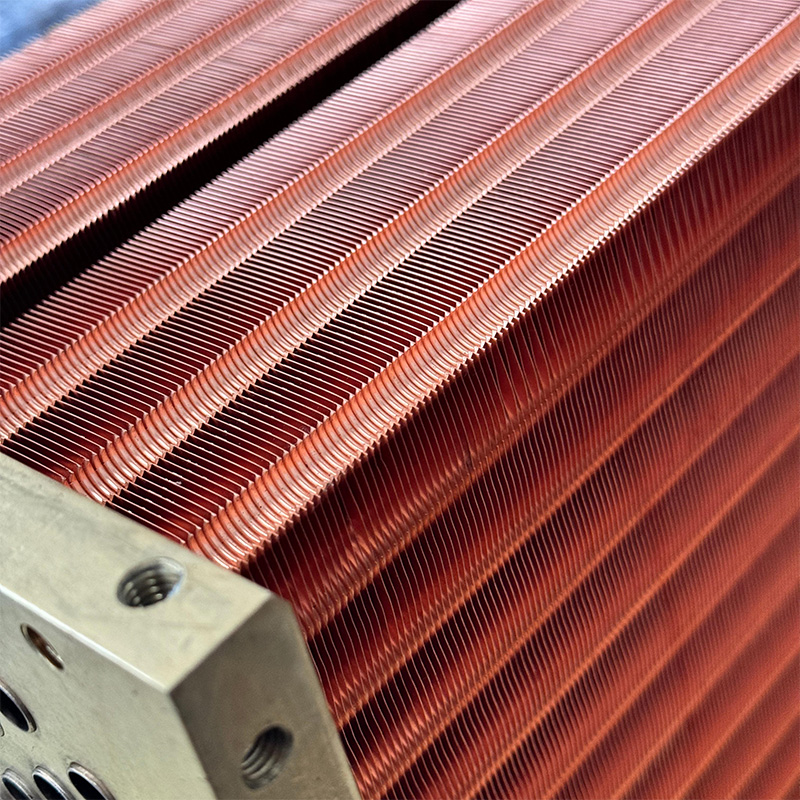
Air-to-Air Heat Exchangers. These are devices that transfer heat from the internal air of the cabinet to the external air through aluminum plates without mixing flows. Their main advantage is the absence of moving parts (except fans) and independence from electricity for the compressor. However, their effectiveness directly depends on the temperature difference. If it's +35°C outside and you need to maintain +30°C inside, such a heat exchanger is useless. It can only reduce the temperature inside by 10-15 degrees relative to the street. We only recommend them for climate-controlled areas or for northern regions where summer temperatures rarely exceed +25°C. In dusty workshops, they require frequent cleaning of the fins, otherwise the efficiency drops by 30% in one season.
Cabinet Air Conditioners. The only solution that can lower the temperature inside the cabinet below the ambient temperature. The compressor cycle allows you to maintain a stable +35°C even in the heat of +50°C outside. This is a mandatory choice for outdoor KSO cabinets, custody transfer points (PKU) and workshops with hot processes. The main disadvantage is the presence of refrigerant and compressor, which are consumables. Vibration from the compressor can negatively affect sensitive electronics if the air conditioner is installed directly on the door without dampers. In our practice, there was a case when vibration led to weakening of the contacts on the 380V bus and a subsequent short circuit. Installation on a separate frame or using models with a remote compressor unit solves this problem.
Liquid cooling systems (Water-to-Air / Water-to-Water). The most effective option for high power density cabinets (more than 5-10 kW of heat dissipation). Heat exchange occurs between internal air and process water. Advantages: compactness, high heat removal power, possibility of integration into the overall chiller system of the plant. But there are strict requirements for water quality. Using regular tap water causes scale to form inside the heat exchanger within 6-8 months, reducing efficiency to zero. Requires the use of distilled water or glycol mixtures, as well as the installation of filters. The risk of water leakage into the electrical cabinet is a high risk factor, requiring the installation of leakage sensors and emergency valves.
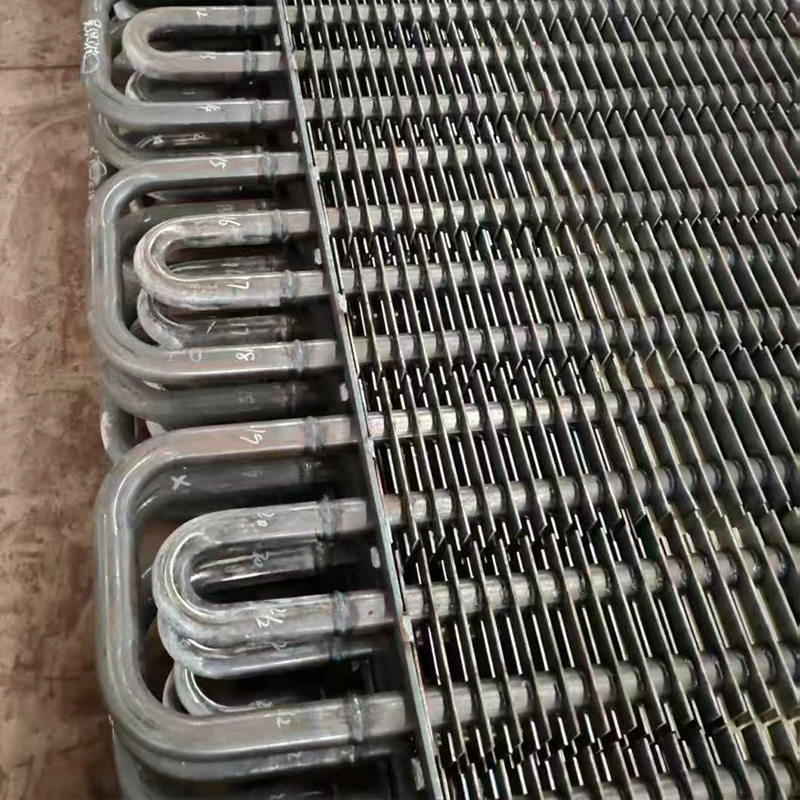
It is in the segment of complex fluid systems and specialized heat exchangers that the quality of materials and engineering production culture play a key role. For example, a companyWuxi Kaisheng Electric Power and Petrochemical Equipment Co., Ltd.specializes in the design and manufacture of high-tech heat transfer solutions, including titanium shell-and-tube heat exchangers, air coolers and waste heat boilers. Their experience building equipment from corrosion-resistant alloys (such as N06625 Nickel, C46400 Marine Brass, and 316 Stainless Steel) certified to stringent international ASME and PED standards demonstrates how critical proper material selection is to system longevity. Although their main products are focused on the oil, gas and chemical sectors, the principles of high thermal efficiency and resistance to extreme pressures that they implement are fully applicable to the cooling tasks of critical 380V power cabinets, where the reliability of the heat exchange circuit is the guarantor of trouble-free operation.
| Comparison parameter | Air-to-air heat exchanger | Compressor air conditioner | Liquid cooler (Water-Air) |
|---|---|---|---|
| Maximum tapping power | Up to 2.5 kW (depending on ΔT) | Up to 6.0 kW (standard models) | Up to 20+ kW (scalable) |
| Dependence on ambient temperature | High (works only at T_out< T_internal) | Absent (works up to +55°C) | Depends on water temperature |
| Dust protection (IP) | IP54/IP55 (needs cleaning) | IP54 (closed loop) | IP54/IP55 (closed loop) |
| Energy consumption | Low (fans only) | High (compressor + fans) | Average (pump stations) |
| Risk of condensation | Low (if calculated correctly) | Medium (requires drainage) | High (requires dew point control) |
| Cost of ownership (5 years) | Low | Average (refilling with freon, repairs) | High (water treatment, chiller maintenance) |
When choosing between these technologies for 380V voltage, the key factor is often the availability of process water. If a facility does not have treated recycled water, installing a wet system becomes an expensive, high-risk project. For 90% of standard tasks in Russia, the optimal balance of reliability and price remains a high-quality compressor air conditioner with a heating function for the winter period.
Condensation problem and IP protection: hidden threats to 380V electronics
Condensation is a silent killer of electrical cabinets, slower than overheating but just as lethal. When using activecooling systems for 380V power cabinets, especially air conditioners, there is a risk of moisture forming on the cold surfaces of the evaporator and the walls of the housing. Moisture leads to corrosion of contacts, interturn short circuits in coils and false alarms of RCDs. In one project at a woodworking plant, the humidity inside the cabinet reached 95% due to incorrect hygrostat settings, which caused an insulation breakdown on the 380V terminal block and a fire.
The physics of the process is simple: when warm, moist air comes into contact with a cold surface (the temperature of which is below the dew point), water falls out in the form of drops. In 380V cooling systems, this is critical, since the step between phases and grounding in modern compact machines is minimal. Even a microscopic film of water can create a conductive bridge.
To prevent condensation, three rules must be followed, which we have implemented in all our projects:
- Using heaters against condensation.This is not an option, but a necessity for the Russian climate. The heaters should turn on automatically when the temperature inside the cabinet drops below +5°C or when the humidity exceeds a preset threshold (usually 60%). They compensate for the overcooling of the cabinet walls at night or during transition seasons.
- Housing sealing according to IP54/IP55.The cooling system only works effectively in a closed loop. Any uncovered cable openings become a gateway for humid outdoor air. We require the correct size cable glands for each cable. Foam filler or rags, which installers often use, are unacceptable - they absorb moisture and deteriorate over time.
- Correct location of drainage.Air conditioners produce water in dehumidifying mode. The drainage pipe must be directed downward, have a siphon to prevent backflow of air, and in no case should it be directed toward underlying equipment or cable routes. A clogged drain is a common cause of cabinet flooding from the inside.
Particular attention should be paid to the protection class of the cooling system itself. For 380V outdoor cabinets (for example, for sewage pumping stations), a design of at least IP55, or better IP65, is required. This means complete protection against dust and jets of water. Cheap models with IP54 may allow dust to enter the heat exchanger, resulting in reduced efficiency and overheating of the compressor. In sandstorms in Kazakhstan and Central Asia, we observed failure of fans of conventional air conditioners after 2 months of operation without additional filtration.
A leak test must be carried out immediately after installation. Use the “smoke test” method or visual inspection of pressure cable entry points. Do not allow a situation where the cooling system struggles with the constant influx of new humid air - this will lead to the compressor working forever and its premature wear.
Integration with automated process control systems and remote condition monitoring
Moderncooling system for 380V power cabinetshould not be a “black box” that is checked only in case of an accident. Integration of climate control equipment into a common control system (SCADA) makes it possible to predict failures and plan maintenance. We strongly recommend choosing models with Modbus RTU (RS485) or Ethernet/IP interfaces. This makes it possible to read not only the current temperature, but also the error status, the number of hours the compressor has been running and the condition of the filters.
As part of the Industry 4.0 concept, data from temperature sensors inside the cabinet is used to dynamically control the load. For example, if the temperature approaches a critical level (for example, +50°C), the controller can automatically reduce the speed of the motors or turn off non-essential loads to prevent an emergency shutdown of the entire line. This gentle limitation of productivity is preferable to a sudden stop in production.
Implementation of monitoring requires the correct connection diagram. Signal cables from climate control must be shielded and laid separately from 380V power cables. Noise from frequency converters can distort telemetry data, leading to false commands. We used Cat5e twisted pair cable with shield grounding on only one side (the controller side) to eliminate loop currents.
Data analytics allows you to optimize energy consumption. In one of the projects at a bakery factory, we set up an algorithm that increased the temperature setpoint inside the cabinet from +30°C to +35°C during night shifts, when the load on the drives is minimal. This reduced the energy consumption of air conditioners by 18% without any risk to the equipment. Such nuances cannot be realized without a digital control interface.
Requirements of GOST and EAS standards for the Russian market
When purchasing equipment for facilities in the Russian Federation and EAEU countries, compliance with regulatory documents is critically important. The use of uncertified cooling systems can lead to problems when handing over the facility to supervisory authorities and refusal of insurance in the event of a fire. Main documents regulating the application:
- GOST 15150-69 “Machines, instruments and other technical products”.Determines the climatic version. Most industrial cabinets in Russia require UHL (temperate and cold climate) category 3 or 4. This means operation at temperatures from -40°C (or -60°C for the north) to +40°C. Conventional European air conditioners are often rated only to -5°C or -10°C and require the installation of a winter start kit (compressor crankcase heater, condensation pressure regulator).
- TR TS 004/2011 “On the safety of low-voltage equipment.”Confirms the electrical safety of the device. The presence of an EAC certificate is mandatory for customs clearance.
- TR TS 010/2011 “On the safety of machinery and equipment”.Regulates the requirements for protection against mechanical risks and vibration.
In our practice, there was a case where the launch of a line was delayed by a month due to the fact that the supplier brought air conditioners with only CE (Europe) certificate. Customs did not allow the equipment through because there was no EAC marking. We had to carry out the compliance confirmation procedure on site, which entailed additional costs and downtime. Always request a copy of a current EAC certificate before signing a contract.
It is also worth considering fire safety requirements. The materials of the cooling system housing must be non-flammable or low-flammable. Пластиковые вентиляторы дешевых моделей могут стать источником распространения огня при коротком замыкании внутри самого кондиционера. Предпочтение следует отдавать металлическим крыльчаткам и корпусам из оцинкованной стали с порошковой покраской.
Frequently Asked Questions
Какую температуру внутри шкафа 380В считать нормальной?
Оптимальный диапазон составляет от +25°C до +35°C. Температура выше +40°C сокращает срок службы электролитических конденсаторов в частотных преобразователях вдвое (правило Аррениуса: рост на 10°C уменьшает ресурс в 2 раза). Температура ниже +5°C опасна образованием конденсата при включении оборудования. Мы рекомендуем устанавливать термостат на включение охлаждения при +35°C и на выключение при +30°C.
Можно ли использовать обычные бытовые сплит-системы для охлаждения шкафов?
Absolutely not. Бытовые кондиционеры не рассчитаны на работу 24/7 в режиме охлаждения при низких наружных температурах, не имеют нужного класса защиты IP от пыли и не предназначены для монтажа на вертикальные поверхности шкафов. Их использование приведет к быстрому выходу из строя компрессора и нарушению герметичности шкафа.
Как часто нужно менять фильтры в системе охлаждения?
Периодичность зависит от запыленности помещения. В чистых серверных — раз в год. В металлообрабатывающих цехах — раз в месяц или даже чаще. Забитый фильтр увеличивает нагрузку на вентилятор и снижает теплоотдачу на 30-50%. Лучший индикатор — визуальный осмотр и датчик перепада давления, если он предусмотрен конструкцией.
Что делать, если шка ф стоит под прямым солнцем?
Необходимо установить защитный козырек (навес) над шкафом, который снизит прямую солнечную радиацию. Это простое мероприятие может снизить тепловую нагрузку на крышу шкафа на 400-600 Вт. Дополнительно рекомендуется окрашивать шкаф в светлые тона или использовать термоотражающие покрытия.
Conclusion and recommendations for choosing a supplier
Selectionсистемы охлаждения для силового шкафа 380В— это инженерная задача, требующая баланса между теплотехническим расчетом, условиями эксплуатации и бюджетом. Ошибки на этом этапе стоят слишком дорого: от сгоревших приводов до остановки целых производственных линий. Мы убедились, что экономия на этапе проектирования (отказ от точного расчета, выбор дешевого аналога без запаса по мощности) всегда приводит к многократным переплатам в процессе эксплуатации.
Ключевые выводы для принятия решения:
- Всегда проводите детальный расчет тепловыделения с учетом гармоник и солнечной радиации.
- Для уличной установки и жарких цехов используйте только компрессорные кондиционеры с исполнением УХЛ.
- Обеспечьте защиту от конденсата с помощью нагревателей и качественной герметизации IP54/IP55.
- Требуйте сертификаты ЕАС и проверяйте возможность интеграции в вашу систему мониторинга.
Если вы сталкиваетесь со сложными условиями эксплуатации или сомневаетесь в выборе оборудования, не рискуйте надежностью своего производства. Наши специалисты готовы провести аудит вашего проекта, выполнить точный теплотехнический расчет и предложить оптимальное решение, проверенное в реальных российских условиях. Мы работаем с ведущими производителями климатического оборудования, включая партнеров с мировым опытом в создании высоконагруженных теплообменных систем, и гарантируем соответствие всем стандартам ГОСТ и ТР ТС.
Contact us todayдля получения консультации и расчета стоимости системы охлаждения для вашего проекта. Мы поможем подобрать оборудование, которое обеспечит бесперебойную работу ваших силовых шкафов 380В на долгие годы.