
Social networks for B2B sales of plastic pipes”
2026-08-22
- Why social networks have become the main channel for B2B sales of industrial equipment in 2026
- Psychology of decision making: how engineers and suppliers use social networks
- Selecting platforms: where to look for industrial buyers
- Content strategy: what to publish to sell equipment wholesale
- Promotion and lead generation: from viewing to application
- Performance measurement: metrics that matter
- Frequently Asked Questions
- Conclusion: Turn Social Media into a Sales Department
Why social networks have become the main channel for B2B sales of industrial equipment in 2026
In our practice over the past three years, we have seen a fundamental shift: the procurement of complex industrial equipment, from polymer pipelines to high-tech heat exchangers, is no longer solely the result of cold calls and exhibitions.Social networks for B2B saleshave evolved from a testing ground to a major source of qualified leads, where engineers and procurement officers make decisions about suppliers even before the first contact with a manager. If you still think that LinkedIn, VKontakte or TenChat are only suitable for finding talent or branding posts, you are losing up to 40% of the market that has already formed an opinion about your brand in the digital environment.
The situation has changed dramatically by 2026. Previously, the procurement process began with a request for a quote over the phone. Today the chain looks different: the chief engineer of the project sees a technical case in the feed, goes to the plant profile, studies ASME, PED or GOST certificates, watches a video from production and only then sends an application. We recorded a case where a large petrochemical holding refused to work with a well-known European brand of heat exchangers solely because their social network profile had not been updated for two years, and the product photos looked like stock images. For the B2B sector, the lack of a digital footprint is now equivalent to the lack of a physical factory address - this causes mistrust.
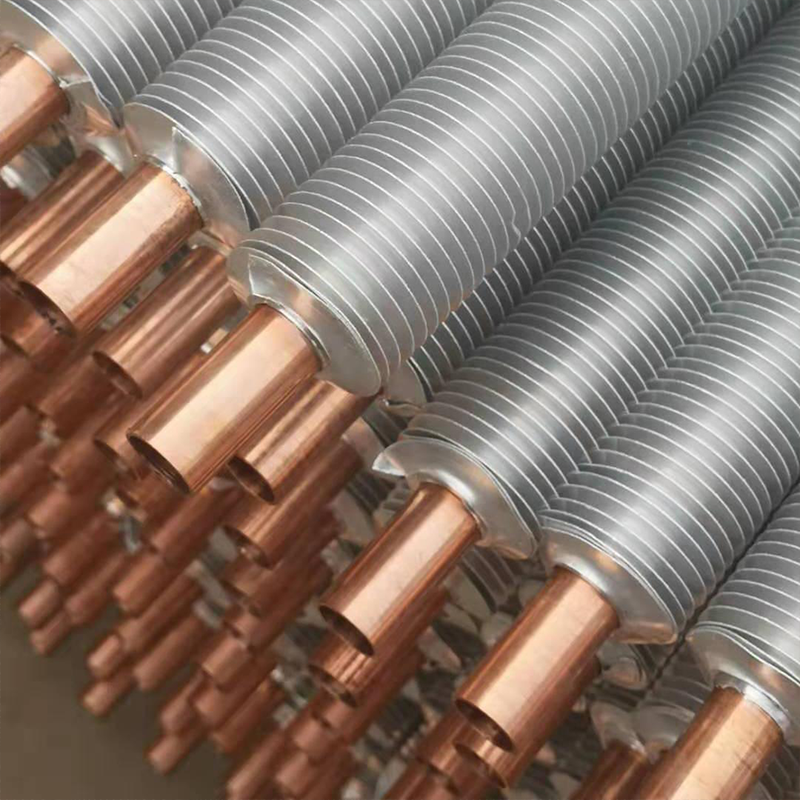
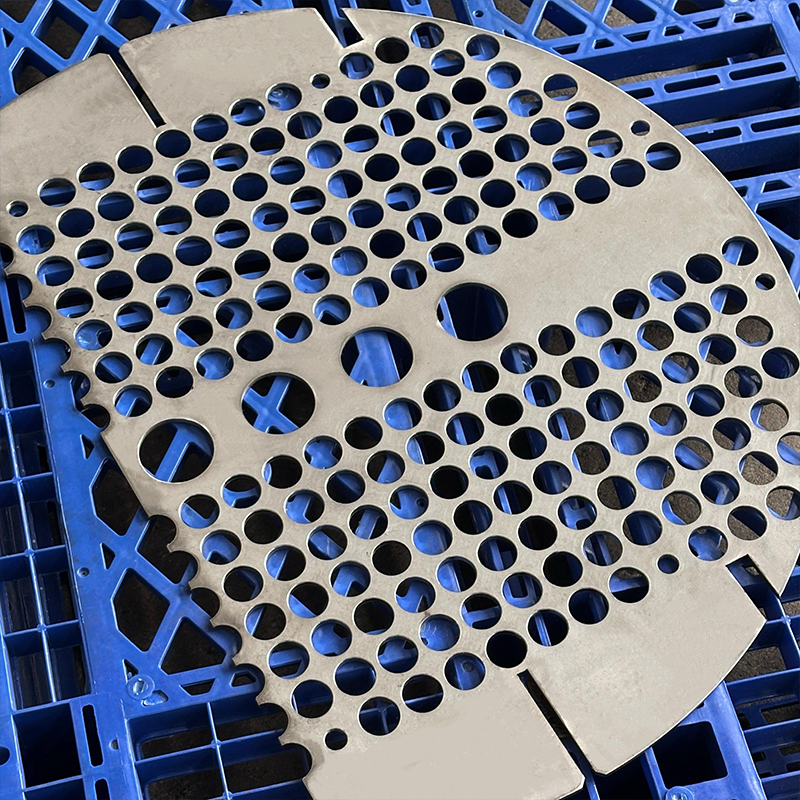
This article will not contain general phrases about the “importance of content.” We will analyze specific mechanics that work specifically in the niche of industrial equipment and metalworking. You will learn how technical specialists use social platforms to verify suppliers of tube bundles, shell-and-tube apparatus and fittings, what content formats inspire trust among buyers, and how to avoid mistakes that cost companies millions of rubles in lost profits. We rely on real data from our campaigns and the experience of companies such asWuxi Kaisheng Electric Power and Petrochemical Equipment Co., Ltd., whose successful digital presence strategy demonstrates how a manufacturer of specialty equipment (from titanium heat exchangers to air coolers) can use social media to demonstrate ASME and PED certification, C70600 and N06625 tubesheet manufacturing processes, and attract international customers from the refining and shipbuilding sectors.
Psychology of decision making: how engineers and suppliers use social networks
To use effectivelysocial networks for B2B sales, it is necessary to understand who exactly is making the decision and what worries them. Unlike retail, the transaction cycle is long and the cost of error is high. Depressurization of a heat exchanger in a high-pressure system or failure of a waste heat boiler leads to colossal losses, production stoppages and reputational risks. Therefore, the buyer in the B2B segment is not looking for a “pretty picture”, but evidence of reliability, corrosion resistance and competence.
In our practice, we have identified three key roles that actively monitor social networks:
- Chief project engineer.He is interested in technical nuances: resistance of materials to aggressive environments, temperature conditions, compatibility of alloys. It seeks confirmation that your 316 stainless steel or copper-nickel corrugated tube bundle will perform as advertised. For him, the social network is a knowledge base where he checks for the latest test reports, welding quality control reports and video reports from stress tests.
- Head of Purchasing Department (Purchaser).Its focus is logistics, production times for complex components, availability of raw materials and transparency of document flow. He wants to see that the plant operates stably and there is no downtime. Photos of shipped large-sized devices, screenshots of invoices and posts about the modernization of CNC machines for processing tube sheets work better for him than any advertising booklets.
- CEO or business owner.It assesses the strategic reliability of the partner. It is important for him to see the company’s participation in industry forums, receipt of new international certifications (ASME, PED), and news about the expansion of production lines. For him, a social profile is a dossier on a counterparty.
One of our clients, a manufacturer of oil refining equipment, was faced with a problem: they were losing tenders to smaller competitors. The audit showed that competitors posted videos of the pipe rolling process and comments from technologists on ovality control on social networks, while the client only posted price lists. Customer engineers were afraid that during installation there would be problems with tightness, which competitors who demonstrated open processes did not have. After the launch of a series of educational videos on technologies for joining dissimilar metals, the conversion from application to contract increased by 28%.
Key takeaway: In B2B sales of complex equipment, the social network serves as a preliminary security audit. If a buyer doesn’t find answers to their technical fears in your profile, they go to someone who has this information in the public domain. Trust is built on transparency, not glossy renderings.
Selecting platforms: where to look for industrial buyers
Not all social networks are equally useful for selling heat exchangers, tube bundles or industrial fittings. Spreading resources across all sites at once is a typical mistake that leads to zero ROI. We need to choose those channels where the concentration of the target audience (TA) is maximum, and the content format allows us to reveal the technical essence of the product.
Let's look at the main platforms in terms of efficiency for the industrial sector:
| Platform | Target Audience | Content type | Efficiency for B2B equipment |
|---|---|---|---|
| VKontakte (VK) | Regional dealers, installation organizations, suppliers of medium-sized enterprises of the Russian Federation. | Factory news, photos of shipments of large units, live broadcasts from the workshop, files of catalogs and certificates. | High. The main platform for work within Russia. Allows you to create communities and knowledge bases. |
| Telegram | Top management, chief engineers, industry experts. | Short news, price analytics for non-ferrous metals (titanium, nickel, copper), market insiders, quick answers to questions. | Growing. Ideal for prompt communication and developing the status of an expert. High open rate of posts. |
| YouTube / RuTube | Technical specialists, installers, designers. | Product reviews, installation instructions for heat exchangers, crash tests, interviews with technologists about welding special alloys. | Critically important. Video is the only way to show the quality of seam welding and the geometry of tube bundles in dynamics. |
| International partners, export departments, foreign investors. | Cases of international projects (desalination, shipbuilding), CE/ASME/PED certificates, participation in global exhibitions. | Specific. Valid for export sales only. Indispensable for entering the markets of Asia, the Middle East and Europe. | |
| TenChat | Russian business sector, government customers, tender participants. | Business news, confirmation of competencies through the “Quality Mark”, networking with representatives of the fuel and energy sector. | Promising. The Russian analogue of LinkedIn, gaining popularity among government agencies and large businesses in the energy sector. |
We recommend focusing 70% of your efforts on the combination of VK + YouTube for the domestic market and Telegram for working with key decision makers (DMs). VK provides coverage and the ability to store an archive of documents, YouTube covers the need for a visual demonstration of the quality of welding and assembly, and Telegram ensures fast delivery of important news directly to the director’s smartphone.
It is important to note one nuance: having a profile on a social network without activity is worse than not having one at all. A “dead” profile with the last post from a year ago gives the impression that the plant has stopped production or is in bankruptcy. If you don’t have the resources to post daily, it’s better to publish one quality article per month, but do it regularly.
Content strategy: what to publish to sell equipment wholesale
The most common mistake manufacturers make is turning a social network into a bulletin board with price lists. The phrases “Buy a heat exchanger”, “Price per ton”, “Call us” do not work in B2B because they do not answer the question “Why you?” Content should solve customer problems, and not just inform about product availability.
An effective content matrix for an industrial equipment plant should include four main areas:
1. Technical expertise and education
This is the foundation of trust. Engineers want to see that you understand metallurgy and process physics. Publish articles and videos on the following topics:
- Material Comparison: Titanium vs. 321 Stainless Steel in Saltwater Conditions; advantages of N06625 alloys in high temperature environments.
- Code Breakdown: Explains ASME Section VIII or PED standards in simple language.
- Production technology: show how the thickness of the pipe wall is controlled, how the quality of rolling of tube bundles is checked, how the tightness of shell-and-tube devices is tested.
- Installation and operation errors: analyze real cases of accidents due to incorrect selection of material or violation of storage conditions. This shows that you care about the end result.
Example post: "Why is the C70600 alloy critical for desalination plants? Understanding the corrosion resistance of copper-nickel alloys." Such content is bookmarked and forwarded to colleagues.
2. Proof of production (Social Proof)
In the B2B sector, customers are afraid of resellers who do not control quality. You need to prove that you are a real full-cycle manufacturer. Use the “Day in the life” format:
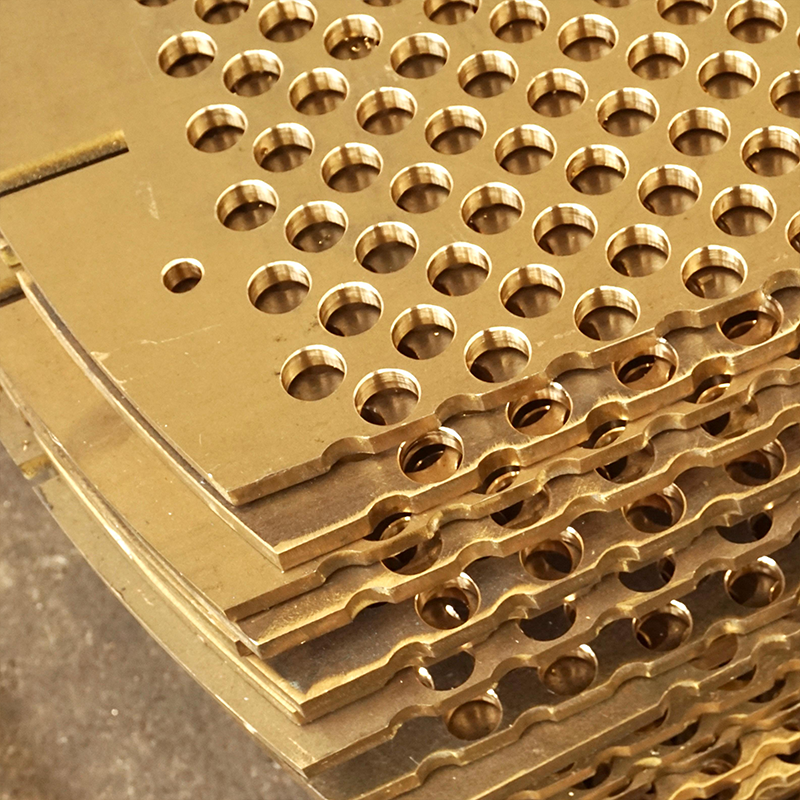
- Photos and videos of the machines in operation, the process of bending pipes, welding tube sheets made of C46400 brass or stainless steel.
- Process of laboratory control of raw materials (spectral analysis of alloys).
- Shipment of large quantities: show scale, packaging of air coolers or waste heat boilers, accuracy of loading.
- Interview with the workshop manager or chief welder. Lively faces of employees increase loyalty.
We noticed that posts with “imperfect” photos of real production (sparks from welding, noise of the workshop) often receive more engagement than studio photos. Real work is perceived as a sign of reliability.
3. Cases and completed projects
Nothing sells better than the success of others. Describe the implemented objects, but not in the format of a press release, but in the format of solving a problem:
- Problem:It was necessary to replace a heat exchanger in an oil refinery under conditions of high hydrogen sulfide corrosion.
- Solution:The device is made of titanium with a specially designed tube bundle that complies with the ASME standard.
- Result:The service life is increased by 3 times compared to its steel counterpart, and unscheduled production stops are excluded.
Be sure to indicate the numbers: pressure, temperature, types of media, production time. Replace abstract phrases “high quality” with specific parameters and alloy grades.
4. Market news and analytics
Position yourself as an opinion leader. Comment on changes in prices for nickel, copper, titanium, new legislative requirements in energy and ecology. This forces suppliers to follow you to stay updated on market conditions.
An important rule: avoid using complicated stationery. Write the way an engineer talks to an engineer. Use professional slang (“rolling”, “tube sheet”, “casing”, “compensator”), this signals industry affiliation.
Promotion and lead generation: from viewing to application
Having quality content is only half the battle. Tosocial networks for B2B salesbrought in money, you need to set up a system for attracting traffic and converting visitors into applications. Organic reach in 2026 is limited by algorithms, so a comprehensive approach is required.
Targeted advertising.In VK and TenChat you can set up advertising for very narrow segments. For example: “People with the title ‘Chief Engineer’ or ‘Chief Mechanic’ in companies in the ‘Oil Refining’ or ‘Energy’ industries.” Advertising should not lead to the main profile page, but to specific useful material: “Download a table of corrosion resistance of alloys” or “Watch a video of a heat exchanger pressure test.” Lead magnets work better than direct “Buy” calls.
Working with communities and groups.Find industry chats on Telegram and VKontakte groups where energy engineers, chemists and builders communicate. Don't spam links! Participate in discussions. If someone asks for advice on choosing a material for work in seawater, give a detailed professional answer about C70600 alloys or titanium, and only at the end gently mention that you have detailed instructions or a case on this matter.
Personal brand of managers and experts.People buy from people. The profile of a technical director or lead designer of a plant can generate leads just as well as a corporate page. Let them share their opinions about trends in heat transfer, comment on news, and post photos from objects. A live dialogue on behalf of a specific specialist is more trustworthy than an impersonal corporate account.
Retargeting.Those who visited your site or watched a video but did not submit a request should see your ad again. Remind them of yourself: "You were interested in waste heat boilers. We have a window for production in the next quarter. Request a time estimate."
We were faced with a situation where a company spent its budget on advertising, but did not receive applications. The analysis showed that the feedback form required filling out 15 fields. In B2B, at the first contact stage, this is intimidating. We reduced the form to 3 fields (Name, Phone, Equipment Type), and the number of leads increased 3 times. Details are clarified by managers over the phone.
Performance measurement: metrics that matter
How do you know if your efforts are working? In B2B sales of complex equipment, you cannot focus only on the number of likes. A beautiful picture can attract a thousand reactions, but not bring a single order. We need metrics that correlate with revenue.
Key performance indicators (KPI) for an industrial plant on social networks:
- Number of qualified leads (MQL/SQL).How many applications were received through social networks, which managers recognized as real potential clients. This is the main metric.
- Cost per lead (CPL).How many rubles did you spend on promotion to receive one application? Compare this indicator with the cost of a lead from the exhibition.
- Browsing depth and time on the site.If clicks from social networks lead to users spending a long time studying the catalog of heat exchangers and technical maps, this is a signal of high interest.
- Brand mentions and reposts.In B2B, reposting a post from your prospect to their colleague or manager is the highest form of endorsement.
- Conversion into a deal.The most important parameter. The CRM system must record the source of the request. If you see that Telegram clients close deals faster, it means the channel is working well.
Don't forget about quality indicators. Read the comments. What questions are asked most often? If they constantly ask about ASME certificates, it means they are missing from your profile. Social media is a huge focus group that gives you free market feedback.
Frequently Asked Questions
Which social network is best for selling heat exchangers and petrochemical equipment?
For the Russian domestic market, the most effective combination isVKontakte + YouTube. VK allows you to work with your customer base and publish documents, and YouTube is indispensable for demonstrating production and testing processes. For export and work with top management, it is recommended to useLinkedIn(for international markets) orTenChat(for working with the Russian fuel and energy complex and government orders).
How often should you publish content on your plant profile?
The optimal frequency for the B2B sector is2-3 posts per week. The main thing is regularity and quality. It is better to publish one deep technical article or high-quality video report once a week than five empty news items daily. Be sure to respond to comments within business hours.
Is it possible to sell equipment directly through social media posts?
Direct sale of complex non-standardized equipment (custom-made heat exchangers, boilers) through correspondence is ineffective. The purpose of social networks isqualifying the lead and transferring it into the sales funnel. The purpose of the message is to receive a contact and schedule an appointment or call with an engineer. However, for standard components (tube sheets of standard sizes, fittings), it is possible to organize a quick order through bots.
What to do if people write negativity or complain about marriage in the comments?
Never delete negative comments (unless they are spam). In B2B, trying to hide a problem raises suspicion. Respond publicly, politely and professionally: acknowledge the fact of the request, offer to transfer the dialogue to private messages to clarify the details and promise to look into it. A properly handled complaint often turns a dissatisfied customer into a loyal partner.
Conclusion: Turn Social Media into a Sales Department
Usagesocial networks for B2B sales of industrial equipment- this is not a tribute to fashion, but a necessity for survival in a highly competitive environment. In 2026, the buyer comes to you already prepared: he has studied your profile, watched a video of the production of heat exchangers, and read reviews about the quality of welding. Your task is to make this path as transparent and convincing as possible.
Don’t be afraid to show the “kitchen” of production, share expertise in the field of alloys and honestly talk about the complexities of engineering problems. It is sincerity and professionalism that distinguishes a market leader such as Wuxi Kaisheng LLC, which provides customized solutions for oil refining and energy industries around the world, from a faceless supplier. Start by auditing your current profiles: do they meet the expectations of the modern chief engineer? Are there any answers to his technical questions regarding corrosion resistance or pressure ratings? If not, it's time to fix it.
We are ready to help you build a promotion system that will bring real orders, not just likes. Our team specializes in marketing for the industrial sector and understands the specifics of the production of heat exchange and petrochemical equipment.
Contact us todayto discuss your digital brand strategy and receive a free audit of your social media. Don't let competitors take away your customers just because they are more active on the Internet.
For more information about our products and services, visitindustrial equipment catalog, where full technical characteristics of heat exchangers, tube bundles and certificates of compliance with international standards are presented.