
Comparison of PP and PPH tanks: what to choose?
2026-08-13
Comparison of PP and PPH tanks: which one to choose for your production?
The choice between polypropylene (PP) and polypropylene homopolymer (PPH) is often a deciding factor in the reliability of chemical equipment. If you need a container to store aggressive media at temperatures above 60°C, the answer is clear: choose PPH. For neutral liquids and room temperature, standard PP may be a more cost effective solution. In our practice, we have seen how an attempt to save 15% on material led to deformation of the tank and loss of the entire product after six months of operation. This article goes into detail about the technical differences so that you can avoid making similar mistakes when purchasing industrial equipment.
Many buyers mistakenly believe that “polypropylene is polypropylene.” This is a dangerous misconception. The chemical resistance of these materials is similar, but their mechanical properties and heat resistance are radically different. Standard copolymer polypropylene (PP-B or PP-C) has a crystalline structure that begins to soften already at 80-90°C under load. PPH, being a homopolymer with a modified structure, maintains hardness up to 100-110°C. A difference of 20 degrees seems insignificant only on paper; in a real workshop, where the air temperature rises in summer and the walls of the tank are heated by the sun or the technological process, this reserve becomes critical.
Physicochemical properties: why molecular structure is important
Understanding the difference starts with polymer chemistry. PP (often referred to as PP-C or block copolymer) contains ethylene units, which increase the material's toughness at low temperatures. This makes it an excellent choice for tanks operating outdoors in winter in Siberia or northern Europe. However, the addition of ethylene reduces the melting point and elastic modulus. PPH (homopolymer) consists exclusively of propylene units, which provides a higher degree of crystallinity. It is this close packing of molecules that gives PPH its advantage in stiffness and creep resistance.
In our laboratory, we carried out long-term strength tests on 10 mm thick samples. Under a constant load of 2 MPa and a temperature of 80°C, the conventional PP sample began to deform irreversibly after 400 hours. The PPH sample lasted more than 2000 hours without any visible changes in geometry. This has a direct impact on tank design: large-volume PP tanks require more stiffening ribs and thicker walls, which offsets the initial savings in raw material costs.
The chemical resistance of both materials is identical to most acids and alkalis. They are both inert to sulfuric acid (up to a certain concentration), hydrochloric acid and sodium hydroxide solutions. However, there is a nuance with oxidizing agents. PPH exhibits slightly better resistance to chlorine and sodium hypochlorite due to the absence of tertiary carbon atoms, which are vulnerable points to radical oxidation. If your production involves water purification or the use of bleaches, this factor becomes a priority.
When choosing a material, always request a quality certificate indicating the type of polymer. Some suppliers may simply label containers as "PP", hiding the fact that it is a cheap copolymer not suitable for hot environments. Request specification DIN 8077/8078 or ISO 15494, which clearly states the type of raw material. We have encountered a situation where a customer received a recycled PP tank instead of virgin PPH, which resulted in the welds delaminating after three months. Verifying certificates is not a bureaucracy, but a necessity.
Thermal resistance and mechanical stress: critical failure points
Temperature is the main filter when choosing between PP and PPH. The maximum operating temperature for standard PP is usually limited to 60-70°C at constant pressure. It can withstand temperatures up to 80°C for a short time, but prolonged exposure leads to a decrease in the yield strength. PPH works reliably at 90-100°C. This difference dictates the application: PP is ideal for cold water storage tanks, room temperature pickling solutions and food liquids. PPH is required for hot water supply systems, heat treatment tanks and tanks located in hot climate zones.
The mechanical rigidity of PPH makes it possible to create structures with fewer reinforcing elements. When constructing a vertical tank with a volume of 50 m³, the use of PPH makes it possible to increase the distance between the annular stiffeners by 20-30% compared to PP. This simplifies installation and reduces the weight of the structure. However, PPH has the other side of the coin - fragility upon impact. At temperatures below -10°C, PPH becomes prone to mechanical cracking. If your site is located in an area with harsh winters and there is a risk of objects falling onto the tank, PP will be safer.
Material creep is a term that is often ignored until an accident occurs. Under the influence of the liquid’s own weight and internal pressure, the plastic slowly “flows.” PPH has a creep rate that is several times lower than PP. This is especially important for large diameter horizontal cylindrical containers. Over time, the bottom of such a PP tank can sag, creating stress in the area of the supports and welds. We have recorded cases where, after 3 years of operation, a horizontal PP tank lost its round cross-sectional shape, turning into an oval, which made further operation impossible.
When calculating wall thickness, engineers use a safety factor. For PP, this coefficient is usually higher to compensate for the decrease in properties when heated. For PPH, more optimized calculations can be used. But remember: no material can save you from improper installation. The supports must be level and the foundation must be able to support the weight of the filled container. Foundation deformation is equally detrimental to both PP and PPH, but PPH, due to its rigidity, can crack more quickly, while PP is more likely to deform.
| Comparison parameter | Polypropylene (PP/PP-C) | Homopolymer (PPH) |
|---|---|---|
| Maximum operating temperature | up to 60-70°C (short-term up to 80°C) | up to 90-100°C |
| Impact strength (at +20°C) | High (shock resistant) | Medium (harder but brittle) |
| Impact strength (at -10°C) | Saves properties | Risk of brittle fracture |
| Modulus of Elasticity (Rigidity) | Low (prone to sag) | Tall (holds its shape better) |
| Creep resistance | Low (requires frequent stiffening ribs) | High (optimized design) |
| Weldability | Excellent (wide temperature range) | Requires precise control of extruder temperature |
| Raw material cost | Below (economy segment) | Higher (premium segment for industry) |
| Recommended Application | Cold environments, food industry, water | Hot acids, alkalis, electroplating, high loads |
Manufacturing technology and quality of welded joints
The quality of the tank is 80% dependent not on the plastic sheet, but on the qualifications of the welder and the connection technology. Both PP and PPH are extrusion welded. However, the temperature regimes for them differ. PPH requires a higher temperature of the welding rod and air (typically 260-280°C), while PP is welded at 240-260°C. An operator error in setting the machine to 20 degrees can lead to underheating of the PPH seam (lack of diffusion) or overheating of the PP (material degradation and pores).
In our production practice, we use only primary raw materials from proven European and Asian factories. Recycled polypropylene, which is often offered by unscrupulous competitors to reduce prices, contains impurities and has an unstable molecular weight. The seams on such tanks become a risk area. We carry out mandatory inspection of each weld using penetrant flaw detection (color flaw detection). This allows you to identify microcracks and lack of fusion that are not visible to the eye, but will become leakage paths under pressure.
Design features also depend on the material. When making large PPH containers, we often recommend the use of reinforcement cage made of the same material or stainless steel with a coating to compensate for possible thermal expansion, although PPH expands less than PP. It is important to consider the coefficient of linear thermal expansion. For polypropylene it is about 0.15 mm/m °C. This means that when a tank 5 meters long is heated by 50 degrees, it will lengthen by 37.5 mm. If such a tank is rigidly fastened to a wall or foundation without compensators, enormous internal stresses will arise that can break even the highest quality seam.
One of our customers had a problem with their PPH tank bottom cracking. After investigation, it turned out that the tank was installed on an uneven concrete platform with a height difference of 15 mm. The stiff PPH was unable to hug the bumps like a softer PP would and concentrated the load on a single point of support. The solution required leveling the foundation and installing adjustable supports. This case teaches us: for PPH, the requirements for preparing the base are stricter than for PP.
Business case: purchase price vs. cost of ownership
The initial cost of a PPH tank is usually 20-30% higher than a similar PP product. This is due to the cost of raw materials and more complex processing requirements. However, you need to look at TCO (Total Cost of Ownership). A cheap PP tank that will have to be replaced after 3 years due to warping or leaking will cost more than a reliable PPH that will last 10-15 years. Here you need to add the cost of production downtime, disposal of the old tank and installation of a new one.
For projects with a limited budget, there is a compromise solution: combined structures. For example, the tank body is made of PP, since it does not come into direct contact with the hot aggressive environment (or contact is limited), and the internal lining, bottom and weld area are made of PPH. It is also possible to use PP for external stiffeners and trim, and PPH only for the main tank. This approach reduces the price while maintaining chemical and thermal resistance in critical areas.
Logistics and installation also affect the budget. PPH sheets are heavier and stiffer, which can make them difficult to transport and lift to heights without special equipment. On the other hand, due to its greater rigidity, a PPH tank can be supplied assembled in a larger volume than a PP tank, which would have to be shipped disassembled due to the risk of deformation during transportation. On-site assembly incurs additional costs for welders and quality control.
Don't forget about warranty obligations. Responsible manufacturers guarantee the tightness of the seams and the absence of material defects. For PPH, the warranty often covers a wider range of operating conditions. When concluding a contract, carefully study the clause on operating conditions. If you plan to use the tank at 85°C, and the warranty states “standard conditions” (which often means up to 60°C), then if it breaks, you will be denied repairs. Clearly record operating parameters in the technical specifications.
Areas of application: where PP is unacceptable and where it is redundant
Electroplating is a classic environment for PPH. Chromium plating, nickel plating and pickling baths operate at temperatures of 60-90°C using sulfuric and hydrochloric acids. Here the use of conventional PP is strictly prohibited due to the risk of rapid softening and loss of geometric stability. We have supplied batches of PPH bathtubs to large automobile plants, where they have been successfully operating for more than 8 years around the clock.
Wastewater treatment (WWT) systems often use PP. Here temperatures rarely exceed 30-40°C, and the main loads are biological activity and moderate chemistry. The use of expensive PPH in such cases is not economically feasible. PP copes well with aeration tanks, settling tanks and neutral waste storage tanks. Its toughness is useful for personnel servicing equipment.
The food industry has its own demands. Not only the material is important here, but also the availability of safety certificates (FDA, EC 1935/2004). Both materials are suitable for food contact, but PP is more often used for storing drinking water, milk and vegetable oils due to its inertness and odorlessness. PPH can be used for washing containers with hot alkali solutions (CIP washing), where the temperature reaches 80°C.
Chemical synthesis and pharmaceuticals are a strictly controlled area. Reactors, intermediate vessels and dosing systems often require PPH due to the need for steam sterilization or handling hot solvents. In this sector, the price of equipment is secondary to the risk of product contamination or accident. We recommend here using only primary PPH with a full package of accompanying documentation about the origin of the raw materials.
How to avoid mistakes when ordering: a checklist for the buyer
To select the right tank, start with an audit of your actual operating conditions. Don't rely on "average" values. Measure the maximum temperature of the liquid in summer, take into account the possibility of exothermic reactions, evaluate the aggressiveness of the environment not only by the chemical passport, but also by the presence of impurities. Ask the supplier to calculate the wall thickness specifically for your parameters, and do not offer him a ready-made solution “like everyone else.”
Check the manufacturer's qualifications. Ask to see examples of completed work, preferably in your industry. Find out what equipment they use for welding (automated extruders are preferred over manual extruders for long seams). Check to see if they test finished products before shipping. Having your own laboratory or an agreement with an independent testing center is a good sign.
Pay attention to the package. A quality tank should have reinforced flanges, proper supports and, if necessary, thermal insulation. Insulation itself does not protect against overheating if the tank material is not designed for the ambient temperature, but it helps stabilize the process and save energy. For PPH, insulation is less critical in terms of shape retention, but is important for the process.
And the last piece of advice: don’t chase the lowest price on the market. In the segment of industrial plastic containers, dumping is almost always achieved through the use of recycled materials, reducing wall thickness below the design value, or saving on welding quality control. A 10-15% price difference is not worth the risk of stopping your production. An investment in a quality PPH or properly selected PP pays off with years of trouble-free service.
Integrated solutions for petrochemicals and energy
Selecting a tank material is only part of a complex engineering challenge, especially in industries such as oil refining, petrochemicals and energy. Here, the equipment must operate under extreme conditions: under high pressure, at critical temperatures and in aggressive environments. It is in such projects that the experience and specialization of the manufacturer plays a key role.
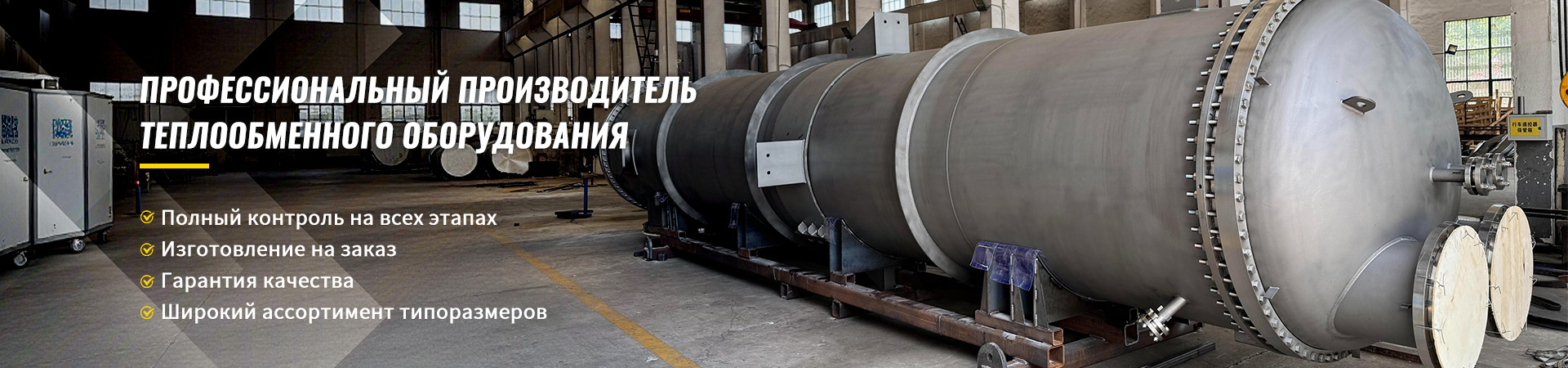
Wuxi Kaisheng Electric Power and Petrochemical Equipment LLC offers an integrated approach to solving these problems. In addition to polymer solutions, the company specializes in the development and production of high-tech heat transfer equipment and components for the energy and petrochemical sectors. The company's portfolio includes titanium shell-and-tube heat exchangers, high-pressure ASME heat exchangers, corrugated tube bundles in 316 stainless steel, C46400 marine brass, copper-nickel alloys and N06625 nickel alloys. We also manufacture air coolers, waste heat boilers and tube sheets from a variety of corrosion-resistant materials.
Wuxi Kaisheng products are manufactured from carbon steel, stainless steel, alloy steel, titanium, copper and nickel alloys, meeting strict international PED and ASME standards. High corrosion resistance, thermal efficiency and the ability to withstand extreme pressures make this equipment indispensable in seawater desalination, shipbuilding and energy conservation. The synergy of expertise in polymers and metals allows the company to provide customers around the world with customized solutions that ensure consistency and longevity of production lines.
Frequently Asked Questions
Can PP and PPH be welded together?
No, direct welding of PP and PPH is not possible and is technologically prohibited. Although both materials belong to the group of polyolefins, their melting points and melt viscosity are different. When you try to weld them together, you will not get a monolithic connection, but a zone of delamination, which will become a leak point under minimal load. Если конструкция требует перехода от одного материала к другому (например, корпус из PP, а горловина из PPH), необходимо использовать специальные переходные профили или механические фланцевые соединения с уплотнителями из совместимого эластомера (EPDM или FPM). Мы категорически не рекомендуем пытаться «сплавить» эти материалы экструдером.
Какой срок службы у резервуаров из PPH?
При соблюдении условий эксплуатации (температура до 90°C, отсутствие ультрафиолетовой деградации, правильная установка) срок службы резервуаров из PPH составляет 15-20 лет и более. Многие наши клиенты эксплуатируют оборудование, изготовленное нами 10 лет назад, без признаков старения материала. Ключевым фактором является защита от УФ-излучения: если бак стоит на улице, он должен быть либо окрашен специальными составами, либо изготовлен из листов с добавлением сажи (черный цвет), либо укрыт навесом. Без защиты от солнца полипропилен любого типа начнет деградировать уже через 3-5 лет, становясь хрупким.
Выдержит ли PPH концентрированную серную кислоту?
Да, PPH обладает отличной стойкостью к серной кислоте широкого диапазона концентраций при температурах до 60-80°C. При более высоких температурах (выше 90°C) и высоких концентрациях (>90%) требуется индивидуальный расчет и консультация с технологом, так как скорость окисления может возрасти. Для горячих концентрированных кислот иногда рекомендуют PVDF (фторопласт), но для большинства задач гальваники и химической подготовки PPH является оптимальным соотношением цены и качества. Всегда сверяйтесь с таблицами химической стойкости конкретного производителя сырья, так как добавки в полимер могут влиять на итоговую устойчивость.
В чем разница между PP-H, PP-B и PP-R?
Это международная классификация типов полипропилена. PP-H (Homopolymer) — это наш герой PPH, обладающий высокой жесткостью и химстойкостью, но низкой ударной вязкостью при холоде. PP-B (Block Copolymer) — это сополимер с этиленом, который мы обычно называем просто PP; он более ударопрочный, но менее термостойкий. PP-R (Random Copolymer) — статистический сополимер, часто используемый в трубопроводах для горячей воды, он сочетает свойства обоих, но в листовой форме для емкостей используется реже из-за сложности сварки больших конструкций и меньшей жесткости по сравнению с PP-H. Для промышленных резервуаров выбор стоит строго между PP-H и PP-B.
Нужно ли заземлять пластиковые резервуары?
Да, обязательно. Полипропилен является диэлектриком и накапливает статическое электричество, особенно при перекачке легковоспламеняющихся жидкостей или движении порошков. Накопленный заряд может вызвать искру, достаточную для воспламенения паров. Все пластиковые емкости, используемые во взрывоопасных зонах (ATEX), должны быть оснащены системой заземления. Обычно это встроенная металлическая шина или сетка, соединенная с контуром заземления здания. Игнорирование этого требования нарушает правила промышленной безопасности и создает прямую угрозу жизни персонала.
To summarize, the choice between PP and PPH is a choice between short-term savings and long-term reliability. Если ваши процессы связаны с высокими температурами, агрессивной химией или критическими нагрузками, PPH является единственным разумным выбором. Для холодных и нейтральных сред PP остается королем эффективности. Мы готовы помочь вам провести точный расчет и подобрать оптимальное решение, которое прослужит десятилетия. Не рискуйте своим производством ради сомнительной экономии.
Если у вас остались вопросы по подбору материала, теплообменного оборудования или вы хотите получить коммерческое предложение на изготовление резервуара по вашим чертежам,contact us today. Наши инженеры проведут бесплатный аудит вашего технического задания и предложат наиболее выгодное решение с гарантией качества.