
ISO 45001 occupational safety and health standards in PE factories”
2026-09-15
- Why ISO 45001 is a survival requirement for PE plants in 2026
- Specific risks of polyethylene production: where the real threat lurks
- Step-by-step algorithm for implementing an OSMS according to ISO 45001 in PE production
- Integration of ISO 45001 with ISO 9001 and ISO 14001: synergy of management systems
- The role of leadership and employee engagement: why orders from above don’t work
- Frequently asked questions regarding the implementation of the standard at polymer industry enterprises
- Technical barriers and digitalization of occupational safety processes
- Conclusion: Security as an investment in the future of your business
Why ISO 45001 is a survival requirement for PE plants in 2026
ImplementationISO 45001 occupational safety and health standards in PE plantsis no longer just a “tick” for the quality department or a marketing ploy. In the current realities of 2026, this is a fundamental issue of the economic security of an enterprise. We are observing a situation where the lack of a certified occupational safety and health management system (OSMS) blocks access to large tenders and makes it impossible to export polyethylene (PE) products to the countries of the European Union and EAEU. Our experience shows that companies that ignore the requirements of ISO 45001 face an increase in insurance premiums by 30-40% and regular production downtime due to Rostechnadzor inspections.
Polyethylene production is a high-risk process. Extrusion at temperatures in excess of 200°C, handling volatile materials, heavy lifting equipment and high noise levels create a unique hazard environment. The traditional “be safe or get a fine” approach no longer works. ISO 45001 requires a shift from reactive mitigation to proactive risk management. This means that we must anticipate an accident before it happens by analyzing chains of events, not just recording the facts of injury.
In this article we will analyze not theoretical calculations from textbooks, but the actual practice of implementing the standard on existing lines for the production of PE pipes, films and sheets. We'll discuss the specific hazards of extruders, problems with polyethylene dust, and how to properly communicate between machine operators and management. If you're looking for a way to reduce operating costs by improving your safety culture, this resource will give you a concrete plan of action.
Specific risks of polyethylene production: where the real threat lurks
Each industry has its own “risk map,” and for polyethylene processing plants it looks different than for metallurgy or chemical synthesis. The main mistake auditors and consultants make is that they try to apply template solutions without taking into account the physics of the extrusion and granulation process. In our experience, there was a case where a plant implemented an excellent injury reporting system, but completely missed the risk of slow poisoning by thermal decomposition products of the polymer. The result was a mass incidence of respiratory diseases among employees two years later, which led to a shutdown of the workshop for three months.
The primary hazards in PE plants are thermal burns and mechanical injuries from moving parts of extruders. Augers, crusher shafts and conveyor belts are unforgiving. HoweverISO 45001 occupational safety and health standards in PE plantsrequire us to look deeper. For example, many people underestimate the fire risk of polyethylene dust. If the concentration of dust in the air is above certain limits and there is a source of spark (even static electricity), an explosion is possible. We have seen the consequences of such incidents: deformation of the load-bearing structures of the workshop and the complete loss of the extrusion line.
Another critical aspect is ergonomics and microclimate. Operators servicing large diameter PE pipe production lines are often forced to work in areas with elevated temperatures (up to 45-50°C in the summer near the extruder). Prolonged exposure to heat combined with the need to lift heavy spools or bags of pellet leads to chronic musculoskeletal conditions. The ISO 45001 standard obliges us to evaluate these factors not as “necessary evils”, but as manageable risks that can be reduced by engineering methods or changes in work practices.
Chemical risks are also present, although polyethylene is considered a relatively inert material. The problem arises when using additives: dyes, fire retardants, UV stabilizers. Many of these components in powder form are highly volatile and may cause allergic reactions or dermatitis upon contact with skin. In addition, when the material overheats (thermal degradation), volatile organic compounds are released, including aldehydes and ketones. Without an effective ventilation and air monitoring system, work areas quickly become unsuitable for long periods of occupancy.
The key requirement of the standard here is that hazard identification must be carried out with the participation of the workers themselves. A safety engineer sitting in an office will never notice that the guard on the extruder is preventing the operator from quickly removing a stuck part, causing the worker to regularly remove the guard while working. Only dialogue with staff makes it possible to identify such hidden but deadly practices. Write this rule down: If your hazard log doesn't have entries from front-line operators, your system isn't working.
Step-by-step algorithm for implementing an OSMS according to ISO 45001 in PE production
The process of implementing a standard is not about writing a thick folder of documents, but about changing business processes. Many companies make the mistake of buying a ready-made package of documents from consultants and trying to tailor it to their specific needs. This is a path to formalism that will not save lives. Below is the proven algorithm we use to prepare PE plants for certification. It is based on the PDCA (Plan-Do-Check-Act) cycle, but adapted to the realities of Russian and international industrial production.
- Audit the current state and determine the context of the organization.
The first step is to look at things honestly. You need to understand what internal and external factors influence your ability to manage occupational safety and health. For a PE plant, external factors will include changes in legislation (for example, new maximum permissible concentrations for harmful substances), customer requirements for environmental friendliness and security of the supply chain, as well as the availability of qualified personnel. Internal factors include equipment condition, corporate culture and financial strength. At this stage, we conduct interviews with owners, shop managers and trade unions. A common mistake: ignoring the opinions of middle management. It is the shift supervisors who know the real problems, not the directors. The result of this stage should be the “Organizational Context” document, which clearly defines the boundaries of the application of the OSMS.
- Hazard identification and risk assessment (PE specific).
This is the core of the entire system. You must create a complete hazard register for each area: from the raw material warehouse (pellets in big bags) to the finished product packaging area. For extrusion lines, it is critical to evaluate the risks associated with high melt pressure. A rupture of the filter or flange can result in the release of a polymer stream with a temperature of 250°C, which is equivalent to being hit by a flamethrower. It is also necessary to assess the risks when cleaning augers, where chemical solvents or mechanical methods are often used with the risk of injury to hands. Risk assessments should be quantitative where possible (noise level in dB, dust concentration in mg/m³), and qualitative where measurements are difficult. Use the risk matrix, but remember: a high risk requires immediate control measures, a medium risk requires an action plan, and a low risk requires monitoring.
- Determine legal requirements and other obligations.
The PE plant operates in a highly regulated environment. In Russia, this is the Labor Code, GOST 12.0.002-2014 (SSBT), fire safety rules, sanitary standards. If you export products, EU directives (for example, on machines 2006/42/EC) or technical regulations of the EAEU are added. The mistake many companies make is using outdated standards. Legislation is changing quickly. For example, requirements for dust protection of flammable materials have become more stringent in recent years. You need a mechanism to continually monitor changes. Appoint a responsible employee or subscribe to professional legal frameworks. Failure to comply with even one point can revoke the ISO certificate and lead to criminal liability for management in the event of an incident.
- Developing goals and planning activities.
Occupational safety and health policies should not be a slogan on the wall like “Safety First.” It must be transformed into measurable goals. An example of a bad goal: “Reduce injuries.” An example of a good ISO 45001 goal: “Reduce the incidence of microtrauma in the pipe winding area by 15% by the end of 2026 through the installation of automatic spool removal devices.” To achieve the goals, action programs are developed indicating deadlines, responsible and necessary resources (budget for the purchase of new sensors, personnel training, ventilation modernization). It is important to involve employees in this process. If they don't understand why a new goal is needed, they sabotage its implementation.
- Providing resources, competence and awareness.
People are the main resource. The standard requires that every employee performing work that affects occupational safety and health is competent. This applies not only to extruder operators, but also to contractors who come to repair roofs or clean silos. For PE plants, training on pressure equipment and fire procedures is critical. Training should not be formal (“sign in a journal”), but practical, with skills practiced on simulators or mock-ups. Awareness means that the employee knows the company's policies, his rights to refuse hazardous work, and the procedure for reporting incidents. We recommend introducing a system of rewards for reporting potential hazards (near-miss situations), rather than punishing mistakes.
- Operational planning and control.
At this stage, you introduce barriers between the person and the danger. The hierarchy of controls states: hazard elimination first, then replacement, engineering controls, administrative controls, and finally PPE. For PE production, this means installing locks on the extruder doors (an engineering measure) that stop the screw when opened, rather than relying on operator alertness (an administrative measure). This also includes change management. If you change pellet brand or extrusion speed, you are required to carry out a new risk assessment. It is often during changes that accidents occur because the old instructions no longer correspond to the new process.
- Performance assessment and internal audit.
You can't manage what you don't measure. You need performance indicators (KPIs). In addition to the traditional injury frequency rate (LTIFR), use leading indicators: number of trainings provided, percentage of corrective actions completed, number of hazards identified by employees. Internal audit is not a punitive audit, but a tool for finding improvements. Auditors must be independent of the units being audited. It is best to attract external experts or train employees from other departments. The audit should check not only the availability of documents, but also their compliance with actual practice. If the instructions say one thing, but the worker does something else, this is a discrepancy that needs to be eliminated.
Implementing these seven steps takes time and discipline. Don't try to do everything in one month. Start with a pilot project in one workshop, test the mechanisms, and then scale the experience to the entire plant. Remember that ISO 45001 certification is not the finish line, but the beginning of a journey of continuous improvement.
Integration of ISO 45001 with ISO 9001 and ISO 14001: synergy of management systems
For a modern PE plant, the isolated existence of the occupational safety and health system is a waste of resources. Most enterprises already have certified quality (ISO 9001) and environmental (ISO 14001) management systems. The structure of the ISO 45001 standard is specifically designed to integrate easily with them. This is called an integrated management system (IMS). The main benefit is the elimination of duplication of documents and processes.
Let's look at an example. The Document Management procedure can be the same for all three standards. You don't need three different document logs. The same applies to internal audit, management review and corrective action. Moreover, risks often overlap. The process that leads to the release of harmful substances into the atmosphere (ecology) is often dangerous to the health of the worker nearby (occupational safety). Assessing such risks together saves time and provides a more complete picture.
However, there are also nuances. Unlike ISO 9001, which focuses on customer satisfaction, ISO 45001 prioritizes the life and health of the employee. This may create conflicts of interest. For example, to fulfill an urgent order (quality/deadlines), management may want to run the line without fully testing the filters. From the point of view of ISO 45001 this is unacceptable if there is a risk of air pollution or equipment failure with the ejection of parts. Integration requires top management to understand that security cannot be sacrificed for productivity. In the long term, safe production is always more efficient, as it is more stable and does not incur hidden costs for compensation and downtime.
When building an IMS, we recommend using a single software package to manage processes. This allows you to see relationships in real time. If a product quality incident occurs, the system can automatically initiate a review of working conditions that may have contributed to the defect (for example, operator fatigue due to heat). This approach transforms disparate departments into a single organism working towards the common goal of sustainable development.
The role of leadership and employee engagement: why orders from above don’t work
One of the most revolutionary aspects of ISO 45001 is its requirement for active participation from senior management. The plant director can no longer delegate all responsibility to the chief safety engineer and forget about it. The standard is clear: management must demonstrate leadership. What does this mean in practice for a PE plant? This means that the director must personally participate in shop floor walk-throughs, discuss safety issues at production meetings, and allocate a budget for occupational safety measures without any questions asked.
Employees must feel that their opinions are valued. A mechanism for consultation with employees is a mandatory requirement of the standard. This is not just collecting signatures for new instructions. This is the creation of labor safety committees, which include representatives of the team, conducting surveys and “safety minutes” before the start of the shift. In PE factories, where the work is monotonous and noisy, workers often become isolated and stop noticing growing dangers. Active engagement helps overcome this apathy.
We came across a situation where one enterprise introduced a new locking system on presses. Engineers designed the perfect protection, but operators began to remove it. It turned out during the conversation that the new casing interfered with visual control of the pipe profile exit. Instead of punishing workers, management redesigned the unit by adding a heat-resistant glass inspection window. This is the real ISO 45001 approach: solving problems through collaboration rather than coercion.
A safety culture takes years to build, but is destroyed overnight. Leadership is demonstrated by how a leader responds to an error message. If an employee is scolded or deprived of a bonus for reporting a near-miss accident, the reporting system will die instantly. People will hide incidents until a disaster occurs. Encourage openness. Make each employee feel responsible not only for their own safety, but also for the safety of their colleagues nearby.
Frequently asked questions regarding the implementation of the standard at polymer industry enterprises
How long does it take to achieve ISO 45001 certification from scratch?
A realistic time frame for the average PE plant is 9 to 14 months. This period includes time for the initial audit, developing documentation, implementing procedures, accumulating records (evidence of the system's operation), and conducting internal audits. Attempts to speed up the process to 3-4 months usually result in a formal “piece of paper” that does not work in reality and will be easily detected by the auditor at the first serious incident. The period depends on the initial state of affairs at the enterprise and the willingness of management to allocate resources.
Is it necessary to hire external consultants for implementation?
No, the standard does not require the mandatory involvement of consultants. You can implement the system with your own employees if you have a competent occupational safety specialist with experience in developing an OSMS. However, in practice, most factories involve external experts at the stage of initial audit and training of internal auditors. This helps avoid blind spots and incorporates industry best practices. Consultants are useful for transferring experience, but responsibility for the system always remains with plant management.
What to do if the plant already has a Soviet labor protection system?
The Soviet system (based on standard instructions and strict controls) often conflicts with the philosophy of ISO 45001, which is based on risk assessment and employee involvement. You don't have to throw away everything old. Many elements (briefing logs, orders, standards for issuing PPE) can be adapted. The main task is to shift the focus from “violation control” to “risk management”. Conduct a gap analysis to understand what elements your current system lacks to meet the international standard, and supplement it with the necessary procedures.
How does the standard help reduce insurance premiums?
In Russia and many other countries, the presence of a certified occupational safety and health management system is the basis for reducing tariffs for insurance against industrial accidents (FSS in the Russian Federation). Insurers see a certified company as having a lower claim risk. In addition, preventing even one major accident saves the company millions of rubles in direct (compensation, treatment) and indirect (downtime, investigation, reputation) costs. The economic effect of implementing the standard usually pays off in 1.5-2 years.
Technical barriers and digitalization of occupational safety processes
The modern PE plant cannot effectively manage safety using paper logs. Digitalization is a trend that is becoming a necessity. The introduction of IoT sensors allows you to monitor the condition of equipment in real time. For example, vibration sensors on extruder gearboxes can warn of potential failure before a flying part accident occurs. Gas and dust sensors in ingredient mixing shops automatically turn on ventilation when the maximum permissible concentration is exceeded.
Mobile applications for inspections and audits allow you to record violations with photos and geolocation, assign responsibility and control the timing of elimination directly from your smartphone. This removes bureaucratic red tape and makes the process transparent. Big data analytics helps to identify hidden patterns: for example, that the number of microtraumas increases in the second half of the night shift or when working with a certain batch of raw materials.
However, digitalization should not replace face-to-face communication. The most advanced software will not replace the gaze of an experienced technician who heard a strange sound in the car. Use technology as a decision support tool, not as a panacea. When choosing software, make sure it is privacy compliant and can integrate with your existing ERP system.
Conclusion: Security as an investment in the future of your business
ImplementationISO 45001 occupational safety and health standards in PE plantsis a strategic decision that determines the competitiveness of your enterprise in the coming decades. It's not just about complying with laws, it's about creating an environment where people want to work, where equipment lasts longer and brand reputation grows. In a world where consumers and partners are increasingly looking at companies' ESG ratings, occupational safety is becoming as important an asset as product quality.
We urge plant managers not to delay this process. Every day of inaction increases the risks. Start small: meet with your team, ask them what is preventing them from working safely, and take the first step towards change. The path to certification is challenging, but it leads to creating a strong, sustainable and prosperous business.
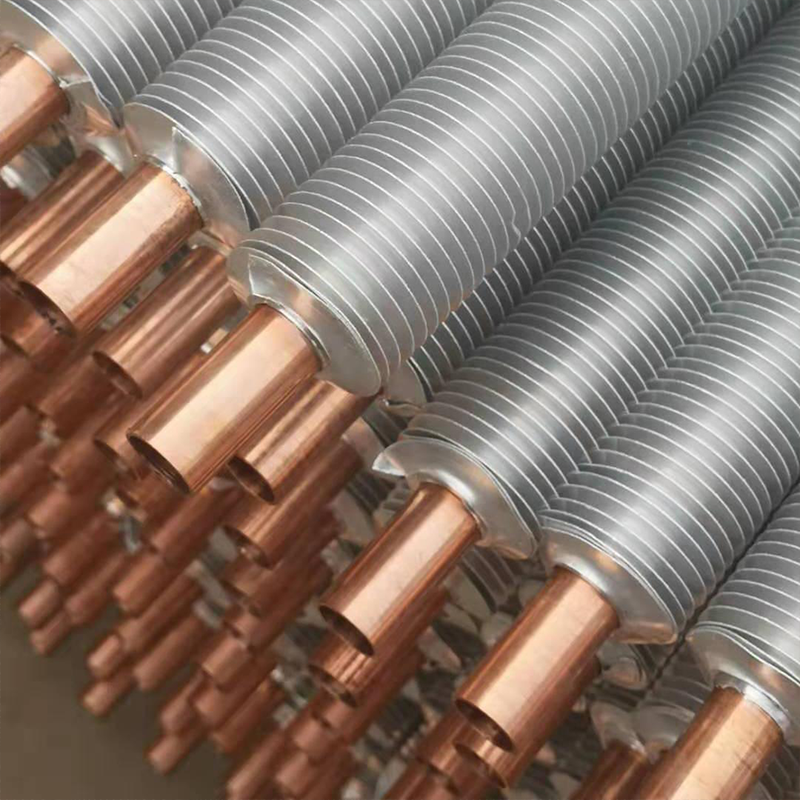
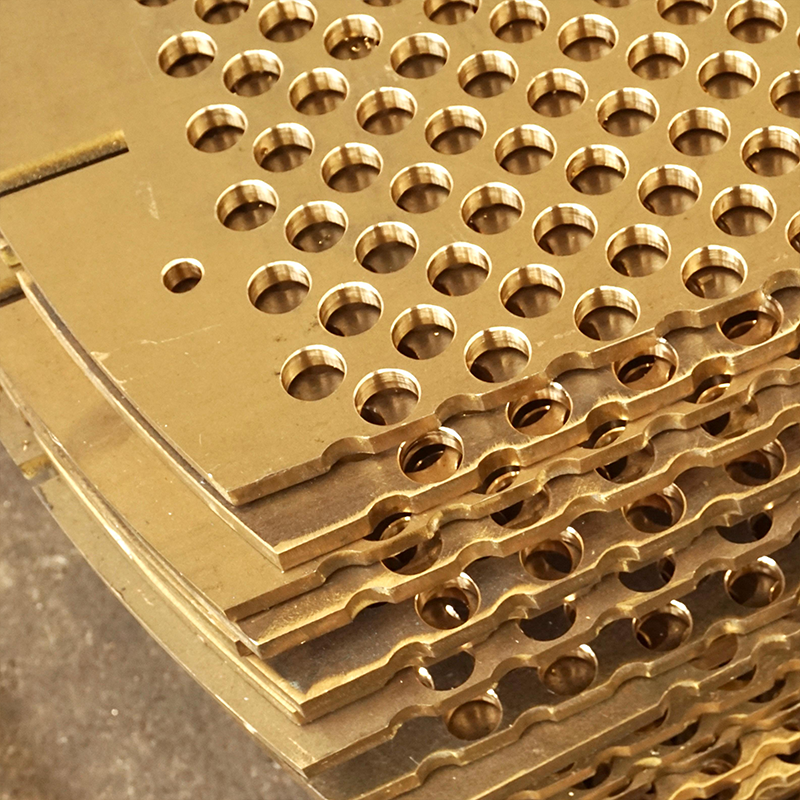
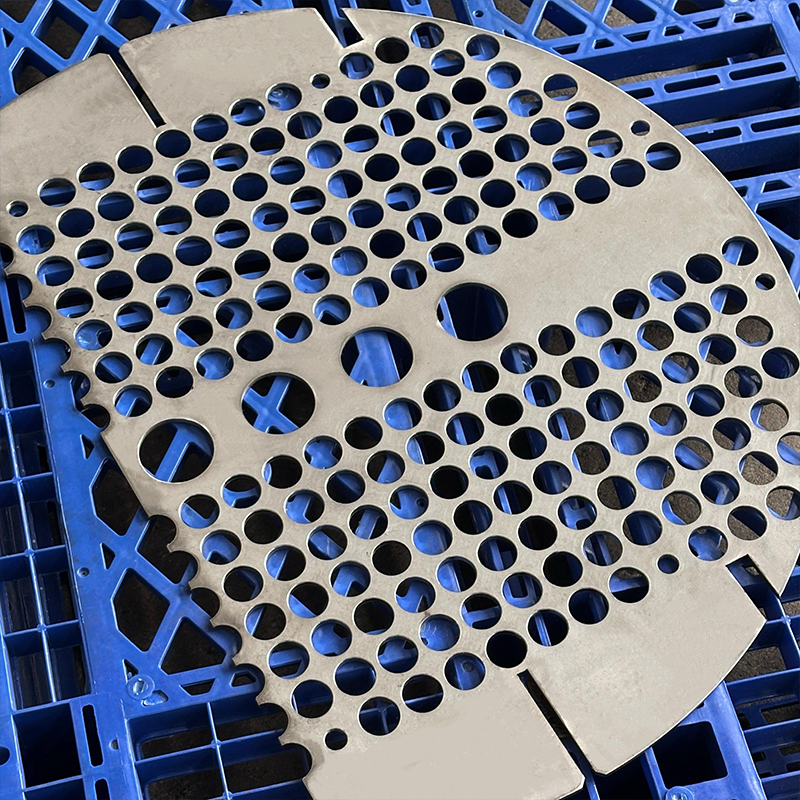
Successful implementation of such complex projects requires not only a deep understanding of standards, but also reliable technology partnerships. CompanyWuxi Kaisheng Electric Power and Petrochemical Equipment Co., Ltd., specializing in the design and manufacture of high-performance heat transfer and petrochemical equipment, understands the importance of safety at every stage of the production cycle. Our experience in creating titanium shell-and-tube heat exchangers, ASME high-pressure systems and air coolers for the oil refining and chemical industries proves that equipment reliability and process safety are inseparable. Wuxi Kaisheng products, certified to PED and ASME standards and made of corrosion-resistant alloys (titanium, 316/321 stainless steel, N06625 nickel alloys, C46400 marine brass), ensure stable operation even in extreme conditions of high pressure and temperature, minimizing the risk of accidents. By providing customized solutions for global customers, we help businesses build infrastructure that meets today's most stringent industrial safety requirements and helps achieve sustainability goals.
If you are ready to transform the approach to safety in your production and receive expert support in matters of audit, implementation of international standards or modernization of key equipment,contact us today. Our specialists will help develop a roadmap for implementing ISO 45001 taking into account the specifics of your polyethylene processing enterprise and offer optimal technical solutions.
For more information about our industrial safety and technology services, visitindustrial consulting, where detailed cases of successful projects are presented.