
ISO 14001 certification for manufacturers of plastic products”
2026-09-15
- Why ISO 14001 certification has become a critical survival factor for plastic manufacturers
- The essence of the standard: what is really required from a plastic production plant
- A step-by-step guide to implementing an environmental management system
- Financial feasibility: payback and hidden benefits
- Common mistakes when preparing for an audit and how to avoid them
- Choosing a certifying body: what to look for
- The Future of Green Standards: Trends for 2026 and Beyond
- The role of reliable partners in creating sustainable infrastructure
- Frequently Asked Questions
- Conclusion: Your next step towards sustainability
Why ISO 14001 certification has become a critical survival factor for plastic manufacturers
In our practice of working with polymer processing plants, we observe a clear trend:ISO 14001 certification for plastic manufacturershas ceased to be just a “green” marketing ploy and has become a prerequisite for entering the supply chains of large international retailers and automobile concerns. If five years ago the lack of this certificate limited export potential, then in 2026 this is a direct path to the loss of contracts. We saw a factory in Tatarstan lose a tender to supply packaging to a European supermarket chain solely because their environmental management system was not verified by a third-party auditor to international standards.
This article is not written by theorists, but by engineers and consultants who face the real-life challenges of implementing environmental standards on extrusion and injection molding production lines every day. Here you will not find general phrases about “caring for nature.” We will analyze specific technical requirements, financial risks of ignoring the standard, and a step-by-step algorithm of actions that will allow your company to pass the audit the first time. Our goal is to give you a tool that will reduce your operating costs by optimizing energy consumption and minimizing waste, while opening doors to new markets.
The essence of the standard: what is really required from a plastic production plant
Many managers mistakenly believe thatISO 14001 certification for plastic manufacturersIt only comes down to installing filters on the hood or sorting waste in the workshop. This is a dangerous misconception. The ISO 14001:2015 standard requires the implementation of a cyclical management system (Plan-Do-Check-Act), which covers the entire product life cycle - from the purchase of raw materials to the disposal of the finished product. For the plastics manufacturer, this means full control over environmental aspects including volatile organic compound (VOC) emissions, extruder energy consumption and process waste generation.
The key difference between the current approach and older methods is the risk assessment. Auditors no longer simply check for the presence of documents. They analyze how your business reacts to changes in the external environment. For example, if wastewater discharge regulations are tightened in your area, your system should have a predetermined plan of action for upgrading its treatment facilities. In our practice, there was a case when a company received a fine not for exceeding standards, but for the lack of an action plan in case of an emergency spill of granulate, which was regarded as non-compliance with the requirements of the emergency management standard.
For the plastics industry, life cycle management is a critical element. You must consider the environmental impact of not only your production, but also the transportation of raw materials, customer use of the product, and its eventual disposal. This requires collecting data from pellet suppliers and working with logistics partners. Ignoring this point often causes audit failure. Manufacturers who focus only on their walls are missing out on up to 40% of the requirements of the modern standard.
The implementation of the system also requires documentary evidence of the competence of personnel. Extrusion line operators must not only know the technology, but also understand the environmental consequences of their actions. We recommend including environmental issues in annual employee performance reviews. This is not a formality: one incorrectly adjusted temperature regime of the heater can lead to degradation of the polymer and an increase in the volume of rejects by 15%, which directly affects the environmental performance of the enterprise.
Act now: Conduct a preliminary analysis of all your production processes and identify those where the environmental impact is greatest. Make a list of these aspects and evaluate their current control. This will become the foundation for your future management system.
Specific environmental aspects in polymer production
The production of plastic products involves a unique set of environmental risks that require a specific approach to certification. The primary aspect is energy consumption. Extruders and injection molding machines (injection molding machines) are energy-intensive equipment. On average, the production of 1 kg of polyethylene film consumes from 0.8 to 1.2 kWh of electricity. Inefficient operation of heating zones or wear on augers can increase this figure by 20-25%. The ISO 14001 system requires you to establish baselines for energy consumption and regularly monitor deviations.
The second critical aspect is waste generation. During the processing process, sprues, burrs, defective products and transition batches inevitably arise when changing colors or materials. If these wastes are not recycled within the cycle (regranulation), they become a serious burden on the environment and the budget. The standard requires minimization of waste generation at source. We have seen factories where the introduction of automatic systems for grinding and returning secondary raw materials to the extruder (up to 30% without loss of properties) made it possible to reduce the purchase of primary raw materials by millions of rubles annually.
The third aspect is air emissions. When processing some types of plastic, especially PVC or polystyrene, toxic substances can be released if temperature conditions are violated. Even when working with safe polypropylene, overheating leads to the release of thermal destruction products. An effective aspiration system and regular monitoring of emissions are mandatory requirements to obtain the certificate. The absence of laboratory measurement data for the last year is a guaranteed remark from the auditor.
The fourth aspect is the use of resources and materials. This includes not only polymer raw materials, but also auxiliary materials: masterbatches, stabilizers, mold release agents, packaging materials. Accounting for the consumption of these materials and finding less toxic alternatives is also within the scope of the standard. Switching to biodegradable additives or reducing packaging thickness while maintaining strength are examples of improvements that are rated highly in audits.
The fifth aspect is potential emergency situations. Oil spills from hydraulic injection molding systems, raw material dryer fires, or accidents in cooling systems can cause significant damage. Your system should include a plan for eliminating such situations, the availability of sorbents, fire extinguishers of the appropriate class, and regular staff training. We strongly recommend checking the expiration dates of fire extinguishing agents and the availability of training logs before starting preparation for certification.
A step-by-step guide to implementing an environmental management system
The process of preparing for ISO 14001 certification is complex and requires a systematic approach. Mistakes at the early stages can lead to repeated redoing of documentation and delaying the process for months. Below is a proven algorithm of actions based on our experience in supporting more than 50 industrial enterprises. Following these steps will allow you to structure your work and avoid common pitfalls.
- Conducting an Initial Environmental Review.
This is the foundation of the entire project. At this stage, you should collect comprehensive information about the current state of affairs at the plant. It is necessary to inventory all sources of exposure: ventilation pipes, drains, waste storage areas, electricity metering points. It is important not just to list them, but also to assess their compliance with the current legislation of the Russian Federation and international standards. It often turns out that some emission permits are expired or waste generation standards are not updated. Correcting these legal inconsistencies should be priority #1, as the certifying authority will not issue a certificate to a business that violates the law. We recommend engaging third-party environmentalists to conduct an independent audit at this stage to see the picture through the eyes of an inspector. - Defining environmental policy and setting goals.
The management of the enterprise must formulate a document reflecting its commitment to environmental protection. This is not just a beautiful declaration for the site. The policy should contain commitments to compliance with legislation, pollution prevention and continuous improvement. Measurable goals are established based on the policy. For example: “Reduce specific energy consumption by 5% by the end of 2026” or “Increase the share of recycled materials in production to 20%.” Goals should be realistic but ambitious. Avoid vague formulations like “improving the environment.” Each goal must be supported by an action plan indicating responsible persons, deadlines and necessary resources. Without clear numbers, the system will be considered ineffective. - Development of documentation and procedures.
At this stage, the “skeleton” of your system is created. You need to develop procedures that describe how key processes are carried out from an environmental perspective. These are instructions for waste management, procedures for responding to emergency spills, monitoring and measurement regulations, and procedures for conducting internal audits. Documentation must be understandable for performers. If the instructions are written in complex clerical language, workers simply will not read it. We often see a mistake when companies download templates from the Internet and do not adapt them to their specific needs. The auditor will immediately notice a discrepancy: if the procedure says “temperature control every 30 minutes”, but in the operator’s log the marks are made once an hour - this is a discrepancy. The documentation must reflect actual practice, or the practice must be modified to accommodate the documentation. - Implementation, training and operational control.
Documents by themselves don't work. All staff need to be involved. Conduct training seminars for all employees: from the general director to the cleaning lady. Everyone must understand their role in the system. Operators must know how to act in the event of an accident, storekeepers must know how to correctly label waste, purchasers must know what environmental requirements to impose on suppliers. Begin data collection according to established procedures. Keep logs, collect receipts for recycling, record meter readings. This period of data accumulation should last at least 3-4 months before the certification audit, so that the auditor can see the dynamics and effectiveness of the measures taken. Lack of observational history is a common reason for rescheduling an audit date. - Internal audit and management review.
Before inviting an external commission, you are required to conduct an internal audit. This is a self-check for compliance with the requirements of the standard and its own procedures. Select internal auditors from employees who are not responsible for the areas being audited (independence principle). Identified inconsistencies must be eliminated and their causes analyzed. This is followed by a review by senior management. The director should review audit reports, data on achievement of goals, and suggest resources for further improvement. The minutes of this meeting are a mandatory document for the external auditor. It shows that the system is alive and controlled from above, and does not exist only on paper in the labor protection department.
After successfully passing the internal audit, you can apply to the certification body. Remember that the choice of body must be considered: make sure that it is accredited and recognized in the markets where you plan to supply products. Certification from a little-known company may be a waste of money for your international image.
Financial feasibility: payback and hidden benefits
The main argument against the implementation of ISO 14001 is cost. Yes, the process requires investment: payment for consultants, employee time, possible costs for upgrading equipment, services of a certifying body. However, looking at costs alone is shortsighted. In the long term, an environmental management system provides direct financial benefits that often outweigh the costs of certification within 12-18 months.
The first savings item is reducing resource consumption. A systematic approach forces us to look for losses where they were not noticed before. Optimizing heating cycles, eliminating compressed air leaks, and adjusting engine operating modes lead to lower energy bills. At a large plant for the production of PET preforms, reducing energy consumption by just 7% results in savings of tens of millions of rubles per year. This is the net profit made through efficiency rather than through price increases.
The second article is waste management. Implementing circular economy principles within a plant can turn waste into raw materials. Self-produced regranulate costs several times less than primary polymer. In addition, proper sorting and compaction of waste increases the price of their sale to recyclers. Mixed waste is often accepted for pennies or requires additional payment for removal, while monofraction HDPE or PP is a commodity. We have recorded cases where income from the sale of properly prepared waste completely covered the costs of maintaining the environmental service of the enterprise.
The third, and perhaps most important, is market access and risk reduction. Large customers (automotive industry, food industry, construction chains) are increasingly including ISO 14001 in their mandatory supplier qualification criteria. Lack of a certificate denies access to these lucrative contracts. In addition, the system reduces the risk of fines from government agencies and lawsuits from local residents. One serious environmental accident can cost a company more than all the world's certificates combined. Insurance companies are also beginning to offer preferential rates to businesses with certified risk management systems.
Don't forget about intangible assets. The reputation of a “green” manufacturer attracts investors and talented employees. In conditions of personnel shortage in industry, the image of a socially responsible company becomes a competitive advantage in the struggle for qualified engineers and operators.
Recommendation: before starting a project, draw up a detailed business plan with ROI calculations. Consider not only direct costs, but also potential savings. Use actual data from your business over the past year to model scenarios. This will help justify the budget to the owners and gain their support.
Common mistakes when preparing for an audit and how to avoid them
Statistics show that about 30% of enterprises receive major non-conformities during the first certification audit. This leads to additional costs for repeated auditor visits and a delay in issuing a certificate. Analysis of our projects allowed us to identify the most common mistakes that plastic manufacturers fall into.
Mistake #1: Formal approach to documentation.
Companies create mountains of paperwork that no one reads or uses in their work. The instructions are in folders, and people work “the old fashioned way.” Auditors are able to identify such inconsistencies very quickly. They ask the operator: “What will you do if there is a fire?” and check the answer with the instructions. If the answers don't match, it's a failure.Solution:Write documents the way you work, or change work the way it is written in the documents. Conduct staff training and surveys regularly.
Mistake #2: Ignoring life cycle aspects.
Many people focus only on their fence and their pipe, forgetting about suppliers and clients. ISO 14001:2015 clearly requires impact to be taken into account at all stages. If you buy pellets from a supplier who violates environmental regulations, it is your risk.Solution:Implement supplier surveys. Ask them for copies of their environmental certificates or declaration of conformity. Include environmental criteria in supply contracts.
Mistake #3: Lack of analysis of monitoring results.
Enterprises regularly take meter readings and keep logs, but no one analyzes this data. The numbers are simply archived. The standard requires trend analysis. Why did water consumption increase by 15% in March? Is this an accident or a seasonal factor? If you cannot explain the fluctuations in performance, the system is considered ineffective.Solution:Implement a monthly performance review. Build graphs, look for anomalies and take corrective actions before the auditor arrives.
Mistake #4: Unprepared for emergency situations.
On paper there is an emergency response plan, but in practice there are no sorbents, fire extinguishers are expired, and employees do not know where the emergency shower is. This is a critical discrepancy.Solution:Conduct a surprise drill. Check that all emergency equipment is present and in working order. Make sure escape routes are clear of finished product storage (a common problem on the shop floor).
Mistake #5: Weak involvement of top management.
If the director delegates all issues to the chief engineer and does not appear at the system analysis, the auditor will conclude that management policy is not being implemented.Solution:Management must demonstrate leadership. Participate in meetings, sign orders, allocate budgets. Your personal participation is a signal to the entire team about the importance of the process.
Avoiding these mistakes will save you time, stress and money. Approach preparation not as an exam to be passed, but as a tool for improving your business.
Choosing a certifying body: what to look for
The success of certification depends not only on your preparation, but also on the choice of a partner - a certification body (CB). There are many players on the Russian and CIS markets, from global giants to small local firms. The choice should depend on your strategic goals.
If your target audience is Europe and the USA, choose internationally accredited bodies (IAF MLA). Certificates from organizations such as TUV, SGS, Bureau Veritas, DNV are recognized throughout the world without additional checks. Their audits are stricter, prices are higher, but the weight of the document is maximum. For export, this is the only sure way. We recommend requesting a certificate of accreditation from the candidate and checking its status on the IAF registry.
If you work primarily within Russia or the EAEU countries, you can consider Russian certification bodies accredited by Rosaccreditation. Their certificates are legitimate for participation in government procurement and working with Russian customers. The cost of their services is usually lower, and the geography of travel is wider. However, for Western partners such a certificate may require additional verification or not be accepted at all.
An important criterion is the competence of auditors in your industry. An auditor who has spent his life inspecting offices or food production facilities may not understand the specifics of plastic extrusion or injection molding. Ask the OS a question: “Do you have auditors with experience specifically in the polymer industry?” An experienced auditor speaks the same language with you, understands the terms “screw”, “die”, “rheological properties” and will not waste time explaining basic things. This makes the audit more focused and useful for you.
Also pay attention to the service. Some authorities offer comprehensive support: pre-certification audit (gap analysis), employee training, assistance in developing documentation. This is convenient, but remember the conflict of interest: the same company cannot both advise you and certify you (according to accreditation rules). Consulting and certification should be kept separate. You can hire consultants for preparation, and choose an independent certification body.
Request commercial proposals from 3-4 organizations. Compare not only the price, but also the scope of work, the duration of the audit (man-days), and the conditions for renewing the certificate. Cheapness often results in a formal approach and reputational risks. A certificate issued by an “office in a garage” can discredit your company in the eyes of serious partners.
The Future of Green Standards: Trends for 2026 and Beyond
The world does not stand still, and requirements for environmentally friendly production are becoming stricter every year. As you prepare for ISO 14001 certification today, you need to look to the future. What trends will determine the industry in the next 3-5 years?
The first trend is integration with carbon regulation. The introduction of a cross-border carbon tax (CBAM) in the EU and similar mechanisms in other countries makes accounting for the carbon footprint of products mandatory. ISO 14001 is evolving to include requirements for monitoring and reducing greenhouse gas emissions. Plastic producers will have to calculate the CO2 equivalent for each ton of production. Those who incorporate this accounting into their management system now will receive a huge advantage in a couple of years.
The second trend is the digitalization of environmental control. Paper magazines are becoming a thing of the past. The introduction of IoT sensors that automatically transmit data on emissions, energy consumption and waste levels into a single system is becoming a de facto standard. This ensures data transparency and eliminates the human factor in reporting. Auditors of the future will request access to your digital dashboards in real time, rather than reviewing paper archives from the past quarter.
The third trend is the circular economy. Expectations from manufacturers are shifting from simply “not polluting” to actively participating in the material cycle. Certification will encourage the use of recyclable materials, easily recyclable product design, and consumer take-back programs. Companies that can prove their contribution to closing the cycle will take leading positions in the market.
The fourth trend is supply chain transparency. Customers will demand environmental reporting not only from you, but also from your subsuppliers. Blockchain and other technologies for tracking the origin of raw materials will become a tool for confirming the “greenness” of a product. Your management system must be prepared to aggregate and transmit this data up the value chain.
Don't wait until these requirements become legally required. Start adapting now. Modernize your ISO 14001 system to include carbon accounting and digital monitoring. This is an investment in the future sustainability of your business.
The role of reliable partners in creating sustainable infrastructure
The implementation of an environmental management system often requires not only organizational changes, but also technical modernization. Energy efficiency, emissions reduction and process safety directly depend on the quality of the equipment used. In this context, the selection of suppliers of key industrial equipment becomes a strategic decision.
A striking example of a partner whose solutions meet high standards of sustainable development isWuxi Kaisheng Electric Power and Petrochemical Equipment Co., Ltd.. The company specializes in the design and manufacture of high-tech heat transfer equipment that plays a critical role in optimizing the energy consumption of oil refining, petrochemical and chemical industries - industries closely related to the polymer industry.
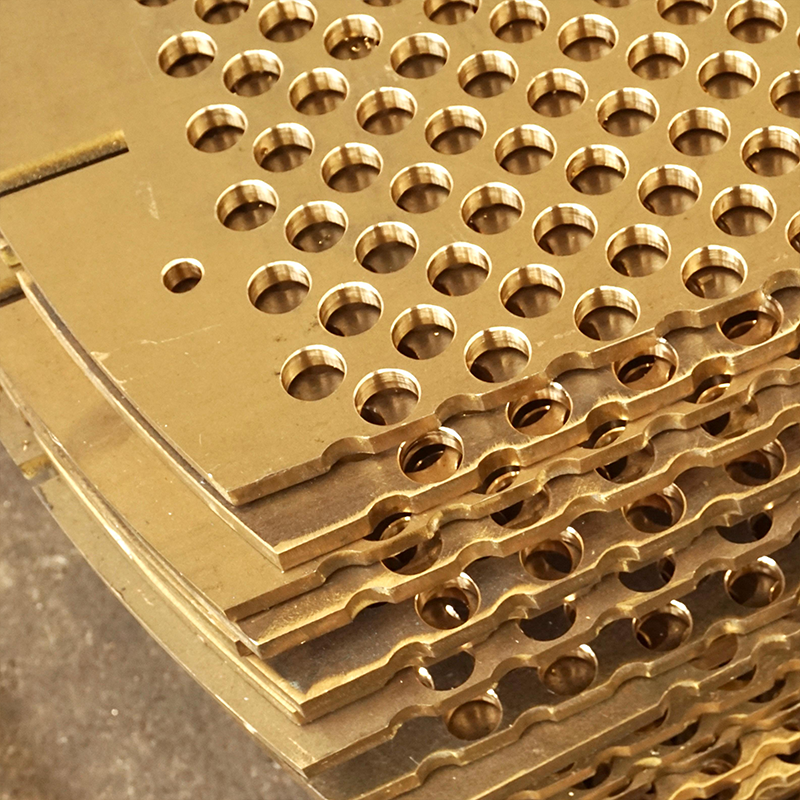
Wuxi Kaisheng's products, including titanium shell-and-tube heat exchangers, ASME high-pressure units, 316 stainless steel and marine alloy corrugated tube bundles (C46400, C70600, N06625), as well as air coolers and recovery boilers, are designed to provide maximum corrosion resistance and thermal efficiency. The use of materials such as titanium, nickel alloys and special steels allows equipment to operate under extreme conditions of high pressure and temperature, minimizing the risk of accidents and leaks, a key aspect of the ISO 14001 standard.
Certification of products to international standards PED and ASME confirms their reliability and safety for use in critical projects around the world. By implementing energy-efficient solutions from manufacturers such as Wuxi Kaisheng, enterprises not only reduce their operating energy costs, but also demonstrate a commitment to the principles of environmental responsibility, which is highly valued when auditing management systems. Stable and durable equipment becomes the foundation for building a truly “green” and competitive production.
Frequently Asked Questions
As we work with clients, we hear the same questions. Below are answers to the most popular of them, based on real practice, and not on theoretical calculations.
How long does it take to achieve ISO 14001 certification from scratch?
On average, the process takes 6 to 9 months for a medium-sized enterprise. The time frame depends on the initial state of your system, the size of your company, and the availability of your staff. If you already have ISO 9001 implemented, the process will go faster (4-6 months), since many procedures are unified. Do not trust companies that promise a certificate in 2 weeks - this is either a scam or a document that will have no value and will be revoked at the first check.
Do we need to redo all the documents if we already have ISO 9001?
There is no need to completely redo anything. The ISO 9001 and ISO 14001 standards are built on a common high-level structure (HLS). You can integrate systems by creating a single set of documentation. Policies can be combined, internal audit and document management procedures made common. This will reduce bureaucracy and simplify management. The main thing is to clearly distinguish between areas of application: where we are talking about product quality, and where about environmental protection, although they often overlap.
How much does certification cost and how long is the certificate valid?
The cost depends on the number of personnel, the complexity of the processes and the chosen certification body. For a small plant, prices can start from several hundred thousand rubles, for large holdings - in the millions. In addition to initial certification, there are annual inspection audits to confirm compliance. The certificate itself is issued for a period of 3 years, after which full recertification is required. The budget needs to be planned for these 3 years in advance, including the cost of annual auditor visits.
What happens if we don't pass the audit the first time?
This is a normal operating situation. If the auditor finds inconsistencies, he classifies them as major (critical) or minor (insignificant). If there are major discrepancies, the certificate is not issued until they are eliminated and re-verified (for an additional fee). Minor nonconformities require the submission of a corrective action plan, but do not immediately block the issuance of a certificate. Our task as consultants is to minimize the risk of major criticism through a high-quality pre-certification audit.
Is it necessary to hire an external consultant?
The law does not require it, but in practice it is almost always necessary. It is difficult to implement the system on your own due to the lack of highly specialized knowledge and time among employees. An external expert brings experience, knows the pitfalls and speeds up the process by 2-3 times. He acts as a catalyst for change. Trying to save money on a consultant often drags out the process for years and ends up costing more due to wasted time and poor decisions.
Conclusion: Your next step towards sustainability
ISO 14001 certification for plastic products manufacturers is not the finish line, but the start of a new stage in the development of your business. This is a tool that helps you see hidden reserves, reduce costs and build trusting relationships with partners around the world. In the conditions of global competition, it is not the largest that survive, but the most adaptive and responsible.
We urge you not to put this issue off for a long time. Every day of delay means lost profits and growing risks. Start small: audit your current practices, discuss strategy with your team, and choose a reliable partner to support you. Let your plastic be not only durable and functional, but also a symbol of responsibility towards the planet.
Are you ready to transform your production and reach a new level?Contact us todayto receive a free preliminary assessment of your enterprise and develop an individual plan for implementing ISO 14001. Our experts are ready to answer all your questions and help you navigate this path with minimal costs and maximum results.
For more information about our industrial consulting services, please visitcomprehensive solutions for industry.