
Customs duties on pipe imports from China”
2026-09-01
- Current rates of customs duties on pipe imports from China in 2026
- Classification of pipes according to the EAEU Commodity Nomenclature for Foreign Economic Activity: where financial risks are hidden
- Structure of customs duties: why the rate is not equal to the total amount
- Certification and permitting documentation: barriers to entry into the market
- Logistics routes and hidden delivery costs
- Checking Chinese suppliers: how to avoid counterfeit goods
- Frequently Asked Questions
- Conclusion and action strategy
Current rates of customs duties on pipe imports from China in 2026
Customs duties on imports of pipes from China vary from 0% to 15% depending on the HS code, country of origin and type of material (black or stainless), but the real fiscal burden for a Russian importer in 2026 often exceeds 25% due to recycling fees and VAT. We have analyzed hundreds of declarations and see that an error in pipe classification by just one code digit can cost a company millions of rubles in fines and confiscation of cargo. Direct answer to your question: the base rate for most seamless pipes is 5-10%, but if the pipe has an anti-corrosion coating or specific geometric parameters, it may fall under the protective measures of the EAEU with a rate of up to 15%. In this article, we will analyze not only the dry figures of tariffs, but also the hidden risks that logistics departments face when trying to save on certification.
The pipe rolling market has experienced tectonic shifts after 2024. Chinese factories, previously focused on Europe and the United States, poured into the market of Russia and the CIS countries, creating excess supply. This led to the Eurasian Economic Commission (EEC) tightening control over the import of metal products. In our practice, there was a case when a client ordered a batch of casing pipes using a code with a zero duty, counting on benefits for the oil and gas sector. Customs conducted an examination, determined that the pipes did not have the necessary certificates for the declared use, and reclassified the cargo under the general rate with additional payments being retroactively charged. The loss amounted to 18% of the contract value. To avoid such situations, you must understand the mechanics of calculation not as an accountant, but as a process engineer who knows the specifics of the product.
Classification of pipes according to the EAEU Commodity Nomenclature for Foreign Economic Activity: where financial risks are hidden
The correct selection of the TN VED (Commodity Nomenclature for Foreign Economic Activity) code is the foundation of legal imports. An error is impossible here: the customs inspector will not accept your explanations of “ignorance” if the pipe parameters do not match the declaration. Group 73 of Section XV of the Commodity Code of Foreign Economic Activity covers products made of ferrous metals, but the devil is in the details: production method (seamless or welded), section shape (round, square, rectangular) and material (carbon steel, alloy, stainless).
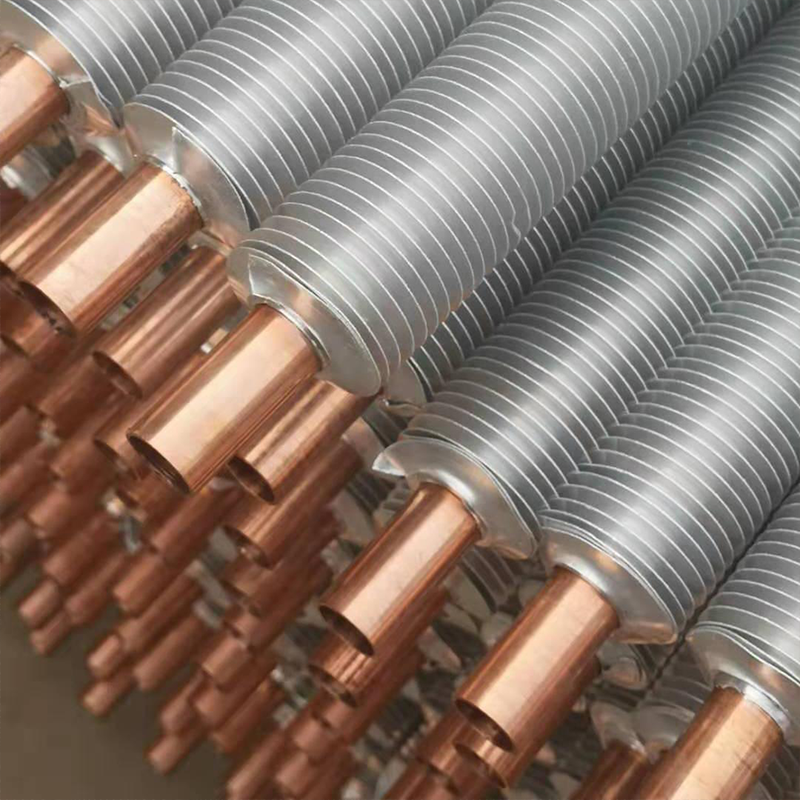
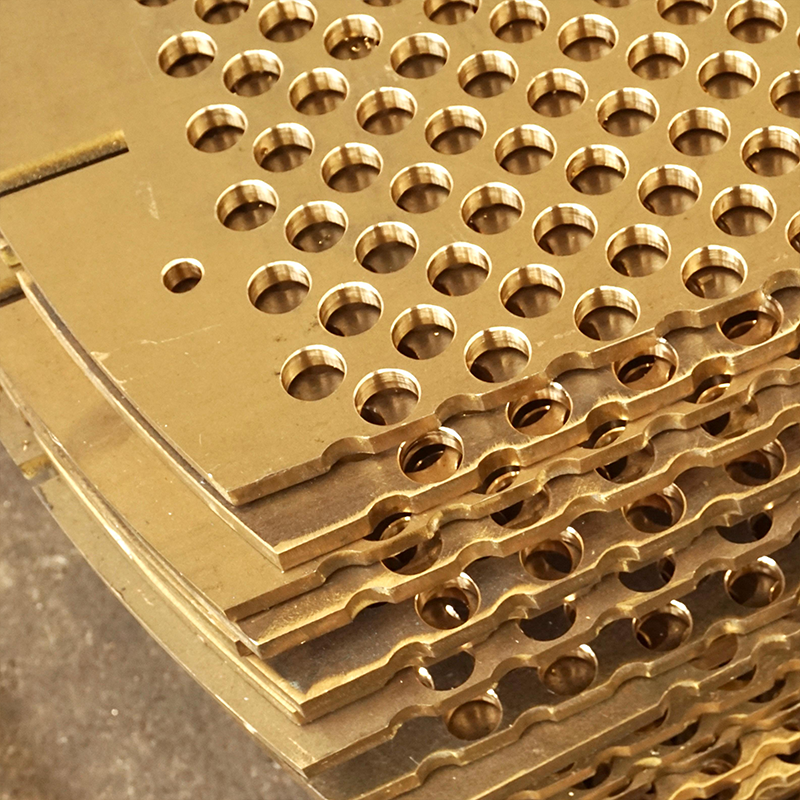
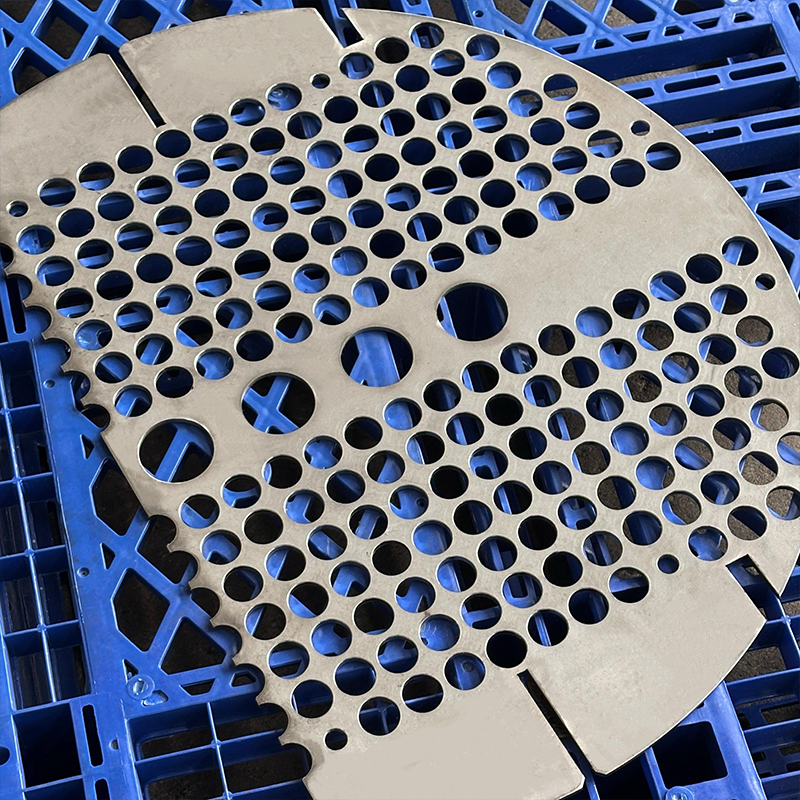
Particularly difficult is the import of high-tech pipe solutions for specific industries. For example, companies likeWuxi Kaisheng Electric Power and Petrochemical Equipment Co., Ltd., specializing in the production of heat transfer equipment for the oil, gas and chemical industries, are faced with the need to import not just pipes, but complex components: corrugated tube bundles made of 316 stainless steel, products made from marine brass C46400 or nickel alloys N06625. For such products, certified to the stringent international standards of ASME and PED, it is critical to prove not only the grade of steel, but also compliance with the stated characteristics of corrosion resistance and pressure. An error in the code for titanium shell-and-tube heat exchangers or alloy C70600 tube sheets may result in excessive rates being applied or refusal of release, as customs requires detailed confirmation of the technological purpose of such products.
Let's consider the key subitems that cause 90% of disputes during customs clearance of pipes from China:
- Seamless pipes (codes 7304):This includes pipes obtained by piercing a blank. The main pitfall is the difference between OCTG and conventional structural pipes. Pipes for oil and gas production often have special threaded connections and undergo heat treatment. If you import them as ordinary structural ones in order to save on documents, customs will apply the maximum rate and require a license from the Ministry of Industry and Trade, which you do not have.
- Welded round pipes (codes 7305, 7306):The division is based on diameter and welding method (spiral or straight-seam). Large pipes with a diameter of over 406.4 mm are often used in main pipelines. They are subject to special requirements for industrial safety certification. In 2025, there were cases of such consignments being delayed at the border due to the lack of weld test reports that complied with GOST R or EAEU standards.
- Profile pipes (square and rectangular, code 7306.61):This segment is most susceptible to anti-dumping investigations. Many Chinese manufacturers disguise profile pipes as structural profiles in order to avoid quotas. Customs authorities now use X-ray inspection and chemical analysis of the alloy directly at the post. If the content of carbon or alloying elements does not correspond to what is stated in the invoice, the cargo is seized.
- Pipes made of stainless steel and special alloys (code 7304.11, 7304.22, etc.):Here it is critical to prove the grade of steel. Chinese suppliers often indicate AISI 304, but in fact they bring an analogue with a reduced nickel content. The difference in duty may be insignificant, but the difference in quality leads to corrosion of the object after six months of operation. Customs requires a quality certificate from the manufacturer with a breakdown of the chemical composition. This is especially true for manufacturers of water desalination and shipbuilding equipment using copper-nickel alloys, where the slightest deviation in composition is unacceptable.
It is important to remember: the description of the goods in column 31 of the declaration must be comprehensive. It is not enough to write “steel pipe”. It is necessary to indicate: outer diameter, wall thickness, steel grade, coating (galvanized, varnished, polyethylene), manufacturing method and standard by which the product was manufactured (for example, GB/T 8162 or ASTM A53). In our practice, one of our clients was faced with the fact that a batch of galvanized pipes was cleared by customs as black because they forgot to indicate “zinc coated” in the description. The difference in rates and subsequent inspections took three weeks of warehouse downtime. Always check the invoice with the technical data sheet before submitting the declaration.
Structure of customs duties: why the rate is not equal to the total amount
Many importers make the fatal mistake of budgeting based only on the basic import duty rate. The real cost of owning an imported pipe is made up of four components, and ignoring any of them destroys the project's margins. Let's look at each element using the example of importing a batch of seamless pipes worth $100,000.
1. Import customs duty.This is the first payment. The rate is determined by the HS code. Most pipes from China are subject to most favored nation (MFN) treatment as China is a member of the WTO, but some items are subject to seasonal or protective duties. The average rate fluctuates in the range of 5–10%. However, if the country of origin is incorrectly determined or the product falls under special protective measures (SPM), the rate may rise to 15–20%. SPMs are often introduced against Chinese manufacturers who dump prices on the EAEU market.
2. Value added tax (VAT).In Russia and the EAEU countries, the standard VAT rate is 20%. It is important to understand the tax base: VAT is charged not only on the cost of the goods, but also on the amount of duty paid. The formula looks like this: (Customs value + Duty) × 20%. This creates the effect of compound interest. If you incorrectly underestimated the customs value in an attempt to save on VAT, the risk of additional charges and fines many times outweighs the benefit. Customs posts have access to databases of average prices for rolled metal products and instantly see deviations.
3. Customs duty.This is a fixed payment for paperwork. Its size depends on the customs value of the consignment. For large industrial supplies of pipes, it usually ranges from 30,000 to 100,000 rubles. Although this is a small percentage of the cost of the container, the delay in payment of the fee blocks the release of the goods.
4. Disposal fee.The most difficult and painful point for metal importers in 2026. The recycling fee was introduced to protect the domestic market and level the playing field of competition. For pipes it is calculated based on the net weight. Rates are regularly indexed. In 2025–2026, rates reached levels that made the import of some types of low-cost rolled products economically unfeasible without benefits. Benefits are possible if pipes are imported for one’s own production needs (as raw materials for further manufacturing of products) or for the implementation of investment projects included in a special register of the Ministry of Industry and Trade. It is difficult to obtain such a benefit: it requires a conclusion from the Chamber of Commerce and Industry and confirmation of the intended use.
We observed a situation where a company was planning to purchase electric-welded pipes for the construction of a warehouse. The calculation of profitability was based on a duty rate of 5%. However, the accounting department did not take into account the recycling fee, which for this category of pipes increased by 40% at the beginning of the year. As a result, the cost of a meter of pipe increased by 12%, and the project became unprofitable. Always request an up-to-date quote from your broker before signing a contract with a Chinese factory, taking into account all four components.
Certification and permitting documentation: barriers to entry into the market
Even if you are willing to pay all the fees, the pipe will not enter your warehouse without the correct package of permits. The EAEU technical regulation system strictly controls the safety of metal structures. The absence of a certificate or declaration of conformity leads to a refusal to release the goods and their placement in a temporary storage warehouse (TSW), where every day of downtime costs money.
Main types of documents for pipes:
- Certificate of conformity TR TS 032/2013:Mandatory for equipment operating under excess pressure. This includes many types of boiler pipes, steam and hot water pipes, as well as high-pressure heat exchanger components. Certification includes analysis of documentation, testing of samples in an accredited laboratory and inspection control of production. For Chinese factories producing complex equipment (for example, air coolers or waste heat boilers), this means an auditor visiting the PRC or providing an extensive quality file confirming compliance with ASME and PED standards.
- Declaration of conformity TR CU 010/2011:Relates to the safety of machinery and mechanisms, but is often applied to elements of pipeline systems if they are part of complex equipment.
- Refusal letter:If the pipes are not subject to technical regulations (for example, some types of low pressure structural pipes), an official clarification from the certification body is required that a certificate is not required. Without this letter, customs has the right to suspend release.
- Hygienic conclusion:Necessary for pipes in contact with drinking water. The requirements for the migration of harmful substances from steel and coatings are very strict.
Particular attention should be paid to labeling. According to the rules of the EAEU, each pipe or bundle of pipes must be clearly marked in Russian or duplicated in Russian, containing: the name of the manufacturer, trademark, steel grade, dimensions, batch number and date of manufacture. Chinese suppliers often ignore this requirement, labeling only in English or Chinese. Re-labeling at a customs warehouse is an expensive and risky procedure (the coating can be damaged). Require the factory to apply markings prior to shipment. In one case, a shipment of pipes from Hebei province was returned to the sender because the paint on the markings had been washed off with solvent, which was seen as an attempt to conceal the origin of the goods.
There is also a requirement to provide a Certificate of Origin Form A (Form A) or a General Certificate of Origin if you are claiming preferential rates (although preferences are limited for China within the EAEU). The document must be certified by the China Chamber of Commerce and Industry. Forged certificates are common and customs authorities check them through electronic databases. Forgery of a document entails criminal liability for the general director of the importing company.
Logistics routes and hidden delivery costs
The choice of route for delivering pipes from China determines not only the delivery time, but also the structure of customs risks. In 2026, the logistics map has changed: traditional sea routes through European ports are closed or extremely difficult, and transit through Central Asia requires in-depth study.
Rail transportation (direct trains).The most popular route for heavy loads such as pipes. Trains go through the Zabaikalsk/Manzhouli or Grodekovo/Suifenhe border crossings. Advantage: speed (14–20 days to Moscow) and the ability to transport long cargo (pipe strings up to 12 meters) without complex transshipment. Risk: shortage of gondola cars during peak seasons and queues at the border. Customs clearance often takes place directly at the border station. Here, the presence of a correctly executed railway consignment note (SMGS) is critical. An error in the gross/net weight in the invoice will lead to a discrepancy with the invoice data and the cargo will be stopped.
Sea transportation through the Far East.The ports of Vladivostok, Nakhodka, and Vostochny accept containers and bulk cargo from the ports of Qingdao, Tianjin, and Shanghai. Suitable for pipes in containers (usually up to 6 meters long to fit into a 40ft container). Sea freight is cheaper than rail freight, but the terms are longer (25–35 days, including transshipment). The main advantage: the ability to consolidate cargo from different factories. Disadvantage: double customs clearance (transit declaration at the port and the main one in the destination region), which increases the risk of errors and costs for brokerage services at two points.
Road transportation.Used for urgent small shipments or delivery to border regions. Crossings Blagoveshchensk/Heihe, Pogranichny/Suifenhe. Expensive for heavy metal, but fast. Allows you to deliver cargo “to the door” without transshipment. Customs clearance takes place at automobile posts, which are often less equipped for complex examination of metal than railway posts, but are more picky about weight control (axle weight overload).
Don't forget about insurance. Pipes are a specific load: they can become deformed if improperly tied, get the coating chipped when loaded by crane, or rust if moisture gets into the container. Standard insurance conditions (ICC C) often do not cover risks such as corrosion or mechanical damage during loading/unloading. Insist on extended coverage (ICC A) and be sure to record the condition of the cargo with a photo protocol upon acceptance at the sender’s warehouse. One of our clients lost 15% of a batch of galvanized pipes due to the fact that they were loaded in the rain without tents, and the zinc coating reacted with moisture while still in transit.
Checking Chinese suppliers: how to avoid counterfeit goods
The Chinese market is heterogeneous. Along with giants like Baosteel or Hualing, there are thousands of small resellers and garage factories that pass off low-quality metal as a brand. When importing pipes, the risk of running into “gray” metal is extremely high. How to protect yourself?
First, never work solely on photos and PDF certificates. Quality certificates (Mill Test Certificate - MTC) can be easily faked in Photoshop. Request original MTCs with blue stamp and signature sent by courier along with documents, or check them through online systems of large factories (if such a feature is available). Check the Heat Number on the metal itself with the number on the certificate. This is a mandatory acceptance procedure, especially for critical components used in the petrochemical and energy industries.
Second, conduct a pre-shipment inspection (PSI). Hire an independent inspection company (SGS, Bureau Veritas or reputable local Chinese partners) to inspect the batch at the factory. The inspector must check: geometry (diameter, wall thickness, ovality), visual surface quality (cracks, dents, rust), markings and packaging. Pay special attention to the flattening test and hydraulic test, if required by the standard. The cost of an inspection ($300–500) is negligible compared to the loss of an entire substandard carriage.
Third, review the vendor's business license. In China there is the concept of “Trading Company” (trading company) and “Manufacturer” (factory). Trading companies often have no control over the quality of production and simply resell the goods. If you require specific specifications, work directly with the factory. Check the factory address on maps, request a video of the production process in real time. Fraudsters often use the addresses of other people's factories or rent offices in business centers, posing as manufacturers.
We came across a case when a Russian developer ordered a batch of profile pipes for a hangar frame. The supplier sent ideal samples, but in the main batch the pipe walls were 0.5 mm thinner than stated. Because of this, the load-bearing capacity of the structure decreased by 20%. The customer's engineers discovered this only during installation, when the bolts did not pass through the holes due to profile deformation. We had to cut the pipes and send them to scrap, wasting time and money. A pre-shipment inspection would have identified this defect immediately.
Frequently Asked Questions
What is the exact duty rate on seamless stainless steel pipes?
The rate depends on the specific HS code, which is determined by the diameter and thickness of the wall. For most stainless steel pipe (Group 7304), the base rate is 5% or 10%. However, if the pipes are intended for the oil and gas industry and have special properties, the rate may differ. The exact rate can only be determined after providing a complete technical description of the goods to a qualified customs broker. Do not rely on general tables on the Internet, as the nuances of classification change annually.
Do I need to pay a recycling fee when importing pipes for my own construction?
Yes, in general, the recycling fee is always paid, regardless of the purpose of import (for resale or personal use). The exception is when pipes are imported as components for the production of other products (for example, the manufacture of radiators or furniture) and you can document this process at customs. There are also benefits for participants in special investment contracts. It will not be possible to simply build a warehouse from imported pipes without paying a recycling fee - this will be regarded as a violation of the law.
Is it possible to clear pipes through customs at a price lower than the market price if there is a discount from the factory?
Theoretically, yes, if you can document the reason for the low price (defects, illiquidity, proximity to the expiration date of the coverage, volume discount). However, customs authorities use risk profiles and reference price databases. If your price deviates from the weighted average by more than 10-15%, customs will initiate a customs value check (CVC). You will have to provide correspondence with the supplier, price lists, and evidence of the uniqueness of the deal. In practice, it is easier to declare a price closer to the market price than to spend months arguing with customs and paying for storing cargo at a temporary storage warehouse.
What documents are needed to obtain a pipe certificate?
To obtain a TR CU certificate of conformity, you need a supply contract (or an invoice for a single batch), a technical description of the product, a quality certificate from the plant (MTC), a product sample for testing and an application to the certification body. If the manufacturer is foreign, an authorized person in the EAEU will be required, who will take responsibility for the conformity of the products. The process takes from 2 to 4 weeks, depending on the certification scheme and the need for an expert to travel to the factory in China.
Conclusion and action strategy
Importing pipes from China in 2026 remains a profitable direction, but the field of miracles has ended here. The era of “bought low, sold high” without a deep understanding of regulation is gone. Success now depends on technical literacy, classification accuracy and supply chain transparency. Customs duties on pipe imports from China are just the tip of the cost iceberg; Hidden underwater are recycling fees, VAT, logistics risks and certification costs.
Our experience shows: companies that implement a preliminary audit of suppliers and order a classification solution from customs before shipment of cargo save up to 20% of the budget due to the absence of fines and downtime. Don't try to save money on a professional customs broker - their services are worth the cost of one avoided erroneous payment.
If you are planning a large supply of pipe products, start with an audit of your current contract and HS codes. Check whether the recycling fee is included in the current rate. Make sure your Chinese partner is willing to provide original MTCs and undergo inspection.Order a professional calculation of customs dutiesand risk analysis before signing a contract to protect your business from unexpected costs.