
Certificates of origin for export of PE tanks”
2026-09-01
- Why Certificate of Origin is Critical for Exporting Polyethylene Tanks
- Types of certificates and their impact on customs payments
- Technical requirements for document filling for polymer containers
- Receiving procedure and typical mistakes of exporters
- Impact of rules of origin on the cost of PE tanks
- Specifics of working with polyethylene tanks in different regions
- Frequently Asked Questions
- Conclusion and next steps
Why Certificate of Origin is Critical for Exporting Polyethylene Tanks
The absence of a correctly issued Certificate of Origin when delivering polyethylene tanks to the CIS countries or the European Union leads to delays at customs for a period of 14 to 30 days and fines exceeding the cost of the logistics itself.Certificates of origin for export of PE tanksis not just a bureaucratic formality, but a key document that determines the customs duty rate and the legality of importing goods into a specific jurisdiction. In our practice, we encountered a situation where a batch of 50 large containers for the chemical industry stood at the border of Kazakhstan for three weeks only because the incorrect HS coding was indicated in the “Criterion of Origin” column, although the product itself fully complied with technical regulations.
For the importer, an error in this document means that it is impossible to confirm the country of manufacture, which automatically deprives him of the right to preferential rates within free trade zones (for example, between China and the EAEU countries). We recommend checking the draft certificate at the stage of shipment from the manufacturer, since making changes after the fact requires re-examination and new time expenditure. Your first task is to request a document template from the supplier before signing the contract.
Types of certificates and their impact on customs payments
The differences between certificate of origin formats determine the financial model of your transaction. The wrong choice of document form can increase the final cost of the tank by 5–15% due to the loss of customs benefits. There are several basic forms, each of which has strict geographical and product restrictions.
Form A: Preferences for developing countries
This document is required if you are importing tanks from China to countries that provide preferences under the Generalized System of Preferences (GSP), however for the EAEU countries (Russia, Belarus, Kazakhstan) this form is often replaced by specific agreements. Form A certifies that the product originated in a developing country. The mistake here is that many logisticians try to use Form A for deliveries within the EAEU, where it does not have legal force to zero duties. Instead, a certificate of form CT-1 or a certificate of a general form indicating specific rules of origin is required. If your supplier insists on Form A for shipment to Russia without further analysis of the free trade agreement, this is a signal of insufficient qualifications of the freight forwarder.
General Certificate of Origin
The most common document for commercial shipments not subject to special trade agreements. It confirms the fact that the product was produced in a specific country (for example, China), but does not guarantee a reduction in duties. For polyethylene tanks, this document is mandatory in almost all countries of the world for statistical accounting and application of most favored nation treatment (MFN). The absence of the seal of the Chamber of Commerce and Industry (CCI) makes such a certificate invalid. We have seen cases where customs has rejected documents signed only by the manufacturer, requiring a mandatory visa from an authorized body. Make sure that your copy bears the round seal of the authorized body.
Certificate form ST-1 (for EAEU countries)
A critical document for duty-free import of goods between the countries of the Commonwealth of Independent States (CIS) and participants in free trade agreements. If your polyethylene tanks are manufactured in a country that has such an agreement with Russia or Kazakhstan, having the ST-1 form reduces the import duty to 0%. The main condition for obtaining is compliance with the rule of sufficient processing: the share of foreign components (raw materials, additives) should not exceed a certain percentage (usually 50% of the cost), or the HS code must be changed at the level of the first four digits as a result of processing. Violation of this rule will result in the certificate being revoked and additional fees being charged retroactively. Please check your tank cost estimate before submitting your application.
Technical requirements for document filling for polymer containers
Customs inspectors pay special attention to the correspondence of the description of the goods in the certificate and in the invoice. For tanks made of polyethylene (PE), there are specific classification nuances, ignoring which leads to refusal to release the cargo. The document must contain comprehensive information that allows you to identify the goods without physical inspection.
Exact indication of the HS Code.Tanks made of polyethylene are most often classified in group 39 (Plastics and products made from them). The most common codes are: 3925 (Building products made of plastics, including tanks, tanks) or 3926 (Other products made of plastics). A difference of one digit can change the duty rate. For example, code 3925 20 000 (doors, windows, shutters) is not applicable, but 3925 90 800 (other products) is suitable for many industrial tanks. However, if the tank is intended for the transportation of goods (tanks on chassis or removable tanks), it may fall into group 86 or 87. In our practice, there was a case when a batch of tanks with a volume of 50 m³ was delayed due to the fact that the certificate indicated the code for household containers, although by design they were industrial containers. Always check the code against the pre-classification decision.
Description of material and technology.It is not enough to write “Plastic tank” in the product description column. Details required: “Vertical tank made of high density polyethylene (HDPE), made by rotational molding, volume 2000 liters, raw material grade PE-80.” Specifying the production method (rotational molding, extrusion blow molding) is important as it confirms the depth of processing. Customs authorities may request a technological map to ensure that the product is not a simple assembly of imported components. If you use imported fittings or manholes, their cost must be factored into the rule of origin. Don't hide components in the description.
Net and gross weight.A discrepancy in weight between the certificate of origin and the packing list of even 2-3% triggers an automatic check. For large PE tanks, weight may vary depending on raw material density and wall thickness. Indicate the exact weight of each unit or the average weight of the lot with a tolerance of no more than ±1%. If the certificate indicates “approximate” weight, customs has the right to reweigh the entire shipment at your expense. We recommend control weighing of 3-5 random units before shipment and recording this data in the annex to the certificate.
Receiving procedure and typical mistakes of exporters
Obtaining a certificate of origin is a multi-step process requiring coordination between the manufacturer, exporter and the authorized body. Reducing steps or trying to speed up the process through dubious intermediaries often leads to the document being invalidated. The algorithm of actions must be built strictly sequentially.
- Preparation of an application and manufacturer's declaration.The exporter fills out an application in the prescribed form, attaching a commercial invoice and packing list. The key point is providing a declaration from the manufacturer about the origin of the raw materials. For PE tanks, it is necessary to confirm that the polyethylene granules have undergone the necessary processing in the country of export. If the raw materials are imported (for example, a Chinese plant buys pellets in Europe), you need to prove that the cost of processing exceeds the cost of the raw materials or that the HS code has changed. A mistake at this stage: using declaration templates without taking into account current changes in the legislation of the country of export.
- Checking the criteria for sufficient processing.The authorized body (usually the Chamber of Commerce and Industry or the Customs Service) analyzes the data provided. For plastic products, the criterion is often a change in the commodity item at the level of any of the first four characters of the HS code or the performance of a certain technological operation. Inspectors may request cost estimates. A problem that often arises here is that factory accountants do not always allocate overhead costs correctly, which distorts the share of foreign content. We recommend preparing cost calculations specifically for customs purposes, separately from tax accounting.
- Submission of documents and payment of fees.After preliminary approval, the state fee for issuing the certificate is paid. Processing times vary from 1 to 5 business days depending on the country. Urgent processing is possible, but costs 2-3 times more. It is important to submit documents in advance, before the cargo arrives at the port of destination, since electronic copies are not always accepted by customs without the originals.
- Receiving and checking the original.The finished certificate is issued on a secure form with watermarks, a hologram and the signature of an authorized person. Check every letter: name of the recipient company, address, description of the product. Corrections made by hand or using correction fluid will invalidate the document. Any error requires a cancellation procedure and the issuance of a new document, which takes time. Request the agency to send a scanned copy for preliminary verification before courier sending the original.
- Legalization and consular visa (if necessary).For some countries (especially the Middle East or certain African countries), additional legalization of the certificate is required at the consulate of the importing country. This is a lengthy process that can take up to 2 weeks. Ignoring this requirement will result in the cargo being placed in a temporary storage warehouse with penalties for storage. Check the requirements of the destination country before sending the goods to the port.
One of the most common mistakes is the discrepancy between the date of issue of the certificate and the date of shipment. The Certificate of Origin must be issued before the goods cross the border or, at most, within a short period after shipment (depending on the rules of the specific country). If the date of the certificate is later than the date of the Bill of Lading by a significant period, customs may consider this an attempt to retroactively issue benefits. We strongly recommend that you initiate the process of obtaining the document immediately after order confirmation, rather than waiting until production is completed.
Impact of rules of origin on the cost of PE tanks
The financial feasibility of obtaining a preferential certificate directly depends on the volume of the batch and the rate of the basic duty. For large industrial tanks, savings can reach tens of thousands of dollars, while for small batches, the clearance costs may outweigh the benefits. Let's look at specific numbers.
Let's assume that the base import duty rate on polyethylene tanks in the country of import is 10%. The cost of a batch of 20 containers with a volume of 10 m³ each is estimated at $40,000. Without a certificate of origin (or with a regular certificate without preferences), the importer will pay $4,000 in duty. If there is a valid trade agreement and a preferential certificate has been issued (for example, form ST-1 or a free trade zone certificate), the duty is reduced to 0%. Savings amount to $4,000. The cost of obtaining such a certificate (including preparation of documents, brokerage services and government fees) usually ranges from $200 to $500. The net benefit is clear.
However, the situation changes with small batches. If you are bringing a sample or a shipment of 2-3 small tanks worth $1,000, the duty will be $100. The time and money spent on obtaining a preferential certificate can amount to the same $200–$300 due to fixed tariffs and bureaucratic procedures. In this case, it is more economical to pay the full fee and use a regular general form certificate, which is issued faster and cheaper. In addition, some countries have a value threshold (de minimis), below which certificates of origin are not required at all. For example, for parcels worth up to €150 in the EU, the rules are simplified. But for B2B commercial cargo, this is rarely applicable.
It is also worth considering indirect costs. Delay of cargo due to problems with documents leads to equipment downtime, failure to meet installation deadlines and penalties from the end customer. In one of our projects, a 10-day delay in the delivery of wastewater treatment plant tanks due to the lack of the correct certificate resulted in a fine from the general contractor in the amount of 5% of the contract amount, which completely offset the savings in duties. Therefore, the reliability of the design is more important than the absolute minimization of costs for the document itself.
| Comparison criterion | Preferential Certificate (Form ST-1, FTA) | General Certificate (General CO) | Lack of certificate |
|---|---|---|---|
| Duty rate | 0% or reduced (for example, 2-3%) | Base rate (MFN), usually 5-15% | Maximum bet + possible penalties |
| Registration period | 3-7 business days (criteria verification required) | 1-3 working days | Not applicable |
| Registration cost | Higher ($300-$600 + audit costs) | Below ($50-$150) | 0 (but risks are high) |
| Document requirements | High (costing, proof of processing) | Average (invoice, manufacturer’s declaration) | Not applicable |
| Risk of refusal to release | Average (if there are errors in calculations) | Low | Critical (the goods will not pass customs) |
| Recommended Application | Large shipments, regular deliveries to FTA countries | One-time deliveries, small quantities, countries without FTZs | Not recommended under any circumstances |
Specifics of working with polyethylene tanks in different regions
Documentation requirements vary greatly depending on the destination region. What works for Europe may not work for Asia or the Middle East. Understanding these differences helps you avoid fatal mistakes when planning your export strategy.
Countries of the Eurasian Economic Union (EAEU)
For Russia, Belarus, Kazakhstan, Armenia and Kyrgyzstan, the main document is the Declaration of Conformity of the CU TR (Technical Regulations of the Customs Union) and the Certificate of Origin Form ST-1 (if the agreement is applicable). A special feature of the EAEU market is strict control over the labeling and safety of polymer products that come into contact with water or food. If your tanks are intended for drinking water, the certificate of origin must correlate with the sanitary and epidemiological conclusion. The customs authorities of the EAEU actively use the risk management system (RMS), and any discrepancies in the HS codes between the certificate and the goods declaration lead to the automatic transfer of the cargo to the “red corridor” (full inspection). We recommend obtaining a preliminary classification decision from the customs office of the importing country in advance.
European Union
The EU has a Registered Exporter (REX) system. For consignments worth less than €6,000, the exporter can independently declare the origin of the goods on the invoice without obtaining a separate certificate from the chamber, if it is registered in the REX system. For large quantities, an EUR.1 movement certificate or a statement on the invoice from the registered exporter is required. European inspectors are very attentive to the description of raw materials. If the tank is made from recycled polyethylene, this must be clearly stated as this affects environmental charges and the applicability of certain standards. It is also important to remember about sanctions restrictions: for some categories of goods from certain countries there may be bans or quotas that are checked first.
Middle East and Africa countries
Here are the most bureaucratic procedures. Often, not just a certificate of origin is required, but its certification by the Chamber of Commerce and Industry of the exporting country, then by the Ministry of Foreign Affairs, and finally by the consulate of the destination country. For tanks used in the oil and gas industry or water supply, additional quality certificates (ISO, API) may be required, complete with a certificate of origin. In some countries (for example, Saudi Arabia, UAE) there is a requirement that the certificate of origin be issued no earlier than 3 months before the date of shipment, but no later than the date of the bill of lading. Violation of this time window renders the document useless. We came across a case where a batch of tanks for Iraq was returned to the sender due to the fact that the seal on the certificate was too faint and could not be read on the scanner of the customs terminal.
Frequently Asked Questions
Is it possible to obtain a certificate of origin post factum if the cargo has already been shipped?
This is technically possible in a number of jurisdictions, but involves high risks and additional costs. Many customs administrations will accept retrospective certificates (issued after the date of shipment) for a certain period (usually up to 1 year) if the exporter can prove that the delay was due to a valid reason. However, the importer in this case will have to pay the full import duty and then apply for a refund after providing the certificate. This return process may take 3 to 6 months and does not guarantee success. In addition, some countries (especially in Latin America and Africa) strictly do not accept retrospective documents. Our advice: never count on the possibility of rear clearance. If you forgot to make a certificate before shipment, it is better to send it by express courier separately from the cargo, but indicate the date of issue as a date close to shipment (if the country's rules allow), or honestly indicate the real date and be prepared for an explanation.
Is a certificate of origin required for sample tanks costing less than $1000?
Depends on the customs legislation of the country of import and the purpose of import (commercial sale or exhibition/testing). Many countries have a de minimis value, below which no duties or taxes are levied and a certificate of origin is not required. For example, in the USA it is $800, in the EU it is €150 for parcels from a private person, but for commercial samples the rules are stricter. If samples are imported for subsequent sale or are part of a commercial shipment divided into several shipments, customs may add up the cost and require a complete package of documents. In addition, even in the absence of duties, a certificate may be required for statistical recording or confirmation of the safety of the product. We recommend that you always attach at least a simplified certificate or manufacturer's declaration to samples to avoid questions about the nature of the cargo. This will save time at customs, even if the document is not formally required.
What should I do if a typo is found in the certificate of origin after receiving the original?
Never try to correct a mistake yourself using a pen, proofreader or sticker. Such a document will be immediately rejected by customs as counterfeit or invalid. The correction procedure depends on the type of error. If the error is technical (a typo in the name, address) and does not change the essence of the product or the criteria of origin, sometimes a letter from the exporter with an explanation and a copy of the correct document certified by the Chamber of Commerce and Industry is sufficient. However, in most cases, a procedure is required to cancel the erroneous certificate and issue a new one. To do this, you need to return the original of the erroneous document to the issuing authority (or confirm its loss/destruction) and submit a new package of documents. It takes time and money. To minimize risks, always request a draft certificate from the agent before printing on the form and check it line by line against the invoice and packing slip. It's better to spend a day checking than a week redoing it.
Conclusion and next steps
Correct execution of the document on the origin of the goods is the foundation for the successful export of polyethylene tanks. This is not just a piece of paper, but a tool for risk management and cost optimization. Mistakes at this stage are very costly: from direct financial losses to reputational damage and loss of customers. The industrial equipment market is becoming increasingly competitive, and a supplier's ability to provide hassle-free customs clearance is becoming as important an advantage as the price or quality of the tank itself.
We analyzed key aspects: from choosing the correct form of certificate (ST-1, Form A, General) to the nuances of filling out fields and interaction with customs authorities of different regions. Remember that each region is different and there is no one-size-fits-all solution. An individual approach to each transaction is required, based on in-depth knowledge of local legislation and trade agreements. Don't rely on luck or standard templates - adapt the documentation to the specific requirements of your buyer and customs service.
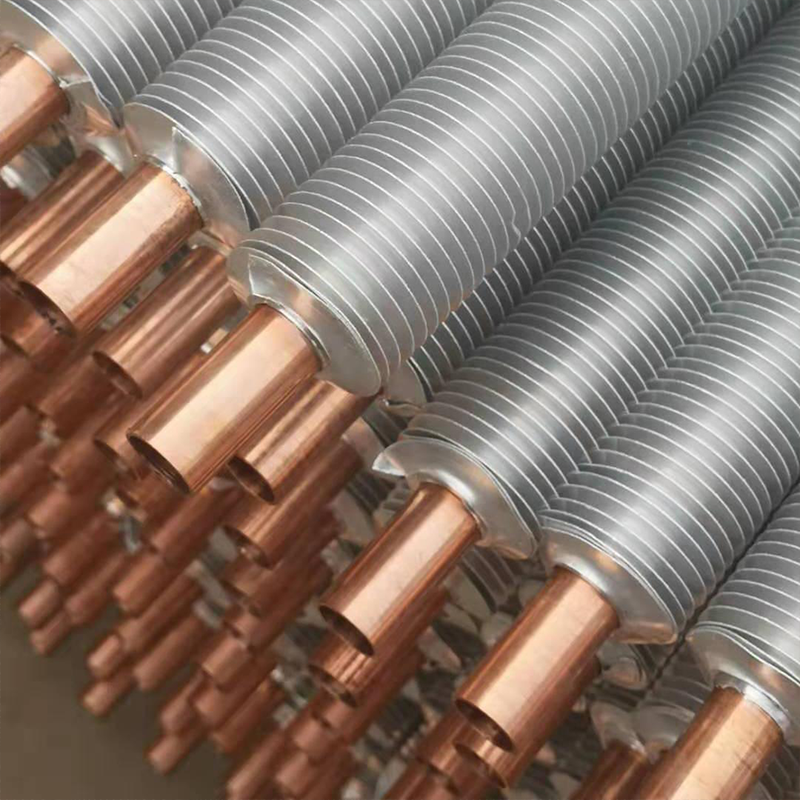
CompanyWuxi Kaisheng Electric Power and Petrochemical Equipment Co., Ltd., being a leading manufacturer of complex engineering equipment, understands the importance of impeccable documentary support for exports. Specializing in the design and manufacture of heat exchangers (including titanium shell-and-tubes, ASME high-pressure heat exchangers, 316 stainless steel and C46400/N06625 alloy corrugated tube bundles), as well as waste heat boilers and air coolers, we supply products to the refining, petrochemical and power generation industries around the world. Our experience with international standards (PED, ASME) and complex materials (titanium, copper-nickel alloys, alloy steels) has allowed us to hone customs clearance processes to perfection. We apply the same high standard of quality control and documentary accuracy when exporting polyethylene tanks, ensuring our customers there are no delays and full compliance with the requirements of importing countries.
If you are planning a large supply of polyethylene tanks and want to ensure that all documentation, includingcertificates of origin for export of PE tanks, designed impeccably, do not risk time and money. Our experts are ready to audit your current processes and prepare a full package of accompanying documents to guarantee quick customs clearance.Contact us todayfor consultation on your specific case and to receive an individual commercial offer. We will help you avoid typical pitfalls and deliver your cargo on time.
For more information about the technical characteristics of our tanks and delivery conditions, visit the sectionproduct catalog, which provides detailed specifications and examples of completed projects.