
Carbon Steel: Manufacturing and Machining of Precision Castings
2026-08-07
- Technology for the production of precision carbon steel castings
- Selecting a steel grade and preparing a charge: the foundation of quality
- Simulation of gating systems and formation of wax models
- Forming ceramic shells and burning wax
- Metal pouring and inspection of structural defects
- Heat treatment and mechanical finishing
- Practical application: experience of Wuxi Kaisheng LLC
- Comparative Analysis of Casting Methods: Why Precision Casting?
- Frequently Asked Questions
- Conclusion and recommendations for choosing a supplier
Technology for the production of precision carbon steel castings
The production of precision castings from carbon steel is a complex engineering process, where a tolerance of 0.1 mm is often the limit between defects and the finished product. We have encountered situations where a batch of valves for the oil and gas industry was sent for remelting due to microcracks that arose when the mold was not cooled properly. Carbon steel requires tight control of the chemical composition: even a 0.05% deviation in carbon content changes the weldability of the part and its ability to withstand shock loads. In this article we will analyze the full cycle: from choosing a steel grade (from St3 to St45 according to GOST or AISI 1020–1045 analogues) to finishing machining, based on real workshop experience, and not on theoretical textbooks.
The industrial casting market in 2026 dictates new conditions: customers no longer accept “approximate” dimensions. Full traceability of the melt is required and compliance with ISO 9001 and GOST R standards. If you are looking for a supplier who will simply pour the metal into a mold, this article is not for you. Here we are talking about technologies that make it possible to obtain parts of complex geometry with a surface roughness of Ra 3.2 without subsequent total machining. This saves up to 30% of the project budget, but requires highly qualified technologists at each stage.
Selecting a steel grade and preparing a charge: the foundation of quality
Choosing the wrong grade of carbon steel is the most costly mistake in a casting project. Low-carbon steels (up to 0.25% C) are excellent in weldability and ductility, but have a low yield strength. High carbon grades (above 0.6% C) give high hardness after quenching, but are prone to hot cracking directly in the mold. In our practice, there was a case when a client insisted on using St50 steel for a gearbox housing operating at low temperatures. The result was the brittle failure of three pieces of equipment during the first winter of operation. An engineer must understand: precision casting does not correct metallurgical errors, it fixes them.
The preparation of the charge begins not in the furnace, but in the scrap warehouse. The use of scraps with unknown alloying is unacceptable for critical components. We apply spectral analysis to each batch of charge before loading it into the induction furnace. For precision castings, sulfur and phosphorus content is critical. If sulfur exceeds 0.04%, the toughness drops sharply, especially in the rolling or crystallization direction. Phosphorus above 0.05% causes cold brittleness. Modern technologies make it possible to reduce these indicators to 0.02%, but this increases the cost of melting by 15-20%. Is it worth it? Yes, if the part operates under cyclic load.
Metal deoxidation is another bottleneck. The use of ferrosilicon and ferromanganese is mandatory, but the order in which they are added affects the purity of the steel. Improper deoxidation leads to gas pockets, which are often disguised as shrinkage pores during X-ray inspection. We use combined deoxidation in a ladle with argon purging. This removes hydrogen, which is the main cause of flakes - internal cracks that appear after months of use. For precision casting, the hydrogen content should not exceed 2 ml per 100 g of metal. This parameter is monitored by express analyzers directly at the furnace.
The temperature at which metal is released from the furnace depends on the thickness of the casting wall. Thin-walled parts (less than 5 mm) require overheating 50-70°C above the liquidus point to prevent premature solidification in the gating system. Solid castings, on the other hand, are poured at the lowest possible temperature to reduce overall shrinkage and the risk of macropores. The spread of pouring temperatures in one melt should not exceed ±10°C. Violation of this rule leads to heterogeneity of the structure: in one corner of the part there will be large grains, in the other there will be small grains, which will create internal stresses during heat treatment.
Before starting production of a new batch, always carry out a test melt on a smaller copy of the model. This allows you to check the fillability of the form and identify hidden defects without the risk of losing the main batch of material. Do not skimp on incoming inspection of raw materials: the cost of analysis is pennies compared to losses from complaints.
Simulation of gating systems and formation of wax models
The gating system is the circulatory system of the casting. An error in its calculation leads to underfilling, slag entrapment or uneven shrinkage. In modern precision casting manufacturing, we have abandoned empirical calculations in favor of computer-aided engineering (CAE). Programs like ProCAST or MagmaSoft allow you to see metal movement and heat dissipation in a virtual environment before making the first wax model. This reduces the number of iterations to refine the technology from 5-6 to 1-2 samples.
The process of making wax models begins with a mold. The accuracy of the metal mold should be one or two classes higher than the required accuracy of the finished casting. The wax shrinkage coefficient is taken into account, which varies from 0.8% to 1.2% depending on the ambient temperature and holding time. We encountered a problem when the summer heat in the workshop led to a change in the geometry of the models by 0.3 mm, which brought a batch of turbine blades out of tolerance. The solution turned out to be simple, but expensive: installing climate control in the wax block assembly area.
Assembling wax trees is an operation that requires pinpoint precision. The junction between the model and the sprue should be smooth, without steps. Any unevenness here will turn into an influx of metal, the removal of which by mechanical means can damage the casting body. We use ultrasonic wax welding for critical components, which ensures the integrity of the connection. The number of models on the tree is calculated based on the possibility of uniform heating of the mold during burning and filling with metal during pouring. Too large a tree creates the risk of the ceramic shell breaking under its own weight at the time of pouring.
The geometry of wax models is controlled using coordinate measuring machines (CMMs). Sampling inspection is not sufficient for precision casting. Each model from the first batch and every tenth in mass production must be tested against key databases. Wax defects such as warping or blistering are often repeated on metal castings. If you see a defect in the wax, do not try to fix it with putty before applying ceramic - this is almost guaranteed to lead to chipping of the mold. It's better to remake the model.
The storage of wax models is also regulated. They should not lie on open racks for more than 24 hours before coating, as the wax adsorbs moisture and dust, which impairs the wettability of the suspension. Use airtight, humidity-controlled containers. Remember: the quality of a precision casting is established at the wax stage, not in the oven.
Forming ceramic shells and burning wax
The ceramic shell is the only barrier between the liquid metal and the outside world. Its strength, gas permeability and heat resistance determine the success of the pour. The process of applying layers (layers can be from 6 to 12) requires strict adherence to drying time between operations. An under-dried layer leads to delamination of the shell when heated. An overdried layer loses adhesion. In our practice, there was an incident when a batch of molds was poured in rainy weather without adjusting the drying time. The result is massive defects in the form of “swelling” of molds and sand getting into the metal.
The material of the facing layer (first layer) is critical to the surface quality of the casting. For carbon steels we use electrocorundum or zirconium in combination with an ethyl silicate or colloidal silica binder. Zirconium gives a better surface (Ra 1.6-3.2), but is much more expensive. Electrocorundum is cheaper, but can cause burns on difficult surfaces. The choice depends on the requirements of the drawing. If the part requires minimal machining, saving on the first layer is unacceptable.
Burning out the wax (removing the wax) is the riskiest step. Sudden heating can cause the wax to expand explosively and destroy the mold. We use the autoclave burning method: the mold is placed in a chamber where saturated steam pressure is created. The wax melts and flows out in 5-8 minutes, leaving the cavity clean and ready for baking. An alternative method, kiln burning, is cheaper, but takes up to 10 hours and carries a higher risk of carbon residues in the pores of the ceramic, which can carburize the surface layer of the steel during pouring.
The molds are calcined at temperatures of 850-950°C. This temperature is necessary not only to remove residual binder, but also to ensure that the mold has sufficient thermal reserve when pouring. A cold mold will cause instantaneous hardening of the metal at the walls, which will lead to underfilling of thin sections. An overheated mold (>1000°C) may react with the melt, causing welds. The temperature of the mold before pouring is controlled by pyrometers. The tolerance is ±20°C.
After calcination, the molds should be stored in a dry place. Ceramics are hygroscopic and can pick up enough moisture within 2 hours in open air to cause gas defects when pouring. If the mold has stood for more than 4 hours after calcination, it must be briefly heated again before use. Ignoring this rule is a common cause of porosity in finished products.
Metal pouring and inspection of structural defects
The moment of pouring is the culmination of a process where seconds make all the difference. The pouring speed must be such that the metal fills the mold with a laminar flow, without splashing or trapping air. Turbulence leads to metal oxidation and the formation of slag inclusions. For large carbon steel castings, we use a vacuum or injection molding system to minimize exposure to the atmosphere. This is especially important for grades with a high manganese content, which are actively oxidized.
The shrinkage of carbon steel is about 2%. To compensate for this, the gating system is designed with gates (feeders) that supply liquid metal to the solidification zone. Incorrect profit calculation leads to shrinkage cavities inside the casting body. These defects are not visible from the outside and are only detected during ultrasonic testing or during machining when the tool suddenly falls into a void. We use the solidification modulus rule: profit should solidify last. Violation of this principle makes profit useless.
Cooling of molds after pouring must be controlled. Sudden cooling (for example, watering) creates thermal shocks leading to cracks. Natural pit cooling is preferred for alloy steels, but for plain carbon steel, accelerated cooling after crystallization is complete to refine the grain is acceptable. However, haste here is dangerous: if you start knocking out too early, when the metal is still at a temperature above 600°C, deformations from its own weight are possible.
The destruction of the ceramic shell (knockout) is carried out with hydraulic hammers or sandblasting chambers. It is important not to damage the casting by mechanical action. After knocking out, a visual inspection and sandblasting are carried out. At this stage, surface defects are identified: underfilling, cold junctions, sagging. Cold junctions are the result of the meeting of two metal flows with an already formed oxide film. They can be corrected by surfacing, but this requires additional certification of the welding technology and is often not economically feasible for precision parts.
Each casting undergoes input geometry control. The use of laser scanners allows you to compare a real part with a 3D model and build a deviation map. The color map shows where the material went positive and where it went negative. This makes it possible to make a decision: send the part for revision, pass it conditionally, or send it for remelting. Transparency at this stage is critical to customer trust.
Heat treatment and mechanical finishing
Heat treatment (HT) for carbon steel castings is mandatory. The casting structure is characterized by large grains and segregation, which makes the metal brittle and heterogeneous. Annealing (normalization) aligns the structure, relieves internal stresses and improves machinability. Maintenance modes depend on the steel grade: for St20 it is heating to 900-920°C with cooling in air, for St45 - up to 840-860°C followed by high tempering to obtain sorbitol-like pearlite. An error in the tempering temperature by 30 degrees can change the hardness by 10-15 HB units, which will make the part unsuitable for further use.
After maintenance, shot blasting follows. It not only cleans the surface, but also creates hardening, increasing the fatigue strength of the part. For critical components operating under vibration (crankcases, flanges), this stage is a mandatory requirement of the standards. We control the blasting intensity using Allman strips to ensure reproducible results.
Mechanical processing of precision castings has its own specifics. The machining allowance is minimal (usually 1-3 mm), so any mistake by the CNC programmer can result in the part being rejected. The tool must be sharp and wear-resistant, since the casting crust (even after sandblasting) is abrasive and quickly dulls the cutting edges. We recommend using TiAlN coated inserts for roughing carbon steels.
Dimensions are controlled at the machining stage using gauges and CMMs. Particular attention is paid to base surfaces. If the base is machined with a deviation, all subsequent holes and planes will be offset. In our practice, there was a case when a batch of pump casings was rejected due to the fact that the technologist used an untreated casting surface as a base for drilling mounting holes. Casting tolerances are too large for such operations. Always use pre-treated bases.
The final operation is the application of an anti-corrosion coating or preservation. Carbon steel is susceptible to rust, so protection is a must. Depending on the operating conditions, this may be a primer, galvanizing or simple lubricant. Packaging must prevent mechanical damage during transportation. The use of wooden boxes with soft pads in place is standard for export.
Practical application: experience of Wuxi Kaisheng LLC
Theoretical knowledge about casting only gains true value when it is translated into reliable equipment capable of operating under extreme conditions. A striking example of the integration of advanced casting and metalworking technologies is the company’s activitiesWuxi Kaisheng Electric Power and Petrochemical Equipment Co.,Ltd" Specializing in the design and manufacture of heat transfer equipment, energy and petrochemical solutions, the company demonstrates how the strict quality control of raw materials and processes described above translates into world-class end products.
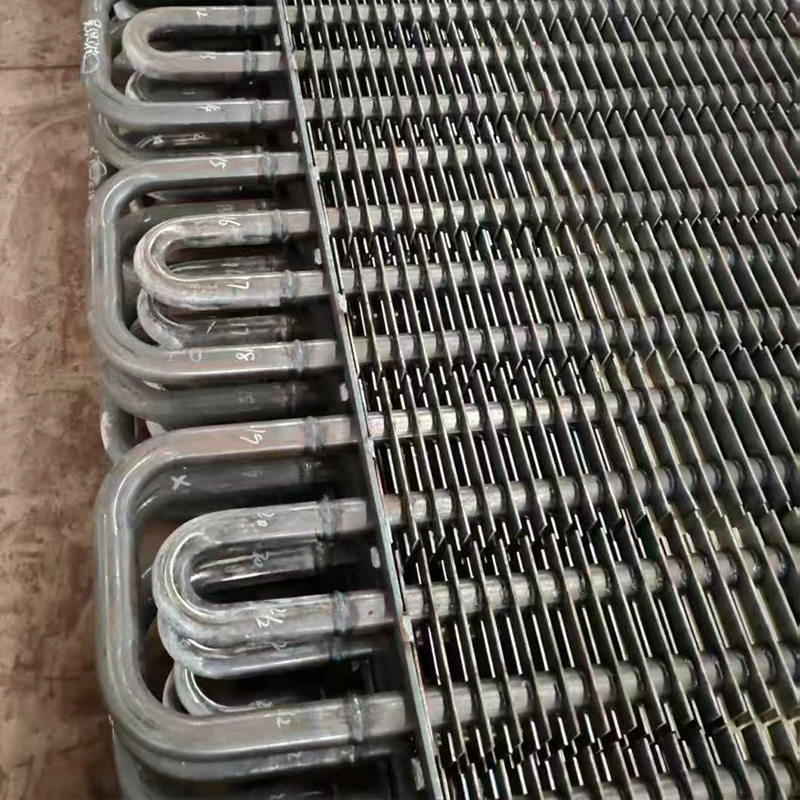
Wuxi Kaisheng's product range includes complex components where precision castings made of carbon, stainless and alloy steel play a key role. For example, the production of tube sheets from 321 stainless steel or C46400 brass requires the same geometric accuracy and absence of internal defects that we discussed in the sections on modeling and inspection. The company successfully manufactures titanium shell-and-tube heat exchangers, high-pressure devices according to the ASME standard and corrugated tube bundles from N06625 alloys, where the slightest crack or pore is unacceptable due to high pressures and aggressive environments.
The experience of Wuxi Kaisheng confirms that the use of certified materials (PED, ASME) and adherence to technological disciplines - from spectral analysis of the charge to the final anti-corrosion protection - allows us to create equipment with exceptional corrosion resistance and thermal efficiency. The company's products are widely in demand in the oil refining, chemical industries, seawater desalination and shipbuilding industries precisely because of their ability to provide customized solutions that combine casting reliability and machining precision. When choosing a supplier of critical components, it is important to look for the same deep expertise and manufacturing base as Wuxi Kaisheng, guaranteeing the stability of your equipment around the world.
Comparative Analysis of Casting Methods: Why Precision Casting?
The choice of casting technology depends on the circulation, the complexity of the geometry and accuracy requirements. Below is a comparison of investment casting (precision casting) with other popular methods for carbon steel.
| Criterion | Precision Casting (Lost Wax) | Sand casting (V-process/LSC) | Chill casting |
|---|---|---|---|
| Dimensional Accuracy (CT) | CT 4-6 (high) | CT 7-9 (medium) | CT 5-7 (medium/high) |
| Surface roughness (Ra) | 3.2 – 6.3 µm | 12.5 – 25 µm | 6.3 – 12.5 µm |
| Minimum wall thickness | up to 1.5 mm | at least 4-5 mm | not less than 3 mm |
| Cost-effective circulation | Medium and small series (50-5000 pcs.) | Single and small-scale production | Large-scale production (>10,000 pcs.) |
| Geometry complexity | Any, including internal cavities without rods | Limited by the ability to remove rods | Ограничена (нужен разъем формы) |
| Cost of equipment | High (molds for wax) | Низкая (модельная оснастка) | Very high (metal molds) |
Из таблицы видно, что прецизионное литье выигрывает там, где важна сложная форма и минимизация мехобработки. Песчаное литье дешевле для крупных, простых деталей, но затраты на последующую обработку нивелируют экономию. Литье в кокиль эффективно только при огромных тиражах, где амо ртизация дорогой металлической оснастки окупается. Для большинства промышленных заказов на узлы из углеродистой стали (фланцы, корпуса клапанов, фитинги) прецизионное литье остается золотой серединой по соотношению цена/качество.
Frequently Asked Questions
Какова максимальная масса одной отливки из углеродистой стали по технологии lost wax?
Технически возможно изготовить отливку массой до 50-100 кг, однако экономически целесообразный предел обычно составляет 10-15 кг. При увеличении массы растет риск дефектов (раковины, горячие трещины) и значительно удорожается процесс из-за расхода керамики и сложности выбивки. Для деталей тяжелее 20 кг мы часто рекомендуем гибридный подход: литье заготовки с припуском и последующую сварку или механическую обработку, либо переход на песчаное литье по выплавляемым моделям (для единичных экземпляров).
Можно ли сваривать прецизионные отливки из углеродистой стали?
Yes, you can, but with restrictions. Низкоуглеродистые стали (Ст3, Ст10, AISI 1020) свариваются без ограничений всеми видами сварки. Среднеуглеродистые стали (Ст35, Ст45) требуют предварительного подогрева до 150-200°C и последующего медленного охлаждения для предотвращения трещин в зоне термического влияния. Высокоуглеродистые стали сварке практически не подлежат. Перед сваркой любой отливки обязательно проведите спектральный анализ для точного определения марки стали и разработки технологии сварки (WPS).
Какой минимальный объем заказа (MOQ) вы принимаете?
Минимальный заказ определяется стоимостью изготовления пресс-формы для воска. Обычно мы работаем с партиями от 50 штук для мелких деталей и от 10 штук для крупных и дорогих изделий. Для опытных образцов (прототипов) возможно изготовление методом 3D-печати восковых моделей без пресс-формы, но стоимость единицы продукции в этом случае будет в 5-10 раз выше серийной. Это позволяет получить первые образцы за 2 недели для тестирования сборки.
Какие сертификаты предоставляются на партию отливок?
На каждую партию мы предоставляем паспорт качества (Mill Certificate) 3.1 по стандарту EN 10204. В документе указываются результаты химического анализа, механических испытаний (растяжение, ударная вязкость) и данные неразрушающего контроля (УЗК, капиллярный контроль). По запросу возможна сертификация по ГОСТ, ISO или специфическим отраслевым стандартам (например, для судостроения или нефтегаза). Все лаборатории аккредитованы и проходят регулярный аудит.
Conclusion and recommendations for choosing a supplier
Manufacturing precision carbon steel castings is a balance between metallurgy, ceramics and mechanics. Успех проекта зависит не от одного фактора, а от слаженной работы всех звеньев цепи. Как мы видели на примерах, экономия на входном контроле шихты или нарушение режима сушки форм приводит к потерям, многократно превышающим стоимость сэкономленных ресурсов. Рынок наполнен предложениями, но не все производители обладают компетенцией для работы с высокими допусками.
При выборе партнера обращайте внимание не только на цену за килограмм, но и на наличие собственного парка оборудования для мехобработки и контроля. Завод, который только льет и отправляет вам «черновые» отливки, перекладывает риски брака на вас. Полноценный сервис «под ключ» включает в себя разработку технологии, литье, термообработку, механику и контроль. Это гарантирует, что вы получите готовое изделие, которое встанет в ваш узел без дополнительных проблем.
Если ваш проект требует изготовления ответственных деталей из углеродистой стали с высокими требованиями к точности, не рискуйте качеством ради сомнительной экономии. Свяжитесь с нами сегодня для обсуждения технического задания и расчета стоимости. Мы готовы предоставить образцы нашей продукции и провести экскурсию по производству, чтобы вы убедились в наших возможностях своими глазами.Запросить коммерческое предложение.