
Conditions for returning defective plastic pipes”
2026-08-25
- Direct answer: when and how to return defective plastic pipes
- Legal grounds and regulatory framework for returns
- Step-by-step instructions: return processing procedure
- Technical aspects: how to distinguish a defect from an installation error
- Financial risks and hidden costs of return
- Prevention: how to minimize risks during procurement
- Frequently Asked Questions
- Expert opinion and recommendations
Direct answer: when and how to return defective plastic pipes
Return of defective plastic pipes is possible only if a strict algorithm of actions is observed during the warranty period, which usually ranges from 12 to 60 months depending on the type of polymer (HDPE, PPR, PVC) and operating conditions. The key condition is the presence of a report on hidden defects, drawn up by a commission with the participation of a representative of the supplier, and proof that the violation of the tightness or integrity of the wall was not due to installation errors or excess operating pressure. In our practice, we encountered a situation where a large construction holding company lost more than 4 million rubles trying to return a batch of pipes without a preliminary laboratory examination - the court rejected the claim because the samples were destroyed during dismantling. If you find cracks, delamination or changes in geometry immediately after unpacking, immediately stop work and document the condition of the cargo with a photograph before starting any manipulations.
The return procedure is regulated not only by the Civil Code of the Russian Federation (Articles 518, 523), but also by the specific provisions of your supply contract, as well as the technical regulations of the Customs Union (TR CU 010/2011 “On the safety of machinery and equipment”). We strongly recommend not to rely on verbal agreements with the sales manager. Every step must be documented. Below we will analyze the step-by-step mechanism of action, typical mistakes that lead to refusal of compensation, and technical nuances that allow us to distinguish a manufacturing defect from operational damage.
Legal grounds and regulatory framework for returns
The basis for return is the identification of non-compliance of the product with the requirements of the contract or mandatory quality standards. For plastic pipes, this is most often GOST 32415-2013 (pressure pipes made of thermoplastics), GOST R 52134-2003 or GOST 32414-2013 for non-pressure systems. It is important to understand the difference between obvious and hidden marriage. Obvious defects (for example, mechanical damage to packaging, visible cracks on the surface, lack of markings) must be identified at the time of acceptance of the goods at the buyer’s warehouse. According to Article 513 of the Civil Code of the Russian Federation, if you signed the delivery note (TORG-12) without any comments, it will be extremely difficult to prove later that the pipe was broken upon delivery, unless you have video recording of the unloading process.
Hidden defects appear during operation or storage. This may be the brittleness of the material at low temperatures, delamination of walls under pressure, which must be maintained according to the service class, or premature aging of the polymer under the influence of ultraviolet (if the pipe does not have appropriate protection). In this case, the period for filing a claim is determined by the warranty period specified in the quality certificate or contract. If a guarantee is not established, a reasonable period of time applies, but not more than two years from the date of transfer of the goods. However, for industrial facilities, we always recommend specifying in the contract a specific period of supplier responsibility, synchronized with the timing of commissioning work.
A critical document is the certificate of conformity or declaration of conformity. The absence of these documents automatically makes the product illegal for use in water supply and heating systems in the Russian Federation and the EAEU countries. If you purchased pipes without an EAC certificate and they leaked, the supplier may claim that you used uncertified equipment for other purposes, shifting all the blame to you. Verifying the authenticity of the certificate through the RosAccreditation register is the first action that must be taken before signing the acceptance certificate.
In one of our cases, a client was faced with the fact that the supplier refused to accept returns, citing that the pipes had been stored in the open sun without shelter, although the specification specified low-density polyethylene (HDPE), which is sensitive to UV radiation. The examination showed degradation of the polymer chain precisely due to violation of storage conditions. The supplier won the dispute because the contract clearly stated the requirement to store products in closed warehouses or under an awning. This example shows that legal protection only works when the buyer himself perfectly complies with the operating conditions.
Typical types of plastic pipe defects
- Geometric deviations:Section ovality exceeding acceptable standards (usually no more than 3% of the nominal diameter), or uneven wall thickness. Such pipes cannot be butt welded efficiently - an internal burr is formed, narrowing the flow area, or an overheating zone becomes a rupture point.
- Structural defects:Delamination of the material, presence of foreign inclusions (soot, metal shavings), bubbles inside the pipe wall. These defects are often invisible to the eye and require ultrasound guidance or radiography. They are critical for pressure systems operating at pressures above 6 bar.
- Chemical instability:Change in color, appearance of surface chalking, sharp unpleasant odor, indicating the use of recycled materials in excess of the permissible norm. This is unacceptable for drinking water supply, as it threatens to pollute the water with toxins.
- Marking defects:No laser print indicating manufacturer, release date, SDR size and operating pressure. Without this information, it is impossible to identify the batch and verify its compliance with the declared characteristics.
Step-by-step instructions: return processing procedure
You need to act quickly and consistently. Any delay gives the supplier an opportunity to claim that the damage was your fault between discovery and notification. Below is an algorithm that we have worked on hundreds of industrial-scale deliveries.
- Recording the fact of discovery (Day 0).As soon as you notice a defect, immediately stop installing or using the lot. Draw up an internal inspection report indicating the date, time, lot number, number of defective units and nature of damage. Be sure to take high-quality photographs and videos where you can see the pipe markings and the defect itself to scale (place a ruler or coin nearby). Do not throw away the packaging - it may contain important information about shipping conditions.
- Supplier Notification (Day 1).Send an official letter to the supplier requesting their representative to come for a joint inspection. Send the notification by registered mail with a list of attachments or through electronic document management systems (EDF) in order to have legally significant confirmation of the date of dispatch. In the letter, clearly indicate: “We require a joint inspection of product quality in accordance with Art. 513 of the Civil Code of the Russian Federation." If the supplier ignores the call within 3-5 days (or the period specified in the contract), you have the right to conduct a unilateral inspection with the involvement of an independent expert or chamber of commerce.
- Sampling and creation of a commission (Day 3-5).If a supplier representative arrives, work together to select samples for testing. The number of samples must comply with GOST requirements for statistical reliability (usually at least 3-5 pieces per batch). Samples must be sealed and the sampling report must be signed by both parties. If the parties do not reach an agreement, an independent expert organization is invited. Important: store samples in conditions that prevent further damage.
- Laboratory examination (Day 5-15).Submit samples to an accredited laboratory. Testing may include tensile testing, hydraulic tensile testing, melt flow index (MFI) determination, or material composition analysis. The cost of the examination is initially paid by the initiator (buyer), but if the defect is confirmed, these costs are recovered in full from the supplier. Receive an official conclusion with the laboratory's seal.
- Submitting a claim (Day 16).Based on the inspection report and the laboratory’s conclusion, make a written claim. In it, indicate the requirements: replacement of defective products with quality products, a proportionate reduction in the purchase price or a refund. Attach copies of all documents. The period for consideration of a claim is usually 10-30 days, unless otherwise provided by the contract.
- Returning goods and receiving compensation (Day 30+).Once the claim is satisfied, arrange reverse logistics. Return the defective product using a separate delivery note marked “Return of defective goods.” Refunds must be received in your bank account within 10 days of the return, or the supplier will ship a replacement. If the supplier is silent, prepare a claim in arbitration court.
A common mistake at stage #3 is taking insufficient samples. The supplier may claim that you selected the exact pipes that were accidentally damaged during loading by your forklift, and that the rest of the shipment is intact. To avoid this, take samples at random from different places in the stack and videotape the process.
Technical aspects: how to distinguish a defect from an installation error
Most disputes are broken down by the technical illiteracy of the receiving party. Suppliers often use the argument “violation of welding technology” to refuse returns. Let's look at how to prove the opposite.
Problem: Cracks in the weld area.
The supplier states: “You overheated the pipe or did not sufficiently clean the surface before welding.”
How to prove a defect: Order a metallographic analysis of the seam. If a microscopic examination shows that the structure of the polymer in the fusion zone is damaged due to the presence of an oxide film or contamination, this is the fault of the installer. But if the analysis shows that the pipe material itself has a low molecular weight or contains impurities that did not allow the formation of a monolithic joint even with ideal welding parameters, this is a defective material. We have seen cases where pipes made from recycled HDPE simply did not sinter, no matter how much we heated them with a welding machine.
Problem: Pipe rupture under operating pressure.
The supplier states: “You have exceeded the pressure in the system or a water hammer has occurred.”
How to prove a defect: Check the data of the pressure recorders (if any) and compare the peak values with the passport data of the pipe. If the pressure was normal, request testing of samples from the same batch for long-term strength. According to GOST, a pipe of a certain class (for example, PN10) must withstand a certain hoop stress for 100 hours at a temperature of 20°C without destruction. If samples burst early, this is an extrusion manufacturing defect. It often happens that the manufacturer skimped on stabilizers, and the pipe became fragile.
Problem: Discoloration and brittleness in cold weather.
The supplier claims: “The pipes were stored outside, this is due to the influence of ultraviolet radiation.”
How to prove marriage: Yes, PND is afraid of the sun. But if the pipes were protected with a black layer of soot (standard for HDPE) and lay in the sun for only a couple of weeks, they should not crumble in your hands. Perform a carbon black content test. If its content is less than 2-2.5%, it means that the manufacturer has violated the recipe. You can also check the melt index. Plastic that has degraded under the sun has some indicators, while initially poor-quality plastic has others. In our practice, there was a case when a batch of pipes became fragile after just a month of storage in a warm warehouse. The examination revealed the absence of antioxidants in the granulate.
It is important to remember: no visual examination can replace laboratory data. The words “I think this is a marriage” do not work in court. Only a test report from an accredited laboratory gives you leverage.
Financial risks and hidden costs of return
Returning a defective product is not just an exchange of one pipe for another. This means stopping construction, downtime for crews, fines from the general contractor and reputational losses. The real cost of defects can be 5-10 times higher than the price of the pipes themselves.
Let's look at the structure of losses that are often overlooked when calculating claims:
- Dismantling cost:To replace a defective section, it is often necessary to open walls, trenches or dismantle insulation. These works are rarely covered automatically by the supplier; they must be separately justified and included in the amount of damages.
- Logistics costs:Shipping a heavy load of pipes back to the supplier's warehouse can cost more than the product itself. Who pays for return shipping? According to the law, it is the guilty party, but in practice suppliers are playing for time, forcing the buyer to pay in advance. Include these costs in your claim right away.
- Downtime of equipment and personnel:If an excavator or a team of welders is idle due to a lack of pipes, every hour costs money. Collect time sheets and equipment travel sheets to document these losses.
- Penalties from the customer:If you are a subcontractor and miss the delivery deadline due to defective materials, the general contractor will issue you a fine. This fine is a direct loss caused by the supplier of low-quality goods, and is subject to compensation in full (Article 15 of the Civil Code of the Russian Federation).
One of our clients, engaged in laying heating mains, was faced with the fact that the supplier admitted the defect, but refused to compensate for the cost of opening the asphalt above the break site. The argument was: “We will replace the pipes, but how you get them is your problem.” The court of first instance agreed with the supplier, but the appeal, where we helped prepare evidence of a direct cause-and-effect relationship, obliged the plant to pay for all restoration work. The lesson is simple: in the claim you need to describe every ruble of damage, supporting it with estimates and acts.
Prevention: how to minimize risks during procurement
The best way to deal with defects is to prevent them from entering the facility. Experienced buyers implement a multi-level control system at the stage of selecting a supplier.
Production audit.Never buy large quantities of pipes from a factory that you have not visited personally or through a trusted auditor. Ask to see the extruder log, laboratory logs of incoming control of raw materials and output control of finished products. If you are denied access to these documents, run away. An honest manufacturer is proud of its quality.
Incoming control of each batch.Do not trust the “batch” certificate. The certificate may be real, but the pipes in the car may be left-handed. Implement a rule: taking samples from each truck being shipped before signing the invoice. Carry out express tests: measuring wall thickness with a caliper, checking ovality, visually inspecting the end for delamination. It takes 15 minutes, but saves you from millions of losses.
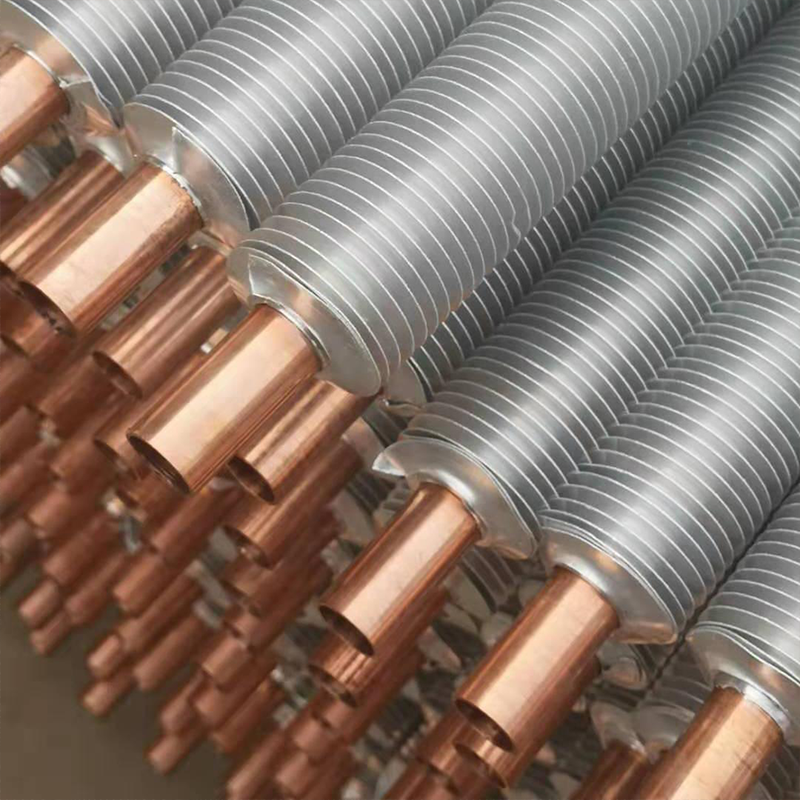
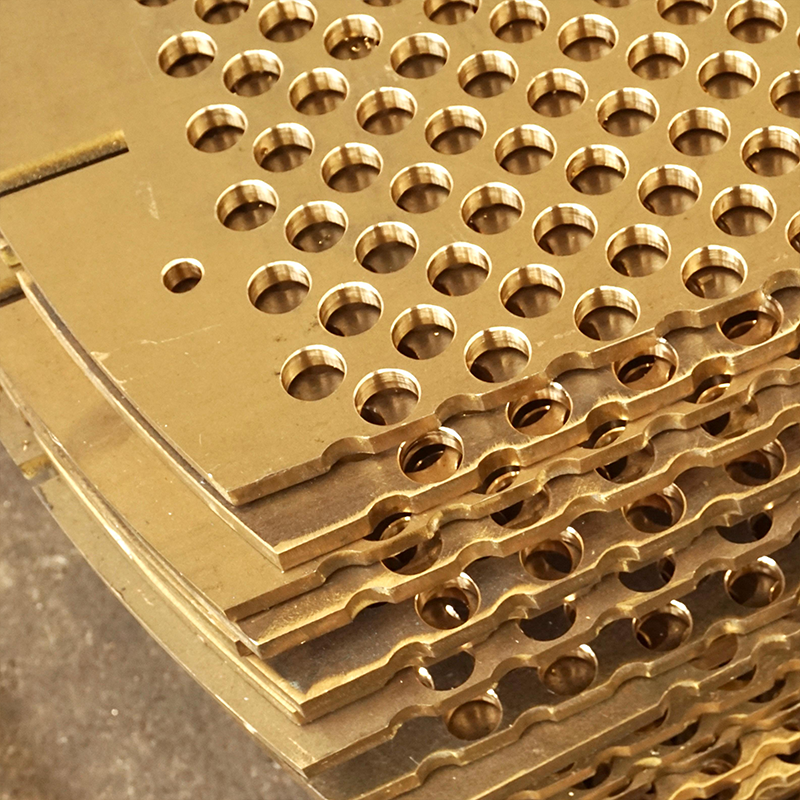
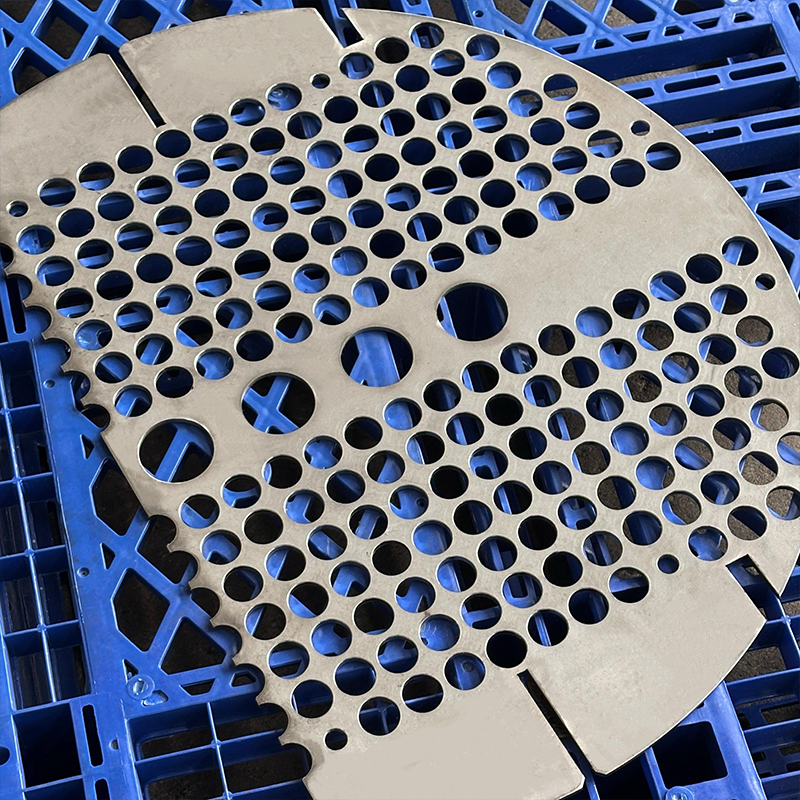
Working with reliable brands.The market for plastic pipes is oversaturated with “garage” production, where recycled cable plastic is used instead of virgin polyethylene. Such pipes cost 20% less, but last 5 times less. Saving on material turns into a disaster. Work only with suppliers who have valid ISO 9001 certificates and are included in the registries of reliable suppliers of large oil and gas or construction companies. The principles of quality production are universal: be it plastic pipes or complex heat exchange equipment, like what the company producesWuxi Kaisheng Electric Power and Petrochemical Equipment Co., Ltd.. This specialist in the design and manufacture of heat exchangers (including titanium shell-and-tube units, high-pressure ASME systems and N06625 alloy bundles) demonstrates how strict raw material controls and international standard certification (PED, ASME) create a product that can withstand the extreme conditions of the petroleum refining and chemical industries. Wuxi Kaisheng's approach, where each product is rigorously tested for corrosion resistance and thermal efficiency before shipment, sets the standard for how a responsible supplier should operate, keeping the risk of defects to a minimum.
Proper storage.Even perfect pipes can be damaged by improper storage. Follow the rules: stacking no higher than the recommended height (so that the bottom rows do not become deformed), protection from direct sunlight (for HDPE and PP), no contact with sharp objects and chemically active substances. Appoint a person responsible for the warehouse who will keep a log of storage conditions.
Frequently Asked Questions
Can I return pipes if I have already started installing them?
Yes, it is possible, but the procedure becomes more complicated. You will have to prove that the defect existed before installation and was not caused by the welding or installation process. This will require dismantling the site and conducting an examination of this particular site. If you welded 100 meters of pipe and then noticed that one of them was leaking, it will be difficult to return the entire batch. You will be able to return only the pipes remaining in stock and demand compensation for the damaged area if you prove the systemic nature of the defect. Tip: carry out a spot check of the pipes before starting welding by cutting 1-2 samples from the pack.
What to do if the supplier was liquidated or changed legal entity?
This is a difficult situation. If the company is officially liquidated, it is almost impossible to recover damages unless you have taken out transaction insurance or a bank quality guarantee. If there is simply a renaming or reorganization (merger, accession), the rights and obligations pass to the legal successor. You need to request an extract from the Unified State Register of Legal Entities and send the claim to the new legal entity. In the future, insure yourself with prepayment: work upon delivery or use a letter of credit to have leverage until the goods are fully accepted.
What is the shelf life of plastic pipes and does it affect returns?
Plastic pipes (HDPE, PP, PVC), when properly stored, have a service life of up to 50 years. However, manufacturers often set a warranty period for products of 1-3 years. Returns are possible within the warranty period or expiration date, if applicable. If the pipes have been lying in a warehouse for 5 years and are just now being installed, and then burst, the supplier can decline responsibility, citing the expiration of a reasonable period for identifying deficiencies. Always check the production date on the pipe label. Do not buy pipes manufactured more than 2 years ago without additional testing of their physical and mechanical properties in the laboratory.
Is it necessary to conduct an examination at your own expense?
At the initial stage, yes, most likely, you will have to pay the laboratory yourself. But in the text of the claim, be sure to indicate that these expenses are part of your losses and are subject to reimbursement by the supplier if the defect is confirmed. If the examination shows that the pipes are of high quality, and your workers broke them, the costs will remain with you. Therefore, before paying for an expensive examination, consult with an independent engineer to assess the prospects for success. Sometimes a cheap visual inspection by an expert is enough to gain arguments in negotiations.
Expert opinion and recommendations
Returning defective plastic pipes is a complex process that requires strict documentation discipline and deep technical knowledge. The main mistake buyers make is relying on the honesty of the supplier and maybe. In reality, the more expensive the batch, the stronger the resistance of the plant when trying to return the money. Your strength lies in preventive control, a competent contract and the willingness to go to the end with expertise in hand.
Remember: the quality of pipes determines the reliability of the entire engineering system for decades. Skimping on incoming inspection or purchasing questionable material at a low price is a ticking time bomb. We recommend not to take risks and work only with trusted partners who are ready to take responsibility for their product, such as market leaders who ensure stability of supply and high quality of order fulfillment.
If you are faced with a pipe quality problem right now and don’t know where to start filing a claim, or you need help organizing an independent examination -contact us today. Our specialists will help you analyze your situation, draw up a competent claim and protect your financial interests. We work with the largest manufacturers and know their weaknesses.
For more information about plastic pipe quality standards and methods of their control, check out our materialQuality standards for plastic pipes: a complete guide.