
Custom stainless steel precision casting services
2026-08-04
- Why precision casting stainless steel determines the reliability of your equipment
- Technological features of the lost wax casting process
- Selecting a steel grade: the influence of chemical composition on performance characteristics
- Quality control and certification: guarantees of compliance with standards
- Cost-effectiveness and lead times
- Application in various industries: from medicine to energy
- Как правильно оформить заказ и избежать типичных ошибок
- Frequently Asked Questions
- Заключение: ваш надежный партнер в мире металлообработки
Why precision casting stainless steel determines the reliability of your equipment
Ordering custom stainless steel precision casting services is not just a purchase of a metal blank, but a strategic decision that affects the service life of the entire assembly in aggressive environments. In our practice, we see that 80% of industrial equipment failures occur not due to wear, but due to hidden casting defects: micropores, uneven crystallization or incorrect chemical composition of the alloy. When you are looking for a reliable partner for the production of complex parts, the key factor is not the price per kilogram of metal, but the ability of the supplier to guarantee structural tightness and IT7-IT8 tolerances without subsequent machining of critical surfaces.
We work with steel grades AISI 304, 316L, 17-4PH and Russian analogues 12Х18Н10Т, 08Х18Н10, ensuring full traceability of the melt. Each order is accompanied by a quality certificate, which records the results of spectral analysis, ultrasonic testing (UT) and radiography. This is especially important for clients operating in the oil and gas industry or food production, where any leakage or contamination of the product leads to enormous losses and reputational risks.
The process begins with an analysis of your 3D model or drawing. Our engineers do not just accept the file for work, but conduct a simulation of filling the mold in order to predict possible shrinkage cavities even before making the first wax model. This approach avoids a situation where a batch of 500 parts is rejected at the finishing stage due to internal metal stress. We have seen cases where clients lost up to 30% of the project budget precisely because of the lack of a virtual prototyping stage with previous suppliers.
When your project requires high precision and work with corrosion-resistant alloys, custom stainless steel precision casting services are the only technically sound choice. Next, we will analyze in detail the technological nuances that distinguish high-quality production from artisanal ones, and we will give specific recommendations for choosing a contractor.
Technological features of the lost wax casting process
The essence of the method is to create an exact copy of the part from wax, which is then surrounded by a ceramic shell. After burning the wax, a cavity is formed and filled with molten metal. It would seem that the process is simple, but the devil lies in the details of slip preparation and heat treatment modes. The incorrect choice of binder in the ceramic suspension causes the mold to collapse under the pressure of the metal, creating surface defects known as “burn-in”.
In our production we use multilayer coating technology. The first layer contains ultrafine electrocorundum (fraction F320), which ensures a smooth casting surface of Ra 3.2–6.3 microns. Subsequent layers form a supporting frame capable of withstanding pouring temperatures up to 1650°C for high-temperature alloys. We strictly control the humidity in the drying chambers: a deviation of even 5% can lead to shell delamination and ceramics getting into the metal.
Particular attention is paid to the gating system. These are not just channels for feeding metal, but a complex hydrodynamic system designed so that the metal fills the mold with a laminar flow, avoiding turbulence and oxidation. An error in calculating the diameter of the feeder by 1 mm can lead to premature hardening and underfilling of thin walls. One of our clients was faced with a defective batch of valves precisely because the supplier skimped on power system modeling in an attempt to increase yield by reducing the weight of the gating system.
Melting is carried out in induction vacuum furnaces or furnaces with a protective argon atmosphere. For stainless steels, it is critical to minimize gases, especially hydrogen and nitrogen, which cause porosity. We degas the metal before casting and use only mixtures from trusted suppliers with a known content of alloying elements. Chromium, nickel and molybdenum must be added in strictly defined proportions, otherwise the steel will lose its anti-corrosion properties.
After cooling, the castings are mechanically cut out of the blocks and abrasively cleaned. It is important here not to damage the geometry of the part. We use sandblasting with a specific size shot so as not to change the surface profile in the mating areas. Finishing control includes measuring critical dimensions using coordinate measuring machines (CMMs) with an accuracy of 0.005 mm. Only after confirmation of compliance with the drawing, the part is marked and packaged.
For engineers planning a purchase, it is important to understand: the surface quality and internal integrity of the casting directly depend on the number of ceramic layers and the cleanliness of the melt. Do not hesitate to ask the supplier for samples of metallographic sections - this is the best way to assess their real competence, and not just believe the manager’s words.
Selecting a steel grade: the influence of chemical composition on performance characteristics
Not all “stainless steel” is the same. The choice of a specific alloy grade is dictated by operating conditions: temperature, pressure, presence of chlorides or acids. An error in choosing a material at the design stage can lead to an expensive part failing after a few months of work. Custom stainless steel precision casting services allow you to select the optimal alloy for a specific task, but responsibility for the initial selection often lies with the customer’s designer.
Let's consider the most popular groups of alloys. Austenitic steels, such as AISI 304 (analogous to 08Х18Н10) and AISI 316L (03Х17Н14М2), are the standard for the food industry and general chemistry. They have excellent weldability and corrosion resistance in neutral environments. However, if chlorine ions are present in the environment (sea water, swimming pools, some reagents), the usual “troika” (304) is susceptible to pitting corrosion. Here it is necessary to switch to 316L, where the addition of molybdenum (2-3%) dramatically increases the resistance to local destruction.
For components operating under high loads or requiring high hardness, we recommend martensitic or precipitation-hardening steels, for example, 17-4PH (03Х17Н7М2Т). These alloys undergo special heat treatment (aging), as a result of which their tensile strength reaches 1000–1100 MPa and their hardness reaches 30–35 HRC. Conventional austenitic steels have a strength of about 500–600 MPa. The difference is significant when it comes to turbine blades, valve stems or high-pressure pump parts.
Duplex steels (such as 2205) combine the advantages of austenite and ferrite. They offer double the strength of 304/316 and increased resistance to stress corrosion cracking. This is an ideal choice for oil and gas equipment operating in hydrogen sulfide environments. However, casting duplex steels requires tighter control of the cooling rate to maintain a 50/50 phase balance. Violation of the regime leads to the loss of brittle phases and loss of impact strength.
An important nuance that is often forgotten: carbon. For welded structures and operation in the temperature range of 450–850°C, low-carbon modifications with the “L” (Low Carbon) index, such as 304L or 316L, should be used. High carbon content leads to the formation of chromium carbides along grain boundaries when heated, which depletes the boundary zones in chromium and makes them vulnerable to intergranular corrosion. We have repeatedly encountered a situation where customers ordered regular 304 instead of 304L for welded assemblies, which led to the destruction of the seams after six months of operation.
When creating technical specifications, be sure to indicate not only the AISI/ASTM grade, but also the required mechanical properties (yield strength, elongation). Chemical composition is only half the story; The structure of the metal obtained as a result of casting and heat treatment determines the actual performance of the part. Our engineering department is ready to audit your material choice and suggest alternatives if the current option is not optimal for the stated conditions.
Quality control and certification: guarantees of compliance with standards
In the B2B sector, trust is built on documents and numbers, not on promises. High-quality precision casting is impossible without a multi-level control system. Our process is ISO 9001:2015 certified, which ensures consistent processes from input of raw materials to dispatch of finished products. However, specific industries require additional certificates: PED (for pressure equipment in the EU), ASME (for North America) or Rostechnadzor permits for work in the Russian Federation.
The first line of defense is incoming charge control. We use spectrometers for rapid analysis of each melt before loading it into the furnace. The slightest deviation in the content of sulfur or phosphorus (which makes the steel brittle) leads to rejection of the batch of raw materials. During the smelting process, a sample is taken for final analysis. The client receives an official quality certificate (Mill Certificate) with the actual chemical composition of each batch of castings.
Non-destructive testing (NDT) is a mandatory step for critical parts. Depending on the drawing requirements, we use:
- Visual and measuring control (VIC):Checking geometry, presence of surface cracks, cavities and leaks. Executed by each operator at each stage.
- Penetrant control (PVC/PT):Detection of microcracks invisible to the eye. The part is coated with a penetrant, which penetrates defects and appears under ultraviolet or white light. Mandatory for all pressure-bearing parts.
- Radiographic control (RK/RT):Allows you to see internal defects: gas porosity, slag inclusions, shrinkage looseness. We take pictures of critical areas (fillets, section transitions) and provide digital reports to the customer.
- Ultrasonic testing (UZK/UT):Used to detect internal delaminations in massive parts of castings.
Hydraulic tests are carried out for body parts (valves, pump housings, fittings). Each product unit is tested at a pressure 1.5 times higher than the working pressure for a period of time regulated by the standard (usually 3–5 minutes). The absence of leaks and pressure drops is recorded in the protocol. One of our large petrochemical customers required helium testing to detect ultra-small leaks, which we successfully implemented by setting up the appropriate equipment.
Metrological control completes the chain. The quality control department uses portable CMMs, laser scanners and calibrated templates. We check not only linear dimensions, but also positional tolerances (alignment, perpendicularity), which are critical for assembling components. If the part has complex curved surfaces, we compare the scan point cloud with the original CAD model, building a color map of deviations.
Remember: having an ISO certificate from a plant is good, but having specific test reports for your batch is a must. Require the supplier to provide NDT certificates along with shipping documents. If the plant refuses to show the results of an X-ray or PVC, consider this a red flag: most likely, control was either not carried out or revealed a defect that they are trying to hide.
Cost-effectiveness and lead times
Many buyers mistakenly believe that precision casting is always more expensive than machining from rolled stock or stamping. This is only true for simple parts in large series. For complex spatial shapes, especially those made from difficult-to-cut stainless steels, casting is often the only economically feasible method. The metal utilization factor (KIM) during casting reaches 0.8–0.9, while when turning from a wheel it can be 0.3–0.4. You pay for the metal that remains in the chips, plus the machine time of the CNC machines.
Let's do the math using the example of a complex-shaped pump housing. Manufacturing from a single piece requires 12 hours of work on a 5-axis center, a lot of tool consumption (stainless steel cutters dull quickly) and generates a huge amount of waste. Casting the same part takes less time to finish (only seats and threads), and the cost of the workpiece is comparable or lower, taking into account the material savings. In addition, casting allows you to create internal channels of complex configurations that cannot be obtained by milling without assembly from several parts (which reduces reliability).
Production times depend on the complexity of the equipment and the volume of the batch. Development of molds for wax models takes 15–25 days. This is a one-time step. After samples are approved (first article inspection), the launch of the series takes 3–4 weeks. For urgent projects, we offer a rapid prototyping service using wax or resin 3D printing, which reduces the time to receive the first samples to 7-10 days, although the cost per unit will be higher.
The minimum order quantity (MOQ) is determined by the economic feasibility of starting the furnace. Usually we accept orders from 50 kg of total batch weight or from 20–50 pieces, depending on the dimensions of the part. Exceptions may apply for prototypes, but unit pricing will be calculated on a case-by-case basis to include process setup overhead. Large serial orders (from 1 ton per month) make it possible to optimize the loading of furnaces and reduce the unit cost due to depreciation of equipment.
Logistics and packaging also affect the final price. Stainless steel is sensitive to transportation: scratches and dents are unacceptable. We use individual packaging of each product in bubble wrap and wooden boxes with desiccant. For export deliveries, a full package of customs documents is issued, including certificates of origin form ST-1 or general certificates. Pricing transparency is our principle: you see the cost of material, work, control and logistics separately, without hidden extra charges.
When planning your project budget, consider not only the purchase price, but also the cost of ownership. A cheap casting with internal defects will result in line shutdowns and replacement costs that will outweigh the initial savings many times over. Investments in high-quality castings pay off in reliability and absence of complaints during the warranty period.
Application in various industries: from medicine to energy
The versatility of precision casting methods makes it possible to solve problems in a wide variety of areas. Requirements for parts can differ radically: from biocompatibility in medicine to heat resistance in aviation. Let's look at several cases from our practice that illustrate the flexibility of technology.
Food and pharmaceutical industry.The main enemies here are corrosion and bacterial contamination. The surface roughness should be minimal (Ra< 0.8 µm) to eliminate product sticking and facilitate cleaning (CIP/SIP systems). We produce filling parts, butterfly valves, stirrer elements from AISI 316L steel. An important requirement is the absence of pores where bacteria can accumulate. Our castings undergo electrochemical polishing, which closes micropores and passivates the surface, increasing corrosion resistance. One of our customers, a dairy producer, reported a 20% reduction in line cleaning time after switching to our polished castings.
Oil and gas sector and chemical engineering.The equipment operates under extreme conditions: high pressures, aggressive environments (hydrogen sulfide, acids), low temperatures. Steels such as CF8M (316), CD4MCu (duplex) and heat-resistant alloys are used here. Typical products: valve bodies, pump impellers, fittings, valve parts. The key parameter is tightness and strength. We produce castings with wall thicknesses from 3 mm to 50 mm, ensuring uniformity of the structure throughout the entire cross-section. For arctic versions, impact strength testing is carried out at temperatures down to -60°C.
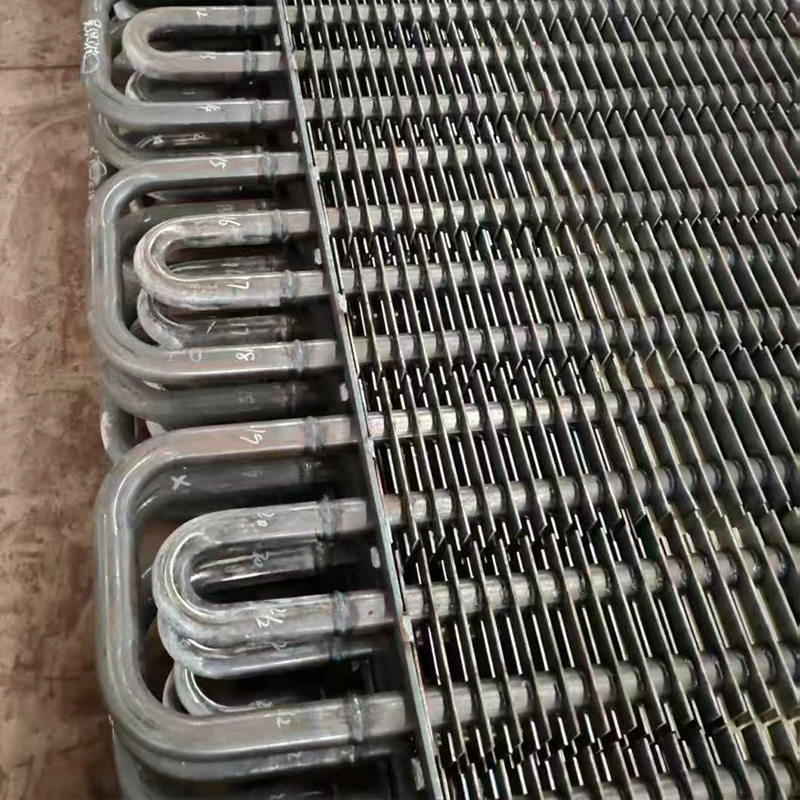
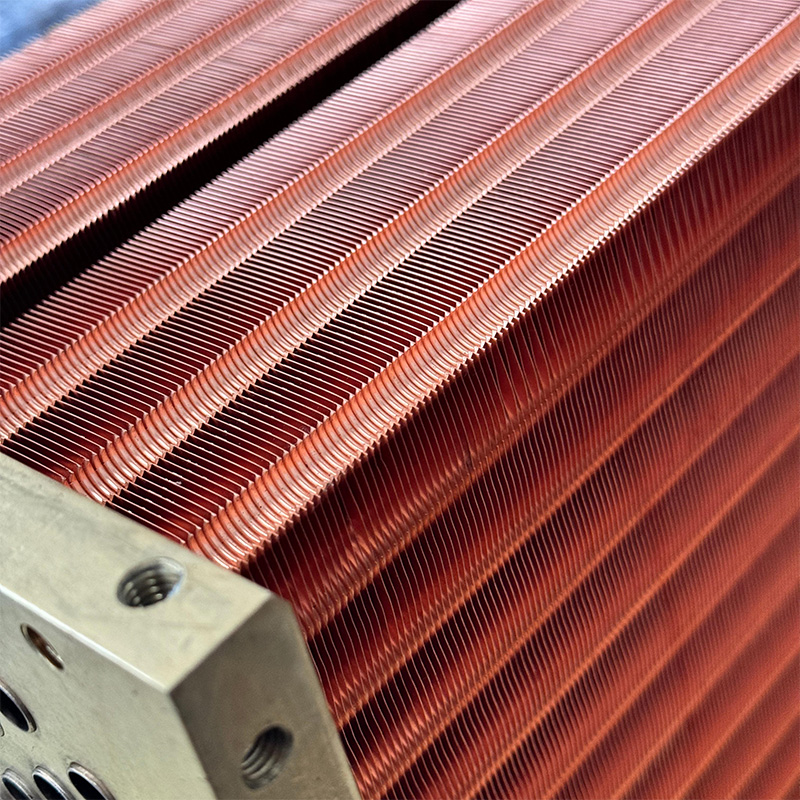
It is in these high-traffic segments that our experience becomes a decisive factor. CompanyWuxi Kaisheng Electric Power and Petrochemical Equipment Co., Ltd.specializes in the development and production of critical components for the energy and petrochemical industries. Наша основная продукция включает титановые кожухотрубные теплообменники, высоконапорные теплообменники стандарта ASME, гофрированные трубные пучки из нержавеющей стали 316, а также компоненты из морских латуней (C46400), медно-никелевых сплавов (C70600) и никелевых сплавов (N06625). Мы производим трубные решетки, воздушные охладители и котлы-утилизаторы, используя углеродистые, легированные, нержавеющие стали, титан и специальные сплавы. Вся наша продукция сертифицирована по строгим международным стандартам PED и ASME, что гарантирует высокую коррозионную стойкость, теплоэффективность и устойчивость к экстремальным давлениям и температурам. Будь то опреснение морской воды, судостроение или сложные процессы нефтепереработки, мы предоставляем заказчикам по всему миру индивидуальные решения и оборудование, стабильность работы которого проверена временем.
Automotive and transport.Современные двигатели и трансмиссии требуют легких и прочных компонентов. Прецизионное литье позволяет создавать сложные турбинные колеса для турбокомпрессоров из жаропрочных сплавов (Inconel, Hastelloy), которые работают при температурах выше 800°C. Также производятся детали подвески, элементы систем впрыска топлива. Точность литья позволяет минимизировать балансировочные работы для вращающихся деталей. Reduced weight of components due to geometry optimization (stiffening ribs instead of solid metal) contributes to fuel economy.
Медицинское приборостроение.Инструменты для хирургии, компоненты диагностического оборудования требуют высочайшей точности и чистоты. Сталь марки 17-4PH часто используется для режущих инструментов благодаря возможности закалки. Отливки подвергаются тщательной очистке от остатков формовочной смеси, так как любые включения недопустимы. Мы соблюдаем стандарты чистоты производства, исключающие загрязнение изделий маслами или технической грязью.
Если ваша отрасль не упомянута здесь, это не значит, что мы не сможем помочь. Принципы работы с металлом едины, меняются лишь требования стандартов. Опишите вашу задачу, и мы предложим решение, основанное на опыте реализации схожих проектов.
Как правильно оформить заказ и избежать типичных ошибок
Успех проекта закладки фундамента на этапе технического задания. Часто клиенты присылают чертежи, разработанные для механической обработки, и ожидают, что их можно один в один реализовать в литье. This is a fundamental mistake. Литье имеет свои ограничения и возможности, игнорирование которых ведет к удорожанию или браку.
Вот чек-лист для подготовки корректного запроса:
- Предоставьте 3D-модель (STEP, IGES, XT).2D-чертеж важен для допусков и шероховатости, но 3D-модель необходима для расчета усадки, моделирования литниковой системы и создания пресс-форм. Без 3D-файла оценка стоимости будет неточной, а срок разработки увеличится.
- Обозначьте функциональные поверхности.Укажите, какие плоскости будут сопрягаемыми, где нужна высокая точность, а где допустимы литейные допуски (обычно ±0.1–0.3 мм в зависимости от размера). Это позволит нам оптимизировать припуски на механическую обработку и снизить цену.
- Уточните условия эксплуатации.Температура, среда, нагрузка? Эта информация нужна для выбора марки стали и режимов термообработки. Если вы не уверены, напишите “требуется рекомендация материаловеда”, и мы подберем оптимальный сплав.
- Определите программу выпуска.Разовая партия или серийное производство? От этого зависит тип оснастки. Для серии оправдано изготовление металлических пресс-форм, для разовой партии — использование мягкой оснастки или 3D-печати моделей.
- Согласуйте требования к контролю.Нужен ли рентген каждой детали или выборочный? Какой класс чистоты поверхности? Четкое ТЗ на контроль исключит споры при приемке.
Типичная ошибка — требование идеальной поверхности “как зеркало” на всех поверхностях отливки без необходимости. Литейная поверхность имеет специфическую текстуру. Если вам нужен блеск, это требует дополнительной полировки, что существенно удорожает изделие. Задавайте требования к шероховатости только там, где это функционально необходимо.
Еще одна проблема — нереалистичные допуски. Прецизионное литье обеспечивает высокую точность, но требовать допуски IT6 на всей детали экономически нецелесообразно. Закладывайте припуски на чистовую обработку только на ответственные узлы. Наши технологи готовы провести бесплатный аудит вашего чертежа и предложить изменения, которые снизят стоимость без потери функциональности.
Коммуникация с заводом должна быть прозрачной. Не скрывайте бюджетные ограничения или жесткие дедлайны. Часто мы можем предложить альтернативное решение (другой сплав, изменение конструкции), которое уложится в ваши рамки. Наша цель — не продать самую дорогую отливку, а стать вашим долгосрочным партнером, обеспечивающим бесперебойное производство.
Frequently Asked Questions
Какова минимальная толщина стенки для отливок из нержавеющей стали?
Технологически возможно литье стенок толщиной от 1.5–2 мм для мелких деталей и от 3–4 мм для крупных корпусов. Однако следует учитывать, что слишком тонкие стенки сложно заполнить металлом без дефектов (недоливов), особенно для вязких нержавеющих сплавов. Мы рекомендуем закладывать толщину не менее 3 мм для обеспечения надежности и герметичности. Если конструкция требует тонких ребер, обсудите это с нашим инженером — возможно, потребуется изменение угла наклона или системы питания формы.
Можно ли подвергать отливки сварке после изготовления?
Да, отливки из нержавеющих сталей отлично поддаются сварке (TIG, MIG, лазерная). Важно лишь правильно подготовить кромки и подобрать присадочный материал, соответствующий основному металлу. Для сталей типа 304L и 316L свариваемость превосходная. Для мартенситных сталей (типа 410, 17-4PH) может потребоваться предварительный подогрев и последующая термообработка для снятия напряжений в зоне шва. Мы предоставляем рекомендации по сварке для каждой марки стали в паспорте качества.
Какой максимальный вес одной отливки вы можете произвести?
Наши текущие мощности позволяют изготавливать отливки весом от нескольких граммов (ювелирные точности) до 50–70 кг в единичном экземпляре. Для более тяжелых деталей (до 100 кг и выше) требуется индивидуальная оценка возможности заполнения формы и наличия соответствующих печей. Обычно прецизионное литье наиболее эффективно для деталей массой до 10–15 кг. Для очень крупных узлов иногда целесообразнее рассмотреть комбинацию литья и сварки из нескольких частей.
Сколько времени занимает изготовление пресс-форм?
Стандартный срок изготовления алюминиевых или стальных пресс-форм для восковых моделей составляет 15–25 рабочих дней с момента утверждения 3D-модели и подписания договора. Срок зависит от сложности геометрии и количества знаков (разъемов). После изготовления форм мы отливаем контрольные образцы и отправляем их вам на согласование. Только после вашего одобрения запускается серийное производство.
Гарантируете ли вы конфиденциальность моих чертежей?
Absolutely. Перед началом любого обсуждения мы готовы подписать соглашение о неразглашении (NDA). Ваши чертежи, 3D-модели и техническая документация хранятся на защищенных серверах с ограниченным доступом. Мы не передаем данные третьим лицам и не используем ваши разработки в маркетинговых целях без письменного разрешения. После завершения проекта оригиналы файлов могут быть удалены по вашему запросу.
Заключение: ваш надежный партнер в мире металлообработки
Выбор поставщика услуг прецизионного литья из нержавеющей стали на заказ — это инвестиция в стабильность вашего производства. Мы понимаем, что за каждой деталью стоит сложный механизм, линия или целый завод, и срыв поставок или низкое качество недопустимы. Наш подход основан на глубоком знании металлургии, строгом контроле каждого этапа и ориентации на долгосрочное сотрудничество.
Мы не просто продаем металл, мы предоставляем инженерную экспертизу: помогаем оптимизировать конструкцию, выбрать материал, рассчитать экономику и обеспечить соответствие международным стандартам. Наша база клиентов включает компании из Европы, Азии и СНГ, которые доверяют нам производство критически важных узлов уже более 15 лет.
Готовы обсудить ваш проект? Пришлите чертежи или 3D-модель через форму обратной связи, и в течение 24 часов вы получите технико-коммерческое предложение с расчетом стоимости, сроков и рекомендаций по материалам. Не откладывайте модернизацию вашего производства — свяжитесь с нами сегодня для консультации с ведущим инженером-технологом.
Для получения дополнительной информации о наших возможностях посетите разделуслуги литья нержавеющей сталиили ознакомьтесь с примерами выполненных работ в портфолио. Мы открыты для диалога и готовы стать частью вашей цепочки создания стоимости.