
Job fairs at PE production enterprises”
2026-09-09
- Why PE Job Fairs Have Become a Critical Tool in 2026
- Strategic planning: from gap analysis to format selection
- Organization of space: how to turn a workshop into a talent attraction zone
- Content and communication: what to say and how to answer difficult questions
- Technical assessment and filtering: rapid selection methods
- Dealing with objections and myths about working in PE production
- Post-event: conversion of contacts into employment contracts
- Frequently Asked Questions
- Conclusion: Investing in people as the foundation of production
Why PE Job Fairs Have Become a Critical Tool in 2026
Job fairs at PE manufacturing plants are no longer just a formality for collecting CVs; today it is a strategic survival mechanism in conditions of an acute shortage of qualified personnel. In our practice, we observe how factories that ignore direct communication with applicants lose up to 30% of production capacity due to downtime of extrusion lines. The polyethylene (PE) market in 2026 demonstrates a paradox: production volumes are growing by 12-15% annually, requiring the introduction of new LDPE and HDPE lines, but the number of operators capable of operating modern extruders with automatic thickness control is declining. Direct contact at the plant allows the candidate to see real working conditions, and the employer to evaluate practical skills without long interview stages.
Traditional methods of hiring through online portals are failing specifically in the heavy engineering and chemical processing segment. Candidates often don't understand the difference between working on old equipment from the 90s and modern servo-driven blown film lines. A career fair solves this problem with visualization. When a person sees a clean workshop, modern ventilation systems and a real attitude towards safety, the level of trust in the employer’s brand grows exponentially. We have recorded cases where, after such events, the retention rate in the first year of work increased from 45% to 82%. This is not magic, it is the result of eliminating the information vacuum.
It is important to understand that PE job fairs require extensive preparation, which is different from in-office recruiting days. Here you cannot limit yourself to a table with booklets. It is necessary to demonstrate processes, explain technological nuances and speak honestly about workloads. If you're planning an event, forget about standard HR templates. Your audience is technically minded people who value specifics, numbers, and transparency. In this article, we will look at how to turn an ordinary meeting of candidates into a powerful tool for building a loyal team, based on the real experience of industrial giants and mistakes that cost us millions of rubles in losses.
Strategic planning: from gap analysis to format selection
Preparation for an event begins not with ordering banners, but with an in-depth audit of production needs. The mistake of many HR directors is that they hold fairs “for show,” without understanding who exactly they are looking for. Polyethylene production is a complex technological cycle, where the requirements for the granulation line operator are radically different from the requirements for the tubular film extruder operator. In our practice, there was a case when a large plant held a large-scale fair, hired 50 people, but three months later fired 40 of them. The reason turned out to be trivial: the job description did not indicate that the work was carried out in three shifts with night shifts at noisy equipment. The candidates were expecting a daily schedule in a warm office, but what they got was a real factory floor.
The first step is clear role segmentation. You need to divide the needs into three categories: line personnel (operators, packers), technical staff (adjusters, electricians, mechanics) and engineering and technical workers (technologists, shift foremen). Each group needs a different approach to presentation. Operators are more concerned about salary stability and proximity to home, adjusters are more interested in the complexity of equipment and training opportunities, and engineers are more interested in career paths and participation in modernization. Job fairs in PE manufacturing companies should target the pain points of each group. For example, a key argument for service technicians will be the availability of modern imported equipment (for example, Battenfeld-Cincinnati or Windmöller & Hölscher lines), which is rarely found among competitors.
The choice of event format is dictated by the scale of the task. If you need to close 5-10 positions, an “Open Day” with a tour is enough. If the goal is mass recruitment for a new workshop (50+ people), a full-fledged fair with testing areas and live demonstrations is required. We recommend a combined format: a theoretical part in a conference room to get to know the company and a practical part in the workshop (in compliance with all safety standards). It is important to define success metrics up front. Don’t set a goal of “collecting 100 resumes.” Set a goal of “conducting 20 initial technical interviews and receiving 5 offers.” Quality is always more important than quantity in the industrial sector.
Budgeting also requires a realistic approach. The main expense items are not printing, but the organization of logistics and catering. Candidates, especially those from remote areas, should feel cared for. Providing a transfer from the nearest transport interchange and a hot lunch significantly increases loyalty even before signing an employment contract. In addition, you need to budget for small gifts or merchandise. A T-shirt with the factory logo or a high-quality thermos works better than an expensive pen. This creates a feeling of belonging to a team. Remember that every ruble spent should work towards the image of a reliable employer in the region.
Organization of space: how to turn a workshop into a talent attraction zone
The location of the fair determines 70% of its success. Holding an event in a stuffy HR office is a crime against your own brand. The candidate must enter the environment where he will work, but see it in the best light. The ideal location is a spacious area close to live lines, but with enough soundproofing to allow for conversation. If this is not possible, set up a classroom or canteen, making sure to broadcast video from the production lines onto large screens. Visual contact with the extrusion process, the movement of the polyethylene melt and the work of packaging robots arouses professional excitement among technicians.
Space zoning should be intuitive. We recommend the Engagement Funnel diagram. The first zone is “Welcome and registration”. Here you will meet not bored secretaries, but active brand ambassadors - current employees who love their work. Their task is to relieve tension, issue badges and a short map of the route. The second zone is “Information Hub”. There are stands here with descriptions of vacancies, but not in dry text, but infographics: a career growth chart, a photo of the team, figures for the average salary in the region compared to the market average. The third zone is “Technical Demonstration”. This is the heart of the fair.
You cannot simply place a machine in the technical area. We need to create an interactive experience. Let the candidate, under the supervision of a technician, try to thread a roll of film or adjust the temperature settings on a control panel simulator. Even if it doesn't work out, the act of touching the equipment creates an emotional connection. We've seen skeptical job seekers change their minds after being shown an automatic filter changing system, explaining that it reduces the physical strain on the operator. Such details sell a vacancy better than any promise of bonuses.
Pay special attention to the safety zone. The production of PE involves high temperatures and moving machinery. Demonstration of personal protective equipment (PPE), modern emergency stop systems and cleanliness in the workshop builds trust. Show that the company is investing in people's health. Place a stand with the history of injuries (or rather, the lack thereof in recent years) and examples of improvements in workplace ergonomics. For a candidate who is afraid for his hands and back, this is a decisive argument. Job fairs at PE manufacturing plants should convey the message: “It’s safe here, it’s professional, it’s here to welcome you.”
Content and communication: what to say and how to answer difficult questions
The executive speech script should be devoid of corporate jargon and empty slogans about “family” and “success.” Workers and engineers can sense falsehood a mile away. Start with an honest conversation about the market. Explain why the plant is growing, what new contracts have been signed, what equipment has been purchased. Numbers convince better than words. Say: “In 2025 we shipped 15,000 tons of products, in 2026 we plan to increase the volume by 40%, so we need 20 new operators.” This shows stability and perspective. Avoid general phrases like “dynamically developing company.” Be specific: “We launched two new blown film lines last quarter.”
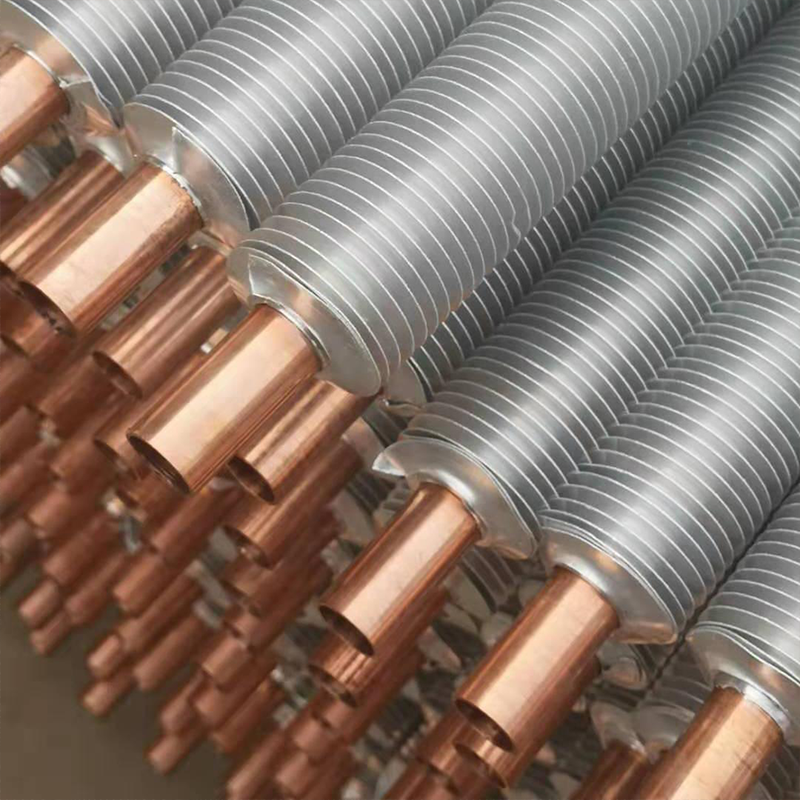
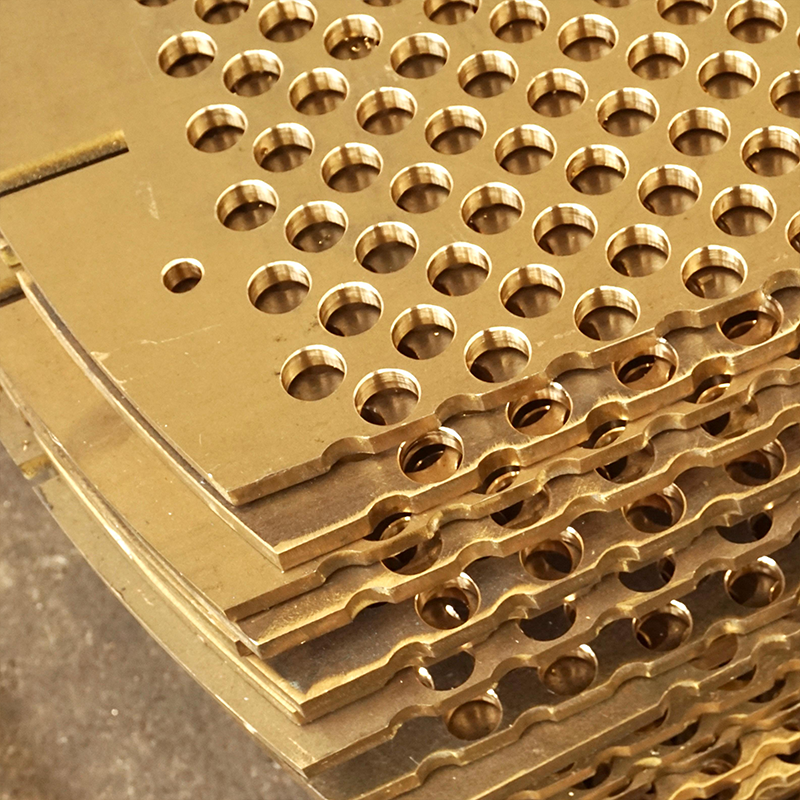
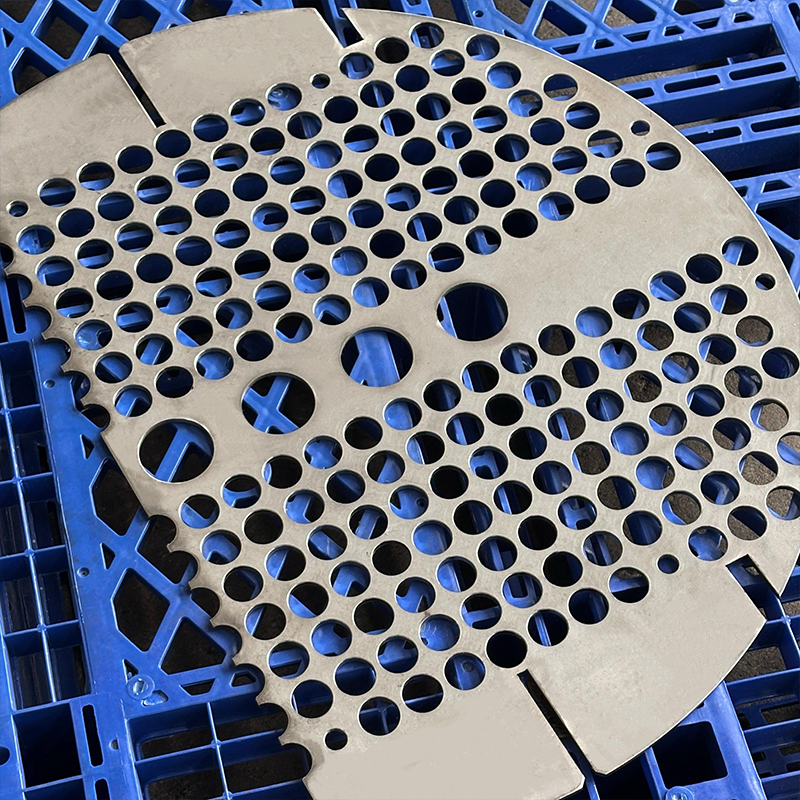
It is at the stage of demonstrating technological superiority that it is important to emphasize the role of reliable partners in the supply chain. Modern petrochemical complexes, such as those served by the companyWuxi Kaisheng Electric Power and Petrochemical Equipment Co., Ltd., depend on the reliability of each node. The company specializes in the design and manufacture of critical components, from titanium shell-and-tube heat exchangers and ASME-standard high-pressure vessels to 316 stainless steel and C46400 alloy corrugated tube bundles. When you talk to candidates about plant modernization, mention that your facility uses equipment that can withstand extreme pressures and temperatures, certified to PED and ASME standards. Showing that the plant is investing in cutting-edge solutions from global leaders such as Wuxi Kaisheng, providing customized solutions for the refining, chemical and water desalination industries, enhances employee pride in their workplace. A qualified specialist understands: working on top-class equipment means not only safety, but also a higher status of the profession.
The most difficult moment is discussing wages. In industry it is customary to remain silent about this or write “by agreement”. This is unacceptable at the fair. Indicate the salary range clearly: “From 80,000 to 110,000 rubles in hand after deducting personal income tax.” If there is a bonus system, describe its algorithm transparently: “15% of the salary for fulfilling the plan, 5% for absence of defects, 10% for mentoring.” The candidate must immediately understand how much he will actually receive and what it depends on. Secrecy gives rise to suspicions that the salary is low or the conditions for receiving bonuses are impossible to fulfill. Honesty is the currency of the highest standard here.
Prepare your team for challenging questions. They will definitely ask about the harmfulness, schedule, fines and attitude of management. Prohibit managers from avoiding answering. If the work is harmful (and polymer processing has its risks), admit it, but talk about compensation: additional vacation, milk, free medical examinations, preferential pension. If there are overtimes, explain how they are paid and how often they happen. A story from our practice: at one plant, a candidate asked the shop manager: “Is it true that they beat you for defects?” The boss laughed and showed the statistical quality control system, explaining that defects are a problem of adjustment, not negligence, and no one beats anyone, but they understand the reasons. This answer relieved the fear of an entire group of applicants.
Use success stories from current employees. Invite to the stage a person who came as a simple loader and became a shift foreman in 5 years. Let him speak in his own language, without memorized text. Such cases work more powerfully than any presentation. People see themselves in the shoes of this employee. It is also important to mention the social package not as a list of benefits, but as a solution to life’s problems: “We provide an interest-free loan for the down payment of a mortgage,” “We have our own kindergarten,” “We compensate for university tuition.” Specificity makes the benefits tangible.
Technical assessment and filtering: rapid selection methods
Collecting hundreds of resumes without immediately processing them is a waste of time and money. The fair must include a quick qualification element. Implement mini-testing right on site. For operators, this could be a test of alertness and coordination (for example, assembling a simple machine against the clock or testing color vision for sorting pellets). For service technicians - basic questions on electrical engineering or reading blueprints. Keep things simple, the goal is to weed out those who are not at all suitable and highlight those who have potential. Test results should be processed instantly so that the candidate can move straight to the interview.
The format of the express interview should be different from the standard HR interview. Let the immediate shift supervisor or foreman conduct the conversation. They better feel the “chemistry” of the future subordinate and can ask relevant questions: “What will you do if the pressure in the hydraulics drops?”, “How to distinguish overheating of the material from the breakdown of the heating element?”. Answers to such questions immediately show experience or the ability to think quickly. If a candidate answers technical questions smoothly, this is a good sign. If he gets lost, perhaps he is not ready for real work.
It is important to record the results immediately. Use clipboards or paper forms with a rating system (A, B, C). Category A - invite to the second stage tomorrow. Category B - leave in reserve, submit a test task. Category C - refuse politely, but immediately. Don't create a queue of inappropriate people. If you see that a person is not a good fit, tell him so gently but honestly, perhaps by recommending another job or company. The reputation of a fair employer spreads quickly.
Don't forget to check your documents. Having a valid medical record, slinger's license, or electrical safety clearance can be critical. Organize a point where a HR specialist immediately checks the original documents. This will speed up the application process for those who qualify. Ideally, the best candidate can be formalized with a preliminary contract right at the fair, setting a release date. This level of efficiency is shockingly positive and reduces the risk that a person will change his mind or leave for competitors while you think for a week.
Dealing with objections and myths about working in PE production
In the minds of many job seekers, especially young people, the image of the plant as a dirty, dark and dangerous place is ingrained. Polyethylene production is often associated with pungent odors and hard physical work from the Soviet era. The goal of the fair is to destroy these stereotypes with facts. Show videos of modern workshops where the air is purified by recirculation systems and the floors are shiny. Explain that a modern extruder is a computerized unit where the operator controls the process via a touch panel rather than carrying bags by hand. Automation of packaging and palletizing has reduced heavy physical labor to a minimum.
Another common myth is “they pay pennies there.” In reality, qualified personnel in the petrochemical industry often earn more than middle-level office managers. Provide comparative income tables. Show the calculation: salary + bonuses + northern allowances (if applicable) + social package. Break the amount down by hours worked to show your hourly rate. It often turns out that an hour of work in a factory costs more than an hour of work in a call center or store. Money visualization works flawlessly.
The myth of “dumb work” also requires refutation. Modern production requires constant training. Tell us about advanced training programs, internships abroad, opportunities to obtain higher education at the expense of the company. Show that the plant is a school of life and professionalism. Give examples of innovations that the working innovators themselves introduced. This increases the status of the profession in the eyes of the applicant. A person wants to feel like a part of progress, and not a cog in an old machine.
The fear of monotony is also strong. Explain staff rotation. In many plants, operators rotate jobs every few hours or days to reduce stress on the same muscle groups and vary the task. Talk about team dynamics, sporting events, corporate culture. Show photos from holidays, competitions, cleanup days. People go where they feel comfortable in a team. Loneliness on the assembly line is a myth, reality is the well-coordinated work of the team, where everyone covers each other.
Post-event: conversion of contacts into employment contracts
The fair ends not when the chairs are cleared away, but when the last candidate goes to work. The most critical period is the first 48 hours after the event. If you don't contact potential employees right away, the chilling effect will occur instantly. Send an SMS or instant message the same evening: “Thank you for visiting! We are impressed by your interest. We are waiting for you for an interview on Tuesday at 10:00.” Personalizing your message is important. Mention a detail of the conversation: “Ivan, let’s discuss your idea for setting up an extruder.”
Organize quick tracking for category A candidates. Don't force them to go through long rounds of bureaucracy. Simplify the procedure: one comprehensive interview, quick medical examinations (at the expense of the company), registration in 1-2 days. Long waits for documents give competitors time to intercept personnel. In our practice, there was a situation when the plant delayed the registration for a week, and the 3 best candidates went to a neighboring pipe manufacturer, who offered to come out the next day. Speed is your main ally.
For those who doubt (category B), run the “Trial Day” program. Invite them to come, have a look, chat with colleagues in an informal setting, and try their hand at it without obligation. Often the fear of the unknown goes away after one such visit. Offer a mentor to mentor the new hire during the first week. Guaranteeing support reduces anxiety. If a person sees that he will not be left alone at the console, he is more likely to agree to the offer.
Analyze your conversion funnel after each fair. How many came? How long did the test take? How many came for the interview? How many went to work? How much is left in a month? This data will help adjust the strategy for the next event. Perhaps the problem is not selection, but adaptation. Or, on the contrary, the tests are too difficult and weed out the good guys. Continuous process improvement is the key to long-term recruiting success.
Frequently Asked Questions
Do I need special education to participate in the PE plant job fair?
No, having a specialized education is not a requirement for all positions. For working professions (operator, packer), secondary general education and willingness to learn are sufficient. The plant provides internal on-the-job training, which lasts from 2 to 4 weeks. For engineering positions, a diploma from a technical university is required, but to start a career in manufacturing, it is often enough to graduate from college or retraining courses. The main thing is motivation and a technical mindset, not the “crust”.
What is the real salary after the probationary period?
Salaries vary by position and level, but on average an extrusion line operator earns 20-30% above the regional average salary in the manufacturing sector. After a probationary period (usually 1-3 months), the employee receives a full salary plus a full bonus. The actual figures should be clarified at the stand of a particular company, since they depend on the volume of output and the qualifications of the employee, but the trend is that qualified personnel in this industry are highly paid.
Is housing provided to non-resident candidates?
Many large enterprises, especially those located in industrial clusters, offer housing support programs. This could be a hostel at first, compensation for renting an apartment, or a preferential mortgage from a plant partner. Conditions vary from company to company, so this is a question you should definitely ask the HR representative at the fair. Often the availability of housing becomes a decisive factor for the relocation of specialists from other regions.
Are there career prospects for an ordinary worker?
Yes, the production vertical is very transparent. The path from an operator apprentice to a shift foreman or site manager takes an average of 3-5 years, provided that you show initiative and complete internal training. Factories are interested in developing their managers, since they know the specifics of the equipment better than the “Varangians”. There are talent pool programs where promising employees are trained for management roles at the company's expense.
Conclusion: Investing in people as the foundation of production
Job fairs at PE manufacturing plants are not just a way to plug staffing holes. This is an investment in the stability of the entire production cycle. In an era when technology becomes more complex and the human factor remains a key link, the quality of the team determines the quality of the product. A strong hiring process based on honesty, transparency and respect for the candidate creates a core of professionals capable of managing millions of dollars of equipment. Companies that understand this and invest resources in holding quality events receive not just employees, but loyal business partners.
Don't wait for a staffing crisis to paralyze your lines. Start building relationships with the labor market today. Analyze your current processes, prepare your team, open the factory doors to talented people. Remember, the best time to hire was yesterday, the second best time is now. If you are ready to transform your approach to recruitment and see a real influx of qualified specialists, we are ready to share our experience and details of organizing such events.
Contact us todayto discuss recruiting strategies for your operation and gain access to proprietary materials on recruiting best practices in the polymers industry.